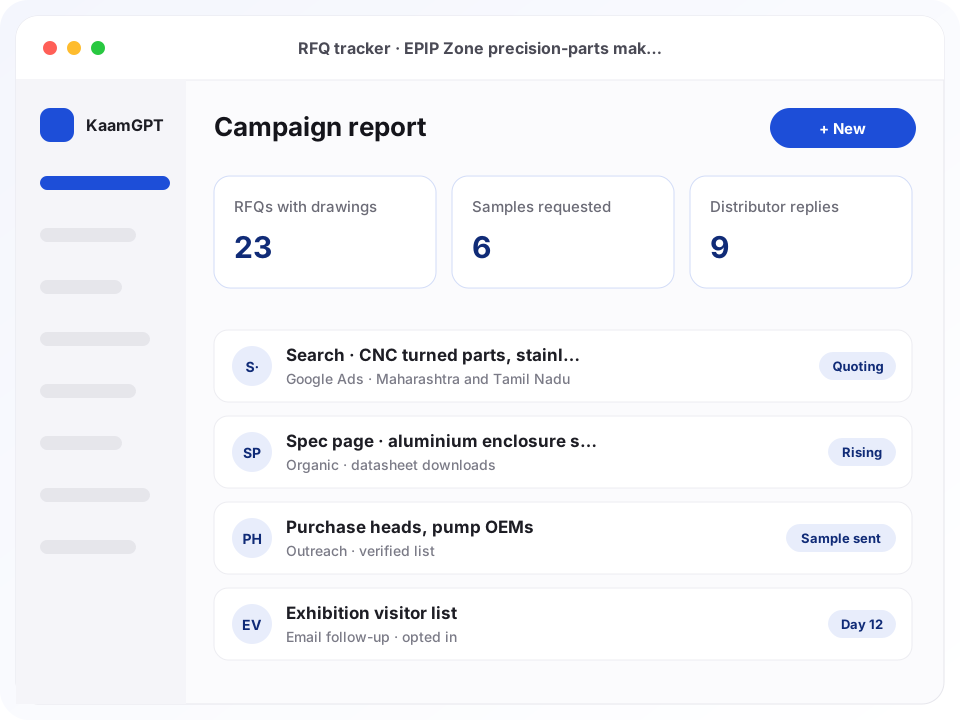
If your company in the EPIP Zone makes or designs something an engineer has to approve, such as a sensor, a machined housing, a control panel or a medical consumable, then choosing the best digital marketing company in EPIP Zone, Bangalore comes down to finding someone who can sell to engineers. Design engineers and purchase managers read specifications before they read brochures, and they drop a vendor whose website hides the numbers.
KaamGPT's work for these firms starts with the catalogue. We turn PDF datasheets into product pages that search engines and buyers can read, run SEO for industrial products around applications and part types, and add verified outreach to OEMs and distributors where buyers can be named. Below you will find what each piece costs and which to begin with.
- ₹9,999per project is where a product-catalogue website starts, CMS and analytics included
- ₹14,999monthly opens SEO work on applications, part types and spec pages
- ₹24,999monthly starts verified outreach to OEM, distributor and EPC contacts
- 14 daysis lead generation's listed start-up window: criteria signed, first list checked, outreach under way
What is actually made and designed in the EPIP Zone?
The name says what the zone was built for: EPIP stands for Export Promotion Industrial Park. It lies in Whitefield between Kundalahalli and the International Tech Park, shares the 560066 PIN with Whitefield and even has its own EPIP post office. Walk its roads and the mix is unusual for Bengaluru: tech-park towers housing electronics, semiconductor-design and engineering offices, beside factory plots where precision components, machine tools and medical products are made.
Two neighbours shape how these firms sell. The KTPO exhibition and convention centre, run by the state's Karnataka Trade Promotion Organisation, sits on the zone's edge, so trade exhibitions happen close to many factory gates. And container freight facilities stand near the Nallurhalli metro station, a reminder that goods, not only code, leave this corner of Whitefield for other states and countries.
The Purple Line reached the zone in 2023 via the Nallurhalli station, with a bus interchange at the Whitefield TTMC. Staff arrive more easily than before, but customers mostly do not arrive at all: an OEM in Pune or a distributor in Chennai meets an EPIP Zone firm first on a screen, through a search result, a datasheet or an email.
What should a manufacturer in the EPIP Zone hand to a marketing team?
Digital marketing for manufacturers rewards precision over volume: the right part, the right application and the right person at an OEM. These are the pieces we take on, with notes on where each fits an EPIP Zone firm.
A catalogue built as web pages
Each product family gets its own page with dimensions, materials, tolerances, standards and downloadable drawings, plus an RFQ form that asks for quantity and application. Pricing starts at ₹9,999 per project; a bigger catalogue is quoted on the number of families and variants.
Websites in detail →Search built on applications
Engineers search for a problem or a part type, such as an IP67 enclosure or a flow sensor for water treatment. We research those phrases, add product structured data, fix crawl problems and write application notes your engineers check, so pages answer the query a buyer actually types.
SEO in detail →Ads on part types, not slogans
Search campaigns target specific product and application terms, limited to the states or countries you ship to, with exclusions for job hunters and students. A conversion is counted only when an RFQ, drawing upload or sample request arrives. Our fee to run it is ₹4,999 monthly, and click charges go from Google to you.
Google Ads in detail →Named OEM and distributor contacts
When buyers are nameable, say purchase heads at pump or panel makers, outreach reaches them directly. Contacts are verified against criteria you sign, approached by email, hand-sent LinkedIn notes and calls, and any that break the criteria are replaced. Lead generation for engineering firms starts at ₹24,999 a month.
Lead generation in detail →Exhibition and dealer follow-up
Visitors who gave consent at a stall, and dealers already on your books, receive a planned sequence: the product sheet they asked about, an application note, then a sample offer. KaamGPT's email app handles unsubscribes and bounces, and every reply returns to one inbox.
Email campaigns in detail →Dealer updates on WhatsApp
Distributors and service partners on an opt-in list get new-product notices, price-list changes and stock alerts, sent as Meta-approved templates from KaamGPT's WhatsApp tool. It is kept for existing trade relationships, never for cold messages to strangers.
WhatsApp campaigns in detail →One team running the whole plan
For firms without a marketing manager, the managed programme (₹19,999 monthly and up) covers planning, creative, campaign running and a weekly summary across search, email and social, so the founder stops writing ad copy between customer audits.
Digital marketing in detail →From datasheet to RFQ: how does an engagement run?
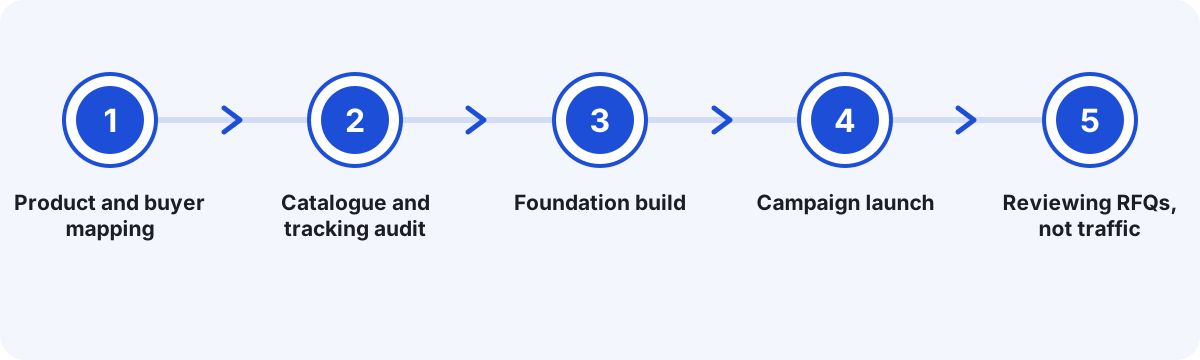
Product and buyer mapping
On the first call we list your product families, the industries buying each, and where you ship. For an EPIP Zone enclosure maker that might be panel builders in three states and one export market to test.
Catalogue and tracking audit
We review your site, datasheets, Google presence and how RFQs arrive today, then send a written quote listing pages, channels, fees and the numbers reports will show. You approve it or change it.
Foundation build
Spec pages, the RFQ form and tracking are built first, and each conversion is tested with a real submission. Your engineer approves every table of dimensions and tolerances before a page goes live.
Campaign launch
Search campaigns open for the first product families and markets, outreach begins to the agreed OEM or distributor list, and exhibition follow-up sequences are loaded ahead of your next show.
Reviewing RFQs, not traffic
Weekly reports show spend, RFQs, samples and replies by source. Monthly, we decide with your sales lead which products and markets deserve more budget and which should pause.
Which EPIP Zone businesses do we build campaigns for?
- Electronics and PCB assemblyContract manufacturers and board houses whose buyers compare capabilities, certifications and turnaround before sending a Gerber file for quotation.
- Semiconductor and embedded design servicesDesign teams selling engineering hours to product companies, where technical articles and verified outreach carry more weight than ads.
- Precision machining and machine toolsJob shops and equipment makers whose enquiries depend on materials, tolerances and batch sizes stated clearly on each product page.
- Medical devices and consumablesManufacturers selling to hospitals and distributors, where claims must match approvals exactly and advertising policies need careful handling.
- Industrial automation and control panelsIntegrators and panel builders whose buyers are plant engineers searching for a solution to a specific process problem.
- Testing, calibration and certification labsLabs whose customers search by test type and standard, and who benefit from pages listing scope, turnaround and sample requirements.
- Logistics and export servicesFreight, packing and customs specialists serving the zone's shippers, who win through clear service pages and a well-kept Google listing.
Package prices for EPIP Zone manufacturers
KaamGPT publishes six starting prices, shown below in rupees. For a manufacturer the number that counts is the quoted one, set in writing after a call about product families, markets and sales channels, and work waits for your acceptance. The notes under each package say which kind of EPIP Zone firm it tends to suit; the pricing page carries the complete inclusions.
Digital Marketing
Full service₹19,999/month
Typically 15 days
Owner-run factories without marketing staff that want search, email and social handled by a single team, summarised each week.
- Channel strategy
- Creative production
- Campaign management
- Weekly reporting
SEO
₹14,999/month
Typically 30 days
Makers of standard product ranges that engineers search for by part type, material, rating or application.
- Technical audit
- Keyword research
- On-page optimisation
- Content plan
- Monthly reporting
Google Ads
₹4,999/month
Typically 30 days
Firms with stock items or clear capabilities, targeting specific states or countries, and an estimator free to answer RFQs quickly.
- Account setup
- Keyword strategy
- Ad copy testing
- Conversion tracking
- Bid optimisation
Meta Ads
₹4,999/month
Typically 30 days
Seldom the first spend for industrial products; useful for exhibition reminders, recruitment of dealers or retargeting spec-page visitors.
- Creative testing
- Audience building
- Retargeting funnels
- Pixel setup
- Weekly reporting
Lead Generation
₹24,999/month
Typically 14 days
Component and equipment makers who can name the OEMs, EPC contractors or distributors they want to supply.
- Verified leads
- Multi-channel outreach
- CRM integration
- Lead scoring
- Replacement guarantee
Website Development
From ₹9,999/project
Typically 7 days
Any firm whose catalogue lives in PDFs or whose site has no RFQ form, drawing upload or product-level pages.
- Custom design
- Mobile first
- SEO ready
- CMS included
- Analytics setup
- 1 month free support
- Clicks and impressions are charged by Google or Meta straight to your account; KaamGPT's invoice covers only our work.
- All amounts are rupees; the quote you approve before work begins fixes both scope and total.
What does it cost an EPIP Zone manufacturer to generate RFQs online?
Think of the budget in two layers. The first is a one-time foundation: a website whose catalogue is readable, tracked and able to accept drawings. The second is the monthly engine, which for most firms is either search (SEO, with or without ads) or outreach, rarely both at the start. A ₹9,999 site plus one monthly service is a realistic first year for a small maker; larger catalogues and several export markets cost more.
Judge the spend against the value of an approved part, not against a monthly lead count. An industrial buyer who qualifies you as a vendor may order for years, so a campaign yielding a few serious RFQs can outperform one producing hundreds of vague form fills. Ask any agency how it will separate the two before you compare prices, and expect a one-sentence answer.
- The number of product families and variants that need their own spec pages
- How many states, countries and languages you want to reach, each with its own campaigns
- Whether you want clicks, verified contacts or held meetings, since each is scoped differently
- Media money paid to Google or Meta, which no agency fee includes and which climbs with competition
- Usually absent from a low bid: RFQ tracking, spec accuracy checks and a CRM hand-off
- Questions to compare agencies on: who writes technical copy, who owns the accounts, what counts as a result
Why do EPIP Zone firms shortlist KaamGPT?
Accuracy before publishing
Specifications, certifications and approvals are only published after your engineer signs them off. A marketing page that overstates a rating costs more in lost trust than it ever earns.
RFQs in a CRM, not an inbox
Enquiries land in a KaamGPT workspace or your existing CRM with their source, so a founder can see which exhibition, search or outreach list produced the order that finally arrived.
Your accounts, your data
Ad accounts, analytics, domains and prospect lists are registered to your firm. Access runs through permissions you grant, and all of it stays with you if we part ways.
Plain limits, stated early
We do not promise rankings, RFQ counts or orders, and we do not offer PR, video shoots or trade-stall design. Knowing that on the first call saves both sides time.
A wider base of users
With 100+ companies across India using KaamGPT, quotes, access checklists and report templates have been tested well before they reach your factory.
How do we market an engineered product from Whitefield to the rest of India?
Any partner calling itself the best digital marketing company in EPIP Zone, Bangalore should start where we do, with three lists: your product families in order of margin, the industries that buy each one, and the states or countries you can ship to and support. Those lists decide which pages are built first, which searches are bid on and which companies go into an outreach list. Anything that does not map to a product and a buyer waits.
After that, every route to an RFQ is tagged. A drawing upload from a search ad, a reply to outreach and a form filled after an exhibition all enter one CRM with their source, and each month channels are compared on RFQs and samples, not on page views. That discipline matters when a single approved part can be worth years of repeat orders.
Datasheets rebuilt as HTML
Every PDF is turned into a readable page with a spec table, keeping the PDF as a download. Search engines index the specs, engineers can compare variants on a phone, and your team updates one page instead of re-exporting documents.
An RFQ form that saves a call
The form asks for part type, material, quantity, target price band and drawings. Better-qualified requests reach your estimator, and the fields let reports separate serious RFQs from students and resellers.
Thirty days after an exhibition
Consenting stall visitors are sorted by interest on the day, then receive the relevant sheet within a week, an application note in the second, and a sample or call offer before the month ends.
Territory pages for distributors
Where you sell through dealers, each territory gets a page naming its partner, so a buyer in Coimbatore reaches the right distributor and your dealers see the website working for them rather than around them.
Export markets, one at a time
Export enquiries improve when one country is targeted properly, with its standards, units and certifications stated, before the next is added. Broad worldwide targeting mostly produces the spam your team already distrusts.
Why do good engineering firms get so few enquiries online?
Most manufacturers here grew through relationships: a founder's contacts, a few distributors and a stall at the right exhibition. That still works, but it does not scale, and it leaves the firm invisible to the engineer who starts a new sourcing search on Google. The website usually offers a company history, a photo of the shop floor and a catalogue locked inside a PDF that search engines rank poorly and buyers struggle to read on a phone.
- Datasheets published only as PDFs, so a part-type search surfaces a competitor's product page instead
- Enquiries arriving through personal inboxes, with no record of which campaign or exhibition produced them
- Vendor qualification that takes months, making it easy to cut marketing before the first order lands
- Export enquiries that are mostly spam or mismatched, which slowly teaches the team to ignore every one
- Agencies that write about 'quality and innovation' without a single tolerance, material or certification
How should a manufacturer judge the best digital marketing company in EPIP Zone, Bangalore?
Test whether the agency can talk to your engineers. Give it one product family and ask for a sample page outline: which specifications appear first, which applications are named, what the RFQ form asks. An agency that returns adjectives and stock photos will struggle; one that asks about tolerances, standards and who approves a vendor at your customers is worth a second meeting.
Then check how results will be counted. Page views and followers mean little to a factory. Ask each shortlisted agency, KaamGPT included, how it will tell a serious RFQ from a student's question, how exhibition leads will be tracked, and whose name the ad and analytics accounts will carry.
- Who drafts the technical copy, and which of our engineers signs it off?
- Which conversions will be counted: RFQs, drawing uploads, sample requests?
- How will you target only the states or countries we can serve?
- What will you do with PDFs we already have?
- Which of our products would you not advertise, and why?
What should happen in the month after a trade exhibition?
Most stall leads die in a spreadsheet. The fix is dull but effective: on the day, tag each consenting visitor by product interest and urgency; within a week send the specific datasheet they asked about; in the second week share an application note or case example; and before the month ends offer a sample, a site visit or a call.
Nothing here needs a large budget, and it works whether the exhibition was at KTPO or in another city. It does need consent recorded at the stall, a single list rather than business cards in drawers, and someone who owns the follow-up. That is exactly where email marketing and a CRM earn their keep.
- Built for
- Manufacturers and design firms in the EPIP Zone
- Catalogue website
- ₹9,999 upwards per project, RFQ form built in
- SEO for product pages
- ₹14,999 monthly upwards, built on applications
- OEM and distributor outreach
- ₹24,999 monthly upwards, each contact verified
- Success measure
- RFQs, samples and replies traced to source
- Spec approval
- Your engineer signs off every figure before publishing
Where this applies around EPIP Zone, Bengaluru
- EPIP Zone
- Bengaluru
- Karnataka
- India
- Nallurhalli
- ITPL
- Kundalahalli
- Whitefield
Frequently asked questions
22 answersHow much does KaamGPT charge an EPIP Zone manufacturer?
Six published starting points apply: a website at ₹9,999 per project, then monthly retainers of ₹14,999 for SEO, ₹4,999 each for running Google Ads or Meta Ads, ₹19,999 for the managed programme and ₹24,999 for lead generation. What an EPIP Zone firm pays depends on catalogue size and markets, and the quote you approve settles it.
Our catalogue is a set of PDFs. Is that really a problem?
Google can index PDFs, but a PDF rarely ranks as well as a proper page, is awkward on a phone and cannot carry an RFQ form. We keep your PDFs as downloads and rebuild each product family as a web page with a spec table, which is usually the single biggest improvement an EPIP Zone firm can make.
When do industrial product pages start ranking?
Niche part-type searches often face little competition, so well-built spec pages may begin to surface a few months after indexing. Broader terms take longer. An EPIP Zone manufacturer gets our estimate inside the written scope, and monthly reports track the product terms agreed, without any promise of positions.
What Google Ads budget should an EPIP Zone engineering firm start with?
Our side costs ₹4,999 monthly; Google separately charges your card for each click. Industrial searches are fewer than consumer ones, so the budget is sized from Keyword Planner estimates for your product terms in the states you serve. If those numbers suggest ads cannot pay back for a product, you hear it from us before anything is spent.
Can ads reach only OEMs and not students or job seekers?
Not perfectly, but closely. Campaigns use precise product and application terms, exclude words like jobs, internship and project report, target only the regions you serve and count a conversion only when an RFQ or drawing arrives. Search-term reviews each week remove whatever slips through.
Can you find purchase heads at OEMs we want to supply?
Yes, where they can be identified. Together we fix the filters, for example sector, headcount band, region and designation, then each contact is verified and approached by email, hand-sent LinkedIn notes and calls. Anyone who breaks the agreed filters is replaced. No agency can promise that a particular company will reply or order.
Is it legal under the DPDP Act to email engineers and buyers we have never met?
The Digital Personal Data Protection Act, 2023 covers work emails and mobile numbers too. Lawful B2B outreach therefore rests on a genuine business reason, a note of where every contact came from, an unsubscribe that works first time and erasure when asked. Calls must also honour TRAI's do-not-disturb registry. Have your lawyer confirm the specifics for your EPIP Zone firm.
Do you help with export enquiries?
Yes, one market at a time. We build pages stating the standards, units and certifications a given country expects, target that country in search, and optionally reach verified importers or distributors there. Broad worldwide campaigns tend to attract spam, so we avoid them unless the data says otherwise.
How do you follow up on leads from an exhibition at KTPO or elsewhere?
Consenting visitors are tagged by product interest, then receive a planned email sequence over roughly a month: the requested datasheet, an application note and a sample or call offer. Replies arrive in one inbox and are logged in the CRM, so an EPIP Zone firm can see which show actually produced RFQs.
Can our distributors get enquiries from the website too?
Yes. Territory pages can name each distributor, and RFQ forms can route enquiries by state to the right partner while copying your own sales team. That keeps dealers supportive of the website rather than worried it will bypass them.
Will you write technical content about our products?
Yes, from your datasheets, drawings and short calls with your engineers. Drafts mark every figure and claim for verification, and nothing is published until the engineer you nominate approves it. We would rather publish fewer, accurate pages than many vague ones.
Can you add structured data so our products show richer results?
Where it fits, yes. Product structured data describes names, identifiers and specifications for search engines, following Google's own documentation. It helps Google understand a page but does not force any special display, and we say so plainly rather than overselling it.
What should an EPIP Zone firm prepare before starting?
Your current datasheets and drawings, a list of product families ranked by priority, the industries and regions you sell to, access to your website and any ad accounts, and one engineer who can check specifications quickly. A list of existing customers helps too, so outreach never cold-contacts them.
What goes into the weekly numbers you send?
Spend by channel, RFQs and drawing uploads by source, samples requested, outreach replies, and flags like a rejected ad or a form that stopped sending. The monthly review then looks at which products and regions produced qualified RFQs, and budget moves accordingly.
How are payments handled, and is there a long lock-in?
Each cycle's fee is settled upfront against the accepted quote, which also writes down the engagement length and notice period. Media spend is charged by Google or Meta to you directly. Anything beyond the agreed scope is priced separately before work on it starts.
Which EPIP Zone firms would waste their money with us?
Firms that need PR, video production, trade-stall design or influencer campaigns, since we do not provide them. Manufacturers with a single captive customer and no plans to add more rarely need marketing at all. And anyone wanting purchased email lists blasted without criteria should look elsewhere.
Can KaamGPT help neighbours in Nallurhalli, ITPL and Kundalahalli too?
Yes. Businesses around the EPIP Zone, from tech firms in <a href="/best-digital-marketing-company-in-itpl-bangalore">ITPL</a> to hotels and co-living in <a href="/best-digital-marketing-company-in-kundalahalli-bangalore">Kundalahalli</a> and healthcare providers near Nallurhalli, each get a plan built for how their own customers buy. We also serve clients across Bengaluru and India.
Who should our factory contact to start a conversation?
Ring +91 79767 82366, or WhatsApp it a datasheet with one line on who buys the product. A callback request through the <a href="/services">services page</a> works too. Expect our reply inside one working day; the written quote comes after the first proper conversation about your products and markets.
Does a factory in the EPIP Zone need a Google Business Profile?
It helps, even without walk-ins. Buyers, couriers and visiting auditors look up the address, and a verified pin with accurate timings, real plant photos and a link to your site adds credibility. The Google Business Profile app that comes with every KaamGPT plan, free tier included, lets you answer reviews and post updates.
Is Meta advertising useful for an industrial company?
Occasionally. Facebook and Instagram can remind people about your stall before an exhibition, retarget engineers who read a spec page, or attract new dealers in a region. They rarely replace search or outreach for industrial sales, so we suggest them only with a specific job in mind.
Can you build an app or an AI tool for our sales team?
Yes, as separate projects. Apps are quoted from ₹14,999 per project (a dealer ordering app, say) and AI work from ₹49,999, such as a tool that drafts first replies to RFQs from your catalogue for an estimator to check. We recommend either only when enquiry volume justifies the build.
How is the best digital marketing company in EPIP Zone, Bangalore for a factory different from a general agency?
It works with specifications rather than slogans: reading a datasheet, asking about tolerances and standards, building pages engineers trust, and tracking RFQs rather than likes. Judge every shortlisted agency on a sample product page and a sample report before comparing prices.