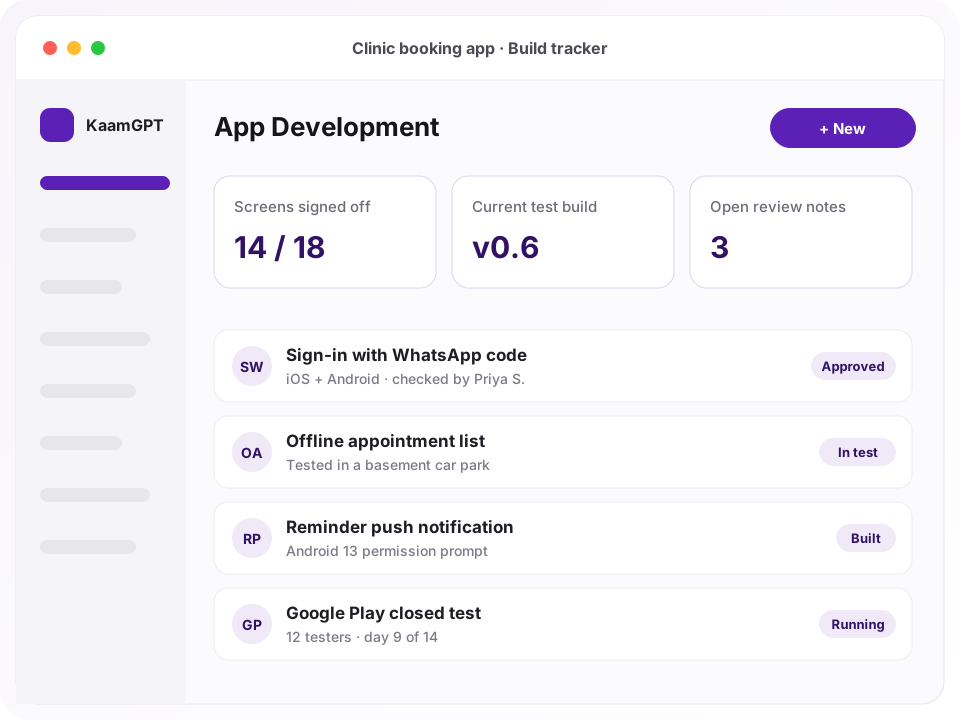
Choosing the best mobile app development company in Bengaluru comes down less to a portfolio reel than to what gets written down before work starts. KaamGPT builds iOS and Android apps for businesses, starting at ₹14,999 per project, and every engagement begins with a fixed written quote covering the screens, the offline behaviour, the notifications, the store submission and who owns the developer accounts. Nothing is charged through the callback form in the managed-services catalogue.
What sets this apart from a standalone studio is the backend. If your business already runs on a KaamGPT workspace, the app can book into the same calendar your front desk uses, sign customers in with a WhatsApp code sent from your own linked number, and send confirmations through your workspace email. A starting-scope app is typically delivered in 10 days; bigger apps get their own schedule in the quote. The full inclusions sit on the App Development service listing.
- ₹14,999starting price per project for the listed app scope
- 10 daystypical delivery for that starting scope; larger apps are scheduled in the quote
- 2 storesApple App Store and Google Play, with submission included
- 3 monthsof support after the app is handed over
Four Bengaluru businesses and the apps that would suit them
Illustrative scenarios only: the sorts of businesses that ask us for apps, never named clients.
A physiotherapy practice running two branches, in Jayanagar and HSR Layout
- The situation
- Patients call reception to book, reschedule and ask which branch has an evening slot, because there is no online booking. The front desk juggles two phone lines, and calls missed in peak hours become appointments nobody can count.
- How KaamGPT fits
- A patient app shows live openings from the clinic's KaamGPT Calendar across both branches, signs patients in with a WhatsApp code, and sends a push reminder before each session. Reschedules happen in the app, and reception sees every change in the calendar it already uses.
- What changes
- Reception spends its time with the patients in the room rather than on the phone, and the calendar stays the single record of who is coming.
An AC and appliance service team covering apartment complexes around Whitefield
- The situation
- Technicians fill job cards on paper, photograph units on personal phones and call the office to close each job. Basement plant rooms have no signal, so digital forms that need a live connection simply fail.
- How KaamGPT fits
- A staff app downloads the day's jobs each morning and lets technicians complete checklists, capture photos and a customer signature offline. Everything queues until the phone finds a network, and supervisors see closed jobs as each van comes back into coverage.
- What changes
- Job records arrive complete and legible, and supervisors stop chasing technicians for photos at the end of every day.
A wholesale FMCG distributor supplying kirana stores from Yeshwanthpur
- The situation
- Salesmen take orders in notebooks and WhatsApp voice notes. Orders are re-typed at the depot each evening, prices drift out of date, and the same shop hears two different rates from two salesmen.
- How KaamGPT fits
- An order-taking app carries the current price list and each shop's details on the phone, works through dead zones, and syncs orders once a salesman is back in range. Price changes are pushed centrally, so everyone quotes the same rate on the same morning.
- What changes
- The depot receives clean orders instead of transcriptions, and pricing disputes with shopkeepers become rare.
A two-founder subscription startup in Koramangala testing its first idea
- The situation
- The founders need something real in customers' hands before they raise money, but a full product build would eat the runway. They also plan to sell a digital membership inside the app.
- How KaamGPT fits
- The first version is cut to the starting scope: sign-up, the core feature, notifications and store listings on both platforms. The quote flags early that digital memberships sold inside an iPhone app fall under Apple's in-app purchase rules, so pricing is planned around them.
- What changes
- The founders learn from real users on both stores and walk into investor meetings with a working app rather than a slide.
Which parts of a business app does KaamGPT design, build and hand over?
Every card here is either in the listed App Development scope or a connection the KaamGPT workspace already exposes.
Both platforms from one engagement
You get an iPhone app and an Android app from the same quote, the same designs and the same test cycle. Whether that means one cross-platform codebase or separate native work is decided at scoping, based on what the app must do with the camera, location or Bluetooth devices, and the decision is recorded in the quote.
An offline-first core flow
We pick the one or two jobs the app must finish without a signal, such as logging a service visit, taking an order or showing today's appointments, and keep that data on the phone. Entries wait in a queue, sync when the connection returns, and the screen says plainly what has and has not reached the server yet.
Push notifications people keep on
Transactional alerts like a booking confirmation, a job assignment or an order dispatch are built first, because those are the ones users actually want. The permission request appears after the user sees why it matters, which counts on Android 13 and later, where notifications need an explicit runtime grant.
Store listings prepared for review
App Store submission and the Google Play release are prepared as part of the job: listing text, screenshots, the privacy answers both stores ask for, a demo login for reviewers, and a build that meets the Android API level Google currently demands. Submission goes through developer accounts you own, so the listing stays yours.
Sign-in with a WhatsApp code
Instead of passwords, customers verify their number with a one-time code sent over WhatsApp from the number your KaamGPT workspace has linked. The app connects to a small server, which calls the workspace Developer API with a scoped key. Codes carry a resend cooldown, and each message is charged to your prepaid wallet.
Bookings that land in KaamGPT Calendar
For clinics, salons and consultants, the app can read open slots from the same KaamGPT Calendar your staff already manage and book straight into it. Each slot is re-checked at the moment of booking, so two customers tapping the same 5 pm opening cannot both be confirmed, and reschedules use a private manage link.
Test builds on your own phone
Before anything reaches the public stores, you install working builds on your own iPhone and Android phone through Apple's and Google's testing channels. Your staff try the real flows in the real places they work, whether a clinic reception, a delivery van or a warehouse aisle, and their notes shape the next build.
Three months of support included
After handover, three months of support is part of the price. What counts as support and what counts as new work is spelled out in the quote, so a small change request never becomes an open-ended bill, and second-phase features are priced before anyone starts on them.
How does an app go from a callback request to a live store listing?
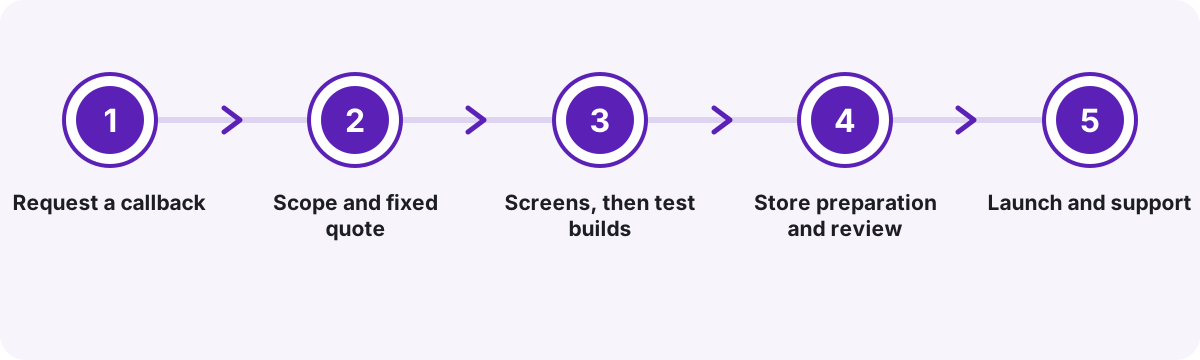
Request a callback
Fill the short form on the services page with your name, phone number and what the app should do, or message the team on WhatsApp. Nothing is paid at this point; expect an answer inside one working day.
Scope and fixed quote
On a call, we list the screens, user roles, offline jobs, notifications, integrations and whose developer accounts the app ships under. A written quote follows, stating the price, the schedule and the payment terms, before any design work begins.
Screens, then test builds
Screens are agreed first, so nobody argues about layout halfway through the build. Working builds then arrive on your phone through Apple's and Google's test channels, and each round of feedback is logged against the screen it concerns.
Store preparation and review
Listings, screenshots, privacy answers and reviewer logins are prepared, and the app is submitted to both stores. A new personal Google Play account first needs a 14-day closed test with at least 12 testers, which is planned into the dates.
Launch and support
Once approved, the app goes live under your business name. Three months of support follows, and later phases such as new features, a web admin or AI features are quoted as separate pieces of work.
Why Bengaluru businesses hand their app build to KaamGPT
A price on the page
The starting price of ₹14,999 per project is published on the services page, so the minimum is clear before anyone picks up the phone, and you can judge whether your idea is a starting-scope app or a larger quote.
Scope agreed before money moves
No payment is taken through the enquiry form. Screens, roles, offline behaviour, notifications and ownership go into a fixed quote first, giving both sides the same document to point at when questions come up.
Your workspace becomes the backend
Bookings, WhatsApp verification and transactional email can run through the KaamGPT workspace you already pay for, instead of an entirely separate backend with its own database, hosting bill and patching schedule.
API keys kept off the phone
Workspace API keys are shown once, stored only as a hash, limited by scope and revocable at any time. They stay on a server and never ship inside the app package, where anyone could extract them.
Both stores, one team
iOS and Android are delivered together from one set of designs and one test cycle, so the two apps do not drift apart in features or wording after launch.
A platform already in daily use
The workspace behind your app already runs attendance, billing, marketing and bookings for 100+ companies around India, so the app extends tools your staff already know.
What does a mobile app cost with KaamGPT, and what changes the quote?
Mobile app development cost at KaamGPT starts at ₹14,999 per project for the listed scope: iOS and Android, push notifications, offline support, store submission and three months of support. All figures are in INR, and your own app's number is fixed on paper once the scoping call is done. Anyone weighing the best mobile app development company in Bengaluru against others should compare scope lines, not just totals.
- iOS + Android
- Push notifications
- Offline support
- App store submission
- 3 months support
Starting-scope app
From ₹14,999 per project
A business that needs one focused app for customers or staff, on both stores, built around a handful of core screens.
- iOS and Android builds
- Push notifications for key events
- Offline support for the core flow
- App Store and Google Play submission
- 3 months of support after handover
Workspace-connected app
RecommendedQuoted after a call
Businesses already running KaamGPT that want bookings, sign-ins or confirmations flowing through their workspace.
- Everything in the starting scope
- Booking into KaamGPT Calendar
- WhatsApp OTP sign-in through the Developer API
- Order or booking emails through the email API
- A small server that holds the scoped API key
Multi-role operations app
Quoted after a call
Field-service, distribution and multi-branch teams where staff, managers and customers each need their own view.
- Separate screens and permissions per role
- Larger offline data sets with conflict rules
- Photo, signature and location capture
- Phased releases planned in the quote
- Web admin screens scoped with website development
Optional add-ons
- Payment gateway checkoutUPI and card checkout through a gateway account in your business name; the gateway's own charges are separate. Quoted separately.
- WhatsApp OTP messagesEach verification code sent through your linked WhatsApp number draws on the prepaid wallet balance of your KaamGPT workspace.
- Kannada or bilingual interfaceTranslated labels, notifications and store listings for users who prefer Kannada; quoted separately because it touches every screen.
- The 10-day delivery applies to the starting scope. Larger apps, extra roles and integrations get their own schedule in the quote, and store review time sits on top of the build.
- Apple's developer membership (US$99 a year) and Google Play's one-time US$25 registration are paid by you, directly to Apple and Google.
- What moves the quote: the number of screens and user roles, how much data must work offline, integrations, in-app payments and languages.
- The enquiry form takes no payment; payment terms are written into the quote you accept.
Which route suits a first business app: KaamGPT, a freelancer or a large agency?
Three realistic ways to hire iOS and Android app developers in Bengaluru, compared on the points that decide whether an app reaches the stores and keeps working afterwards.
| What matters | KaamGPT App Development | Solo freelancer on a marketplace | Large custom-software agency |
|---|---|---|---|
| Starting price you can see | From ₹14,999 per project, published | Hourly or per milestone, varies by person | Usually shared only after a discovery phase |
| iOS and Android together | Both platforms in the listed scope | Often one platform per specialist | Yes, sometimes as separate teams |
| Store submission | Included, under your own developer accounts | Depends on the individual | Included, priced into a larger budget |
| Offline behaviour | Core flow designed to work without signal | Usually only when requested | Available as a separately scoped workstream |
| Link to daily operations | Calendar, WhatsApp OTP and email through your KaamGPT workspace | A new backend you host and pay for | A custom backend with its own hosting contract |
| Written scope before work | Fixed quote before anything starts | Varies; often a chat thread | Detailed contract after a longer negotiation |
| Help after launch | 3 months of support included | Ends with the gig unless renegotiated | Paid maintenance retainer |
The honest verdict. The best mobile app development company in Bengaluru for a first business app is the one sized to it. KaamGPT fits a focused app on both stores, a price visible up front, and bookings or sign-ins running through a workspace you already use. A freelancer can suit a tightly defined single-platform tool you manage yourself. A large agency earns its fee on regulated products such as lending apps and on long multi-team builds.
What should the best mobile app development company in Bengaluru put in writing before design starts?
A quote that says only 'iOS and Android app, 10 days' leaves every hard decision for later. Ask for a scope that names each screen, each type of user and what each type can see. It should say which flows must work offline, which events trigger a notification, and which outside systems the app reads from or writes to.
Ownership deserves its own paragraph in the quote. Publishing under your own Apple Developer Program membership and Google Play developer account keeps the listing, ratings and install history with your business if you ever change vendors. Source-code handover, custody of the signing keys and who renews the Apple membership each year should be settled the same way: in writing, not in a WhatsApp thread.
- A numbered screen list, with the user role that sees each screen
- The offline jobs, and what the app shows while data waits to sync
- Every notification, with its trigger and whether it is transactional or promotional
- The developer accounts, signing keys and support terms, each with a named owner
Why do apps get rejected or delayed at the App Store and Google Play?
Apple's App Review Guidelines expect an app to go beyond a repackaged website, to carry a privacy policy both in its store listing and inside the app, and to let anyone who can create an account delete it from within the app. Reviewers also need a working demo login and a live backend. Missing any one of these is a common reason a first submission comes back.
Google Play has its own gates. From 31 August 2026, new apps and updates must target Android 16, which is API level 36. Personal developer accounts created after 13 November 2023 must also run a closed test with at least 12 testers, opted in for 14 continuous days, before applying for production access. Organisation accounts follow a different route, so pick the account type before the build begins. Even the best mobile app development company in Bengaluru cannot talk its way past these gates.
- Budget US$99 a year for the Apple Developer Program and a one-time US$25 Google Play registration, both paid to Apple and Google directly
- Recruit the 12 closed-test testers from staff and friendly customers early
- Keep the backend live and a reviewer login active until approval arrives
How should offline mode and push alerts be designed for patchy Bengaluru networks?
Offline-first mobile apps start from one question: which task must finish even with no signal? For a technician it is closing a job, for a salesman it is taking an order, and for a patient it is seeing tomorrow's appointment. That data lives on the phone, changes queue locally, and each record carries enough detail to settle a conflict when two people edited it before syncing.
Notifications need the same discipline. On Android 13 and later, and on iPhone, an app needs the user's permission before it can show alerts, and a prompt on first launch is often refused. Ask at the moment it helps, such as right after a booking. Keep transactional alerts apart from offers, respect quiet hours, and after launch watch opt-ins, sync failures and crashes rather than downloads alone.
- How many users allowed notifications, broken down by the screen where they were asked
- Records stuck in the sync queue for more than a day
- Crash reports per app version, checked after every release
Where a custom iOS and Android app earns its keep
- Clinics & diagnosticsPatient booking, branch-wise slots and visit reminders drawn from the clinic's own KaamGPT Calendar.
- Salons & wellness studiosRepeat-visit booking, stylist choice and reminder alerts, without a third-party marketplace owning the customer relationship.
- Field service & AMC teamsOffline job cards, before-and-after photos and customer sign-off for technicians working in basements and plant rooms.
- Distributors & wholesalersOrder-taking apps for field sales teams that carry today's price list and sync orders when back in range.
- Coaching & training institutesClass schedules, attendance notices and study-material alerts for students who live on their phones rather than in email.
- D2C & retail brandsA loyal-customer app for order tracking and launch alerts; counter billing is better served by a POS subscription.
- Facility & property managementResident complaint logging with photos, technician assignment and status alerts across large gated communities.
Building apps for how Bengaluru works: basements, traffic and two languages
Bengaluru's working day happens in places phones struggle. Technicians in Whitefield apartment basements, salesmen in the lanes around Yeshwanthpur market and riders crawling along the Outer Ring Road all drop in and out of coverage. An app built on fast office Wi-Fi in Koramangala can look perfect and still fail on day one in the field, which is why test builds go to the people who will use them.
Customers here expect things to happen on WhatsApp, so sign-in by a WhatsApp code often suits a Bengaluru audience better than email and passwords. Clinics in Jayanagar, salons in Indiranagar and startups in HSR Layout and Electronic City each bring different expectations about language, payments and pace. The firm you finally call the best mobile app development company in Bengaluru should raise those differences at scoping, unprompted.
Why do so many first business apps stall between the demo and the store listing?
Any search for the best mobile app development company in Bengaluru turns up a shortlist of polished demo videos. The demo is rarely where projects go wrong. They go wrong in the parts nobody showed: what the app does when the network drops, who holds the Apple and Google developer accounts, what the privacy policy says, and which system the bookings or orders land in once the app is live.
Most small and mid-sized businesses commission one app in their lifetime, so they have no checklist for any of this. The developer ships a build, the store rejects it for a missing account-deletion option or an outdated Android target, and the launch date slides while both sides argue about whether the fix was ever in scope. Writing those details down before design starts costs far less than discovering them at review.
- The app shows a spinner, or loses a half-filled form, the moment a technician walks into a basement.
- The store listing was opened under a freelancer's own login, leaving the business unable to update it once the contract ends.
- Bookings made in the app live in a separate database the front desk never opens.
- Promotional push alerts arrive late at night, and customers switch notifications off for good.
- Nobody budgeted for Apple's annual developer fee, Google's closed test or the privacy policy both stores insist on.
- Price floor
- ₹14,999 per project for the starting scope, in INR
- Typical delivery
- 10 days for the starting scope; larger apps are scheduled in the quote
- Platforms
- iOS (Apple App Store) and Android (Google Play)
- Included
- Push notifications, offline support, store submission, 3 months of support
- Workspace connections
- KaamGPT Calendar bookings, plus WhatsApp OTP and email via the workspace Developer API
- First step
- Ask for a callback from the KaamGPT services listing; the form takes no payment
Where this applies around Bengaluru, Karnataka
- Bengaluru
- Yeshwanthpur
- Whitefield
- Jayanagar
- Electronic City
- Indiranagar
- HSR Layout
- Koramangala
- Karnataka
- India
Frequently asked questions
22 answersWhat will a business app from KaamGPT cost me?
App Development starts at ₹14,999 per project. That starting scope covers iOS and Android builds, push notifications, offline support, submission to both stores and three months of support. The figure for your app depends on screens, user roles, offline data, integrations and payments, and the final number, in INR, is agreed in writing before work begins. Apple and Google developer fees are paid by you directly.
When do I pay, and when does the work actually start?
Nothing is paid through the callback form. Once the scoping call is done, a written quote arrives setting out the price, the schedule and the payment terms, and work begins once you accept it. Because the terms sit in that document, you know before any design starts exactly what is due and at which point in the project.
How soon can my app be live on both stores?
The listed delivery time is 10 days for the starting scope. Apps with more screens, roles or integrations get their own schedule in the quote. Store review adds time on top of the build, and a brand-new personal Google Play account must first run a 14-day closed test with at least 12 testers, so that is planned into the dates from the start.
What should I prepare before the first call?
Whether you choose KaamGPT or another contender for the best mobile app development company in Bengaluru, bring a rough list of what users should be able to do, who those users are, and two or three apps whose feel you like. Mention whether you already use a KaamGPT workspace, whether you hold Apple or Google developer accounts, and any deadline such as a store opening. Logos and brand colours help, but sketches on paper are enough to start.
Who owns the app, its code and its store listing?
The recommended setup is that the app is published under your own Apple Developer Program membership and Google Play developer account, so the listing, ratings and install history belong to your business. Source-code handover and signing-key custody are written into the quote. Customer records that flow through your KaamGPT workspace stay inside your own company's workspace data.
How is customer data inside the app protected?
The app talks to servers over encrypted connections, and workspace API keys never ship inside the app package; they sit on a server, are stored by KaamGPT only as a hash, and can be scoped and revoked. Each workspace's records are separated by company. The app also gets a privacy policy and in-app account deletion, which Apple requires and India's DPDP Act of 2023 makes sensible practice.
What does the three months of support include?
Three months of support follows handover and is part of the price. The quote defines exactly what it covers, so there is no debate later about whether a request is a fix or a new feature. New screens, extra user roles and second-phase ideas are quoted separately, which keeps small changes from quietly turning into an open-ended bill.
How can I speak to someone about my app idea?
Ring +91 79767 82366 to talk an app idea through (the same line works on WhatsApp), or use the request-a-callback form in <a href="/services">KaamGPT's services catalogue</a>. Share what the app should do and who will use it. Expect a first response inside one working day, and a scoping call follows before any quote is written, so you can ask questions first.
Is hiring a freelancer cheaper than using KaamGPT for an app?
A freelancer's hourly rate can look lower, and for a small single-platform tool that you manage yourself it may be. The costs appear elsewhere: a second person for the other platform, a backend to host, store submission under someone else's account, and support that ends with the gig. When weighing anyone against the best mobile app development company in Bengaluru, compare complete scopes rather than day rates.
Can the app work with my KaamGPT Calendar, WhatsApp and email?
Yes. The app can show open slots and book into <a href="/best-appointment-scheduling-software-in-bengaluru">KaamGPT Calendar</a>, verify customers with a WhatsApp one-time code sent from your linked number, and send confirmations through your workspace email. The WhatsApp and email connections use the workspace Developer API with a scoped key held on a server. The <a href="/pricing">Growth and Business subscriptions</a> include API access, and each WhatsApp message draws on your prepaid wallet balance.
Who should not use KaamGPT for their app?
This service is the wrong fit for graphics-heavy games, lending or payments apps that need regulatory sign-off, and products that need a round-the-clock engineering team from day one. It is also unnecessary if you only need a counter till, which <a href="/best-retail-pos-billing-software-in-bengaluru">POS & Billing</a> already runs on a tablet, or a simple booking page that a Calendar link can provide without an app.
Do you take on app projects from elsewhere in Karnataka?
Yes. The work runs over calls, WhatsApp and shared test builds, so a business in Mysuru, Hubballi or Mangaluru is scoped the same way as one in Bengaluru. Karnataka-specific needs, such as Kannada labels for staff or customers, are raised at scoping and priced into the quote, because they touch every screen and the store listing too.
Can I try the app on my own phone before it is published?
Yes. During the build you install working test versions on your own iPhone and Android phone through Apple's and Google's testing channels, and you can add staff or trusted customers as testers. Trying the app on the phones your users really carry, in the places they really work, catches problems a desktop preview never shows.
We already have an app from another developer. Can you take it over or rebuild it?
That depends on what you can hand over: store listing access, the developer accounts, the source code if you hold it, and a list of what is broken. After a review, the quote says whether fixing the existing code or rebuilding costs less. Keeping the same store listing preserves your ratings, so the aim is to publish updates under the existing app wherever possible.
Is KaamGPT the best mobile app development company in Bengaluru for a first-time app owner?
For a first app with a clear job to do, it is a strong fit: a published starting price, iOS and Android in one engagement, store submission included and a written quote before work. If your idea needs a large engineering team for many months or regulated financial features, a bigger agency is the better choice, and the scoping call will say so plainly.
Will the app keep working when the internet drops?
The core flow will, because offline support is in the listed scope. At scoping we pick the tasks that must work without a signal, such as closing a job, taking an order or viewing today's bookings. Those records are saved on the phone, queue up while offline and sync automatically when a connection returns, with a clear indicator of what is still waiting.
Do I need my own Apple and Google developer accounts?
It is strongly recommended. The Apple Developer Program costs US$99 a year and Google Play charges a one-time US$25 registration fee, both paid by you directly. Owning the accounts means the app, reviews and users stay with your business. Google offers personal and organisation account types, and new personal accounts must complete a closed test before going live, so decide early.
Can customers pay by UPI or card inside the app?
Yes, through a payment gateway account in your business name; that integration is quoted separately and the gateway's charges are paid to the gateway. Apple requires apps selling physical goods or real-world services, such as a salon visit or a delivered order, to collect payment outside its in-app purchase system. Digital content or memberships used inside an iPhone app fall under Apple's in-app purchase rules instead.
Can you also build a website or a web admin panel alongside the app?
Yes. Many apps need a web side, either a public website that ranks on Google or an admin screen where managers review orders and bookings. That work is scoped through <a href="/best-website-development-company-in-bengaluru">KaamGPT's website development service</a>, and the two can share one design language and one backend, so customers see the same business on every screen.
Can the app include AI features such as a chat assistant?
It can. An in-app assistant that answers product questions, reads uploaded documents or sorts incoming requests is scoped under <a href="/best-ai-development-company-in-bengaluru">custom AI development</a>, and the app calls that service like any other backend. Keeping the AI work in its own quote makes the cost of model usage and tuning visible instead of hiding it inside the app price.
Should the app be native or built with a cross-platform framework?
For most business apps, one cross-platform codebase keeps iOS and Android identical and makes later changes cheaper. Heavy use of Bluetooth devices, background location or advanced camera work can justify native code for one or both platforms. The approach is chosen at scoping, based on what your app must actually do, and the choice is recorded in the quote, so nothing surprises you later.
What happens if Apple or Google rejects the submission?
No developer can promise approval, because the decision belongs to Apple and Google. Most rejections cite something specific, such as a missing account-deletion option, a privacy policy gap or an outdated Android target, and the reviewer's note says what to change. How resubmissions are handled is written into your quote, and designing to the guidelines from the start keeps rejections uncommon.