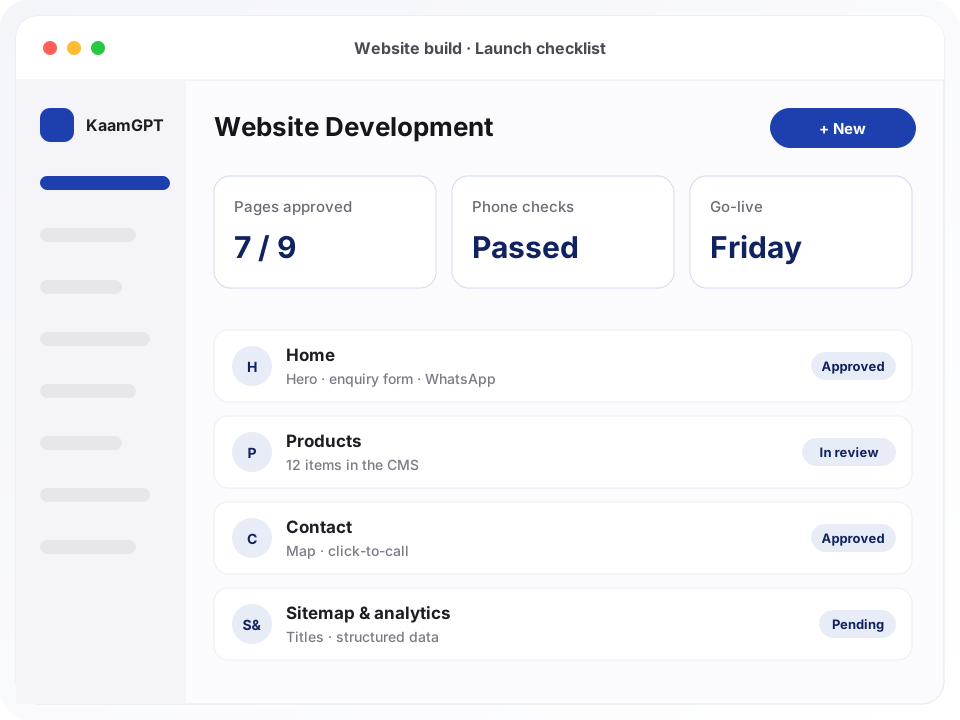
Searching for the best website development company in Bengaluru usually produces a stack of quotes nobody can compare: one counts pages, another counts hours, a third only says premium. KaamGPT starts from a published number instead. A custom-designed, mobile-first business website begins at ₹9,999 per project, is typically delivered in 7 days, and goes live with SEO-ready pages, a content editor, analytics and one month of support.
The KaamGPT team takes on four kinds of web project: business websites, campaign landing pages, online stores and web applications. All of them are written in React and TypeScript, the same stack the KaamGPT workspace runs on. Scope, timeline and a fixed quote are agreed in writing before anyone designs a screen. Compare every managed offer on the KaamGPT services page, or open the Website Development service listing to send a brief.
- ₹9,999starting price per website project, in INR
- 7 daystypical delivery for the starting scope
- 1 monthof post-launch support included in the project
- 6inclusions on the service: design, mobile-first, SEO, CMS, analytics, support
Websites for Bengaluru buyers, from Peenya to Whitefield
Bengaluru buyers research on phones, often in traffic and often on patchy mobile data. A procurement manager at a Whitefield tech park checks a supplier between calls; a parent in Malleshwaram compares coaching centres while waiting at a signal; a Peenya factory owner's customers arrive from Tamil Nadu and Maharashtra through trade directories. Each of them gives a page seconds rather than minutes, which is why every KaamGPT build is designed at phone width first.
The city's business districts also want different things from a site. Founders around Koramangala and HSR Layout need launch pages and web apps that move as fast as their product. Restaurants and boutiques around Indiranagar need photos that load quickly and a clear route to ordering or visiting. Clinics and family-run shops in Jayanagar often need Kannada alongside English. The best website development company in Bengaluru for you is the one that builds for your street, not a generic template.
Why do so many Bengaluru business websites stop bringing in enquiries?
Plenty of company websites across the city got built once, handed over as a login nobody remembers, and then left alone. The theme grows heavier with every plugin, the contact form quietly stops delivering, and the number in the header still belongs to someone who resigned last year. Meanwhile buyers check you on a phone between meetings and give the page a few seconds before returning to the search results.
The fix is rarely a prettier homepage. It is a site built around what a buyer needs in order to decide: what you make or do, proof that you are real, and a one-tap way to reach you. That is the test worth applying to anyone calling itself the best website development company in Bengaluru, KaamGPT included.
- Pages crawl on mobile data, so visitors from Google leave before the first headline appears.
- The enquiry form sends mail to an old inbox, and nobody notices for months.
- Every text change needs the original developer, who now takes a week to reply.
- The domain and hosting sit in a freelancer's personal account, so the business does not fully control its own address.
- Nobody can say how many enquiries the site produced last month, because analytics was never connected.
Four illustrative builds for very different Bengaluru businesses
These scenarios are illustrations, showing how one service bends to buyers who want quite different things from a site.
A precision-machining unit supplying auto parts from Peenya
- The situation
- Buyers from Chennai and Pune find the unit through trade directories, then land on a two-page site with a dead contact form and a machine list nobody has touched in years. Quote requests arrive as missed calls with no drawings attached.
- How KaamGPT fits
- A capability-led site for a small manufacturer: machine list and tolerances maintained through the CMS, a request-for-quote form that accepts drawing uploads, separate pages for automotive and pump-making customers, and structured data describing the plant. Analytics counts every RFQ so the owner sees which pages produce them.
- What changes
- The sales engineer receives complete RFQs with drawings attached, and the owner updates the machine list without phoning a developer.
A Koramangala-based D2C brand selling handmade soaps and serums
- The situation
- Marketplace listings bring orders but no relationship with the buyer. Instagram traffic lands on a link-in-bio page with no checkout, so interested visitors drift away before paying.
- How KaamGPT fits
- Ecommerce website development on the brand's own domain: product pages with full ingredient detail, cart and checkout on the brand's payment gateway account, order confirmations over WhatsApp and email through KaamGPT's developer API, and new launches added from the CMS.
- What changes
- Repeat buyers order directly from the brand's own store, and the founder holds the customer list for future campaigns.
A family-run dental practice in Jayanagar with three treatment chairs
- The situation
- Patients phone while the dentists are mid-procedure, so reception misses bookings. The clinic's search listing points to an outdated page that is hard to read on a phone and says nothing about treatments.
- How KaamGPT fits
- A fast, mobile-first site with doctor and treatment pages in English and Kannada, clinic timings and a map, and a Book appointment button that opens the clinic's KaamGPT Calendar booking page for online scheduling.
- What changes
- Patients pick a slot without phoning, and the front desk sees every booking in one calendar instead of a notebook.
A B2B SaaS startup preparing a launch from HSR Layout
- The situation
- The founders need a launch page within a week and a customer dashboard soon after, but both are engineers buried in the core product and cannot spare time for front-end work.
- How KaamGPT fits
- Landing page design first: one audience, one promise, one waitlist form, analytics in place for launch day. Web application development follows under its own quote, with a React and TypeScript dashboard and sign-in by WhatsApp OTP through KaamGPT's developer API.
- What changes
- The launch page goes live on schedule while the founders stay on the product, and the dashboard arrives in code their own engineers can read.
Six inclusions, and what each one looks like on a live site
Every build carries the six inclusions listed on the service, and here is how they show up once real visitors arrive.
Custom design, not a reskinned theme
Custom website design here means layouts drawn around your offer and your buyer, not picked from a theme gallery. The homepage and one inner page are designed and approved first, at phone width, before the remaining pages are built, so your feedback lands while changes are still cheap to make.
Mobile-first layouts and tap targets
Pages are designed for a phone screen and then widened for desktop. Call and WhatsApp buttons sit within thumb reach, text stays readable without pinching, and forms bring up the right keyboard for numbers and email addresses. Google indexes the mobile version of a site first, so this is not cosmetic.
SEO-ready pages from the first deploy
Each page ships with its own title and meta description, one clear H1, readable URLs, alt text on images and structured data describing the business. An XML sitemap is generated, and public pages carry their real text in the HTML that crawlers receive instead of an empty application shell.
A CMS your team will actually use
A content management system is included, so staff can edit text, replace photos, publish a blog post or add a product without opening code. Logins are created for the people who will do the editing, and the editor is arranged around content fields so routine changes leave the layout intact.
Analytics connected before go-live
An analytics property is connected in your own account before launch, so form submissions and taps on call or WhatsApp buttons are counted from the first day. That makes any campaign, including one run by the managed digital marketing team, measurable in enquiries rather than clicks.
React and TypeScript underneath
Sites and web apps are written in React and TypeScript, the stack behind the KaamGPT workspace. Typed code is easier for any future developer to read and change safely, and web applications sit on a hardened API layer rather than on a patchwork of third-party plugins.
Enquiry paths that reach a person
Forms, click-to-call and WhatsApp links with a prefilled first message are placed where buyers make up their minds, not only on a contact page. Each form asks only for what you need and sits beside a short notice explaining how the details will be used.
A month of support after launch
The first month after go-live is covered: fixes wherever the live site behaves differently from the approved build, and help with the CMS while your team settles in. After that month, ongoing changes are quoted separately and in advance, never billed as a surprise.
What does website development cost with KaamGPT?
Few firms describing themselves as the best website development company in Bengaluru publish a starting price. KaamGPT's Website Development begins at ₹9,999 per project for a defined business-site scope, typically delivered in 7 days once content is ready. Online stores and web applications are scoped on a call and quoted in writing. All figures are in Indian rupees, and the quote you approve carries the final amount.
- Custom design
- Mobile first
- SEO ready
- CMS included
- Analytics setup
- 1 month free support
Business website
From ₹9,999 per project
Shops, clinics, studios, manufacturers and service firms that need a credible, fast site which turns visitors into calls and enquiries.
- Custom design, key screens approved first
- Mobile-first layouts checked on real phones
- SEO-ready pages with sitemap and structured data
- CMS for text, photos and posts
- Analytics connected in your own account
- One month of support after launch
Online store
RecommendedQuoted after a call
D2C brands and retailers that want orders on their own domain rather than only through marketplaces.
- Catalogue structure and product page templates
- Cart and checkout on your payment gateway account
- Product-level SEO and structured data
- Order updates by email or WhatsApp via KaamGPT's API
- Products managed from the CMS
Web application
Quoted after a call
Startups and operations teams that need logins, dashboards, portals or internal tools rather than brochure pages.
- Screens and user roles agreed in writing
- React and TypeScript front end
- Hardened API layer for your data
- Optional WhatsApp OTP sign-in via KaamGPT's developer API
- Timeline and milestones set in the quote
Optional add-ons
- SEO retainer after launchOngoing technical fixes, content planning and authority work through KaamGPT's SEO service, from ₹14,999 per month.
- Companion mobile appiOS and Android apps with push notifications and offline support through App Development, from ₹14,999 per project.
- Support beyond the first monthContinued content updates, new pages and fixes after the included month, quoted separately before any work begins.
- Page copywritingWritten page content for owners who would rather not draft it themselves, quoted separately.
- The ₹9,999 figure covers a defined starting scope; more pages, custom features, copywriting, extra languages and integrations change the quote.
- Domain registration, payment-gateway charges and any paid fonts, stock photos or plugins are paid to those providers, and where the site is hosted is stated in the quote.
- The 7-day estimate runs from the day text, photos and approvals are in hand; stores and web apps get their own timeline in writing.
- KaamGPT's developer API, used to send WhatsApp and email from a site, comes with the Growth and Business workspace plans listed on the plans page.
How does a website go from first call to launch?
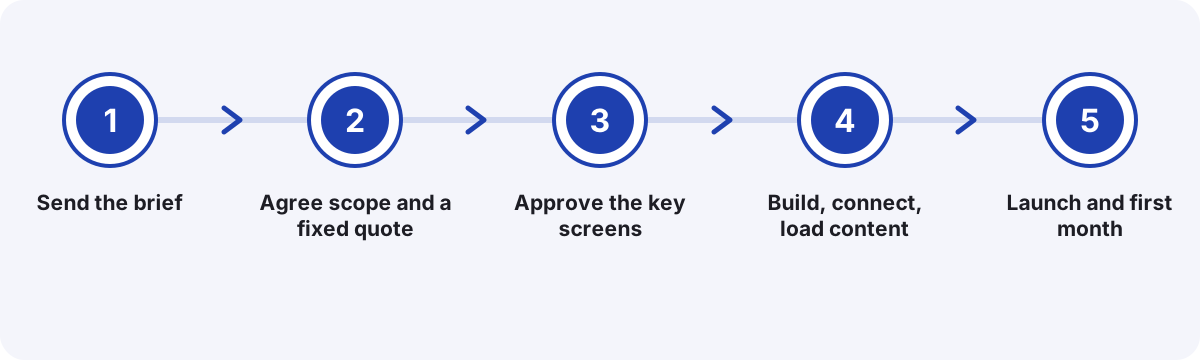
Send the brief
Use the enquiry form on the services page or call the team. Share what the business sells, who buys it, the pages you think you need, two or three sites you admire and any deadline. The team aims to reply within one working day.
Agree scope and a fixed quote
You receive a written scope: the page list, features such as a store or booking, who supplies text and photos, the timeline and the payment schedule. Nothing is designed until you approve it, and later changes are re-quoted openly.
Approve the key screens
The homepage and one representative inner page are designed first, at phone width. You comment, the design is revised, and once approved it sets the pattern for every remaining page, which is what keeps the build quick.
Build, connect, load content
Pages are built in React and TypeScript, the CMS is configured, forms and WhatsApp links are wired, analytics is connected, and every page gets its title, description and structured data. You review the whole site on a private preview link before anything goes public.
Launch and first month
The domain is pointed at the new site, pages are checked on real Android phones and iPhones, and the sitemap is submitted. For the month after launch, fixes and CMS questions are handled as part of the project.
Should you hire KaamGPT, a marketplace freelancer or a DIY website builder?
Three routes dominate most small-business website decisions in the city. They differ less on launch day than they do six months later, when something needs changing.
| What matters | KaamGPT Website Development | Freelancer on a marketplace | DIY website builder subscription |
|---|---|---|---|
| Design | Custom layouts, key screens approved first | Depends entirely on the individual | You adapt a template yourself |
| Starting cost | From ₹9,999 per project, fixed quote | Varies widely, often billed hourly | Recurring subscription, plus your own time |
| Mobile-first build | Designed at phone width, checked on real phones | Varies by freelancer | Responsive templates; custom sections can break |
| SEO basics at launch | Titles, sitemap and structured data included | Often an extra line item | Partly automatic; you configure the rest |
| Content editing | CMS included, logins for your staff | Depends on the tools chosen | Built-in editor, tied to that platform |
| Analytics | Connected in your own account before launch | Frequently skipped | You connect it yourself |
| After launch | One month of support included | Depends on the freelancer's availability | Platform help desk, not for your content |
| Links to a KaamGPT workspace | Calendar booking, QR codes, developer API | Custom work, if offered at all | Through third-party plugins |
The honest verdict. Pick a DIY builder for a simple one-page presence when you have evenings to spend on it. A good freelancer suits a tightly defined job you are happy to manage yourself. When the site has to bring in enquiries, orders or sign-ups, KaamGPT belongs among the candidates for the best website development company in Bengaluru: fixed scope, a custom mobile-first build, SEO and analytics in place, and support after launch.
What should a website brief contain before you ask anyone for a quote?
Quotes differ wildly because briefs are vague. Two vendors reading 'we need a website for our clinic' will picture different sites, and each will price the version in their own head. A one-page brief removes most of that guesswork, and it is the cheapest way to get numbers you can genuinely compare from every agency you approach.
Write it for your buyer, not for the developer. Say who visits, what they must believe before contacting you, and the single action you want them to take. Only then list the pages. Good design follows from those answers; a site designed before them usually needs rebuilding within a year.
- The one action a visitor should take: call, WhatsApp, book, buy or request a quote.
- A page list, with how many products, services or locations each page must cover.
- Who writes the text and supplies photos, and by which date.
- Two or three sites you like, and the one thing from each you want to borrow.
- Integrations that must work on day one: payments, booking, WhatsApp, a CRM.
- Languages: English only, or English with Kannada or Hindi pages.
Why do some React websites stay invisible on Google, and how is that avoided?
React is excellent for interactive screens, but a React site that sends crawlers an empty page and assembles everything in the browser can be slow to index and weak in search. The remedy is to deliver every public page as real HTML with its text, title and structured data already present, and to keep heavy client-side code for the parts that need it, such as a cart or a dashboard.
Speed is the other half. Google's Core Web Vitals guidance asks for the largest element on a page to appear within 2.5 seconds, interactions to respond in under 200 milliseconds, and layout shift to stay below 0.1. On a mid-range Android phone on a crowded network, those targets are met by sizing images properly, loading fonts carefully and keeping third-party scripts to a minimum.
Google also indexes the phone version of each page first, and its guidance is to keep the same content on mobile and desktop. Text dropped from the phone layout to save space can be missed entirely. Whatever a desktop visitor can read, a phone visitor should be able to reach too, even if it sits inside an expandable panel.
- View the page source: the main text of the page should appear in it.
- Test the page in PageSpeed Insights with the mobile setting selected.
- Open the site on a budget Android phone, not just a developer's laptop.
- Confirm every page has its own title and a single H1.
- Check text contrast, form labels and keyboard use against WCAG 2.2, the W3C accessibility standard.
What should the best website development company in Bengaluru hand over at launch?
A website is an asset only if the business controls it. Many owners discover, usually when a vendor relationship ends, that the domain was registered in someone else's name or that the analytics account belongs to the agency. Whoever you shortlist as the best website development company in Bengaluru, settle these points in writing before the first payment.
KaamGPT's written quote states what is handed over on each project, and the checklist here is worth asking of anyone. Your content and customer data remain yours; KaamGPT's terms say it claims no ownership of customer data. Ownership of the design and code for a specific build should be spelled out in the scope rather than assumed by either side.
- The domain registered in your company's name, with the registrar login in your hands.
- Administrator access to the CMS, not only an editor account.
- Analytics and Search Console properties owned by your own Google account.
- A list of every third-party service the site depends on, and who pays for each.
- Where the code and content backups are kept, and how to request a copy.
Which Bengaluru sectors get the most from a custom-built site?
- Manufacturing & engineering suppliersCapability pages, machine lists and RFQ forms that let buyers from other states qualify you before they call.
- Clinics, dental practices & diagnosticsDoctor and treatment pages, clear timings, and a booking button linked to a KaamGPT Calendar page.
- D2C & retail brandsA storefront on your own domain, product pages with real detail, and order updates on WhatsApp.
- Schools, coaching centres & training institutesCourse pages, fee-enquiry forms and admission notices that office staff can publish from the CMS.
- Real estate & interior studiosProject galleries that stay quick on mobile, location pages and site-visit enquiry forms.
- IT services & SaaS startupsLaunch pages, product sites and customer-facing web apps written in React and TypeScript.
- Restaurants & cafésA story-led site that hands online ordering to RestroMenu, so the menu is maintained in one place.
- CA, legal & consulting firmsService pages written for search, credentials presented plainly, and a consultation form that reaches a partner.
What makes KaamGPT a practical pick for your next website?
A starting price in public
₹9,999 per project sits on the public service listing, so the first conversation starts from a real number rather than a request to share your budget. Anything that changes it is written into the quote.
Fixed scope before any design
Page list, features, content responsibilities, timeline and payments are agreed in writing first. Nobody opens a design file until you have approved what is being built and what it costs.
The stack KaamGPT itself runs on
React and TypeScript power the KaamGPT workspace, and your site is built with the same tools. The code is typed, maintainable and familiar to most modern web developers you might hire later.
Plugs into a workspace you may use
The KaamGPT workspace already has more than 100 Indian companies running their daily operations on it. A KaamGPT-built site connects to it through Calendar booking pages, QR Studio codes and the developer API for WhatsApp and email.
Built to be found, kept findable
Pages launch SEO-ready. Afterwards, the self-serve page builder or the managed SEO service keeps new pages, structured data and sitemaps coming without rebuilding the site.
Support included, not upsold
The first month after launch is part of the project, which is exactly when real visitors reveal what needs adjusting. You do not pay extra to fix what should already work.
- Starting price
- From ₹9,999 per project, in INR; the final amount is in the written quote
- Typical delivery
- 7 days for the starting scope, counted from when content is ready
- Included in every build
- Custom design, mobile-first layouts, SEO-ready pages, CMS, analytics setup
- Post-launch support
- 1 month included
- Technology
- React and TypeScript, with a hardened API layer for web applications
- Getting started
- Enquiry form on the KaamGPT services page, or call or WhatsApp the team; replies aim for one working day
Where this applies around Bengaluru, Karnataka
- Bengaluru
- Karnataka
- India
- Koramangala
- HSR Layout
- Indiranagar
- Jayanagar
- Whitefield
- Peenya
- Malleshwaram
Frequently asked questions
23 answersHow much does a website cost with KaamGPT?
Website Development starts at ₹9,999 per project, in Indian rupees, for a defined business-site scope with custom design, mobile-first layouts, SEO-ready pages, a CMS, analytics and one month of support. More pages, a store, web-app features, extra languages or copywriting raise the figure. You receive a written quote with the final amount before work begins, and the <a href="/services/website-development">Website Development listing</a> always shows the current starting price.
How long does it take to build a business website?
The starting scope is typically delivered in 7 days. That clock runs from the day your text, photos and approvals are in hand, because waiting on content is the most common cause of delay on any website project. Online stores and web applications take longer and get their own timeline, with milestones, in the written quote you approve.
How is payment handled on a website project?
The payment schedule is part of the written quote you approve before work starts, so you know in advance what is due and when. Larger builds can be split against milestones such as design approval and launch. Payments are made to KaamGPT in Indian rupees, and KaamGPT's terms of service apply to every engagement, so read them before you approve a quote.
What do I need to send before the build can start?
Your logo, the text for each page or rough notes the team can shape, photos you have the rights to use, access to your domain registrar and any existing site logins. Add two or three sites you like and the one action visitors should take. If the text is not ready, copywriting can be quoted separately so the timeline does not stall.
Who owns the website, the domain and the content once it is live?
Register the domain in your company's name and keep that login yourself, which is worth insisting on with any vendor. Your content and customer data are yours, and KaamGPT's terms say it claims no ownership of customer data. Ownership and handover of the design and code for your particular build are written into the scope before you pay, so nothing rests on assumption.
How is data from my website's forms kept secure?
Pages are served over HTTPS, forms collect only the fields you actually need, and web applications sit behind a hardened API layer rather than exposed plugins. A short notice beside each form explains what is collected and why, in line with the Digital Personal Data Protection Act, 2023. CMS access is limited to the people you name, and you can remove a login whenever someone leaves.
What support do I get after the site goes live?
One month of support after launch is included in every project. It covers fixes wherever the live site behaves differently from what was approved, plus help using the CMS. After that month, content changes, new pages and maintenance are quoted separately, so you only pay for what you ask for. Questions about the KaamGPT workspace apps themselves go through the workspace's regular support.
Who do I speak to about scoping my website?
Call or WhatsApp +91 79767 82366, or send the enquiry form on the <a href="/services">KaamGPT services page</a>; the team aims to reply within one working day. A first conversation covers what the business sells, who the site is for, the pages and features you need and your deadline, which is enough to prepare a written scope and a fixed quote.
Is KaamGPT a better choice than a freelancer for my website?
A skilled freelancer can be ideal for a narrow, well-defined job you are happy to manage. KaamGPT suits businesses that want a written scope, a fixed quote, SEO and analytics in place at launch, and a month of support without chasing one person's calendar. When comparing the best website development company in Bengaluru against a freelancer, compare handover and support, not only the launch price.
Should I just use a DIY website builder instead?
If you need a single page with your address and timings, and you have evenings to spend on it, a DIY builder is a sensible choice. It gets harder once you need custom layouts, integrations, careful SEO or a web app with logins. Plenty of businesses start on a builder and move to a custom build once enquiries matter more than the subscription.
Can my website connect to other KaamGPT apps?
Yes. A clinic or salon site can send visitors to a <a href="/best-appointment-scheduling-software-in-bengaluru">KaamGPT Calendar booking page</a>, printed material can carry codes from <a href="/best-dynamic-qr-code-generator-in-bengaluru">QR Studio</a> that open specific pages, and restaurants can hand ordering to RestroMenu. Stores and web apps can send WhatsApp messages, WhatsApp OTP codes and email through the developer API, which comes with the Growth and Business workspace plans.
Which businesses should not hire KaamGPT for a website?
It is not the right fit if a free business profile or a link-in-bio page already does the job, or if you want to build and edit the code yourself on a platform of your own choosing. Very large portals with many third-party integrations need longer discovery than a week-long build allows; they can still be scoped, but expect a separate quote and timeline.
Can the site have Kannada pages alongside English ones?
Yes. A bilingual site can be scoped with English and Kannada versions of each page, a visible language switch and the language tags search engines use to show people the right version. Fonts are chosen so Kannada script renders cleanly on budget Android phones. Translation can come from you or be quoted separately, and Hindi or Tamil pages work the same way.
Why does a Bengaluru website need to load fast on mobile data?
A large share of browsing in the city happens on phones, in cabs, buses and between meetings, where connections drop in and out. A page weighed down by uncompressed photos and scripts loses those visitors before the headline shows. Google grades loading, responsiveness and visual stability through Core Web Vitals, so the best website development company in Bengaluru should design for a crowded 4G connection, not office Wi-Fi.
Will the website work properly on phones and tablets?
Every page is designed at phone width first and then widened for tablets and desktops, instead of squeezing a desktop design down. Buttons are sized for thumbs, phone numbers open the dialler, WhatsApp links open a chat, and forms bring up the right keyboard. Before launch the site is checked on real Android phones and iPhones, not only in a browser's device preview.
Can my team update text, photos and products without a developer?
Yes. A content management system is included in every build, with logins for the people who will edit. Staff can change text, swap images, publish posts and, on a store, add or update products. The editor is organised around content fields, so routine edits such as a new price or a holiday notice do not disturb the page layout.
Will a new website rank on the first page of Google?
Nobody can honestly promise a ranking. A KaamGPT build removes the technical reasons a site fails to rank: crawlable HTML, fast mobile pages, unique titles, a sitemap and structured data. Rankings then depend on content and authority built over months. For that work, look at <a href="/best-seo-services-in-bengaluru">KaamGPT's managed SEO services</a> or the self-serve <a href="/best-seo-software-in-bengaluru">SEO + AEO + GEO page builder</a>.
Can you move my existing WordPress or Wix site to a new build?
Yes. Migration starts with an inventory of your current pages and which of them already bring search traffic. Content worth keeping is carried over, old URLs are mapped to new ones with permanent redirects so inbound links and rankings are not thrown away, and the old site stays live until the new one is approved. Your domain name stays the same throughout.
Do you build e-commerce websites that take online payments?
Yes. Ecommerce website development is quoted after a call, because catalogue size and checkout rules vary so much between businesses. A storefront covers product pages, cart and checkout on your own payment gateway account, and order confirmations by email or WhatsApp. Gateway fees are paid to the gateway, and settlements go to the bank account linked to your gateway account.
Can KaamGPT build a web app with logins, not just a website?
Yes. Customer portals, dashboards, booking systems and internal tools are quoted after a call and built with React and TypeScript on a hardened API layer. Screens and user roles are written into the scope first. Sign-in can use WhatsApp OTP through KaamGPT's developer API, and if you later need a phone app, the same backend can serve it.
Do you also build a mobile app to go with the website?
Yes, through KaamGPT's App Development service, which builds iOS and Android apps from ₹14,999 per project, typically in 10 days for its starting scope, with push notifications, offline support and app store submission. Planning the website and the <a href="/best-mobile-app-development-company-in-bengaluru">companion mobile app</a> together lets both run on one backend instead of two systems that drift apart.
What analytics does KaamGPT set up on a new website?
Analytics setup is part of every build. A property is created or connected in your own Google account, key actions such as form submissions, call taps and WhatsApp clicks are counted, and the site is verified in Search Console so you can see which searches show it. Because the accounts belong to you, the history stays with you if you ever change vendors.
Does the ₹9,999 price include the domain and hosting?
Domain registration is best paid directly to a registrar in your company's name, so the address is always yours. Hosting, and whether KaamGPT arranges it, is stated line by line in the written quote, along with third-party costs such as payment-gateway charges, paid fonts or stock photos. That way every recurring cost of the site is visible before you commit.