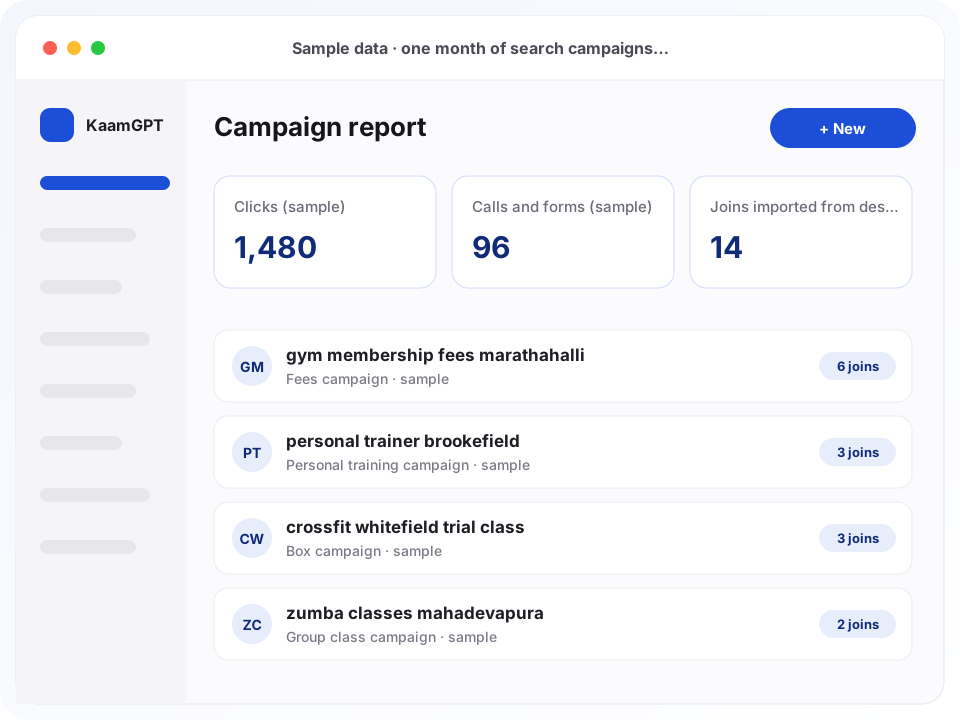
A Google Ads agency for gyms in Bangalore has one advantage over every other channel: the people it reaches are already looking. Someone typing a gym's fees, a format and their neighbourhood, or 'personal trainer' and a landmark, has usually decided to start and is choosing where. The job is to be the clear, honest answer for those searches within the distance members will actually travel, and to stop paying for the ones that never turn into members.
KaamGPT builds and manages those campaigns for strength gyms, boxes, studios and personal-training rooms in Bengaluru, from ₹4,999 a month in management through our Google Ads service; the ad budget is billed to the gym by Google. If people in your area discover studios through video before they search, see the Meta Ads page for gyms, and for what happens after the click, the lead generation page for gyms.
- ₹4,999a month is where Google Ads management starts; ad spend is billed by Google to the gym
- ~30 daysto audit, rebuild tracking, launch and gather a first month of join data
- A few kmis the usual targeting radius per branch, set from where members actually live
- Cost per joinis the figure we optimise towards, using joins imported from the front desk
Why do so many gym ad accounts in Bengaluru waste money?
Gym ad accounts we audit were usually built in a hurry by someone long gone, then left alone. The ads still get clicks. The trouble is that nobody can say which clicks became members, so the account keeps rewarding whatever brings an enquiry for the least money, whether or not that person ever visits.
More budget is seldom the answer. The cure is usually a smaller radius, a clean list of negative keywords, ads that state the fee and the batch times honestly, and a front desk that marks each join so the account can learn from it. Gym google ads accounts that get those four things right tend to spend less in quiet months and more confidently in January.
- Radius targeting of ten kilometres or a whole city around a single branch, so a large share of clicks come from people who will never make the drive.
- Conversion tracking that counts page views or button taps as success, teaching Google to find people who tap rather than people who join.
- Broad keywords left unchecked, paying for searches about home workouts, gym equipment shopping, supplements and jobs at gyms.
- Headlines such as 'lose 8 kg in 30 days' that run until Google's unreliable-claims policy catches them, then leave the account with disapprovals and warnings.
- The same budget every day of the year, so January demand is capped while quiet weeks in October spend on poor clicks.
How should a gym pace its Google Ads budget through the year?
Unevenly, on purpose. Search demand for gyms is not flat, so a flat daily budget runs out of money on the best days and wastes it on the worst. We plan a yearly budget with you, then shape it month by month: heaviest in the first fortnight of January, strong again from March to May, steadier through the monsoon and lightest in the festive weeks of October and November, unless a renewal or referral push needs support.
Inside each month, the schedule follows your floor. If the 7 pm batches are full, bids drop for evening searches and rise for mid-morning and early-afternoon slots, with ads that mention those times. If a new branch opens, its campaign runs at a higher budget for the first weeks while its Maps profile builds reviews. The plan is written down, agreed with you and reviewed each month against joins.
Late December: be ready, not early
Tracking is tested, ads approved, landing pages live and the desk briefed before 26 December, so that when searches rise in the last days of the year the account is already learning rather than still being set up.
First fortnight of January: raise caps, watch quality
Budgets go up for fee, format and trial searches close to each branch, while negatives are added daily for searches that look like January curiosity rather than intent, such as home workouts or free plans.
March to May: sell the short programme
Ads and landing pages shift to eight- or twelve-week programmes and personal-training packs, which match what people search for before summer travel and weddings, written without promising a shape or a weight by a date.
June to September: target the indoor switch
Keywords for indoor alternatives, morning batches and roofed training are added, and evening bids are adjusted on rainy patterns, since outdoor plans often collapse late in the day.
October and November: hold position cheaply
Budgets ease, brand and high-intent fee searches stay on, and the savings fund January. This is also the time to rebuild landing pages and test new ad copy ahead of the peak.
New branch launches: borrow a radius, then earn one
A branch opening in Kadugodi or Brookefield has no reviews and no search history. For its first six to eight weeks, ads carry more of the load inside a tight radius, with opening-batch timings and a clear trial offer, while the Maps profile gathers reviews. As organic visibility grows, the ad budget steps down.
Which tasks sit inside Google Ads management for a gym?
The work below is scoped per branch and per format in writing. A single studio may need two or three campaigns; a chain with several formats may need a structure for each location.
Membership search campaigns by format and intent
Separate campaigns or ad groups for membership fees, specific formats, personal training and trial classes, each with its own keywords, negatives, ads and landing page. Splitting them shows which kinds of search bring members and lets budget follow. The work sits on our Google Ads retainer.
Google Ads in detail →Radius and schedule set per branch
Location targeting drawn from where members live, with bid adjustments for the hours your floor has room and for searches made close to the branch. Ads can be shown more heavily when the front desk is staffed to answer calls.
Google Ads in detail →Call ads for gyms and call tracking
Many people would rather call than fill a form, especially to ask about timings or women-only batches. Call assets and call-only ads route to the front desk during staffed hours, and only calls long enough to be genuine conversations count as conversions.
Google Ads in detail →Joins imported back from the desk
Every enquiry carries a click identifier into the gym's sheet or CRM. When that person signs up, the desk marks it, and the join is uploaded to Google with the plan's value. Bidding then learns to find people who become members, not just people who enquire.
Google Ads in detail →Landing pages per format
A page for each campaign, showing the format, the branch, batch times, the fee or fee range, the trial terms and a short booking form. Pages that answer the question in the search convert better than a home page. New pages, where needed, start at ₹9,999 per project.
Websites in detail →Policy-safe ad copy
Headlines describe what members get, such as coached sessions, equipment, timings and fees, and stay well clear of time-bound weight-loss promises. Prices shown in ads match what most people will actually pay, so the ad stays honest and approved.
Google Ads in detail →Fast follow-up on every enquiry
An ad click is only the start. Enquiries go to WhatsApp and the desk within minutes, with a template reply and a trial slot offered. Where this needs a managed process, our lead generation service takes it on.
Lead generation in detail →Why might a gym hand its search ads to KaamGPT?
Judged on members, not clicks
Join imports are wired up early and cost per join is reported first, so choices follow what actually reached the desk.
Copy that survives review
Copy is drafted against Google's misrepresentation and health policies and ASCI's Code, which keeps them approved through the busiest weeks.
Budgets shaped to the season
A yearly plan puts money where demand is, instead of a flat daily figure that misses January and wastes October.
Accounts in your name
Account and billing remain with the gym; we act as managers with access the gym can withdraw whenever it likes.
One team if you add channels
Maps, SEO, Meta Ads and follow-up can join later under the same team, with no handover of what has been learned.
How do management fees and click budgets add up for a gym?
Our fee begins at ₹4,999 monthly, with locations, campaigns and reporting fixed in a written quote. Clicks are billed by Google to the gym's own account, outside that fee. Just to illustrate, a one-location studio could trial a daily budget in the low hundreds of rupees, then revise it after a month of imported joins.
Google Ads
Recommended₹4,999/month
Typically 30 days
This service, ₹4,999 monthly upwards in management, turns price, class and trainer searches into joins.
- Account setup
- Keyword strategy
- Ad copy testing
- Conversion tracking
- Bid optimisation
Digital Marketing
₹19,999/month
Typically 15 days
The managed retainer, ₹19,999 monthly upwards, plans search alongside Maps, Meta and follow-up on one seasonal calendar.
- Channel strategy
- Creative production
- Campaign management
- Weekly reporting
SEO
₹14,999/month
Typically 30 days
SEO at ₹14,999 monthly upwards lets class and price pages earn free visits so bids can ease over time.
- Technical audit
- Keyword research
- On-page optimisation
- Content plan
- Monthly reporting
Local SEO
₹4,999/month
Typically 14 days
Local SEO at ₹4,999 monthly per location matters because searchers often check the Maps listing before calling.
- Google Business Profile optimisation
- Local keyword map
- Location page on-page fixes
- Citation building and NAP cleanup
- Local link outreach
- Review replies and posts
- Monthly report
Meta Ads
₹4,999/month
Typically 30 days
Meta Ads, managed from ₹4,999 monthly, reaches residents before they ever search.
- Creative testing
- Audience building
- Retargeting funnels
- Pixel setup
- Weekly reporting
Lead Generation
₹24,999/month
Typically 14 days
Lead generation, ₹24,999 monthly upwards, helps when ad enquiries outrun the desk's capacity to follow up.
- Verified leads
- Multi-channel outreach
- CRM integration
- Lead scoring
- Replacement guarantee
- Click costs show up on Google's invoice to the gym; our fee is invoiced on its own.
- The pricing page has the full catalogue, and our general Bengaluru Google Ads guide covers accounts in other industries.
| Package | Starts at | Timeline | Best for |
|---|---|---|---|
| Google Ads | ₹4,999/month | Typically 30 days | This service, ₹4,999 monthly upwards in management, turns price, class and trainer searches into joins. |
| Digital Marketing | ₹19,999/month | Typically 15 days | The managed retainer, ₹19,999 monthly upwards, plans search alongside Maps, Meta and follow-up on one seasonal calendar. |
| SEO | ₹14,999/month | Typically 30 days | SEO at ₹14,999 monthly upwards lets class and price pages earn free visits so bids can ease over time. |
| Local SEO | ₹4,999/month | Typically 14 days | Local SEO at ₹4,999 monthly per location matters because searchers often check the Maps listing before calling. |
| Meta Ads | ₹4,999/month | Typically 30 days | Meta Ads, managed from ₹4,999 monthly, reaches residents before they ever search. |
| Lead Generation | ₹24,999/month | Typically 14 days | Lead generation, ₹24,999 monthly upwards, helps when ad enquiries outrun the desk's capacity to follow up. |
What is a sensible cost per join for a gym?
That hinges on a member's value to the gym, so we ask for that number before any target is set. As a sample only: if an average member pays ₹2,200 monthly for ten months, that member brings in ₹22,000 in fees. A gym that decides it can spend a tenth of that to win a member has an allowable cost per join of ₹2,200, and every campaign is judged against it once joins are imported.
That target is a ceiling, not a goal, and it should differ by format. A personal-training client who buys sessions on top of membership can justify a higher cost per join than an off-peak plan. Campaigns that consistently beat the ceiling get more budget; those that cannot get there after a fair test are paused, whatever their click-through rate.
- What a member pays and how long they stay, which sets the ceiling on cost per join.
- How many branches and formats need their own campaigns and landing pages.
- How crowded the search results are around each branch, especially along the ORR and Whitefield corridors.
- Whether joins can be imported from the desk, which makes bidding far more accurate.
- How fast enquiries are answered, since slow replies raise the real cost of every member.
- Seasonal peaks, which need higher budgets for a few weeks rather than a higher flat budget all year.
How is a gym's ad account taken over or built from scratch?
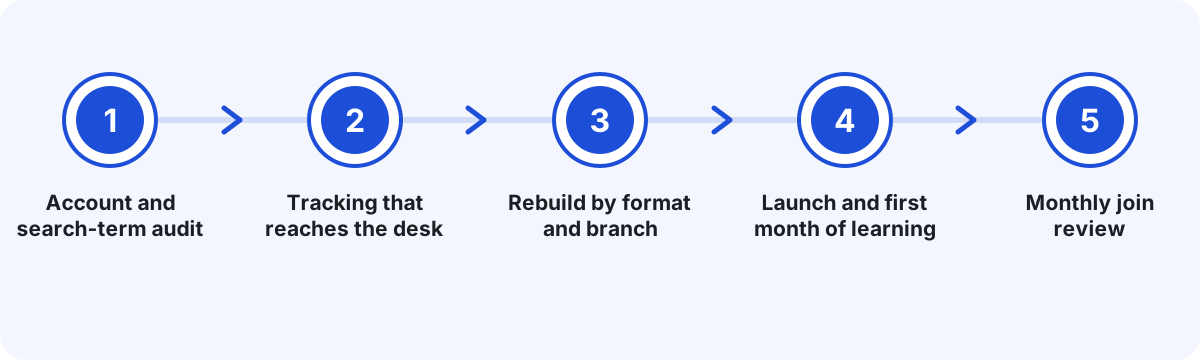
Account and search-term audit
We read the last few months of search terms, locations, devices and hours, and match them against whatever join records exist, to see where money went and what came back.
Tracking that reaches the desk
Form fills, calls and WhatsApp taps are tracked, each enquiry keeps its click identifier, and the desk is shown how to mark a join so it can be uploaded.
Rebuild by format and branch
Campaigns are restructured around formats and locations, with tight radii, negatives, schedules and a landing page for each.
Launch and first month of learning
Campaigns go live within about 30 days of the signed scope, with budgets set for the season and checked several times a week at first.
Monthly join review
Joins and their cost, by campaign and location, open the report, followed by search terms added or excluded and the tests planned for next month.
Which fitness formats suit search advertising?
- Large commercial gymsFee and facility searches carry strong intent, so tight radius campaigns around each location tend to pay back fastest.
- Boutique class studiosFormat searches such as HIIT, spin or functional training work when the ad names real class times with space.
- CrossFit affiliatesSearches for trial classes and fundamentals courses suit small, focused campaigns that lead to an on-ramp booking.
- Yoga centresStyle and timing searches, such as a morning hatha batch, work best with a timetable-led landing page.
- Reformer studiosFew machines and high session value mean small budgets aimed at specific open slots, paused when full.
- Personal trainers and PT studiosSearches naming a goal or a trainer near home suit call ads and consultation bookings.
- Martial arts and kids' programmesParents searching for batches by age and timing respond to clear schedules; ads target adults, never children.
How far will a Bengaluru gym member travel, and what does that mean for ads?
Not far, as east Bengaluru shows. Marathahalli sits close to the IT clusters of Mahadevapura, Bellandur, ITPL and the Whitefield campuses, and is known as much for its traffic as for its housing. Brookefield along ITPL Road mixes IT parks, apartment complexes and young families. Kadugodi lies within the wider Whitefield area. For people living in any of these, a gym that is twenty minutes away at 7 pm may as well be in another city, however good its equipment.
That shapes every account we build. Every location receives its own radius, drawn from where its current members actually live and work rather than a round number, and sometimes shaped to avoid the far side of a road that takes half an hour to cross. Searches from office campuses along the Outer Ring Road are treated differently from searches made at home, because a lunch-hour class near the office and a 6 am batch near the flat are different products bought by the same person.
Timing matters too. Searches with fees, formats and trainers in them cluster in the first weeks of January and again from March, as people prepare for summer. When the monsoon sets in from June, some outdoor exercisers start searching for indoor options, often in the evening after rain has stopped play. Bids, budgets and ad copy follow those shifts rather than staying flat all year.
What may a gym's Google ad say about weight loss?
Less than many gyms assume. Google's Unreliable claims policy, which sits under its Misrepresentation rules, prohibits claims of unrealistic weight loss within a specific time frame or with little effort. Google's own example is an ad saying you can eat whatever you want and lose 10 pounds in a month. The same policy bars enticing people with an improbable result as the likely outcome, even where that result is possible for a few.
For a gym, that rules out the headlines that tempt every January: a number of kilos by a date, a dress size by a wedding, or results with no effort. Google says a warning is issued at least seven days before an account is suspended under this policy, but disapprovals in the busiest fortnight of the year cost real joins long before any suspension. Our fitness ad policy check is simple: if a headline promises a body outcome, it is rewritten to describe the service instead.
ASCI's Code agrees: factual claims need to be true and provable, and an exaggeration that would leave people disappointed is not allowed. Ads that describe coached sessions, equipment, timings, programme length and the fee are both compliant and, in our experience, attract members who expect to work for their results and therefore stay.
- Avoid: 'Lose 8 kg in 30 days', 'Flat stomach by summer', 'Burn fat without dieting'.
- Use: 'Coached strength classes, 6 am and 7 pm batches', 'Twelve-week programme with weekly check-ins'.
- Avoid implying every member gets one person's result.
- Keep landing pages consistent with the ad; Google reviews both.
Which searches show that someone is ready to join a gym?
Searches fall into rough tiers, and budgets should follow them. At the top sit searches that name a price, a trial or a booking alongside a format and a place: membership fees in Marathahalli, a trial class at a box in Whitefield, a personal trainer in Brookefield. These people are comparing options to act on. In the middle are format and area searches without a price, such as a spin class in Mahadevapura, where the landing page has to do more explaining.
At the bottom are searches that look related but rarely end at a front desk: exercise tutorials, diet plans, equipment reviews, supplement prices and job openings at gyms. Membership search campaigns are built so that the top tier gets most of the money and bids, the middle tier is tested carefully, and the bottom tier is excluded. The split is reviewed weekly in January, because new phrasing appears every year.
- High intent: fees, trial, joining, timings, personal trainer plus an area.
- Medium intent: a format plus an area, such as HIIT, spin, reformer or boxing.
- Low intent: tutorials, diet plans, equipment shopping and supplements.
- Exclude: jobs, franchise enquiries and gym equipment for sale.
Can a gym use its member list or remarketing for a health-focused programme?
Health is one of Google's sensitive interest categories. Content about physical or mental health conditions, with examples such as treatments for diabetes or arthritis, cannot be promoted using advertiser-curated audiences: Customer Match, your own data segments, audience expansion and lookalike segments. Predefined Google audiences, location, demographics and custom segments remain available. A general gym membership is not among Google's listed examples, so ordinary campaigns are unaffected.
A programme marketed to people with a condition is a different matter. In our reading, a fitness programme for people managing diabetes, arthritis or back problems promotes health content, so it should be run without uploading member lists or building lookalikes from them. We build those campaigns on keywords, location and predefined audiences instead, and keep the copy free of treatment claims. And any member list used in ordinary campaigns needs consent that actually covers advertising.
- General memberships and classes: ordinary targeting rules apply.
- Programmes for a named condition: no Customer Match, data segments or lookalikes.
- Use keywords, location and predefined audiences instead.
- No treatment or cure claims in any copy.
Should a gym advertise prices like 'from ₹999' in its ads?
Only if most people can actually buy at that price. The ASCI Code gives 'prices from as low as Rs. Y' as an example of a claim that is unacceptable when consumers are likely to be misled about its availability or applicability. A gym that advertises from ₹999 but means an off-peak, twelve-month, upfront plan at one branch, with a joining fee on top, is likely to mislead, and people who click for that price leave disappointed or never join.
The better approach is to name the plan the price belongs to, mention any joining fee beside the price, in the ad or on its landing page, and show a typical monthly figure where that is more honest. Price-led ads still work when they are specific. 'Off-peak plan, 10 am to 4 pm, from ₹X a month' tells the right people exactly what they are getting, and the wrong people stop clicking, which saves budget.
Which numbers should the best Google Ads agency for gyms in Bengaluru put in its monthly report?
One that the front desk's own records can verify. Joins and their cost should come first, split by location and campaign, then trials booked and attended, then calls and forms, with clicks and impressions last. It should list search terms that were added and excluded, show how budget was spread across the month, and say plainly what will change next. If an agency's report starts with impressions and click-through rate, ask where the members are.
- Joins and cost per join, by branch and campaign.
- Trials booked and attended from paid search.
- Calls answered and missed during ad hours.
- Search terms excluded, and why.
- Next month's budget plan and tests.
- Google Ads management
- From ₹4,999 a month; ad spend billed by Google to the gym
- Time to start
- About 30 days including tracking and a first month of data
- Optimised for
- Joins imported from the front desk, not form fills
- Targeting
- A radius per branch set from where members live and work
- Claims policy
- No unrealistic weight-loss promises, per Google's unreliable-claims rules
- Seasonal pacing
- Heaviest in the first weeks of January and the March to May run-up
Where this applies around Bengaluru, Karnataka
- Bengaluru
- Karnataka
- India
- Marathahalli
- Brookefield
- Mahadevapura
- Kadugodi
- Whitefield
Frequently asked questions
29 answersHow is a Google Ads agency for gyms in Bangalore paid for its management?
KaamGPT's management starts from ₹4,999 a month, and the written quote lists the branches, campaigns and reporting covered. The ad budget is paid by the gym straight to Google through its own account, so management and spend stay separate and you can see every rupee spent on clicks in Bengaluru.
What monthly click budget suits a gym in Bengaluru?
Work it out from what a member is worth and how many joins your floor can take, not from a round number. Just to illustrate, a single studio might trial a modest daily budget, then revise it after a month of imported joins. Budgets should rise in January and from March to May, and ease in the festive weeks.
Can a gym ad on Google promise weight loss in a month?
No. Google's Unreliable claims policy prohibits claims of unrealistic weight loss within a specific time frame or requiring little effort, and gives an ad promising 10 pounds in a month as its example. Such ads get disapproved and can lead to warnings. Describe the programme, the coaching and the timings instead.
What radius should a gym target with Google Ads in Bangalore?
Usually a few kilometres around each branch, drawn from where current members live and work rather than a round figure. Bengaluru traffic means people rarely travel far to train several times a week. Radii can also exclude areas across slow roads or rail lines, and campaigns for office campuses can run separately from home-area campaigns.
How do you track gym joins from Google Ads?
Each enquiry from an ad carries a click identifier into your sheet or CRM. When that person joins, the front desk marks the record, and the join is uploaded to Google with the plan's value. This lets reports show cost per join and lets Google's bidding learn which searches produce members rather than just enquiries.
What is a good cost per join for a gym?
No single figure fits every gym. It rests on monthly fees, how many months people stay and what extras they buy, such as personal training. We help you set a ceiling from your own numbers, then judge each campaign against it. Campaigns that cannot get under the ceiling after a fair test are paused or rebuilt.
When should a gym increase its Google Ads budget?
Ahead of the moments when more people are deciding: the last days of December into the first fortnight of January, and again from March as people prepare for summer. A new branch also justifies a higher budget for its first weeks. In October and November, budgets can usually ease while brand and fee searches stay covered.
Can a gym use Customer Match for a diabetes fitness programme?
In our reading of Google's policy, no. Health conditions such as diabetes are a sensitive interest category, and advertiser-curated audiences, including Customer Match, your data segments and lookalikes, cannot be used to promote that content. Run such a programme on keywords, location and predefined Google audiences, and avoid treatment claims in the copy.
Should a gym advertise prices like from ₹999 in Google ads?
Only if most people can buy at that price. The ASCI Code warns against 'from as low as' prices that mislead about availability or applicability. Name the plan the price belongs to, show any joining fee beside it, and prefer a typical figure where that is more honest. Specific price ads tend to bring better-matched clicks.
Are call ads useful for gyms?
Yes. Many people want to ask about timings, women-only batches, parking or trials before visiting, and a call is quicker than a form. Call ads for gyms work best when limited to staffed hours, routed to a phone someone answers, and counted only when the call runs long enough to be a real conversation.
Why is our gym paying for clicks from people searching for home workouts?
Broad keywords match many searches that look related but carry no intent to join, such as home workouts, equipment shopping, supplements or gym jobs. Reviewing search terms every week and adding them as negatives stops that spend. In busy months, we check daily, because January brings many curious searches.
Is bidding on rival gyms' names a good idea?
Allowed, but seldom wise for a neighbourhood gym. Clicks tend to be expensive, the searcher already has a preference, and ads must not imply you are the other business. We usually spend first on fee, format and trial searches close to each of the gym's locations, and test competitor terms only where there is a clear reason.
How quickly can Google Ads start for our gym?
Most single-branch gyms and studios are live within about 30 days of the signed scope, including the audit, tracking set-up, campaign build and landing pages. If you are close to January, we prioritise tracking and the highest-intent campaigns so that something useful is running before the peak.
Can you fix an existing gym Google Ads account rather than starting again?
Usually, yes. We audit search terms, locations, schedules, conversion tracking and ads, then restructure what is there. The account's history is kept, which helps bidding. Starting afresh is only suggested when tracking has been wrong for so long that the history is misleading.
Which questions reveal the best Google Ads agency for gyms in Bengaluru?
Ask three things. Will they import joins from your front desk and report cost per join? Will the ad account stay in your gym's name? Can they show ad copy that sells memberships without weight-loss promises? An agency that answers clearly on all three, and shows a sample report, is worth a conversation; one that talks only about clicks is not.
Do Google Ads work for a small yoga studio?
They can, if kept small and specific. A yoga studio with a few batches benefits from ads for style and timing searches within a short radius, sent to a timetable page with a booking form. Ads are paused when batches are full. For many small studios, a well-kept Maps profile does more, and ads fill the gaps.
Should a CrossFit box run Google Ads for trial classes?
Yes, focused on searches for trial classes, fundamentals or on-ramp courses near the box. Ads point to the next start date and the booking form. Keep the copy about coaching and community rather than results, and use the CrossFit name only as your affiliate agreement permits.
How are Google Ads for a gym chain with several branches organised?
Every location gets separate targeting, budget and landing pages, usually within campaigns organised by format. This shows which branch and format bring members at what cost, and lets budget move towards the branch with spare capacity. Reports split joins and cost per join by branch.
Can our gym's ads target only women for a women-only batch?
Google allows demographic targeting in most cases, but searches are the main signal: people looking for a ladies' gym or women-only batch say so in the search. Campaigns built on those keywords, with respectful copy and clear details of timings and coaches, reach the right people without assumptions about the viewer.
Who writes the landing pages behind our gym's ads?
We plan and write a landing page for each main campaign, showing the format, branch, timings, fees or fee range, trial terms and a short form. Where the current site struggles, new pages start at ₹9,999 per project. Pages that answer the search directly tend to turn more clicks into enquiries.
What should a gym's Google ad say instead of weight-loss claims?
What the member gets: coached sessions, equipment, batch timings, programme length, the coaches' qualifications and the fee. Phrases like 'twelve-week strength programme with weekly check-ins' or '6 am and 7 pm batches near Brookefield' are specific and compliant, and they attract people who expect to put in the effort.
Do Google Ads and SEO compete for the same gym searches?
They overlap usefully. Paid ads win intent today; SEO earns positions over months. Whichever paid terms produce joins also tell us which pages to write first. Our <a href="/best-seo-company-for-gyms-in-bengaluru">SEO page for gyms</a> covers the organic side.
Will you show our gym the search terms that brought members?
Yes. Monthly reports list the searches that led to joins, those that only produced enquiries and those excluded, with reasons. You will see the real words people used in Bengaluru to find your gym, which is often useful for your front desk and website as well.
Does KaamGPT promise a number of joins from Google Ads?
No. Ads control who sees the gym and how clearly it is presented; the trial, the coaching and the conversation at the desk decide the join. We commit to the scope, tracking, honest reporting and active management, and to pausing what does not work rather than spending through it.
What access does KaamGPT need to run our gym's Google Ads?
Manager access to the gym's own Google Ads account, or help creating one in the gym's name; access to the website or landing-page tool; and a simple way for the front desk to mark joins in a sheet or CRM. Billing stays between the gym and Google.
Where should a gym owner start a Google Ads conversation with KaamGPT?
Ring +91 79767 82366, or WhatsApp the gym's addresses and, if you have one, read access to the ad account. Our Bengaluru team traces where the money goes and replies with a written scope and fee, working over calls, chat and online meetings.
Should gym ads run at night when the floor is closed?
Sometimes. Many people research late in the evening, so ads that lead to a booking form or a WhatsApp message can still work overnight. Call ads, though, should run only when someone will answer. The schedule is set from when enquiries actually turn into trials, not from opening hours alone.
With walk-ins already coming, is a Google Ads agency for gyms in Bangalore still useful?
It depends on spare capacity. If your batches are full, ads add crowding rather than value. If mid-morning or new branches have room, focused search campaigns within a short radius can fill them, and joins can be tracked to show whether it pays. Our <a href="/services">services overview</a> lists other options.
Can Google Ads promote our gym's corporate plans to tech parks in Bengaluru?
Yes, with campaigns aimed at searches for corporate or group gym plans and at locations around office campuses on the ORR and in Whitefield. Landing pages explain the group offer for HR teams. Many corporate deals are closed through direct conversations, so ads usually support that outreach rather than replace it.