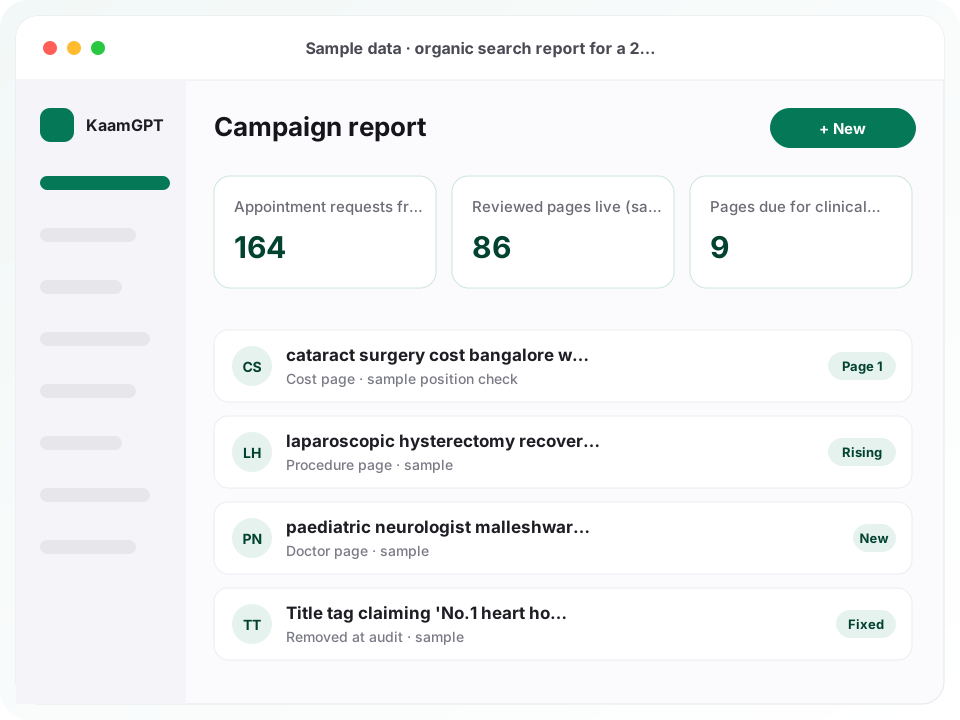
The best SEO company for hospitals in Bengaluru is the one whose pages your own doctors would be comfortable signing. That sounds like a low bar until you look at how many hospital sites rank on thin articles nobody reviewed, or on claims of being number one that no one can substantiate.
Families research a bypass, a hysterectomy or a cataract operation for weeks before they phone anyone, often in the evenings and often for a parent. KaamGPT, working as an SEO company for hospitals in Bangalore, builds the pages they find during that reading: hubs for each service line, plain-language condition and procedure pages, honest cost and insurance pages and factual doctor profiles. Each page carries a clinician's review and date, and the work runs under our SEO service.
- ₹14,999monthly is the opening SEO retainer; the written scope lists the pages and fixes in it
- ~30 daysfor the audit, the site map of service lines and the first reviewed pages
- 54diseases and conditions sit in the schedule of the Drugs and Magic Remedies Act, 1954
- 1 reviewernamed on every medical page, with the date it was last checked
How does Bengaluru's hospital map show up in search results?
Search engines reward the page that best answers a query for a place, and in Bengaluru the place is often a road or a locality rather than the city. Hospital chains have responded by opening units across the map. Manipal's Bengaluru site, for instance, lists separate hospitals in Malleshwaram, Yeshwanthpur, Kanakapura Road, Whitefield, Hebbal, Sarjapur Road, Jayanagar, Electronic City, Yelahanka and more, each competing for the searches of its own neighbourhood. Aster runs units in Hebbal, Whitefield and JP Nagar.
Older anchors still shape what people type. Whitefield searches sit beside the Vydehi campus at Nallurahalli and the Sri Sathya Sai Institute of Higher Medical Sciences, a charitable hospital that does not charge patients. Bannerghatta Road searches sit beside Jayadeva, Apollo and Fortis. A standalone hospital in Malleshwaram or on Kanakapura Road competes with chain units that have strong domains, so it needs pages that are more specific and more useful than theirs, not simply more of them.
That is why hospital SEO in Bangalore is partly a geography exercise. A single generic services page cannot rank in Whitefield and JP Nagar at once. We build a page for each unit or campus with real details, such as departments, entrances, parking and visiting hours, and link it to the service-line pages that patients from that area actually need.
What does SEO for a hospital include?
The scope is shaped by your audit. These are the pieces that usually matter most for a hospital, nursing home or specialist centre.
Service-line hubs and a clean site map
We reorganise the site so each speciality has a hub that links to its conditions, procedures, doctors and units, and every important search has one page clearly meant to answer it.
SEO in detail →Condition and procedure pages
Plain-language pages explaining symptoms, tests, treatment options, recovery and when to see a doctor. Your clinicians review each one, and the page shows the reviewer and the review date.
SEO in detail →Doctor profile pages
One page per consultant with registered qualifications, speciality, languages spoken, units and timings, written factually and marked up so search engines understand who the doctor is and where they consult.
SEO in detail →Technical fixes for large hospital sites
Speed on mobile phones, indexing rules for appointment and filter URLs, campus pages that do not duplicate each other, and structured data for the hospital, its units and its physicians.
Websites in detail →Unit pages tied to Maps
Each campus page matches its Google profile in name, address and phone. Our local SEO page for hospitals covers the Maps side, including department and practitioner profiles.
Local SEO in detail →Cost, insurance and admission guides
Pages that answer the practical questions families ask before choosing: package ranges where you publish them, cashless insurance and TPA steps, documents to bring, and what admission involves.
SEO in detail →Content calendar tied to service lines
Topics are chosen from patient questions and your capacity, not from trends. If you also want ads and social under one plan, see our hospital digital marketing page.
Digital marketing in detail →What would the best SEO company for hospitals in Bengaluru fix first?
Structure before writing. We crawl the site, list every URL, and map each one to a service line, a unit or a doctor. Pages that compete with each other are merged, empty department pages are filled or retired, and the appointment and filter URLs that bloat the index are kept out of it. Only then do we decide which new pages to write.
Next comes the review loop. Healthcare SEO depends on trust, and trust on the page comes from visible expertise: a named reviewer, a date, sources your doctors accept, and wording that informs rather than sells. We agree a review rota with your medical director so a cardiologist reviews cardiac pages and an obstetrician reviews maternity pages, and we track when each page is due to be checked again.
One page, one search intent
Every important search gets one page built to answer it, whether that is a condition, a procedure, a cost question or a doctor's name. Overlapping pages are merged so they stop splitting ranking signals.
Review rota by speciality
Each clinical page is assigned to a reviewer from the right department, with a review date shown on the page and a reminder before it falls due again.
Physician and hospital markup
We add structured data using the schema.org types for a hospital, its physicians and medical web pages, including the date a page was last reviewed, so search engines read the facts correctly.
Kannada pages for core topics
The most-read condition and procedure pages get Kannada versions, reviewed like the English ones, because many parents and grandparents search and read in Kannada.
Unit pages with real detail
Each campus page lists its departments, entrances, parking, visiting hours and nearby landmarks, so it can rank for its own locality instead of copying another unit's text.
Internal links that follow the patient
Condition pages link to the procedure, the procedure to the doctors who perform it, and the doctors to the unit where they consult, ending at a clear way to book.
How is hospital SEO priced?
Our SEO retainer starts at ₹14,999 a month and takes about 30 days to get the audit, the site map and the first reviewed pages in place. A nursing home with a small site often fits near that figure; a multi-speciality hospital with hundreds of pages, several units and a doctor directory needs a larger written scope. The scope lists the pages, fixes and reports, and the starting prices for every service are on our pricing page.
SEO
Recommended₹14,999/month
Typically 30 days
Suits hospitals whose patients read for weeks before choosing, and whose websites need structure, reviewed pages and technical repair.
- Technical audit
- Keyword research
- On-page optimisation
- Content plan
- Monthly reporting
Digital Marketing
₹19,999/month
Typically 15 days
Suits hospitals that want SEO run alongside ads, Maps, social and WhatsApp in a single plan per service line.
- Channel strategy
- Creative production
- Campaign management
- Weekly reporting
Local SEO
₹4,999/month
Typically 14 days
Suits single-site nursing homes and clinics whose patients mostly arrive from a few nearby layouts via Google Maps.
- Google Business Profile optimisation
- Local keyword map
- Location page on-page fixes
- Citation building and NAP cleanup
- Local link outreach
- Review replies and posts
- Monthly report
Google Ads
₹4,999/month
Typically 30 days
Suits service lines that need enquiries now, while organic pages are still being built and reviewed.
- Account setup
- Keyword strategy
- Ad copy testing
- Conversion tracking
- Bid optimisation
Meta Ads
₹4,999/month
Typically 30 days
Suits awareness work for health checks, maternity and camps, which search alone does not create.
- Creative testing
- Audience building
- Retargeting funnels
- Pixel setup
- Weekly reporting
Lead Generation
₹24,999/month
Typically 14 days
Suits hospitals whose pages already bring enquiries but whose follow-up loses patients before an appointment is held.
- Verified leads
- Multi-channel outreach
- CRM integration
- Lead scoring
- Replacement guarantee
- Clinical review time is your doctors'; we prepare drafts, sources and questions so a review takes minutes rather than hours.
- Translation into Kannada and writing for additional units are quoted separately when they go beyond the agreed scope.
| Package | Starts at | Timeline | Best for |
|---|---|---|---|
| SEO | ₹14,999/month | Typically 30 days | Suits hospitals whose patients read for weeks before choosing, and whose websites need structure, reviewed pages and technical repair. |
| Digital Marketing | ₹19,999/month | Typically 15 days | Suits hospitals that want SEO run alongside ads, Maps, social and WhatsApp in a single plan per service line. |
| Local SEO | ₹4,999/month | Typically 14 days | Suits single-site nursing homes and clinics whose patients mostly arrive from a few nearby layouts via Google Maps. |
| Google Ads | ₹4,999/month | Typically 30 days | Suits service lines that need enquiries now, while organic pages are still being built and reviewed. |
| Meta Ads | ₹4,999/month | Typically 30 days | Suits awareness work for health checks, maternity and camps, which search alone does not create. |
| Lead Generation | ₹24,999/month | Typically 14 days | Suits hospitals whose pages already bring enquiries but whose follow-up loses patients before an appointment is held. |
What makes SEO for one hospital cost more than another?
Size and state of the website matter most. A hospital site with a few dozen tidy pages needs far less work than one with thousands of auto-generated doctor, filter and appointment URLs. The number of service lines you want to rank for sets the writing load, and the number of reviewers available sets how fast pages can go live.
Competition matters too. Ranking a standalone hospital in Malleshwaram for orthopaedic searches means competing with chain units nearby, which takes more depth than ranking a nursing home for a less contested procedure. Ask any SEO company for hospitals in Bangalore to price the audit, the technical work and the monthly writing separately, and to explain which searches each part is meant to win.
- Number of pages and URLs on the current site, and how much of it needs merging, rewriting or removing.
- How many service lines, procedures and doctors you want pages for in the first six months.
- Availability of clinical reviewers, which decides how many reviewed pages can go live each month.
- Number of units or campuses, each needing its own detailed page tied to its Maps profile.
- Whether Kannada versions are needed, and for how many pages.
- Technical debt in the content management system, such as slow templates or uncontrolled filter URLs.
Which kinds of hospitals benefit most from SEO?
- Multi-speciality hospitalsLarge sites with many departments gain the most from a clean structure, because their existing pages usually compete with each other.
- Hospital chains with several unitsSeparate, detailed campus pages let each unit rank in its own neighbourhood without duplicating the others.
- Single-speciality centresEye, cardiac, orthopaedic and cancer centres can own the deep procedure questions that general hospitals answer only briefly.
- Maternity and children's hospitalsPregnancy and child-health questions are searched for months, so reviewed guides bring families in long before delivery.
- Nursing homesA small, well-structured site with honest fee pages often outranks bigger rivals for local procedure searches.
- Fertility and IVF centresPatients read deeply and privately; careful, factual pages matter more here than anywhere, and claims need the strictest review.
- Teaching and trust hospitalsPublic information on departments, fees and admission helps patients who need care at lower cost find the right door.
What does the SEO engagement look like month by month?
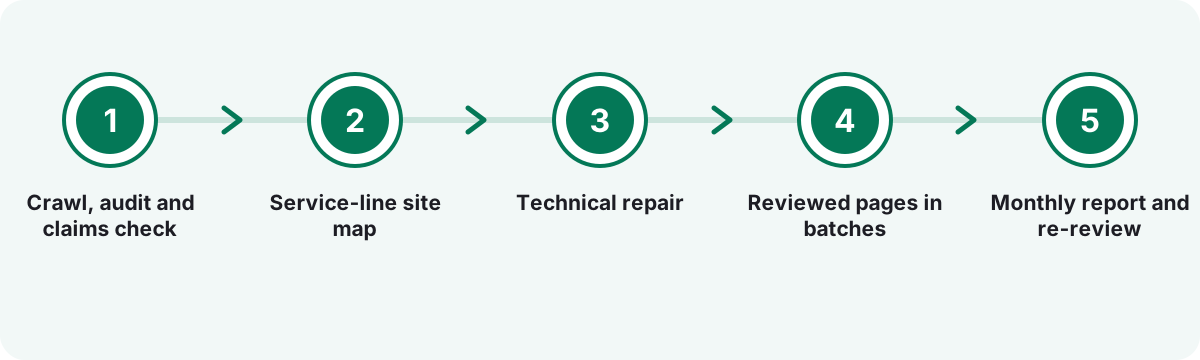
Crawl, audit and claims check
We crawl the whole site, list its URLs, measure mobile speed, and flag every title, page and article that makes a claim needing review, from cure language to unsupported rankings.
Service-line site map
We agree with you which hubs, conditions, procedures, doctors and units should exist, which pages merge, and which searches each page is meant to answer.
Technical repair
Indexing rules, redirects for merged pages, structured data, faster templates and a sitemap that lists only pages worth ranking go live first.
Reviewed pages in batches
We draft pages in batches by service line, your reviewers approve them, and each goes live with the reviewer's name and date.
Monthly report and re-review
We report enquiries and calls from organic search by service line, the searches gaining ground, and the pages due for clinical re-review.
Why choose KaamGPT for hospital SEO?
We write for the reviewer first
Drafts arrive with sources and specific questions for your doctors, so a busy consultant can approve or correct a page quickly.
Rules built into the brief
Writers work from a checklist covering the medical ethics code, drug-advertising law and advertising standards, so risky claims are caught before review.
Structure over volume
We would rather merge twenty weak pages into five strong ones than publish fifty new articles nobody needed.
Reporting on enquiries
Rankings are reported, but the headline numbers are appointment requests and calls that started on an organic search.
One team for site and search
KaamGPT also builds websites, so technical fixes are done by the same team that plans the pages, without long handovers.
Which pages should a hospital website have for search?
Think of the site as a set of doors, each matched to a question a patient or family member actually asks. The service-line hub answers 'does this hospital do cardiac care well enough for us'. The condition page answers 'what is wrong and what are the options'. The procedure page answers 'what happens, how long is recovery, what will it cost'. The doctor page answers 'who will treat us'. The unit page answers 'how do we get there'.
Most hospital sites have only the first and last of these, plus a news section. The middle doors, where families spend most of their reading time, are missing or thin. That gap is where a well-planned site wins, because each page can be more specific and more honest than a general health portal, and it ends with a way to book a consultation with a named specialist.
- Service-line hubs: one per speciality, with the conditions treated, procedures offered, doctors, units, facilities and booking options.
- Condition and procedure pages: symptoms, tests, options, risks, recovery and when to seek care, written in plain language and reviewed by the relevant specialist.
- Doctor profile pages: registered qualifications, speciality, languages, units, consulting days and a booking route, without superlatives.
- Cost and insurance pages: published package ranges where you choose to publish them, inclusions and exclusions, cashless insurance steps and documents needed.
- Unit and campus pages: departments, entrances, parking, visiting hours and directions, matched to each Google profile.
- Patient guides: admission, discharge, visiting rules and what to bring, which answer practical searches and reduce calls to the front desk.
How do you write condition pages without breaking the rules?
Three sets of rules shape what a hospital page may say. First, the Drugs and Magic Remedies (Objectionable Advertisements) Act, 1954 bars taking part in publishing an advertisement that refers to a drug in terms suggesting its use for any of 54 scheduled conditions. The schedule includes diabetes, heart diseases, high or low blood pressure, cancer, obesity, kidney stones, cataract, glaucoma and tuberculosis. A first conviction can bring up to six months in prison, a fine or both.
In practice, a page about diabetes can explain the condition, the tests and the treatment approaches your doctors use, and invite readers to consult a specialist. What it must not do is read like a promotion of a particular medicine, supplement or remedy for that condition, especially one your pharmacy sells. We write treatment sections around the consultation, not around a product, and medicines are named only where your reviewer judges it necessary for information.
Second, the medical ethics code adopted by NMC in 2023 forbids doctors to boast of cases, operations or cures, so pages describe what a procedure involves rather than celebrating outcomes. Patient case reports or photos that could identify someone need that patient's permission. Third, ASCI expects any award or ranking claim about a hospital to rest on published parameters and scores, which is why we remove 'number one' and 'best hospital' language from titles unless you can show that basis. A hospital calling itself the best without it invites complaints.
- Write: what the condition is, how it is diagnosed, which options exist, what recovery involves, and when to see a doctor.
- Show: the reviewing doctor's name and registered qualifications, and the date the page was last reviewed.
- Avoid: cure language, success-rate boasts, patient testimonials of outcomes, 'painless' or 'permanent' promises, and promoting any medicine for a scheduled condition.
How do Bengaluru families research a procedure before choosing a hospital?
The research usually starts with a diagnosis from a family doctor or a first specialist, and a question: is this the right treatment, and is this the right place? Children working in Bengaluru often research for parents in other parts of Karnataka, and children abroad research for parents in Bengaluru. They read late at night on phones, compare two or three hospitals, look for the doctor's background, and try to estimate cost and insurance cover before they call.
Their searches show the stage they are in. Early on they ask about the condition, for example angioplasty vs bypass which is better. Later they ask about recovery and cost, such as laparoscopic hysterectomy recovery time or cataract surgery cost Bangalore with insurance. Near the end they search for a person or a place, like paediatric neurologist Malleshwaram or second opinion oncology Bangalore. Some search in Kannada, such as ಮಂಡಿ ನೋವು ಚಿಕಿತ್ಸೆ for knee pain treatment. These are examples of phrasing, not volumes.
Medically reviewed content wins this phase because it answers each stage honestly and leads naturally to the next. A family that has read your hospital's explanation of a procedure, seen the surgeon's qualifications and understood the insurance steps arrives at the first consultation already half-decided, and asks better questions when it does.
How long does hospital SEO take, and what should you measure?
Expect the first months to be about repair and review rather than traffic. Technical fixes and merged pages can change how a site performs within weeks, but new condition and procedure pages often take several months to settle in search, and competitive specialities take longer. A hospital that needs appointments this month should run search ads alongside SEO; our hospital Google Ads page explains how the two divide the work.
We measure what the hospital can use. The report leads with appointment requests and calls that began on an organic search, split by service line, then shows which searches and pages are gaining ground, and which reviewed pages are due for another look. Rankings for a handful of agreed searches are tracked, but we do not chase a single vanity term, and we never promise a position, because search engines decide those. How much changes each month depends largely on how quickly reviewers can approve new pages.
Why do doctor pages deserve the most care on a hospital site?
Late in their research, families stop searching for conditions and start searching for people. They type a consultant's name, sometimes misspelled, sometimes with the hospital or the locality added, and they want to know three things: is this doctor qualified for my problem, where and when can I see them, and can I trust what I read. A thin profile with a photo and a list of honours answers none of these, and a directory page shared by forty doctors answers them worse.
A good profile is factual and specific. It gives the doctor's registered qualifications and speciality, the conditions and procedures they focus on, the languages they speak, the units and days they consult, and a direct route to book. It avoids the things the ethics code discourages: superlatives, counts of operations used as a boast, and honours that do not reflect a recognised qualification. Written that way, it serves the patient and protects the doctor at the same time.
There is a technical side as well. Each consultant should have one canonical page, not separate copies on every campus where they consult, with the units listed on that one page. Structured data identifies the person as a physician linked to the hospital, and the profile links to the procedure pages the doctor performs, so search engines and readers can follow the connection. When a doctor leaves, the page should redirect sensibly rather than vanish, because their name will keep being searched for months.
Why do most hospital websites in Bengaluru underperform in search?
The problems are rarely about keywords. Most are about structure, trust and the rules. A hospital website grows by accretion, one department page at a time, until no one can say which page should rank for which search.
- One long page per department tries to cover every condition and procedure, so it ranks for none of them and answers no one's question properly.
- Health articles are written by whoever was free, carry no reviewer and no date, and sometimes recommend medicines in ways drug-advertising law does not allow.
- Doctor profiles are photos and a list of honours, missing the registered qualifications, specialities, languages and consulting times patients look for.
- Titles and meta descriptions claim to be the best or number one hospital without any published basis, inviting complaints and eroding trust.
- Appointment widgets, doctor search filters and campus duplicates create thousands of near-identical URLs that waste the crawl and split ranking signals.
- Hospital SEO retainer
- Starts at ₹14,999 a month
- First phase
- About 30 days for audit, site map and first reviewed pages
- Drug-advertising law
- Drugs and Magic Remedies (Objectionable Advertisements) Act, 1954, with 54 scheduled conditions
- Ethics code on boasting
- Clause 6.1.1 of the 2002 regulations bars boasting of cases, operations or cures
- Structured data used
- schema.org Hospital, Physician and MedicalWebPage with lastReviewed
- Languages
- English and Kannada pages, both clinically reviewed
Where this applies around Bengaluru, Karnataka
- Bengaluru
- Karnataka
- India
- Whitefield
- Malleshwaram
- Yeshwanthpur
- Kanakapura Road
- JP Nagar
Frequently asked questions
30 answersHow do I judge the best SEO company for hospitals in Bengaluru?
Ask to see how they would rebuild one of your service lines: the hub, two condition pages, a procedure page and a doctor profile. Check whether each draft names a reviewer, avoids cure claims and ranking boasts, and ends with a clear way to book. Then ask how they will report appointment requests rather than only rankings.
What does an SEO company for hospitals in Bangalore charge at KaamGPT?
Our hospital SEO retainer starts at ₹14,999 a month. The first phase of roughly 30 days covers the audit, the service-line site map and the first reviewed pages. Larger sites with several units, a doctor directory and Kannada versions are scoped in writing before work begins.
Can a hospital website recommend medicines for diabetes or heart disease?
Be careful. The Drugs and Magic Remedies Act, 1954 bars advertising that suggests using a drug for scheduled conditions, which include diabetes, heart diseases, high or low blood pressure and cancer. A page can explain the condition and invite a consultation, but it should not promote a particular medicine, supplement or remedy. Your reviewing doctor decides whether naming a drug is necessary for information.
Should doctor profile pages show qualifications and registration?
Yes. The 2002 ethics code asks doctors to display their registration number and to use only recognised degrees and qualifying diplomas after their names. A profile should list those, plus speciality, languages, units and consulting days. Leave out superlatives and counts of operations presented as achievements.
Can a hospital call itself the number one hospital on its website?
Only if it can back the claim. ASCI expects award and ranking claims about hospitals to rest on published evaluation parameters, scores and weightages. Without that basis, 'number one' or 'best hospital' wording in titles and pages invites complaints and adds nothing for patients. We describe facilities and specialities factually instead.
How long does hospital SEO take to bring appointment requests?
Technical fixes and page merges can help within weeks, but new condition and procedure pages usually need several months to settle, and contested specialities in Bengaluru take longer. Hospitals that need appointments quickly often run search ads while SEO builds. We report organic appointment requests from the first month so progress is visible.
Who writes the medical content on our hospital pages?
We draft from sources your doctors accept, in plain language, and your clinicians review every page before it goes live. The reviewer's name and the review date appear on the page. We do not give medical advice; accuracy is decided by your medical team.
Should a hospital write pages in Kannada?
For core topics, yes. Many parents and grandparents in Bengaluru and across Karnataka read health information in Kannada, and a reviewed Kannada page can rank for searches English pages miss. We start with the most-read condition and procedure pages and add more as reviewers allow.
How do you handle a hospital chain with several units in Bengaluru?
Each unit gets its own page with real, distinct detail: departments, entrances, parking, visiting hours and the doctors who consult there. Units link to shared service-line hubs so content is not duplicated. Each unit page matches its Google profile exactly.
What is wrong with our current department pages?
Usually they try to cover everything a department does on one long page, so they answer no single question well. Patients search for a condition or a procedure, not a department name. We split the department into a hub plus specific pages that each answer one search properly.
Will you add schema markup to our hospital website?
Yes, where it fits. We use schema.org types for the hospital, its units, its physicians and medical web pages, including the date each page was last reviewed. Markup helps search engines read facts correctly; it does not replace useful content.
Can we publish patient success stories for SEO?
We advise against outcome stories. The ethics code bars doctors from boasting of cures, and identifiable patient details need permission. Pages that explain the process, the team and the facilities serve searchers better and carry no such risk.
Do appointment and doctor-search URLs hurt hospital SEO?
They can. Booking widgets and directory filters often create thousands of near-identical URLs that search engines crawl instead of your real pages. We set indexing rules so only pages worth ranking are listed, and keep booking functions working for patients.
How is hospital SEO in Bangalore different for a nursing home?
A nursing home needs fewer pages but sharper ones: a small set of procedure pages, honest fee information, doctor profiles and a strong local page. Often local SEO matters as much as site SEO. Our <a href="/best-local-seo-agency-for-hospitals-in-bengaluru">hospital local SEO page</a> explains the Maps side.
Can you promise our hospital a page-one ranking?
No. Search engines decide positions, and anyone who promises one is guessing. We commit to the work: a clean structure, reviewed pages, technical repair and honest reporting of the enquiries organic search brings. Positions for agreed searches are tracked and shown each month.
Which searches should a hospital in Bengaluru target first?
Start with procedures and conditions in service lines that have capacity and that families research before choosing, plus your doctors' names and your units' localities. Broad terms like 'best hospital Bangalore' are expensive to chase and rarely bring ready patients. We rank targets with you in the first month.
How often should medical pages be reviewed again?
We suggest a review date on every clinical page and a re-check at least once a year, sooner when treatment guidance or your services change. The monthly report lists pages that are due, so nothing silently goes out of date.
Can our hospital pages appear in AI answers?
Clear, reviewed, well-structured pages are easier for search engines and AI assistants to read and quote accurately. Nobody can promise that a particular assistant will cite your hospital, but stating facts plainly, such as services, units, doctors and fees, gives them the best material.
Is SEO worth it for a small hospital in Bengaluru?
Often yes, because a small hospital can be more specific than a chain. A fifty-bed hospital with an excellent orthopaedic team can own detailed knee and spine questions in its area. The site needs to be tidy, the pages reviewed and the booking route clear.
Do you work on hospital websites built on any platform?
Usually yes. Most fixes, such as titles, structure, redirects, markup and indexing rules, can be done on common content systems. Where a platform blocks essential changes, we explain the options, including a rebuild by our website team if that is the better route.
Will SEO conflict with our hospital's brand guidelines?
It should not. We work within your brand voice and design. Where a guideline conflicts with a rule, for instance a slogan that promises outcomes, we flag it and suggest a compliant version for your team to decide.
How do you measure SEO results for hospitals?
By appointment requests and calls that began on an organic search, grouped by service line and unit, plus the searches and pages gaining visibility. We also report pages awaiting review. Clicks and positions explain the movement; they are not the goal.
Should cost pages show actual prices for procedures?
It is your choice, and the 2002 code allows a public declaration of charges. Families value ranges, inclusions, exclusions and insurance steps even without exact prices. If you publish figures, keep them current; outdated prices damage trust faster than having none.
Can you help if our hospital website was hacked or lost rankings?
Yes. We check for injected pages, spam links and broken redirects, clean up with your developer or ours, and request reconsideration where needed. Then we rebuild the structure so the site recovers on sound pages.
How do I start SEO for my hospital with KaamGPT?
Send your website address and the three service lines you most want to grow, or call +91 79767 82366. We review the site, share what we found on a short video call, and send a written proposal covering pages, fixes and the review rota.
What other services work well with hospital SEO?
Maps profiles, search ads for urgent demand and WhatsApp follow-up. Our <a href="/services/local-seo">local SEO service</a> handles profiles and citations, our <a href="/services/google-ads">Google Ads service</a> covers paid search, and the <a href="/best-seo-services-in-bengaluru">Bengaluru SEO guide</a> explains our general approach to search.
Does a hospital need a blog for SEO?
Not a blog in the usual sense. Hospitals rank on condition, procedure, doctor and unit pages far more than on news posts. A short, reviewed patient-guide section is useful; a stream of unreviewed articles is a risk. We put effort where patients search.
Can SEO help our hospital attract patients from other cities?
For specialities patients travel for, such as complex cardiac, cancer or transplant care, yes. Detailed procedure pages, clear doctor profiles and practical guides on travel, stay and insurance help families in other districts of Karnataka and beyond decide on a Bengaluru hospital.
What happens to a doctor's page when they leave our hospital?
Do not simply delete it. Patients keep searching for a known name for months. We usually redirect the page to the relevant speciality hub or to a colleague's profile with a short note, so searchers still reach someone who can help, and remove the doctor from booking routes at once.
Should each hospital unit have its own copy of a doctor's profile?
No. One canonical profile per consultant works better, listing every unit and day where they consult. Separate copies on each campus page compete with each other in search and drift out of date. Unit pages link to the single profile instead.