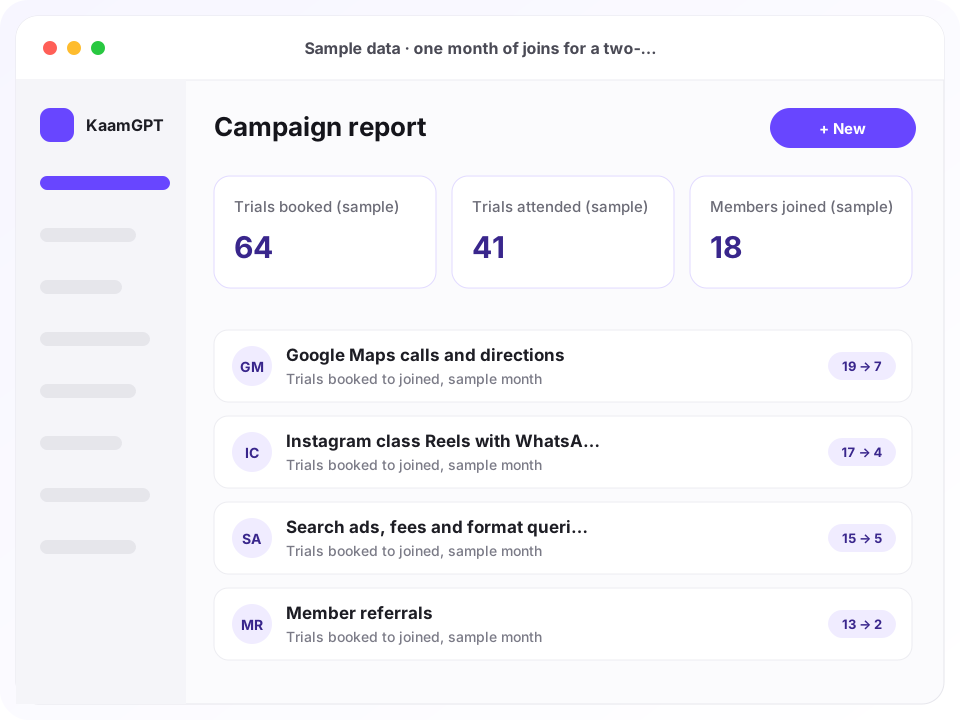
If you run a gym, CrossFit box or yoga studio and are sizing up a digital marketing agency for gyms in Bangalore, the first thing to ask is what that agency will count. Enquiries are easy to buy in the first week of January; members who are still paying in July are not. Below is how KaamGPT plans a fitness business's marketing around its membership year in Bengaluru, from the resolution rush to the monsoon lull, and what each channel is expected to do in each stretch.
The plan covers Google Maps, search, Meta and Google ads, WhatsApp follow-up and the website, run by one team against one figure: members joined each month, by source, and how many of them renew. Managed work starts from ₹19,999 a month on our digital marketing service, while Google and Meta invoice the gym for media spend themselves. If you need a single channel, the pages on Meta Ads for gyms and Google Ads for gyms go deeper.
- ₹19,999monthly opens the managed retainer; the quote then pins down which locations and channels are in
- ~15 daysbetween signing and the first live campaigns for a typical one-location studio
- 4 stretchesJanuary, March to May, the June to September monsoon, and the festive months
- 1 headline figuremembers joined per month, by source, leads every report we send
How does the membership calendar change the plan month by month?
Think of the year in four stretches. January brings the biggest wave of first-time joiners and returners, and the job is to convert them quickly and set them up to stay, not to discount hardest. From March to May people prepare for summer travel, weddings and holidays, so programmes with an end date and personal-training packs often sell better than annual plans. June to September is monsoon: outdoor exercisers want a roof, and evening rain changes who turns up and when.
October and November bring festivals, travel and family commitments, and many owners see new joins soften. That is the time to work on renewals, referrals and website pages that will rank by January. We plan budget, creative and front-desk capacity for each stretch in advance, using your own past join and renewal records where you have them. Where you do not, the first year of the gym marketing plan builds that record, so the second year is planned on your numbers rather than ours.
January: convert first, then onboard
Search and Maps run at full strength, discounting is capped, and every new joiner goes into a four-week onboarding sequence: a programme review, a class suggestion and a check-in from a coach. The members you keep from January pay for much of the year.
March to May: sell a goal with a date
Eight- or twelve-week programmes, couple plans for the wedding season and personal-training packs give people a defined finish line. Creative shows the work and the coaching, never a promised body shape or a number on the scale.
June to September: own the roofed hour
Runners, cyclists and bootcamp regulars are shown indoor alternatives, and morning batches are promoted when evening rain is likely. Monsoon is also a sensible window for referral drives among existing members, who already know the floor.
October to December: renewals and groundwork
Renewal offers go to members whose plans end around the festive season, win-back messages go to lapsed members with consent on file, and new website pages are written now so they have time to rank before the new year.
Office and apartment tie-ups all year
Many members work in the same few tech parks or live in the same gated communities. Group plans for an office team or a residents' association, promoted through their own channels, add members that no ad auction reaches cheaply.
What does a full-funnel plan for a gym include?
Seven pieces, weighted to your floor space and class timetable. A one-room yoga shala and a three-branch strength gym need very different amounts of each, so the written quote spells out which pieces you get and in what depth.
A membership-year plan and budget split
We map the next twelve months against your timetable and capacity: which batches are full, which are thin, and when renewals fall due. Budget then moves between channels by season instead of sitting still. The plan runs on our managed digital marketing retainer, and you approve each month's split before any money moves.
Digital marketing in detail →Google Maps for every branch
Most joins begin with a short drive, so each branch's profile, opening hours, photos and reviews come first. Correct 5 am opening times, accurate festival closures and real photos of the floor do more than any slogan. The detail is laid out on the gym local SEO page.
Local SEO in detail →Website pages that answer the comparison
One page per format and per branch, an honest page on fees or fee ranges, coach profiles and a timetable that opens fast on mobile. People compare three or four options before booking a trial, and the page that answers fees, batch timings, parking and women-only slots usually wins the visit.
SEO in detail →Instagram and Facebook for discovery
Short class videos, coach introductions and member stories, told without body-shaming, reach people well before any search. Lead forms or a click-to-WhatsApp button send interest straight to the front desk. Meta's health rules apply here; the mechanics are in our Bengaluru Meta Ads guide.
Meta Ads in detail →Search ads at the moment of choice
Searches for membership fees, a format plus a locality, or a trainer close to home are bid within the distance your members will really drive. Joins are fed back from the front desk, so the account learns to find members rather than form fills.
Google Ads in detail →WhatsApp follow-up and renewal reminders
Trial confirmations, a nudge the night before, a check-in once the first week is done and a nudge before renewal, sent from your own number with each person's opt-in recorded. A large share of the work of turning interest into membership happens in these messages, and silence here loses people quietly.
WhatsApp campaigns in detail →Trial booking that works on a phone
A short form that asks for branch and preferred batch, shows the real terms of the trial and drops every enquiry into one sheet or CRM. If the old site is beyond repair, a rebuild starts at ₹9,999 per project.
Websites in detail →What is a gym member worth, and why does that set the budget?
Member lifetime value is the fees a typical member pays from the day they join to the day they stop, less what it costs to serve them. No figure in fitness marketing is more useful, because it caps what one more member is worth paying for. Most gyms in Bengaluru sell a mix of monthly, quarterly, half-yearly and annual plans, and the mix matters: an annual plan paid upfront is cash today, but if that member stops coming in March, the renewal a year later is unlikely.
The arithmetic is simple enough to do on paper. Take your last hundred members who have already left, add up what each paid in total, and divide. Do the same for personal training, supplements or recovery sessions they bought, because those often separate a profitable member from a break-even one. If you have no records that old, we start a clean count from the first month and use cautious sample figures until your own data replaces them.
Capacity is the other half. A strength studio with twenty racks cannot take two hundred joins in January without spoiling the 7 pm experience for everyone who already pays. So the plan sets a monthly target for each branch from its free capacity by batch, and marketing pushes harder on the hours with room: mid-morning, early afternoon, and weekend slots that often sit half used.
- Sample: ₹2,500 a month × 11 months = ₹27,500 in fees from one member, before costs.
- Sample: add ₹6,000 of personal-training sessions and the same member is worth ₹33,500.
- If that member renews for a second year, the value roughly doubles while the cost of winning them does not.
- The ceiling on cost per join comes from these figures, not from what the ad platform reports.
What may a gym say in its ads under the ASCI Code?
ASCI, the advertising industry's self-regulator, applies its Code to gym ads, posts and banners as to any consumer brand. Under clause 1.1, advertising has to be truthful and factual claims must be backed up whenever ASCI asks. Clause 1.4 rules out misleading by implication, omission or exaggeration, and clause 1.5 says nothing may be called free if the customer bears a direct cost beyond delivery. For a gym, that bites on joining fees, compulsory kit and assessment charges.
Consumer-protection guidelines on misleading ads, notified by the CCPA on 9 June 2022, add two rules that matter here. A free offer must make clear what the customer must sign up for to claim it, and an endorsement must reflect the genuine, reasonably current opinion of the person giving it, based on real experience. A testimonial from a member who left two years ago, or one written by the front desk, fails that test.
The practical result is a short checklist we apply to every offer before it is published. Trial terms belong in the ad itself, not in small print that contradicts the headline. The way people convert after a free or paid trial, and the consumer rules around trial sign-ups and auto-renewal, are covered on our lead generation page for gyms.
- State the plan price and any joining or admission fee together, in the same place.
- Member stories need written consent and should stay in the member's own words.
- Describe programmes by what happens in them, such as three coached sessions a week, not by promised kilos.
- Keep evidence on file for any factual claim, such as coach certifications or equipment counts.
How should a gym read its marketing numbers each month?
A good monthly report for a fitness business reads like the journey a member takes: enquiries, trials booked, trials attended, members joined and renewals. Each step has its own leak. Lots of enquiries but few bookings points to slow replies or a confusing offer. Bookings without attendance points to weak reminders or trials booked too far ahead. Attendance without joins usually means the trial itself, the walkthrough or the price conversation needs work, which is a sales issue rather than a media one.
Source tagging is what makes the report honest. Every enquiry should carry where it came from: the Maps profile, a search ad, an Instagram Reel, a referral or a walk-in. Front-desk staff need one question at sign-up, asked the same way every time. We set that up in week one, because without it, January's joins get credited to whichever channel shouts loudest, and the channel that really started them is cut in March.
- Enquiries by source, and the median time to first reply.
- Trials booked, trials attended and members joined, each by source and branch.
- Renewals due next month, renewals won last month, and members lost.
- Spend by channel against joins, giving cost per join rather than cost per lead.
How do you judge the best digital marketing agency for gyms in Bengaluru?
Expect questions about your floor before questions about your budget. An agency worth hiring asks which batches are full, what a member pays, how long they stay, and who picks up the phone at 6.30 am. It should show you a seasonal plan, explain how joins will be counted, and be honest that no agency can promise a number of members, because the trial, the coaching and the price conversation happen on your floor, not in an ad account.
Fitness studio marketing also needs restraint. The posts that perform best for a few days, extreme transformations and countdown offers, tend to attract people who leave soon and can draw complaints. Yoga studio marketing in particular depends on teacher credibility and a calm, accurate timetable more than on volume. Ask any agency for sample creative and a sample monthly report before you sign; both reveal more than any pitch.
- A written scope that names each branch, channel and deliverable.
- Ad accounts and profiles in the gym's own name from day one.
- Reports that lead with joins and renewals, not reach.
- Creative that follows Meta's and Google's health policies and the ASCI Code without needing rewrites.
What does each KaamGPT service cost for a gym?
Nothing starts without a written quote listing locations, channels, deliverables and exclusions. These are published entry prices for our management work only. Media budgets sit outside them and Google or Meta charge them to the gym; many studios open with a small daily amount and lift it only once joins can be traced to a source.
Digital Marketing
Recommended₹19,999/month
Typically 15 days
The managed retainer, ₹19,999 monthly upwards, is built for gyms wanting Maps, search, social ads and follow-up on a single seasonal calendar.
- Channel strategy
- Creative production
- Campaign management
- Weekly reporting
SEO
₹14,999/month
Typically 30 days
SEO at ₹14,999 monthly upwards helps a gym's own site win class and neighbourhood searches before the January rush.
- Technical audit
- Keyword research
- On-page optimisation
- Content plan
- Monthly reporting
Local SEO
₹4,999/month
Typically 14 days
Local SEO at ₹4,999 monthly per location suits a one-site gym whose profile, hours and reviews need tidying first.
- Google Business Profile optimisation
- Local keyword map
- Location page on-page fixes
- Citation building and NAP cleanup
- Local link outreach
- Review replies and posts
- Monthly report
Google Ads
₹4,999/month
Typically 30 days
Google Ads, managed from ₹4,999 monthly, catches people already searching for prices, classes or trainers close by.
- Account setup
- Keyword strategy
- Ad copy testing
- Conversion tracking
- Bid optimisation
Meta Ads
₹4,999/month
Typically 30 days
Meta Ads, managed from ₹4,999 monthly, suits boutique rooms and boxes whose sessions sell best on video.
- Creative testing
- Audience building
- Retargeting funnels
- Pixel setup
- Weekly reporting
Lead Generation
₹24,999/month
Typically 14 days
Lead generation, ₹24,999 monthly upwards, is for chains needing enquiries qualified, trials booked and follow-up tracked to the join.
- Verified leads
- Multi-channel outreach
- CRM integration
- Lead scoring
- Replacement guarantee
- A chain with several branches is quoted per branch for Maps work, so the local search line grows with your footprint while the plan itself stays one piece of work.
- Media money never touches our books: the platforms charge an account registered to the gym, and it stays yours if we stop working together.
- Our pricing page lists the full catalogue, and the services overview explains what each line covers.
| Package | Starts at | Timeline | Best for |
|---|---|---|---|
| Digital Marketing | ₹19,999/month | Typically 15 days | The managed retainer, ₹19,999 monthly upwards, is built for gyms wanting Maps, search, social ads and follow-up on a single seasonal calendar. |
| SEO | ₹14,999/month | Typically 30 days | SEO at ₹14,999 monthly upwards helps a gym's own site win class and neighbourhood searches before the January rush. |
| Local SEO | ₹4,999/month | Typically 14 days | Local SEO at ₹4,999 monthly per location suits a one-site gym whose profile, hours and reviews need tidying first. |
| Google Ads | ₹4,999/month | Typically 30 days | Google Ads, managed from ₹4,999 monthly, catches people already searching for prices, classes or trainers close by. |
| Meta Ads | ₹4,999/month | Typically 30 days | Meta Ads, managed from ₹4,999 monthly, suits boutique rooms and boxes whose sessions sell best on video. |
| Lead Generation | ₹24,999/month | Typically 14 days | Lead generation, ₹24,999 monthly upwards, is for chains needing enquiries qualified, trials booked and follow-up tracked to the join. |
How much should a gym spend on marketing in a year?
Begin with the value of one member, not with what the gym down the road spends. Purely as a sample: a member on ₹2,500 a month who stays eleven months brings in about ₹27,500 in fees before costs. Pick the share of that you are willing to invest to win one member, and you have a ceiling on cost per join. Multiply by the number of joins your floor can absorb in a month and you have a budget the numbers can defend.
That ceiling moves with membership renewals. A studio that keeps members for two years can justify paying more per join than one that loses most of them after the first plan, which is why we report renewals beside new joins, and why better onboarding is often cheaper than buying more leads. If you are still comparing agencies in general, our Bengaluru digital marketing guide covers how agencies are run in general.
- Number of branches and the distance between them, since each needs its own Maps work and ad radius.
- Formats sold: open gym, group classes, personal training and recovery sessions each warrant separate pages and campaigns.
- How crowded the micro-market is, which tends to be fiercest along tech corridors such as the ORR and Whitefield.
- How much real video and photography you can supply from sessions, and how much has to be produced from scratch.
- Whether your front desk answers calls and WhatsApp within minutes, or follow-up has to be built and run for you.
- Plan lengths and prices, which set the value of each join and therefore the budget the arithmetic can support.
Where do Bengaluru's gym members live, work and train?
Fitness demand in Bengaluru follows the commute. The Outer Ring Road, a 60-kilometre ring the Bangalore Development Authority opened in sections between 1996 and 2002, strings tech parks past Bellandur, Marathahalli and Hebbal, and the layouts behind it are where many members live. Whitefield grew from a quiet settlement into a major suburb with the IT boom of the late 1990s, and was the first tech corridor reached by Namma Metro's Purple Line. HSR Layout, laid out by the BDA in 1985, sits between Sarjapur Road, Electronic City and the ORR and doubles as a startup address.
That geography decides when people train. Someone who leaves for an office on the ORR at half past eight wants a 6 am batch close to home, or a 7.30 pm slot that still works after the drive back. Studios in Koramangala and HSR Layout also pull lunch-hour and weekend crowds from offices around them, while older neighbourhoods such as JP Nagar keep a strong early-morning culture of yoga and walking groups. A plan for one studio must match one rhythm; a plan for a chain must accept that every branch has a different crowd.
Climate shapes the year as well. Bengaluru's summer runs from March to May, with April the hottest month, and the monsoon brings most of the rain from June to September, usually in the late afternoon or evening. Evening runners, cyclists and outdoor bootcamp groups look for a roof in those months, which gives gyms and studios with indoor space something specific to say.
Which kinds of fitness businesses does this plan suit?
- Full-service commercial gymsThey need volume across many hours, so the plan relies on search, Maps and renewal reminders to keep off-peak floors in use.
- Boutique HIIT roomsThey sell a class experience; video of real sessions and a quick first-class booking matter more than reach.
- CrossFit boxesThey grow through community and on-ramp courses, so referrals and member stories carry more weight than broad ads.
- Neighbourhood yoga shalasSteady morning batches come from nearby homes, so local search, a clear timetable and teacher credibility lead the plan.
- Reformer and mat pilatesA handful of machines and high value per session mean filling specific slots, not chasing impressions.
- One-coach PT studiosClients buy trust in one coach, so coach profiles, consultations booked on WhatsApp and reviews carry most of the load.
- Women-only gyms and batchesClear, respectful messaging about privacy and trainers, and enquiries routed to the right batch without delay.
How does the first quarter with KaamGPT run?
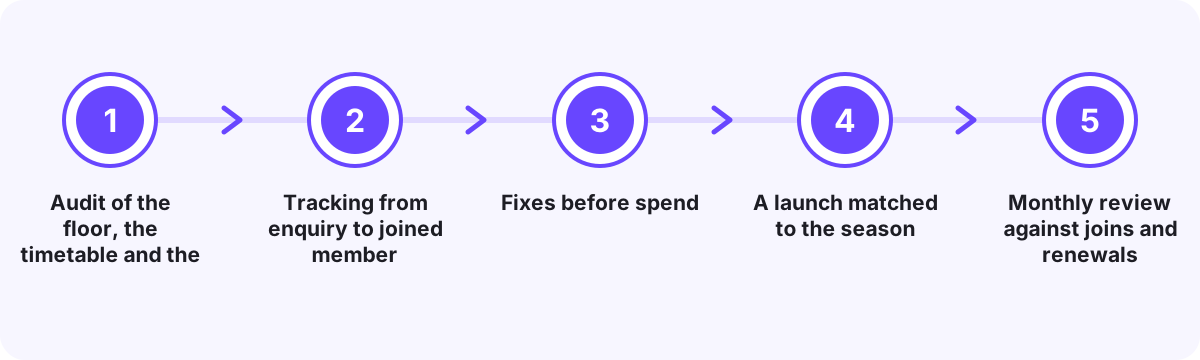
Audit of the floor, the timetable and the funnel
We look at capacity by batch, current plans and prices, the website, each Maps profile, any ad accounts and how enquiries get answered at present, including how long someone waits for a reply.
Tracking from enquiry to joined member
One sheet or CRM where every enquiry is logged with its source, trial date, attendance and outcome. Without it, no channel can be judged fairly and budget follows guesswork.
Fixes before spend
Profiles, booking forms, trial terms and follow-up messages are put right first, because paying for traffic into a leaky funnel only makes the leak more expensive.
A launch matched to the season
Campaigns open for the stretch you are entering, with budgets agreed per channel. A one-location studio is typically running within a fortnight of signing.
Monthly review against joins and renewals
A short report leads with members joined by source and renewals due next month, followed by the changes made, the lessons and the next experiment.
Why hand your gym's marketing to KaamGPT?
One team for every channel
Maps, search, Meta, WhatsApp and the website share one plan, so a January offer reads the same everywhere and no channel is tuned in isolation.
Policy-aware creative from the first draft
Ads and posts follow the platforms' health policies and ASCI's Code from the start, which avoids rejected ads, complaints and rushed rewrites.
Reporting at the level of the join
We report what your front desk can confirm: trials, attendance and members joined, each with its source. Clicks and reach sit lower down the page.
A Bengaluru team on call and WhatsApp
Our people are reachable on calls, WhatsApp and online meetings, and can review a timetable and its offers in an afternoon.
Your accounts and your data
Ad accounts, profiles and enquiry records stay in the gym's name, so the history belongs to the business whatever happens next.
Why do gym marketing budgets so often buy the wrong thing?
Most fitness owners we speak with are not short of enquiries in January. They are short of members in April, and of renewals when the first annual plans run out. The problems below come up again and again, and nearly all of them come from measuring the wrong step of the journey.
- Reporting cost per lead when the business is paid per member: a cheap form fill from someone twelve kilometres away is not a prospect for a neighbourhood studio, however good the dashboard looks.
- Spending most of the year's budget in the first three weeks of January, then going quiet in March just as people start preparing for summer holidays and weddings.
- Offers that leak margin: deep annual discounts that pack the floor at 7 pm and leave the slots between eleven and four almost empty.
- No record of where each member came from, so renewals, referrals and walk-ins never get credited to the channel that started them, and the wrong channel gets cut.
- Copy and transformation posts that promise kilos lost in weeks. That breaks platform policy and the ASCI Code, and it attracts the people most likely to quit after a month.
- Managed digital marketing
- Retainer from ₹19,999 monthly, scope agreed on paper
- Time to start
- Roughly a fortnight after signing
- Fitness formats covered
- Strength floors, boxes, shalas, reformer rooms and PT studios across the city
- Measured by
- Members joined by source, trials attended and renewals
- Ad spend
- Charged by the ad platforms straight to the gym, never routed through us
- Advertising rules followed
- ASCI Code Chapter I and the CCPA guidelines on misleading advertisements
Where this applies around Bengaluru, Karnataka
- Bengaluru
- Karnataka
- India
- HSR Layout
- Koramangala
- JP Nagar
- Whitefield
- Hebbal
Frequently asked questions
28 answersWhat is the monthly fee of a digital marketing agency for gyms in Bangalore?
KaamGPT's managed retainer begins at ₹19,999 a month for planning, running and reporting. Media spend is extra and is charged to the gym by Google or Meta. The quote names each location and channel, so a single yoga studio and a three-location gym in Bengaluru pay for what they actually need.
Should the best digital marketing agency for gyms in Bengaluru be judged on cost per lead?
No. A gym is paid per member, not per enquiry, so the useful figure is cost per member joined, and then how many of those members renew. Cheap leads from people far away, or from people who only wanted a free session, look good on a dashboard and do little for the business. Ask any agency to report joins by source.
When is the busiest season for gym marketing in Bengaluru?
January brings the largest wave of new and returning members for most gyms, followed by the run-up to summer from March to May, when people prepare for travel, weddings and holidays. The June to September monsoon moves outdoor exercisers indoors. Your own join records are the best guide, and the first year with us builds that record if it does not exist.
Should a gym cut its prices in January to win more members?
Usually not by much. January demand arrives anyway, and the members a deep discount attracts are often the first to stop coming. A small joining incentive, a clear onboarding plan and fast replies normally do more for the gym than a large price cut, and they protect what existing members paid. Save stronger offers for quieter months and off-peak batches.
What should a yoga studio promote during the monsoon?
Indoor practice for people who usually walk or run outside, morning batches when evening rain is likely, and short courses such as a four-week beginners' series. Bengaluru's monsoon rain tends to fall in the late afternoon or evening, so a dry, roofed morning class is a genuine reason to choose your studio over a park.
How long before January should a gym start planning its campaigns?
Ideally by October. Website pages need weeks or months to rank, Maps profiles need fresh photos and reviews, and ad accounts need conversion tracking in place before the rush. A plan agreed in October lets the gym open January with tested ads, a working booking form and front-desk staff who know how each enquiry will be handled.
Can a gym advertise a free trial if members pay a joining fee?
The trial itself can be free if nobody pays anything to take it. The ASCI Code says nothing may be called free if the customer bears a direct cost beyond delivery, and the CCPA guidelines ask that the commitment needed for a free offer is made clear. State the joining fee and plan price plainly wherever you advertise the trial, so nobody is surprised at the desk.
Can we post member transformation photos on our gym's social pages?
Only when the member has agreed in writing, in their own words, and without implying everyone will get the same result in the same time. Meta restricts weight-loss claims and close-ups of body fat in ads, and ASCI expects every claim to be true and provable. Stories about strength, consistency and routine usually work better than before-and-after pairs anyway.
Which channel brings the most members to a neighbourhood gym?
It differs by format and location, which is why we measure rather than assume. A walk-in gym on a main road often gets many joins through its Google Maps profile, a boutique studio may rely on Instagram, and a CrossFit box on referrals. Tagging every enquiry with its source for a few months shows which channel deserves the next rupee.
How do you track which ads produced a paying gym member?
Every enquiry gets tagged with its origin, whether it came through a form, a call, WhatsApp or a walk-in, and the front desk updates the record when the person attends a trial and joins. Joins then flow back to both ad platforms as conversions, so both platforms learn which kinds of people actually become members.
Does our studio need a new website before digital marketing starts?
Not always. If the current site opens fast on mobile, shows the timetable and fees honestly and has a working booking form, we fix what is missing and keep it. If it cannot be repaired, a rebuild starts at ₹9,999 per project. The booking path matters more than design, because most enquiries arrive from mobile phones.
How quickly can campaigns start for a gym in Bengaluru?
Most single-branch gyms and studios in Bengaluru are live about 15 days after the scope is signed. That time goes on the audit, tracking, profile fixes and the first set of creative. Multi-branch chains take a little longer because each branch needs its own profile work, radius and offer checks before money is spent.
Will you plan marketing separately for each branch of our gym chain?
Yes, within one overall plan. Each branch gets its own Maps profile work, ad radius, batch-level targets and reporting, because a branch near a tech park fills at different hours from one in an older residential area. Budget can then move towards the branch with the most spare capacity in any given month.
How do you fill off-peak hours at a gym?
By marketing those hours to the people who can use them: parents after school drop-off, shift workers, retirees, freelancers and students. Off-peak plans priced below full access, mid-morning group classes and small-group training slots are promoted to nearby audiences, while peak-time advertising is reduced so the 7 pm floor does not get more crowded.
Does a CrossFit box need different marketing from a regular gym?
Yes. A box sells coached classes and a community, and new members usually start through an on-ramp or fundamentals course. Marketing therefore leans on member stories, coach introductions and referrals, with ads pointing to the next on-ramp start date. Use the CrossFit mark only as your affiliate licence permits, and keep any talk of results restrained.
How do membership renewals fit into a gym's marketing plan?
Renewals often cost a gym less to win than any new member, because the person already knows the floor and the coaches. The plan lists members whose plans end in the next month, sends a timely reminder with any loyalty terms, and flags people whose attendance dropped so a coach can call. Renewals appear in every monthly report beside new joins.
Can you run corporate membership campaigns for tech parks in Bengaluru?
Yes. Many members work in a handful of campuses along the ORR, in Whitefield, Electronic City and near Manyata Tech Park. We prepare a group offer, a one-page proposal for HR or the employee wellness team, and a landing page with a booking form, then promote it through the employer's own channels as well as targeted ads in Bengaluru.
What reports will a gym owner receive each month?
A short report that starts with members joined by source and branch, trials booked and attended, renewals due and won, and spend by channel. Below that come the details: ad results, Maps activity, website enquiries and response times. It closes with the month's changes, lessons and the next experiment.
Who pays for the ads, the gym or KaamGPT?
The gym pays Google and Meta directly, through ad accounts in its own name. KaamGPT's fee covers the planning, creative, management and reporting work. That keeps spend transparent, lets you see every rupee on the platform's own invoice, and means the account history stays with your gym if the engagement ends.
Can a small pilates studio with a few reformers benefit from paid ads?
Yes, if the ads are aimed at filling specific slots rather than building reach. A small reformer studio has limited capacity and high value per session, so ads run within a short radius, promote named class times with room, and send people to book directly. Budgets can stay small, and they pause when the timetable is full.
How do you write fitness ads without body-shaming anyone?
We describe what happens in a session and how it feels, show real members and coaches with consent, and avoid language that attacks someone's appearance or suggests one ideal body. The ASCI Code bars ads that deride people for body shape, and Meta rejects statements of inferiority about appearance. Positive, specific copy also tends to bring in members who stay.
Can you promise how many members our gym will gain?
No, and an agency that does so deserves suspicion. Marketing controls who hears about the gym and how quickly they are followed up; the trial, the coaching and the price conversation happen on your floor. The written commitment covers the scope of work, the tracking, the reporting and an honest review each month.
What should a gym hand over at the start?
The timetable and capacity by batch, current plans and prices, any joining fees, branch addresses, access to the website, Maps profiles and ad accounts, a few months of join records if they exist, and who looks after enquiries. Photos and short videos of real sessions help, though we can plan a shoot if you have none.
How should a women-only gym or batch be promoted online?
With clear facts: who trains the batch, what privacy arrangements exist, the timings and the fees. Imagery should be respectful and shot with consent. Enquiries need to reach a staff member who can answer specific questions quickly, often on WhatsApp. Ads reach adults nearby without hinting at anything about the viewer's body.
Is it worth advertising a gym outside peak season?
All year, at different strengths. Peak months need more budget because more people are deciding, but quieter months are when you build reviews, website pages, referrals and renewals cheaply. Switching marketing off entirely also resets what the ad platforms have learned, so restarting in January costs more than keeping a small presence running.
Will our gym keep its ad accounts and data if we stop working together?
Yes. Ad accounts, Maps profiles, the website and the enquiry records are set up or kept in the gym's own name, with KaamGPT given access as a manager. Should we part ways, you simply revoke our access and retain all of it, including the history that makes the next campaign cheaper to run.
What is the quickest way to brief KaamGPT on our gym?
Call or WhatsApp +91 79767 82366 and share the gym's locations, timetable and current plans. Our Bengaluru team works by call, WhatsApp and online meetings, and will reply with questions about capacity and joins, then a written scope and quote. There is no obligation to proceed after the first conversation.
Does a single-studio owner need a digital marketing agency for gyms in Bangalore?
It can be, if the studio has spare capacity and a clear price. A single studio often gains most from fixing its Maps profile, booking path and follow-up, which costs less than full management. If that is all you need, the <a href="/services/local-seo">Local SEO service</a> from ₹4,999 a month per location could be the smarter place to begin.