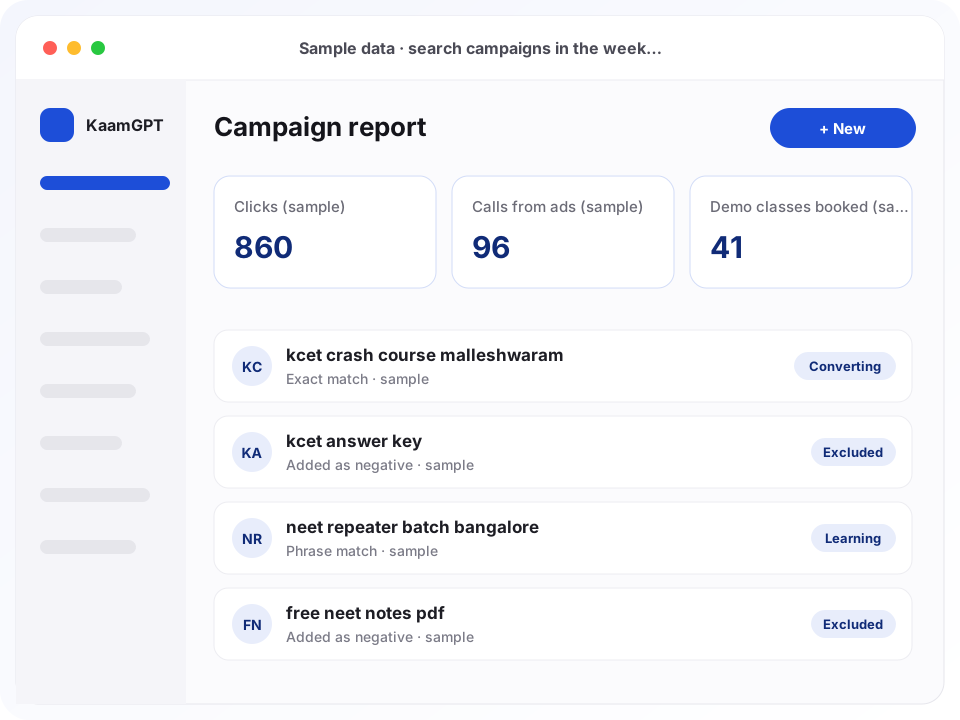
Most coaching enquiries that arrive through Google begin with an anxious search typed on the evening results come out. A best google ads agency for coaching centres in Bengaluru earns its fee in those few weeks, by placing the right course in front of the family searching 'KCET crash course near Malleshwaram' or 'NEET long term coaching Bangalore fees', and by keeping your budget away from the flood of exam-day searches that will never turn into students.
KaamGPT splits campaigns by course and location, writes ad copy that Google's misrepresentation policy and the consumer authority's coaching guidelines both permit, and tracks every call, form and WhatsApp tap through to a booked demo class. Our Google Ads management is billed apart from media: the fee opens at ₹4,999 for each month, while Google invoices clicks straight to the centre's own account.
- ₹4,999starting monthly fee for managing the account, with Google charging clicks to the centre
- ~30 daysto rebuild the account, repair conversion tracking and learn which searches book demos
- Under 18users receive no personalised ads on Google, so coaching campaigns run on keywords and place
- 1 campaignper course family and location, so a crash-course budget never bleeds into the two-year programme
Which coaching businesses get most from paid search?
- Crash-course and repeater programmesShort windows and urgent families make search ads the fastest way to fill seats after results.
- Integrated PU entrance programmesHigher-value two-year courses where a single enrolment justifies careful bidding on parent searches.
- Civil services academiesAspirants search for foundation batches, test series and optional-subject classes through much of the year.
- Study-abroad and language test prepIELTS, GRE and GMAT searches tied to application deadlines rather than school results.
- Tuition centres opening a new branchPaid search brings calls while the new location's Google profile is still earning reviews.
- Schools during admissionsSearches for admission process, fees and curriculum in the weeks the admission notice is out.
- Skill and activity academiesParents searching for chess, coding or abacus classes for a child, often with 'for kids' in the query.
Where does a coaching centre's Google Ads budget leak?
Coaching accounts tend to fail in the same few places. None of them are about bidding cleverness; they are about what the account is allowed to buy and what it counts as success.
The good news is that each leak shows up in data the account already holds. Search term reports, call logs and the landing page's own behaviour usually point to the problem within a day, long before anyone needs to talk about bigger budgets.
- Broad keywords such as 'NEET' or 'KCET' buy huge numbers of result, admit-card and answer-key searches in exam season, none of which come from families shopping for coaching.
- One campaign covers every course, so the crash-course rush in May starves the foundation batch, and nobody can see which programme the money went to.
- Ad copy promising selections or ranks is disapproved under Google's unreliable-claims rules or, worse, approved and then cited in a consumer complaint under the CCPA guidelines.
- Conversion tracking counts page views or button clicks, so the algorithm gets better at finding clickers instead of families who turn up for a demo.
- Ads run late into the night while the counsellor's phone is switched off, and the calls they produce go unanswered.
Inside a managed coaching account, what work actually happens?
The structure follows your course list and your locations. Search ads for coaching institutes work when each programme has its own budget, its own words and its own landing page.
Campaigns by course and location
Separate campaigns for the integrated programme, repeater batch, crash course and school tuition, each targeted to the catchment of the centre that runs it. Budgets move between them by season, not by accident. Scope and inclusions are listed under Google Ads in our services, and our Bengaluru Google Ads guide explains the wider method.
Google Ads in detail →Negative keywords for exam season
Shared lists block answer keys, admit cards, results, cut-offs, free PDFs, teaching jobs and other searches that will never enrol. We update them weekly through results season, because new exam-day phrases appear every year.
Google Ads in detail →Copy cleared before it runs
Every headline and description is checked against Google's misrepresentation policy and the coaching advertising rules. Real facts carry the ad: faculty, batch size, timings, location and the demo-class offer.
Google Ads in detail →Landing pages per course
Every campaign sends its traffic to the page for its own course, carrying fees, timings, batch size, teachers and a three-field demo-class form, never to the home page. Larger page builds go to our website development team.
Websites in detail →Call assets and call tracking
Call assets show only while the centre's lines are staffed, and calls are tracked by length so a real conversation counts and a misdial does not. Missed calls are flagged the same day for a callback.
Google Ads in detail →WhatsApp taps followed up
Many parents prefer to message. A tap on the WhatsApp button reaches a counsellor with ready replies for fees, timings and booking, and the conversation is logged against the campaign that started it.
WhatsApp campaigns in detail →Enquiries traced to enrolments
Whatever the centre logs, from demo attendance to fees collected, flows back to Google Ads, and bidding then chases paying families rather than form fillers. Larger institutes can pair this with our lead generation work for coaching centres.
Lead generation in detail →What happens inside the ad account during the first month?
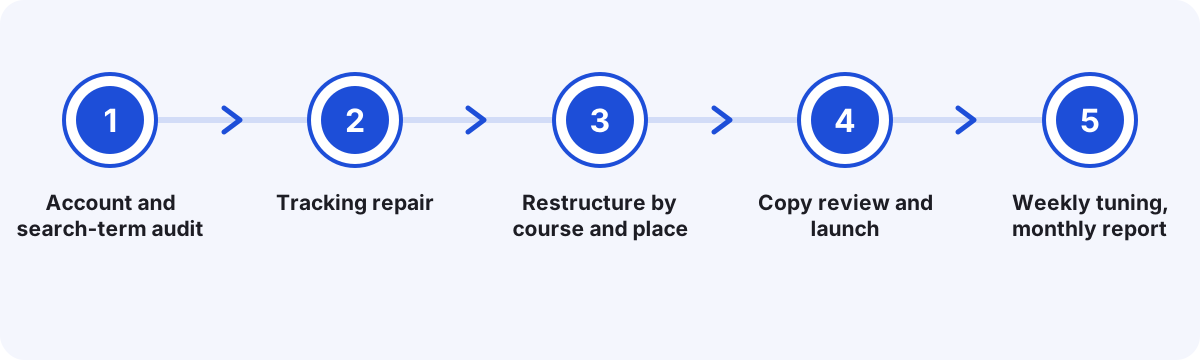
Account and search-term audit
Recent search-term, conversion and spend history is pulled apart, the exam-day phrases draining money are listed, and note which courses and centres never received a fair share.
Tracking repair
Calls above a set length, demo-class form submissions and WhatsApp taps become the conversions, and a simple way is agreed to pass bookings and enrolments back from the centre.
Restructure by course and place
Campaigns are split by programme and location, keyword lists rewritten in parent language, negative lists loaded and landing pages matched to each campaign.
Copy review and launch
Headlines, descriptions and assets are checked against Google's policies and the coaching rules, then launched or paused ready for the next results window.
Weekly tuning, monthly report
Search terms, bids, budgets and schedules are tuned weekly, and a monthly report shows calls, demo bookings and enrolments by course and centre against spend.
Which package suits a coaching centre's paid search needs?
Running one coaching centre's Google Ads starts at ₹4,999 per month in fees, and a rebuilt account needs about thirty days to settle. Your click budget is separate and paid to Google. More courses, more locations or Kannada ads add to the management quote, which is written out before any campaign changes.
Google Ads
Recommended₹4,999/month
Typically 30 days
Centres that need demo bookings quickly in results weeks and before batches start, and want every rupee of click spend traceable.
- Account setup
- Keyword strategy
- Ad copy testing
- Conversion tracking
- Bid optimisation
Digital Marketing
₹19,999/month
Typically 15 days
Centres that want search ads planned with Instagram, WhatsApp and the website on one admissions calendar, from ₹19,999 a month.
- Channel strategy
- Creative production
- Campaign management
- Weekly reporting
SEO
₹14,999/month
Typically 30 days
Institutes tired of paying for every visit, who want course pages that rank without a click charge; ₹14,999 monthly upward.
- Technical audit
- Keyword research
- On-page optimisation
- Content plan
- Monthly reporting
Local SEO
₹4,999/month
Typically 14 days
Tuition centres whose families live nearby and find them on Maps, where profile work at ₹4,999 a location may do more than ads.
- Google Business Profile optimisation
- Local keyword map
- Location page on-page fixes
- Citation building and NAP cleanup
- Local link outreach
- Review replies and posts
- Monthly report
Meta Ads
₹4,999/month
Typically 30 days
Centres wanting parents to recognise them before any search starts, via Instagram and Facebook; managing it opens at ₹4,999 monthly.
- Creative testing
- Audience building
- Retargeting funnels
- Pixel setup
- Weekly reporting
Lead Generation
₹24,999/month
Typically 14 days
Large institutes wanting each paid enquiry screened and chased until a counsellor has met the family; ₹24,999 monthly upward.
- Verified leads
- Multi-channel outreach
- CRM integration
- Lead scoring
- Replacement guarantee
- Your click budget is agreed with you and can change from month to month; the written quote states exactly which courses, centres and campaigns the management fee covers.
- Google may change its policies and ad formats; we adjust campaigns when it does and tell you what changed.
| Package | Starts at | Timeline | Best for |
|---|---|---|---|
| Google Ads | ₹4,999/month | Typically 30 days | Centres that need demo bookings quickly in results weeks and before batches start, and want every rupee of click spend traceable. |
| Digital Marketing | ₹19,999/month | Typically 15 days | Centres that want search ads planned with Instagram, WhatsApp and the website on one admissions calendar, from ₹19,999 a month. |
| SEO | ₹14,999/month | Typically 30 days | Institutes tired of paying for every visit, who want course pages that rank without a click charge; ₹14,999 monthly upward. |
| Local SEO | ₹4,999/month | Typically 14 days | Tuition centres whose families live nearby and find them on Maps, where profile work at ₹4,999 a location may do more than ads. |
| Meta Ads | ₹4,999/month | Typically 30 days | Centres wanting parents to recognise them before any search starts, via Instagram and Facebook; managing it opens at ₹4,999 monthly. |
| Lead Generation | ₹24,999/month | Typically 14 days | Large institutes wanting each paid enquiry screened and chased until a counsellor has met the family; ₹24,999 monthly upward. |
How much click budget does a coaching centre need?
It depends on the course, the season and the area more than on any rule of thumb. Purely as an illustration, one tuition centre might trial its two best-selling courses on a cautious daily cap, whereas an entrance institute selling crash courses after results could multiply that cap for a few hectic weeks. The click budget should follow what one enrolment is worth to you: a two-year programme can justify far more per demo class than a short revision course.
When you judge any google ads agency for coaching centres in Bangalore, ask for cost per demo class and cost per enrolment by course, not just cost per click. Management starting points appear on the pricing page; the click budget is a separate agreement and goes straight to Google.
- Season: results weeks are crowded, and clicks cost more when national institutes bid on the same phrases.
- Course value: what one enrolment in the programme is worth over its full duration.
- Area: some catchments have many rival centres bidding, others very few.
- Number of courses and locations, each needing its own campaign and landing page.
- Conversion tracking: an account that can see enrolments bids more efficiently than one that sees only clicks.
- Answer speed: a centre that calls back within minutes gets more from the same budget than one that calls the next day.
Why let KaamGPT run a coaching centre's Google Ads?
Coaching search campaigns already in hand
For OneMove Chess Academy , a Bengaluru chess school, our search campaigns bid on what parents actually type, 'chess coaching for kids Bangalore' among them, with call and WhatsApp assets on the ads and every call and form counted.
Policy read before copy
Our copy checklist comes from Google's misrepresentation policy and the CCPA's coaching guidelines, so disapprovals and complaints are prevented rather than appealed.
Demo classes as the goal
Accounts are optimised towards booked demo classes and, where the centre shares them, enrolments, so the algorithm learns what a real student looks like.
Your account, your data
Campaigns run in an ad account owned by the centre, with KaamGPT given access. Spend, search terms and results are visible to you at any time.
Part of a wider plan when needed
Paid search can run alone, or alongside SEO, Maps, Instagram and WhatsApp work planned on one admissions calendar by the same Bengaluru team.
When coaching suddenly feels urgent, what do Bengaluru families search?
Two kinds of people search, and they type differently. Parents use the language of a purchase: the course, the area, the word 'fees', sometimes the board. Students use the language of the exam: cut-offs, answer keys, best books, previous papers, toppers' strategies. Only the first group is ready to book a demo class, and an account blind to the difference pours its budget into students with no plan to join anything.
Place shapes the phrasing too. Around Malleshwaram, where the Karnataka Examinations Authority has its office and PU colleges are close by, KCET and counselling searches are common. In HSR Layout and Kumaraswamy Layout, families compare national test-prep brands with smaller local institutes and search by brand and by batch. In Indiranagar and Electronic City, parents with office jobs tend to search after dinner, hunting for weekend and online-plus-classroom options that fit their working week.
A campaign for Bengaluru therefore cannot be one city-wide net. Each centre needs location settings drawn around where its students actually come from, keyword lists in the way local parents phrase things, and ad schedules that match when the centre can pick up the phone.
In results week, what does the best Google Ads agency for coaching centres in Bengaluru actually do?
By building everything before the rush. Campaigns for crash courses and repeater batches are written, approved by Google and paused weeks ahead, with landing pages live and negative keyword lists loaded. When SSLC, II PUC, JEE or NEET results land, they are switched on within hours rather than drafted in a panic while rivals already hold the top of the page.
During the rush the account is checked daily. Search term reports show which new exam-day phrases are slipping through, call logs show whether the centre is answering, and budgets shift towards the course and location producing demo bookings. After it, spend falls back to a steady level for school tuition and foundation batches, which families research more slowly.
Any google ads agency for coaching centres in Bangalore should be able to show you this plan on paper before results arrive: which campaigns exist for which course, what each may spend per day in the peak, which phrases are blocked, and who at the centre answers the phone. If that plan cannot be shown, the rush will be managed by guesswork.
Pre-approved, paused campaigns
Ads for each results window are built and reviewed in advance, so approval delays never cost the first two days of searching.
Schedules that match the phones
Ads and call assets run only during hours when a counsellor can answer, with form and WhatsApp ads covering the rest.
Parent phrasing first
Keywords lead with course, area and 'fees' language that parents use; student-style exam queries are added only where a page genuinely serves them.
Catchment-based location settings
Targeting is drawn around the schools, colleges and routes that feed each centre, set to count people physically there or regularly there, not everyone who has merely shown an interest in Bengaluru.
Weekly negative keyword sweeps
Search term reports are read every week in season, and anything about answer keys, admit cards, results or jobs goes straight onto the shared negative lists.
Why can't coaching ads target teenagers directly on Google?
Google's personalised advertising policy says users under the age of 18 are not eligible for personalised advertising of any kind, including audiences Google defines itself. Interest audiences, demographic layering and remarketing lists simply do not reach most school and PU students. Advertisers using their own customer lists are also barred from uploading data collected from viewers of child-directed content.
Indian privacy law pulls in the same direction. Section 9 of the 2023 data protection Act stops a data fiduciary from tracking or behaviourally monitoring under-18s or aiming targeted ads at them, and a parent's verifiable consent is needed before a child's data is handled at all. With the 2025 Rules giving businesses an eighteen-month runway, the destination is settled even if the deadline is still ahead.
For coaching this is less of a loss than it sounds. The person deciding and paying is usually a parent, and parents search in plain words. Campaigns built on course, area and fee keywords, with location settings drawn around each centre, reach them without profiling anyone's child. Remarketing and customer lists, where used at all, are built from adults who gave consent.
There is a practical upside as well. Ads written for parents tend to state the facts parents ask about, such as fees, timings, batch size and travel, and those are the same facts that make a demo class worth attending. Campaigns built this way usually waste less on curious students and give the counsellor better conversations from the first call.
Which searches should a coaching centre pay for, and which should it block?
Think in three tiers. Buy the searches that name a course and a place or a price, because those families are shopping. Test the searches that name a course and a format, such as weekend batches or online-plus-classroom, because some of them are shopping. Block the searches about the exam itself, because almost none of them are.
Exam season search terms are the trap. On a results or answer-key day, searches containing 'NEET' or 'KCET' surge, and a broad keyword will happily spend the day's budget on them. A shared negative keyword list, refreshed through the season, keeps the account focused on people looking for coaching.
Match types matter here. Exact and phrase match keep a coaching account close to the searches it means to buy, while broad match needs strong conversion data and firm negative lists before it can be trusted. We open new accounts on tighter matching and loosen it only where the search term reports show families, not exam traffic, behind the clicks.
- Buy: 'KCET crash course Malleshwaram', 'NEET coaching fees Bangalore', 'II PUC maths tuition Kumaraswamy Layout'.
- Test: 'Saturday Sunday JEE classes CBSE', 'hybrid NEET coaching Bangalore'.
- Block: answer key, admit card, result, cut off, syllabus pdf, free notes, previous papers download, faculty jobs.
- Watch: competitor brand names, which raise trademark and relevance questions and rarely convert well.
What can a coaching ad say under Google's policies and the CCPA?
Under Google's misrepresentation rules, an ad may not dangle an unlikely result as the normal outcome, or that imply backing from an organisation or government body that does not exist. 'Crack NEET guaranteed' fails on the first count; 'approved by the education department' fails on the second unless it is literally true.
The CCPA's coaching guidelines go further for any advertisement, search ads included. Untrue numbers of selections, invented success rates, promised admissions or marks, and manufactured urgency are all off limits. A headline such as 'Only 3 seats left' is acceptable only when it is true at the moment the ad shows, which in practice means not using it. ASCI also wants any boast about past results paired with a disclaimer, worded along the lines that past record is no guarantee of what comes next, printed no smaller than the boast.
What works instead is plain fact. Batch size, faculty qualifications, timings, location, fees or a free demo class are all things an ad can state truthfully. Sitelinks can point to individual course pages, and callouts can carry facts such as the batch size or the language of instruction.
Landing pages are part of the ad in the eyes of both Google and the consumer rules. A truthful headline that leads to a page promising selections is still a misleading advertisement, so we review the course page with the same checklist before any campaign points to it.
How should conversions be counted for a coaching centre?
Count actions that a counsellor would recognise. A phone call that lasts beyond a minute or so, a demo-class form carrying a real name and number, and a WhatsApp chat asking about a specific course all qualify. Page views, scrolls and clicks on the call button without a call are not, and an account trained on them will find more people who click without enrolling.
The best signal is the one recorded at the centre: a demo class attended, then a fee paid. Google Ads can import these offline results, so bidding learns from families who actually joined. That needs a simple, disciplined enquiry register and attention to consent, because the data being sent back belongs to parents and students.
Consent travels with the data. Phone numbers and emails sent back to Google for measurement come from parents who filled in a form, so the form should say plainly how the details will be used, and data about students under 18 should not be uploaded for advertising at all. A short consent line on every enquiry form keeps measurement and privacy on the same side.
- Primary: demo class booked, call above a set length, qualified WhatsApp enquiry.
- Imported later: demo class attended, enrolment.
- Reported, not optimised: clicks, impressions, page views.
When should a coaching centre's search budget rise and fall?
Budgets should follow the decision calendar rather than the financial year. SSLC and II PUC results trigger the sharpest demand for PU programmes and crash courses. JEE (Main) has two sessions a year, and NTA's tentative calendar pencils the first 2027 sitting in for 22 to 24 and 28 to 30 January, so January brings both demand for last-minute revision and a quiet patch while students sit the exam. KCET and its counselling create Karnataka-specific weeks of their own.
The 2026 NEET cycle is a useful warning. The exam held on 3 May was followed by a re-examination on 21 June, which shifted when families were deciding. An account with paused, ready campaigns and a daily review can follow such a change in a day; one built around fixed dates on a spreadsheet cannot. Whether the extra spend in a hectic week paid off shows up in one figure: cost per demo class.
Between the peaks, a small always-on budget keeps the account learning. School tuition, foundation batches for Class 9 and 10, and adult courses such as civil services or study-abroad preparation are searched steadily through the year, and a campaign that never fully stops keeps its conversion history, its quality signals and its negative lists in good shape for the next rush.
- Management fee
- From ₹4,999 monthly; Google invoices clicks to the centre
- Set-up period
- About thirty days to rebuild, track and settle the account
- Under-18 users
- Not eligible for any personalised ads on Google
- Campaign structure
- Split by course family and by centre location
- Copy rules
- Google misrepresentation policy plus CCPA coaching guidelines
- What we optimise for
- Demo classes booked and, where shared, enrolments
Where this applies around Bengaluru, Karnataka
- Bengaluru
- Karnataka
- India
- Malleshwaram
- HSR Layout
- Indiranagar
- Kumaraswamy Layout
- Electronic City
Frequently asked questions
29 answersHow much should a coaching centre spend on Google Ads in Bangalore?
No universal number exists. Work backwards from the value of one enrolment and the seats still empty, then trial your best courses first. Purely as an illustration, a single tuition centre could open with a cautious daily cap on two courses, whereas an entrance institute might spend heavily for a few weeks after results. KaamGPT's management fee is separate and opens at ₹4,999 monthly.
Can I target students under 18 with Google Ads in India?
Not through personalised targeting. Google excludes everyone under 18 from personalised ads of every kind, and section 9 of India's data protection law forbids targeted advertising aimed at children. Coaching campaigns therefore reach families through keywords and location, which in practice means reaching the parents who decide.
What keywords should a coaching centre use in Google Ads?
Keywords that name a course with a place, a price or a format, in the words parents use: 'KCET crash course Malleshwaram', 'NEET coaching fees Bangalore', 'II PUC maths tuition near Jayanagar'. Exam-only words such as 'NEET' on their own bring large volumes of students checking results rather than families shopping for coaching.
Which negative keywords should a NEET coaching institute add?
At minimum: answer key, admit card, result, cut off, rank predictor, syllabus pdf, free notes, previous papers download, mock test free, faculty jobs and teacher vacancy. We review search terms weekly through exam season and add new phrases as they appear, because each year brings a few new ones.
Can a coaching ad promise selection or rank?
No. Google's misrepresentation policy does not allow ads that present an improbable result as the likely outcome, and the consumer authority's 2024 coaching rules forbid suggesting that joining will secure a selection, a rank or high marks. Ads can lean on checkable facts instead: batch size, faculty, timings, location and a demo class.
When should KCET coaching ads start?
Campaigns should be built and approved well before II PUC results, then switched on as results arrive and families start choosing crash courses. A second, smaller window often follows around counselling. Starting from nothing on results day loses the first few days to approvals and set-up.
How do you track demo class bookings from Google Ads?
The demo-class form, calls above a set duration and WhatsApp enquiries are tracked as conversions. Where the centre records which enquiries attended and enrolled, we upload those outcomes to Google Ads as offline conversions, teaching the account what a genuine student looks like.
Which Google Ads agency in Bengaluru manages coaching institutes?
KaamGPT does, from Bengaluru, for coaching and tuition centres it serves remotely. Whichever agency you speak to, ask three things: how campaigns would be divided between courses, which exam-day terms get blocked before launch, and what exactly counts as a conversion.
Is a google ads agency for coaching centres in Bangalore worth it for one small tuition class?
Sometimes not. When nearly every family lives within a few streets, a properly maintained Maps profile can outperform ads at a fraction of the cost. Paid search earns its place when seats must be filled fast, a course worth enough per student, or a new branch without reviews yet. We will say so if ads are not the right first step.
Our coaching ads attract clicks, yet hardly anyone enquires. Where should we look?
Check four suspects: broad keywords soaking up exam-news traffic, ads pointing at the home page rather than a course page, a booking form that fights the parent on a small screen, and phones nobody picks up. The search terms report and call logs normally show which within a day of looking.
Should our coaching ads run all night?
Calls placed when no one answers are wasted, so call assets should follow your staffed hours. Ads driving forms and WhatsApp chats may run on into the evening, provided replies go out early the following day. Late-evening searches by working parents are common in Bengaluru, so we look at your own data before cutting hours.
Can we bid on a rival coaching institute's name?
Bidding on the keyword is often possible, though putting another institute's trademark into the ad copy may be blocked after a complaint from its owner, and such searches rarely convert well because the family wanted that institute. We usually advise against it and spend the budget on course and area searches instead.
Do you write Kannada ads for coaching centres in Bengaluru?
Yes, where families near the centre search or read in Kannada. Kannada ads need their own keywords and ideally a Kannada landing page, so we start with the courses where Bengaluru parents most often enquire in Kannada and compare results with the English campaigns.
How quickly can paid search fill a crash-course batch?
If the campaign is ready before results and the centre answers calls quickly, enquiries can begin on the first day. How many become enrolments depends on fees, location, timing and the demo class. We report demo bookings daily during that window so you can decide on the batch early.
Is the best google ads agency for coaching centres in Bengaluru really different from a general one?
Knowing the calendar and the rules. A coaching account lives or dies by results weeks, exam-day negative keywords and copy that stays within the CCPA guidelines, and it should be judged on demo classes rather than clicks. A general agency may run tidy campaigns and still miss all three.
Do you use Performance Max for coaching centres?
Carefully, if at all at first. Performance Max can be hard to steer away from exam-news traffic and placements that do not suit coaching, and it reports less detail on search terms. Plain search campaigns come first; it gets a trial only after conversions are being recorded accurately and brand exclusions are set.
Can we show results or toppers in a Google ad?
A short text ad has no space for what must accompany a successful student's name or photo under the consumer rules: the rank, which course, how long it ran, whether fees were paid, and consent signed after the result. It is safer to keep results on a landing page that carries those details and let the ad state other facts.
Can Google Ads promote an online coaching course to students across Karnataka?
Yes, with location settings widened to the districts you can genuinely serve and keywords that make the online format clear. The same rules on claims and on under-18 targeting apply. Parents outside Bengaluru often want to know about doubt sessions and test schedules, so the landing page should explain how live classes and support work before asking for a booking.
Should ads lead to our home page or a course page?
A course page. A parent who searched for a KCET crash course wants that course's fees, timings, batch size and a short demo-class form, not a home page with ten programmes. Each campaign gets a landing page matched to its keywords.
Whose card does Google charge for the clicks?
The centre's. Google bills its own Ads account and payment method, our management invoice is a separate document, and the owner can open the account and inspect spending whenever they like.
During results season, what kind of updates do we get?
Daily updates on demo bookings and spend during the busiest weeks, a weekly note on search terms and changes the rest of the season, and a full monthly report by course and centre. If a campaign goes wrong on a busy day, we call.
Do paid search campaigns suit a Bengaluru school's admissions?
They can, with search campaigns on admission process, fees and curriculum searches while the admission notice is open, and location settings drawn around the school's realistic catchment in Bengaluru. The landing page should carry the admission steps, documents and visit days.
Suppose we end the engagement. What happens to the ad account?
It carries on untouched, since it was registered to the centre from day one, with every campaign, its history and its conversion data. We hand over notes on the structure and the negative lists so whoever runs it next can continue.
Do call assets help coaching centres?
Yes. Plenty of parents want to ask about fees and timings out loud. A call asset puts the number on the ad, and only calls of a genuine length are counted. Schedule the asset for hours when someone is at the desk, and return every missed call that day.
Can ads target parents near a particular school or college?
Location settings can target areas around a school or college by radius or by locality, and ads can mention the area. They cannot target the school's students as individuals. Combined with course keywords, area targeting reaches families who live or travel near those campuses.
Does Google treat coaching ads as a restricted category?
Google's general policies apply to coaching ads in full, especially those on misrepresentation and unreliable claims. Indian consumer law adds the CCPA's coaching guidelines on top. Both are checked before any ad runs.
What is the first step towards handing over our Google Ads?
Ring or message +91 79767 82366 with your course list, your centres and whether ads are already running. We review the account or the opportunity, after which a written management quote arrives; the click budget is settled separately.
Do you also handle the rest of our coaching marketing?
If you want, yes. Paid search often works best alongside a strong Google profile and course pages. The Maps side is on our <a href="/best-local-seo-agency-for-coaching-centres-in-bengaluru">coaching-centre local SEO page</a>, and the year-round plan on the <a href="/best-digital-marketing-agency-for-coaching-centres-in-bengaluru">coaching-centre digital marketing page</a>.
Should a coaching centre pick Google Ads or Instagram ads?
Each covers a different stage. Google meets families who are already searching and so fills seats in decision weeks; Instagram makes the centre familiar before any search happens. Most centres need Google first in results season. The Instagram half is explained on the <a href="/best-meta-ads-agency-for-coaching-centres-in-bengaluru">coaching-centre Meta Ads page</a>.