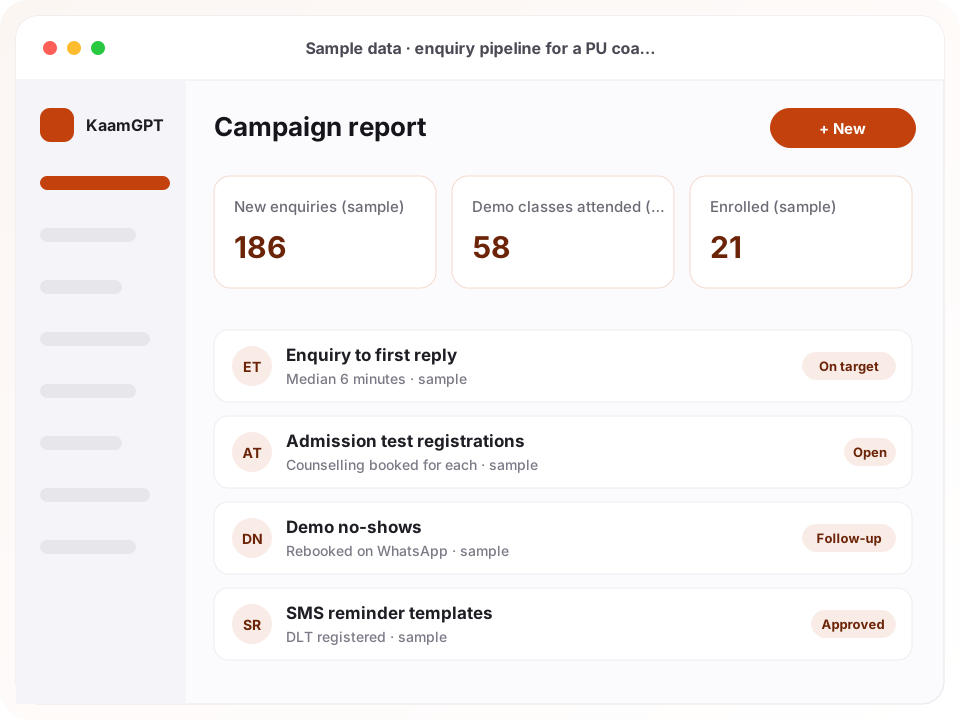
Enquiries are cheap in coaching; enrolments are not. The best lead generation company for coaching centres in Bengaluru is judged on what happens between a parent's first message and the fee receipt: how quickly someone replies, whether the family sits through a demo class, and whether the counselling conversation answers the parent's worries and the student's doubts in the same room.
KaamGPT builds and runs that pipeline with your counsellors. Campaigns and forms collect enquiries with consent, a simple scoring routine separates ready families from browsers, WhatsApp and calls move them to a demo class, and every stage is tracked to enrolment. The lead generation service carries a ₹24,999 monthly entry price and is usually live in about two weeks.
- ₹24,999monthly entry price for a managed enquiry-to-enrolment pipeline
- ~14 daysto connect forms, WhatsApp, the enquiry register and the first campaigns
- 5 stagestracked for every family: enquiry, qualified, demo booked, demo attended, enrolled
- Under 18counts as a child under the DPDP Act, so enquiry data is gathered from parents with care
Where do coaching enquiries go missing?
Most centres generate more enquiries than they convert, and the gap rarely comes from the ads. It comes from what happens after the phone rings or the form arrives, usually in the busiest teaching weeks of the year.
- The first reply comes the next day, by which time the parent has already booked a demo elsewhere.
- Enquiries sit in five places: a counsellor's personal WhatsApp, the front-desk register, the Instagram inbox, form emails and missed calls, with no single list of who needs a call.
- Every enquiry is treated the same, so counsellors spend evenings on curious students while ready parents wait.
- Families who miss a demo class are never rebooked, though many of them were simply caught in traffic or a school event.
- Counselling slides into pressure, such as warnings that seats will vanish tonight, which damages trust and, in an advertisement, would breach the CCPA's rule against false urgency.
How does the best lead generation company for coaching centres in Bengaluru build the pipeline?
From the counsellor's desk outwards. Before any campaign changes, we sit with the people who answer the phone and ask what a good enquiry sounds like, which questions parents always ask, when the desk is staffed and how many demo classes a week the centre can actually run. The pipeline is then designed to keep those people busy with the right families, not buried under the wrong ones.
Only after that do we decide where enquiries should come from. A centre with spare demo capacity and a strong course may need more campaigns; a centre already drowning in enquiries usually needs better qualification, faster replies and fewer, better-targeted ads. The counselling pipeline is measured end to end, so it is obvious which of the two problems you have.
A first-reply promise
Every new enquiry gets a written reply within minutes during staffed hours and a call soon after, with an automatic acknowledgement outside those hours saying when someone will call.
Score before you call
Class, board, area, course and start date decide priority, so the parent of a II PUC student asking about a crash course starting next week is called before a casual question about next year.
Demo classes as the hinge
The whole sequence aims at a demo class attended by both parent and student, with reminders the evening before and a rebooking message the moment someone misses it.
Honest counselling scripts
Scripts explain the course, the effort it demands, the fees and the exit policy, and say plainly that joining is no assurance of admission or rank, as the Ministry's model guidelines ask.
Closed-loop reporting
Enrolments recorded at the centre are matched back to the campaign and the counsellor, so budgets and coaching for the counselling team both follow what actually produced students.
What does a lead generation programme include for a coaching centre?
Seven working parts. Some centres need all of them; others already have strong campaigns and need only the follow-up machinery behind them.
Enquiry capture with consent
Forms on the website, in Meta lead ads and on landing pages ask the parent for what a counsellor needs, and state plainly how the details will be used. The scope is set out on our Lead Generation service page.
Lead generation in detail →Lead scoring and routing
Simple lead scoring rules, based on class, board, area, course and timing, mark which enquiries need a call within minutes and which can wait for a scheduled callback. Each one is routed to a named counsellor by course or centre.
Lead generation in detail →WhatsApp follow-up that sounds human
Quick replies for fees and timings, demo-class confirmations, reminders the evening before and a rebooking message for no-shows, all sent to parents who opted in. Our WhatsApp tools run the routine; counsellors handle the conversations.
WhatsApp campaigns in detail →Demo-class scheduling
A shared calendar of demo slots by course and centre, booked from forms, chats and calls, with reminders and a follow-up call after each demo class. Demo class bookings become the main number on the weekly report.
Lead generation in detail →Nurture for long decisions
Parents of Class 8 and 9 students, or aspirants planning a year ahead, receive a monthly email with exam notices, study advice and batch announcements, so the centre is remembered when they are ready.
Email campaigns in detail →Campaigns that feed the pipeline
Search, Instagram and Facebook campaigns bring the enquiries, planned around results weeks and batch starts. Our pages on Google Ads and Meta Ads for coaching centres cover them in detail.
Digital marketing in detail →Landing pages that convert
Each course gets a short page with fees, timings, batch size, faculty, the exit policy and a three-field demo-class form, so parents arrive at the counselling session already informed.
Websites in detail →Why trust KaamGPT with a coaching centre's enquiries?
Follow-up we already run for an academy
For OneMove Chess Academy in Bengaluru we handle WhatsApp demo-class confirmations, batch and fee reminders, automated replies to new enquiries and follow-ups so leads do not go cold.
Our own messaging tools
WhatsApp replies, reminders and broadcasts to opted-in parents run on KaamGPT's own tools, so routing and reporting sit in one place rather than across five apps.
Consent designed in
Forms are addressed to parents, say how details will be used, and keep students' data to the minimum, with the DPDP Act's rules on children in mind from the first field.
Counsellors kept at the centre
We build the machinery; your counsellors have the conversations. Scripts are written with them, and reports help them see which approach brings families to a demo class.
Enrolments as the measure
Reports lead with demo classes attended and enrolments by source, not with lead counts, so it is clear what each rupee of campaign spend produced.
What does lead generation cost a coaching centre, and what else fits?
A managed enquiry-to-enrolment pipeline for a coaching centre carries a ₹24,999 monthly entry price and is usually running within about fourteen days. Ad budgets for the campaigns that feed it are separate and paid to Google and Meta. The written quote states the courses, centres, enquiry volumes and channels covered.
Lead Generation
Recommended₹24,999/month
Typically 14 days
Institutes with steady enquiry volume and several counsellors or centres, who need qualification, follow-up and tracking to enrolment.
- Verified leads
- Multi-channel outreach
- CRM integration
- Lead scoring
- Replacement guarantee
Digital Marketing
₹19,999/month
Typically 15 days
Centres wanting every channel planned on one admissions calendar, with the pipeline as one part; the managed retainer has a ₹19,999 monthly starting point.
- Channel strategy
- Creative production
- Campaign management
- Weekly reporting
SEO
₹14,999/month
Typically 30 days
Institutes that want course pages to bring unpaid enquiries into the same pipeline over time; search work has a ₹14,999 monthly starting point.
- Technical audit
- Keyword research
- On-page optimisation
- Content plan
- Monthly reporting
Local SEO
₹4,999/month
Typically 14 days
Single tuition centres whose enquiries mostly come from Google Maps and need a tidy profile more than a pipeline; ₹4,999 a month per location.
- Google Business Profile optimisation
- Local keyword map
- Location page on-page fixes
- Citation building and NAP cleanup
- Local link outreach
- Review replies and posts
- Monthly report
Google Ads
₹4,999/month
Typically 30 days
Centres that mainly need more high-intent enquiries in results weeks; campaign management alone has a ₹4,999 monthly starting point.
- Account setup
- Keyword strategy
- Ad copy testing
- Conversion tracking
- Bid optimisation
Meta Ads
₹4,999/month
Typically 30 days
Centres that need parents to know them before decision weeks, with lead forms feeding counsellors; management has a ₹4,999 monthly starting point.
- Creative testing
- Audience building
- Retargeting funnels
- Pixel setup
- Weekly reporting
- If your enquiry handling is already strong and you need only more enquiries, a campaign-only plan may suit you better, and we will say so.
- SMS through DLT-registered headers and templates, and WhatsApp Business messaging, carry their own usage charges, which are shown in the quote.
| Package | Starts at | Timeline | Best for |
|---|---|---|---|
| Lead Generation | ₹24,999/month | Typically 14 days | Institutes with steady enquiry volume and several counsellors or centres, who need qualification, follow-up and tracking to enrolment. |
| Digital Marketing | ₹19,999/month | Typically 15 days | Centres wanting every channel planned on one admissions calendar, with the pipeline as one part; the managed retainer has a ₹19,999 monthly starting point. |
| SEO | ₹14,999/month | Typically 30 days | Institutes that want course pages to bring unpaid enquiries into the same pipeline over time; search work has a ₹14,999 monthly starting point. |
| Local SEO | ₹4,999/month | Typically 14 days | Single tuition centres whose enquiries mostly come from Google Maps and need a tidy profile more than a pipeline; ₹4,999 a month per location. |
| Google Ads | ₹4,999/month | Typically 30 days | Centres that mainly need more high-intent enquiries in results weeks; campaign management alone has a ₹4,999 monthly starting point. |
| Meta Ads | ₹4,999/month | Typically 30 days | Centres that need parents to know them before decision weeks, with lead forms feeding counsellors; management has a ₹4,999 monthly starting point. |
What decides the cost of a coaching centre's lead generation?
Volume and complexity. A single centre with two courses and one counsellor needs a simpler pipeline than an institute with four locations, eight programmes and a counselling team working shifts. The number of channels feeding enquiries, the languages used and whether a usable enquiry register already exists all change the work involved.
When comparing any lead generation company for coaching centres in Bangalore, ask them to separate their fee from ad budgets and messaging charges, and ask what they report: enquiries alone, or demo classes and enrolments. Published starting points are on our pricing page, and the written quote names everything else.
- Number of courses, centres and counsellors to route enquiries between.
- Expected enquiry volume, especially in the weeks after results.
- Channels feeding the pipeline: website, Google, Meta, Maps, walk-ins and calls.
- Kannada and English scripts, messages and forms.
- Whether an enquiry register or CRM already exists or must be set up.
- Messaging usage for SMS and WhatsApp reminders, which is charged by the providers.
How is a coaching centre's enquiry pipeline set up?
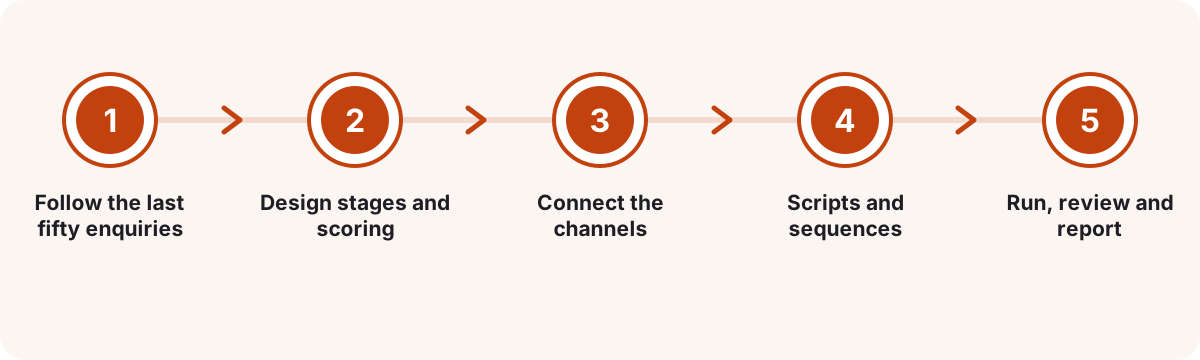
Follow the last fifty enquiries
We trace a recent sample of enquiries from first contact to outcome, noting where each came from, how long the first reply took and where families dropped away.
Design stages and scoring
Together with your counsellors we define the stages, the scoring rules, the reply targets and the demo-class slots each centre can realistically offer.
Connect the channels
Website forms, Meta lead forms, WhatsApp, missed calls and walk-ins are brought into one register, with consent wording on every form and DLT templates for SMS.
Scripts and sequences
Counselling scripts, WhatsApp quick replies, reminders and rebooking messages are written, reviewed by the centre and switched on.
Run, review and report
Each week we review reply times, demo bookings, attendance and enrolments by source and counsellor; each month we adjust campaigns and scripts to match.
Which coaching businesses need a structured enquiry pipeline most?
- Multi-branch entrance institutesJEE, NEET and KCET centres with several locations and counsellors, where enquiries must be routed and tracked consistently.
- Integrated PU programmesHigh-value two-year decisions where a family may need three or four conversations before paying.
- Crash-course operatorsShort windows after results, when hundreds of enquiries can arrive in days and speed decides everything.
- Civil services academiesAdult aspirants who enquire months ahead and need nurturing until a batch opens.
- Study-abroad test prepStudents and young professionals whose start date depends on application deadlines abroad.
- Schools in admission seasonEnquiries, campus visits and application follow-ups that need the same discipline as coaching admissions.
- Activity academies for childrenTrial-class bookings for chess, abacus or coding, where reminders and quick rebooking matter most.
How do Bengaluru families move from enquiry to admission?
The path differs by neighbourhood, and a pipeline should respect that. In the north-west, around Rajajinagar, Vijayanagar and Seshadripuram, many families still start with a phone call or a walk-in, bring a grandparent or an uncle to the counselling session, and prefer to talk in Kannada. A centre there needs counsellors free in the evenings and on Saturday mornings, and follow-up that sounds like a person rather than a machine.
In the southern layouts such as JP Nagar and Padmanabhanagar, parents often shortlist three or four centres and visit them on consecutive weekends, comparing faculty, batch size and fees side by side. The centre that sends a clear written summary after the visit, with timings, fees and the exit policy, tends to stay in the conversation longest.
Out towards Electronic City and the tech parks, the first contact is more often a form or a WhatsApp message sent late at night, and both parents may work long hours. These families want quick written answers, online demo classes as an option, and counselling calls scheduled around office meetings. One pipeline can serve all three patterns, but only if it is set up to notice which family it is dealing with.
What should happen in the first hour after a coaching enquiry?
Three things, in order. An acknowledgement goes out at once, on WhatsApp or SMS, thanking the parent, naming the counsellor who will call and saying when. A counsellor calls within the hour during staffed hours, with the enquiry's details already on screen: class, board, course, area and how the family found the centre. And before the call ends, the parent is offered a specific demo-class slot rather than a vague invitation to drop by.
Speed matters because coaching decisions are comparative. A parent who enquires on the evening of a results day is usually asking several centres at once, and the first useful conversation sets the standard the others are judged against. A reply the following afternoon often reaches a family that has already booked a demo elsewhere.
Outside staffed hours, honesty works better than pretending. An automatic message that says a counsellor will call at ten the next morning, and then a call at ten, builds more trust than an instant chatbot that cannot answer a single question about fees.
A good lead generation company for coaching centres in Bangalore treats the first hour as a handover, not a sales pitch. The person who replies confirms the student's class, board and target exam, says which batch or demo slot fits, and states when a counsellor will call. If the enquiry arrives at 11 at night from a parent in Electronic City, the reply says so honestly and offers a morning slot instead of pretending someone is at the desk.
Every enquiry gets an owner by name in the register. When two branches share a phone line, the owner is the branch nearest the family's home or the student's school, decided once and recorded, so the same parent is not called by two counsellors with two different fee quotes.
- Minute one: acknowledgement naming the counsellor and the call time.
- Within the hour: a call with the enquiry details on screen.
- Before hanging up: a specific demo-class slot, confirmed in writing.
- Evening before the demo: a reminder with the address and what to bring.
How should counselling sessions and admission tests be run honestly?
The Ministry of Education's 2024 model guidelines describe a counselling standard that also happens to convert well. Before enrolling, students should be told how difficult the exam is, what the syllabus demands and how much effort preparation takes; they should hear about other career options besides engineering and medicine; and parents and students should be told plainly that joining a coaching centre is no assurance of admission to any institution or of success in the exam.
The same guidelines allow an admission or mock test to assess a student's capability, after which the centre may convey realistic expectations to the parents and suggest a way forward. Scholarship or admission tests are therefore a legitimate source of enquiries, provided they are used to counsel, not to pressure. The guidelines also say a centre should not make the results of its internal assessments public, so test scores belong in a private conversation, not on a poster.
Pressure tactics fail on both trust and law. Telling a family that seats will be gone by tonight, when they will not, is the kind of false urgency the CCPA's coaching guidelines forbid in advertising, and it tends to produce enrolments that leave within weeks. A counselling pipeline that gives parents fees, timings and the exit policy in writing closes fewer families on the spot and keeps more of them for the whole course.
Admission tests deserve particular care. Under the Ministry of Education's 2024 model guidelines a centre may hold one to assess a student's capability, must tell families that admission is no assurance of success, and should not publish internal test results. We write the counsellor's script around those three points: what the test measured, what it means for the batch the student would join, and what the centre cannot promise.
Scholarship or fee-concession tests remain a legitimate way to invite families in, provided the concession terms are written down and the invitation does not create false urgency. The CCPA's 2024 coaching guidelines and ASCI's education guidelines both treat invented scarcity, such as seats that are not really limited, as misleading.
What does the DPDP Act mean for coaching enquiry data?
The Digital Personal Data Protection Act, 2023 defines a child as anyone who has not turned 18, which covers most coaching students. Section 9 requires verifiable consent from a parent or lawful guardian before a child's personal data is processed, and forbids tracking, behavioural monitoring of children and advertising targeted at them. The DPDP Rules were notified on 14 November 2025 with an eighteen-month period for phased compliance.
For a coaching centre, the practical steps are straightforward even before every deadline arrives. Address enquiry forms to the parent. Ask only for what a counsellor needs. Explain in plain words what the details are for and how to have them removed. Keep enquiry records in one controlled system rather than on counsellors' personal phones, and never build advertising audiences from students' data. This is general guidance, not legal advice; a lawyer should review your forms and notices.
In practice that means the enquiry form asks for the parent's details first, records that the parent agreed to be contacted and for what, and keeps the student's marks or test reports out of advertising audiences altogether. Campaigns that feed the pipeline are aimed at parents; the Google Ads page for coaching centres explains why Google does not allow personalised ads to under-18s anyway.
- Forms addressed to the parent, not the student.
- Minimum fields: parent name, phone, class, board, course, area.
- A clear line on purpose and how to opt out.
- One controlled enquiry register; no personal-phone spreadsheets.
- No advertising audiences built from minors' data.
How do SMS and WhatsApp follow-ups stay within the rules?
Promotional and service SMS in India run through TRAI's commercial communication framework. Under the 2018 regulations, a sender needs registered headers, registered content templates and recorded customer consent, all held on the telecom operators' distributed ledger systems. A centre that sends batch reminders or demo confirmations by SMS needs its header and each template registered before the messages will be delivered reliably.
WhatsApp works on permission too. Parents should opt in to messages from the centre, usually through a tick box or a clear statement on the form or in the first chat, and broadcasts should go only to those who agreed. Messages that are useful, such as confirmations, reminders and replies to questions, keep the channel welcome; daily promotions to a whole contact list do the opposite and invite blocks and reports.
Keep separate templates for reminders and for promotions. A demo-class reminder, a counselling confirmation or a fee-receipt message is service traffic the family expects; an offer for a crash course is promotional and goes only to families who agreed to receive it. Registering both kinds of SMS template under DLT before a results season avoids the week-long wait when volumes are highest.
How should a coaching centre measure cost per enrolment?
Group enquiries by intake window and follow them to the end. For each results season or batch start, count how many enquiries came from each source, how many were qualified, how many booked and attended a demo class, and how many enrolled. Divide what each source cost, including ad spend and our fee, by the enrolments it produced. That figure, by course, is the one to manage.
Two cautions apply. Coaching decisions can take months, so a source that looks weak in the first fortnight may produce enrolments later; and some enrolments come from families who saw an ad, then asked a friend, then walked in. Asking every new family how they first heard of the centre, and recording it in the register, fills most of that gap without any tracking of minors.
That is the honest test of any lead generation company for coaching centres in Bangalore, including us: cost per enrolment by course, not the number of form fills. The figure tells you whether search, social, local listings or referrals are actually filling the JEE, NEET, KCET or board batches, and which ones only fill the register.
Compare sources across a full year from enquiry to enrolment before cutting any. Local listings tend to bring nearby walk-ins all year (see the local SEO page for coaching centres), while search and Meta campaigns peak around results. The lead generation guide and Google Ads service explain how those feeds are run.
- Lead generation for coaching
- ₹24,999 monthly entry price; about two weeks to go live
- Stages tracked
- Enquiry, qualified, demo booked, demo attended, enrolled
- First-reply target
- Minutes during staffed hours; a stated callback time otherwise
- Children's data
- DPDP Act: verifiable parental consent; no ads targeted at under-18s
- SMS rules
- TRAI DLT: registered headers, templates and consent
- Measure that matters
- Cost per enrolment by course and source
Where this applies around Bengaluru, Karnataka
- Bengaluru
- Karnataka
- India
- Rajajinagar
- Vijayanagar
- Seshadripuram
- JP Nagar
- Electronic City
- Padmanabhanagar
Frequently asked questions
26 answersHow much does lead generation cost for a coaching centre in Bangalore?
KaamGPT's managed pipeline for a coaching centre has a ₹24,999 monthly entry price. Ad budgets for the campaigns that feed it are paid separately to Google and Meta, and SMS or WhatsApp usage is charged by those providers. More centres, courses or languages change the written quote.
How can a coaching centre convert more enquiries into admissions?
Reply within minutes, qualify before calling, offer a specific demo-class slot on the first call, remind families the evening before, rebook no-shows at once, and give parents fees, timings and the exit policy in writing after the visit. Most of the gain comes from speed and follow-up rather than from more advertising.
How fast should a coaching centre reply to an enquiry?
Within minutes during staffed hours, with a call inside the hour. Outside those hours, send an honest acknowledgement saying exactly when a counsellor will call, and keep that promise. Parents enquiring after results usually contact several centres the same evening.
Can a coaching centre collect student data without parental consent?
Under the DPDP Act 2023, anyone under 18 is a child, and processing a child's personal data needs verifiable consent from a parent or guardian. The Rules give businesses an eighteen-month phase-in from November 2025, but the safe course now is to address forms to parents, collect only what is needed and explain its use.
Do coaching centres need DLT registration for SMS?
Yes, for commercial SMS. TRAI's 2018 regulations require registered sender headers, registered content templates and recorded consent, so demo-class confirmations and batch reminders sent by SMS need the header and each template registered first. We prepare the templates with the centre.
Which lead generation company in Bengaluru works with coaching centres?
KaamGPT builds and runs enquiry pipelines for coaching and tuition centres from Bengaluru, working with your counsellors by phone, WhatsApp and video call. Whoever you speak to, ask what they report: lead counts alone, or demo classes and enrolments by source.
Are scholarship tests a good way to get coaching enquiries?
They can be, if used honestly. The Ministry of Education's model guidelines allow an admission or mock test to assess capability and help the centre set realistic expectations with parents. Use the result in a private counselling conversation, do not publish internal test results, and never use the score to pressure a family.
What should a coaching counsellor tell parents?
What the course covers, how hard the exam is and how much work it takes, the batch size, timings, faculty, fees and exit policy, and other career routes worth considering. The Ministry's model guidelines also ask centres to tell families that joining is no assurance of admission or success, which builds more trust than any promise.
What makes the best lead generation company for coaching centres in Bengaluru different?
It is measured on enrolments, not lead counts, and it understands coaching's calendar and rules: results-week surges, demo classes, parental consent for students' data, DLT for SMS and honest counselling. Ask to see a sample report with demo classes and enrolments by source before you sign anything.
Should we buy coaching leads from a lead vendor?
We advise against bought lists. Families on them did not ask to hear from your centre, many will be students under 18 whose data needs parental consent, and messaging them risks complaints under TRAI's rules and the DPDP Act. Enquiries your own campaigns and website generate are slower to build but far more valuable.
What is lead scoring for a coaching centre?
A simple set of rules that ranks enquiries by how ready the family is: the student's class, the course asked about, the start date, the area and whether a parent made contact. High scores get a call within minutes; lower ones get a scheduled callback or a nurture message. It keeps counsellors on the right families.
How do you handle demo-class no-shows?
A friendly message within the hour offering two new slots, then a call the next day if there is no reply. Many no-shows are traffic, a school event or a forgotten time rather than lost interest, and a quick rebooking recovers a good share of them.
Can you work with our existing CRM or register?
Yes. If your centre already uses a CRM, spreadsheet or admissions software, we connect forms and channels to it where possible, or set up a simple shared register if nothing suitable exists. What matters is that every enquiry lives in one place with its source and stage.
Do you make calls to parents on our behalf?
Our focus is the system: capture, routing, scripts, messaging and reporting. The conversations themselves are best handled by your counsellors, who know the courses and the centre. If you need help with first-response calls in a peak window, tell us and we will discuss what is practical.
Can a coaching centre in Bengaluru enrol a Class 8 student for JEE foundation?
The Ministry of Education's 2024 model guidelines say a centre should not enrol a student below 16 years of age or before the secondary school examination. They were sent to states as a model, and Karnataka's own rules sit under the Karnataka Tutorial Institutions Rules, 2001, so check the current position with your advisor. For the pipeline, it means asking the student's class at enquiry and routing younger families honestly.
Can an admission test be used to decide which batch a student joins?
The 2024 Ministry guidelines allow an admission or mock test to assess a student's capability, and ask centres to tell parents and students that admission is no assurance of success. They also discourage segregating batches by academic performance. We use the test to start an honest counselling conversation about readiness and workload, not to sort students into toppers and the rest.
Can we publish the scores from our scholarship test to attract enquiries?
No, not as marketing. The 2024 Ministry guidelines say results of internal assessment tests should not be made public, and the CCPA's coaching guidelines treat unsubstantiated success claims as misleading. Share each student's report privately with the family during counselling. The test still generates enquiries; it simply stops being an advertisement for the centre's results.
Can our follow-up messages use a topper's photo and rank?
Only with the candidate's written consent, taken after the selection, under the CCPA's 2024 coaching guidelines. The same rules require the rank, the course name, its duration and whether the course was paid to be stated alongside the photograph, with any disclaimer in the same font as the claim. If any of that is missing, the WhatsApp brochure goes out without the photo.
When is enquiry volume highest for JEE and NEET coaching in Bangalore?
Around results. Families compare long-term and repeater programmes once JEE (Main) and NEET (UG) results are out, and again after board results. NEET (UG) 2026 was held on 3 May 2026, and NTA's calendar tentatively places JEE (Main) 2027 session 1 in late January 2027. We staff counsellor slots and reminder templates before each window rather than during it.
How does KCET change enquiries for PU coaching in Bengaluru?
Karnataka students preparing for engineering and medical seats often want KCET preparation alongside the PU board syllabus and NEET or JEE. The Karnataka Examinations Authority runs UGCET and UGNEET counselling. An enquiry form that asks which exams the student is targeting lets the counsellor offer the right combined batch on the first call instead of a generic brochure.
Should a counsellor talk to the parent or the student first?
Both, together where possible. The parent usually pays and worries about fees, distance and safety; the student decides whether they will attend with interest. A counselling slot booked when both can come, often a weekday evening or Saturday morning, avoids the second meeting that many families never return for. The pipeline records who attended so the next call fits.
What is a fair exit policy to state during counselling?
That is your decision, but the 2024 Ministry guidelines expect the fee and exit policy to be published on the centre's website, along with courses, duration and tutor qualifications. We make sure the counsellor sends the same written terms after the session, so the family reads exactly what the website says. Clear terms reduce late disputes and help families decide.
Do you work with chess, music or dance academies as well as exam coaching?
Yes. The CCPA coaching guidelines exclude sports, dance, theatre and other creative activities, but consent for children's data and the TRAI SMS rules still apply. Our <a href="/works/onemove-chess-academy-website-seo-social-media">OneMove Chess Academy work</a> in Bengaluru included a website with online demo-class booking, local SEO, social media, ads and WhatsApp follow-up. That case study publishes no result figures, so we quote none.
Can students fill in the enquiry form themselves?
They can start it, but a student under 18 is a child under the DPDP Act, so processing their data needs verifiable consent from a parent or guardian. In practice the form asks for the parent's name and mobile, and the counsellor confirms consent with the parent before anything else is stored or any campaign message is sent. Ads are aimed at parents, not children.
How long does a coaching family take to decide?
It varies. A parent searching the week after board results may join within days; a family planning a two-year JEE or NEET programme may visit three centres over several weekends. The pipeline keeps each family at its stage with a next action and date, so a slow decision is followed up politely rather than forgotten or chased daily.
How do we start with KaamGPT on coaching admissions?
Share how last season's enquiries were recorded, even a spreadsheet, and the courses you are filling next. We return a written quote and a two-week setup plan for forms, WhatsApp, the register and SMS templates. Call or WhatsApp +91 79767 82366 to speak to our Bengaluru team. You can also compare the <a href="/best-meta-ads-agency-for-coaching-centres-in-bengaluru">Meta Ads page for coaching centres</a>.