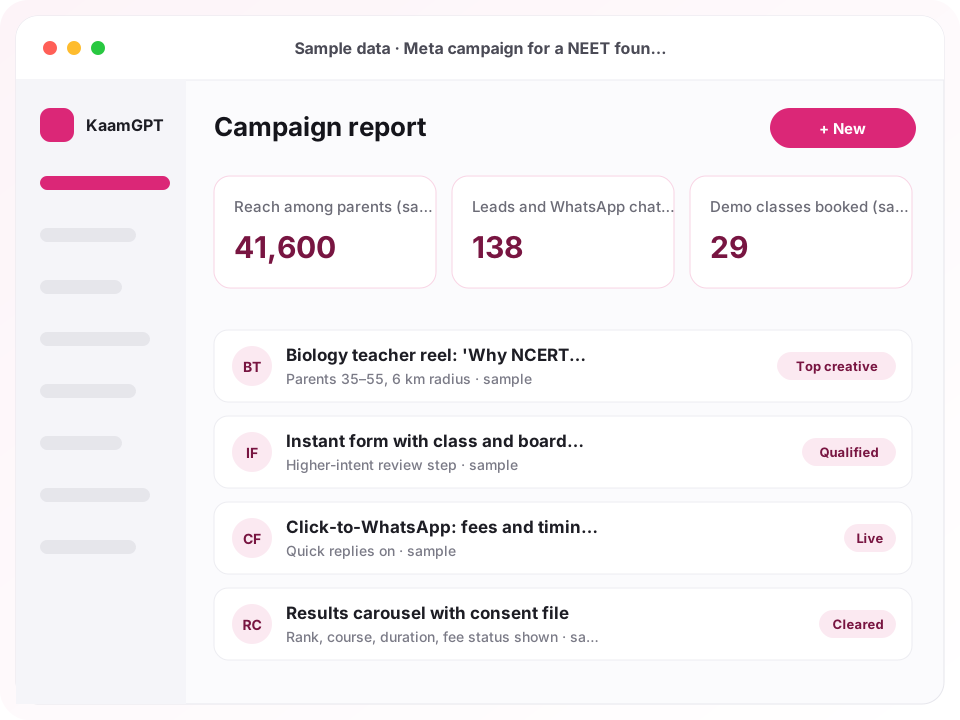
On Instagram and Facebook, a coaching centre is really talking to parents. The best meta ads agency for coaching centres in Bengaluru starts from that fact: Meta lets advertisers reach teenagers by age and location only, and the person who compares fees, checks the faculty and signs the admission form is usually a mother or father scrolling after work in Jayanagar, Hebbal or Whitefield.
KaamGPT plans Meta campaigns around those parents. We film faculty-led reels and classroom walk-throughs with your team, build results creatives that carry the disclosures the CCPA requires, and set up lead forms and click-to-WhatsApp ads that a counsellor can follow up within minutes. Running these Meta campaigns costs from ₹4,999 per month in management, and Meta debits the media spend from the centre's own ad account.
- ₹4,999per month is where management of a centre's Instagram and Facebook campaigns begins
- ~30 daysto set up audiences, film the first creatives and settle lead handling
- Age + locationremain the only levers Meta offers advertisers for reaching under-18s
- 1 demo classis the action every ad, form and WhatsApp reply is built to produce
Which Bengaluru parents see a coaching centre's Instagram ads, and when?
Meta audiences are drawn as circles on a map, which makes Bengaluru's geography part of the plan. A centre in Banashankari draws families from the surrounding stages and from Padmanabhanagar and JP Nagar, and its ads should reach parents within that ride, rather than on the far side of the Outer Ring Road jams. A centre in Sahakar Nagar or Hebbal serves the northern layouts, where classes are thinner on the ground and a longer ride is accepted.
The eastern tech corridors bring their own rhythm. In Whitefield and Marathahalli, many parents work in technology firms, scroll late in the evening, and respond to content about weekend batches, blended online and classroom options, and CBSE or ICSE syllabi. In the older south and north-west, state-board and PU parents respond more to content about KCET, II PUC subjects and teachers they may already have heard of through other families.
Timing follows the school year rather than the festival calendar. Parents of Class 9 and 10 students are open to awareness content through the autumn and winter, long before board results force a decision. During the board and entrance exams themselves attention drops sharply, and in results weeks Meta works best as a reminder to parents who already know the centre, while Google handles the urgent searches.
Which pieces make up a coaching centre's Meta programme?
Six parts, following a parent from the first reel they notice to the demo class they book. Season and course change the balance between them, never the list.
Parent audiences around each centre
Campaigns go to grown-ups of an age to be your students' mothers and fathers, inside a radius drawn around each centre, with Kannada and English versions where useful. Inclusions are listed under Meta Ads in our services, and the general method is laid out in our Bengaluru Meta Ads guide.
Meta Ads in detail →Faculty reels and classroom footage
Short faculty reels in which a teacher explains one concept, plus walk-throughs of the real classroom and reception, filmed by your staff from our shot list or by a crew quoted separately. Real teachers persuade parents more than any graphic.
Social media in detail →Results creatives built within the rules
Results carousels and posts use only students who gave written consent after selection and who completed the advertised programme, with rank, course name, duration and fee status beside every face, and disclaimers in the same font as the claim.
Meta Ads in detail →Lead form ads with real qualification
Instant forms ask for class, board, area and preferred batch time, add a review step that filters casual taps, and include a plain line on how the parent's details will be used. Lead form ads that ask nothing produce lists, not students.
Meta Ads in detail →Click-to-WhatsApp ads and replies
Plenty of parents would sooner chat than fill a form. A click-to-WhatsApp ad starts a thread already stocked with answers on fees, slots and booking a trial, logged against the ad that started it so we can see which creative produced students.
WhatsApp campaigns in detail →Paid search for the urgent weeks
Instagram makes a centre familiar; Google answers the families searching in results week. Where both run, the plan assigns each its weeks and its job, as described on our coaching-centre Google Ads page.
Google Ads in detail →Season by season, how does the best Meta Ads agency for coaching centres in Bengaluru plan the work?
In three layers. The widest layer introduces the centre to parents in its catchment through faculty reels and classroom footage, months before they need coaching. The middle layer re-shows the centre to parents who watched, visited the website or messaged, with demo-class invitations and answers to common questions. The narrowest layer asks for the booking, through instant forms and click-to-WhatsApp ads, timed to the weeks when families decide.
Every layer carries a separate budget and a separate yardstick. Awareness is judged on how many local parents watched a meaningful part of a reel, the middle layer on visits and conversations, and the booking layer on demo classes attended. Lumping all three into a single campaign is how many centres end up deciding Instagram is useless for them.
Catchment radius, not the whole city
Each centre gets its own radius drawn around the schools and colleges its students come from, so a Banashankari centre never pays to reach parents in Hebbal.
Teachers on camera
Faculty reels lead every season, because parents want to see who will teach their child. A teacher solving one problem clearly does more than a montage of achievements.
Separate creative for each course
Foundation, integrated PU, repeater and school tuition each get their own ads, so a Class 8 parent is not shown a crash course and a repeater student's parent is not shown a Class 8 offer.
A consent file for every face
Every student, parent or teacher who appears in an ad has a signed consent on file, and results creatives carry the disclosures the CCPA's coaching guidelines require.
Leads called within minutes
Form leads and WhatsApp chats go straight to a counsellor's phone during staffed hours; speed of reply decides more bookings than any targeting setting.
What do Meta Ads and the related packages cost a coaching centre?
Management of one coaching centre's Meta campaigns is priced from ₹4,999 per month, and the first thirty days or so go on audiences, creative and lead routing. Media spend never touches our invoice; Meta debits it from the centre. The written quote lists the courses, centres, languages and creative volume included.
Meta Ads
Recommended₹4,999/month
Typically 30 days
Centres that want local parents to know their faculty and classrooms before decision weeks, and want form and WhatsApp leads followed up properly.
- Creative testing
- Audience building
- Retargeting funnels
- Pixel setup
- Weekly reporting
Digital Marketing
₹19,999/month
Typically 15 days
Institutes wanting Instagram, search, WhatsApp and the website on a shared admissions calendar; that retainer is priced from ₹19,999 per month.
- Channel strategy
- Creative production
- Campaign management
- Weekly reporting
SEO
₹14,999/month
Typically 30 days
Centres whose website is too thin to convert the parents ads send there; organic search work is priced from ₹14,999 per month.
- Technical audit
- Keyword research
- On-page optimisation
- Content plan
- Monthly reporting
Local SEO
₹4,999/month
Typically 14 days
Tuition classes that families look up on Google Maps after seeing a reel; profile care is priced from ₹4,999 per month per site.
- Google Business Profile optimisation
- Local keyword map
- Location page on-page fixes
- Citation building and NAP cleanup
- Local link outreach
- Review replies and posts
- Monthly report
Google Ads
₹4,999/month
Typically 30 days
Centres needing to catch urgent results-week searches; search campaign management is likewise priced from ₹4,999 per month.
- Account setup
- Keyword strategy
- Ad copy testing
- Conversion tracking
- Bid optimisation
Lead Generation
₹24,999/month
Typically 14 days
Large institutes wanting every Meta lead screened, rung and tracked through to enrolment; priced from ₹24,999 per month.
- Verified leads
- Multi-channel outreach
- CRM integration
- Lead scoring
- Replacement guarantee
- Creative production beyond what your staff can film with our shot list, such as a professional shoot, is quoted on its own.
- Meta's policies and ad formats change; when they do, we adjust campaigns and explain the change in the monthly report.
| Package | Starts at | Timeline | Best for |
|---|---|---|---|
| Meta Ads | ₹4,999/month | Typically 30 days | Centres that want local parents to know their faculty and classrooms before decision weeks, and want form and WhatsApp leads followed up properly. |
| Digital Marketing | ₹19,999/month | Typically 15 days | Institutes wanting Instagram, search, WhatsApp and the website on a shared admissions calendar; that retainer is priced from ₹19,999 per month. |
| SEO | ₹14,999/month | Typically 30 days | Centres whose website is too thin to convert the parents ads send there; organic search work is priced from ₹14,999 per month. |
| Local SEO | ₹4,999/month | Typically 14 days | Tuition classes that families look up on Google Maps after seeing a reel; profile care is priced from ₹4,999 per month per site. |
| Google Ads | ₹4,999/month | Typically 30 days | Centres needing to catch urgent results-week searches; search campaign management is likewise priced from ₹4,999 per month. |
| Lead Generation | ₹24,999/month | Typically 14 days | Large institutes wanting every Meta lead screened, rung and tracked through to enrolment; priced from ₹24,999 per month. |
How should a coaching centre budget for Instagram and Facebook ads?
Split the budget by layer and by season. Purely to illustrate, a one-room tuition class could keep a trickle of spend on awareness reels through the autumn and raise its spend on lead forms and WhatsApp ads for a few weeks around results, while a multi-course institute runs each layer for each course. The right amounts depend on your catchment's size, how many seats are open and what one enrolment is worth.
Before signing with a meta ads agency for coaching centres in Bangalore, find out how it plans to reach parents rather than students, how results creatives will meet the CCPA's disclosure and consent rules, and how fast leads will be called. Those answers say more than any cost-per-lead promise. Our pricing page carries the published starting fees.
- How many courses need their own creatives and audiences.
- How many centres, each with its own catchment radius.
- How much video your staff can film, and whether a professional shoot is needed.
- Whether ads and forms need both Kannada and English.
- How quickly the centre can call leads, which changes how much budget is worth spending.
- Whether results creatives are planned, which needs consent collection and disclosure checks.
Which coaching businesses benefit most from Meta Ads?
- Foundation programmes for Classes 8 to 10Long decisions by parents who are open to awareness content well before board results, subject to how the state applies the age line.
- Integrated PU entrance programmesTwo-year JEE, NEET and KCET courses where parents want to see faculty and facilities before visiting.
- School tuition centresNeighbourhood classes that use a small radius and faculty reels to become the familiar name on the street.
- Children's activity academiesChess, abacus, coding and art-based learning classes, where a short reel of a real session sells the demo class.
- Schools during admission seasonCampus walk-throughs, teacher introductions and admission-day reminders for parents in the school's catchment.
- Adult test-prep and civil servicesAspirants who can be targeted directly as adults, with content on strategy, faculty and test series.
- Language and study-abroad classesIELTS, GRE and spoken-English classes reaching young adults and working professionals near each centre.
Week by week, how does a new Meta programme get going?
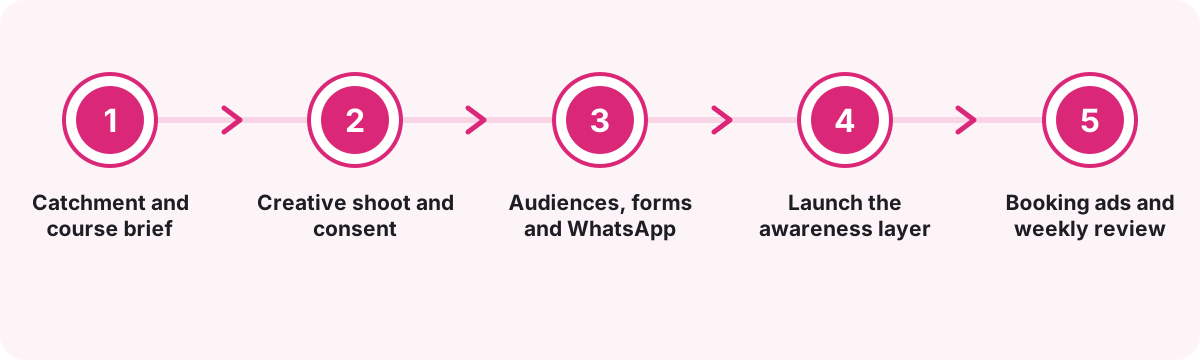
Catchment and course brief
We map where each centre's students come from, list the courses to promote this season and agree which of them parents decide on first.
Creative shoot and consent
Your team films faculty reels and classroom footage from our shot list; consents are collected for everyone on camera, and results material is checked against the coaching rules.
Audiences, forms and WhatsApp
Parent audiences are built for each centre, instant forms are written with qualifying questions, and click-to-WhatsApp replies are set up for the counsellors.
Launch the awareness layer
Faculty reels go live first to build a local audience of parents who have watched, which later booking ads can return to.
Booking ads and weekly review
Lead form and WhatsApp ads go to engaged parents in the decision weeks, and each week we review leads, calls and demo classes by creative and centre.
Why choose KaamGPT for a coaching centre's Meta Ads?
Parent-audience campaigns for an academy
Our Meta work for OneMove Chess Academy in Bengaluru targets parents by area and interest, with tournament reels, lead forms and click-to-WhatsApp ads that invite families to a demo class.
Creative checked against the coaching rules
Topper material, testimonials, urgency lines and any stress imagery are cleared against the consumer authority's coaching rules and the ASCI education code before a rupee is spent promoting them.
Faculty-first content
We help your teachers become the face of the centre on Instagram, with short, useful explanations rather than posters, because that is what parents actually stop to watch.
Leads that reach a person
Each form fill and WhatsApp chat lands with a named counsellor and tracked to a demo class, so you can see which reel produced which enrolment.
Accounts in the centre's name
Page, Instagram profile and ad account remain registered to the centre; KaamGPT works through partner access, and Meta bills the media directly.
Who should a coaching centre's Meta ads actually reach?
Parents first, by design. Since February 2023 Meta has allowed advertisers to reach teens using only age and location; gender was removed as an option, and teens' likes and follows no longer shape the ads they see. A coaching ad can still be shown to sixteen-year-olds in a radius, but it cannot be aimed at teenagers interested in physics or following a rival institute, and it should not try to work around that.
Indian privacy law points the same way. Under section 9 of the 2023 data protection Act, nobody below eighteen may be singled out for targeted advertising, and a parent has to give verifiable consent before a minor's details are used at all. Lookalike seeds built from students' mobile numbers, or retargeting pools made of teenagers, are precisely what that section was drafted against.
The practical answer is to make parents the audience. Adults in the age range of your students' parents, within each centre's catchment, can be reached with content about faculty, safety, batch size and results. Students meet the same content through their parents' phones, through the centre's organic posts and through friends, without anyone profiling them.
- Parent audiences: adults in the right age band, inside each centre's radius.
- Engaged audiences: adults who watched a reel or messaged the page.
- Customer lists: only adults who gave consent, never students' data.
- Teens: reachable by age and location only; never by interests.
What can a coaching centre show in an Instagram ad?
Results can appear in a reel or carousel, but the paperwork comes first. The consumer authority's 2024 rules for coaching want a successful student's signed permission, obtained once the result is out, before that student's name, face, words or video are used. Next to each face, the creative must spell out the rank, which course the student took and for how long, and whether it was a paid course. A twenty-face collage therefore means twenty permissions and twenty sets of captions.
ASCI's education code governs the mood of the ad. Instagram favourites such as the student pulling an all-nighter, the child skipping dinner over a textbook, or the sad face beside a poor mark card are all off the table, as is any hint that low marks make a child unloved. Countdown timers that frighten families into booking, and visuals implying physics is for boys and biology for girls, fall foul of the same code. The building, labs and library on screen have to exist today, and a topper quoted must have finished that very programme with you.
Two further points come from the Ministry of Education's model guidelines. Internal test scores are meant to stay inside the centre, so a 'this week's mock leaders' reel is a poor idea, and classes are not supposed to be sorted by marks, which makes an 'elite rankers batch' campaign hard to defend. Content showing how teachers lift every student serves the same purpose without the risk.
How should Instagram ads for coaching centres differ from posters?
A poster is read in a second on a wall; a reel is watched, skipped or remembered in the first two seconds of a feed. Instagram ads for coaching centres that copy the hoarding, a collage of faces, a list of exams and a phone number, are scrolled past by the very parents they want. What stops a parent is a recognisable teacher, a question they have asked themselves, or a classroom that looks like somewhere their child would sit.
So the creative brief changes. Each ad has one idea: one teacher, one concept, one reason to book a demo. Captions carry the facts a parent would otherwise phone to ask, such as timings, batch size, area and the demo date, so the call that follows is about the child rather than the basics. Text on screen is kept short and readable without sound, because many parents watch on mute.
Faculty reels lead. A thirty to sixty second clip in which a teacher clears one common doubt, such as why a particular NEET biology topic trips students up, shows a parent exactly what their child would experience. Classroom walk-throughs come next, showing the room, the board, the batch size and the reception, followed by short answers to the questions parents ask counsellors every day.
Student-facing content works best on the centre's organic profile rather than in paid campaigns: study tips, timetable ideas, exam notices explained. Parents often see it anyway, and it builds the familiarity that makes a paid demo-class invitation feel natural. Kannada or bilingual versions help in parts of the city where families prefer them.
Results still have a place, but as proof rather than as the whole message. A single consented student with every required disclosure, telling how the course helped, often does more than a wall of faces, and it is far easier to keep within the rules.
- Faculty reels: one teacher, one concept, under a minute.
- Walk-throughs: entrance, classroom, board, reception, study area.
- Parent questions: fees, timings, batch size, travel, exit policy.
- Results posts: consented, disclosed, latest completed year only.
- Demo-day reminders: date, time, what to bring, how to book.
How should lead forms and WhatsApp ads be set up for coaching?
Let the form filter. If the only fields are name and phone, the list fills with idle taps; asking which class the child is in, the board, the locality and a preferred batch slot, with a confirmation screen before submitting, brings in families who mean it. The form should tell the parent plainly who will be in touch and about what, and it should speak to the parent, not the child.
Click-to-WhatsApp ads suit parents who want to ask a question first. The conversation opens with quick replies for fees, timings and demo booking, and a counsellor takes over within minutes during staffed hours. Every chat is tagged with the ad that started it, so a reel that produces bookings gets more budget and one that produces only questions gets less.
Speed settles most of the outcome. A mother who submits a form at half past nine at night may be weighing up three centres before bed; a call the following afternoon often comes after the decision. Alerts, call scripts and a short follow-up sequence keep any lead from waiting, and the report shows minutes to first contact beside the lead count.
When should a coaching centre's Meta budget run through the year?
Awareness belongs in the calm months. From June through the winter, parents of younger students have time for faculty content and the feed is far less crowded with coaching ads than in results weeks. Once board exams draw near, attention drains away, and heavy spending while exams are actually being written rarely earns its keep.
Booking ads belong in the decision weeks around results and before new batches, shown to parents who have already watched the centre's reels. Entrance dates shift those weeks: NTA's tentative calendar puts the first 2027 JEE (Main) sitting in late January, and the 2026 NEET (UG) was held in May and held again in June. A sound Meta plan keeps its booking campaigns built and ready, and moves them when the notices move.
Why do coaching centres' Meta ads so often disappoint?
Meta rewards creative that stops the scroll, and coaching ads are often the opposite: a crowded poster of toppers' faces, a list of exams and a phone number. Even when they work, the leads they bring are rarely followed up fast enough.
- Ads aim at students who cannot be targeted by interest at all under Meta's teen rules, so budgets drift to irrelevant adults or to nobody in particular.
- Topper collages appear without each student's post-selection written consent, and without rank, course, duration and fee status beside each face, which the CCPA guidelines require.
- Creative shows students studying through the night or a disappointed child with low marks, both of which ASCI's education guidelines tell advertisers to avoid.
- Instant forms collect hundreds of names, but nobody calls them for two days, and by then the parent has booked a demo elsewhere.
- Countdown banners and 'only today' offers create a false sense of urgency that both the CCPA and ASCI treat as misleading when untrue.
- Meta Ads management
- Priced from ₹4,999 per month; media spend debited by Meta
- Set-up time
- About thirty days for audiences, creatives and lead handling
- Teen targeting on Meta
- Age and location only since February 2023
- Topper creatives
- Signed permission post-result; rank, course, length and fee status captioned
- Lead routes
- Qualifying instant forms plus click-to-WhatsApp threads
- Result we optimise for
- Demo classes booked and attended
Where this applies around Bengaluru, Karnataka
- Bengaluru
- Karnataka
- India
- Whitefield
- Sahakar Nagar
- Banashankari
- Marathahalli
- Hebbal
Frequently asked questions
30 answersHow much does Meta Ads management cost for a coaching centre in Bangalore?
With KaamGPT, managing a centre's Instagram and Facebook campaigns is priced from ₹4,999 per month. Media spend sits outside that fee; Meta takes it from the centre's own ad account. More courses, more centres, Kannada versions or a professional video shoot change the quote, which is written out before anything starts.
Can a coaching centre target teenagers with Instagram ads?
Only by age and location, the two signals Meta has left advertisers since February 2023; interests and gender are gone for teens. India's 2023 data protection law separately rules out targeted ads aimed at anyone under eighteen. Most coaching campaigns therefore speak to parents, who usually decide and pay anyway.
Should coaching ads show topper photos?
Yes, provided nothing is skipped. Every student pictured must have signed a permission after the result, and every photo must be captioned with rank, course, course length and whether fees were paid. The student should have completed that programme with you. If any of that is missing for a face, leave the face out.
What can a coaching centre show in Instagram ads under CCPA rules?
True, checkable facts: real faculty and their qualifications, real classrooms, batch sizes, timings, fees and demo-class dates. Results are allowed with consent and disclosures. Promises that joining secures a selection, rank or score, and manufactured urgency such as phantom seat shortages, are ruled out by the consumer authority's coaching rules.
Do lead form ads work for coaching institutes?
They work when the form qualifies and the centre calls quickly. Ask for class, board, area and preferred batch time, add a review step, and call within minutes during staffed hours. A name-and-number-only form tends to fill up with people who never pick up when the centre calls back.
What reels should a tuition centre post?
Short faculty explanations of one concept, walk-throughs of the real classroom, answers to the questions parents ask at reception, demo-day announcements and honest student progress stories with consent. Skip anything glamorising all-night study or treating a weak mark as failure; ASCI's code for education ads warns against both.
How fast should a coaching centre call Facebook leads?
Within minutes if the desk is staffed. Evening form-fillers are usually comparing several centres at once, and the first centre to call with useful answers usually gets the demo class. We route leads to a named counsellor and report time to first contact.
Which Meta Ads agency in Bengaluru runs ads for coaching centres?
KaamGPT does, working remotely from Bengaluru for coaching and tuition centres. With any agency, probe three things: whether it targets parents rather than students, how it collects consent for results creative, and how quickly a lead reaches your counsellor.
Are click-to-WhatsApp ads good for coaching centres in Bengaluru?
Often, yes. Many Bengaluru parents prefer to ask about fees and timings in a chat before committing to a form or a call. Click-to-WhatsApp ads open that chat with quick replies, and a counsellor takes over. Every thread is labelled with its source ad, revealing which creative fills demo slots.
Can we run Meta ads in Kannada for our coaching centre?
Yes. Kannada or bilingual reels and ads often work well with state-board and PU parents in parts of Bengaluru. A second language means separate captions, forms and replies, so it begins with whichever courses draw the most Kannada-speaking enquiries.
What is the best meta ads agency for coaching centres in Bengaluru expected to deliver?
A plan that reaches parents in each centre's catchment, creative led by your real teachers, results posts that meet the CCPA's consent and disclosure rules, qualified leads, and a follow-up process that turns them into demo classes. Reports should show demo classes and enrolments by creative, not just reach and likes.
Is boosting posts enough for a coaching centre?
Structured campaigns, nearly always. The boost button offers few controls over audience, placement and objective, and no lead form or WhatsApp routing. A structured campaign lets each course and centre have its own audience, creative and budget, and makes the results comparable.
How do we stop getting junk leads from Facebook?
Add qualifying questions and a review step to the form, aim at parents in a realistic radius, exclude placements that produce accidental taps, and call quickly so genuine parents are reached while interested. We also feed back which leads attended a demo, so the campaign learns what a real family looks like.
Can we use our students' phone numbers to build Meta audiences?
No. Nearly all coaching students are minors, and Indian data protection law needs a parent's verifiable consent before their data is touched and forbids aiming ads at them. Upload lists only of consenting adults, such as parents who said yes to this use.
Does a one-room centre need a meta ads agency for coaching centres in Bangalore at all?
It can be, on a small scale. A tight radius around the centre, two or three faculty reels and a WhatsApp ad for demo days can make a neighbourhood tuition class the familiar name for local parents. If families mostly find you on Google Maps, though, local SEO may be the better first spend.
Who films the videos for our coaching ads?
Normally someone at the centre, following our shot list: teachers explaining, the classroom, the reception, all filmed on a decent phone in daylight. Editing, captions and formatting for reels and ads are ours. If you want a crew, that is priced as an extra.
What reporting should we expect from a meta ads agency for coaching centres in Bangalore?
A monthly account of what each creative and audience produced in demo classes, not only reach and likes, with the time it took to call each lead and the enrolments the centre recorded. During admission weeks, short mid-week notes help you decide whether a batch will fill. Ask any agency for a sample report before signing.
Can our ads say 'only a few seats left'?
Only if it is literally true while the ad is showing. Invented scarcity counts as misleading under the consumer authority's coaching rules, and ASCI separately warns education advertisers off anything that breeds panic in students or parents. Publishing the actual batch size makes the same point safely.
Can we show our weekly mock-test toppers on Instagram?
Internal test results are meant to stay internal under the Ministry of Education's model guidelines for coaching. Celebrate effort and progress in general terms instead, and keep named results for final exams, with consent and the disclosures the CCPA requires.
Can Instagram and Facebook help a Bengaluru school fill its admissions?
Yes, as awareness and reminders. Campus walk-throughs, teacher introductions and admission-day reminders aimed at parents in the school's realistic catchment in Bengaluru help families shortlist. The application itself usually happens on the school's website or at its office, so the ads should point there.
Can a coaching centre advertise on Facebook to parents in other Karnataka towns?
Yes, for online or hybrid courses, with audiences widened to the towns you can genuinely serve. The same limits on teen targeting and the same consumer rules on claims apply. Parents outside Bengaluru usually want to know how live classes, doubt sessions and tests work remotely, so the ad and form should answer that before asking for a booking.
Which privacy wording belongs on a coaching lead form?
Plain sentences stating who receives the details, that the centre will call or message about the course enquired for, and how to ask for the details to be removed. Address it to the parent, and do not ask for the student's date of birth or other details you do not need at the enquiry stage.
Which numbers judge a coaching centre's Meta campaigns?
Reach and watch time among local parents for awareness reels, conversations and visits for the middle layer, and for booking ads the number that matters: demo classes booked and attended, by creative and centre. Enrolments are added where the centre records them, so the cost per enrolment is visible.
Whose name are the Instagram profile and ad account in?
The centre's, as is the Facebook page. KaamGPT works through partner access, and Meta charges media to the centre directly. Ending our work means removing that access; nothing has to be transferred.
Can Meta ads reach adult aspirants for civil services or bank exams?
Yes, more freely than school students, because adult aspirants can be targeted by age, location and relevant interests within Meta's normal rules. Content on strategy, faculty background and test series works well, and the same CCPA rules on results claims still apply.
Should Meta ads and Google Ads run together for a coaching centre?
Usually, with different jobs. Meta makes the centre familiar to parents before they need it; Google catches the urgent searches in results week. How the two share one admissions calendar is set out on our <a href="/best-digital-marketing-agency-for-coaching-centres-in-bengaluru">coaching-centre digital marketing page</a>.
What is the first step towards Meta Ads for our coaching centre?
Message or phone +91 79767 82366 with the centre's Instagram handle, the courses short of students and your locations. Current posts and ads get checked against the coaching rules, a reel plan is sketched and a written management quote follows.
Can you also follow up the leads for us?
We set up routing, scripts, alerts and WhatsApp replies so your counsellors can follow up quickly. If you want a fuller service with qualification and tracking to enrolment, see our <a href="/best-lead-generation-company-for-coaching-centres-in-bengaluru">lead generation page for coaching centres</a> and the <a href="/services/lead-generation">Lead Generation service</a>.
Do Meta's rules ban education ads?
No. Education and coaching ads are permitted, subject to the teen-targeting limits, while Indian consumer law and the ASCI code add their own layers on top. Ads that respect all three run without trouble.
How long before Meta campaigns bring demo bookings?
Booking ads shown to parents who already know the centre can bring enquiries within days. Growing that warm audience through faculty reels takes weeks or months, so awareness work has to start well ahead of the decision weeks.