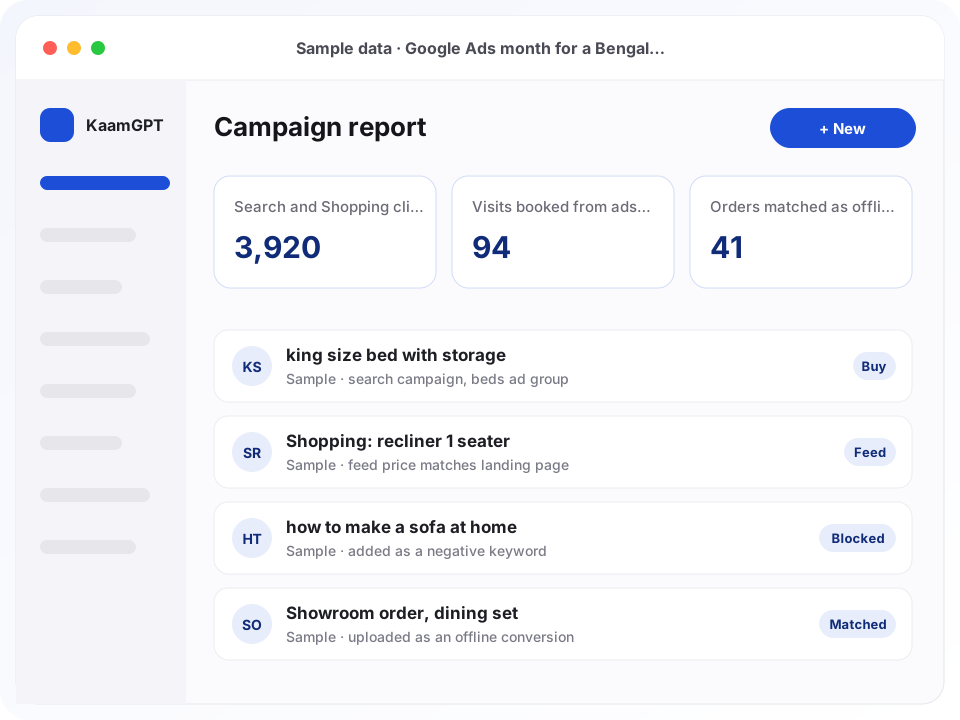
The best Google Ads agency for furniture stores in Bengaluru earns its fee by spending less on curiosity and more on intent. Someone typing sofa ideas is dreaming; someone typing 3 seater fabric sofa grey delivery bangalore is shopping. Paid search rewards the store that can tell those two apart, bid for the second and show the right piece at a believable price.
That is what KaamGPT builds for sofa showrooms, mattress shops and made-to-order workshops. We structure campaigns around the pieces you sell and your delivery zones, connect a Shopping feed, keep every price in the ads consistent with your website and tags, and feed showroom sales back so Google learns which clicks become orders. Details of the Google Ads management service sit on its own page.
- ₹4,999monthly opens account management; Google invoices the clicks separately
- ~30 daysto audit, rebuild, connect the feed and launch
- MRP incl. taxhow pre-packed items such as boxed mattresses must be priced
- Offlineshowroom orders uploaded so bidding learns from real sales
Who searches for furniture on Google in Bengaluru, and from where?
Paid search for furniture in this city is shaped by two crowds. One is the stream of households moving into new flats around the Outer Ring Road and further out, in Bellandur, Marathahalli, Sarjapur Road and Whitefield, who search with specific sizes and delivery questions because they are furnishing to a deadline. The other is established households in areas such as HSR Layout, Bannerghatta Road and Bommanahalli replacing one piece at a time, who search with a material or a style in mind.
Both crowds compare online brands, marketplaces and local showrooms in the same results. Traffic adds a local twist: many will not cross the city on a weekday evening, so ads that state a delivery promise for their area, or a showroom they can reach in reasonable time, earn the click over a cheaper-looking listing from far away.
Location targeting therefore matters as much as keywords. We build campaigns around the zones your vans can reach and serve well, set radius or area targets around each showroom, and adjust bids by area once the data shows where orders come from.
What sits inside a furniture store's Google Ads management?
The account is built around your catalogue, your showrooms and how you sell. A store that takes orders online needs Shopping; a custom maker needs lead-form search; most stores need some of both.
Search campaigns by piece and size
Separate furniture search campaigns for sofas, beds, wardrobes, dining and mattresses, each split by size, material and configuration, with ads and landing pages that repeat the buyer's own words.
Google Ads in detail →Shopping and Performance Max from your feed
We build and maintain the merchant center feed with titles that name the piece, size and material, real photographs, prices that match the landing page, and labels that let us push high-margin or overstocked items.
Google Ads in detail →Negative keywords and placements
A standing list that blocks repair, rental, jobs, second-hand, wholesale and do-it-yourself searches where they do not fit your business, reviewed every week from the search terms report.
Google Ads in detail →Location and schedule settings
Area and radius targets around each showroom and delivery zone, with bids that lean towards weekends and evenings when your own data shows searches leading to visits.
Google Ads in detail →Pages that finish what the ad started
Category and product pages with the full price including delivery, dimensions, return terms, stock at each showroom and a visit-booking button, so the click arrives where the question is answered.
Websites in detail →Showroom addresses shown in ads
Your showroom profiles linked to the ad account, so ads can show address and distance. Map profiles themselves are handled under local SEO for furniture showrooms.
Google Business Profile in detail →Offline conversion uploads
Orders closed in the showroom or over WhatsApp are uploaded back to Google, matched on details the buyer gave with consent, so that bidding learns which searches turn into real sales.
Google Ads in detail →How is a furniture Google Ads account set up and run?
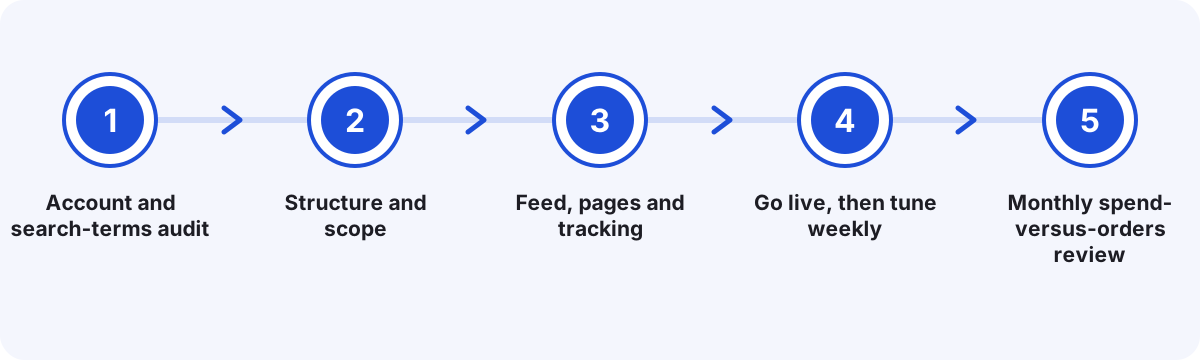
Account and search-terms audit
We read a year of search terms, conversions and spend if the account exists, list waste and missed categories, and check the feed and landing pages for price mismatches.
Structure and scope
A category-by-category plan with budgets, areas, keywords, negatives and conversion goals, agreed in writing before any change is made.
Feed, pages and tracking
The product feed is cleaned, landing pages are matched to ad groups, and conversion tracking is set up for calls, forms, WhatsApp, bookings and offline orders.
Go live, then tune weekly
Campaigns go live within about thirty days; search terms, bids and placements get checked every few days in the early weeks.
Monthly spend-versus-orders review
Each month we compare spend with booked visits and matched orders by category and area, and move budget towards what sells.
Which furniture sellers are Google Ads a good fit for?
- Large multi-brand floorsWide catalogues where Shopping and category-level search let budget follow margin and season.
- Licensed brand outletsLocal campaigns around one outlet, complementing the brand's national advertising with area and delivery messages.
- Bespoke furniture workshopsSearch ads for made-to-measure terms leading to a consultation form, since there is no product to put in a feed.
- Sleep and mattress retailersHigh-intent size and firmness searches, plus Shopping ads where boxed mattresses are sold online.
- Wardrobe and kitchen fabricatorsSearches tied to new homes and measurements, where a booked site visit is the conversion that matters.
- Office seating and workstation dealersBusiness buyers searching by product type and quantity, often during working hours rather than weekends.
- Cane, outdoor and décor specialistsNiche searches with lower competition, where tight targeting can work on modest budgets.
What is the management charge for a furniture account?
Managing one account starts at ₹4,999 monthly, and the scope sets out the campaigns, feed work and reporting included. Media is separate and appears on Google's own invoice to you. Stores with several showrooms or a large feed sit higher, as the pricing page sets out.
Google Ads
Recommended₹4,999/month
Typically 30 days
Stores with clear products and prices that want to reach people already searching for a piece, size or material.
- Account setup
- Keyword strategy
- Ad copy testing
- Conversion tracking
- Bid optimisation
Digital Marketing
₹19,999/month
Typically 15 days
Furniture brands that want paid search to sit inside a wider calendar with social, maps and WhatsApp follow-up.
- Channel strategy
- Creative production
- Campaign management
- Weekly reporting
SEO
₹14,999/month
Typically 30 days
Stores that want their category pages to earn visits over time, so paid clicks are needed less for the same searches.
- Technical audit
- Keyword research
- On-page optimisation
- Content plan
- Monthly reporting
Local SEO
₹4,999/month
Typically 14 days
Showrooms whose map profiles need fixing before location ads can work well, billed per showroom.
- Google Business Profile optimisation
- Local keyword map
- Location page on-page fixes
- Citation building and NAP cleanup
- Local link outreach
- Review replies and posts
- Monthly report
Meta Ads
₹4,999/month
Typically 30 days
Stores that also need to reach households before they search, through room-led video and catalogue ads.
- Creative testing
- Audience building
- Retargeting funnels
- Pixel setup
- Weekly reporting
Lead Generation
₹24,999/month
Typically 14 days
Custom and office furniture sellers whose search clicks must become qualified consultation or quote requests.
- Verified leads
- Multi-channel outreach
- CRM integration
- Lead scoring
- Replacement guarantee
- Meta Ads management is a separate service at the same ₹4,999 monthly entry fee, if you want both platforms run together.
- Landing page or feed fixes that need development are quoted as website work, from ₹9,999 per project.
| Package | Starts at | Timeline | Best for |
|---|---|---|---|
| Google Ads | ₹4,999/month | Typically 30 days | Stores with clear products and prices that want to reach people already searching for a piece, size or material. |
| Digital Marketing | ₹19,999/month | Typically 15 days | Furniture brands that want paid search to sit inside a wider calendar with social, maps and WhatsApp follow-up. |
| SEO | ₹14,999/month | Typically 30 days | Stores that want their category pages to earn visits over time, so paid clicks are needed less for the same searches. |
| Local SEO | ₹4,999/month | Typically 14 days | Showrooms whose map profiles need fixing before location ads can work well, billed per showroom. |
| Meta Ads | ₹4,999/month | Typically 30 days | Stores that also need to reach households before they search, through room-led video and catalogue ads. |
| Lead Generation | ₹24,999/month | Typically 14 days | Custom and office furniture sellers whose search clicks must become qualified consultation or quote requests. |
How large should a furniture store's click budget be?
There is no single right figure. Spend depends on how many categories and areas you want to cover, how competitive those searches are, and your average order value. Sofas and mattresses attract many advertisers; cane furniture or teak cots attract fewer. A store selling high-value pieces can afford a higher cost per visit than one selling small items.
As an example only, a single-showroom store could open with a small daily budget on two or three categories in nearby areas, read six weeks of search terms and offline conversions, and then widen. We recommend proving the economics on a small scale before raising spend for the festive season.
Remember that the management fee and the media budget answer different questions. The fee pays for the hours spent on structure, feed, negatives, tracking and reporting; the media budget decides how many buyers you can reach. A small budget managed carefully usually teaches you more than a large one left on automatic settings, because every rupee is tied to a category, an area and an outcome you can read.
- The number of categories and showrooms you want to advertise.
- The size of your delivery area and how many areas you target.
- Your average order value and margin per category.
- Whether you sell online, so Shopping and Performance Max apply.
- How strong your landing pages are, which affects cost per click.
- How much of the festive season and how many possession waves you want to cover.
Why run your furniture Google Ads with KaamGPT?
Orders, not just clicks
We set up offline conversions and visit bookings from the start, so the account is judged on sales the showroom can recognise.
Price checks ahead of every launch
Feed prices, ad text and landing pages are checked against your price list and the rules on this page, especially before festive sales.
Account and billing in your name
The Google Ads account and Merchant Center stay in your name, and Google bills spend to you; we manage, we do not resell clicks.
Feed and site fixes in-house
KaamGPT builds websites too, so landing page and feed problems are fixed by the same team that finds them.
Local judgement
We know how Bengaluru traffic shapes how far buyers will travel, and we set areas and delivery messages accordingly.
Honest about what cannot be measured
Some showroom sales will never be traced to a click. We say so in reports, show the trend we can see, and never fill the gap with guesses dressed up as results.
Account structure: how the best Google Ads agency for furniture stores in Bengaluru organises campaigns
Structure follows margin and intent. We separate categories that behave differently, because a mattress, a modular wardrobe and a recliner have different prices, margins, decision times and searches. Within each category, size and material keywords sit in their own ad groups so that the ad and the landing page match exactly what the person typed.
Budgets are set per category, not per account, so a strong month for mattresses does not starve the dining range. Shopping and Performance Max run from the feed for stores that sell online; search carries the weight for showroom-led and custom businesses. Brand campaigns keep your own name visible when competitors bid on it, and catch buyers who heard about you offline.
Every campaign carries one clear conversion goal. For a showroom-led store that is a booked visit or a call; for an online store it is an order; for custom work it is a consultation request. Mixing goals inside one campaign confuses the bidding, so we keep them apart and compare them in the monthly review using the value of the orders each one produced.
Match the ad to the size
A search for a queen bed with storage sees an ad about queen beds with storage, leading to that exact category, with the price range and delivery promise in the ad text. Generic furniture ads struggle to compete with that precision.
Put the full price in front
Ads and landing pages show prices that include delivery and assembly, or say plainly what those cost. Buyers who click knowing the price arrive better prepared, and the account stays clear of Google's rules on undisclosed costs.
Use the feed as a merchandising tool
Custom labels in the feed mark margin bands, seasonal ranges and overstock, so google shopping ads for furniture can push the pieces you most need to sell rather than whatever costs least to show.
Bid on what happens in the showroom
With offline conversions uploaded weekly, Google's bidding can favour the searches that end in showroom orders, not just the ones that end in online checkouts or cheap clicks.
Plan the festive weeks in advance
Budgets, ad copy, sale prices in the feed and extended showroom hours are prepared before Dasara and Diwali, and the feed's sale price is used only for genuine reductions with real dates.
Give mattresses and modular work their own lanes
Mattress buyers search by size and firmness and want a place to lie down first; modular wardrobe buyers want a measurement visit. Each gets its own campaign, landing page and conversion goal, so neither is judged by the other's numbers.
Where do furniture stores waste Google Ads budget?
Most wasted spend in furniture accounts comes from a few avoidable settings rather than from the price of clicks.
A furniture account also needs regular attention because the catalogue moves. New fabrics, discontinued models and changing prices all ripple into keywords, feed items and landing pages, and an account left alone for a quarter drifts out of step with what the showroom actually sells.
- Broad keywords like furniture or sofa matched to searches for repairs, rentals, second-hand listings, carpentry jobs and do-it-yourself videos.
- One campaign for the whole catalogue, so mattresses, wardrobes and dining sets share a budget and low-priced clicks win regardless of margin.
- Ads that land on the home page instead of the category or product the person searched for, forcing them to start again.
- Shopping feeds with outdated prices or prices that exclude delivery, which risk product disapprovals and frustrate buyers.
- Conversion tracking that counts only online checkouts, so campaigns that fill the showroom look like failures and get paused.
Which furniture searches are worth paying for?
Think in three tiers. The top tier names a piece with a size, material or configuration and often an area: queen size cot with storage teak, L shape sofa with recliner, wardrobe 3 door with mirror price, mattress showroom open today. These are examples of the pattern, not volumes. Such searches come from people who have measured the room, and they deserve the highest bids and the most specific ads.
The middle tier names a piece without detail, like dining table or sofa set. These can work when the ad and landing page help the buyer narrow down quickly, but they cost more per sale. The bottom tier is inspiration, such as living room ideas; it is usually cheaper to reach those people through social media than through search.
Negatives matter as much as keywords. A furniture account that does not exclude repair, rental, second-hand, carpenter jobs, wholesale or how-to searches will spend on them, because they share words with what you sell. We start with a broad negative list and add to it each week after reading the search terms report.
- Top tier: piece plus size, material, configuration or area.
- Middle tier: piece only, used selectively with strong landing pages.
- Inspiration: usually better reached on Instagram and Facebook.
- Negatives: repair, rental, used, jobs, wholesale, how-to, DIY.
How do Shopping ads and the product feed work for furniture?
Shopping ads show a photo, a title, a price and the store name before anyone clicks, which suits furniture well because the picture does much of the selling. They run from a Merchant Center product list giving each item its title, description, image, link, availability and price.
Google's Merchant Center rules are strict on price. Its help page on the price attribute wants the submitted amount and currency to equal what the product page and checkout show. A separate sale price attribute is for the price charged during a sale. In practice that means the feed must update when prices change, and a festive discount must appear on the website before it appears in the ads.
Titles do the work keywords do in search. A title such as Sheesham Wood 6 Seater Dining Set, Walnut Finish matches far more real searches than a model code. We rewrite titles from the way people search, use your own photographs and mark items with labels for margin and season.
- Titles: piece, size or seating, material, finish, then brand.
- Images: your own photographs, the piece shown whole on a plain background first.
- Prices: identical in the feed, on the product page and at checkout.
- Labels: margin band, season and overstock, used to steer budget.
What price rules apply to furniture ads in India?
Three sets of rules meet in a furniture ad. Google's misrepresentation policy bars ads that do not make the total cost to the user clear and conspicuous, and pricing practices that create a misleading impression of cost. A sofa advertised at a price that excludes compulsory delivery and assembly is exactly the kind of thing that policy describes.
The Legal Metrology (Packaged Commodities) Rules cover pre-packed goods, which for a furniture store usually means boxed mattresses, flat-pack furniture and packed soft furnishings. Since amendments in force from 1 January 2018, goods sold online must display the declarations the rules require, such as the manufacturer, packer or importer, the product name, net quantity, retail sale price, consumer care details and dimensions. Changes effective 1 April 2022 want the MRP stated in rupees with all taxes included, and the 2018 changes forbid two different MRPs on identical packs.
Discounts are the third area. A further change arrives on 1 January 2027: when an online seller advertises a cut, the old price it shows must be the lowest it charged over the previous thirty days. The furniture-store marketing plan explains how that changes festive offers; for ads, it means sale prices in the feed must be backed by your own price records.
- Show the full price, or state delivery and assembly costs clearly.
- For pre-packed items, display the required declarations and MRP inclusive of tax.
- Keep feed, ad text, website and showroom tags on the same price.
- Use sale prices only for genuine, recorded reductions.
How do you track sales that close in the showroom?
Furniture is the classic case where online ads lead to offline sales. Someone clicks an ad on Tuesday, visits on Saturday, and pays at the counter. If the account only counts online checkouts, it will undervalue the campaigns that drove that visit and overvalue the ones that sold cheap cushions online.
We close the gap with several measures. Visit bookings and WhatsApp chats started from ads are tracked as conversions. Calls from ads are counted. Most importantly, showroom and phone orders are uploaded as offline conversions, paired with the phone number or email the buyer gave when booking, with the buyer's consent captured at that point. Over a few weeks Google's bidding learns which searches turn into orders.
Some visits will always slip through untraced. But with showroom visit tracking in place, the trend is clear enough to move budget between categories and areas with confidence, which is all a store owner needs from it.
- Bookings and WhatsApp chats started from an ad, counted as conversions.
- Calls from ads, counted when they last long enough to be real.
- Showroom and phone orders uploaded weekly as offline conversions.
- Staff notes on how each buyer heard of the store, checked monthly.
When should a furniture store spend more on search, and when less?
Furniture demand has two clocks. The festive clock runs from Dasara through Diwali, when households like to bring something new home and many stores run their biggest offers. The possession clock runs on handover letters, which arrive tower by tower and do not care what month it is. A search budget that only follows the first clock misses buyers who are furnishing in February because their keys arrived in January.
We handle the two clocks differently. For festive weeks, the work is preparation: feed sale prices with genuine dates, ads written in advance, extended showroom hours added to the profile, and budget raised only on categories with a record of converting. For possession waves, the work is attention: when the showroom team notices buyers from one apartment project, we raise bids for searches from that area and add a line to the ads about delivery there.
Weekly patterns matter too. Many furniture searches that end in a visit happen late in the week, as couples plan the weekend, while office furniture searches cluster in working hours. Ad schedules follow your own conversion data rather than a template, and they change when the data changes.
- Festive season: prepare early, raise spend only where categories convert.
- Possession waves: raise bids by area when the floor team spots a project.
- Week shape: set schedules from your own conversion data.
- Quiet months: keep brand and top-tier searches running, trim the rest.
- Google Ads management
- ₹4,999 monthly entry fee; campaigns live within a month
- Who pays for clicks
- The store, billed directly by Google
- Merchant Center price rule
- Feed price equal to the landing-page and checkout price
- Google misrepresentation policy
- The total a buyer pays has to be stated plainly
- Pre-packed goods
- Since 1 April 2022, MRP stated in rupees with every tax included
- Online declarations
- Required on e-commerce listings of pre-packed goods since 1 January 2018
Where this applies around Bengaluru, Karnataka
- Bengaluru
- Marathahalli
- Bellandur
- HSR Layout
- Bommanahalli
- Bannerghatta Road
- Karnataka
- India
Frequently asked questions
29 answersDay to day, what is a google ads agency for furniture stores in Bangalore actually adjusting?
Keywords and negatives by category, ad text, bids, budgets, location and schedule settings, the product feed for Shopping, landing page matching and conversion tracking, including showroom sales uploaded as offline conversions. Search terms are reviewed every week, and a monthly review ties spend to booked visits and orders.
What is KaamGPT's fee for Google Ads management for a furniture store in Bengaluru?
Our management charge opens at ₹4,999 monthly, and your store settles click costs with Google on its own card. Accounts with several showrooms, a large product feed or many categories sit above the entry fee, and the scope states what is included before work starts.
Do Google Shopping ads work for furniture?
They work well for stores that sell online or show prices on product pages, since shoppers see the picture and the price before they ever click. They need a clean Merchant Center feed with accurate prices, good titles and real photographs. Showroom-only stores without online prices usually rely more on search ads instead.
Should a furniture store bid on the word furniture?
Rarely on its own. A bare search for furniture is vague and attracts rentals, repairs, used goods and jobs. It is usually better to bid on specific pieces with sizes and materials, and to use the word furniture only alongside an area or your brand, with a strong list of negative keywords.
Which negative keywords should a furniture store add first?
Common starting points are repair, polish, rent, rental, second hand, used, OLX, jobs, carpenter salary, wholesale, how to make, DIY and free. Some stores do sell used or rental furniture, so the list is adjusted to your business, then grown week by week using the search terms report.
How can we tell if Google Ads brought buyers into the showroom?
Track visit bookings, WhatsApp chats and calls from ads, and upload showroom orders as offline conversions matched on the contact details buyers gave with consent. Staff can also ask how buyers found you. Together these show which furniture campaigns produce orders, even when the payment happens at the counter.
Does the price in our Merchant Center feed have to match the website?
Yes. Google's price attribute guidance wants the feed's amount and currency to equal the product page and checkout price. When your furniture prices change, or a sale starts, the website and feed must change together, or products risk being disapproved.
Can we advertise a sofa price that excludes delivery and assembly?
It is risky. Under Google's misrepresentation policy, an advertiser must make clear the whole amount a buyer will pay, and hidden charges also fall foul of consumer rules on drip pricing. Either fold delivery and assembly into the figure or spell out what they cost in the ad text and on the landing page.
Do Legal Metrology rules apply to furniture ads?
They apply to pre-packed commodities, which for furniture stores usually means boxed mattresses, flat-pack pieces and packed soft furnishings. Online listings of such goods must show the required declarations, including a rupee MRP that already contains all taxes. Ask your adviser which of your items are pre-packed in law.
Is the best Google Ads agency for furniture stores in Bengaluru the one with the lowest cost per click?
No. Cheap clicks often come from vague searches that never buy. What matters is cost per booked visit and cost per order, by category. An agency that shows you those numbers, including sales that closed in the showroom, is giving you a better basis for judgement than one quoting click prices.
How long before Google Ads show results for a furniture store?
Campaigns usually launch within about thirty days of starting, including the audit, feed and tracking work. Clicks and enquiries begin immediately, but bidding needs a few weeks of conversion data, especially offline orders, before it settles. Judge the first two months on trend, not on single weeks.
Should we use Performance Max for our furniture store?
It can work for stores with a good product feed, enough conversion data and clear goals, because it uses the feed across Google's channels. It offers less control over where ads show, so we usually run it alongside search campaigns for the most important furniture categories, and judge it on matched orders.
Can Google Ads help a custom furniture maker with no catalogue?
Yes, through search ads for made-to-measure terms, such as custom wardrobes, bespoke dining tables or furniture made to size, leading to a consultation form or WhatsApp. Without products there is no Shopping feed, so landing pages with project photos and a clear process carry the weight.
Should a mattress store run separate Google Ads campaigns?
Yes. Mattress searches differ from furniture searches: buyers use sizes, firmness, materials and brand names, and many want a store where they can lie down first. Separate campaigns, ads and landing pages for mattresses keep the budget and the messages focused, and avoid health claims the store cannot substantiate.
How should our furniture ad budget change around Diwali?
Prepare early and raise spend on categories that sell, rather than across the account. More advertisers compete in festive weeks, so the gains come from having the feed, sale prices, ads and extended hours ready before the rush, and from cutting categories that do not convert. Diwali's main day is 8 November in 2026.
Can we target only buyers near our showroom?
Yes. Location targets can be set by area or by a radius around each showroom, and bids can be raised for areas that convert. For Bengaluru we usually combine nearby areas with the delivery zones that matter most, then adjust as the order data shows where buyers really come from.
Should we bid on our own furniture store's name?
Usually yes, at a modest budget. Brand campaigns catch people who heard about you offline or saw you on social media, and keep competitors from taking your name's results. They also give you control over the message, such as current offers or showroom hours.
Which logins and data should our furniture store prepare before Google Ads begins?
Admin or read access to the existing account, access to Merchant Center if you sell online, your price list and categories, showroom addresses and delivery areas, your average order values, and a way to share showroom orders weekly for offline conversion uploads.
Will you create landing pages for our furniture ads?
We match ads to your existing category and product pages wherever they are good enough, and suggest edits where they are not. If new pages or feed fixes need development work, that is quoted as a website project. A strong landing page can matter as much as the ad itself.
Google or Meta: which suits a furniture store better?
Google meets buyers whose minds are mostly made up; Meta reaches households earlier, often with video of real rooms. Most furniture stores benefit from both in different proportions. See <a href="/services/meta-ads">Meta Ads</a> and our <a href="/best-meta-ads-agency-for-furniture-stores-in-bengaluru">Meta campaigns for furniture retailers</a> for the other side.
Can Google Ads replace SEO for a furniture website?
It can bring visits faster, but every click costs money. SEO builds category pages that earn visits without paying per click, and good pages also make ads cheaper by improving relevance. Many stores run both; the <a href="/services/seo">SEO service</a> explains the organic side.
Do you report the search terms that triggered our furniture ads?
Yes. Each month we share the main search terms, the negatives added, spend and orders by category and area, and what we adjusted. Everything is also visible directly in your own account at any time, because it stays in your name.
Who do we speak to at KaamGPT about furniture Google Ads in Bengaluru?
Dial +91 79767 82366, or drop a WhatsApp to that number, giving your store name, showroom areas and whether you sell online. We will look at your current account if you have one then share a plan and fee on paper to set beside any other google ads agency for furniture stores in Bangalore.
Can festive sale prices go into the furniture feed?
Yes, using the sale price attribute, provided the sale is genuine, the same price shows on the website and checkout, and the dates are real. Because rules from 1 January 2027 tie the displayed old price to the lowest price of the last thirty days, keep records of what each piece actually sold for.
What makes a good furniture Shopping ad title?
The piece, size or seating, material and finish, then the brand if it helps, in the words buyers use. For example, a king size bed in sheesham with hydraulic storage should say exactly that. Model codes and marketing phrases waste the space where search matching happens.
Do furniture stores need call tracking in Google Ads?
It helps, because many furniture buyers call to check stock or directions before visiting. Call assets and tracked numbers show which campaigns and areas generate calls. Combined with visit bookings and offline orders, calls complete the picture of what a google ads agency for furniture stores in Bangalore actually delivered.
Can you run ads for office furniture to businesses in Bengaluru?
Yes. Office buyers search for workstations, ergonomic chairs and conference tables, often with quantities, during working hours. We run separate campaigns with business hours schedules, quote-request landing pages and follow-up, and the <a href="/best-lead-generation-company-for-furniture-stores-in-bengaluru">guide to furniture enquiry handling</a> covers how those enquiries are handled.
Can a furniture store advertise free delivery on Google?
Yes, if delivery really is free for the areas and orders the ad reaches. If it applies only above an order value or within certain areas, say so in the ad or on the landing page. A free-delivery claim that turns into a charge at checkout breaks Google's pricing rules and the trust of the buyer.
How do possession waves in new Bengaluru apartments affect our furniture ads?
When many households in one project receive keys, searches for wardrobes, beds and sofas from that area rise. If your floor staff tell us which projects buyers are coming from, we can raise bids for those areas and mention delivery there in the ads, rather than waiting for the festive season.