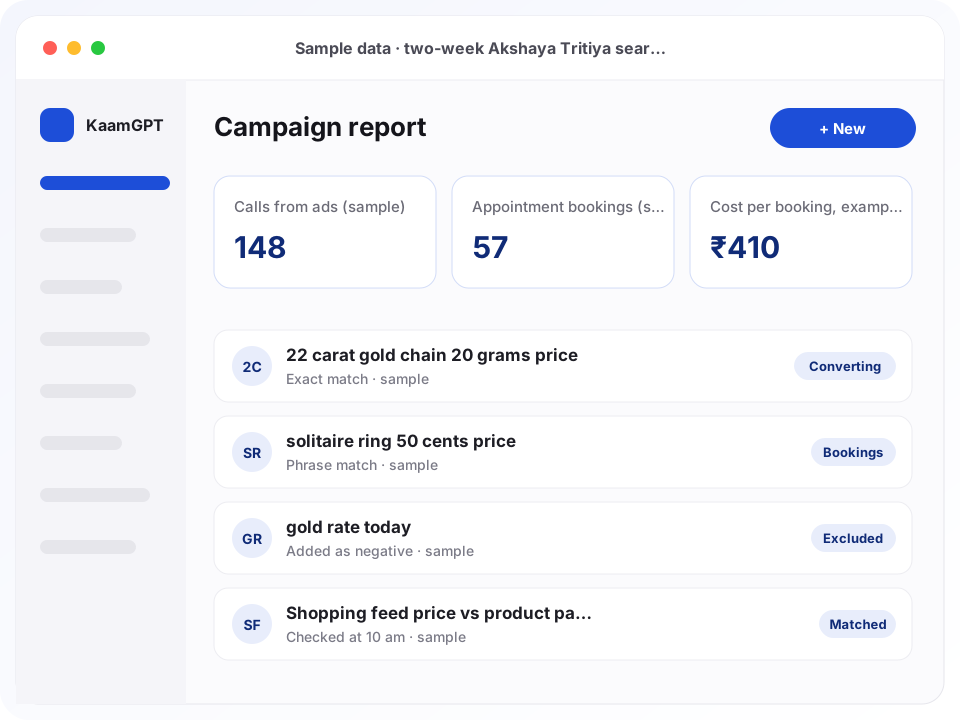
Picking the best Google Ads agency for jewellery stores in Bengaluru should mean paying for intent, not attention. Most jewellery searches are browsing, but some carry a number: a 20 gram chain, a 50 cent solitaire, earrings under a set budget, a showroom open this Sunday. Those are the searches worth paying for, and they need ads, landing pages and bids built for each.
KaamGPT sets up and runs those campaigns for showrooms and online jewellery stores, from single family jewellers to chains running several showrooms in the city. We separate design, purity and budget searches, keep any prices shown in ads in step with the day's gold rate, write offers that would survive a regulator's question, and measure what reaches your counter. Our cross-industry method is described under Google Ads management.
- ₹4,999opens our monthly management fee; clicks are billed to the store by Google itself
- ~30 daysto set up campaigns, feeds and tracking, then trim the first wasted searches
- Dailyprice checks when Shopping ads show items whose value follows the gold rate
- 3 signalscounted before clicks: calls, appointment bookings and direction requests
In what order would the best Google Ads agency for jewellery stores in Bengaluru build your account?
Structure first. We split the account by what the buyer has decided: occasion (bridal, festival, gifting), product and purity (22 carat chains, 18 carat diamond settings, silver articles), and place (each showroom's radius). That way a search for a 50 cent solitaire never shares a budget with a search for a silver lamp, and each is assessed on its own numbers.
Then we cut waste before adding reach. For the opening weeks we read the search terms report daily, add negatives for rate checkers, bullion investors, job seekers and repair queries you do not serve, and only then widen match types. A tight account that spends less but books appointments is the base everything else is built on.
Ad copy comes last, and it borrows the counter's language. Customers ask for a "twenty gram chain" or "something for the engagement", not for "premium gold solutions". Headlines repeat those words, descriptions add the purity, the hallmark and the booking option, and every claim in the copy is one a salesperson could repeat to the customer's face.
Ad groups that mirror the query
A search with a weight gets an ad naming that weight range and a page filtered to it. A search naming a design gets that design's page. The closer ad and page match the query, the better the click turns into a visit.
Rate-checkers kept out
"Gold rate today" and similar searches bring volume but rarely visits. We add them as negatives in sales campaigns and let your rate page win them organically instead of paying for each look.
Radius by showroom, hours by store
Each branch gets its own radius and schedule. Ads stop when the showroom closes, unless the goal is an appointment request that staff will answer the next morning.
Festival bid plans written in advance
For each peak we set dates for raising budgets, turning on promotion assets and returning to normal, so festival spending is a plan rather than a reaction.
Conversions that reflect the showroom
Calls above a set length, appointment bookings and direction clicks are the primary conversions; page views and clicks are not. Bidding learns from what brings people to your counter.
What does a managed Google Ads account include for a jeweller?
Campaigns are built around your stock, your showrooms and your calendar, and each one has a single job. The list below is the usual starting set; the written scope confirms which apply.
Jewellery search ads by design, purity and budget
Separate ad groups for bridal sets, chains by weight, diamond rings by size, mangalsutras, silver articles and coins, each with ads that repeat the searcher's own terms and a landing page that shows those pieces. Jewellery search ads work best when the page answers the exact query, weight in grams and carat included.
Google Ads in detail →Google Shopping for jewellers who sell online
Product feeds with titles that name metal, carat, weight and design, accurate images and a price that matches the product page. For items priced from the day's gold rate, we set up gold rate feed updates so the feed never lags the site, or leave those items out of Shopping.
Google Ads in detail →Location assets and call-first ads
Ads show the closest showroom with its address, how far it is and a button to ring it, scheduled to your opening hours. Showroom-only stores often do best with call-first campaigns aimed at a radius of a few kilometres drawn round each branch.
Google Ads in detail →Appointment forms that reach the floor
Bridal and diamond searchers are offered an appointment slot rather than a generic contact form, and each booking reaches your floor manager at once. The follow-up routine belongs to our guide to lead generation for jewellers.
Lead generation in detail →Landing pages per campaign
Each campaign gets its own page showing the pieces, the purity, the weight range, the appointment slots and how the price is built up. Sending a solitaire searcher to your homepage wastes most of the click.
Websites in detail →A profile the ads can lean on
Location assets draw on your Google Business Profile, so its hours, pin and reviews need to be right. The Maps work itself is explained in the jewellery local SEO guide.
Local SEO in detail →Budget paced to the festival calendar
Spend is raised in the build-up to Akshaya Tritiya, Varamahalakshmi, Dhanteras and the wedding clusters and trimmed in the quiet weeks between them. In a wider plan, Google Ads sits beside search, social and WhatsApp, as set out under managed digital marketing.
Digital marketing in detail →Can Shopping ads work when prices follow the day's gold rate?
Yes, but only with discipline. Google Merchant Center asks for a price and currency that match the landing page and the checkout pages, and it asks merchants to keep prices up to date and send the latest value when a price changes. It also advises against submitting products whose price changes constantly, giving auctions and prices based on a live currency exchange as examples. A jewellery item priced from a gold rate that is revised once a day sits between those two statements.
The practical answer is a routine. If your website recalculates prices each morning from the day's rate, the feed must be refreshed right after, so the two never disagree. If your rate changes several times a day, keep those items out of Shopping and promote them with search ads leading to a page on how the price is built. Fixed-price items such as silver articles, certified diamonds priced as a whole or lightweight pieces sold at a set price suit Shopping best.
We check feed and site prices for a sample of products every morning during peaks, and watch Merchant Center diagnostics for price mismatch warnings, because a disapproved feed in Dhanteras week cannot be fixed fast enough to save the week.
- Feed price equals product page price equals checkout price.
- Feed refreshed after each daily rate change, or the item stays out of Shopping.
- Titles name metal, carat, weight in grams and design.
What can't a jeweller do when advertising pooja silver or other religious items?
Google treats religious beliefs as a sensitive interest category in personalised advertising. For ads promoting religious products or topics, its policy says advertisers cannot use advertiser-curated audiences, namely customer match, the advertiser's data segments, lookalikes and audience expansion. Silver idols, pooja thalis, lamps and other devotional articles may fall into that category.
That does not stop the campaign; it changes the tools. Google still allows its predefined audiences, in-market and affinity segments, demographics, life events, location targeting and custom segments for such products, and keyword targeting is unaffected. A Varamahalakshmi or Dhanteras campaign for silver articles can rely on search terms, location radius around the showroom and timing, which is where such a campaign earns most anyway.
Ad wording deserves the same care on both platforms. Describe the product and the occasion, not the person: a silver kalasha for Varamahalakshmi is fine, while text that assumes the reader's faith is not. For Meta's equivalent rules, read the jewellery guide to Meta ads.
How should a making-charge offer be written for a search ad?
Precisely, because an offer inside a search ad counts as advertising under consumer law. The CCPA's misleading-advertisement guidelines of 2022 define a bait advertisement as one that offers goods at a low price to attract consumers, and set conditions for it: the advertiser must reasonably expect to sell at the advertised price, must hold enough supply for the demand it can foresee, and must state why it believes both. An offer of reduced making charges that applies to two pieces, advertised to a whole city, fails that test.
The ASCI Code adds that a factual claim needs evidence behind it and that comparisons with competitors must be accurate and fair. So a claim of the lowest making charges in the city is out unless you can prove it against every rival. Promotion assets with a stated category, a stated reduction, start and end dates and a sitelink to the full terms are compliant, and they give a shopper something concrete to act on.
Promotion assets help here because they carry their own dates. A festival offer can be scheduled to appear only during its stated period and to stop automatically when it ends, so a Dhanteras reduction cannot keep running into the following week by accident. We pair each one with a sitelink to a terms page that lists the categories covered, the exact reduction and any exclusions, written in the same plain words your staff use.
How do you count showroom visit conversions from Google Ads?
Jewellery is paid for at the counter, so the account must learn from signals close to the visit. We set calls from ads above a chosen duration, appointment bookings, direction clicks and WhatsApp chats as conversions, each with a value that reflects how often it leads to a bill. Bidding then favours searches that produce those actions rather than cheap clicks.
Where your billing or booking system records the click identifier with the customer's consent, offline conversions can be imported, so Google learns which clicks became bookings or bills. Google also offers store visit measurement to accounts that meet its eligibility and privacy thresholds; many single showrooms do not, so we never promise it. Asking each buyer at the billing desk how they found the store fills the gap, and we include its tally in the monthly report.
Importing bookings or bills back into Google involves customer data, so it follows the consent your forms collect. Under the Digital Personal Data Protection Act, 2023, that means a clear notice of what is collected and why, and a way to withdraw. We set up the forms and the import together, so the measurement never runs ahead of what customers agreed to.
- Primary: qualified calls, bookings, direction clicks, WhatsApp chats.
- Imported where possible: bookings and bills linked to ad clicks, with consent.
- Never primary: impressions, clicks, page views.
When should a jeweller pause or cut back its ads?
More often than most accounts do. If the showroom is already full on Akshaya Tritiya afternoon and customers are waiting, extra clicks add frustration, not sales. If a collection advertised in a campaign has sold through, the ad should stop the same day, both for honesty and because the CCPA expects adequate supply behind a low-price offer. And if the person who answers calls is away, call-first ads should pause until someone can pick up.
We agree these rules with you in advance: who tells us when stock runs low, when the floor is too busy, and when the phones are unattended. A message on WhatsApp from your floor manager is enough. The account then reflects the store as it is that hour, which protects both the budget and the customer's first impression.
Quiet periods need a different kind of restraint. In the weeks after Diwali or between wedding clusters, budgets come down, but campaigns for diamonds, gifting and custom orders keep running at a low level so the account does not lose its learning. Switching everything off and on again with each festival costs more than a steady, smaller presence.
- Pause when the floor is full, stock is gone or calls cannot be answered.
- Keep low, steady campaigns running between festivals.
- Agree who sends the pause message before each peak.
What will a jeweller pay us to manage its ads?
Running a jeweller's account costs from ₹4,999 a month in management, with campaigns, feeds, landing pages and reporting itemised in the scope. Clicks are a separate cost the store pays Google. Our pricing page carries every published starting price.
Google Ads
Recommended₹4,999/month
Typically 30 days
Jewellers wanting to meet people who search with a weight, carat, design or budget in mind, close to a showroom, today.
- Account setup
- Keyword strategy
- Ad copy testing
- Conversion tracking
- Bid optimisation
Digital Marketing
₹19,999/month
Typically 15 days
Showrooms that want search ads planned alongside social, Maps and WhatsApp across the full festival year.
- Channel strategy
- Creative production
- Campaign management
- Weekly reporting
SEO
₹14,999/month
Typically 30 days
Stores wanting design and purity searches to keep sending visitors over time without a fee per click.
- Technical audit
- Keyword research
- On-page optimisation
- Content plan
- Monthly reporting
Local SEO
₹4,999/month
Typically 14 days
Showrooms whose ads rely on location assets, so the Maps profile behind them must be exact.
- Google Business Profile optimisation
- Local keyword map
- Location page on-page fixes
- Citation building and NAP cleanup
- Local link outreach
- Review replies and posts
- Monthly report
Meta Ads
₹4,999/month
Typically 30 days
Collections that need to be seen before people know what to search for, especially bridal and new designs.
- Creative testing
- Audience building
- Retargeting funnels
- Pixel setup
- Weekly reporting
Lead Generation
₹24,999/month
Typically 14 days
Stores with many ad-driven enquiries that need fast calls, booking and follow-up to turn into visits.
- Verified leads
- Multi-channel outreach
- CRM integration
- Lead scoring
- Replacement guarantee
- As an illustration only, a single showroom might begin with a modest daily ad budget in quiet months and raise it for the six weeks before Dhanteras; your own figures are agreed in writing after the audit.
- Landing pages and Shopping feed set-up are quoted inside the scope when needed, so the cost of each is visible before work starts.
| Package | Starts at | Timeline | Best for |
|---|---|---|---|
| Google Ads | ₹4,999/month | Typically 30 days | Jewellers wanting to meet people who search with a weight, carat, design or budget in mind, close to a showroom, today. |
| Digital Marketing | ₹19,999/month | Typically 15 days | Showrooms that want search ads planned alongside social, Maps and WhatsApp across the full festival year. |
| SEO | ₹14,999/month | Typically 30 days | Stores wanting design and purity searches to keep sending visitors over time without a fee per click. |
| Local SEO | ₹4,999/month | Typically 14 days | Showrooms whose ads rely on location assets, so the Maps profile behind them must be exact. |
| Meta Ads | ₹4,999/month | Typically 30 days | Collections that need to be seen before people know what to search for, especially bridal and new designs. |
| Lead Generation | ₹24,999/month | Typically 14 days | Stores with many ad-driven enquiries that need fast calls, booking and follow-up to turn into visits. |
What size of ad budget suits a jewellery store?
Enough to learn first, and then enough to scale whatever proves itself. During month one a fresh account mostly pays to find out which searches bring bookings in your area, so budgets should be modest and campaigns few. When the search terms report reveals what converts, money moves to those campaigns and away from the rest. Any figures we show you before that are examples, not forecasts.
Put three questions to any Google Ads agency for jewellery stores in Bangalore: what counts as a conversion, how often the search terms get read, and how Shopping prices stay in line with the day's rate. If the answer to the first is clicks or impressions, the account will be optimised for the wrong thing.
- How many showrooms need their own radius, schedule and budget.
- Whether you sell online, which brings Shopping campaigns and feed upkeep.
- How competitive your design and locality searches are in the weeks you most want to appear.
- Which festivals and wedding periods you plan to push, and how hard.
- Whether each campaign already has a landing page or one has to be made.
- How quickly enquiries get answered, because slow replies waste paid clicks however good the ads are.
Which Bengaluru jewellery searches deserve a paid click?
Browsing searches are cheap to win and rarely lead anywhere: a design idea, a celebrity's necklace, today's rate. Decision searches look different. They carry a weight, a carat, a stone size, a budget or a time: 22 carat gold chain 20 grams price, solitaire ring 50 cents price, diamond earrings under 50000, gold mangalsutra online bangalore, jewellery showroom open sunday. These are illustrations of phrasing, not volume figures. A family typing them has usually agreed on what they want and is choosing where to buy.
Where people live shapes the bidding. The older jewellery trade sits on Avenue Road in Chickpet, on Commercial Street and in Jayanagar's commercial blocks, but many buyers now live far from those streets, in Whitefield, Marathahalli, HSR Layout or Koramangala, where a drive across the city on a weekday is a real cost. For them, the store that appears first, showing how far away it is, when it opens and a way to ring it, tends to get the trip. Radius targeting around each showroom matters more than citywide reach.
Timing matters as much as place. Bridal searches build months before the muhurat clusters; gold coin and silver searches jump in the days before Akshaya Tritiya and Dhanteras; diamond purchases are less tied to one festival, so their budget can run more steadily through the year. A good account shifts budget across these patterns instead of spending evenly every day of the year.
Which jewellery businesses suit search advertising?
- Diamond and solitaire boutiquesSearches with carat, cents and budget are specific and valuable, and appointment campaigns fit the long decision.
- Bridal jewellery showroomsBridal searches build months before the muhurat dates, so steady campaigns with booking forms pay off.
- Online jewellery storesShopping ads carry most of the sales, provided feeds match the day's prices on every product page.
- Family jewellers in one neighbourhoodCall-first ads in a tight radius bring nearby families who already know the name.
- Regional chainsOne account with campaigns per branch, so each showroom's radius, hours and budget are managed separately.
- Silver and pooja article storesFestival-driven search demand, with care over audience tools Google restricts for religious products.
- Coin and bullion countersCoin searches spike before Akshaya Tritiya and Dhanteras; prices in ads must not lag the day's rate.
How does a jeweller's Google Ads account get built?
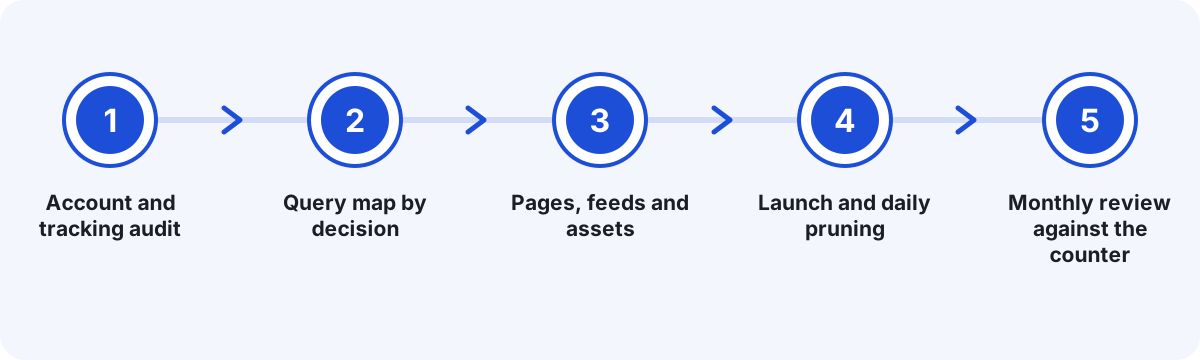
Account and tracking audit
We review any existing account, check which conversions are recorded, and set up call, booking and direction tracking before a rupee more is spent.
Query map by decision
Searches are grouped by occasion, product, purity and showroom, with negatives for rate checkers, bullion investors and services you do not offer.
Pages, feeds and assets
Landing pages per campaign, a Shopping feed if you sell online, location and call assets, and promotion assets dated for each festival.
Launch and daily pruning
For the first weeks we read search terms daily, cut waste, adjust bids by showroom and hour, and move budget toward the queries that book visits.
Monthly review against the counter
Each month we compare bookings, calls and direction requests with what your team saw in the showroom, and plan the next festival's budget from that.
Why let KaamGPT run a jeweller's search ads?
We pay for numbers, not noise
Accounts are built around searches that carry a weight, carat, size or budget, and the broad, curious traffic is filtered out early.
Prices kept honest in every ad
Shopping prices follow your product pages, and offers in ads name the category, the reduction and the dates, nothing vaguer.
Policies known before they bite
We know where Google restricts audiences, what Merchant Center expects of prices, and what the CCPA expects of an offer, and plan around them.
Reports a showroom owner can read
Bookings, calls, directions and cost per booking, explained in plain words, and a plain statement of the next change we intend.
Fee and spend kept apart
You pay Google directly for ads and pay us for management, so you always see exactly where the money went.
Where do jewellers waste money on Google Ads?
Google Ads punishes vague accounts quickly. A jeweller who bids on broad terms such as "gold" or "jewellery" pays for students researching prices, investors checking bullion and people looking for a rate, and very few of them will ever enter the showroom.
Then there is the account nobody looks at. A freelancer set it up two years ago, the card on file keeps paying, and the only report is a monthly invoice. Such accounts often still bid on last year's festival offers, send traffic to pages that no longer exist, and count a page view as a conversion. An audit of an old account usually finds savings before it finds growth.
- Broad keywords like "gold rate today" left running, which pull in crowds of people after nothing but the figure.
- Shopping feeds updated weekly while prices on the website follow the daily gold rate, so items are disapproved or show the wrong price.
- Offers such as "zero making charges" advertised without stock or terms to back them, which risks breaching the CCPA's rules on bait advertisements.
- Smart campaigns left to optimise for clicks, because nobody set up calls, bookings and direction requests as conversions.
- Customer lists uploaded to target buyers of pooja silver, when Google restricts such audience tools for religious products.
- Google Ads management for jewellers
- ₹4,999 a month opens the fee; first campaigns run within roughly a month
- Who pays the ad budget
- The jeweller, directly to Google; KaamGPT's fee covers the management only
- Merchant Center price rule
- Feed price must match landing page and checkout and be kept up to date
- Religious products
- No customer match, data segments, audience expansion or lookalikes in personalised ads
- Bait advertisements
- CCPA 2022: reasonable prospect of selling at the price, adequate supply, grounds stated
- Primary conversions
- Qualified calls, appointment bookings, direction clicks and WhatsApp chats
Where this applies around Bengaluru, Karnataka
- Bengaluru
- Whitefield
- Marathahalli
- HSR Layout
- Koramangala
- Karnataka
- India
Frequently asked questions
28 answersWhat separates the best Google Ads agency for jewellery stores in Bengaluru from the rest?
An account built around searches that carry a weight, carat, size or budget; negatives that keep rate checkers out; Shopping prices that match your product pages; offers worded to meet consumer rules; and conversions counted as calls, bookings and visits. Monthly reports should tell you what each booking cost and what changes next.
What is KaamGPT's fee for running a Bengaluru jewellery store's Google Ads?
The management fee opens at ₹4,999 a month, with the campaigns, feeds and pages itemised in a written scope. Clicks are billed by Google to your store, separately. A chain with several showrooms or a large online catalogue is priced after an audit, because the work is wider.
Can a jeweller run Google Shopping ads when prices follow the gold rate?
Yes, if the feed is refreshed whenever the site's prices change, so feed, product page and checkout always agree. Merchant Center asks for exactly that, and advises against products whose price changes constantly. Items repriced several times a day are better promoted through search ads to a page that explains the price.
Which keywords should a jewellery showroom bid on?
Searches that show a decision: a design name with a weight, a carat with a product, a diamond size with a budget, or a product with your locality or a day such as Sunday. Pair each group with an ad and page that match it. Broad words like gold or jewellery alone bring curious traffic that rarely visits.
Should a jewellery store advertise on gold rate today searches?
Usually not in a sales campaign. People searching the rate mostly want the number, and they click often without visiting. Let the store's own dated per-gram rate page earn those searches organically, and add rate phrases as negatives in paid campaigns so the budget goes to searches that book visits.
Can a jeweller use customer match to advertise silver pooja items?
Not for ads promoting religious products. Google's personalised advertising policy lists religious beliefs as a sensitive category and rules out uploaded customer lists, the advertiser's own data segments, audience expansion and lookalikes for such ads. Keywords, location radius, timing and Google's predefined audiences remain available, and they carry most festival campaigns well.
How do jewellers measure showroom visits from Google Ads?
By counting what sits closest to the visit: qualified calls, appointment bookings, direction clicks and WhatsApp chats from ads, plus a quick "how did you find us?" at the billing desk. Where consent and systems allow, bookings or bills can be imported back to Google. Store visit measurement exists, but only for accounts Google deems eligible.
Is zero making charges a legal ad claim for jewellers?
It can be, if it is true for the pieces named, for the whole period, with enough stock. The CCPA's 2022 guidelines set conditions for low-price bait offers, among them a genuine expectation of selling at that price and stock enough for the demand. State the category, dates and terms in the ad or a sitelink; an offer that applies to almost nothing is misleading.
Who runs PPC for jewellery stores in Bangalore?
Many agencies run pay-per-click; KaamGPT runs PPC for jewellery stores in Bangalore with campaigns split by occasion, product, purity and showroom, Shopping feeds kept in step with the day's prices, and conversions counted at the counter. Our team works from Bengaluru with your staff over calls, WhatsApp and video meetings.
Does one showroom justify a Google Ads agency for jewellery stores in Bangalore?
Often, because a single showroom's catchment is small and well defined, which suits radius targeting and call-first ads. The budget can stay modest outside festivals. What matters is that someone reads the search terms, cuts waste and checks whether calls became visits; an unmanaged account usually drifts toward broad, costly traffic.
When should jewellers increase Google Ads budgets for Akshaya Tritiya?
About two to three weeks before the day for search campaigns, with promotion assets dated to the offer period. Bridal campaigns follow the muhurat clusters instead and run steadily for months. Raise budgets in steps while watching cost per booking, and return to normal levels once the festival period ends.
Do you write the ads and landing pages for jewellery campaigns?
Yes. We write ads that repeat the searcher's own words and build landing pages showing the pieces, weight ranges in grams, purity, appointment slots and how the price is calculated. Pages are kept simple and fast on a phone, since most jewellery searches happen there.
Should a jewellery store use Performance Max campaigns?
Sometimes, once tracking is reliable and there is enough conversion history. Performance Max lets Google place spend across its channels, Search, Shopping, YouTube, Display and Maps among them, which can work for online jewellery stores with good feeds. For a showroom without solid conversion data, focused search and call campaigns usually teach the account more, more cheaply, before automation takes over.
Can Google Ads show our gold rate in the ad text?
We advise against it. Ad text can stay live for days, and a rate that changed overnight becomes inaccurate. Ads should talk about designs, purity, making-charge terms and booking, and point to the store's dated rate page. If any price does appear in an ad, it must match the landing page and be quoted per gram.
How is a Google Ads agency for jewellery stores in Bangalore different from one that handles any retail?
It knows that prices follow a daily gold rate, that offers on making charges are regulated claims, that pooja items limit audience tools, and that the sale happens at a counter after several visits. Those facts change how feeds, ads, audiences and conversions are set up. A general retail approach usually misses at least two of them.
How do Bengaluru traffic and distance affect jewellery search ads?
A great deal. A shopper in Whitefield or Marathahalli weighs a cross-city drive heavily, so ads showing a nearby showroom with its distance, hours and a call button tend to win the visit. We set a separate radius and schedule for each branch, and stop paying for clicks from areas a showroom cannot realistically serve.
What negative keywords does a jeweller need?
Typically rate and price-check phrases, bullion and investment terms if you do not sell them, jobs and training searches, repair and polishing if not offered, imitation jewellery if you do not stock it, and the names of brands you do not carry. The list lengthens every week in the early months as the search terms report shows new waste.
Can Google Ads help sell diamond jewellery in Bengaluru?
Yes. Diamond searches are specific, with carat, cut, certification and budget, and buyers take time, so appointment campaigns with a clear consultation offer suit them. Ads and pages must describe stones exactly as the certificate does and keep lab-grown and natural diamonds clearly distinct in every line.
Can we target NRI families buying jewellery for weddings in Bengaluru?
You can target people by location and language, including Indians abroad searching for Bengaluru jewellers, with a landing page that explains video consultations, how purity and hallmarks are shown, and how pieces are collected in person. Be clear about what can and cannot be done remotely, since most families will still want to see the jewellery before paying.
How quickly will a jeweller see results from Google Ads?
Calls and bookings may begin in the first days, but month one is mostly about learning which searches convert in your area. Expect clearer cost-per-booking figures by the second month, and better results each festival as the account builds history and negatives.
Can you run search ads for a jewellery chain with several showrooms?
Yes. Every showroom runs with separate location settings, radius, schedule and budget, and the report shows results per showroom. That stops a busy flagship hiding a branch that needs attention, and it lets festival budgets go to the showrooms that can handle the crowd.
Do Google Ads for jewellery need special approval?
Ordinary jewellery ads do not need special certification. The rules that apply are the general ones: accurate prices that match the site, no misleading claims, the personalised advertising limits for religious products, and Merchant Center requirements if you sell online. Gold loans or investment schemes are a different matter and fall under Google's financial services policies.
What reports will a jewellery store get for Google Ads?
Each month: spend, calls, bookings, direction clicks, cost per booking, the searches that converted best, the waste we removed, and next month's plan. During festivals we send shorter weekly notes so budget decisions can be made quickly.
Can search ads and SEO help each other for a jeweller?
They should. The search terms report shows which phrases bring buyers, which tells us which collection pages and guides to write for organic search. In turn, strong organic pages make better landing pages. The organic half is explained in our <a href="/best-seo-company-for-jewellery-stores-in-bengaluru">jewellery SEO guide</a>.
Does the store own the Google Ads account?
Yes. The account is created under your business, with your payment method, and we are given manager access. Should the engagement end, the account remains yours with every campaign, setting and conversion record intact. Google invoices the click spend to your business, never through us.
How do we begin Google Ads for our jewellery showroom?
Send us your showroom locations, the products you most want to sell and any account you already run. Use +91 79767 82366 for a call or a WhatsApp note; we audit the existing account or sketch a new one, then share a written scope with the campaigns, our fee and a proposed click budget for your approval.
What mistakes do jewellers make with Google Ads?
Bidding on broad words, paying for rate searches, counting clicks as success, sending every ad to the homepage, letting Shopping prices drift from the site, and switching campaigns on only in festival week. Each one is common, and each is fixed by structure and regular attention rather than a bigger budget.
Do you also run Instagram and Facebook ads for jewellers?
Yes. Search catches people who know what they want; Instagram and Facebook reach people before they search, which suits bridal collections and new designs. Our <a href="/best-meta-ads-agency-for-jewellery-stores-in-bengaluru">Meta Ads guide for jewellers</a> explains that work, and our <a href="/services/meta-ads">Meta Ads service</a> covers how it is managed.