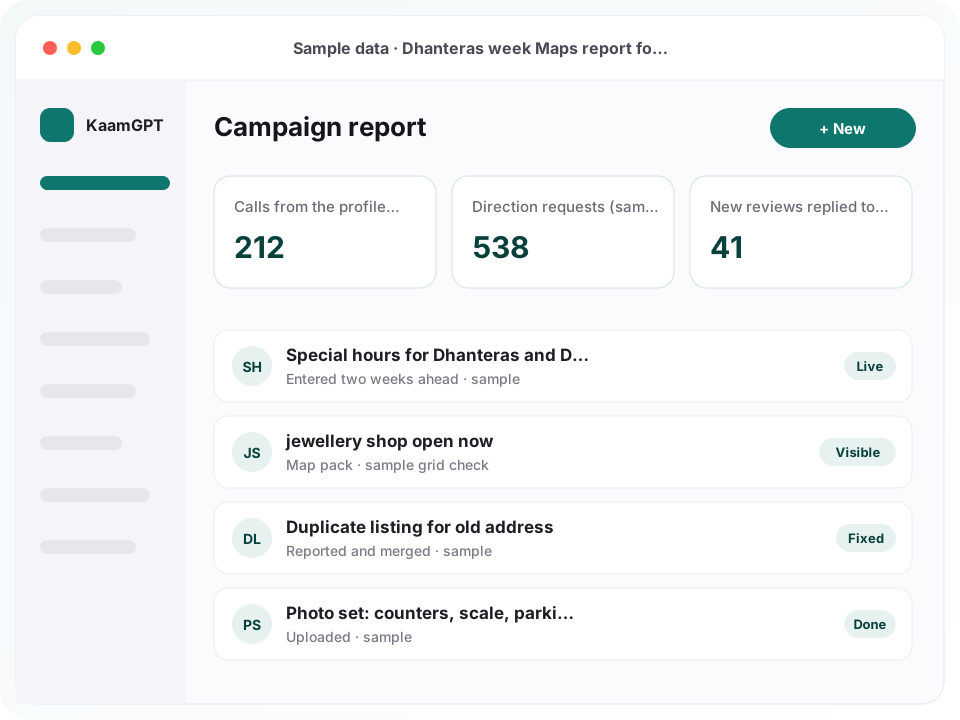
Any local SEO agency for jewellery stores in Bangalore is really working on the last mile of a purchase. By the time someone opens Google Maps and types a jeweller's name or a nearby search, the family has usually decided to go out today. What they see in the next thirty seconds, the pin, the hours, the photos, the latest reviews, decides which door they walk through.
That matters more for jewellers than for most shops. Showrooms sit close together on old streets, festival days change opening hours, and a single wrong pin on Avenue Road can send a buyer into a rival's store two doors away. KaamGPT keeps each showroom's profile exact and alive, from the pin and categories to festival special hours and review replies. Our general method sits on the Local SEO service page; here we cover what changes when the business sells gold and diamonds.
- ₹4,999is the monthly starting point for a single showroom; the written scope lists its tasks
- ~14 daysfor the opening work on one showroom: pin, categories, duplicates and first citations
- 1 profileper physical showroom, as Google's guidelines require; no duplicates for the same door
- 0 incentivesoffered for reviews: no coins, discounts or gifts, which Google's policy forbids
Where do Bengaluru's jewellers cluster, and why does that complicate Maps?
Jewellery in Bengaluru still concentrates on a few old streets. Avenue Road, which runs through Chickpet close to Majestic bus station and the city railway station, has a long trade in jewellery and pawn broking next to its book and textile shops. Commercial Street in Tasker Town, near Shivajinagar's Russell Market, sells jewellery among clothes and footwear, and its shopping spreads into side lanes, Dispensary Road and Abrahim Sahab Street among them. On streets like these, several jewellers can share a building, a landmark and almost the same pin.
The newer pattern is spread out. Jayanagar's 3rd and 4th Blocks act as commercial hubs for south Bengaluru, Malleshwaram has its own shopping roads and two large malls at its edge, and regional chains open showrooms on main roads in residential areas such as Kammanahalli, Marathahalli and HSR Layout. Each showroom draws from its own few kilometres, so Google's distance weighting decides a great deal.
On the day of a visit, people search simply: jewellery shop open now, gold shop avenue road, silver articles commercial street, jewellers in malleshwaram, or just the store's name with "directions". Treat these as samples of wording, never as volume data. Underneath each one is a practical question: is it open, can I park, is it the shop my aunt meant, and will someone help me quickly?
Which Maps tasks does a jewellery showroom need?
Work is planned per showroom. A single-branch jeweller gets the full list below for one door; chains get the same for each location, with the brand kept consistent across them.
A jewellery showroom Google Business Profile done properly
Real-world name only, the right primary category for what the store is, accurate secondary categories, the pin on the real entrance, phone, website and products. Accessibility and parking attributes are ticked only when accurate. This is the foundation of every other step.
Google Business Profile in detail →Festival special hours, entered early
We add festival special hours for Akshaya Tritiya, Varamahalakshmi, Dhanteras, Diwali and any store holidays two weeks ahead, and check them again the day before. Shoppers searching late in the evening see the real hours rather than guessing, and nobody stays home because the profile wrongly showed the store as closed.
Local SEO in detail →Photos that answer visit questions
Entrance from the street, the landmark next door, the display cases, the desk where gold is weighed, seating for families and the parking or nearest parking. Photos are taken at the store, not borrowed, and refreshed before each peak so the profile looks current.
Local SEO in detail →Reviews requested the honest way
A short card or message goes to every buyer, pleased or not, inviting a review, with no gift or discount attached. Replies to every review, polite and specific, within two working days. Jeweller reviews on Google build slowly this way, but they hold up and they read as genuine.
Local SEO in detail →Branch pages that match the profile
Each showroom's own page on the website repeats its profile's name, address and phone word for word, adding directions from the nearest landmark and metro stop. The jewellery SEO guide covers deeper website work.
SEO in detail →Citation clean-up
We find old addresses, old phone numbers and duplicate listings on directories and maps, correct what can be corrected and request removal of the rest. For shops that moved within Chickpet or along Commercial Street, this alone often clears up confusion.
Local SEO in detail →Location assets on search ads
Where a showroom also buys search ads, we link the profile so ads show the address, distance and call button. Search campaigns are explained under Google Ads management, with the trade detail in our jewellery search-ads guide.
Google Ads in detail →How does a showroom's first month unfold?
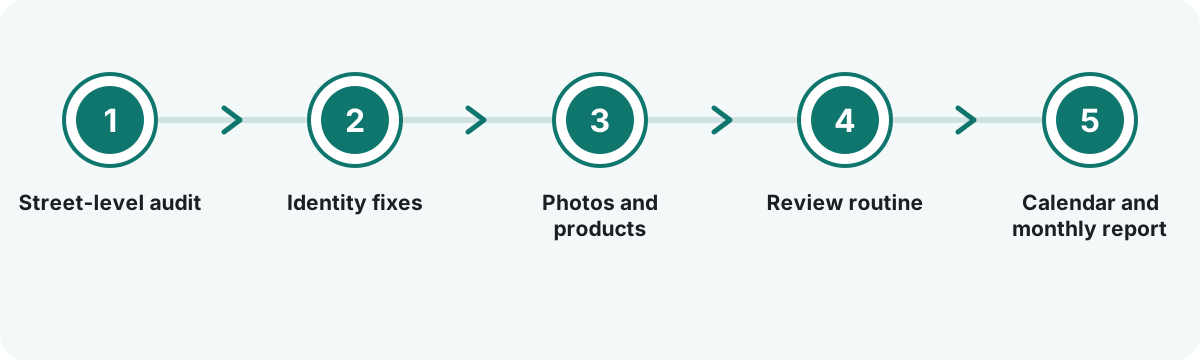
Street-level audit
We check the pin, name, categories, hours, photos and reviews, run a grid check around the showroom, and list duplicates and stale citations.
Identity fixes
We correct name, pin, phone and categories so they agree with the signboard and website, and send duplicate listings to Google for merging or removal.
Photos and products
A fresh set of photos is taken at the store, and key product groups such as bridal sets, silver articles and coins are added with weights in grams.
Review routine
We set up an incentive-free routine for inviting every buyer to review, and a reply routine so each review gets an answer within two working days.
Calendar and monthly report
Festival special hours go in ahead of each peak, and each month you see phone calls, route requests, site visits and fresh reviews for every showroom.
Which kinds of jeweller lean hardest on Maps?
- Avenue Road and Chickpet tradersShops share buildings and landmarks, so an exact pin and clear entrance photos decide which counter a walker reaches.
- Commercial Street jewellersCrowded lanes and scarce parking make directions, parking notes and accurate hours unusually important.
- Neighbourhood family jewellersBuyers mostly live within a few kilometres, and reviews from local families carry the profile.
- Regional chains with many showroomsOne profile per showroom, consistent names, and branch hours that differ during festivals.
- Mall-based jewellery countersProfiles must show the mall, floor and unit clearly, and hours that follow the mall's own timings.
- Silver and pooja article shopsSearched heavily before festivals and housewarmings, often by people who need the item the same day.
- Diamond boutiques with appointmentsAppointment links, quiet seating photos and clear parking details suit buyers planning a longer visit.
How is Maps work for a jeweller priced?
Maps work for one showroom begins at ₹4,999 monthly, and the scope we send lists that location's tasks before anything starts. A single store usually fits the plan as it is; chains are quoted per showroom, with any shared work such as brand photography or a website template scoped separately. Every published starting price is listed on the pricing page.
Local SEO
Recommended₹4,999/month
Typically 14 days
Every showroom whose walk-ins depend on the pin, the hours, the photos and honest reviews on Google Maps.
- Google Business Profile optimisation
- Local keyword map
- Location page on-page fixes
- Citation building and NAP cleanup
- Local link outreach
- Review replies and posts
- Monthly report
Digital Marketing
₹19,999/month
Typically 15 days
Stores that want Maps work joined to a full festival calendar of search, social and WhatsApp.
- Channel strategy
- Creative production
- Campaign management
- Weekly reporting
SEO
₹14,999/month
Typically 30 days
Jewellers whose own website should be found for design names, hallmark questions and a dated rate page.
- Technical audit
- Keyword research
- On-page optimisation
- Content plan
- Monthly reporting
Google Ads
₹4,999/month
Typically 30 days
Showrooms that want location-linked search ads during peaks, on top of a well-kept profile.
- Account setup
- Keyword strategy
- Ad copy testing
- Conversion tracking
- Bid optimisation
Meta Ads
₹4,999/month
Typically 30 days
Stores that want people near the showroom to see new collections on Instagram before a festival.
- Creative testing
- Audience building
- Retargeting funnels
- Pixel setup
- Weekly reporting
Lead Generation
₹24,999/month
Typically 14 days
Showrooms where Maps calls and chats need fast answers and a booking routine to become visits.
- Verified leads
- Multi-channel outreach
- CRM integration
- Lead scoring
- Replacement guarantee
- Each physical showroom is priced on its own, beginning at ₹4,999, so a jeweller with three showrooms sees three lines in the quote, each with separate tasks.
- We never buy reviews, offer gifts for them or write them, and we will not take on work that asks for any of those.
| Package | Starts at | Timeline | Best for |
|---|---|---|---|
| Local SEO | ₹4,999/month | Typically 14 days | Every showroom whose walk-ins depend on the pin, the hours, the photos and honest reviews on Google Maps. |
| Digital Marketing | ₹19,999/month | Typically 15 days | Stores that want Maps work joined to a full festival calendar of search, social and WhatsApp. |
| SEO | ₹14,999/month | Typically 30 days | Jewellers whose own website should be found for design names, hallmark questions and a dated rate page. |
| Google Ads | ₹4,999/month | Typically 30 days | Showrooms that want location-linked search ads during peaks, on top of a well-kept profile. |
| Meta Ads | ₹4,999/month | Typically 30 days | Stores that want people near the showroom to see new collections on Instagram before a festival. |
| Lead Generation | ₹24,999/month | Typically 14 days | Showrooms where Maps calls and chats need fast answers and a booking routine to become visits. |
How should a jeweller budget for Maps visibility?
Budget per door. Each showroom has its own catchment, rivals and review history, so a store in a quiet residential road may need far less effort than one in the middle of Avenue Road. Before quoting, we check how many duplicates and old citations exist, because clean-up is the heaviest work at the start.
Before signing with a local SEO agency for jewellery stores in Bangalore, find out what happens in the first fortnight, how reviews will be requested, and whether they will put keywords in your business name. The last answer should be no; it is against Google's rules, and a suspended profile at Dhanteras costs more than any ranking gain.
- Number of showrooms, since the plan is priced per location.
- The count of duplicate or outdated listings left by moves, renames or partner changes.
- Whether the store sits on a dense jewellery street with several rivals in the same building.
- How many festivals and seasonal hour changes the year includes.
- Whether branch pages exist on the website or must be built.
- How reviews are currently collected, and whether past incentive practices need to stop.
Why trust KaamGPT with a jeweller's Maps presence?
Rules followed, even when rivals don't
We keep names clean and reviews honest. Shortcuts that work for a few months end in suspended profiles, usually at the worst possible time.
Built around the festival calendar
Hours, photos and posts are planned for Akshaya Tritiya, Varamahalakshmi, Dhanteras and the wedding season, not updated after the rush.
Our own profile tool plus judgement
Our in-house profile software queues review replies, schedules posts and runs rank checks; people on our team make the judgement calls.
Remote, from a Bengaluru team
We serve showrooms across Bengaluru from our team in the city, over phone calls, WhatsApp and video meetings, and ask your staff for photos when a visit is not needed.
Per-showroom reporting
Chains see each location separately, so a weak branch is spotted early instead of hidden inside a total.
Where would the best local SEO agency for jewellery stores in Bengaluru begin with a showroom?
We start by looking at the street the way a shopper does. From the nearest metro exit, bus stop or parking spot, which jewellers appear on the map, where are their pins, and which one would you tap? A grid check at several points around the store shows how visibility changes within a few hundred metres, which on Avenue Road can mean the difference between one doorway and the next.
Then we fix identity before anything else. Name, address, phone, category and pin must match the signboard, the website and the directories. Only after that do photos, posts and reviews pay off, because Google has to be confident it is showing the right store before it shows it more often.
Google Maps for jewellery shops is also seasonal in a way few categories are. The week before Dhanteras, a profile may get more views than in the previous two months together. So the plan front-loads the slow work, ownership, duplicates and citations, into the quiet months after the wedding season, and keeps festival weeks for hours, photos, posts and fast replies.
Pin the entrance, not the building
In shared buildings and narrow lanes the pin goes on the customer entrance and describe it in words too, such as "ground floor, next to the bank ATM", so walkers and drivers arrive at the right door.
Signboard name, nothing added
Google's guidelines say the business name must reflect the real-world name used on the storefront and known to customers. Keywords, taglines and locality names are left out, even when competitors break the rule.
Plan hours around the festival calendar
Festival special hours, wedding-season late evenings and Sunday changes go into the profile ahead of time. A jeweller that opens at dawn on Akshaya Tritiya should say so a fortnight before.
One profile per door, chains named alike
Each showroom gets one profile. Google expects all locations of a chain to share the same name and, where they offer the same thing, the same category, with each profile carrying its own address and phone.
Show what builds trust in the store
Pictures of the display cases, the weighing desk and the hallmark notice answer questions before people arrive. Under the Legal Metrology Act, weighing instruments used in trade must be verified and stamped; a clear photo of your stamped scale quietly says that yours is.
What goes wrong with jewellery stores' Maps listings?
Most problems are not dramatic. They are small errors that compound on a crowded street, where Google has several similar businesses to choose from and will favour the one it is most confident about.
Jewellers also inherit problems they did not create. A relative once claimed the listing with a personal email, a former employee still holds the login, or a directory copied an address from a decade ago. Recovering ownership and cleaning those traces is slow, unglamorous work, but nothing else on the profile can be trusted until it is done.
- Business names stuffed with keywords, such as "Best 916 Gold Jewellers Jayanagar", which breaks Google's naming rules and risks suspension.
- Pins dropped on a building's middle or across a busy road from the actual door, so people walking along Avenue Road end up at a neighbouring counter.
- Regular hours left in place on Akshaya Tritiya, Dhanteras and Diwali, when the store opens early or closes late, so shoppers think it is shut.
- Free coins or discounts offered for a Google review, a common habit that Google's Maps content policy prohibits outright.
- Duplicate listings left behind after a move or a rename, splitting reviews and confusing both Google and customers.
Why can't a jeweller give a silver coin for a Google review?
Because Google's Maps content policy says contributions should reflect a genuine experience, and it bars businesses from rewarding reviewers, naming payment, discounts and free goods or services as examples. A silver coin, a discount on making charges or entry into a lucky draw all count. The policy also says businesses should not give staff review targets, dictate what a review says, or require customers to leave a review while they are still on the premises.
Incentivised reviews can be removed, and a pattern of them can harm the whole profile. They also read badly: a wall of short five-star reviews posted on one festival weekend looks bought, even when it was not. For a business whose product is trust, that is a poor exchange for a temporary boost.
The honest routine works more slowly but lasts. Every customer is asked, in person at billing and again in a short message a day later, with the link attached and nothing offered. Staff are asked to mention it, not to chase numbers. Every review gets a reply that names something specific, and complaints get a calm, factual answer with an offer to talk.
- Not allowed: coins, discounts, draws or gifts linked to reviews.
- Not allowed: review quotas for staff, or asking for particular words.
- Allowed: asking every customer, with a link, and replying to all.
How should a chain or a store with separate counters set up its profiles?
Google allows one profile per location of a business. For chains, its guidelines say every location should carry the same name and, when they provide the same service, the same category. So "Sri Example Jewellers" stays "Sri Example Jewellers" in Jayanagar and Malleshwaram; the address and phone tell them apart, not a locality tacked onto the name.
Separate counters inside one showroom, such as a silver section, a diamond lounge or a bridal floor, usually belong inside the main profile as products and photos rather than as listings of their own. Google permits departments only under specific conditions, including a distinct category and a different name from the main business. Creating extra profiles for sections that do not meet those conditions risks duplicates and suspensions.
Shopping-centre counters raise a related question. A chain's counter inside a mall is a location in its own right if it is staffed and open to customers during stated hours, so it gets its own profile, named like the other branches, with the mall, floor and unit in the address. A temporary stall at a wedding exhibition is not a location and should be promoted through posts on the main profile instead.
What should a jeweller's profile show during festival weeks?
Festival weeks are when the profile is most viewed and most often wrong. Enter festival special hours for each altered day well in advance, including early openings for Akshaya Tritiya muhurat times and late closings around Dhanteras. Add a short post about appointment slots, parking arrangements or token systems if the store runs them, and refresh photos so the profile shows this season's displays rather than last year's.
Keep rates out of profile posts. Posts stay visible for days, while gold prices change daily, and under the Legal Metrology Act a quoted price belongs in standard units such as grams. Point people to your dated rate page instead. Products in the profile can show design, weight in grams and carat, which answers most questions without a price that will go stale.
Brief your staff too. Calls from the profile spike in festival weeks, and a phone that rings out undoes the work. We suggest a named person for profile calls on peak days and a short script covering hours, parking and how to book a slot.
Who should own the profile, and what if a relative or ex-employee has it?
The store should own its profile through a business account it controls, with at least two trusted people as managers. Family businesses often find that the listing was claimed years ago by someone who has since left, or by a relative using a personal email. Until ownership is recovered, every fix depends on someone else's login and can be undone without warning.
Google provides a process to request ownership of a profile someone else has claimed, and it can take time. We start it early, keep a record of each step, and in the meantime avoid creating a second listing for the same showroom, which only splits reviews and adds to the confusion. Once ownership is settled, we set up manager access so that staff changes no longer put the profile at risk.
Access is also a festival-week question. If only the owner can change hours and the owner is on the shop floor from dawn on Akshaya Tritiya, the profile will not be updated when it matters. A named manager with access, and a short checklist, solves that.
- Owner and at least one manager on a business account.
- Ownership requests started early and logged.
- No second listing created while recovery is pending.
Is local search for gold shops different from other retail?
In three ways. First, density: several jewellers often sit within a short walk, so tiny accuracy differences decide who appears. Second, timing: demand piles onto a few dates a year, so hours and responsiveness on those dates matter more than any average. Third, trust: shoppers are about to spend a large sum, so they read reviews closely and look for signs of honesty, from hallmark displays to the stamped weighing scale.
There is a fourth difference that owners often miss: the same family returns for years. A bride's mother bought her own wedding set from the store, and the bride will check the profile before her first visit. Old reviews, photos of a renovated showroom and replies to complaints from years ago all shape that check, which is why we review the full history of a profile, not just the last month.
That is why we treat a jeweller's profile as a shop window that changes with the calendar, not a listing set up once. For the website side of the same trust signals, read the guide to SEO for jewellers; for the whole year, the jewellery marketing calendar, run as managed digital marketing.
- Local SEO for jewellers
- ₹4,999 monthly per showroom to start; opening fixes take roughly two weeks
- Business name rule
- Real-world name as on the signboard; no keywords, taglines or localities added
- Chains
- Shared brand name on every showroom; one profile each, told apart by address and phone
- Review incentives
- No reward of any kind, cash, discount or free item, may be tied to a review
- Festival hours
- Entered as special hours ahead of Akshaya Tritiya, Dhanteras and Diwali
- Weighing scales
- Must be verified and stamped under Legal Metrology Act section 24 before use in trade
Where this applies around Bengaluru, Karnataka
- Bengaluru
- Chickpet
- Shivajinagar
- Malleshwaram
- Kammanahalli
- Karnataka
- India
Frequently asked questions
29 answersHow is the best local SEO agency for jewellery stores in Bengaluru different from a generalist?
It treats each showroom's profile as part of the festival calendar. Pins are placed on the actual entrance, names match the signboard, festival hours go in early, photos show counters and parking, and reviews are requested from every customer with no gifts attached. On crowded jewellery streets, that accuracy decides which door a shopper walks through.
What will Maps work for one jewellery showroom in Bengaluru cost?
Our price for local SEO begins at ₹4,999 monthly for each showroom. Each showroom is scoped separately, with its tasks listed in the written quote. Initial set-up, including the audit, pin and category fixes and the first citation corrections, takes about 14 days.
Can a jeweller give a free coin for a Google review?
No. Google's rules for Maps contributions rule out any reward for a review, whether money, a discount or something handed over free, and a silver coin is exactly that kind of reward. Incentivised reviews can be removed and can damage the profile. Invite all buyers to write honestly, share the link, and answer each review.
How should a jewellery chain name its Google Maps profiles?
With the same real-world brand name on every location, exactly as on the signboards. Google's guidelines expect chain locations to share a name and, where they offer the same thing, a category. The address and phone distinguish one showroom from another. Adding the locality or words like "916 gold" to the name breaks the rules.
How do I set festival hours on Google for Dhanteras?
Use the special hours option in your Business Profile for each day that differs from normal, including early openings and late closings, and enter them a week or two ahead. Check them again the day before. Many Bengaluru jewellers change hours around Dhanteras and Diwali but forget to tell Google, so shoppers see the wrong times.
Why does my jewellery shop pin show the wrong building?
Usually the pin was dropped automatically from the address text, and that can land mid-building, on the next plot or across the road. On streets such as Avenue Road, where buildings hold several shops, move the pin to your customer entrance mention the entrance in the address line, and show it in photos.
Who manages Google Business Profiles for jewellers on Avenue Road?
KaamGPT manages profiles for jewellery stores on Avenue Road, in Chickpet and across Bengaluru, working remotely with your staff for photos and approvals. We fix pins, names, categories, hours, photos and reviews, and report monthly per showroom. The underlying service is outlined on our <a href="/services/local-seo">local SEO service page</a>, and the citywide picture on <a href="/local-seo-services-in-bangalore">local SEO services in Bangalore</a>.
Should a diamond lounge inside a jewellery store have its own Google listing?
Usually not. Google allows separate department profiles only under specific conditions, including a distinct category and a name different from the main business. A diamond lounge or silver counter inside one showroom is better shown through products, photos and the description of the main profile. Extra listings risk being treated as duplicates.
How can a gold shop on Commercial Street get more direction requests?
Make the profile answer the practical questions: an exact pin on the entrance, photos from the street and the nearest landmark, parking notes, correct hours, and recent reviews with replies. On a crowded street with little parking, clarity about how to reach the door usually outweighs everything else on the profile.
Does a well-known jeweller still need a local SEO agency for jewellery stores in Bangalore?
Reputation brings the search; the profile decides whether the visit happens. Well-known stores still lose visitors to wrong hours on festival days, duplicate listings with old addresses, and unanswered complaints that remain the first review people read. Upkeep is light for an established store, but it is rarely zero.
How long before Maps changes show for a jewellery store?
Corrections to the name, hours and pin tend to appear within days, sometimes two weeks, after Google approves them. Visibility shifts more slowly, often over one to three months, as reviews, photos and citations accumulate. Merging duplicates waits on Google's own checks and may run for several weeks.
What photos should a jewellery showroom put on its profile?
The entrance from the street, the signboard, the nearest landmark, the counters, the seating area for families, the hallmark display, the weighing scale and the parking or nearest parking. Add product photos with weights in grams. Avoid stock images and heavily filtered shots; shoppers want to know the storefront the moment they see it.
Should we post gold rates on our Google profile?
No. Posts stay visible for days while rates change daily, so a posted figure soon misleads. Link to a dated rate page on your website instead, with prices per gram, matching the Act's insistence on standard units. Use posts for hours, collections and appointment slots.
What should a jeweller do about a negative review on Google?
Answer within a day or two, calmly and specifically: recognise what upset the customer, state the facts without arguing, and offer to talk by phone. Never post fake positive reviews to bury it. If a review breaks Google's policy, for instance by describing another shop entirely, flag it to Google, but disagreement alone is not grounds for removal.
Can staff collect reviews for our jewellery store?
Staff can ask customers to leave a review and share the link. What Google's policy rules out is setting staff quotas for reviews, asking for particular words in reviews, or requiring customers to post one while still in the store. A friendly request at billing and a follow-up message the next day is the right approach.
Do jewellery stores in malls need a different Maps setup?
Yes, slightly. The address should include the mall name, floor and unit, the pin belongs on the store itself inside the mall rather than the mall's entrance, and hours should follow the mall's timings, including its own festival changes. Photos of the storefront within the mall help shoppers find you among other counters.
How do we fix a duplicate listing left from our old shop address?
First confirm which listing is verified and holds the reviews. Then report the duplicate in Google Maps or ask Google support to merge or remove it, and update the stale address wherever directories and your own site still show it. Jewellers who moved within Chickpet or along Commercial Street often have such duplicates.
Does Google Maps matter for diamond boutiques that work by appointment?
Yes. Appointment-led buyers still check the location, parking and reviews before a visit, and many search the boutique's name with "directions" on the day. Add an appointment link, photos of the consultation area and clear notes on hours, and keep reviews answered, since diamond buyers read them closely.
Should a jewellery exhibition stall in Bengaluru get its own Google listing?
No. A temporary stall at a wedding or jewellery exhibition is not a permanent, staffed location, so it does not qualify for a profile of its own. Promote it with a post on your main showroom's profile and on social channels, giving the venue, dates and stall number, and remove the post once the exhibition ends.
What categories should a jewellery store choose on Google?
Pick a main category that names what the business is, normally jewellery store, and add extras such as gold dealer or diamond dealer only if they genuinely apply. Google advises using as few categories as possible. Choosing many loosely related categories rarely helps and can blur what the store is.
Can you manage profiles for all branches of a Bengaluru jewellery chain?
Yes. Each showroom gets its own profile tasks and monthly figures, while the brand name, photo style and review approach stay consistent. Pricing runs showroom by showroom, beginning at ₹4,999 monthly for each one. Shared work such as a branch-page template is scoped separately in the quote.
Will local SEO help us during Akshaya Tritiya?
It helps most when done in advance. Hours, photos and appointment posts should be in place a fortnight before, and duplicates fixed months earlier. On the day, shoppers check the profile for hours and directions, so an accurate profile captures people who have already decided to buy.
Where do we send our showroom's Maps listing for a check?
Phone us on +91 79767 82366, or share the listing link over WhatsApp. We look at the pin, name, categories, hours, photos and reviews of each Bengaluru showroom, then send back a written list of fixes with a quote for every location. Nothing starts until you approve it.
Does the stamped weighing scale really matter on a profile?
It is a small but real trust signal. The Legal Metrology Act requires weighing instruments used in trade to be verified before use, and customers buying gold watch the scale closely. A clear photo of the weighing counter tells shoppers your store takes accuracy seriously, before they arrive.
Can local SEO and search ads work together for a jeweller in Bengaluru?
Yes. A linked profile lets search ads show your address, distance and a call button, and a well-kept profile improves what people see after clicking. During festival weeks the two together cover the shopper who is browsing and the one who needs directions now. The paid side for jewellers is set out in our <a href="/best-google-ads-agency-for-jewellery-stores-in-bengaluru">guide to search ads for jewellery stores</a>.
Do you also handle enquiries that come from our Maps profile?
We set up the profile so calls and chats reach the right person, and suggest a festival-day script for staff. If you want enquiries tracked and followed up as a pipeline, that is our lead generation work, set out in the <a href="/best-lead-generation-company-for-jewellery-stores-in-bengaluru">jewellers' lead generation guide</a>.
Can a home-based jewellery designer in Bengaluru get on Google Maps?
Only within Google's rules. A business that does not receive customers at its address should list a service area with the address hidden, rather than list a home as a storefront. If clients visit by appointment at a staffed studio with signage, a storefront profile may suit. We confirm which case fits before creating anything.
Which reports will a jeweller receive for local SEO?
Each showroom gets its own monthly sheet: phone calls, route requests, website taps, photo views, new reviews with our replies, and a grid check of visibility around the store. Before and after each festival we add a short note comparing that period against the same festival a year earlier.
Can even the best local SEO agency for jewellery stores in Bengaluru promise a top Maps spot?
No, and treat any such promise with suspicion. Google weighs relevance, distance and prominence, with distance by itself making results shift from one street to the next. What we put in writing instead is the work itself: accurate profiles, honest reviews, correct hours and clear reporting.