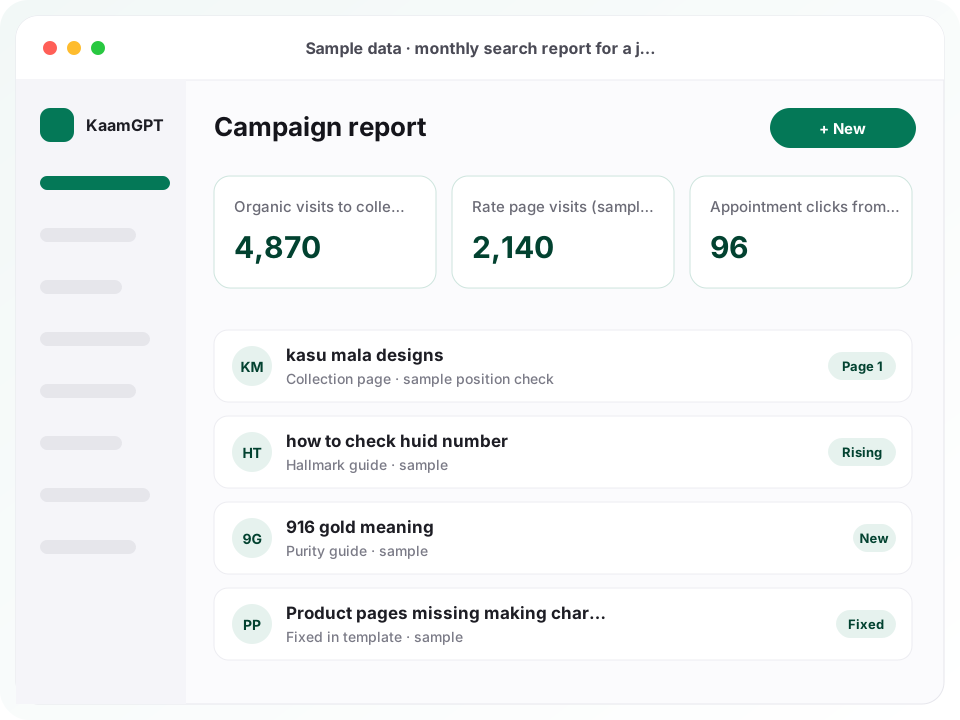
The best SEO company for jewellery stores in Bengaluru should understand one thing about your customers: they research for weeks before they walk in. A bride's cousin looks up antique haram designs, a father checks what 916 means, someone asks how to verify a HUID. Whoever answers those questions well becomes the jeweller they trust enough to visit.
KaamGPT builds and maintains the pages that win that research: collections named the way people search, a dated per-gram rate page, purity and hallmark guides that match what BIS actually requires, and product pages that show the whole price. It is search work for showroom owners who sell in person, so every page leads to a visit or a conversation. How we run SEO in general is on our SEO service page.
- ₹14,999opens the monthly SEO fee, with deliverables listed in the quote
- ~30 daysto finish the audit, map the searches and rebuild the first collections
- 3 marksof a hallmark explained on your site: BIS logo, purity, six-digit HUID
- 1 rate pagedated, per gram and in plain text, instead of rates scattered across posts
Why don't most jewellers' websites rank for the designs they sell?
Jewellery sites are often built as catalogues: hundreds of photos, a few words each, and a contact page. Search engines have little to read, and shoppers have little reason to stay. The pieces may be beautiful; the pages are thin.
There is a quieter problem too. Many sites copy supplier photographs and descriptions that appear on dozens of other stores, so search engines see nothing original, and shoppers see the same necklace on three websites at three different prices. Original photographs of your own stock, with real weights, are the simplest, least costly way to stand apart.
- Collections named by internal codes or vague labels such as "Gold Collection 2" instead of the design names families actually type.
- A gold rate shown as an image or an embedded widget from an unknown source, never dated, and sometimes days out of date.
- Product pages that show a price but reveal making charges, stone value or tax only at the final step of checkout.
- No page that explains the hallmark, the HUID or how to verify it, although these are among the first questions a careful buyer asks.
- Heavy, uncompressed photographs that make the site slow on a phone, which is where most browsing for jewellery happens.
How would the best SEO company for jewellery stores in Bengaluru structure your site?
We begin with the questions, not the keywords. Your counter staff know what customers ask: is this 22 carat, why is the wastage different here, can I exchange my mother's chain, how do I check the hallmark. We collect those, match them to the phrases people search, and decide which page answers each one. A site built this way grows into a reference that shoppers come back to.
Then we organise the catalogue by how people choose. Families pick by occasion and design first, metal and purity second, weight and budget third. Navigation and internal links follow that order, so a shopper who lands on a temple jewellery page can reach matching earrings, the purity guide and the appointment form in one or two taps.
Finally, we decide what not to publish. Pages for designs you rarely stock, festival pages you will not maintain, and thin location pages for areas you do not serve all dilute a site. A smaller set of well-kept pages usually beats a sprawling one, and it is easier for your team to keep accurate when rates and stock change.
Design-led collections with real text
Every collection page carries a few hundred words of genuine guidance: what the style is, which occasions suit it, typical weight ranges you stock, and how to care for it. Thin category grids rarely rank; pages that help do.
A gold rate page built to be trusted
One gold rate page, in plain crawlable text, per gram for each carat you sell, with the date and time of the last update and the name of who updates it. It answers a frequent search and becomes the page your posts and messages link to.
Purity and hallmark guides
Pages that explain the three marks, how carat relates to fineness, what the bill will show and how to verify a HUID. Written to match BIS wording exactly, because a guide that gets the rules wrong does more harm than having none.
Structured data that matches the page
Product markup with weight, purity and price where you sell online, and JewelryStore markup for each showroom. Markup must describe what is visible on the page; we never mark up prices or ratings that a visitor cannot see.
Image search that sends visitors
Jewellery is chosen with the eyes, so image search matters. Descriptive file names, alt text that names the design and metal, compressed images, and original photographs rather than supplier stock that appears on fifty other sites.
What does SEO work for a jewellery store cover?
The work is mostly writing and structure, done carefully. Each item below is scoped to your stock, the number of showrooms and the questions your counter staff hear most often.
Collection pages named the way families search
We map your stock to the design names, occasions and metals people use: temple, antique, nakshi, kundan, haram, choker, jhumka, vanki, mangalsutra, solitaire, platinum bands. Each of the jewellery collection pages gets a short, useful introduction, real weights, care notes and an appointment link, so it reads like advice rather than a grid.
SEO in detail →Guides that answer the counter questions
A HUID hallmark guide, a page on carat and fineness, an honest explainer on making charges and wastage, and a page on how exchange works at your store. These are the questions customers ask face to face; answering them in writing earns searches and saves your staff time.
SEO in detail →Product pages that show the whole price
If you sell online, each product page should show metal weight, purity, making charges, stone value and tax before the customer reaches checkout. We fix templates so the breakup is visible upfront, and so images load quickly on a phone. Larger rebuilds are scoped under website development.
Websites in detail →Branch pages that match your Maps profiles
Each showroom gets a page with its address, landmark directions, hours, parking notes and what that branch stocks, written to match its Google profile exactly. Profile work is part of local SEO, and the jewellery detail is on our local SEO page for jewellery stores.
Local SEO in detail →Paid search data that guides content
When a store also runs search ads, the search terms report shows exactly which phrases bring buyers. We use it to choose which guides and collections to write next, so organic work goes where demand is proven. How we run those campaigns is on our Google Ads service page and, for this trade, our Google Ads page for jewellers.
Google Ads in detail →Content timed to the jeweller's calendar
Akshaya Tritiya and Dhanteras pages need to be live and indexed weeks before the day, not published the night before. We schedule seasonal pages, refresh last year's versions with this year's collections, and keep them at the same address so they build strength from year to year.
Digital marketing in detail →Why choose KaamGPT for jewellery SEO?
Pages that read like your best salesperson
We write from the questions your counter hears, so pages answer shoppers the way a patient, knowledgeable staff member would.
Rules checked before publishing
Hallmark, purity and pricing statements are checked against BIS and consumer protection rules before they go live, because a wrong claim on a trust page costs more than it earns.
SEO, AEO and GEO together
Clear answers in plain text help search results, answer boxes and AI assistants read your pages the same way. We write for all three without stuffing keywords.
Bengaluru team, remote delivery
Our people in Bengaluru work with you by phone, WhatsApp and video, and the work does not depend on site visits.
Honest timelines
Organic search takes months to build. We say so at the start, show progress monthly and recommend paid search for anything that cannot wait.
How much does SEO for a jewellery store cost?
A jeweller's SEO is priced from ₹14,999 monthly, and the quote states how many pages we write or rebuild, which technical fixes are included and what the monthly report covers. For a store with a large online catalogue, scope grows with the number of templates and collections. All published starting prices are on our pricing page.
SEO
Recommended₹14,999/month
Typically 30 days
Jewellers who want their website to rank for design names, purity questions and a trustworthy rate page.
- Technical audit
- Keyword research
- On-page optimisation
- Content plan
- Monthly reporting
Digital Marketing
₹19,999/month
Typically 15 days
Stores that want search, social, Maps and WhatsApp planned together around festivals and muhurat dates.
- Channel strategy
- Creative production
- Campaign management
- Weekly reporting
Local SEO
₹4,999/month
Typically 14 days
Showrooms whose customers mostly arrive from Google Maps, where profiles and reviews matter more than articles.
- Google Business Profile optimisation
- Local keyword map
- Location page on-page fixes
- Citation building and NAP cleanup
- Local link outreach
- Review replies and posts
- Monthly report
Google Ads
₹4,999/month
Typically 30 days
Stores that need visibility in the next few weeks, while organic pages are still being built and indexed.
- Account setup
- Keyword strategy
- Ad copy testing
- Conversion tracking
- Bid optimisation
Meta Ads
₹4,999/month
Typically 30 days
Design-led collections that sell on visuals and benefit from paid reach before festivals and weddings.
- Creative testing
- Audience building
- Retargeting funnels
- Pixel setup
- Weekly reporting
Lead Generation
₹24,999/month
Typically 14 days
Showrooms with many bridal and diamond enquiries that need fast, organised follow-up to become visits.
- Verified leads
- Multi-channel outreach
- CRM integration
- Lead scoring
- Replacement guarantee
- SEO compounds slowly; seasonal pages for Akshaya Tritiya or Dhanteras should be started at least two months before the day to stand a fair chance.
- Product photography and full website rebuilds are quoted separately if your audit shows they are needed.
| Package | Starts at | Timeline | Best for |
|---|---|---|---|
| SEO | ₹14,999/month | Typically 30 days | Jewellers who want their website to rank for design names, purity questions and a trustworthy rate page. |
| Digital Marketing | ₹19,999/month | Typically 15 days | Stores that want search, social, Maps and WhatsApp planned together around festivals and muhurat dates. |
| Local SEO | ₹4,999/month | Typically 14 days | Showrooms whose customers mostly arrive from Google Maps, where profiles and reviews matter more than articles. |
| Google Ads | ₹4,999/month | Typically 30 days | Stores that need visibility in the next few weeks, while organic pages are still being built and indexed. |
| Meta Ads | ₹4,999/month | Typically 30 days | Design-led collections that sell on visuals and benefit from paid reach before festivals and weddings. |
| Lead Generation | ₹24,999/month | Typically 14 days | Showrooms with many bridal and diamond enquiries that need fast, organised follow-up to become visits. |
Why do SEO quotes for jewellers differ so much?
The size of the job depends far more on your website than on your city. A twenty-page showroom site with one branch is a different task from an online store with two thousand products, several metals and three branches. Before quoting, we audit the site, count templates and collections, and check how much existing content can be kept.
When comparing any SEO company for jewellery stores in Bangalore, ask what will be written, not just what will be optimised. A plan that lists ten technical fixes and no new pages will not move a catalogue site that has nothing to say. Ask also who checks the hallmark and pricing statements for accuracy.
A rough guide to effort, offered only as an illustration: the first three months are heavy, because collections are rewritten and guides published; later months shift to seasonal pages, new stock and refreshing what already ranks. The monthly fee stays the same in the quote, but you should see the balance of work change in the reports.
- How many products, collections and templates your website has, and whether you sell online or only in showrooms.
- How many branches need their own pages, matched to their Maps profiles.
- Whether original photographs exist, or stock images need replacing over time.
- How many guides are needed: purity, hallmark, exchange, making charges, diamond certification, care.
- The state of the site's speed, indexing and structured data at the start.
- Whether seasonal pages for Akshaya Tritiya, Varamahalakshmi and Dhanteras are part of the year's scope.
How does an SEO engagement with a jeweller run?
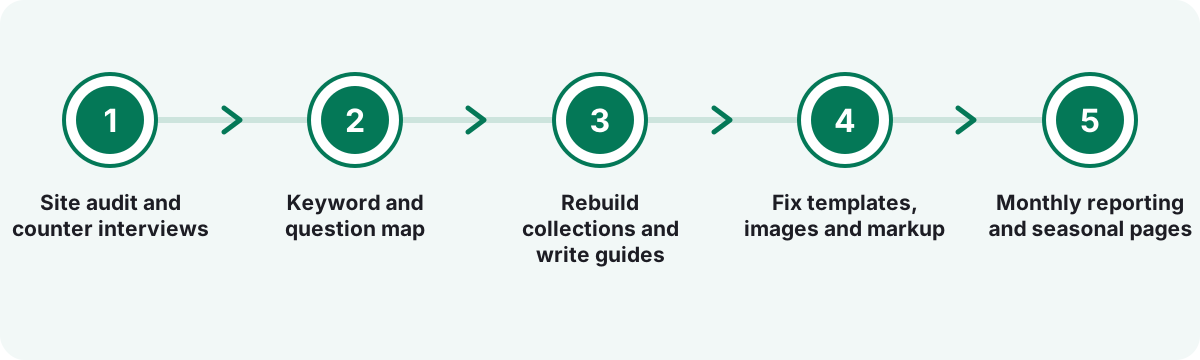
Site audit and counter interviews
We crawl the site, check speed and indexing, and spend an hour with your floor staff listing the questions customers ask. Both feed the plan equally.
Keyword and question map
Each design, purity question, seasonal occasion and branch is assigned to one page, so no two pages compete and nothing important is left without an answer.
Rebuild collections and write guides
We rewrite collection pages first, because they carry most buying intent, then publish the hallmark, purity, exchange and making-charge guides, checked against the rules.
Fix templates, images and markup
Product templates gain the full price breakup, images are compressed and named properly, and structured data is added where it matches visible content.
Monthly reporting and seasonal pages
Each month you see rankings for your mapped phrases, visits, and appointment or WhatsApp clicks from organic pages, plus the seasonal pages being prepared for the next festival.
Which jewellery businesses gain most from search?
- Family jewellers with a long local nameTheir reputation exists offline; search lets younger relatives find and confirm it before the family visits.
- Diamond and solitaire boutiquesBuyers research certification, cut and lab-grown versus natural stones for weeks, so guides earn the most here.
- Temple and antique jewellery specialistsDesign names are distinctive and widely searched, which suits collection pages with proper descriptions.
- Online-first jewellery labelsProduct pages, price transparency and structured data carry the whole business when there is no walk-in counter.
- Multi-branch regional chainsBranch pages and consistent naming stop the brand competing with itself across Bengaluru localities.
- Silver and gifting storesGift searches run all year, around housewarmings, naming ceremonies and festivals, and reward steady content.
- Bullion and coin sellersCoin buyers compare purity and price closely, so a dated rate page and clear explanations of what is sold matter most.
What do Bengaluru jewellery shoppers search for before they visit?
Research starts long before the showroom. For a wedding, the family's younger members do the browsing: design names, photos of sets worn at other weddings, weights that fit the budget, and the difference between 22 and 18 carat. Older members decide, usually after seeing the pieces in person. The searches are specific. Examples include kasu mala designs, 916 gold meaning, how to check huid number, lab grown vs natural diamond and making charges on gold explained. They show intent, not volume, and each needs its own page.
Locality shapes search too. People in Bengaluru often add a place to the query, because they would rather visit a jeweller near home than cross the city: Rajajinagar, Banashankari, JP Nagar, Basavanagudi. The older markets are searched by street name, such as Avenue Road in Chickpet or Commercial Street, and Jayanagar's 4th Block is a destination in its own right. A store's website should say plainly where it is, how to reach it and what each branch stocks.
Trust decides the click and the visit. Shoppers comparing two jewellers online look for signs of care: clear purity information, real photographs with weights, a rate that is dated, and answers to the awkward questions about wastage, exchange and what the bill will show. Jewellery website SEO is mostly about publishing those answers better than anyone nearby.
What should a jeweller's hallmark guide actually say?
Accuracy first. BIS describes the hallmark on gold jewellery as three marks: the BIS standard mark, the purity in carat and fineness, and a six-digit alphanumeric HUID. Purity is written as carat and fineness together, in forms such as 22K916, 18K750 and 14K585. Since 1 April 2023, hallmarked gold jewellery sold in the notified districts must carry the six-digit HUID, and Bengaluru Urban is one of those districts in the current order.
A good guide then turns rules into reassurance. It shows a close-up photograph of a real hallmark from your stock, explains each mark in a sentence, and tells the shopper how to check the HUID using the Verify HUID feature in the BIS Care app. It lists what the bill will show, because BIS requires the description of each article, the net weight of precious metal, the purity in carat and fineness, and the hallmarking charges to appear on the invoice.
It should also be honest about exemptions, because shoppers find them elsewhere and wonder why a piece has no HUID. BIS lists articles under two grams, kundan, polki and jadau jewellery, and jewellers with annual turnover up to 40 lakh rupees among the exemptions. A guide that hides those facts looks evasive; one that explains them looks confident.
- Three marks: BIS logo, purity in carat and fineness, six-digit HUID.
- Verification: the Verify HUID feature in the BIS Care app.
- On the bill: description, net weight of precious metal, purity, hallmarking charges.
- Exempt: under two grams, kundan, polki, jadau, and jewellers with turnover up to 40 lakh rupees.
How should a jeweller write about purity checks and older pieces?
Two BIS points answer questions that often stall a sale. First, a customer can get the purity of hallmarked jewellery tested at any BIS-recognised assaying and hallmarking centre. If the purity is found short, BIS says compensation of two times the difference, calculated on the shortage of purity, is to be paid. A store that is confident in its stock can say this calmly on its guide page.
Second, older stock. BIS states that a jeweller who wishes to sell old hallmarked jewellery without a HUID must get it re-hallmarked before sale. Pages describing heritage or vintage pieces should therefore never suggest that older-style marks are acceptable for new sales. Customers bringing their own older jewellery for exchange are a separate topic, and a page on your exchange process should explain how your store tests and values it.
Why must an online jewellery store show making charges before checkout?
Jewellery prices have several parts: metal at the day's rate, making charges or wastage, stones, hallmarking and tax. Many online stores show an attractive number on the product page and add the rest later. The CCPA's Guidelines for Prevention and Regulation of Dark Patterns, 2023 name this drip pricing: elements of price not revealed upfront, or revealed surreptitiously during the purchase, or a higher amount charged after confirmation than was shown at checkout.
The compliant approach is also the better page for search. Show the breakup on every product page: weight in grams, purity, making charges, stone value, and tax. If the metal value follows the day's rate, say so and show when it was last updated. Structured data should then reflect the same price a visitor sees. Shoppers stay longer on transparent pages, and they arrive at the showroom with fewer surprises.
Showroom-only jewellers face a softer version of the same problem. A website that says "prices from" for a necklace, when the real bill adds making charges, stones and tax, sets up an awkward conversation at the counter. Even without online checkout, it is better to show an indicative breakup with a clear note that the metal value follows the day's rate, so the visitor understands how the final figure is built.
Is a gold rate page worth the effort for search?
Yes, if it is maintained, because rate searches are frequent and repeat daily. The page should be plain text, not an image, list each carat you sell per gram, carry the date and time of the last change, and name the source your store uses to set it. The Legal Metrology Act expects prices to be quoted in standard units, which for gold means grams, and that also matches how people search for the rate.
What does not work is a scraped widget pulling numbers from an unknown feed, or a page updated twice a month. Both give shoppers a figure your counter will not honour. We set up a simple routine for your staff, a single field to update each morning, and link every post and broadcast to that page instead of repeating numbers that go stale. The planning side of rate communication is covered on our digital marketing page for jewellers.
A rate page also earns links that collection pages rarely get. Community groups, wedding planners and relatives forward a reliable rate page to one another, and every forward is a small vote of trust. That only happens if the page is right every morning, which is why we treat the update routine as part of the SEO work rather than an afterthought.
Can a jeweller's pages be found by AI assistants as well as by Google?
Shoppers increasingly type full questions into AI assistants: which carat suits daily wear, how to check a hallmark, where to buy temple jewellery in south Bengaluru. Those tools draw on pages that state facts plainly, in text, with clear headings. The same habits that help seo for jewellers in Bangalore help here: a direct answer near the top of each guide, consistent store details everywhere, and no claims a reader cannot verify.
Nobody can promise that an assistant will name a particular store, and we do not. What we can do is make your pages easy to read and quote accurately: short factual answers, the store's address and hours written the same way on every page, product facts in grams and carat, and guides that cite the BIS rules they describe. That work also improves ordinary search results, so nothing is wasted if assistants change how they choose sources.
- Answer first, detail after, on every guide.
- One spelling of the store name, address and phone across the site and profiles.
- Facts a reader can check: carat, fineness, weight in grams, HUID steps.
- SEO for jewellers
- From ₹14,999 a month; first rebuilt pages in about 30 days
- Hallmark marks explained
- BIS standard mark, purity such as 22K916, six-digit HUID
- HUID required since
- 1 April 2023 for hallmarked gold jewellery in notified districts, Bengaluru Urban included
- Invoice must list
- Description, net weight of precious metal, purity in carat and fineness, hallmarking charges
- Pricing on product pages
- Full breakup shown upfront; the CCPA treats hidden charges revealed later as drip pricing
- Reporting
- Rankings for mapped phrases, organic visits and appointment or WhatsApp clicks each month
Where this applies around Bengaluru, Karnataka
- Bengaluru
- Rajajinagar
- Banashankari
- JP Nagar
- Bengaluru Urban
- Karnataka
- India
Frequently asked questions
30 answersWhat makes the best SEO company for jewellery stores in Bengaluru different from a general SEO agency?
Knowing what jewellery shoppers ask and which rules govern the answers. A general agency may optimise pages; a jewellery-aware one writes design-named collections, explains hallmarks exactly as BIS does, shows full price breakups and keeps rates in grams. The difference shows when a customer reads your page and then asks your staff the same question.
How much does SEO cost for a jewellery store in Bengaluru?
Our SEO fee begins at ₹14,999 monthly. The written quote states how many pages are written or rebuilt, which technical fixes are included and how reporting works. A large online catalogue with several metals and branches needs a bigger scope than a showroom site, and the audit decides which applies to you.
What should a jeweller's website say about HUID hallmarking?
That hallmarked gold carries three marks, the BIS logo, purity in carat and fineness, and a six-digit HUID; that shoppers can verify the HUID in the BIS Care app; and what the bill will list. It should also mention the exemptions BIS lists, such as pieces under two grams and kundan, polki and jadau work, so customers are not confused later.
How do I check the HUID number on gold jewellery?
Use the Verify HUID feature in the BIS Care app and enter the six-digit code stamped on the piece. A jeweller's website can show a photo of where the HUID sits on a typical ring or chain and walk the reader through the steps. Encouraging customers to check is a quiet sign that the store is confident.
What does 916 mean on gold jewellery?
It is the fineness figure for 22 carat gold, shown with the carat in the purity mark as 22K916. BIS gives 18K750 and 14K585 as the matching marks for 18 and 14 carat. A purity guide on your site should explain this with a photograph from your own stock, because it is one of the most common searches families make.
Should a jewellery website show making charges before checkout?
Yes. The CCPA's Dark Patterns Guidelines, 2023 treat price elements that are hidden until late in the purchase, or added after checkout, as drip pricing. Show weight, purity, making charges, stone value and tax on the product page itself. Transparent pages also tend to hold visitors longer, which helps rankings and reduces disputes in the showroom.
How can a jewellery store rank for design names like kasu mala?
Give each design its own page with real substance: what the style is, where it is worn, typical weights you stock, photographs of actual pieces and care notes. Link it from related collections and guides. A grid of photos with a two-word heading rarely ranks; a page that teaches something about the design usually does over time.
Who offers SEO for jewellers in Bangalore?
Many agencies offer general SEO; KaamGPT offers SEO for jewellers in Bangalore built around design collections, purity and hallmark guides, a dated gold rate page and price transparency. Our Bengaluru-based team works with stores at a distance, by phone, WhatsApp and video. Details of the service are on our <a href="/services/seo">SEO page</a>, and the citywide guide is <a href="/best-seo-services-in-bengaluru">SEO services in Bengaluru</a>.
Is a gold rate page good for a jeweller's SEO?
It is, as long as someone updates it daily. Rate searches repeat every day, and a trusted, dated page brings people back and gives posts and messages one place to link. A stale or scraped rate does the opposite, because shoppers arrive expecting a figure your counter will not honour.
How long does SEO take to work for a jewellery website?
Expect the first movement on rebuilt collection pages within two to three months and steadier gains over six to twelve. Seasonal pages should be published at least two months before Akshaya Tritiya or Dhanteras. If you need visibility sooner, paid search fills the gap while organic pages mature.
Can SEO help a jewellery showroom that does not sell online?
Yes. Most jewellery is still bought in person, but chosen online first. Collection pages, guides and branch pages bring families to your showroom ready to buy, often with screenshots of the pieces they want to see. The conversion is an appointment, a WhatsApp chat or a visit rather than a cart.
Do you write content in Kannada for jewellery websites?
We can plan Kannada pages where your customers search in Kannada, and we work with native writers for them. For most Bengaluru jewellery sites, English pages carry the bulk of searches while design names stay in their familiar local form. We decide from your audience and the searches we find, not by default.
Should every branch of a jewellery chain have its own page?
Yes, a page per branch with its address, directions, hours, parking notes and what that showroom stocks, matched exactly to its Google profile. Without branch pages, one page tries to rank for every locality and none of them well. The Maps side is covered on our <a href="/best-local-seo-agency-for-jewellery-stores-in-bengaluru">local SEO page for jewellery stores</a>.
Are lab-grown diamonds a good SEO topic for jewellers?
Very much, because buyers research the difference for weeks. A clear, accurate comparison of lab-grown and natural diamonds, covering certification, appearance and resale, earns searches and trust. The key is accuracy: never blur the two, and describe each stone exactly as the certificate does.
What happens if a customer finds the purity of hallmarked jewellery is short?
The customer can have the piece tested at any BIS-recognised assaying and hallmarking centre. BIS says that if purity is found short, compensation of two times the difference, calculated on the shortage, is to be paid. A jeweller who is confident in its stock can explain this openly on a guide page, which reassures buyers.
Can a jeweller sell old hallmarked pieces without a HUID?
BIS states that old hallmarked jewellery without a HUID must be re-hallmarked before a jeweller sells it. So heritage or vintage pages should describe such pieces as re-hallmarked, not as exceptions. This is different from a customer's own older jewellery brought in for exchange, which follows your store's testing and valuation process.
Is an SEO company for jewellery stores in Bangalore worth it if we already post on Instagram?
They do different jobs. Instagram shows pieces to people who follow you; search brings people who are actively looking for a design, a purity answer or a store in their area. Posts also disappear from view within days, while a good collection page can bring visitors for years.
How do we compare one SEO company for jewellery stores in Bangalore with another?
Ask each one to name the pages they would write in the first three months, show how they would explain a hallmark, and say who checks pricing and purity statements. Ask what they would report monthly and how they would connect organic visits to showroom appointments. Vague answers about backlinks and keyword density usually mean the jewellery side has not been thought through.
What structured data should a jewellery website use?
JewelryStore markup for each showroom with its address and hours, and Product markup for items sold online, with price, weight and purity where they are shown on the page. Markup must match what visitors can see. Marking up prices, stock or reviews that are not visible risks a manual action and gains nothing.
Why is my jewellery website slow on phones?
Usually large, uncompressed product photographs, too many sliders and scripts, and pages loading every image at once. Jewellery sites are image-heavy by nature, so compression, modern formats and lazy loading make a large difference. We fix the templates rather than individual images, so new uploads stay fast too.
How do you find the searches Bengaluru jewellery buyers use?
From four places: your counter staff's list of common questions, search tools, your own site search and Search Console data, and, where you run ads, the search terms report. Together they show the phrases people actually type, which are often more specific than what a store would guess.
Should we publish gold rates on our homepage?
A small, dated rate box linking to a full rate page is fine, as long as it updates daily and shows rates per gram for each carat. Avoid a large rate banner that becomes the first thing people see when it is stale. The homepage should sell your designs and your trustworthiness first.
Do Bengaluru jewellery shoppers trust online reviews of a store's website?
They trust specific ones. A review that names the piece, the branch and how the staff handled exchange or alterations carries weight; a row of five stars with no words does not. On the website, quote reviews only with the reviewer's permission and never edit their meaning. Reviews on Google itself sit with the local SEO work.
Can SEO help with Akshaya Tritiya and Dhanteras sales?
Yes, if the pages are ready in time. Seasonal pages need to be published and indexed weeks before the day, and kept at the same address each year so they build strength. They should show this year's collections, booking options and hours, and link to your rate page rather than quoting figures that change.
Can you promise first-page rankings for jewellery searches?
No. Nobody controls Google's results, and anyone promising a position is guessing. What we commit to is the work: the pages, the fixes, the markup and the monthly reporting, plus an honest view of which phrases are realistic for your site and which need more time or a paid campaign.
How do you report SEO results to a jewellery store?
Monthly, in plain language: rankings for the phrases we mapped, organic visits to collection pages and guides, rate page visits, and clicks to call, WhatsApp or book an appointment. Where your team tags visits that started online, we include those too, because a showroom visit is the result that matters most.
Do you also run ads and social media for Bengaluru jewellers?
Yes. Many stores combine SEO with search ads for near-term demand and with planned content around festivals. See our <a href="/best-google-ads-agency-for-jewellery-stores-in-bengaluru">Google Ads page for jewellery stores</a>, or the whole-year approach on our <a href="/best-digital-marketing-agency-for-jewellery-stores-in-bengaluru">digital marketing page for jewellers</a>.
How do I start SEO for my jewellery store with KaamGPT?
Share your website address, the showrooms you run and the designs you most want to sell. Ring +91 79767 82366 or leave a WhatsApp note; we will audit the site, talk to your floor staff about the questions customers ask, and send a written quote listing the pages we would build first.
Can a small jeweller in Bengaluru compete with national brands in search?
On local and design-specific searches, often yes. National brands have authority, but their pages are broad. A local store that writes the best page on a specific design, answers purity questions clearly and is easy to find in its own neighbourhood can win searches where the shopper wants something nearby and particular.
What mistakes do jewellers make with their websites?
Thin collection pages, rates shown as images, prices that grow at checkout, supplier photos used on many other sites, no hallmark guide, and a contact page as the only way to reach the store. Each is fixable, and fixing them usually matters more than any amount of keyword tuning.