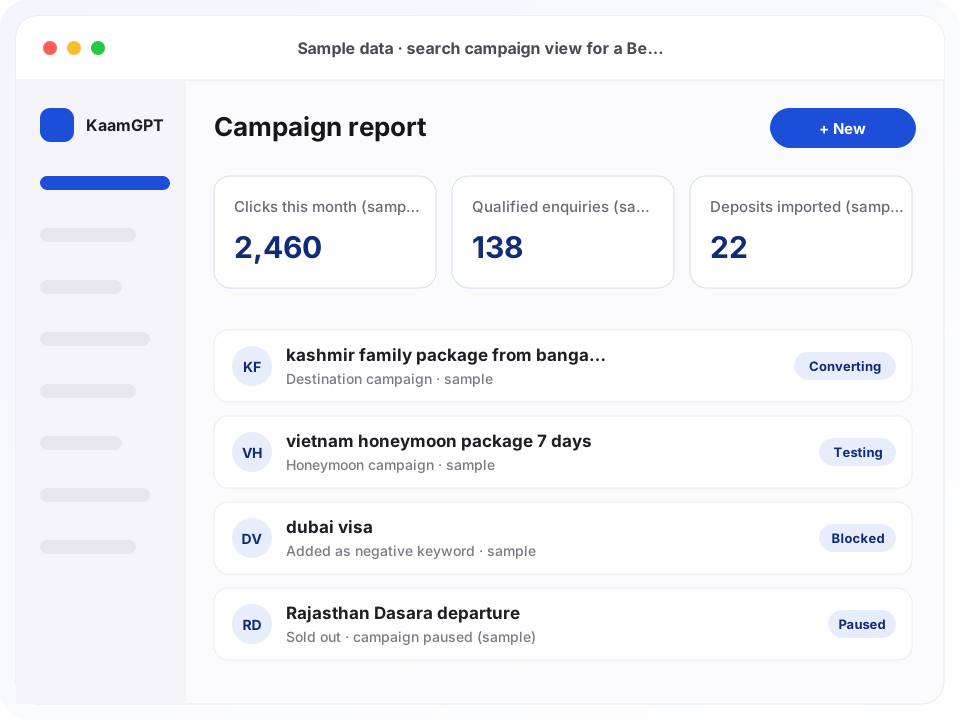
The best Google Ads agency for travel agencies in Bengaluru spends your money on one kind of person: a traveller who already knows roughly where and when, and is now choosing who to book with. Searches such as Kerala family package 5 nights from Bangalore or Bali honeymoon package with flights from Bengaluru carry that intent; a search for Bali alone usually does not.
KaamGPT's Google Ads management for tour operators is built around that difference. We structure campaigns by destination and trip type, write ads whose prices match the landing page, keep visa help out of ads because Google restricts it, and import deposits back into the account so bidding learns what a booking looks like. This page covers how travellers search, the policies that apply, campaign design, measurement and cost.
- ₹4,999buys a month of travel-account management; Google invoices click costs to the agency itself
- ~30 daysto rebuild a travel account, wire up enquiry tracking and let bidding settle
- 44.47 millionpassengers used Bengaluru's Kempegowda airport in FY2025-26, as reported on its Wikipedia page
- 0 visa adsGoogle limits ads for visa help to authorised providers, so we keep it out of ad text
What do Bengaluru travellers type into Google before they book?
Search behaviour narrows as a trip gets closer. Early research is broad and cheap to ignore: places to visit in June, Vietnam or Thailand. Mid-way, searches add a duration, a trip type or a group: Sikkim 6 days itinerary family, Andaman honeymoon package. Near the decision they add a departure city, a month or a price: Kashmir tour package from Bangalore May, Thailand package under 60000 per person. Those last searches are where paid clicks are most likely to become enquiries.
Bengaluru is a large outbound market. Kempegowda International Airport, out beyond Yelahanka near Devanahalli, is described on Wikipedia as India's third-busiest airport, and it handled over 44 million passengers in FY2025-26. Every arterial road to the airport meets at Hebbal, which is why north Bengaluru and the tech corridors along the Outer Ring Road matter so much for international departures.
The decision-makers vary by trip. Parents decide family holidays, often after checking with grandparents. Couples decide honeymoons together and compare carefully. HR and admin staff at technology firms in Marathahalli, Bagmane Tech Park and Embassy Tech Village decide team offsites after internal approvals. Each group searches differently, so each deserves its own campaign rather than one catch-all.
How does KaamGPT run search ads for tour packages?
Search ads for tour packages work when the keyword, the ad and the page describe the same trip at the same price. Everything we set up serves that match.
Campaigns by destination and trip type
Every leading destination is given a dedicated campaign or ad group, split by trip type where it matters, such as family, honeymoon or group. That lets budgets follow the trips with seats, and lets you see which destinations actually earn money. Our wider approach appears on our Google Ads service page.
Google Ads in detail →Holiday package keywords with intent
We build holiday package keywords around destination plus a qualifier: a departure city, a duration, a month, a group type or the word package or tour. Single-word destinations are used carefully, if at all, and a long negative list keeps out visa, jobs, flight status, weather and free-guide searches.
Google Ads in detail →Ads and assets that match the page
Headlines name the trip, the duration and what is included. Price assets show a from-price only when that price is real and explained on the page. Sitelinks point to itineraries, dates and cancellation terms. Call assets run only during the hours someone answers the phone.
Google Ads in detail →Landing pages per itinerary
A click for a Kerala family package lands on that package, with the day plan, hotels, total price for a stated group, inclusions and an enquiry button near the top. If those pages do not exist, we scope them. Pages built well here also serve organic search, as our SEO guide for tour operators explains.
Websites in detail →Tracking from click to deposit
Form fills, ad calls, website calls and WhatsApp taps each get their own conversion action. Deposits recorded in your sheet or CRM are uploaded back with an offline conversion import, so the account learns which searches produce trips rather than just chats.
Google Ads in detail →A brand campaign for your own name
Travellers who heard about you from a friend search your agency's name, and competitors or portals may bid on it. A modest campaign on the agency's name keeps your official site and phone number on top for those searches, usually at a low cost per click.
Google Ads in detail →Follow-up that turns clicks into trips
Paid enquiries cost money every time, so slow replies are expensive. We help set reply times, quote templates and reminders; the whole enquiry pipeline is mapped in our travel lead generation page.
Lead generation in detail →How is a travel PPC account in Bangalore structured across the year?
Travel PPC in Bangalore follows the city's holiday calendar more than any monthly budget. We set each campaign's start date by the selling window it serves, so May departures go live while families are still choosing in the first quarter, and Dasara-break departures go live in mid-year. Bidding systems need a few weeks of data to settle, so campaigns start before the busy weeks, not on the first day of them.
Location settings deserve attention. For most agencies we pick the presence option for Bengaluru and the nearby districts you serve, rather than anyone showing interest in the city, so a traveller in another state researching Coorg does not eat a budget meant for local departures.
We also decide early what the account is for. A Google Ads agency for travel agencies in Bangalore should be able to say, for each campaign, which departures it is meant to fill and by when. Campaigns without that answer tend to drift towards whatever costs least per click.
Separate research from booking searches
Broad destination research can run in a small, capped campaign or not at all. Searches that include a departure city, duration, month or the word package get the main budget, because they are much closer to an enquiry.
Schedule calls to office hours
Call assets and call-only campaigns run only when someone is at the desk. A missed call from an ad is money spent for nothing, and the traveller rarely tries twice.
Price assets with a stated basis
A from-price works when it is real, bookable and explained, such as per person on twin sharing for named dates. We keep the ad, the price asset and the page showing the same figure, and update all three together.
Pause sold-out departures the same day
Seat counts feed the campaign plan. When a departure fills, its ads stop and the budget shifts to the next trip with open seats, instead of collecting enquiries you cannot serve.
Treat Performance Max with care
Automated campaign types can spend heavily on display and video placements for a small agency with little conversion data. We start with search, add automation once booked-trip imports give the system something real to learn from, and watch where the money goes.
Read the search terms every week
Travel searches throw up surprises: a destination that is also a film title, a resort name shared with a housing project, a sudden rush of visa questions. A weekly look at actual search terms catches these before they absorb a month of budget.
What does Google Ads management cost a travel agency?
Running a travel agency's Google Ads account costs from ₹4,999 monthly in management. The fee buys the build, the daily running and the reporting, while every click is charged by Google straight to your agency. Published rates for all services sit on the KaamGPT price list.
Google Ads
Recommended₹4,999/month
Typically 30 days
Agencies with departures to fill soon and travellers already searching for those destinations and dates.
- Account setup
- Keyword strategy
- Ad copy testing
- Conversion tracking
- Bid optimisation
Digital Marketing
₹19,999/month
Typically 15 days
Agencies that want search ads planned together with social, WhatsApp and website work on one seasonal calendar.
- Channel strategy
- Creative production
- Campaign management
- Weekly reporting
SEO
₹14,999/month
Typically 30 days
Operators who want itinerary pages that attract searchers without a cost for every click over time.
- Technical audit
- Keyword research
- On-page optimisation
- Content plan
- Monthly reporting
Local SEO
₹4,999/month
Typically 14 days
Offices that want nearby travellers to find the counter on Maps alongside paid search.
- Google Business Profile optimisation
- Local keyword map
- Location page on-page fixes
- Citation building and NAP cleanup
- Local link outreach
- Review replies and posts
- Monthly report
Meta Ads
₹4,999/month
Typically 30 days
Trips that need demand created among people who are not yet searching for a destination.
- Creative testing
- Audience building
- Retargeting funnels
- Pixel setup
- Weekly reporting
Lead Generation
₹24,999/month
Typically 14 days
Agencies receiving plenty of paid enquiries but converting too few of them into deposits.
- Verified leads
- Multi-channel outreach
- CRM integration
- Lead scoring
- Replacement guarantee
- Click costs appear line by line on Google's invoice to your agency, never bundled into ours.
- No budget figure on this page is a KaamGPT fee; any amount mentioned simply illustrates how the sums work.
- Landing pages for advertised itineraries, if missing, are scoped separately under website development from ₹9,999 per project.
| Package | Starts at | Timeline | Best for |
|---|---|---|---|
| Google Ads | ₹4,999/month | Typically 30 days | Agencies with departures to fill soon and travellers already searching for those destinations and dates. |
| Digital Marketing | ₹19,999/month | Typically 15 days | Agencies that want search ads planned together with social, WhatsApp and website work on one seasonal calendar. |
| SEO | ₹14,999/month | Typically 30 days | Operators who want itinerary pages that attract searchers without a cost for every click over time. |
| Local SEO | ₹4,999/month | Typically 14 days | Offices that want nearby travellers to find the counter on Maps alongside paid search. |
| Meta Ads | ₹4,999/month | Typically 30 days | Trips that need demand created among people who are not yet searching for a destination. |
| Lead Generation | ₹24,999/month | Typically 14 days | Agencies receiving plenty of paid enquiries but converting too few of them into deposits. |
How should a tour operator set a Google Ads budget?
Start from the trip, not the platform. Work out roughly how much margin a booking earns, how many enquiries it usually takes to win one, and therefore what an enquiry is worth to you. That number sets a sensible ceiling on what you can pay for clicks and enquiries for that itinerary. A premium Europe tour can carry a far higher cost per enquiry than a two-night Coorg drive.
Click prices for travel searches vary by destination, season and competition, and they change through the year. We do not quote typical figures, because they would be guesses. Instead we run the first weeks with careful caps, measure what enquiries and deposits actually cost, and then set budgets for each selling window from your own data.
- The margin per booking on each itinerary you want to advertise.
- How many destinations and departures need campaigns at the same time.
- Whether you already have conversion tracking and booked-trip data.
- The competition for your destinations during the selling window.
- Whether landing pages exist for each itinerary or need building.
- How quickly your team answers calls and enquiries from ads.
Which travel businesses get most from search advertising?
- Outbound package specialistsSearches with a destination, duration and departure city signal intent strongly enough to justify a click cost.
- Domestic circuit operatorsDepartures to Kashmir, Sikkim, Kerala and the North East fill best when campaigns run through each selling window.
- Honeymoon plannersCouples search specific islands and durations, and respond to ads that show what is included.
- Corporate offsite organisersOffice-manager searches for offsites near Bengaluru are few but valuable, and need their own campaign.
- Pilgrimage organisersYatra searches from families planning for parents often come with a phone call, so call assets matter.
- Weekend and adventure operatorsShort-notice searches for Coorg, Gokarna or treks need campaigns that switch on about three weeks before each long weekend.
- Visa-help businessesAds for help obtaining visas are restricted to authorised providers, so most such businesses must rely on other channels.
- Ticketing and hotel booking agentsCommission margins are thin, so ads only pay for agents who combine tickets with packages or corporate accounts.
How do we take over or build a travel agency's account?
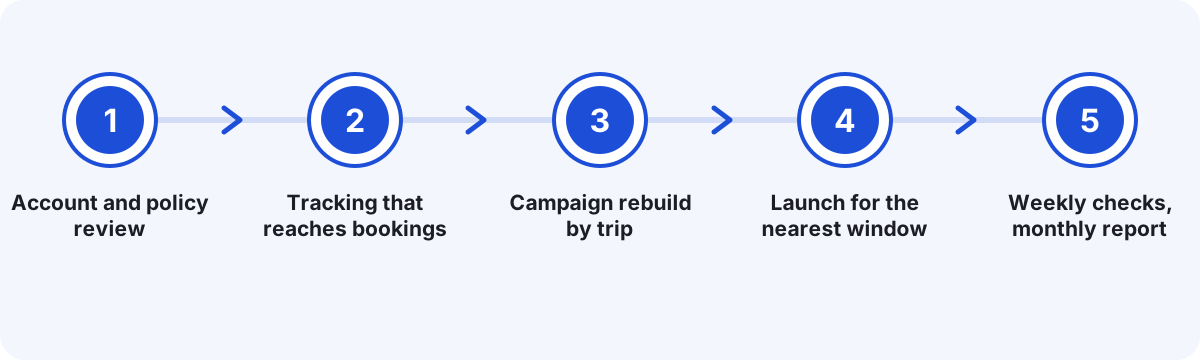
Account and policy review
We read the existing account, search terms, disapprovals and landing pages, and flag anything touching visa help, pricing claims or unavailable offers before spending another rupee.
Tracking that reaches bookings
Form, call and WhatsApp actions are set up separately, and a simple sheet or CRM field records deposits so they can be imported back against the original click.
Campaign rebuild by trip
Campaigns are reorganised by destination and trip type, with intent keywords, a full negative list, matching ads and price assets with a stated basis.
Launch for the nearest window
The departures selling soonest go live first, with careful daily caps until the real cost per enquiry and per deposit is known.
Weekly checks, monthly report
Search terms and spend are checked weekly; each month we report enquiries, deposits, cost per trip by campaign and the next window's plan.
Why hire KaamGPT for travel agency search ads?
Policy-aware from the start
We know where travel ads trip over Google's rules on visas, pricing and offers, and we design around them.
Deposits, not clicks
Our reports end at booked trips, and we import them so bidding optimises for travellers, not for chatter.
Seasonal timing
Campaigns start ahead of Bengaluru's holiday windows, when families are choosing, and stop when departures fill.
Your account, your data
The account is in your agency's name, so the history and the learning stay with you whatever happens.
A Bengaluru team
Our people sit in Bengaluru and serve agencies remotely, close enough to know what a Dasara break means for bookings.
Honest about fit
If search ads are the wrong tool for a trip, because nobody searches for it yet, we say so and suggest what to try instead.
Can a travel agency advertise visa services on Google Ads?
In most cases, no, and it is better to know this before building a campaign. Google's policy on government documents and official services allows only certified governments and authorised providers to run ads that promote getting specific government documents. Google's own announcement of the policy listed travel documents such as visas and electronic travel authorisations among them. To count as authorised, your domain must be linked from an official government website that names you as authorised for that document or service.
A business licence, a supplier contract or an association membership does not meet that test. Google has also announced stricter enforcement of the authorisation requirement from 5 October 2026. For an ordinary Bengaluru travel agency, the practical reading is that ads offering help with visa applications will be disapproved, however small the fee.
There is a narrow exception. The policy lets advertisers ask for an exclusion where the service is purely editorial, educational or consultancy-based and does not help anyone obtain the document itself. A destination guide with a section on entry rules is not a visa service. A paid service that fills in and submits applications is. If your business sits near that line, we review it with you before any ad is written, rather than testing Google's patience.
- Keep visa help out of headlines, descriptions, sitelinks and keywords, including inside package ads.
- Add visa-related searches as negative keywords so your package ads do not show for them.
- Explain visa requirements on the itinerary page as information, linking each requirement to the relevant government portal.
- Where a fee is charged for help, the site should say plainly that a private company is charging it and for what.
How do price claims in travel ads stay inside the rules?
Google's misrepresentation policy names dishonest pricing practices, which include failing to disclose the full expense clearly, and unavailable offers, where the ad promises something the landing page does not readily show. Travel ads cross these lines easily: a from-price that excludes compulsory taxes, a price for a date that sold out months ago, or a free airport transfer that is not on the page.
The fix is discipline rather than cleverness. Every price in an ad states its basis, such as per person on twin sharing, and the landing page shows the same figure with the breakup beside it. When prices change, the ad, the price asset and the page change together. Indian consumer rules on online price display point the same way, as our digital marketing guide for travel agencies explains in detail.
- State the basis beside every price: group size, room sharing and the dates it applies to.
- Show compulsory taxes and charges inside the headline figure, with the breakup on the page.
- Remove offers from ads the day they lapse, including free transfers or early-booking extras.
- Avoid outcome promises such as assured snow, sightings or darshan, which travellers cannot verify in advance.
Which conversions should a travel account optimise for?
Most travel accounts optimise for whichever action costs least, usually a form or a WhatsApp click. That teaches Google to find people who tap buttons, not people who travel. We track those actions, but we treat them as early signals and keep the account's main goal as close to a deposit as the data allows.
The tool for this is an offline conversion import. When an enquiry arrives from an ad, its click identifier is saved with the lead. When that traveller pays a deposit days or weeks later, the deposit is uploaded back to Google with its value. Over a season, the account learns which searches, ads and times of day produce trips, and bidding shifts towards them.
Calls deserve care too. Many Bengaluru families, and a large share of pilgrimage enquirers, phone rather than fill forms. Counting every ring as a conversion inflates results, so we count only calls above a sensible length and check a sample against the call log each month to make sure the figure means what we think it means.
- Form enquiry and WhatsApp click: early signals, counted but not the main goal.
- Calls from ads above a minimum length: a stronger signal for family and pilgrimage trips.
- Qualified enquiry with dates and group size: the first milestone worth importing.
- Deposit with value: the conversion that bidding should ultimately chase.
How do Bengaluru's holiday seasons change bids and budgets?
Demand for family trips rises in the weeks before Karnataka's summer vacation and the Dasara school break, and competition for the same searches rises with it. Click prices often climb in those weeks, while the same searches in the middle of exam season are cheaper but convert poorly. A flat monthly budget therefore underspends when travellers are choosing and overspends when they are not.
We plan budgets by selling window instead. Each window gets its campaigns switched on a few weeks early so bidding can settle, a heavier budget during the comparing weeks, and a quick taper once departures fill. Honeymoon and year-end campaigns follow their own rhythm, starting after the monsoon as wedding dates are fixed.
- January to March: heaviest spend on summer-vacation family trips, tapering in April to fill last seats.
- July to September: Dasara-break departures, with campaigns live by July and budgets peaking in August.
- September to November: honeymoon and year-end trips, as couples fix dates after the monsoon.
- Two to three weeks before each long weekend: short bursts for drives and weekend trips.
What should you ask the best Google Ads agency for travel agencies in Bengaluru?
Start with visa-related searches and ad text: a competent answer will cite Google's government documents policy. Ask what the account will optimise for, and listen for deposits or qualified enquiries rather than clicks. Ask to see a sample negative keyword list for a destination you sell. Ask whose name the account is in.
A capable Google Ads agency for travel agencies in Bangalore will also tell you when search ads are the wrong tool. If a trip has no search demand yet, the social approach in our Instagram and Facebook advertising guide for travel firms may build it first. If enquiries arrive but few become bookings, the problem is follow-up, not the ads.
Finally, ask how they will report. A useful monthly report for a travel agency fits on two pages: spend, enquiries, deposits and cost per deposit by destination, the search terms blocked that month, any policy flags, and what will change before the next window. If the sample report you are shown leads with impressions, ask why.
Where do travel agencies waste money on Google Ads?
Travel accounts leak in predictable places. Broad keywords attract researchers and job seekers, ads promise prices the page cannot deliver, and the account counts a WhatsApp tap as if it were a booking. The result is a cost per enquiry that looks acceptable and a cost per trip nobody has ever calculated.
None of this is unusual, and none of it needs a bigger budget to fix. Most travel accounts we review improve first by spending less on the wrong searches, then by moving that money to the departures and weeks where travellers are actually choosing.
- Broad match on single destination words such as Goa or Dubai, which pulls in searches for weather, maps, jobs, visas and flight status.
- Ads showing a teaser price that the landing page does not show, or that only applies to dates nobody can book, which Google's misrepresentation policy treats as a problem.
- Visa assistance mentioned in ad text or keywords, triggering disapprovals under Google's policy on government documents and official services.
- Every click sent to the homepage instead of the itinerary the traveller searched for, so they search again and find a competitor.
- Campaigns left running for departures that are sold out, and switched off in the weeks when families are actually comparing summer trips.
- Google Ads management
- ₹4,999 monthly upward, with Google invoicing clicks to the agency
- Account rebuild
- Around 30 days including tracking and bidding settling
- Visa help in ads
- Restricted by Google to certified governments and authorised providers
- Price claims
- Must disclose the full expense; hidden costs breach Google's misrepresentation policy
- Kempegowda International Airport
- Near Devanahalli; 44.47 million passengers in FY2025-26 per Wikipedia
- Main conversion
- Deposits imported from your records against the original click
Where this applies around Bengaluru, Karnataka
- Marathahalli
- Outer Ring Road (ORR)
- Hebbal
- Devanahalli
- Bengaluru
- Karnataka
- India
Frequently asked questions
28 answersWhat is KaamGPT's fee for managing a travel agency's Google Ads?
Our management fee begins at ₹4,999 monthly. It pays for account structure, keywords, ads, tracking, weekly checks and a monthly report. Media spend is separate: Google charges it to the card or account your agency sets up, and you can see every click and invoice there directly.
What does the Google Ads visa policy mean for a Bengaluru travel agency?
Google restricts ads that promote getting government documents, including visas and electronic travel authorisations, to certified governments and providers that a government site names as authorised. A typical Bengaluru travel agency is not authorised in that sense, so ads offering visa help, even as one line in a package ad, are likely to be disapproved.
Can our tour package ads mention that visa assistance is included?
We advise against it. Google's policy covers offers of help obtaining visas, and a line about visa assistance inside a package ad can attract a disapproval. Promote the trip itself in the ad, and explain visa requirements on the landing page linking each requirement to the relevant government portal.
Will Google suspend our account for a visa-related ad?
Google describes violations of this policy as non-egregious, meaning a first issue leads to ad disapproval and a warning rather than an immediate suspension. Repeated violations can still lead to suspension, so it is far safer to remove visa wording and keywords from the account entirely.
Which keywords work best for a travel agency's search ads?
Searches that combine a destination with a departure city, a duration, a month, a group type or the word package or tour. For example, Kashmir family package from Bangalore or Bali honeymoon 6 nights. Single destination words alone attract researchers, job seekers and visa seekers, and usually waste money.
What negative keywords should a Bengaluru tour operator add?
Common ones include visa, jobs, salary, course, flight status, PNR, weather, map, free and distance. Each destination also needs its own list, built from the search terms report in the first weeks. Bengaluru operators selling domestic trips may also exclude searches from travellers looking for local transport only.
How should we show prices in our travel ads?
Show a price only when it is bookable and state what it is based on, such as per person on twin sharing for listed dates. The landing page must show the same figure with the breakup. Google's misrepresentation policy treats hidden full costs and unavailable offers as violations, and travellers treat them as a reason to leave.
Should a travel agency use Performance Max?
Not as the first campaign for most small agencies. Performance Max spreads spend across search, display, YouTube and other placements and learns from conversion data. Without booked-trip data it can spend heavily on low-intent placements. We start with search, import deposits, and test automated campaigns once there is real data to learn from.
Travellers pay us by bank transfer, so how are those bookings traced to Google Ads?
The click identifier is stored with each enquiry in your sheet or CRM. When the traveller pays a deposit, whether by transfer, UPI or card, someone marks the lead as booked with the amount, and we upload those bookings back to Google as offline conversions. It needs a few minutes of discipline from your team each week.
When should Bengaluru tour operators start Google Ads for summer holidays?
Several weeks before families finish choosing, which for May departures usually means January or February. Campaigns need time for bidding to settle, and families who travel in the Karnataka summer vacation often decide well before April. We keep a smaller budget in April for remaining seats.
What monthly ad budget suits a travel agency?
Nobody can give one figure honestly. Divide what a booking earns by the enquiries usually needed to win it, and you know roughly what an enquiry is worth. We start with capped daily budgets, measure the real cost per enquiry and per deposit, then set budgets per selling window from your own numbers.
Can Google Ads target only people in Bengaluru?
Yes. Location options let ads reach people physically present, or usually present, in Bengaluru and chosen nearby districts, rather than anyone interested in the city. That matters for agencies selling departures from Bengaluru, because it stops travellers elsewhere in India from using up the budget.
Is it worth paying for clicks on our own travel agency's name?
Usually, through a modest brand campaign. Travellers who were referred to you search your name, and competitors or portals may appear above your site. A brand campaign keeps your official site and number first for those searches, typically at a low cost per click.
Can search ads help sell corporate offsites from Bengaluru?
Yes, through a campaign of its own. Office managers and HR staff look for offsite venues, team outing packages and resorts within driving distance of Bengaluru. Volumes are small but each enquiry can be worth a lot, so the ads, landing page and follow-up should be written for a business buyer, not a family.
How fast should we answer calls and enquiries from ads?
As quickly as possible during office hours, and the same day at the latest. Paid enquiries cost money whether or not anyone replies, and travellers often contact several agencies. Call assets should run only when someone can answer, and missed calls need a callback routine.
How long before Google Ads produces travel bookings?
Enquiries can begin within days of launch. Bookings follow the travel cycle, so a campaign for Dasara-break departures might bring enquiries in July and deposits in August. Bidding usually needs a few weeks of data to settle, which is another reason to launch before the busy weeks.
Do you also run YouTube or display ads for travel agencies?
When there is a reason. Video can work for destination inspiration, but it builds interest rather than capturing intent, and it needs good footage from your own trips. For most agencies we start with search and use social campaigns for inspiration, as described on our <a href="/services/meta-ads">Meta Ads service</a>.
Our travel ads get clicks yet almost nobody enquires. Why?
Four causes come up again and again: keywords attracting researchers rather than buyers, ads sending people to the homepage, a price in the ad that differs from the page, or a page that hides the enquiry button. We review search terms, ads and landing pages together, because fixing only one rarely solves it.
Is a Google Ads agency for travel agencies in Bangalore different from a general one?
Same platform, different priorities; the general method is set out in our <a href="/best-google-ads-agency-in-bengaluru">Bengaluru Google Ads guide</a>. Travel adds its own needs: seasonal launch timing, visa policy, honest package pricing, sold-out departures, and deposits paid offline that must be imported to train bidding.
Do yatra and pilgrimage operators suit Google search ads?
Yes. Pilgrimage searches often come from adult children planning for parents, and many prefer to call. We use call assets during office hours, landing pages that address pace, food and medical support, and campaigns timed to the yatra season. Ads avoid unrealistic promises about comfort or darshan arrangements.
Are you the best Google Ads agency for travel agencies in Bengaluru?
We would rather you decide that from evidence. Share access to your account or your departure list and we will show where money is being wasted, which searches deserve more budget and how we would track deposits. Compare that review with others before choosing.
How do we start Google Ads with KaamGPT?
Ring or message +91 79767 82366, naming the agency and the departures that most need filling. If you already run ads, add us as a user on the account so we can review it. You will get findings, a proposed structure and the management fee in writing before anything changes.
Do you need our website changed before running ads?
Only if the current pages would waste the clicks. Each advertised itinerary needs a page with the day plan, total price, inclusions and an enquiry button near the top. If those pages are missing, we scope them first, because ads pointing to a homepage or a PDF rarely convert.
Can Google Ads work together with our lead follow-up team?
It should. Ads bring enquiries, but the team decides how many become trips. Reply speed, quote format and follow-up reminders matter as much as bids, and our <a href="/services/lead-generation">lead generation service</a> can take on that side if your team is stretched.
What does the monthly Google Ads report for a tour operator contain?
Two or three pages covering spend, clicks, enquiries, qualified enquiries, deposits and cost per deposit by campaign and destination, plus search terms added as negatives, policy issues found and the plan for the next selling window. We explain what changed and why in plain language.
Do airport-area and north Bengaluru searches need different campaigns?
Not necessarily separate campaigns, but they can reveal patterns. Households near Hebbal and the airport road may book more international departures, while south Bengaluru families may lean towards pilgrimages and domestic circuits. We look at location reports after the first weeks and adjust bids or messages where the data supports it.
Can international tour packages from Bengaluru be advertised if the destination needs a visa?
Yes. Advertising the tour itself, with its itinerary, hotels and price, is ordinary travel advertising. What Google restricts is promoting help to obtain the visa. Keep visa wording out of the ad and keywords, explain entry requirements on the landing page, and link travellers to the official government site for applications.
Do travel ads need different landing pages for mobile users?
The same page should work well on a phone, because plenty of Bengaluru travellers search on a phone, often in a cab or during a break. That means fast loading despite photos, the price and enquiry button visible without much scrolling, a tap-to-call number and a WhatsApp link that opens straight into a chat.