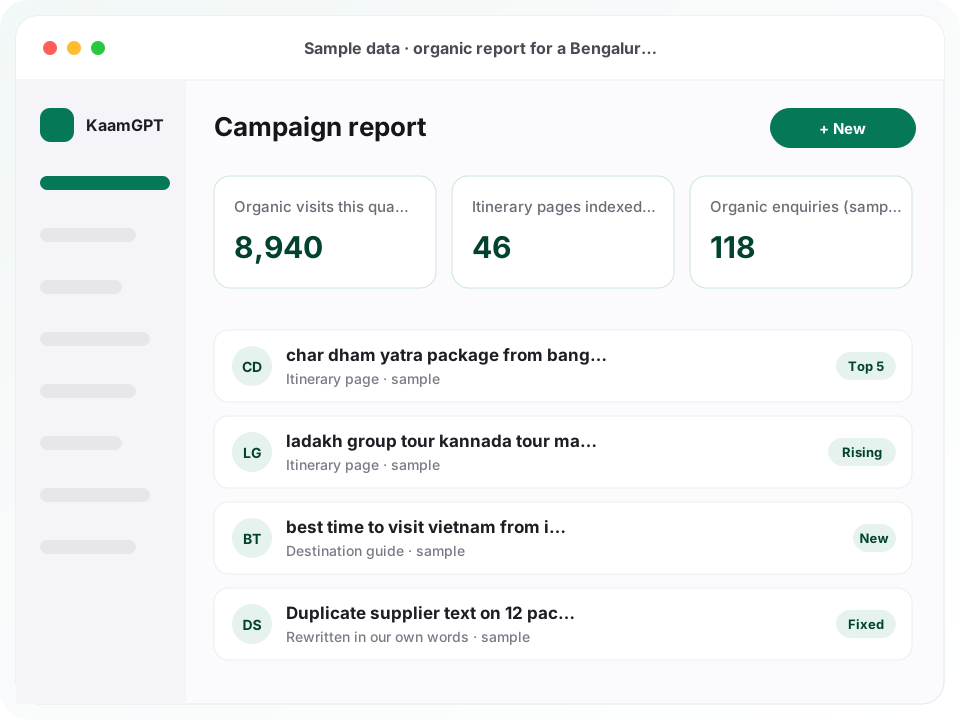
The best SEO company for travel agencies in Bengaluru will not promise to outrank the national booking portals for a word like Goa. It will help you win the searches those portals answer badly: a specific itinerary, from Bengaluru, for a specific kind of traveller, on dates you actually run.
That is where a local operator has something a portal lacks. You know which Kerala houseboat suits a family with a toddler, which Ladakh route works for first-timers and which guide speaks Kannada. KaamGPT's SEO service turns that knowledge into pages that search engines can read and travellers can trust. This page explains how travellers research, which content earns visibility, the rules around credentials and visa information, and what the work costs.
- ₹14,999monthly starting point for search engine work on a travel site, with scope confirmed after an audit
- ~30 daysfor the audit, the keyword map and the first rebuilt itinerary pages
- 1 pageper itinerary you really operate, written from your own trip knowledge, not a supplier's text
- 3–6 monthsis a realistic period before new travel pages settle into steady organic enquiries
How do we plan travel website SEO for a Bengaluru agency?
We begin with an inventory, not a keyword tool. Which trips do you run, how often, for whom and at what price? Which ones make money, and which ones fill other departures? Travel website SEO only pays when the pages that rank are pages for trips you want to sell more of, so the commercial picture shapes everything that follows.
Next we look at what already ranks for those trips, and why. Sometimes a portal holds the broad term and a blog holds the question; sometimes nobody answers the query well at all. Those gaps are where a smaller agency can win, and they become the first pages we build or rebuild.
Finally we agree what success looks like for each group of pages. For a niche trek it may be a handful of well-qualified enquiries a month; for a popular family circuit it may be steady visibility through the selling window. Writing those expectations down at the start keeps everyone judging the work by the same measure.
Write from the trip, not the brochure
We interview your tour leaders or sales staff for the details only they know, such as the hotel with the lift for elders or the day the road to Nubra closes, and turn them into page copy. That is what separates your page from forty identical ones.
Departure-city and traveller-type pages
A page for a Rajasthan tour from Bangalore with a Kannada-speaking tour manager answers a real, specific search. We build these only where you genuinely run the trip that way, never as hollow variants.
Refresh guides before the season
Searches about summer destinations start well before the holidays. We update guides and itinerary dates months ahead, so search engines have recrawled them by the time Bengaluru families begin planning.
Keep URLs alive across years
A Kashmir departure page from last May should become this May's page with new dates, not a deleted URL. Keeping addresses stable lets each season build on the last.
Give each traveller type a home
Families with toddlers, senior pilgrims, first-time international travellers and solo women each search differently and worry about different things. Where you genuinely design trips around one of these groups, a hub page explaining how you look after them, linked to the matching itineraries, gives both readers and search engines a clear picture.
Answer visa questions carefully
Visa guides can attract useful traffic, but they must be accurate, dated, and point readers to the official government site. If you charge for help, say clearly that you are a private agency.
What does SEO work for a travel agency actually involve?
Search work for a travel business is mostly editorial and structural. Which pieces get the most hours depends on what the audit of your site turns up.
A keyword map built from trips you run
We list the itineraries, departure cities, traveller types and seasons you genuinely serve, then match each to the searches people use. The map stops two pages chasing the same query and shows which trips have no page at all. Detail on the service sits on our SEO service page.
SEO in detail →Itinerary page optimisation
Each trip gets one page in your own words: who it suits, a day-by-day plan, hotel category, meals, pace, inclusions, exclusions, cancellation terms and upcoming dates. Itinerary page optimisation also covers titles, headings, internal links and image weight, so the page loads quickly on a phone in a moving cab.
SEO in detail →Destination guide content
Guides answer the questions asked before a traveller picks a trip: best months, weather, getting there from Bengaluru, how many days are enough, what to pack for children or elders. Good destination guide content links to the matching itineraries, so a reader who is convinced has somewhere to go next.
SEO in detail →Fixes to the site underneath
Booking engines and theme plugins often create duplicate URLs, slow pages and broken filters. We fix crawl and indexing problems, compress heavy galleries, add TravelAgency and breadcrumb structured data, and make sure expired departures redirect or update instead of disappearing.
Websites in detail →Your office on Google Maps
Many travellers search for an agency they can visit. If you have a real office, a properly kept Business Profile supports your site's credibility. The Maps side is covered in depth on our local SEO page for travel agencies.
Local SEO in detail →Content that paid campaigns can use
Strong tour package pages make every ad cheaper to run, because the landing page already answers the traveller's questions. When search work and advertising share one plan, as described on our digital marketing page for travel agencies, both improve.
Digital marketing in detail →Earned mentions, not bought links
Links that help a travel site come from real things: a homestay you partner with, a trekking club you support, a local newspaper feature about a group departure. We pursue mentions like these and avoid paid link schemes, which put a site at risk.
SEO in detail →Why do copied itineraries struggle to rank?
Many agencies buy ground arrangements from the same destination management companies, and those suppliers send the same day-by-day text to everyone. When forty websites publish an identical Bali itinerary, a search engine has no reason to prefer yours. It usually picks one version, often from the strongest site, and quietly filters the rest. Google's own spam policies also describe taking content from other sites to manipulate rankings as scraping, which is a risk you do not need.
Original does not mean longer. It means the page contains things only your agency could have written: why you chose the hotel, what the second day feels like with a seven-year-old, where the group stops for lunch, what changed on last October's departure. Those details are useful to travellers and unmistakably yours.
- Start each itinerary with who the trip suits and who should pick something else.
- Rewrite each day from your own notes and photos, not the supplier sheet.
- Add a short, dated note from the latest departure, such as a road closure or a new hotel.
- Keep inclusions, exclusions, price basis and cancellation terms in plain text on the page.
- Answer the three questions your sales team hears most about that trip, in the words travellers actually use.
How should credentials and visa information appear on a travel website?
Travellers in Bengaluru have heard enough stories of vanished deposits to check an agency before paying. Credentials help, but only when they are real and verifiable. The Ministry of Tourism runs a recognition scheme for travel agents, tour operators and tourist transport operators. Its revised guidelines of December 2020 describe it as voluntary, not mandatory, with categories for start-ups and for experienced businesses, and applications are handled online through the Ministry's NIDHI portal.
IATA accreditation is a different thing. It gives an agency a unique code and lets it issue airline tickets on behalf of participating airlines through IATA's Billing and Settlement Plan. It says nothing about tour quality, but it does show the agency meets IATA's requirements for ticketing.
Yes, with care. Organic content explaining how a visa process works is useful and can attract steady traffic. Paid advertising is a different matter, because Google restricts ads for help with government documents to authorised providers, as the Google Ads guide we wrote for tour operators explains. A guide that ranks well must still be accurate, because a traveller who misses a flight over wrong information will not forget your name.
We write visa guides with a visible last-updated date, a link to the official government source for every requirement, and a plain statement that your agency is a private business. If you charge for help, the fee and what it covers should be clear. Promises of approval do not belong on any page, since no agency controls a consulate's decision.
- Show recognition or accreditation only if you hold it, with the exact name and any number on the certificate.
- Never borrow a supplier's or partner's credential, or use a logo in a way that implies one you lack.
- Display your registered business name, address and contact details consistently on every page.
- Name association memberships, such as TAAI or IATO, only where they are current.
How do Bengaluru's holiday seasons shape a travel content calendar?
Search interest in a destination rises well before people travel there. Families planning the Karnataka summer vacation start reading about Kashmir, Sikkim or Kerala hill stations in the first weeks of the year, and couples planning winter honeymoons begin comparing Bali and the Maldives soon after the monsoon. A page published the week before the holiday arrives after most of the reading is done.
So the content calendar runs a season ahead of the sales calendar. We publish or refresh guides and itinerary pages roughly three to four months before the window they serve, give search engines time to recrawl them, and then update prices and dates again closer to departure. For an SEO company for travel agencies in Bangalore, this timing matters as much as the writing.
- October to December: refresh summer-vacation guides and May itineraries for hill stations and international family trips.
- January to March: update monsoon-season content, such as Coorg, Wayanad and Goa in the rains, and Ladakh pages for June onward.
- April to June: prepare Dasara-break itineraries for Rajasthan, the North East and short trips abroad.
- July to September: publish honeymoon, Christmas and New Year content, and refresh pilgrimage pages for the following year.
How does a ranking itinerary page turn readers into enquiries?
Traffic that reads and leaves is a cost, not a result. A travel page earns its keep when a reader who likes the trip can ask about it in one step, from a phone, without hunting for a form. That means an enquiry button near the price, a WhatsApp link that carries the trip name into the first message, and a short form that asks only for dates, group size and a contact number.
The page should also lower the fear of asking. A line on how quickly you reply, the name of the person who will answer, and a plain note that a quote carries no obligation all help. What happens after the enquiry, from the first reply to the deposit, is covered on our lead generation guide for tour operators.
- Place the enquiry button beside the price and again after the day-by-day plan.
- Pre-fill the WhatsApp message with the itinerary name and month, so staff know the context at once.
- Ask for the fewest fields that let you quote: travel month, adults, children and a phone number.
- Track each enquiry back to the page it came from, so search reporting reaches real bookings.
What should you ask the best SEO company for travel agencies in Bengaluru?
Ask who will write your itinerary pages and how they will learn about your trips. If the answer is a tool or a template, expect pages that look like everyone else's. Ask how they will handle your booking engine's duplicate URLs, and what happens to last season's departure pages. Find out what the monthly report contains, and whether organic enquiries appear in it or only rankings.
Then ask about limits. A careful SEO company for travel agencies in Bangalore should refuse to create dozens of thin suburb pages, buy links, or claim credentials you do not hold. If you also run paid campaigns, ask how search content will support them; the Meta Ads guide for tour operators shows how itinerary pages double as landing pages for social traffic.
What does search engine work cost for a travel site?
Search work for a travel site begins at ₹14,999 per month. After the audit we write down which pages will be built or rebuilt, which site problems will be fixed and how results will be reported, so the scope is clear before work begins. Other services and their published rates are listed on our pricing page.
SEO
Recommended₹14,999/month
Typically 30 days
Operators with a catalogue of real itineraries and the patience to build traffic that does not stop when spending does.
- Technical audit
- Keyword research
- On-page optimisation
- Content plan
- Monthly reporting
Digital Marketing
₹19,999/month
Typically 15 days
Agencies that want search, ads and social planned together around the same departures and seasons.
- Channel strategy
- Creative production
- Campaign management
- Weekly reporting
Local SEO
₹4,999/month
Typically 14 days
Agencies with a genuine office that travellers visit, where Maps visibility supports the website's credibility.
- Google Business Profile optimisation
- Local keyword map
- Location page on-page fixes
- Citation building and NAP cleanup
- Local link outreach
- Review replies and posts
- Monthly report
Google Ads
₹4,999/month
Typically 30 days
Departures that must fill in the next few weeks, too soon for new pages to rank.
- Account setup
- Keyword strategy
- Ad copy testing
- Conversion tracking
- Bid optimisation
Meta Ads
₹4,999/month
Typically 30 days
Trips with strong visual appeal that need demand created before anyone searches for them.
- Creative testing
- Audience building
- Retargeting funnels
- Pixel setup
- Weekly reporting
Lead Generation
₹24,999/month
Typically 14 days
Agencies whose organic enquiries are growing but whose follow-up and quote process is losing them.
- Verified leads
- Multi-channel outreach
- CRM integration
- Lead scoring
- Replacement guarantee
- Writing a large set of new itinerary pages at once may be quoted as a separate one-time project alongside the monthly work.
- Website builds or rebuilds start at ₹9,999 per project and are scoped separately from search retainers.
- Pricing for Maps work on a physical travel office is per location and sits under local SEO rather than this retainer.
| Package | Starts at | Timeline | Best for |
|---|---|---|---|
| SEO | ₹14,999/month | Typically 30 days | Operators with a catalogue of real itineraries and the patience to build traffic that does not stop when spending does. |
| Digital Marketing | ₹19,999/month | Typically 15 days | Agencies that want search, ads and social planned together around the same departures and seasons. |
| Local SEO | ₹4,999/month | Typically 14 days | Agencies with a genuine office that travellers visit, where Maps visibility supports the website's credibility. |
| Google Ads | ₹4,999/month | Typically 30 days | Departures that must fill in the next few weeks, too soon for new pages to rank. |
| Meta Ads | ₹4,999/month | Typically 30 days | Trips with strong visual appeal that need demand created before anyone searches for them. |
| Lead Generation | ₹24,999/month | Typically 14 days | Agencies whose organic enquiries are growing but whose follow-up and quote process is losing them. |
What drives the cost of SEO for a travel agency?
Two travel sites can need very different effort. One may have forty decent itineraries that only need restructuring and fresh dates. Another may have three pages of copied text and a booking engine that creates thousands of duplicate URLs. The audit tells us which situation you are in, and the quote follows from it.
The other major factor is how much original knowledge we can draw on. An operator whose tour leaders will spend an hour describing each trip gives us material no competitor can copy. Where that access is limited, more research time goes into each page, and that shows up in the scope.
- How many itineraries and destination guides need to be written or rewritten.
- The state of the site's technical base, including any booking engine or plugin issues.
- How much copied supplier text has to be replaced with original writing.
- Whether you serve one niche or many destinations and traveller types.
- Access to tour leaders, photos and trip details for first-hand content.
- How competitive the specific trips are in search today.
How do Bengaluru travellers research a trip before they ever call?
Research usually starts broad and ends narrow. Someone in Koramangala begins with best places to visit in December from Bangalore, reads two or three guides, and then searches for something exact, such as Vietnam 7 days itinerary for couple or Kerala tour package 5 days from Bangalore with kids. The broad searches are crowded with portals and publishers. The exact ones are often answered by thin pages that copy a supplier's itinerary word for word.
Travellers here also check the agency itself. They search its name with words like reviews, address or fraud, look for an office they could visit, and compare the trip page with what a friend in Indiranagar booked last year. A site that shows real departures, named tour leaders, clear inclusions and verifiable credentials passes that check. A site with stock photos and a phone number does not.
Language and food matter more than outsiders expect. Many families and senior groups look for a Kannada- or Telugu-speaking tour manager, vegetarian or Jain meals, or slow-paced days for elders. These details rarely appear on portal listings, which is exactly why a page built around them can rank and convert for a local agency.
Which travel businesses gain most from search?
- Niche tour operatorsTreks, wildlife, photography or cultural tours have specific searches that portals cover poorly and expert pages answer well.
- Outbound holiday specialistsDestination guides and detailed itineraries for Southeast Asia, Dubai or Europe catch travellers early in their research.
- Pilgrimage organisersSearches for senior-friendly yatras, language and food needs reward pages that answer them plainly.
- Honeymoon plannersCouples read long guides and compare resorts, so thorough pages earn time and trust before the first call.
- Corporate offsite plannersHR teams search for venues and formats near Bengaluru and value case-style pages describing past offsite formats.
- Inbound and domestic tour operatorsKarnataka circuits such as Hampi, Coorg and Mysuru draw visitors from other states searching in English.
- Adventure and trekking clubsHimalayan treks and Western Ghats weekend hikes attract detailed searches about difficulty, fitness and gear that expert pages can own.
- Ticketing and visa-help agentsClear, accurate guides can draw traffic, provided they are dated, link to official sources and disclose private status.
What happens after you hire us for search?
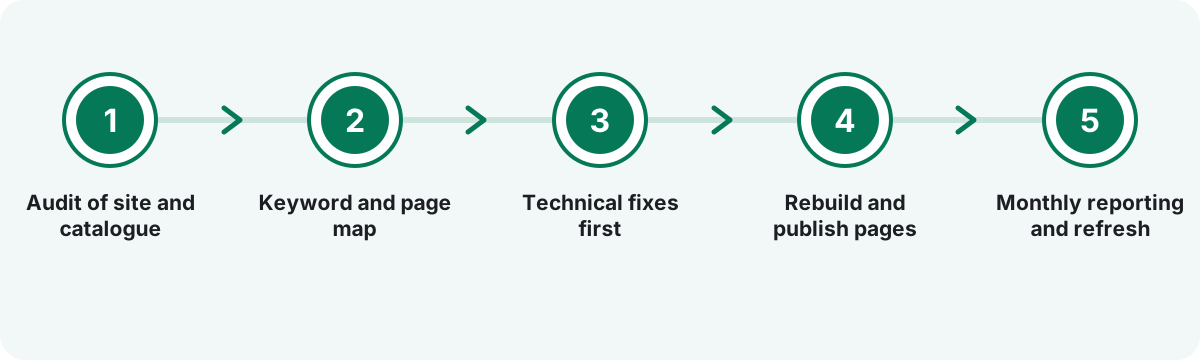
Audit of site and catalogue
We crawl the site, check what search engines have indexed, list copied text and broken pages, and compare your itinerary list with the trips you actually operate.
Keyword and page map
Every important trip, guide and traveller type gets a target page and a set of searches, with gaps marked for new pages and overlaps marked for merging.
Technical fixes first
Indexing, speed, duplicate URLs, redirects for old departures and structured data are fixed early, because content cannot rank on a site that is hard to crawl.
Rebuild and publish pages
We rewrite or create itinerary pages and guides in batches, starting with the trips that earn the most and the season that comes next.
Monthly reporting and refresh
Reports show impressions, clicks, organic enquiries and the pages behind them. Before each season we refresh dates, prices and guide details.
Why choose KaamGPT for travel agency SEO in Bangalore?
Content from your trips
We write from interviews with the people who run your tours, which produces pages that cannot be found elsewhere.
Rules taken seriously
Credentials, visa information and price display are written so they are accurate and checkable, which protects your name.
Seasonal timing
Pages are refreshed ahead of Bengaluru's holiday windows, not after the searches have already started.
Search, answer engines and AI
Clear facts and structured pages help search results, answer boxes and AI assistants describe your trips correctly.
No hollow pages
We will not mass-produce suburb or keyword variants of the same trip, because those pages put the whole site at risk and help no traveller.
Reports tied to enquiries
Rankings are tracked, but the monthly report leads with organic enquiries and the pages that produced them.
What keeps travel agency websites out of search results?
Most of the travel sites we audit have content, often a lot of it. The trouble is that the content is borrowed, buried or broken, so search engines see little reason to show it ahead of a larger site.
Fixing this rarely means publishing more. It usually means publishing fewer, better pages: one strong page per real trip, one guide per destination you know well, and a clear route from the guide to the trip. Sites that do this tend to need less content than they expected, but every page has a job.
- Itineraries pasted from a destination management company's PDF, so the same text appears on dozens of other agency websites and none of them stands out.
- Every package shown only inside a PDF or an image of a brochure, which a search engine cannot read as a proper page.
- Seasonal departure pages deleted after the trip ends, throwing away the links and history that would help the same page rank next year.
- Dozens of near-identical city pages, one per suburb, written to catch searches rather than to help anyone, which Google's spam policies describe as doorway abuse.
- No visible address, credentials or tour leader names, so the site gives travellers and search engines nothing to verify.
- Search engine work
- From ₹14,999 per month after an audit
- First phase
- About 30 days for audit, page map and first rebuilt itineraries
- Content rule
- One original page per itinerary actually operated
- Ministry of Tourism recognition
- A voluntary scheme for travel agents and tour operators, processed online
- IATA accreditation
- A unique IATA code plus ticketing authority via the Billing and Settlement Plan
- Measured by
- Organic enquiries and the pages that produced them
Where this applies around Bengaluru, Karnataka
- Koramangala
- Indiranagar
- Bellandur
- Sarjapur Road
- Yelahanka
- Bengaluru
- Karnataka
- India
Frequently asked questions
28 answersWhat does KaamGPT charge for SEO on a travel agency website?
Search work starts at ₹14,999 per month. The figure is confirmed after we audit your site and catalogue, and the scope lists the pages to be built or rebuilt, the technical fixes and the reporting. A large batch of new itinerary pages may be priced as a separate one-time writing project.
Can a small Bengaluru travel agency really rank against the big booking portals?
Not for broad words like Goa or Thailand, and anyone who promises that is guessing. A small agency can rank for specific searches portals answer poorly: a named itinerary, a traveller type, a language or food need, a departure from Bengaluru. Those searches are often closer to a booking anyway.
How soon will search work produce travel enquiries?
Technical fixes and rebuilt pages can show movement within weeks, but steady organic enquiries for a travel site usually take three to six months. Seasonal pages need to be live well before the season they serve, so a page for May departures is best published or refreshed by January.
Should we copy itineraries from our ground handler onto our site?
No. The same supplier text appears on many agency websites, so search engines treat it as duplicate and rarely show your copy. Use the supplier sheet as a fact source, then write the page from your own notes, photos and staff knowledge about how the trip actually runs.
What should every tour package page include?
Who the trip suits, a day-by-day plan, hotel names or categories, meals, pace, the total price and what it is based on, inclusions, exclusions, cancellation terms, upcoming dates and a clear way to enquire. Photos from your own departures and a short note from the latest trip make the page more credible.
Is Ministry of Tourism recognition mandatory for a travel agency in India?
No. Under the Ministry's revised guidelines of December 2020, recognition of travel agents and tour operators is voluntary. It is still a useful trust signal, and the Ministry handles applications online through its NIDHI portal. If you hold recognition, show it accurately on your site; if not, do not imply that you do.
What does IATA accreditation mean for a travel agency?
It gives the agency a unique IATA code and allows it to issue airline tickets on behalf of participating airlines through IATA's Billing and Settlement Plan. It is about ticketing ability, not tour quality. Mention it on your website only if your agency is accredited, and show the agency name exactly as accredited.
Can we publish visa information pages on our travel website?
Yes. Accurate, dated guides that link to the official government source can help travellers and attract searches. State clearly that you are a private agency, explain any fee for assistance and never suggest you can secure approval. Paid ads for visa help are restricted separately by Google.
Should we create a page for every Bengaluru suburb?
No. Dozens of near-identical suburb pages written only to catch searches fit Google's description of doorway abuse and can harm the whole site. Build pages around real differences, such as an itinerary, a traveller type or an office travellers can visit, not around a list of place names.
What happens to pages for departures that have already happened?
Keep the page and update it with the next dates, or redirect it to the closest current trip if the itinerary has ended. Deleting a seasonal page throws away the history and links it built, and the next season starts from zero. We plan this for every departure page.
Do you write destination guides as well as itinerary pages?
Yes. Guides answer the questions travellers ask before choosing a trip, such as best months, days needed and travel time from Bengaluru, and they link to the matching itineraries. A guide without a related trip to book brings visitors who leave, so we build both together.
Does schema markup help a travel agency site?
Structured data such as Organization, TravelAgency, breadcrumbs and accurate business details helps search engines understand who you are and how pages relate. It does not guarantee any special display in results. We add it where it matches visible content and keep it accurate when details change.
Which numbers show whether search work is paying off for a tour operator?
By organic enquiries first, then by the pages that produced them, the searches behind those pages and their positions. We separate branded searches for your agency's name from discovery searches, because only the second shows new travellers finding you. Rankings alone can rise without any enquiries following.
Can you fix SEO problems caused by our booking engine?
Usually, yes. Booking plugins often create duplicate URLs for each date, filter or currency and slow pages down. We work out which URLs should be indexed, set canonical tags and redirects, and keep the bookable pages fast. Some fixes need your developer or the booking vendor, and we explain exactly what to ask.
Do you build links for travel websites?
We pursue earned mentions from real relationships: homestays and hotels you partner with, clubs and communities you support, local press about notable departures. We do not buy links or join link networks, because the risk to a travel site's visibility outweighs any short-term movement.
Will our travel pages show up in AI answers like ChatGPT or Gemini?
Nobody can promise that. Clear, factual pages with consistent business details, real itineraries and dated information give AI assistants something accurate to draw on when they do mention travel agencies. We write with that in mind, but we report what we can measure, which is search traffic and enquiries.
Is an SEO company for travel agencies in Bangalore different from a general SEO agency?
The methods overlap, as our <a href="/best-seo-services-in-bengaluru">Bengaluru SEO services guide</a> shows. The difference is in the content: travel pages depend on first-hand trip knowledge, seasonal timing, honest price display and careful handling of credentials and visa topics, which general agencies often treat as ordinary product pages.
Should a tour operator in Bengaluru also do local SEO?
If you have an office that travellers visit, yes, because many people search for an agency they can walk into before handing over a deposit. Maps visibility is handled through <a href="/services/local-seo">local SEO</a>, priced per location. If you work only online, focus on the website itself.
Can SEO and Google Ads work together for a travel agency?
They should. Ads fill departures that are weeks away, while search pages take months to build but keep working. The same itinerary pages serve both, and search data shows which trips deserve ad money. Our <a href="/services/google-ads">Google Ads service</a> can run alongside the search work.
What input from our travel team makes the pages good?
An hour with a tour leader or senior sales person for each important trip, photos from real departures, your current price sheets and cancellation terms, and a list of questions travellers ask most. That material is what makes the pages original, so it matters more than any tool.
Who should a tour company contact at KaamGPT about search work?
Ring +91 79767 82366, by voice or WhatsApp, and share your site's address plus the trips that matter most to you commercially. Our team reviews those itinerary pages first, then replies with findings and a proposed scope for search work.
Are you the best SEO company for travel agencies in Bengaluru?
We would rather show you than claim it. Share your site with us, and you will get a list of specific pages, specific problems and what we would change, with the cost. Compare that with what other agencies tell you, and judge which proposal understands your trips best.
Can travel pages be written in Kannada for local travellers?
Many travel searches from Bengaluru are typed in English, so we write in English by default. Where a part of your audience, such as senior pilgrimage groups, searches in Kannada, we can plan pages in Kannada as well, written properly rather than machine-translated, and scoped in the quote.
Can SEO help us sell corporate offsites from Bengaluru?
Yes, with a different kind of page. HR and admin teams search for offsite venues, formats and distances from the city. Pages describing real offsite formats you have run, with capacity, travel time and inclusions, can rank for those searches and give corporate buyers something to forward internally.
What if our travel site was hurt by a past SEO agency?
We start by checking for paid links, copied content, doorway pages and technical damage. Bad links can be documented and, where needed, disavowed; copied pages are rewritten; thin pages are merged or removed. Recovery takes time, and we will tell you honestly how much we expect after the audit.
How often should travel content be updated?
Itinerary dates and prices whenever they change, and every important page at least once before its season. Destination guides need a check each year for entry rules, flight routes and seasonal details. A visible last-updated date helps travellers trust that the information is current.
Should each travel package have its own URL or sit on one long page?
Each itinerary you sell should have its own page and address. One long page listing every package can only rank for one idea at a time, and travellers have to scroll past trips that do not interest them. Separate pages let a Kerala family trip and a Ladakh bike tour each answer their own searches.
Do reviews on Google help a travel agency website rank?
Reviews mainly influence Maps results and the trust a traveller feels on seeing your name, rather than your website pages directly. They still matter for search work, because people who search for your agency's name read them before enquiring. Asking every returning traveller for an honest review is a habit worth building.