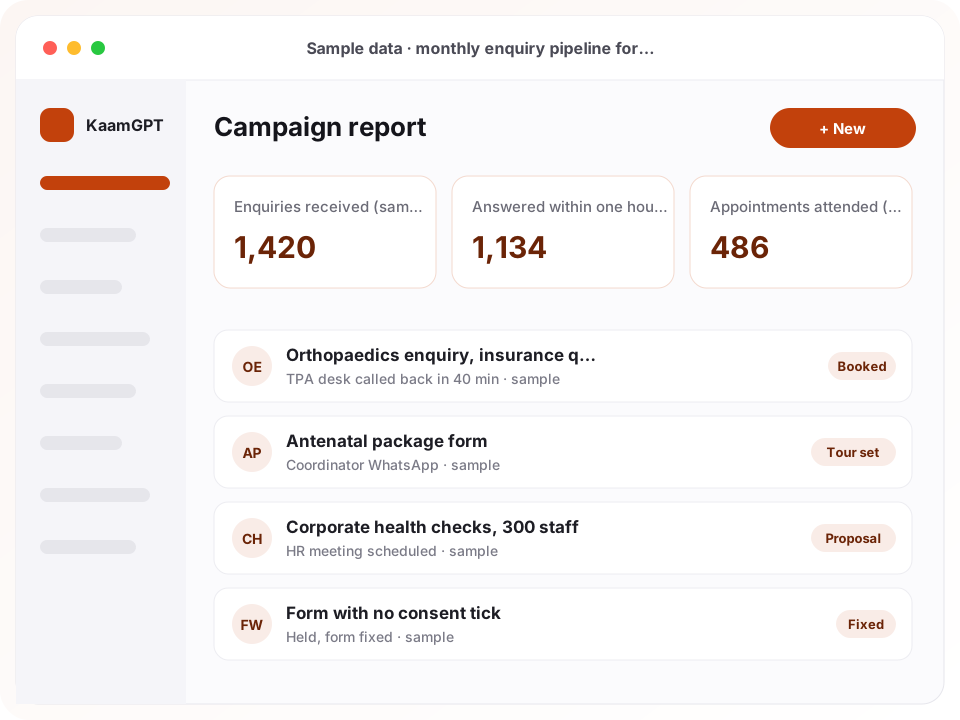
Judge the best lead generation company for hospitals in Bengaluru by what happens once a family has already reached out. Most hospitals already receive calls, forms and WhatsApp messages from search, Maps and social; the patients are lost in the hours that follow, when nobody calls back, nobody answers the insurance question, or nobody reminds the family the night before.
KaamGPT builds the pipeline between the first enquiry and the attended appointment, and fills it where it is thin. Hired as the lead generation company for hospitals in Bangalore, we set up consented capture, route each enquiry to the right desk by service line, agree response times, send reminders on registered channels and run outreach for corporate health checks, all under the Digital Personal Data Protection Act. The work runs through our lead generation service.
- ₹24,999a month begins a hospital lead-generation engagement, with the scope written down
- ~14 daysto map the enquiry flow, set consent wording and switch on routing and reminders
- 14 Nov 2025saw the DPDP Rules notified; obligations phase in over the following year and a half
- 6.4.1is the ethics clause that forbids commissions for referring patients
Which hospitals gain most from a managed enquiry pipeline?
- Multi-speciality hospitalsHigh enquiry volumes across many departments need routing by service line, or calls end up at a switchboard that cannot help.
- Hospital chainsEnquiries must reach the right campus first time, with shared rules for consent, reminders and reporting across sites.
- Maternity hospitalsLong decisions need a coordinator who follows each family through tours, classes and package questions over months.
- Health-check and diagnostic centresIndividual bookings and employer contracts both depend on fast quotes, clear inclusions and reliable reminders.
- Speciality centres with outstation patientsEnquiries from other cities need cost estimates, travel and stay guidance and a single contact who stays with the family.
- Nursing homesA small team benefits most from simple routing, a shared enquiry log and automatic reminders that free up the front desk.
- Day-care, dialysis and rehabilitation unitsRecurring visits depend on scheduling and reminders more than on new enquiries.
Where do hospitals lose patients after the first enquiry?
Ask a front desk how many enquiries became appointments last month and most cannot say. The losses are real but invisible, spread across missed calls, untouched form submissions and WhatsApp chats nobody owns.
None of this shows up in an advertising dashboard, which reports the enquiry as a success the moment the form is sent. The hospital only feels it later, as empty consultant slots and a marketing budget that seems to produce less each year. Measuring from enquiry to attended visit is what makes the losses visible and fixable.
- Calls after OPD hours and at lunchtime go unanswered, and the caller books with the next hospital on the map.
- Web and social forms land in an inbox checked once a day, by which point the family has already decided.
- Insurance and cashless questions are passed between desks, and a patient who cannot get an answer assumes the worst.
- Booked appointments receive no reminder, so no-shows waste consultant slots that another patient could have used.
- Contact lists built over years carry no record of consent, which becomes a liability as the DPDP Rules take effect.
What does a hospital lead pipeline include?
We build what is missing between your channels and your consultants. Each element is scoped in writing against what your audit shows.
Enquiry capture with consent
Forms, call tracking and chat entry points on every channel, each showing patients plainly how the hospital will use their details, with a consent record that can be produced later.
Lead generation in detail →Routing and response targets
Enquiries routed by service line and campus to a named desk or coordinator, with an agreed response time and an escalation when it is missed.
Lead generation in detail →Reminders and preparation messages
Booking confirmations, what-to-bring notes and next-day reminders on WhatsApp and SMS, from approved templates and registered headers, for patients who opted in.
WhatsApp campaigns in detail →Corporate health-check outreach
Researched approaches to HR, admin and wellness leads at Bengaluru employers, with package proposals, on-site camp options and follow-up, run as business conversations with opt-outs honoured.
Lead generation in detail →Paid channels sized to the desk
Search and call campaigns that bring only as many enquiries as the desk can answer. Our hospital Google Ads page covers that side.
Google Ads in detail →Social programmes with fast follow-up
Instagram and Facebook programmes for health checks, maternity and camps, with each lead passed straight to a coordinator. See our hospital Meta Ads page.
Meta Ads in detail →Consented patient newsletters
Occasional, useful updates on new services, camps and visiting changes to patients who requested them; each one ends with a one-tap unsubscribe.
Email campaigns in detail →How is the pipeline built over the first weeks?
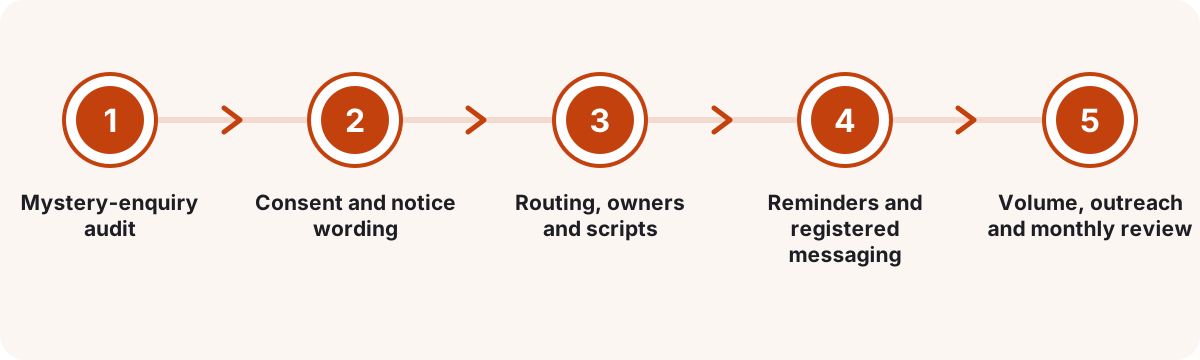
Mystery-enquiry audit
We test your phones, forms and WhatsApp at different hours and record response times, answers given and slots offered, alongside a review of how contact details and consent are stored today.
Consent and notice wording
We draft plain-language notices and consent lines for every entry point, in English and Kannada where needed, for your legal or compliance team to approve.
Routing, owners and scripts
Enquiries are routed by service line and campus to named owners with response targets, and the desk gets short scripts for insurance, cost and preparation questions.
Reminders and registered messaging
WhatsApp templates and SMS headers are registered, then confirmations and reminders switch on for patients who opted in.
Volume, outreach and monthly review
Paid campaigns and corporate outreach scale in step with the desk, and each month we review enquiries, response times, bookings and attended appointments by service line.
What does hospital lead generation cost?
Our hospital pipeline work is priced from ₹24,999 monthly, with roughly the first fortnight spent on the enquiry audit, consent wording, routing and reminders. The fee pays for our team; if campaigns run, Google and Meta invoice the hospital for media themselves. A nursing home with one desk sits near the opening figure, while a hospital group with several campuses, a corporate health-check programme and multilingual follow-up needs a fuller written scope. Our pricing page lists the entry price for each service.
Lead Generation
Recommended₹24,999/month
Typically 14 days
Suits hospitals losing patients between the first enquiry and the appointment, and those building corporate health-check business.
- Verified leads
- Multi-channel outreach
- CRM integration
- Lead scoring
- Replacement guarantee
Digital Marketing
₹19,999/month
Typically 15 days
Suits hospitals that need more enquiries as well as better follow-up, planned together across search, Maps, social and WhatsApp.
- Channel strategy
- Creative production
- Campaign management
- Weekly reporting
SEO
₹14,999/month
Typically 30 days
Suits hospitals that want a steady flow of research-stage enquiries from reviewed condition, procedure and cost pages.
- Technical audit
- Keyword research
- On-page optimisation
- Content plan
- Monthly reporting
Local SEO
₹4,999/month
Typically 14 days
Suits campuses where most enquiries are calls and direction requests from Google Maps, which must be answered fast.
- Google Business Profile optimisation
- Local keyword map
- Location page on-page fixes
- Citation building and NAP cleanup
- Local link outreach
- Review replies and posts
- Monthly report
Google Ads
₹4,999/month
Typically 30 days
Suits service lines that need ready-to-book enquiries quickly, sized to what the desk can handle.
- Account setup
- Keyword strategy
- Ad copy testing
- Conversion tracking
- Bid optimisation
Meta Ads
₹4,999/month
Typically 30 days
Suits programmes such as health checks, maternity and camps, whose social leads need follow-up within the hour.
- Creative testing
- Audience building
- Retargeting funnels
- Pixel setup
- Weekly reporting
- Our fee is fixed for the agreed scope; we do not charge per patient or take any commission on appointments.
- Software for routing, WhatsApp and reminders can come from KaamGPT's own tools or work with your existing hospital systems; the quote states which.
| Package | Starts at | Timeline | Best for |
|---|---|---|---|
| Lead Generation | ₹24,999/month | Typically 14 days | Suits hospitals losing patients between the first enquiry and the appointment, and those building corporate health-check business. |
| Digital Marketing | ₹19,999/month | Typically 15 days | Suits hospitals that need more enquiries as well as better follow-up, planned together across search, Maps, social and WhatsApp. |
| SEO | ₹14,999/month | Typically 30 days | Suits hospitals that want a steady flow of research-stage enquiries from reviewed condition, procedure and cost pages. |
| Local SEO | ₹4,999/month | Typically 14 days | Suits campuses where most enquiries are calls and direction requests from Google Maps, which must be answered fast. |
| Google Ads | ₹4,999/month | Typically 30 days | Suits service lines that need ready-to-book enquiries quickly, sized to what the desk can handle. |
| Meta Ads | ₹4,999/month | Typically 30 days | Suits programmes such as health checks, maternity and camps, whose social leads need follow-up within the hour. |
What sets the cost of a hospital's enquiry pipeline?
Volume and complexity, more than channels. A hospital receiving a few hundred enquiries a month across three service lines needs a lighter setup than a group handling thousands across ten specialities, two languages and several campuses. Corporate outreach adds research, proposals and meetings. Integration with an existing hospital information system or call centre can add work at the start but saves effort later.
To illustrate only, one campus could start with routing and reminders for its two busiest service lines and add corporate outreach in the second quarter. Whichever lead generation company for hospitals in Bangalore you consider, ask how consent will be recorded, who answers the enquiries generated, and whether the firm is paid a fixed fee or per patient, because per-patient payments raise questions under the ethics code.
- Monthly enquiry volume and the number of service lines and campuses routed.
- Whether follow-up is done by your staff with our tools and scripts, or needs more of our team's time.
- Number of languages used in scripts, forms and reminders.
- Integration with existing hospital systems, call centres or booking software.
- Scope of corporate health-check outreach, including research, proposals and meetings.
- Clean-up of old contact lists that lack consent records.
Why build your hospital's pipeline with KaamGPT?
Reports start after the click
Response times, booked appointments and attendance are the core of every report, because enquiries alone do not treat anyone.
Consent built in, not bolted on
Every form, script and message is designed around the DPDP Act's notice and consent requirements from the first day.
WhatsApp and CRM tools we build ourselves
Because KaamGPT develops WhatsApp and CRM software, routing, templates, reminders and enquiry logs can run in one system your desk can use.
No per-patient fees
We charge a fixed fee for agreed work, never a commission per patient, which keeps the arrangement clear of the ethics code's rules on referral payments.
Business outreach handled properly
Corporate health-check prospecting is researched, personal and respectful of opt-outs, not mass messaging to bought lists.
Where do a Bengaluru hospital's enquiries actually come from?
Enquiries follow two maps. One is residential: families near a campus who call about a consultation, a scan or a delivery. The other is economic: the employers, insurers and referring clinics whose decisions send groups of patients to a hospital. In Bengaluru the second map is unusually concentrated. The IT corridors in Whitefield, along the Outer Ring Road and in Electronic City hold large workforces whose health checks and insurance networks are arranged by HR teams, not by individuals.
The hospitals themselves sit across both maps. In Whitefield, patients can choose between Vydehi, Aster, Manipal and the free-of-charge Sri Sathya Sai Institute. In Hebbal the choice includes Bangalore Baptist Hospital and Aster CMI. Koramangala has St. John's, Malleshwaram and Sarjapur Road have Manipal units, and Bannerghatta Road has its own dense corridor. A family in any of these areas can choose between several hospitals within a short drive, which is exactly why a slow callback loses them.
Patients also arrive from outside the city for specialities Bengaluru is known for, and their enquiries look different: longer, with questions about travel, stay, cost estimates and insurance, often from a relative rather than the patient. A pipeline that treats every enquiry the same way serves none of these groups well.
In what order does the best lead generation company for hospitals in Bengaluru build your pipeline?
We start by following real enquiries through your hospital. With your permission, we place test calls at different hours, submit forms, send WhatsApp messages and ask about insurance, then record who answered, how long it took, and whether a slot was offered. That audit usually shows where patients are lost more clearly than any dashboard, and it gives a baseline to improve against.
Then we design patient enquiry management around service lines rather than channels. A cardiac enquiry, whether it came by phone, form or chat, should reach someone who can talk about cardiology consultations and cashless cover. A maternity enquiry should reach the coordinator who runs tours and classes. No enquiry is left without an owner, a response time and a recorded outcome, and every contact detail carries a record of the consent under which it was collected.
Volume comes last. Hospital lead generation that pours more enquiries into a leaking desk makes the problem worse, so paid campaigns and outreach scale up in step with the desk's ability to respond.
Test enquiries before any change
Test calls, forms and chats at different hours establish how quickly and how well your hospital responds today, before anything changes.
One owner per enquiry
A named desk or coordinator takes each enquiry by service line and campus, with a response target and an escalation if it slips.
Insurance answered early
A short script and a direct line to the insurance or TPA desk mean cashless questions are answered on the first call, not passed around.
Reminders that cut appointment no-shows
A confirmation at booking, preparation notes where a test needs them, and a nudge the evening before, for patients who said yes to messages.
Consent records you can produce
Each contact carries the notice shown, the consent given and the date, so the hospital can show how every enquiry was collected if asked.
Corporate pipeline kept separate
Employer health-check deals run in their own pipeline with proposals, meetings and renewals, because they behave like business sales, not patient enquiries.
What happens between a hospital enquiry and an attended appointment?
Every enquiry passes through five moments, and a patient can be lost at each. First, contact: the call is answered, or the form or chat is seen. Second, understanding: someone works out which service line and campus the enquiry belongs to, and whether it is urgent. Third, answers: the questions that decide the booking, usually about the doctor, the cost, the insurance and the timing, are answered. Fourth, the booking itself. Fifth, the visit, which depends on confirmation and a reminder.
Hospitals tend to invest in the first moment, with call centres and chat widgets, and neglect the third and fifth. Yet a family that cannot learn whether cashless cover applies will keep calling other hospitals, and a booked patient who receives no reminder is far more likely to miss the slot. Fixing those two moments often lifts attended appointments more than any increase in enquiries.
Speed matters at every step. A family comparing hospitals in Bengaluru may contact three in one evening, and the first to call them back with a clear answer usually wins. That is why each enquiry gets a named owner and a response target, and why we report how often the target is met rather than only how many enquiries arrived.
- Contact: every channel answered or acknowledged within an agreed time, including after OPD hours.
- Understanding: enquiries tagged by service line, campus and urgency at the first touch.
- Answers: scripts and a direct line for doctor availability, cost estimates and insurance questions.
- Booking: a slot offered in the same conversation wherever possible.
- Visit: confirmation, preparation instructions and a reminder for patients who agreed to receive them.
What does the DPDP Act mean for a hospital's leads?
India's data protection law of 2023 covers the names, phone numbers and messages a hospital gathers through marketing, and its Rules, notified in mid-November 2025, give organisations eighteen months to comply in phases. By the time the Rules fully apply, every hospital form, chat and call script should show a notice of what the data will be used for and collect consent that meets the Act's standard.
Section 6 sets the bar. Consent has to be given freely and without conditions, for a specific purpose the person understands, through a clear positive act such as ticking a box, and it can cover only the data that purpose genuinely needs. The Act's own illustration is a telemedicine app that asks for access to a user's phone contacts, which consent cannot cover because contacts are not needed for telemedicine. The lesson for hospital forms is direct: ask only for what you need to call back and book, and say why.
Two other provisions matter for hospitals. Section 7 allows processing without consent to respond to a medical emergency that threatens someone's life or health, so emergency care is not held up by paperwork; marketing follow-up is not an emergency. Section 9 makes a parent's or guardian's verifiable consent a precondition for handling a child's data, and rules out tracking children, monitoring their behaviour or aiming targeted ads at them, which shapes paediatric campaigns. The Schedule's heaviest penalty, for failing to protect data with reasonable safeguards, runs up to two hundred and fifty crore rupees.
- Notice at every entry point: what is collected, why, and how to withdraw consent.
- DPDP consent for patients recorded with the date, channel and wording shown.
- No health questions on marketing forms; clinical details belong in the consultation.
- Separate consent for promotional messages, distinct from appointment communication.
- Old contact lists reviewed, with contacts lacking a consent record kept out of campaigns.
Can a hospital pay for referrals or buy patient leads?
Paying per patient is where hospital lead generation most often goes wrong. Clause 6.4.1 of the 2002 ethics code, which has governed doctors again since NMC's notice of 23 August 2023, forbids a doctor from paying or accepting any gift, fee, commission or bonus tied to sending a patient somewhere or bringing one in. Arrangements in which a hospital's doctors share in payments to agents or referrers for each patient sit squarely within that rule.
Bought lead lists raise a second problem. A list of people who supposedly want a health check, sold by a third party, rarely comes with consent that names your hospital and your purpose, which the DPDP Act expects. Calling or messaging those people exposes the hospital to complaints and penalties, and the leads seldom convert anyway because nobody on the list asked to hear from you.
Our model avoids both. KaamGPT is paid a fixed fee for agreed work, never a commission per patient or per appointment, and every enquiry comes through the hospital's own channels, where the patient chose to make contact and saw your notice. Doctors who refer to your hospital do so on clinical grounds, and relationships with referring clinics are built on information and access, not payments.
How do hospitals win corporate health-check business in Bengaluru?
Corporate health checks are bought very differently from individual consultations. The decision sits with HR, administration or a wellness lead, often alongside the company's insurer or broker, and it is made once a year or when a policy renews. The buyer compares package inclusions, price per employee, the option of on-site camps, report turnaround, and how easily employees can book across campuses. The cycle runs to weeks or months, and a single contract can bring hundreds of visits.
That makes corporate health check leads a business-to-business pipeline. We research employers within reach of your campuses, especially around Whitefield, the Outer Ring Road and Electronic City, identify the right roles, and approach them with a short, specific proposal rather than a brochure. Follow-ups are personal and well spaced, anyone who declines is removed at once, and every conversation is logged so renewals are not forgotten a year later.
Delivery matters as much as the sale. Employers renew when booking is easy, reports arrive on time and employees speak well of the visit. We set up a dedicated booking route and reminders for each corporate client, so the hospital can show HR how many employees booked, attended and received reports.
Which messages can a hospital send by SMS and WhatsApp?
TRAI governs commercial SMS through its Telecom Commercial Communications Customer Preference Regulations of 2018. Senders are assigned registered headers, and commercial communication passes through a Distributed Ledger Technology system that carries out regulatory pre-checks. In practice, a hospital's SMS reminders and promotions need a registered header and approved templates with its telecom provider before they can be sent reliably.
WhatsApp has its own rules: messages outside an open conversation must go out as Meta-approved templates, and only to people who opted in. We set up separate templates for appointment confirmations, reminders and preparation instructions, which patients expect, and for promotional messages such as camp announcements, which go only to people who agreed to receive them. Each message tells the patient how to stop receiving more.
Frequency is a judgement call as much as a rule. A confirmation, a reminder and a short follow-up after the visit are welcome; a weekly promotion to someone who came once for a blood test is not. We agree a contact policy with your team so patients hear from the hospital when it helps them, which is also the surest way to reduce appointment no-shows without irritating anyone.
- Lead generation price
- ₹24,999 monthly upward; platforms invoice media
- Start time
- Roughly a fortnight to audit, draft consent text and switch on routing and reminders
- Consent standard
- Section 6 of the DPDP Act: specific, informed, freely given without conditions, signalled by a clear positive act
- DPDP Rules
- Notified in November 2025; compliance phases in over eighteen months
- Referral payments
- Clause 6.4.1 of the 2002 ethics code bars commissions for referring patients
- Commercial SMS
- TRAI's 2018 regulations require registered headers and a DLT system for commercial messages
Where this applies around Bengaluru, Karnataka
- Bengaluru
- Karnataka
- India
- Whitefield
- Hebbal
- Koramangala
- Sarjapur Road
- Malleshwaram
Frequently asked questions
31 answersHow should I compare the best lead generation company for hospitals in Bengaluru against others?
Put four questions to each: how attended appointments will be measured, who answers the enquiries it generates, how consent is recorded under the DPDP Act, and whether it charges a fixed fee or per patient. A company that talks only about lead volume and cost per lead is selling only the simple part of the work.
What fee applies when KaamGPT acts as a lead generation company for hospitals in Bangalore?
Pricing opens at ₹24,999 monthly, and roughly two weeks go into auditing enquiries, drafting consent text and switching on routing and reminders. Google or Meta invoice the hospital for any media. Larger groups with several campuses and corporate outreach get a fuller written scope.
Do hospitals need consent before calling patient enquiries back under the DPDP Act?
When someone fills a form or messages the hospital asking to be contacted, the hospital should show a notice and record consent covering that purpose, because section 6 of the DPDP Act expects consent tied to a stated, understood purpose. Using the details later for promotions needs consent that covers promotions. Emergencies are treated differently under section 7.
Can a hospital pay a commission for patient referrals in India?
Doctors may not. Under clause 6.4.1 of the 2002 code, a doctor may neither pay nor accept a commission, gift or bonus linked to bringing in or sending on a patient. Hospitals should avoid referral schemes in which their doctors take part in such payments, and we do not build them.
How fast should a hospital respond to an enquiry?
Aim for under an hour while the desk is open, and faster for same-day consultations and scans. Families tend to ring more than one hospital, and whoever answers clearly first tends to get the booking. We agree targets per service line and report how often they are met.
How can a hospital reduce appointment no-shows?
Confirm every booking at once, send preparation instructions where a test or procedure needs them, and send a reminder the evening before, by WhatsApp or SMS for those who opted in. Make rescheduling easy in the same message, so a patient who cannot come frees the slot instead of simply missing it.
How do hospitals get corporate health check contracts in Bangalore?
Through direct, researched conversations with HR and administration teams at employers near their campuses, offering clear package inclusions, per-employee prices, on-site camp options and easy booking. Decisions often follow the insurance renewal cycle, so timing and follow-up matter. We run this as a separate business pipeline.
When do the DPDP Rules 2025 fully apply?
Notified in mid-November 2025, the Rules allow eighteen months for phased compliance, so most duties bite during 2027. Hospitals should not wait: forms, notices and consent records built now avoid a rushed clean-up later and protect patient trust in the meantime.
Which lead generation company in Bengaluru works with hospitals?
From Bengaluru, KaamGPT's team designs enquiry pipelines for hospitals, nursing homes and clinics: consented capture, routing by service line, reminders and corporate health-check outreach. We work remotely with your desk and coordinators and report attended appointments each month.
Can we buy lists of patients interested in health checks?
We advise against it. Bought lists rarely carry consent that names your hospital and purpose, which the DPDP Act expects, and contacting those people risks complaints and penalties. Enquiries that come through your own channels, from people who chose to contact you, convert far better.
Should our marketing forms ask about symptoms or conditions?
No. Collect just enough to ring back and book: name, phone, preferred campus and the service of interest. Health details belong in the consultation, collected by clinical staff. Leaving them off marketing forms lowers your DPDP exposure and shortens the form.
What is patient enquiry management?
It is the process of capturing every call, form and chat, routing it to the right person by service line and campus, answering it within a target time, and recording the outcome through to the appointment. Done well, it shows management exactly where patients are lost.
Will this fit with the call centre our hospital already runs?
Yes. Many hospitals have a call centre or central booking team. We work with it: tagging enquiries by source, writing scripts for insurance and cost questions, setting response targets and adding reminders, rather than replacing people who already know your hospital.
What happens with enquiries from patients outside Bengaluru?
Outstation enquiries go to a coordinator able to give cost estimates, explain admission, travel and stay options, and stay with the family until the visit. These enquiries take longer and involve relatives, so they need one consistent contact rather than a general desk.
Does the DPDP Act stop hospitals from treating emergencies without consent?
No. Section 7 of the Act allows processing of personal data without consent to respond to a medical emergency involving a threat to life or an immediate threat to health. That provision is about care, not marketing; promotional follow-up still needs consent.
Can a hospital in Bengaluru send promotional SMS to past patients?
Only through a registered header and approved templates, as TRAI's 2018 rules on commercial messages require, and only to people whose consent covers promotions. Appointment confirmations and reminders are expected; camp or package promotions need a clearer opt-in. Every message should offer a way to stop.
What does hospital management see in the monthly report?
Monthly, by service line and campus: enquiries received, share answered within target, appointments booked, appointments attended, and corporate deals in progress. We add notes on where patients were lost and what changes next month. Lead counts alone are never the headline.
Do you charge per lead or per patient?
Neither. KaamGPT charges a fixed fee for the agreed scope of work. We avoid per-patient pricing because it can create the kind of referral payment the ethics code forbids, and per-lead pricing encourages volume over quality.
Can WhatsApp replace our hospital's appointment calls?
For many patients it can handle confirmations, reminders, preparation instructions and simple rescheduling, which frees the desk for calls that need a conversation. Complex questions about cost, insurance or a procedure still benefit from a call. We set up both and let patients choose.
How do you protect patient data in the lead pipeline?
By collecting only what is needed, recording consent, restricting who can see enquiry records, keeping clinical details out of marketing systems, and agreeing retention periods with your team. Where our tools hold data, access is limited to named people working on your account.
Does a small nursing home need any of this?
Yes, in a simple form. A shared enquiry log, a rule that every missed call is returned within the hour, and automatic reminders can transform a small desk. The opening scope often fits a nursing home with one or two busy services.
How long before a hospital sees more attended appointments?
Changes to routing, response times and reminders can show within the first month, because they recover patients already enquiring. Corporate deals need more patience, frequently several months from first contact. We baseline everything in the audit so improvement is measurable.
Do you work with insurance and TPA desks?
We work with them on the enquiry side: scripts so the first person a caller speaks to can answer common cashless questions, and a direct route to the insurance desk for the rest. Insurance decisions themselves stay with your hospital and the insurer.
Can lead generation help fill a new department at our hospital?
Yes. A new department needs awareness through search, Maps and social, and a pipeline that answers its enquiries well from the first day. We plan both together. Our <a href="/best-digital-marketing-agency-for-hospitals-in-bengaluru">hospital digital marketing page</a> covers the awareness side.
Where do hospital enquiries come from besides ads?
Google Maps calls, website forms, organic search, referring doctors, insurers, employers and past patients. Our <a href="/best-local-seo-agency-for-hospitals-in-bengaluru">hospital local SEO page</a> covers Maps and the <a href="/best-seo-company-for-hospitals-in-bengaluru">hospital SEO page</a> covers organic search, both of which feed the same pipeline.
What does KaamGPT need from us to begin the audit?
Give us permission to place test enquiries and share how enquiries are handled today, or call +91 79767 82366. Findings come to you in a brief video meeting, followed by a fixed-fee quote in writing.
What other services connect to a hospital lead pipeline?
Search ads, social campaigns, Maps profiles and SEO all feed it. Our <a href="/services/google-ads">Google Ads service</a>, <a href="/services/meta-ads">Meta Ads service</a> and <a href="/services/local-seo">local SEO service</a> can be scoped alongside, and the <a href="/best-b2b-lead-generation-agency-in-bengaluru">Bengaluru B2B lead generation guide</a> explains our approach to corporate outreach.
Can you run lead generation in Kannada?
Yes. Notices, consent lines, scripts and reminder templates are written in both Kannada and English; plenty of families prefer Kannada for health conversations. Each version is approved by your team before use.
What happens to enquiries that do not book?
They are recorded with a reason, such as cost, timing, distance or insurance, which tells management what to fix. Where the person agreed to follow-up, a single, polite check-in may follow; otherwise the enquiry is closed. Reasons are summarised in the monthly report.
Do you handle paediatric enquiries differently?
Yes. Section 9 of the DPDP Act makes a parent's or guardian's verifiable consent necessary before a child's details are processed, and it rules out tracking children or aiming targeted ads at them. Paediatric enquiries are handled with the parent as the contact, and campaigns address parents, never children.
Can a hospital use patient enquiry data to promote other services later?
Only if the person's consent covers it. Someone who asked about a knee consultation agreed to be contacted about that; promoting a health-check package later needs consent for promotions. We separate the two consents on forms, so the hospital knows exactly whom it may contact about what.