The best Meta ads agency for hospitals in Bengaluru starts from an awkward truth: nobody scrolling Instagram wants to be reminded they might be ill. Social ads work for hospitals when they offer something useful to a healthy person, such as a health check before the new year, an antenatal class for a couple expecting their first child, or a free screening camp in their own neighbourhood.
They fail, and get rejected, when they talk to the viewer as a patient. Meta will not accept an ad that suggests the viewer has a medical condition, so 'Worried about your sugar levels?' is out while 'Diabetes screening camp this Sunday' can run. KaamGPT, working as a Meta ads agency for hospitals in Bangalore, writes campaigns that respect that boundary, then follows every lead on WhatsApp with consent. The buying runs through our Meta Ads service.
- ₹4,999a month is where our Meta management fee begins; Meta bills the hospital for media
- 18+is the youngest age Meta lets weight-loss and cosmetic procedure ads reach
- ~30 daysto set up creative, consented lead forms, WhatsApp routing and the first campaigns
- 0ads that ask viewers about their own health; Meta's personal attributes policy forbids it
How does the best Meta ads agency for hospitals in Bengaluru plan a year of campaigns?
Around offers and life stages rather than departments. A hospital's social calendar has a few anchors: health-check pushes at the turn of the year and whenever employer clients schedule checks for their staff; maternity programmes that run all year with fresh classes each month; awareness days for heart, diabetes or cancer screening; and camps planned with the community team. Everything else fills around them.
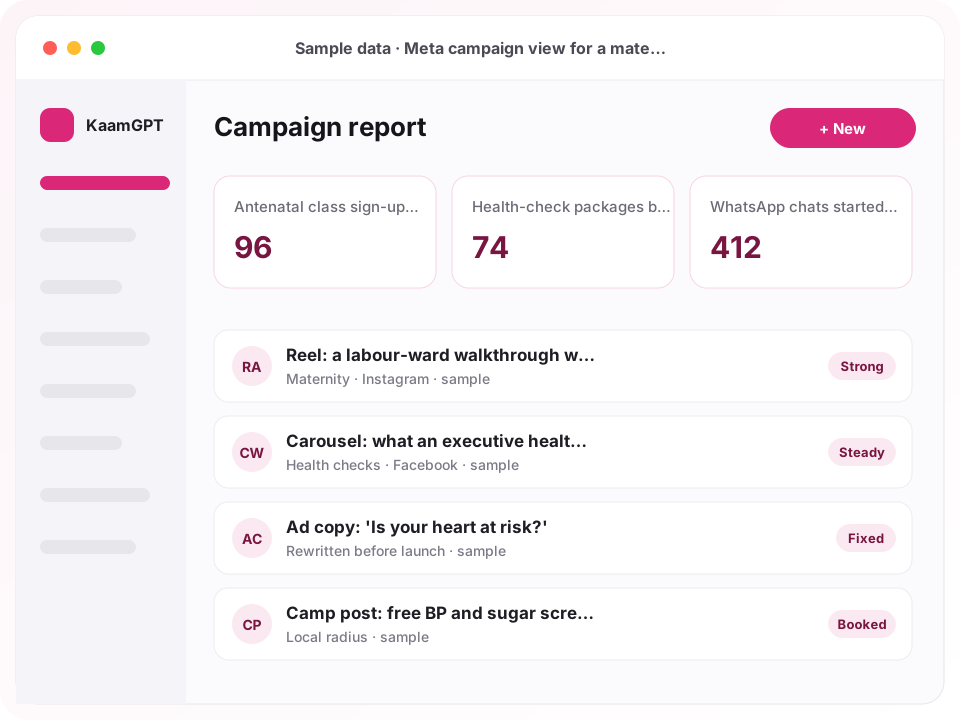
Instagram ads for hospitals work best as a sequence rather than a single shot. A Reel introduces the maternity wing, a carousel explains the antenatal package, and a click-to-chat ad invites questions. People who engage with the first piece see the next. None of this needs health-based targeting, and none of it asks the viewer about their body. It simply shows a useful, honest offer to people at the right life stage near the right campus.
An offer for every campaign
Each campaign promotes something concrete, such as a package, a class, a camp or a tour, with what it includes and what it costs, never just the hospital's name.
Life-stage audiences near each campus
Age bands, locations within a realistic drive and broad audiences replace any attempt to target people by health condition.
Copy written to Meta's health rules
Every line is checked so it describes a service without implying the viewer has a condition, and without inferiority statements, cure claims or health clickbait.
Real people, real places, real consent
Footage of your wards, staff and reception, shot with written consent from everyone identifiable, builds more trust than stock images.
Follow-up within the hour
Leads and chats are routed to a named coordinator during working hours, with an agreed response time, because interest from social fades fast.
Monthly creative refresh
People scrolling past the same ad soon stop seeing it, so each programme gets new Reels or carousels every few weeks, reviewed by your sign-off contact.
What does KaamGPT run on Meta for a hospital?
Management covers strategy, creative direction, copy, buying, lead routing and reporting. The media budget is the hospital's, invoiced by Meta.
Health check campaigns
Package-led campaigns that explain exactly what each check includes, who it suits and what it costs, aimed at adults by age band and location, with booking through a form or WhatsApp.
Meta Ads in detail →Maternity and antenatal programmes
Hospital tours, antenatal classes and birth-preparation sessions promoted to couples near the campus over many months, with follow-up that respects how private this decision is.
Meta Ads in detail →Camps and awareness days
Free screening camps and awareness-day content around occasions such as World Heart Day, promoted to people living close to the camp venue, with registrations captured with consent.
Meta Ads in detail →Doctor-led explainers
Short Reels in which your consultants explain conditions, tests or procedures in plain language, reviewed for accuracy, without endorsing products or boasting of results.
Social media in detail →Click-to-WhatsApp ads and follow-up
Click-to-WhatsApp ads land the viewer in a chat with your front desk or a trained coordinator, who answers questions and books slots, using approved templates for anything sent later.
WhatsApp campaigns in detail →Lead forms that respect privacy
Short forms asking only for name, phone, preferred campus and service, with a clear consent line. What happens next is explained on our hospital lead generation page.
Lead generation in detail →Search to catch the demand social creates
People who see a health-check ad often search for the hospital later. A small brand search campaign makes sure they find you; our hospital Google Ads page explains it.
Google Ads in detail →What can a hospital's Meta ad say about health?
Meta's advertising standards draw the line at personal attributes. A hospital can advertise a service connected with a condition, yet the ad cannot suggest that whoever is watching suffers from it. Meta's own illustrations make the distinction plain: an ad announcing a new diabetes treatment is acceptable, while an ad asking the viewer whether they have diabetes is not. The same applies to mental health, disability and other personal characteristics.
For hospital Facebook ads this changes the grammar of the copy more than its subject. 'Cardiac screening camp at our Hebbal campus this Sunday' works. 'Is your heart at risk?' does not. 'Antenatal classes for first-time parents' works. 'Pregnant and anxious?' does not. We write in the third person or about the service, never in the second person about the viewer's body, and we avoid fear-led hooks entirely.
Meta's health and wellness standard adds more. Weight-loss products and cosmetic procedures may be advertised to adults only, aged 18 and over, and no health ad may make statements of inferiority about appearance, zoom in on body parts pinching fat, claim to cure an incurable disease or use clickbait in a health context. Indian law adds its own layer: the Drugs and Magic Remedies Act bars advertising a drug for scheduled conditions such as obesity, diabetes and heart disease, so a hospital ad should promote a consultation or programme, never a medicine.
- Allowed in principle: services, facilities, camps, classes, packages with inclusions and prices, factual doctor introductions, health information.
- Not allowed by Meta: implying the viewer has a condition, inferiority statements, cure claims for incurable diseases, health clickbait.
- Restricted to adults: weight-loss and cosmetic procedure ads.
- Not allowed under Indian law or the ethics code: promoting a medicine for a scheduled disease, doctors endorsing products, boasting of cures.
Should a hospital use before-and-after photos or patient stories on Instagram?
Meta's current standard permits before-and-after transformation imagery for general cosmetic products and procedures, provided the ad targets adults. That is a platform permission, not a recommendation, and for hospitals it is rarely the right call. The 2002 medical ethics code, which NMC put back in force in August 2023, bars doctors from boasting of cases, operations or cures, and clause 7.17 requires a patient's permission before an identifiable photograph or case report is published.
Advertising standards point the same way. ASCI's code asks that advertising claims be honest and provable, and a single dramatic result implies an outcome other patients may not get. A cosmetic or bariatric department that leans on transformation images invites complaints even where Meta lets the ad run.
There are better options. Show the process rather than the result: the consultation room, the surgeon explaining what a procedure involves, the recovery area, the nurse who will call after discharge. Patient voices can appear when they talk about the experience of care, such as how clearly things were explained, with written consent and without describing medical outcomes. These choices are slower to produce and far safer to run.
Which hospital services suit Facebook and Instagram, and when?
Services that a healthy person can choose in advance suit social best. Health-check packages top the list, especially executive, senior and women's checks with clearly stated inclusions. Maternity programmes follow, because couples start comparing hospitals months before a due date and respond to tours, classes and honest information about rooms and costs. Screening camps, vaccination drives for children and physiotherapy assessments also work, as do doctor-led explainers that build familiarity with your consultants.
Timing matters. Health-check campaigns tend to do well at the turn of the year, when people set health goals, and whenever an employer client schedules checks for its staff. Awareness days such as World Heart Day in September and World Diabetes Day in November give camps a natural hook. Maternity runs all year with monthly classes, and paediatric content follows the school calendar. Emergency and acute services, by contrast, do not belong on social at all; those patients need Maps and a phone line, not a Reel.
Each campus needs its own rhythm. A unit in a young, growing area may run maternity and paediatric programmes almost constantly, while a campus in an older neighbourhood leans on senior health checks, physiotherapy and camps. We plan the calendar campus by campus, so one programme's creative is not shown to families it does not fit, and the coordinators at each site know what is running before the first lead arrives.
How should lead forms and WhatsApp work for hospital ads?
Social leads go cold quickly. Someone who tapped a health-check ad at lunch has moved on by evening, so the follow-up plan matters more than the form. We route Meta leads and chats to a named coordinator with an agreed response time during working hours, and click-to-WhatsApp ads open a conversation the coordinator can continue, rather than a form that waits in a spreadsheet.
The form itself should be short and should not ask about health. Name, phone number, preferred campus and the programme of interest are enough to book a call. A consent line explains how the hospital will use the details and how to opt out, which matters under the Digital Personal Data Protection Act; the full treatment of consent and lead handling is on our hospital lead generation page. Any later message uses a pre-approved WhatsApp template and is sent only to people who said yes to hearing from you.
Can doctors and influencers appear in hospital ads?
Your doctors can appear explaining conditions, tests and procedures, which is often the most trusted content a hospital produces. What they cannot do under the 2002 code is endorse a drug, product or appliance, or present their own skill and results in a self-aggrandising way. Explainers built around what a patient should know, rather than how good the doctor is, stay on the right side of that line.
Outside influencers need more care. ASCI's addendum of 6 March 2025 says influencers who give health and nutrition advice, including claims about prevention, treatment or cure, must have the relevant qualifications and state them upfront. A popular lifestyle creator promoting a hospital's weight-loss programme without such qualifications is a risk to the hospital as well as the creator. Where a hospital wants creators involved, we prefer qualified professionals and factual content about facilities and programmes, with the paid relationship clearly disclosed.
Whoever appears, the same discipline applies: scripts reviewed by your sign-off contact, no claims of results, no product mentions, and written consent from anyone identifiable on screen. Paid creator posts carry a clear disclosure, and we keep a record of each creator's stated qualifications alongside the approved script, so the hospital can show what was checked if a complaint ever arrives.
What do Meta Ads cost a hospital to run?
Meta management at KaamGPT begins at ₹4,999 monthly; the opening month is spent on creative, consented forms, WhatsApp routing and the first campaigns. Meta invoices the hospital directly for the media, so your budget is never held by us. A nursing home promoting one monthly camp often fits the opening fee; a hospital running maternity, health-check and camp programmes across campuses needs a larger written scope. Opening prices across our services appear on our pricing page.
Meta Ads
Recommended₹4,999/month
Typically 30 days
Best for health checks, maternity programmes, camps and doctor-led education, where demand has to be created rather than captured.
- Creative testing
- Audience building
- Retargeting funnels
- Pixel setup
- Weekly reporting
Digital Marketing
₹19,999/month
Typically 15 days
Best when Meta campaigns belong in a single plan alongside search, Maps, website and WhatsApp for each service line.
- Channel strategy
- Creative production
- Campaign management
- Weekly reporting
SEO
₹14,999/month
Typically 30 days
Best for hospitals that also want to be found when people later search for the condition or procedure they first saw on social.
- Technical audit
- Keyword research
- On-page optimisation
- Content plan
- Monthly reporting
Local SEO
₹4,999/month
Typically 14 days
Best for campuses where social ads drive people to look up the hospital on Maps before visiting.
- Google Business Profile optimisation
- Local keyword map
- Location page on-page fixes
- Citation building and NAP cleanup
- Local link outreach
- Review replies and posts
- Monthly report
Google Ads
₹4,999/month
Typically 30 days
Best for capturing the searches social campaigns create, and for urgent services social cannot serve.
- Account setup
- Keyword strategy
- Ad copy testing
- Conversion tracking
- Bid optimisation
Lead Generation
₹24,999/month
Typically 14 days
Best for hospitals receiving many social leads and chats but converting too few into booked appointments.
- Verified leads
- Multi-channel outreach
- CRM integration
- Lead scoring
- Replacement guarantee
- Video shoots at your campus are planned with your team; production costs, if any, are quoted separately and agreed before the shoot.
- Your sign-off contact approves every ad before it runs; Meta's own review can still reject or limit an ad, and we fix and resubmit where that happens.
| Package | Starts at | Timeline | Best for |
|---|---|---|---|
| Meta Ads | ₹4,999/month | Typically 30 days | Best for health checks, maternity programmes, camps and doctor-led education, where demand has to be created rather than captured. |
| Digital Marketing | ₹19,999/month | Typically 15 days | Best when Meta campaigns belong in a single plan alongside search, Maps, website and WhatsApp for each service line. |
| SEO | ₹14,999/month | Typically 30 days | Best for hospitals that also want to be found when people later search for the condition or procedure they first saw on social. |
| Local SEO | ₹4,999/month | Typically 14 days | Best for campuses where social ads drive people to look up the hospital on Maps before visiting. |
| Google Ads | ₹4,999/month | Typically 30 days | Best for capturing the searches social campaigns create, and for urgent services social cannot serve. |
| Lead Generation | ₹24,999/month | Typically 14 days | Best for hospitals receiving many social leads and chats but converting too few into booked appointments. |
How much should a hospital put into Meta campaigns?
Start from the offer and the capacity behind it. If the health-check floor can take forty extra packages a month, the budget should aim at that number, not at a reach figure. Social leads are cheaper than search leads but less ready, so the follow-up team's capacity matters as much as the media budget. A campaign that produces two hundred leads for a desk that can call fifty wastes most of its money.
As an example only, one campus might trial a single programme on a small daily spend and expand once the cost per booked package is known. That is a planning illustration, not KaamGPT's fee. Before you appoint any Meta ads agency for hospitals in Bangalore, ask how it will measure booked packages and attended classes rather than leads, and who will call the leads.
Creative is the other variable. Social audiences need fresh Reels and carousels every few weeks, and real footage from your campus needs planning, consent forms and someone from your team on the day. A hospital that can host a short shoot each month gets better results for the same media money than one relying on a single brand video.
- Number of programmes running at once, such as maternity, health checks and camps, each with its own creative.
- How much new video and photography is needed each month, and whether your team can host shoots.
- The size of the catchment around each campus and how many campuses are included.
- Follow-up capacity, since leads must be called or messaged within an hour or two to convert.
- Language versions, as Kannada and English creative are produced and reviewed separately.
- Reporting depth, for example splitting results by campus, programme and package.
Who sees a hospital's social ads in Bengaluru, and from how far?
Social campaigns reach people where they live and work rather than where they search, so the map that matters is residential. Bengaluru's newer hospital units have followed housing outwards. Manipal's Bengaluru list now includes hospitals in Yelahanka, Electronic City and Doddaballapur, beyond its older city units, and Aster runs a hospital in JP Nagar as well as Hebbal and Whitefield. Each draws from apartment communities, gated layouts and older neighbourhoods within a manageable drive.
That is the audience a hospital's Meta campaigns should talk to: families within reach of a campus, segmented by life stage rather than by illness. Young couples in Electronic City or Yelahanka are the natural audience for antenatal programmes. Working professionals near office clusters are the audience for executive health checks. Parents of older adults across Koramangala, JP Nagar and similar settled areas respond to senior health-check packages and camp announcements.
Language and format follow the audience. Kannada creative performs a different role from English creative, especially for camps and senior packages, and Reels showing a real ward, a real nurse or a real reception desk often say more about a hospital than polished brand graphics. We plan both languages and real-location footage from the start, with consent for anyone who appears.
Which hospitals and clinics suit Meta campaigns best?
- Maternity and women's hospitalsThe long, emotional decision suits months of Reels, tours, classes and gentle WhatsApp follow-up.
- Multi-speciality hospitalsHealth-check packages and camps give a large hospital a reason to be seen by healthy families between illnesses.
- Children's hospitalsVaccination information, paediatric camps and parent education reach mothers and fathers who will need the hospital one day.
- Diagnostic and health-check centresPackages with clear inclusions and prices behave like products and respond well to social campaigns.
- Physiotherapy and rehabilitation unitsExplainers and camp offers reach working professionals and older adults before pain becomes an emergency.
- Nursing homesA small local radius, a monthly camp or class, and a responsive WhatsApp line can work on a modest budget.
- Cosmetic and dermatology departmentsMeta requires these ads to reach adults only, and we keep them factual even where the platform permits more.
How does a hospital's first Meta campaign come together?
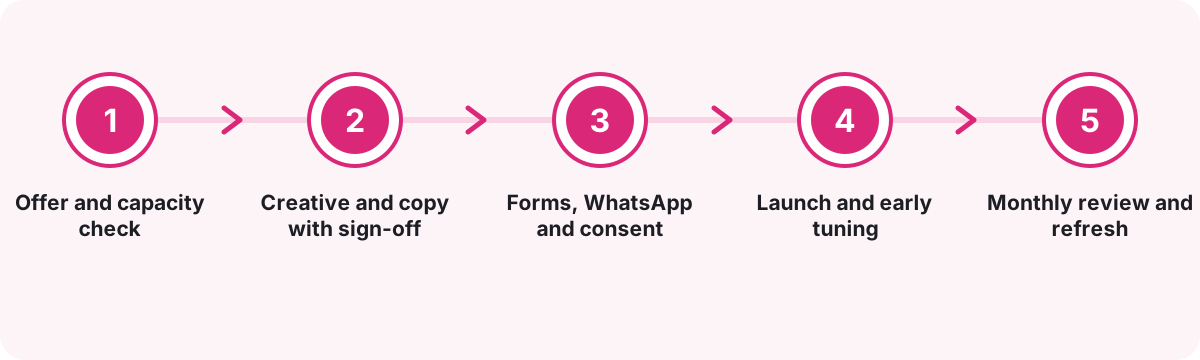
Offer and capacity check
We agree the programme to promote first, the number of extra bookings the hospital can serve, the campus, the price or package and who will follow up the leads.
Creative and copy with sign-off
We script Reels and carousels, write copy to Meta's health rules and the ethics code, plan any shoot with consent forms, and send everything to your sign-off contact.
Forms, WhatsApp and consent
Lead forms ask only what is needed, with a clear consent line; click-to-chat ads route to a named coordinator; approved templates are set for later messages.
Launch and early tuning
Campaigns go live near the chosen campus; in the first fortnight we check rejections, lead quality and response times daily and adjust audiences and creative.
Monthly review and refresh
Each month we report booked packages, class sign-ups and attended visits by programme, retire worn-out creative and agree the next batch with your team.
Why let KaamGPT run your hospital's social ads?
Health rules applied to every line
We write to Meta's personal attributes and health and wellness policies, the drug-advertising schedule and the ethics code, so ads run instead of bouncing in review.
Offers, not boosted posts
Every campaign promotes something a healthy person can use, with clear inclusions and prices, which is what makes social ads work for hospitals.
WhatsApp follow-up built in
KaamGPT builds WhatsApp software, so chats from ads, consent records and reminders run in one place your coordinators can use.
Patient privacy first
Forms collect no health details, audiences are never built from patient records, and nothing clinical goes into Meta.
Reporting in bookings
We report booked health checks, class sign-ups and attended visits, not reach and likes, so management can judge the spend.
Why do hospital Facebook and Instagram campaigns disappoint?
Hospitals usually come to social ads after boosting a few posts and seeing likes but no patients. The causes are predictable, and most of them sit in the creative and the follow-up rather than in the targeting.
The fix is rarely more money. It is a clear offer per campaign, copy that describes services rather than diagnosing the viewer, a form that asks for no health details, and a named person who calls or messages within the hour. With those four in place, a modest budget behaves very differently.
- Ads address the viewer as a patient, with questions about their symptoms, and get rejected or limited under Meta's personal attributes policy.
- Boosted posts promote the hospital in general rather than a specific, useful offer such as a health-check package, a class or a camp.
- Lead forms gather phone numbers that sit uncalled for two days while the family books somewhere else.
- Creative relies on patient success stories or before-and-after photos, which the ethics code and ASCI's standards make risky.
- Forms ask health questions they do not need, collecting sensitive information without a clear purpose or consent.
- Meta Ads management
- Begins at ₹4,999 monthly; Meta bills media to the hospital
- Set-up
- About 30 days for creative, forms, WhatsApp routing and first campaigns
- Personal attributes rule
- No ad may suggest the viewer's physical or mental health or a medical condition
- Age rule
- Weight-loss and cosmetic procedure ads may reach only adults, 18 and over
- Health influencers
- ASCI requires health influencers to be qualified and to state their qualifications (addendum of 6 March 2025)
- What we report
- Booked packages, class sign-ups and attended visits by programme and campus
Where this applies around Bengaluru, Karnataka
- Bengaluru
- Karnataka
- India
- Doddaballapur
- Yelahanka
- Electronic City
- Koramangala
- JP Nagar
Frequently asked questions
32 answersWhat sets the best Meta ads agency for hospitals in Bengaluru apart?
It writes ads that never treat the viewer as a patient, promotes concrete offers such as health checks, classes and camps, keeps patient stories within the ethics code, and answers leads within the hour. Ask any agency to show you three draft ads for your hospital and explain why each would pass Meta's health rules.
What fee does KaamGPT set as a Meta ads agency for hospitals in Bangalore?
Management begins at ₹4,999 monthly, with roughly a month to prepare creative, forms, WhatsApp routing and the first campaigns. Meta invoices the hospital directly for media. Hospitals running several programmes or campuses receive a written scope listing each one.
Can a hospital ad on Facebook ask people if they have diabetes?
No. Meta's personal attributes policy forbids ads that suggest the viewer has a medical condition, and Meta itself gives 'Do you have diabetes?' as an example of a non-compliant ad. An ad announcing a diabetes screening camp or a diabetes clinic's services, without addressing the viewer's own health, is the compliant way to say it.
Are before-and-after photos allowed in hospital ads on Instagram?
Meta permits before-and-after transformation imagery for general cosmetic procedures in ads targeted at adults. For hospitals we still advise against it: the 2002 ethics code bars boasting of cures, identifiable patient photos need consent, and a single dramatic result can mislead. Showing the process and the team is safer and builds trust.
Can doctors promote products in Instagram Reels?
No. Under the 2002 ethics code a doctor may not endorse any drug, product or appliance in advertising. Doctors can appear in Reels explaining conditions, tests or procedures for public information, provided the content does not boast of their results or promote a product.
What should a hospital lead form on Facebook ask?
Just enough for a callback: name, phone, preferred campus and the programme or package of interest, with a clear consent line. Do not ask about symptoms, diagnoses or medicines. Health questions belong in the consultation, not in an ad form.
How can a hospital promote health check packages on Instagram?
Lead with what the package includes, who it suits and its price, in a carousel or short Reel, aimed at adults by age band within reach of the campus. Offer booking through a short form or a click-to-WhatsApp ad, and make sure a coordinator responds the same day.
Do health influencers in India need qualifications?
Yes, under ASCI's guidelines. Its addendum of 6 March 2025 says influencers giving health and nutrition advice, including prevention, treatment or cure claims, must have the necessary qualifications and state them upfront. Hospitals working with creators should check this before any paid post.
Can a hospital in Bengaluru target ads at people with a specific illness?
We do not target by health condition, and Meta's rules make implying someone's condition unacceptable in the ad itself. We use location around a campus, age bands, language and broad audiences, and let the offer, such as a cardiac screening camp, attract the people it is relevant to.
Do Meta ads work for a hospital's emergency services?
No, and we do not run them. People in an emergency use Maps, a phone or an ambulance. Social ads suit services people choose in advance, such as health checks, maternity programmes, camps and physiotherapy. Emergency visibility depends on an accurate Maps profile instead.
Is WhatsApp better than a lead form for hospital ads?
Often. With a click-to-WhatsApp ad, the coordinator picks up a live conversation at once, answering questions about packages or classes and booking a slot. Forms suit people who prefer a callback. Most hospitals run both, and we compare the bookings each produces.
How quickly should a hospital respond to a Meta lead?
Within an hour during working hours, ideally faster. Interest from a social ad fades quickly, and families compare several hospitals at once. Your coordinators and we fix a response-time target and report how often it is met, alongside bookings.
Can our hospital run Meta ads in Kannada?
Yes, and for camps, senior health checks and family programmes Kannada creative often reaches people English ads miss. Kannada copy goes through the same sign-off as English and runs in its own ad sets so results are visible separately.
What creative works best for hospital Instagram ads?
Real footage of your wards, staff and reception, short doctor explainers and clear package carousels. Stock photos of smiling models feel generic, and transformation images carry ethical risk. Everyone identifiable in your footage signs a consent form first.
Can a maternity hospital in Bengaluru use Meta ads?
Yes, and it suits Meta particularly well. Couples choose a maternity hospital months ahead, so tours, antenatal classes, room information and package details shared over time build familiarity. Ads describe the programme without assuming the viewer is pregnant.
Why was our hospital's Facebook ad rejected?
Common reasons are copy that implies the viewer has a condition, weight-loss or cosmetic ads not limited to adults, cure claims, sensational health hooks, or landing pages that make such claims. We read Meta's reason, rewrite the ad or page, and request review where the decision looks wrong.
What monthly Meta budget makes sense for a hospital?
Plan from capacity. If the health-check floor can take a set number of extra packages, budget to fill that number and make sure your coordinators can call every lead. Small campuses often trial one programme on a small daily spend. That is an illustration, not our fee.
What results should a hospital expect from Meta ads?
Leads and chats tend to appear in the first week; what matters is how many become booked packages, class sign-ups and attended visits. We report those numbers by programme and campus each month, along with response times, so you can judge the spend.
Can Meta ads promote our hospital's cosmetic surgery department?
Yes, with conditions. Meta limits cosmetic procedure ads to adults and bars statements of inferiority about appearance. We keep such ads factual about the procedure, the surgeon's qualifications and the consultation, without transformation images or promises.
Can a hospital use patient stories in Meta ads?
Only stories about the experience of care, told with written consent, and never testimonials of cures or outcomes. The ethics code bars boasting of cures and requires permission for identifiable patient material. Talking about how clearly things were explained is fine; claiming a result is not.
Do you also manage the hospital's organic Instagram and Facebook pages?
We can, inside a broader hospital plan. Organic posts carry doctor explainers, camp announcements and hospital news, and paid campaigns promote specific offers. Our <a href="/best-digital-marketing-agency-for-hospitals-in-bengaluru">hospital digital marketing page</a> describes the combined approach.
Which numbers show whether a hospital's Meta ads work?
By booked health-check packages, antenatal class sign-ups, camp registrations that attended and consultations booked from chats. Reach and clicks appear only as context for those numbers. The coordinators tag each lead's outcome, so the report reflects real bookings.
Can Meta ads help a nursing home in Bengaluru?
Yes, on a small scale. A monthly camp, a physiotherapy assessment offer or a women's health-check package promoted within a few kilometres, with a quick WhatsApp response, can fill slots without a large budget.
Should hospital ads mention prices?
Where you have fixed packages, yes. Listing what a health check or class includes and costs keeps away enquiries that would never book, and the ethics code permits a public statement of charges. Keep prices current.
Is it safe to retarget website visitors with hospital Meta ads?
We avoid audiences built from health-related page visits or patient records. Sending condition-specific ads to someone because they read a page about that condition feels intrusive and implies their health status. We rely on location, age bands, broad audiences and the offer itself.
What does KaamGPT need to begin our hospital's Meta campaigns?
Tell us which programme to grow first and which campus will serve it, or phone +91 79767 82366. We draft the first month's creative and follow-up flow for your review, then send a written management quote.
Do Meta ads replace search ads for hospitals?
No. Meta creates interest among people not yet searching; search captures those who are ready. Many hospitals run both. Our <a href="/services/google-ads">Google Ads service</a> covers search, and the <a href="/best-meta-ads-agency-in-bengaluru">Bengaluru Meta Ads guide</a> sets out how we run social campaigns generally.
Can Meta ads support a hospital's corporate health-check business?
Partly. Ads can reach professionals near office clusters with executive packages, but company tie-ups are won through direct conversations with HR teams. Our <a href="/best-seo-company-for-hospitals-in-bengaluru">hospital SEO page</a> explains how package pages support both routes.
Who approves hospital ads before they go live?
Someone you nominate, typically a senior doctor or the quality head, approves every ad, Reel and form. We prepare drafts with notes on which rules each line was checked against, so approval is quick, and nothing runs without it.
Can hospital ads open chats on WhatsApp or Messenger?
Yes. Click-to-message ads on Facebook and Instagram can open a WhatsApp or Messenger chat with the hospital. We choose placements per programme and check that creative works in each, while keeping follow-up in one place your coordinators manage.
Can a hospital in Bengaluru advertise free screening camps on Facebook?
Yes. Camps are among the most useful hospital ads: a clear date, venue, what is screened and how to register, promoted to people living near the venue. Describe the camp, not the viewer's health, and make sure registrations are confirmed by message and that camp staff have the list on the day.
Should our hospital's Meta ads link to the website or stay inside Facebook?
It depends on the programme. Instant forms and chats work well for camps and classes, where people want to register quickly. Health-check packages and maternity programmes often do better with a fast, clear page on your site that shows inclusions and prices, followed by a short form. We test both and keep whichever books more.