A parent comparing tuition and entrance coaching usually reads before calling, so the best SEO company for coaching centres in Bengaluru builds the pages that parent reads. Course pages, teacher profiles, fee and batch details and honest results pages are what Google ranks for a search like 'NEET coaching in Jayanagar', and what an AI assistant draws on when a parent asks which institute near Vijayanagar prepares students for KCET.
Many coaching websites hide those answers inside a brochure PDF or a single 'Courses' page. KaamGPT rebuilds the structure, writes the content with your faculty, and keeps it current through each exam cycle. Each month of search work on an institute website is priced from ₹14,999, and the opening batch of repairs usually goes live about thirty days after the audit.
- ₹14,999per month opens a search retainer for one institute website and its course pages
- ~30 daysfor the crawl, the course-to-search map and the earliest repairs going live
- 9 disclosuresa coaching website should carry under the Ministry's 2024 model, from tutor qualifications to admissions achieved
- 1 pagefor every course, exam and board pairing, so a repeater batch never competes with the two-year programme
How do parents in different parts of Bengaluru search for coaching?
Searches carry the shape of the city. In the south, around Jayanagar, JP Nagar and Basavanagudi, parents tend to type a locality with the course, because a ten-minute ride after school is the limit they will accept: 'II PUC maths tuition JP Nagar', 'NEET coaching in Jayanagar 4th Block'. National College in Jayanagar and the colleges along the Basavanagudi stretch keep a steady population of PU students looking for evening support.
On the north-west side, Seshadripuram is known for the Seshadripuram Educational Institutions and Vijayanagar, a large residential area further west, has plenty of PU students of its own, so searches lean towards KCET, CET counselling help and subject tuition for PU. Out in Marathahalli and the eastern tech corridors, the same need is phrased by board and timing instead: 'CBSE class 11 physics weekend batch', 'online plus offline JEE coaching Marathahalli'.
A website that ranks across Bengaluru has to answer all three ways of asking without turning into a list of area names. That means real pages for real courses at real locations, each with the facts a parent checks, rather than dozens of thin pages that swap one neighbourhood for another and say nothing new.
What does SEO work for a coaching institute include?
The course list drives the work. After the audit, every item here is sized to your institute, which is why a one-room tuition class and a multi-location entrance institute end up with very different plans.
One page per course, exam and board
We map each programme to the searches families use and give it its own page: what it prepares for, who it suits, batch timings, batch size, duration, fees and the exit policy. Course page optimisation of this kind is most of the early work, and it is described on our SEO service page.
SEO in detail →Faculty pages with real credentials
Faculty pages carry each teacher's subject, qualifications and teaching background, written with them and approved by them. Parents check these, and they help search engines connect your institute with expertise in physics, biology or accountancy rather than with a generic brand name.
SEO in detail →Technical fixes for phone-first parents
Most parents open a coaching site on a phone. We fix page speed, broken links, duplicate pages, missing titles and the trial-class form, and add structured data for the organisation and its courses. Larger rebuilds are handled by our website development team.
Websites in detail →Exam update content that stays accurate
Short, dated explainers on JEE (Main) sessions, NEET (UG) notices and KCET counselling steps, written from National Testing Agency and KEA sources and updated when notices change. Done properly, exam update content earns visits and links from parents and students who share it.
SEO in detail →Location pages that match the Maps listing
Each centre gets one location page carrying the identical name, address and phone shown on its Google Business Profile, with directions from nearby schools and metro stations. How the map listing itself is handled is explained on our local SEO page for coaching centres, and the Local SEO service lists its scope.
Local SEO in detail →Results pages built within the rules
Results pages list each consented student with rank, course, duration and whether it was paid, grouped by year, so they can rank for searches about your outcomes without breaching the CCPA guidelines or ASCI's rules on topper testimonials.
Digital marketing in detail →Search data shared with paid campaigns
When an institute also runs paid search, the queries that turn into bookings point to the next pages worth writing, and strong organic positions show the ads team where paying for clicks is wasteful. Our Google Ads page for coaching centres covers that side.
Google Ads in detail →In what order does the work on an institute's website happen?
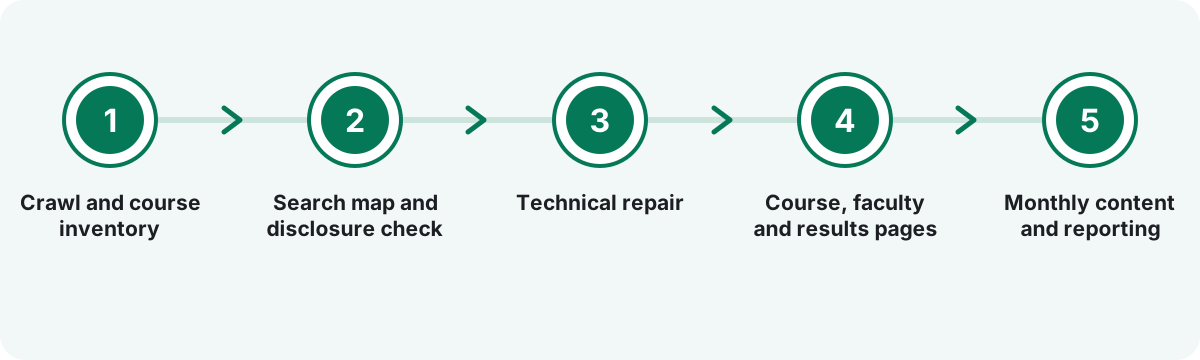
Crawl and course inventory
A crawler lists every page and PDF on the site, and that list is laid beside your real course list, so we can see which programmes have no page, which share one and which pages describe batches that no longer run.
Search map and disclosure check
Example searches are grouped by course, exam, board and area. In parallel we check which of the details the Ministry's model guidelines expect, such as fees, tutor qualifications and exit policy, are missing from the site.
Technical repair
Speed, mobile layout, titles, duplicate pages, redirects from old batch pages, structured data and the trial-class form are fixed before new content goes live, so new pages land on solid ground.
Course, faculty and results pages
We write or rewrite pages in order of likely enrolments, interviewing faculty where needed, and rebuild the results page with consent records and the disclosures the CCPA requires.
Monthly content and reporting
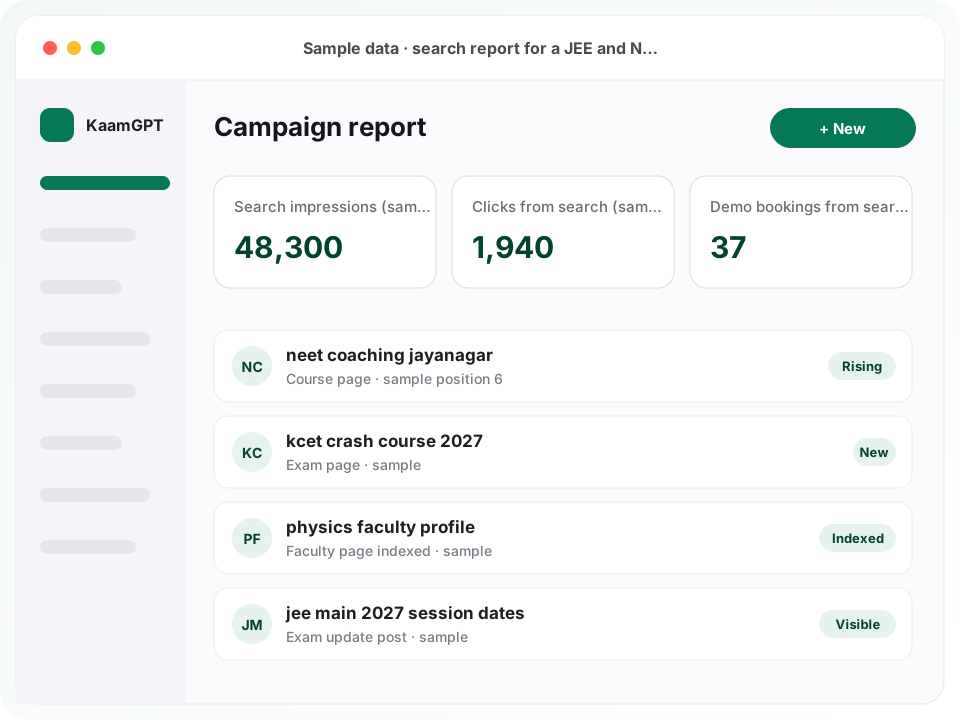
Each month brings new or refreshed pages, exam updates checked against official notices, and a report on impressions, clicks, rankings and demo bookings that came from search.
Which kinds of institute see the most from search work?
- Entrance-exam institutesJEE, NEET and KCET programmes whose parents research for weeks, read faculty pages and compare batch sizes before visiting.
- PU and board tuition centresSubject classes for I and II PUC, CBSE and ICSE students, found through locality searches near schools and colleges.
- Civil services academiesUPSC and KPSC coaching, where long-form explainers and faculty credibility drive enquiries for months before a batch.
- Commerce and CA foundation classesAccountancy and economics coaching whose students search by syllabus and paper rather than by brand.
- Language and study-abroad test prepIELTS, PTE, GRE and GMAT trainers, where score-improvement explainers and trainer profiles carry weight.
- Schools with an admissions pageK-12 schools whose admission process, fee structure and transport routes are the most searched pages on the site.
- Children's skill academiesChess, abacus, coding and robotics classes, where parents search by skill, age group and area.
Where each KaamGPT package fits an institute's search plans
Search work for an institute website is priced from ₹14,999 for each month, and roughly the first thirty days go on the audit, the course grid and the earliest repairs. The written quote counts the courses, locations and content pages involved, because a two-location entrance institute needs more than a single tuition class.
SEO
Recommended₹14,999/month
Typically 30 days
Institutes with several courses that want each programme found by parents searching weeks ahead, without paying for every click.
- Technical audit
- Keyword research
- On-page optimisation
- Content plan
- Monthly reporting
Digital Marketing
₹19,999/month
Typically 15 days
Centres wanting organic search, paid ads, Instagram and WhatsApp steered from a single admissions calendar; ₹19,999 monthly upward.
- Channel strategy
- Creative production
- Campaign management
- Weekly reporting
Local SEO
₹4,999/month
Typically 14 days
A single tuition centre or one branch whose families live close by and look it up on Google Maps, with each location priced from ₹4,999 monthly.
- Google Business Profile optimisation
- Local keyword map
- Location page on-page fixes
- Citation building and NAP cleanup
- Local link outreach
- Review replies and posts
- Monthly report
Google Ads
₹4,999/month
Typically 30 days
Institutes needing enquiries during results weeks while new pages are still earning rankings; ₹4,999 monthly covers management.
- Account setup
- Keyword strategy
- Ad copy testing
- Conversion tracking
- Bid optimisation
Meta Ads
₹4,999/month
Typically 30 days
Centres building parent familiarity on Instagram and Facebook before the search begins; managing it is priced from ₹4,999 monthly.
- Creative testing
- Audience building
- Retargeting funnels
- Pixel setup
- Weekly reporting
Lead Generation
₹24,999/month
Typically 14 days
Large institutes that want every organic and paid enquiry qualified and followed up to a counselling session, from ₹24,999 a month.
- Verified leads
- Multi-channel outreach
- CRM integration
- Lead scoring
- Replacement guarantee
- Writing new course and faculty pages is part of the retainer; a complete site rebuild is quoted separately as a website project.
- We report rankings, clicks and demo bookings from search each month, and never sell a fixed ranking position.
| Package | Starts at | Timeline | Best for |
|---|---|---|---|
| SEO | ₹14,999/month | Typically 30 days | Institutes with several courses that want each programme found by parents searching weeks ahead, without paying for every click. |
| Digital Marketing | ₹19,999/month | Typically 15 days | Centres wanting organic search, paid ads, Instagram and WhatsApp steered from a single admissions calendar; ₹19,999 monthly upward. |
| Local SEO | ₹4,999/month | Typically 14 days | A single tuition centre or one branch whose families live close by and look it up on Google Maps, with each location priced from ₹4,999 monthly. |
| Google Ads | ₹4,999/month | Typically 30 days | Institutes needing enquiries during results weeks while new pages are still earning rankings; ₹4,999 monthly covers management. |
| Meta Ads | ₹4,999/month | Typically 30 days | Centres building parent familiarity on Instagram and Facebook before the search begins; managing it is priced from ₹4,999 monthly. |
| Lead Generation | ₹24,999/month | Typically 14 days | Large institutes that want every organic and paid enquiry qualified and followed up to a counselling session, from ₹24,999 a month. |
Why do two institutes pay different amounts for search work?
The size of the course grid matters more than anything else. Ten real programmes at two locations is a different job from three tuition subjects at one address. Content that needs your faculty's time, such as concept explainers or exam strategy notes, also shapes the plan, because a page written without them is rarely good enough to rank.
Lining up proposals from more than one seo company for coaching centres in Bangalore? Ask each how many pages they will create or rewrite each month, who writes them, how exam facts are checked, and what they will report. Starting figures for every service are on our pricing page, and the written quote converts them into named pages and tasks.
- Number of courses, exams and boards that need their own pages.
- Number of locations, each with its own page and profile to keep consistent.
- State of the current site: a slow or broken site needs technical work before content pays off.
- Languages, if parents in your area need Kannada pages as well as English.
- How much exam update content you want kept current through the JEE, NEET and KCET cycles.
- Whether faculty can give time for interviews and review, which speeds up good writing.
What does KaamGPT bring to an institute's search work?
Written for Google and for AI summaries
Pages are written so that a Google result, a featured snippet and an AI summary all pick up identical facts on courses, fees and teachers, rather than piecing them together from a brochure.
An academy's site we built and maintain
The site we made for OneMove Chess Academy, a Bengaluru chess school, explains its programmes and levels and books a demo class in one step; its Google profile and local pages are ours to look after too.
Content that respects the coaching rules
Every results page, testimonial and claim is drafted with the consumer authority's coaching rules and ASCI's education code open beside it, so a page that ranks is also a page you could show a regulator.
Faculty in the writing loop
Subject pages and explainers are drafted with your teachers and approved by them, which keeps the content accurate and gives parents a real voice to judge.
Reported in demo bookings
Next to rankings and clicks sits the count that matters: demo classes and enquiries traced to unpaid search, course by course, so the retainer is judged on bookings.
What site structure would the best SEO company for coaching centres in Bengaluru build for an institute?
We begin with a grid: courses down one side, exams and boards across the top, locations in a third column. Every filled cell that families actually search for becomes a page, and every empty one stays empty. A centre that teaches II PUC physics, chemistry and maths for state-board students at two locations ends up with a handful of strong pages, not a hundred weak ones.
Then we look at what the institute can prove. Named faculty, published fees, a real batch size and consented results are the evidence that makes a page worth ranking. Where those facts are missing, the first job is collecting them from the centre, because no amount of keyword work fixes a page with nothing to say.
Any seo company for coaching centres in Bangalore can produce pages; the difference is whether each page carries facts a rival cannot copy. Your faculty's names and backgrounds, your actual batch sizes and timings, the schools your students come from and the questions your counsellors hear every week are those facts, and they are what we build each page around.
Map searches to the course grid
Example searches such as 'KCET coaching Vijayanagar', 'CBSE class 12 chemistry tuition' or 'NEET repeater batch' each get exactly one home on the site, so two of your own pages never fight over the same query.
Publish the disclosures as content
Tutor qualifications, course duration, fees, batch size and the exit policy become readable text on each course page, which serves parents, search engines and the Ministry's model guidelines at once.
Answer the questions families ask
Each course page ends with real questions from your counsellors: whether there is a scholarship test, what happens if a student wants to leave mid-term, how doubts are handled after class.
Keep exam pages dated and sourced
Exam update pages show when they were last checked and link their claims to the official notice in the text, so they stay trustworthy through a cycle as changeable as 2026's NEET re-examination.
Earn links the honest way
Useful explainers, faculty talks at schools and listings in genuine education directories bring links. Paid links and link exchanges are off the table, since one penalty can sink every course page at once.
Why do so many coaching websites fail to rank?
Coaching sites are often built once for a launch and then left alone while the institute changes every year. Batches shift, teachers come and go, fee tables change, and the website keeps describing the year it launched.
The fix is rarely a redesign. It is a routine: someone owns the course list, every change in the timetable reaches the website in the same week, and each new batch gets a page before the first poster goes up.
- Every course sits on one long 'Courses' page, so Google cannot tell the NEET repeater batch from the two-year integrated programme or the Class 10 foundation course.
- Fees, timings and the syllabus live inside a scanned brochure or a WhatsApp image rather than as text on a page that search engines and parents can read.
- Faculty appear as first names and stock photos with no subjects, qualifications or experience, which gives a cautious parent nothing to check.
- The results page is a wall of topper photos with no year, course or consent record, which the CCPA's coaching guidelines now treat as a compliance problem as well as a weak page.
- Exam news is copied from other sites, so it adds nothing and falls behind official notices within weeks.
What should a coaching website publish under the Ministry's model guidelines?
The Ministry of Education's 2024 coaching guidelines say a centre should keep a website with up-to-date details of its tutors' qualifications, its courses and curriculum, how long each takes, any hostel facilities, the fees charged, an easy exit policy with terms for returning fees, how many students it has coached and how many went on to higher-education admissions. The same document asks for the batch size to be stated in the prospectus and on the website.
The document went to state governments as a template for their own laws, so how it binds a centre in Karnataka is a question for your lawyer. For search, though, the list is useful whatever its legal status in a given state. It is close to a description of what a cautious parent wants to read, and pages that carry it plainly are the pages Google tends to trust for course searches.
We turn each item into content rather than a compliance footnote. Tutor qualifications become faculty pages. Duration, timings, batch size and fees sit on each course page. The exit policy gets its own short, plain page, linked from every course, because parents look for it before paying a term in advance.
- Faculty pages: subject, qualifications, teaching background.
- Course pages: exam or board, duration, timings, batch size, fees.
- Policy page: exit terms written plainly, linked from every course.
- Outcomes page: students coached and admissions achieved, by year.
How should results and toppers appear on a page that ranks?
Results pages attract searches such as 'NEET coaching in Bangalore with results' and parents return to them more than once while deciding. They are also where most coaching websites get into trouble. Under the consumer authority's coaching guidelines, a successful candidate's photograph must sit beside the rank achieved, the name and length of the course and a note on whether it was paid, and the student's written permission must be collected only after the selection.
ASCI adds two useful constraints. A results claim should describe the academic year that has most recently ended, with evidence on file, and a topper quoted on the page should have actually finished that programme at your institute. A page that mixes a weekend test-series student with two-year programme students, without saying so, is misleading under both.
One more detail from the Ministry's model guidelines is easy to miss: a centre should not make public the results of its own internal assessment tests. Weekly leaderboards and mock-test topper lists may motivate a classroom, yet they have no place on the public site.
Which searches do parents and students actually type?
Coaching searches sort into a handful of groups, and no single page type serves them all. These are example phrasings we plan around, not volume estimates. Course-and-place searches come from parents ready to visit. Exam-and-year searches come from students checking dates and patterns. Question searches come from families still deciding whether coaching is needed at all.
In exam season the mix shifts sharply towards informational searches such as admit cards, answer keys and cut-offs. Those pages can bring large numbers of visitors who will never enrol, so we cover them only when a teacher can add something real, such as a same-day walk-through of the paper, and put most of the effort into pages that end in a demo-class booking.
Language matters too. Some Bengaluru parents type in Kannada, others write Kannada words in English letters, and many mix both with English course names. We check how families near each centre actually phrase things, from enquiry forms and WhatsApp messages, before deciding whether a page needs a Kannada version or simply the right local terms.
- Course and place: 'KCET coaching near Malleshwaram', 'II PUC accountancy tuition Jayanagar'.
- Exam and year: 'JEE Main 2027 session 1 dates', 'NEET syllabus changes'.
- Fit and format: 'NEET repeater batch Bangalore', 'weekend JEE batch for CBSE students'.
- Questions: 'is coaching necessary for KCET', 'integrated PU college or separate coaching'.
How do AI answers change SEO for coaching institutes?
Some parents now ask an AI assistant or read an AI summary at the top of Google before they open any website. Those systems work from what they can find and understand. An institute whose fees, batch sizes, faculty and locations are written clearly on its own site, and stated the same way on its Google Business Profile and in directories, gives them something accurate to repeat.
Whether an assistant names a particular institute is outside anyone's control, and an agency claiming otherwise is guessing. The useful work is removing the reasons it might repeat your details wrongly: inconsistent addresses, outdated batch timings, fees that exist only in an image. Clear questions and answers on course pages, structured data and a consistent name across the web are the practical work behind this.
Structured data is part of this. Marking up the institute as an organisation, each location with its address, and course pages with their real details helps machines read the page as intended. Google decides what to show, so markup is an aid to accuracy rather than a switch for special results, and it must match what the visible page says.
When should a coaching institute start SEO?
Earlier than its ads. New pages usually need months to earn steady rankings, so SEO started in the weeks before results arrives too late for that season. For a PU entrance institute, autumn is a sensible start: pages written between October and December have time to settle before families with a child in Class 10 start comparing institutes, and before the first JEE (Main) session of 2027, which the National Testing Agency's calendar proposes for late January.
The work then follows the year. Exam pages are refreshed as notices arrive, course pages are updated when new batches are announced, and old batch pages are redirected rather than left to show last year's timings. SEO for coaching institutes is less a project than a habit of keeping the website as current as the timetable.
- SEO for an institute website
- From ₹14,999 a month; first fixes in about thirty days
- Page structure
- One page per course, exam and board, plus faculty and policy pages
- Disclosures we publish
- Tutor qualifications, duration, fees, batch size, exit terms
- Results pages
- Consent after selection; rank, course, duration and paid or free shown
- Exam content sources
- National Testing Agency and Karnataka Examinations Authority notices
- Reported each month
- Rankings, clicks and demo bookings from organic search
Where this applies around Bengaluru, Karnataka
- Bengaluru
- Karnataka
- India
- Jayanagar
- Seshadripuram
- Vijayanagar
- Marathahalli
- JP Nagar
Frequently asked questions
29 answersWhat will search work on our coaching centre's site in Bangalore cost?
KaamGPT prices search work on an institute website from ₹14,999 for each month, so how much you pay depends on scope. The quote grows with the number of courses, locations and languages, and with how much technical repair the current site needs. A single-location tuition centre that mostly wants Google Maps visibility may be better served by local SEO, which starts lower.
When will a tuition centre or coaching institute see its pages rank?
The audit and first repairs take about thirty days. Fresh course pages usually climb over a season rather than a week, and exam pages move faster when they answer something current. Hence our advice to begin in the autumn for a PU entrance institute, well before parents begin searching around board results.
What should a coaching centre website include?
At minimum: a page for each course with exam or board, duration, timings, batch size and fees; faculty pages with qualifications; a plain exit policy; location pages; and a results page with proper disclosures. The Ministry of Education's 2024 model guidelines list nearly the same items, and parents look for them before booking a demo class.
Can a coaching website show topper results?
Yes, with care. Under the CCPA's coaching guidelines, a topper's name or photo needs written consent given after the result, and the page should show the rank, the course and its duration, and whether the student paid. ASCI adds that testimonials should come only from students who completed that programme with you.
How can a NEET coaching institute rank on Google in Bangalore?
Split NEET programmes into separate pages, for instance the two-year integrated course, the repeater batch and the crash course, with faculty, timings, fees and batch size written as text. Add a location page for each centre, keep exam pages current from official notices, and earn links through useful content rather than paid schemes. Searches for NEET coaching in Bangalore reward that depth.
Should a coaching institute write exam update content?
Only if it adds something and stays accurate. Dated explainers on JEE (Main) sessions, NEET (UG) notices or KCET counselling, written from NTA and KEA sources and updated when notices change, attract students and parents and earn links. Copied news pages do the opposite and can make the whole site look careless.
Does KaamGPT write faculty pages for institutes?
Yes. We interview each teacher or work from a short questionnaire, then write a page covering subject, qualifications and teaching background, which the teacher approves before it goes live. Parents close to booking a demo class tend to read them closely, and they help search engines link your institute to real expertise.
Why does our institute rank for its name but not for its courses?
Usually because there is no page for each course. If every programme sits on one 'Courses' page, Google has nothing specific to show for 'KCET coaching Malleshwaram' or 'II PUC chemistry tuition'. A page per course, with its own title and facts, fixes most of this.
Are brochure PDFs bad for a coaching centre's SEO?
A PDF does no damage on its own; the trouble is using it instead of a page. Fees, timings and syllabus locked in a PDF or an image make parents pinch and zoom on a phone and leave search engines with little text to read. Keep the brochure as a download and put the same facts on the course page as text.
How do you handle SEO for a coaching centre with several branches in Bengaluru?
Each branch gets one location page with its exact address, phone and batch timings, matching its Google Business Profile. Course pages then link to the locations that run them. We avoid creating near-identical pages for areas where you have no centre, because thin area pages tend to drag a site down rather than help.
Should we create pages for every Bengaluru neighbourhood near our centre?
No. Cloning one page for each nearby locality and changing only the place name produces exactly the doorway-style thin content Google's spam policies warn about. One strong location page per real centre, with directions from nearby schools and metro stations, serves families in surrounding areas better.
Can SEO help a coaching institute appear in AI answers?
It can make accurate answers more likely, though a mention is never in anyone's gift. AI assistants work from what they can find, so clear course facts, consistent details across your site and Google Business Profile, and plain question-and-answer sections give them correct information to draw on.
Do you write in Kannada for coaching websites in Bengaluru?
Yes, where parents in your area search in Kannada or prefer to read in it. Kannada pages are written properly rather than machine-translated, which adds to the work and the quote; the first ones go to the courses where Kannada-speaking families make up most of the enquiries.
Before quoting, what will the best SEO company for coaching centres in Bengaluru want to know?
Your real course list, which programmes bring the most enrolments, who your faculty are, your fees and batch sizes, your exit policy, and which results you have written consent to publish. Without those facts no agency can write pages that rank or that parents trust.
Is it worth targeting answer-key and admit-card searches?
Rarely. These searches spike in exam season and bring many visitors who will not enrol. They are worth covering only if a teacher can add something useful, such as a paper analysis on the day. Otherwise course pages that end in a demo-class booking deserve the hours.
Can we publish our weekly test toppers on the website?
The Ministry of Education's 2024 model guidelines say a coaching centre should not make public the results of its own assessment tests. Share progress privately with students and parents instead, and keep public results pages for final exam outcomes with consent and proper disclosures.
Does an seo company for coaching centres in Bangalore need access to our website?
Yes, to fix technical issues and publish pages, plus Google Search Console and analytics access to measure results. We work in your accounts, which stay in the institute's name, and changes are listed in the monthly report.
Will a new website help our coaching institute rank better?
Only if the old one is slow, broken or impossible to edit. Most ranking problems on coaching sites come from missing pages and missing facts, not from the design. We fix structure and content first, and recommend a rebuild only when the existing platform blocks that work.
Which numbers show whether search work is helping a coaching centre?
Impressions, clicks and rankings for the course searches we planned, plus the enquiries and demo classes that arrived from organic search, broken down by course. Rankings alone can look good while enrolments stay flat, so the demo-class count is the number we pay most attention to.
How do we judge whether an seo company for coaching centres in Bangalore is doing good work?
Look at the pages themselves. Are your real courses, teachers, fees and batch sizes on them, written well enough that you would send them to a parent? Then look at the monthly report: are demo bookings from organic search rising for the courses that matter most? Rankings for vague phrases nobody types are not evidence.
Do you buy links to make coaching sites rank faster?
No. Purchased links and link schemes breach Google's spam policies, and a penalty hits every course page together. Links come from useful explainers, genuine education directories, school talks by your faculty and local press when you do something worth reporting.
Can SEO help a school's admission season in Bengaluru?
Yes. School searches centre on the admission process, fee structure, curriculum, transport routes and visit days. Clear pages for each, updated when the admission notice is published, help parents in Bengaluru find answers before they call the office.
What happens to pages for batches that have finished?
We redirect them to the current version of the course or update them in place, so search engines and parents do not land on last year's timings. Old exam update pages are refreshed or retired once the cycle closes.
Should the exit policy really be published on our website?
We recommend it. The Ministry's model guidelines expect an easy exit policy on a coaching website, and parents who are about to pay a term in advance look for it. A short, plain page linked from every course removes a common reason for hesitation.
Should a coaching centre choose organic search or paid ads?
Ads rent visibility for as long as you pay and can start this week; organic pages take months to climb but then bring enquiries without a charge per click. A common split is paid search in results weeks and organic pages carrying the long months between. See our <a href="/best-digital-marketing-agency-for-coaching-centres-in-bengaluru">digital marketing page for coaching centres</a> for how they fit together.
Do you do SEO for coaching centres outside Bengaluru?
Our work is remote, so yes, though this page is about Bengaluru. Exam content works the same anywhere in India; the location pages and local search work are specific to wherever your centres are.
Our site is maintained by a freelance developer. Does that cause problems?
Yes. We can write briefs and content for your developer to implement, or make changes directly if you prefer. Either way, every change is listed so your developer knows what was touched and why.
Who writes the content for our institute's pages?
Drafts come from conversations with your counsellors and teachers, and your team approves every page before it goes live. Subject explainers are reviewed by the relevant teacher for accuracy, since one wrong formula on a physics page undoes the trust a good ranking earned.
What is the first step towards a search audit for our institute?
WhatsApp the site link and course list, or phone +91 79767 82366. We review the site, tell you which courses lack pages and which disclosures are missing, and a written retainer quote follows.