If you are weighing up the best SEO company for furniture stores in Bengaluru, look first at how it would handle your catalogue rather than how many keywords it promises. Search engines rank furniture sites on structure, on the depth of each product page and on whether the site answers the questions a buyer types at eleven at night after measuring the living room.
That is our approach at KaamGPT. We sort sofas, beds, wardrobes, dining sets and mattresses into pages people actually search for, write product pages that state the dimensions, material, full price, delivery and return terms, and add guides on wood, fabric and sizing. The SEO service runs on a monthly plan, and our wider guide to SEO services in Bengaluru explains how we work across industries.
- ₹14,999monthly is the entry point for an SEO plan, set out in a scope document
- ~30 daysto finish the audit, structure plan and first page fixes
- 23 Jul 2020date the E-Commerce Rules began to govern online furniture listings
- 3 layersof pages: categories, products and buying guides
How do Bengaluru furniture buyers research before they visit?
Research for a large piece usually starts with dimensions. A family in a JP Nagar or Banashankari home that is replacing a twenty-year-old sofa measures the wall, the doorway and the lift, then searches for something that fits. A couple who have just moved into a flat in a new tower search by room: master bedroom, kids' room, a balcony that needs weather-proof chairs. Both groups read before they drive anywhere, and both distrust pages that hide the price.
Bengaluru adds its own questions. Buyers ask whether solid wood will move in the monsoon months, how to keep termites out of a wardrobe, whether a light fabric will survive the dust from nearby construction, and whether a store delivers and assembles on a weekday. Older neighbourhoods such as Basavanagudi, Malleshwaram and Rajajinagar have many independent homes where staircases and doorways matter as much as style.
These questions are search traffic. A store whose site answers them in plain language, with its own photographs and measurements, becomes the page people bookmark and share with family. That is where seo for furniture showrooms earns its keep: not in the most crowded one-word searches, but in the many specific ones that come from real rooms.
What does SEO work for a furniture catalogue cover?
The plan is shaped by the size of your catalogue and how you sell. A forty-piece custom workshop and a two-thousand-item online store need different structures, but the same principles.
Category structure that matches searches
We group pieces the way people search, by type, size, material, room and seating, so that a page like queen beds with storage or six-seater sheesham dining sets exists, is linked from the menu and has its own introduction.
SEO in detail →Product pages rewritten from your floor
Each page gets original copy, dimensions in centimetres and feet, material and finish, care advice, lead time, the total price with delivery and assembly, return and exchange terms, and warranty, so the page answers the buyer and satisfies the disclosure rules at once.
SEO in detail →Speed, images and variants
Photographs are resized and served in modern formats, colour and size options are handled on one page, and filters are set up so they help shoppers without creating thousands of near-identical URLs.
Websites in detail →Buying guides and care content
Guides on wood types, fabric choices, measuring a room, choosing mattress firmness and caring for furniture through the monsoon, each linking to the relevant category. A good mattress buying guide can become one of a store's most-read pages.
SEO in detail →Structured data and feeds
Product schema with price in rupees, availability, shipping and return details, so search results can show price and stock, and so the same data can feed shopping listings without contradictions.
SEO in detail →Showroom pages that connect to Maps
A page for each showroom with address, hours, parking, which ranges are on the floor and how to book a visit, linked to its Google Business Profile. Our local SEO page for furniture stores goes deeper on the map side.
Local SEO in detail →Search insight shared with paid campaigns
The queries that bring organic visits tell your ad campaigns which pieces and words work, and paid search data tells us which pages to build next, so the two budgets inform each other.
Digital marketing in detail →How does the best SEO company for furniture stores in Bengaluru structure a catalogue?
We begin with a crawl of your site and a list of the searches your buyers make, gathered from your own Search Console data, your ad search terms, the questions showroom staff hear and the suggestions search engines show. Then we draw a map: which category, size, material and room pages should exist, which already do, and which product pages are too thin to rank.
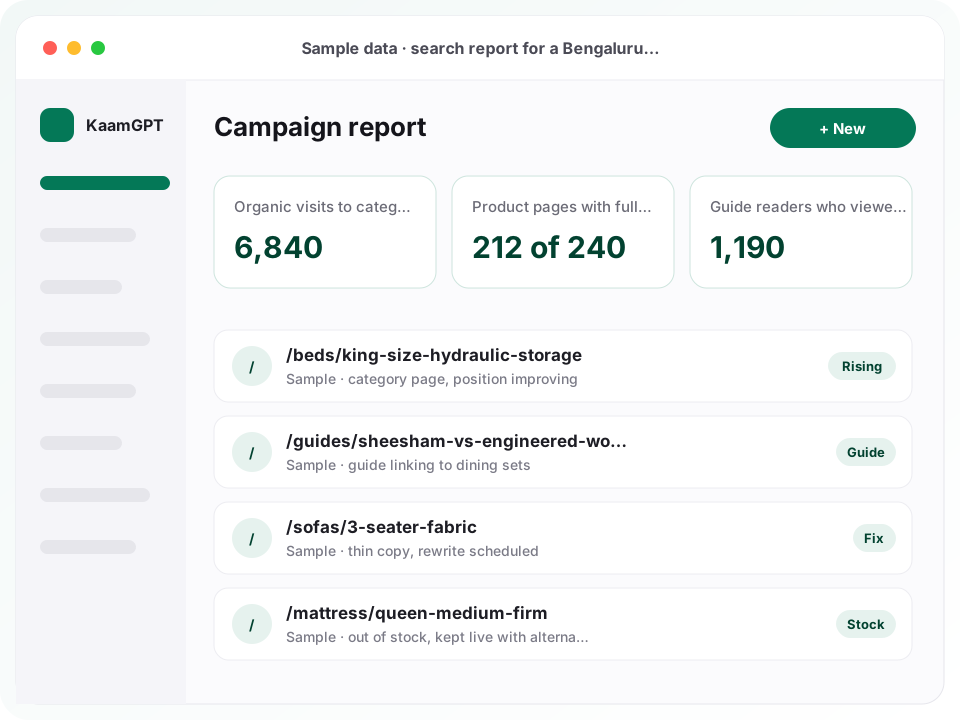
The map becomes a sequence. Fixes that unblock everything, such as broken links, duplicate pages and slow images, go first. Category pages for your best-selling pieces follow, then product page rewrites in batches, then guides. Each month you see which pages moved, which searches they now appear for, and how many of those visitors went on to book a visit, start a chat or place an order.
One page per real search, not per colour
A grey and a blue version of the same sofa share one page with a colour option. A three-seater and an L-shaped sofa get separate pages, because people search for them separately. That one rule clears up a lot of duplication on a typical catalogue.
Keep sold-out pages working
When a piece is temporarily out of stock, the page stays live, says so and suggests similar pieces. When it is discontinued for good, it is redirected to the closest category, so the links and rankings it earned are not thrown away.
Write with your own measurements and photos
Pages built from your tape measure and your camera, including the back of the sofa and the inside of the wardrobe, are original by nature. They also answer the doubts that make buyers leave for a marketplace.
Link guides to the pieces they discuss
A guide comparing sheesham, teak and engineered wood should link to the dining tables made of each. Readers move from learning to shopping in one click, and search engines understand which pages matter.
Answer Bengaluru-specific questions
Delivery to high-rise towers, lift sizes, weekday assembly, monsoon care and termite treatment are questions local buyers ask. Pages that answer them in plain words win searches that national catalogues rarely address.
Give each showroom its own page
A store with two or three showrooms needs a page for each, with the address, hours, parking, the ranges on that floor and directions from nearby landmarks. Those pages catch searches that name an area and give the map profiles a strong page to point to.
What do SEO and the related services cost?
An SEO plan for a furniture store starts at ₹14,999 a month. The scope document states how many pages are rewritten or created each month, what technical fixes are included and how reporting works, so you know what the fee buys. Catalogue size and the state of the current site decide where your plan sits above that entry level; see the full price list.
SEO
Recommended₹14,999/month
Typically 30 days
Stores with a real catalogue online whose category and product pages should bring steady visits without per-click costs.
- Technical audit
- Keyword research
- On-page optimisation
- Content plan
- Monthly reporting
Digital Marketing
₹19,999/month
Typically 15 days
Stores that want SEO as one strand of a managed plan with ads, maps and WhatsApp, under one team.
- Channel strategy
- Creative production
- Campaign management
- Weekly reporting
Local SEO
₹4,999/month
Typically 14 days
Showrooms where most buyers find the store on Google Maps and need accurate profiles and reviews at each address.
- Google Business Profile optimisation
- Local keyword map
- Location page on-page fixes
- Citation building and NAP cleanup
- Local link outreach
- Review replies and posts
- Monthly report
Google Ads
₹4,999/month
Typically 30 days
Stores that need visits now, while organic rankings build, with clicks paid directly to Google.
- Account setup
- Keyword strategy
- Ad copy testing
- Conversion tracking
- Bid optimisation
Meta Ads
₹4,999/month
Typically 30 days
Stores with strong room photography that want to reach households before they begin searching.
- Creative testing
- Audience building
- Retargeting funnels
- Pixel setup
- Weekly reporting
Lead Generation
₹24,999/month
Typically 14 days
Custom and modular makers whose sales begin with a consultation request rather than a product page.
- Verified leads
- Multi-channel outreach
- CRM integration
- Lead scoring
- Replacement guarantee
- Website rebuilds are quoted as a separate project from ₹9,999 when the current platform cannot support the structure SEO needs.
- Product photography is not included; we plan shot lists and can recommend what to shoot first.
| Package | Starts at | Timeline | Best for |
|---|---|---|---|
| SEO | ₹14,999/month | Typically 30 days | Stores with a real catalogue online whose category and product pages should bring steady visits without per-click costs. |
| Digital Marketing | ₹19,999/month | Typically 15 days | Stores that want SEO as one strand of a managed plan with ads, maps and WhatsApp, under one team. |
| Local SEO | ₹4,999/month | Typically 14 days | Showrooms where most buyers find the store on Google Maps and need accurate profiles and reviews at each address. |
| Google Ads | ₹4,999/month | Typically 30 days | Stores that need visits now, while organic rankings build, with clicks paid directly to Google. |
| Meta Ads | ₹4,999/month | Typically 30 days | Stores with strong room photography that want to reach households before they begin searching. |
| Lead Generation | ₹24,999/month | Typically 14 days | Custom and modular makers whose sales begin with a consultation request rather than a product page. |
What decides the cost of SEO for a furniture website?
Furniture SEO cost rises with catalogue size and with the amount of rewriting needed. A site of two hundred pieces with supplier copy on every page needs more writing hours than a site of forty custom projects with good original photography. Technical debt, such as a platform that creates a new URL for every filter, can also add work before any page can rank.
There is no media spend in SEO, which is its appeal. The cost is time: it usually takes months for rewritten pages to settle in results, and the gain compounds as more pages are fixed. Stores that also run ads often use paid campaigns to cover the months before organic visits grow.
A useful way to judge the fee is to compare it with what the same visits would cost as paid clicks. If the category pages we build start bringing buyers who would otherwise have come through ads, the plan is paying for itself; if they do not after a fair period, the monthly reports will show that plainly and you can change course. We would rather you judge us on that evidence than on promises.
- Number of products, categories and showrooms on the site.
- How much copy must be rewritten from scratch rather than edited.
- Platform limits, such as filter URLs, slow themes or missing structured data.
- Whether original photography exists or must be planned.
- How many buying guides and care articles you want each month.
- Competition for your categories, which is usually heavier for popular pieces such as sofas and mattresses than for niche ones.
Which furniture businesses gain most from SEO?
- Multi-brand showroomsLarge catalogues that need a clear category structure so hundreds of pieces do not compete with each other in search.
- Single-brand and franchise storesLocal store pages and original content alongside the brand site, so searches with an area name reach this showroom.
- Custom furniture makersProject pages and process guides that rank for made-to-measure searches, where no catalogue page could.
- Mattress storesComparison and sizing guides that capture the long research phase before a mattress purchase.
- Modular wardrobe and kitchen makersDesign and measurement content that ranks months before the buyer is ready to book a site visit.
- Office furniture dealersProduct and specification pages for chairs and workstations, searched by facility and admin teams comparing options.
- Vintage and second-hand dealersFast-changing stock where a well-built category and archive structure keeps traffic even as pieces sell.
What happens in the first months of furniture SEO?
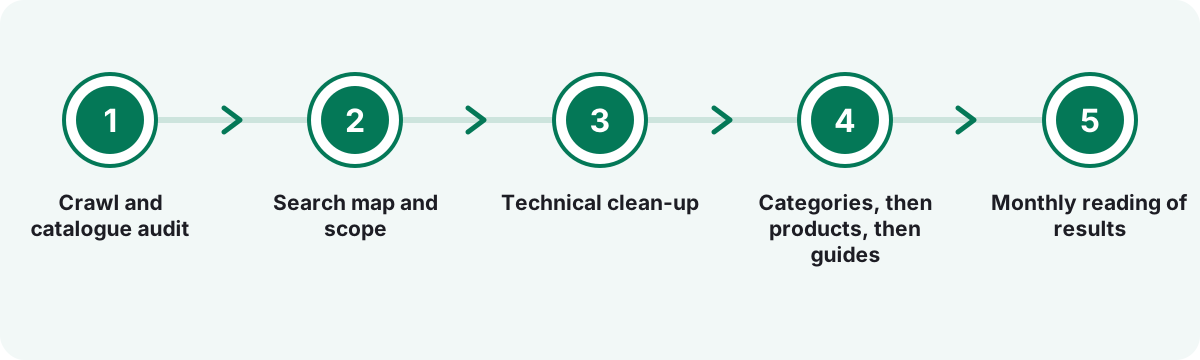
Crawl and catalogue audit
We crawl the site, list duplicate, thin and broken pages, check speed on a phone, and compare your product data with what your showroom tags and price lists say.
Search map and scope
We match buyer searches to the pages that should answer them, then agree a monthly scope of fixes, rewrites and new pages in writing before work begins.
Technical clean-up
Redirects for removed pieces, one URL per product with its options, compressed images, structured data and a clean sitemap, usually within the first thirty days.
Categories, then products, then guides
Best-selling categories are rewritten first, product pages follow in batches, and guides are added once the pages they link to are ready.
Monthly reading of results
A report of rankings, organic visits and the visits, chats and orders those pages produced, with the next month's page list attached.
Why do furniture stores choose KaamGPT for SEO?
We write from your floor
Copy is based on your pieces, measurements and photographs, gathered on video walk-throughs, not on supplier text or generic templates.
Rules built into the template
Our product page template includes the price break-up, delivery, return, warranty and seller details the E-Commerce Rules expect, so compliance is not an afterthought.
Search, answer and AI readiness together
Pages are written so that search results, answer boxes and AI assistants read the same clear facts about each piece and each showroom.
Developers in the same team
KaamGPT also builds websites, so speed, filters and structured data are fixed by the people who diagnose them, without a second vendor.
Plain reports
You see which pages moved and what they produced in visits and orders, explained in words a store owner can act on.
Which furniture searches can your own website realistically win?
Be realistic about the one-word searches. A query like sofa or bed is dominated by large marketplaces and national brands with enormous catalogues, and a single store will struggle to outrank them there. The opportunity sits one level down, in searches that carry a size, a material, a room, a style or a place.
Some examples of that shape: solid wood cot with drawers queen, recliner sofa 2 seater leatherette, study table for small bedroom with shelf, teak wood diwan cot, custom bookshelf made to measure bangalore, pocket spring vs foam mattress. These are illustrations of the pattern, not volume figures. Each one maps naturally to a category page or a guide, and each signals a buyer who has already narrowed down what they need.
Brand and area searches are the other easy win. People who saw your showroom or heard your name search for it with a piece or an area attached. Clean showroom pages and an accurate profile catch those searches; a site that buries its address in the footer loses them to directories.
- Size and configuration: queen, king, 3-seater, L-shaped, 6-seater.
- Material and finish: sheesham, teak, engineered wood, fabric, leatherette.
- Room and use: kids' room, study, balcony, small apartment.
- Questions: comparisons, care, measuring and delivery.
What do the E-Commerce Rules require on a furniture product page?
The Consumer Protection (E-Commerce) Rules, 2020 took effect on 23 July 2020 and apply to all goods sold over a digital network, including, in the rules' own words, multi-channel single brand retailers. A furniture store that sells or takes orders through its own site is likely to be an inventory e-commerce entity. If you sell through a marketplace as well, the marketplace rules for sellers apply to those listings.
Rule 7 asks an inventory entity to display, clearly and prominently, accurate information on returns, exchange, warranty, delivery and shipment, the cost of return shipping, payment methods and the grievance process, and the total price in a single figure with a break-up showing delivery, handling and tax. Rule 4 adds the legal name, address and customer-care contacts, a named grievance officer, importer details for imported goods, and a ban on recording consent through pre-ticked boxes.
We read these less as a burden than as a content brief. Every item on that list is a question furniture buyers already ask. A product page that answers all of them, in plain words and close to the price, serves the buyer better, and gives search engines more to work with, than one that sends the buyer hunting through a terms page. For packaged goods such as boxed mattresses, Legal Metrology declarations also apply, which our Google Ads page for furniture stores covers alongside price feeds.
- Total price with delivery, assembly and tax shown as one figure plus a break-up.
- Returns, exchange and warranty terms on the page, not only in the footer.
- Delivery area and timeline, and who assembles the piece.
- Seller name, address, grievance contact and, for imports, the importer and country of origin.
How should a furniture site handle stock, variants and discontinued pieces?
Furniture catalogues change constantly. Fabrics are swapped, finishes are discontinued and a popular bed sells out for six weeks. Each of those events can quietly damage search visibility if the site handles it badly, and each can be turned into an advantage if it is handled well.
Our rules are simple. Variants of the same piece live on one page with options. Temporarily unavailable pieces stay live, are marked as out of stock in both the page and the structured data, and suggest close alternatives. Permanently discontinued pieces redirect to the nearest category or successor model. New arrivals are linked from the category page on day one, so search engines find them quickly.
Google's documentation on product structured data separates pages where a purchase can happen, which can show merchant listing details such as shipping and return policy, from review-style pages. For a store that takes orders online, adding price in rupees, availability, shipping details and the return window to the product schema helps search results show what buyers need before they click.
What content builds trust for a furniture store online?
Furniture is a considered purchase, and buyers trust stores that teach them something. Guides that compare materials honestly, explain how to measure a doorway, set out what a mattress trial involves or show how to protect wood through a wet season do more for credibility than any slogan. They can also attract links from home-décor blogs and apartment association groups, which helps the whole site.
The test of a guide is whether it would still be useful if the reader never bought from you. That honesty is what makes people bookmark it and come back. It also keeps you on the right side of advertising codes: a guide that claims a mattress cures back pain, or that a finish lasts forever, makes promises the store cannot support.
We plan guides from the questions your staff answer most often on the floor and on WhatsApp. If the same question comes up every weekend, it deserves a page.
- Material comparisons with the store's own close-up photographs.
- Measuring guides for doorways, lifts and staircases.
- Care through Bengaluru's monsoon and dust.
- Plain explanations of delivery, assembly, returns and warranty.
Does furniture website SEO differ for showrooms, online stores and custom makers?
The principles stay the same, but the weight shifts. For a showroom-led store, furniture website seo is about pulling research traffic towards a visit: category pages that show what is on the floor, showroom pages that rank for area searches, and product pages that end with a booking link as well as a price. Success is measured in visits and chats as much as in online orders.
For a store that sells mostly online, the product page is the shop counter. Depth matters more: dimensions from every side, close-ups of joinery and fabric, delivery and assembly in the price, clear return terms, and structured data kept in step with stock. Category and filter design matter more too, because a large catalogue can easily create thousands of near-duplicate pages.
For a custom maker or a modular wardrobe business, there may be no catalogue at all. Here the pages that rank are projects and processes: a walk-in wardrobe built for a particular room shape, a dining table made from reclaimed teak, a step-by-step account of measurement, design approval, production and installation. Those pages answer the specific questions that made-to-measure buyers type, and they show the work rather than describing it.
- Showroom-led: category and showroom pages, booking links, area searches.
- Online-led: deep product pages, clean filters, accurate stock and schema.
- Made to order: project pages, process guides and consultation requests.
What keeps furniture websites off the first page?
When we audit furniture sites, the same few patterns explain most of the missing traffic. Few of them are about keywords.
None of these needs a bigger budget to fix. They need a clear structure, original writing and someone who checks the site every month as stock changes, which is the routine work an SEO plan pays for.
- Product descriptions copied from the supplier or a marketplace listing, so the page is a near-duplicate of dozens of others and gives search engines no reason to prefer it.
- Every colour and size published as its own thin page, splitting the signals that one good page would have gathered.
- Pieces deleted the day they sell out, leaving broken links, lost rankings and visitors who land on an error.
- Heavy, uncompressed photographs that make category pages slow on a phone, which is where many shoppers browse furniture.
- No prices, or prices without delivery and assembly, so buyers bounce back to a marketplace that shows the full cost.
- SEO plan entry price
- ₹14,999 monthly, first fixes in about 30 days
- E-Commerce Rules in force
- 23 July 2020, covering multi-channel single-brand retailers
- Price display online
- Total price in one figure, with delivery, handling and tax broken up
- Pages we build
- Category, product, showroom and buying-guide pages
- Website rebuilds
- Quoted separately, projects from ₹9,999
- Who does the work
- KaamGPT's Bengaluru writers, SEO staff and developers
Where this applies around Bengaluru, Karnataka
- Bengaluru
- JP Nagar
- Banashankari
- Basavanagudi
- Malleshwaram
- Rajajinagar
- Karnataka
- India
Frequently asked questions
29 answersWhat does an SEO company for furniture stores in Bangalore change on our website?
Mostly structure and pages. It decides which category, size, material and room pages should exist, rewrites thin product pages with original copy and full terms, fixes speed, duplicates and broken links, adds structured data, and publishes guides. KaamGPT does all of this from a monthly page plan agreed in writing.
How much does SEO cost for a furniture store in Bengaluru?
KaamGPT's SEO plans begin at ₹14,999 a month. Where a plan sits above that depends on how many products you list, how much copy needs rewriting and how much technical clean-up the site needs. There is no media spend, so the fee is the whole monthly cost.
How long does it take for a furniture website to rank better?
Technical fixes and the first rewritten pages usually go live within about thirty days. Search engines then take weeks to months to re-assess them, and gains build as more pages are fixed. Most furniture stores should expect a clearer trend after three to six months, not overnight jumps.
Can a local furniture store really outrank big marketplaces?
Not for one-word searches like sofa or mattress, and we will not pretend otherwise. A store can win specific searches that carry a size, material, room or area, and searches for its own name. Those are often closer to a purchase, which is why they matter more than raw traffic.
Should we copy product descriptions from our suppliers?
No. Supplier copy is published on many other sites, so your page adds nothing new and has little reason to rank. Original descriptions written from your own measurements, photographs and floor knowledge are one of the most useful changes a furniture site can make.
Do we need a separate page for every colour of a sofa?
Usually not. Colours and fabrics of the same model belong on one page with options, so that the signals from links and visits are not split. Different configurations that people search for separately, such as a three-seater and an L-shaped sofa, deserve their own furniture category pages.
What should happen to a product page when a piece sells out?
If it is coming back, keep the page live, mark it out of stock and suggest similar pieces. If it is gone for good, redirect it to the closest category or the newer model. Deleting pages leaves broken links and throws away rankings the furniture page had earned.
Does product schema help a furniture store in search results?
It helps search engines read the price, currency, availability, shipping and return details reliably. Google's product structured data documentation describes merchant listing details for pages where a purchase can happen. Rich results are never certain, but missing or wrong data removes the chance.
Are prices on our website subject to any rules?
If you sell online, the E-Commerce Rules ask for the total price in one figure with a break-up of delivery and other charges, plus return, exchange, warranty and delivery details. For pre-packed items such as boxed mattresses, Legal Metrology declarations including MRP inclusive of all taxes also apply.
What is the best SEO company for furniture stores in Bengaluru likely to check first?
Whether the site can be crawled cleanly, whether each product has one page, how fast category pages load on a phone, whether prices and terms are shown, and which searches already bring visits. Those five checks usually explain most of the gap before any keyword research begins.
Should a furniture store write a blog?
Write guides rather than a diary. Pages that answer buyers' questions, such as comparing woods, measuring for a sofa, choosing mattress firmness or caring for furniture in the monsoon, attract readers who are planning a purchase and link naturally to your products. News about the store rarely earns search traffic.
What belongs in a mattress buying guide?
Sizes in inches and centimetres, how firmness and materials differ, what a trial period involves, how to measure your cot, delivery and disposal of the old mattress, and care. It should avoid medical claims. A clear mattress buying guide also helps your store's staff answer questions consistently.
Will SEO help our showroom get more walk-ins?
Yes, when showroom pages and the map profile are part of the work. A page for each showroom with address, hours, parking and the ranges on display, linked to its Google profile, catches searches that include an area name. See <a href="/services/local-seo">Local SEO</a> for deeper map work across several furniture showrooms.
Can SEO and Google Ads work together for a furniture store?
They should. Ad search terms show which phrases buy, which tells us which pages to build; organic pages lower your dependence on paid clicks over time. Many furniture stores run <a href="/services/google-ads">Google Ads</a> while SEO builds, then shift budget as organic visits grow.
Do you need access to our website and Search Console?
Yes. We ask for Search Console and analytics access, and either editor access to the website or a developer contact. The accounts stay in your name. Without data from your own site, any furniture SEO plan is guesswork based on tools that estimate rather than measure.
Do you write content in Kannada as well as English?
We can plan Kannada pages where your buyers search in Kannada, for example for showrooms serving older neighbourhoods. Product and material names are usually written in English on furniture sites, so we would usually start in English and add Kannada pages where there is a clear reason.
How do you measure whether furniture SEO is working?
By organic visits to category and product pages, the searches those pages appear for, and what visitors then do: book a showroom visit, start a WhatsApp chat or place an order. Rankings alone can mislead, so every monthly report ties them to actions that matter to a store.
Can you do SEO for a custom furniture maker without a catalogue?
Yes. Instead of product pages we build project pages, each with photographs, measurements, materials and the brief, plus guides on the process and timelines. Searches for made-to-measure work in Bengaluru are often specific, so detailed project pages can rank where a catalogue never would.
Is SEO worth it for a single small furniture shop?
It can be, if the shop has an online catalogue or a clear speciality. A small store selling cane furniture or teak cots can rank for those specific searches. If you only need people to find the shop, local map work at a lower monthly cost may be the better first step.
How can we contact KaamGPT about SEO for our furniture website?
Call or message +91 79767 82366 with your website address and your best-selling categories. We will run a crawl, share the main issues on a short online call and send a scope with the monthly page plan and its price, so you can compare it with any other seo company for furniture stores in Bangalore.
Will AI assistants pick up our furniture store's pages?
No one can promise that, but clear pages help. AI assistants and answer boxes draw on pages that state facts plainly: what a piece is, its size, its price, where it can be seen and how delivery works. The same clarity that helps search engines helps them, and we write furniture pages with that in mind.
Should our product pages show the price if we prefer buyers to visit?
We recommend showing it. Buyers in Bengaluru compare prices across tabs before they drive anywhere, and a page without a price often loses them to one that has it. A clear price with delivery included, plus an invitation to see the piece, tends to bring better-prepared visitors to the showroom.
What do you need from our showroom team for SEO?
A walk-through on video, the questions customers ask most, the measurements and materials for each piece, and someone who can confirm prices and stock each month. An hour a month from the floor team makes our furniture copy far more accurate than anything written from a desk.
How is SEO different from the managed digital marketing plan?
SEO focuses on your website's pages and how they rank without paying per click. The managed plan joins SEO with ads, maps, social and WhatsApp under one calendar. The <a href="/best-digital-marketing-agency-for-furniture-stores-in-bengaluru">digital marketing page for furniture stores</a> describes that wider plan.
Can you fix a furniture site built on Shopify or WooCommerce?
Yes. Both platforms can handle variants, redirects and structured data well when set up properly. The common problems are filter pages being indexed, apps slowing the site and themes that hide product details in tabs. We fix those inside the platform you already use where possible.
Does a seo company for furniture stores in Bangalore need to understand the city?
It helps. Questions about high-rise delivery, lift sizes, monsoon care, weekend assembly and which areas a store serves are local. Pages that answer them win searches a national catalogue rarely addresses, and they read as written by someone who knows how furniture is bought in Bengaluru.
Which pages on a furniture site usually bring the most search visits?
Category pages for specific pieces and sizes, and well-written guides, tend to gather the most organic visits, because they match how people search. Individual product pages rank for exact model names and very specific queries. Showroom pages bring fewer visits, but those visitors are often ready to drive over.
Can SEO help a furniture store sell more mattresses?
Mattress buyers research heavily, so content helps: size and firmness guides, honest comparisons of foam, spring and hybrid builds, clear trial and delivery terms, and pages for each size. Avoid claims about curing back pain or other health outcomes, which advertising codes require you to substantiate and which most stores cannot.
How many new pages will you add to our furniture site each month?
It depends on the plan and on what the audit finds. Early months often focus on fixing and rewriting existing furniture pages rather than adding new ones, because a few strong pages serve buyers better than many thin ones. The monthly page list is written into the scope so you always know the number.