The best SEO company for logistics companies in Bengaluru should understand that your buyers research before they trust anyone with their goods. A family checks what shifting from Bellandur to Pune should cost and whether movers are liable for a broken television; a procurement manager compares storage options on Tumkur Road against the airport side before sending a single RFQ.
Most of those research searches are answered today by moving marketplaces, directories and freight portals, not by the operators who actually do the work. KaamGPT's SEO service builds pages for the routes, lanes, destinations and facilities you genuinely run, explains the paperwork in plain language, and fixes the technical problems that keep quote and tracking pages out of Google's index.
- ₹14,999opening monthly SEO retainer; how many routes and how big the site is decide the rest
- ~30 daysuntil the first technical fixes and priority pages are published
- 1 pageper real route, lane, destination or facility, never a copy with the city name swapped
- 4 sectionsof the Carriage by Road Act most worth explaining to customers: 3, 8, 9 and 10
What do logistics buyers in Bengaluru search for before they call anyone?
Household customers research in a predictable order. First the cost, through queries such as house shifting charges bellandur to pune or 2bhk moving cost within bangalore. Then the risk: are packers and movers responsible for damage, transit insurance for household goods, how to check if movers are genuine. Only then do they search a company's name, often with words like reviews or complaint added. A firm that shows up at the cost and risk stages has usually earned some confidence before its name is ever typed.
Business buyers research by requirement and place. A brand's supply chain team types bonded warehouse near bangalore airport, ambient storage tumkur road 30000 sq ft, ftl rates bangalore to mumbai 32 ft container or 3pl with wms integration bangalore. Freight forwarders see searches like air cargo to dubai from bangalore. These queries are specific, so a page that matches the specifics, size, corridor, vehicle type and systems, can beat a much bigger portal that only lists names.
The corridors that business searches mention are the city's exits. Tumkur Road carries the Peenya industrial area and runs on as NH 48 through Nelamangala and Dobbaspet. The airport side covers Devanahalli and, to the east, Hoskote on the Old Madras Road. Hosur Road leads past Electronic City to Bommasandra, Jigani and Attibele. Doddaballapura sits on NH 648, the Dabaspete to Hosur highway, near the site of a planned multi-modal logistics park. Each corridor deserves its own page only if you actually operate there.
Which SEO work does a logistics website need?
Logistics SEO is mostly about matching pages to the real shape of your business. The list below is what we normally do; the audit decides the order.
Route and lane pages with real detail
Each page covers one route or lane you actually serve, with typical transit times, vehicle types, what affects the price, the paperwork involved and photos from real jobs. These route pages for movers and transporters are planned from your booking history, not from a list of every city in India. Details sit on our SEO service page.
SEO in detail →Guides that answer the paperwork questions
Short, accurate guides on the goods receipt, the forwarding note and its declared value, how carrier liability works, what transit insurance covers and how to read a moving quote. They attract early-stage research searches and give nervous buyers a reason to trust you.
SEO in detail →Warehouse listing pages that answer an RFQ
For storage businesses, warehouse listing pages carry what a buyer's checklist asks: corridor, distance to the highway, built-up area, clear height, docks, racking, temperature range, certifications, systems and services. One facility, one page, kept current as space fills.
SEO in detail →Technical fixes for quote and tracking tools
We make sure quote forms and tracking pages load quickly on phones, do not spawn thousands of duplicate URLs, and carry structured data for your organisation, services and locations, so search engines understand the site rather than guessing.
Websites in detail →Website and Maps telling one story
The name, address, phone and services on your website should match your Google Business Profile exactly. Our local SEO guide for logistics firms covers the Maps side; on this page the website is the focus.
Google Business Profile in detail →Pages written for AI answers as well
People now ask AI assistants which mover or 3PL to use. Clear facts about who you are, where you operate, what you charge for and how you handle damage claims, written in plain sentences, make it easier for those systems to describe your firm accurately.
SEO in detail →Paid search data to pick the pages
If you run Google Ads, the search terms report shows which routes and services people actually pay attention to. We use that to decide which pages to build next, so SEO effort follows demand you can already see.
Google Ads in detail →How does the best SEO company for logistics companies in Bengaluru choose which pages to build?
We start from your operations, not from a keyword tool. Which routes did you run most last year? Which lanes have spare capacity? Which facility has empty pallet positions? A page for a lane you rarely serve can rank and still lose money, because every enquiry it brings is one you will decline or overprice.
Then we look at what searchers want on each topic and who currently ranks. Where marketplaces dominate a broad query such as movers in Bangalore, we aim lower in the funnel and more specific, for example a route with a vehicle type, or a corridor with a size of space. Where nobody answers a question well, such as how declared value affects a claim, we write the best answer we can and keep it updated.
Finally, we agree who in your team checks facts. A route page that promises a three-day transit your drivers cannot meet, or a facility page listing space that was let last month, damages trust faster than it builds traffic. One named reviewer in operations, and a quick monthly check of the pages that state numbers, keeps the site honest as the business changes.
Start with the money lanes
The first ten pages go to the routes, destinations or facilities that already earn most of your revenue, so early rankings turn into work you want.
Prove each page is real
Every route or facility page carries something only you could write: photos from actual jobs, typical transit days, the vehicle you use, the docks at that warehouse or a local landmark drivers use.
Link guides to services
A guide on goods receipts links to the route pages; the route pages link to the quote form. Readers who arrive confused leave knowing what to do next and whom to ask.
Earn links from the trade
Mentions from industry associations, the brands you serve, local business news and supplier pages carry more weight for a logistics site than any number of generic directory links, and they also send real visitors.
Keep tracking pages out of the index
Individual shipment pages should not be indexed. We keep one strong tracking landing page and stop thousands of near-empty URLs from diluting the site.
Answer the questions sales hears
Your sales and dispatch staff hear the same questions every week, about claims, packing, timings and documents. We collect them monthly and turn the recurring ones into short answers on the relevant pages.
How is SEO priced for a logistics business?
Logistics SEO retainers at KaamGPT open at ₹14,999 per month, and the first fixes and pages normally appear within about a month. The number of routes, lanes and facilities, the state of the current site and how much content needs writing decide where the scope settles, and all of it is written into the quote you approve.
SEO
Recommended₹14,999/month
Typically 30 days
Movers, couriers, transporters and 3PL firms that want lasting traffic from route, lane, destination and facility searches.
- Technical audit
- Keyword research
- On-page optimisation
- Content plan
- Monthly reporting
Digital Marketing
₹19,999/month
Typically 15 days
Firms that want SEO alongside ads, social and WhatsApp, run as one plan for both household and business enquiries.
- Channel strategy
- Creative production
- Campaign management
- Weekly reporting
Local SEO
₹4,999/month
Typically 14 days
Logistics businesses with real counters, offices or warehouses that need to appear on Google Maps for nearby searches.
- Google Business Profile optimisation
- Local keyword map
- Location page on-page fixes
- Citation building and NAP cleanup
- Local link outreach
- Review replies and posts
- Monthly report
Google Ads
₹4,999/month
Typically 30 days
Operators who cannot wait months for rankings and need quote requests from paid search during the peak season.
- Account setup
- Keyword strategy
- Ad copy testing
- Conversion tracking
- Bid optimisation
Meta Ads
₹4,999/month
Typically 30 days
Movers and couriers who want people to recognise their brand before they ever search for it.
- Creative testing
- Audience building
- Retargeting funnels
- Pixel setup
- Weekly reporting
Lead Generation
₹24,999/month
Typically 14 days
B2B logistics firms that want qualified RFQs delivered to sales, with SEO pages feeding part of the pipeline.
- Verified leads
- Multi-channel outreach
- CRM integration
- Lead scoring
- Replacement guarantee
- Entry prices for each KaamGPT service are on the pricing page; a logistics SEO scope adds the specific page list.
- Writing for route pages and guides is listed in the scope you approve; photos and facility facts come from your own team.
| Package | Starts at | Timeline | Best for |
|---|---|---|---|
| SEO | ₹14,999/month | Typically 30 days | Movers, couriers, transporters and 3PL firms that want lasting traffic from route, lane, destination and facility searches. |
| Digital Marketing | ₹19,999/month | Typically 15 days | Firms that want SEO alongside ads, social and WhatsApp, run as one plan for both household and business enquiries. |
| Local SEO | ₹4,999/month | Typically 14 days | Logistics businesses with real counters, offices or warehouses that need to appear on Google Maps for nearby searches. |
| Google Ads | ₹4,999/month | Typically 30 days | Operators who cannot wait months for rankings and need quote requests from paid search during the peak season. |
| Meta Ads | ₹4,999/month | Typically 30 days | Movers and couriers who want people to recognise their brand before they ever search for it. |
| Lead Generation | ₹24,999/month | Typically 14 days | B2B logistics firms that want qualified RFQs delivered to sales, with SEO pages feeding part of the pipeline. |
What makes logistics SEO cost more or less?
A movers firm serving Bengaluru and five intercity routes needs a modest site and a steady stream of guides. A 3PL with four facilities, twenty lanes and an international courier arm needs far more pages, more technical care and more coordination with operations, because every page must stay true as capacity changes.
Competition also varies by query. Broad consumer searches for movers face heavy marketplace competition and take longer. Specific B2B searches by corridor and requirement are often far less contested. A sensible SEO company for logistics companies in Bangalore will tell you which of your targets are realistic in months and which may take a year.
- How many routes, lanes, destinations and facilities need their own page.
- Whether the current site is technically sound or needs rebuilding.
- How much of the content your team can supply, such as photos and facility data.
- How competitive your main searches are against marketplaces and portals.
- Whether tracking and quote tools need engineering work to stop index bloat.
- Languages: whether Kannada, Hindi or Tamil pages are needed for some customers.
Which logistics businesses gain most from search?
- Intercity packers and moversRoute searches with clear costs and liability explanations bring buyers who have already done their homework.
- Local house-shifting firmsLocality and building-type pages, such as high-rise moves without a service lift, match the way tenants describe their problem.
- International couriersOne page per destination country, with documents, prohibited items and typical delivery days, answers the questions senders type.
- Part-load and FTL transportersLane pages with vehicle types and loading points reach traders and factories who book by route.
- Warehousing and 3PL providersFacility pages by corridor reach supply chain teams who search for size, location and services before they ever call.
- Vehicle transport servicesPages explaining car carriers, bike packing and paperwork help a genuine operator stand apart from look-alike sites.
- Freight forwardersCountry and commodity pages on air and sea freight reach importers and exporters planning shipments from Bengaluru.
- Cold chain and pharma logisticsPages that state temperature ranges, monitoring and handling standards reach buyers who cannot afford a vague answer.
What are the stages of a logistics SEO engagement?
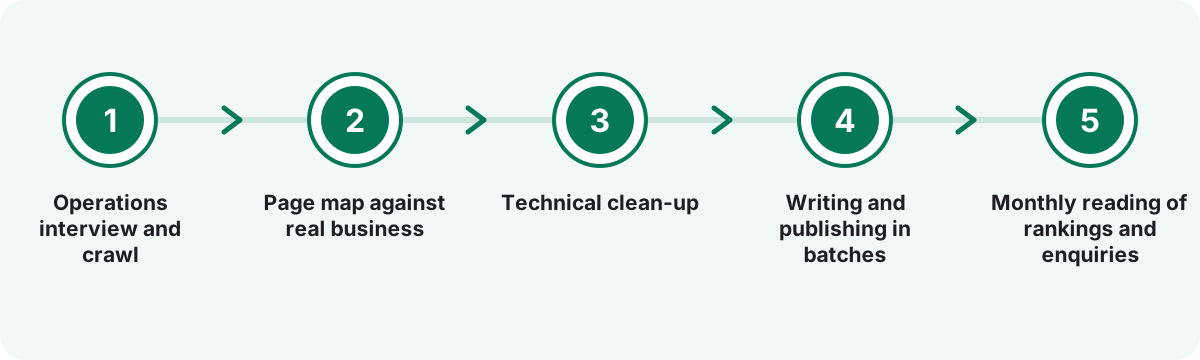
Operations interview and crawl
We learn which routes, lanes and facilities make money, then crawl the site to find broken pages, duplicate URLs, slow templates and missing basics such as titles and structured data.
Page map against real business
Every planned page is tied to a service you deliver and a search people make. Pages for lanes you rarely run are dropped, however tempting their search interest looks.
Technical clean-up
Quote forms, tracking tools and image-heavy galleries are fixed so phones load them quickly and search engines index only what deserves indexing.
Writing and publishing in batches
Route, facility and guide pages go live in small batches with your team's photos and facts, so each one is checked by someone who knows the operation before it is published.
Monthly reading of rankings and enquiries
We report positions for the pages that matter, organic quote requests and calls, and which pages produced them, then adjust the next batch accordingly.
Why trust KaamGPT with logistics search?
Courier area pages already built
For FlyMyCart we built area-by-area courier landing pages across Bengaluru as part of its SEO, alongside its apps and website; the FlyMyCart case study lists the work.
Local courier SEO in Banaswadi
For Globe Courier we built a quote-first site with domestic and international service pages, local landing pages and technical SEO, set out in the Globe Courier case study.
No doorway shortcuts
We will not mass-produce route pages with the city name swapped. Every page we publish has to justify itself to a reader, which is also what Google's spam policies ask for.
SEO, AEO and GEO together
Route, facility and policy facts are phrased so a results page, a featured answer and an AI assistant would each describe your firm identically.
Reporting tied to enquiries
Rankings are a means, not the goal, and any SEO company for logistics companies in Bangalore should say so. Reports connect pages to quote requests and calls, so you can judge SEO the way you judge a salesperson.
Honest about timelines
We tell you which searches are realistic within months and which belong to the long game, and we suggest paid search where waiting would cost you a season of bookings.
What does the Carriage by Road Act mean for a logistics website?
The Carriage by Road Act, 2007 regulates common carriers, and its definition is wide, covering contractors, agents, brokers, goods booking firms and door-to-door courier agencies alike. Section 3 says nobody may run such a business without a certificate of registration. For SEO this is useful rather than burdensome, because buyers increasingly search for ways to check a mover, and a page that shows your registration and explains what it means answers that search directly.
Sections 8 to 11 describe the paperwork that buyers worry about. The consignor signs a goods forwarding note that declares the value of the goods. The carrier issues a goods receipt in triplicate, which is prima facie evidence of weight, measure and number of packages. Section 10 limits the carrier's liability for loss or damage to a prescribed amount unless the consignor pays a higher risk rate, and section 11 says that rate must be shown in a printed or written notice in English and the State's language.
Plain-language guides on each of these documents tend to attract exactly the cautious, serious buyer you want. They should be accurate, avoid legal advice, link to the Act itself and say clearly what your own firm does: which documents you issue, how declared value is recorded and how a damage claim is handled.
How many route and area pages are too many?
Google's spam policies describe doorway abuse with an example that fits the moving trade uncomfortably well: many pages targeted at specific regions or cities that funnel users to one page. A movers site with three hundred city pages that differ only by the city name is the textbook case, and scaled content abuse covers pages generated mainly to manipulate rankings.
The test we apply is simple. Would a reader planning that exact move learn something from this page that they could not learn from the page next to it? Transit days, the highway taken, typical vehicle size, the cost drivers for that distance, toll and state-entry notes, photos from that route and real questions customers asked all make a page earn its place. Where you only have generic information, one good national page is better than fifty thin ones.
Area pages inside Bengaluru follow the same logic. FlyMyCart's courier landing pages across Bengaluru areas, which we built, work because pickup coverage genuinely differs by area. A page for a locality you do not serve is a liability, not an asset.
- Transit days and the highway or rail route actually used.
- Vehicle sizes offered and when a shared load makes sense.
- Cost drivers for that distance, from tolls to floor charges.
- Photos and short notes from moves completed on that route.
How should a warehouse or 3PL page be written to rank and convert?
Supply chain teams compare facilities with a checklist, so the page should be that checklist answered. Start with the corridor and the roads: a facility off NH 48 near Nelamangala serves north Karnataka and the Mumbai lane differently from one near Hoskote on the eastern side or one off Hosur Road near Attibele. Then give the physical facts and the operational ones, including systems, integrations, working hours, security and the brands or sectors you are set up for, without naming clients who have not agreed.
Market reports describe the Hoskote and Devanahalli side, close to the airport, and the Hosur Road side as busy warehousing clusters, with the Tumkur Road belt also important. Those general trends are context; your page should be specific to your own space. Update it as space fills or frees up, because a buyer who calls about space that has gone remembers it.
- Location: corridor, nearest highway junction, distance to the airport or rail yard.
- Building: built-up area, clear height, docks, floor load, racking or bulk storage.
- Conditions: ambient, temperature-controlled or bonded, plus fire and safety approvals.
- Operations: WMS, integrations with marketplaces, pick-pack, returns and working hours.
What structured data and technical basics does a logistics site need?
Search engines read structure as well as words. A logistics website should describe the organisation once, with its registered name, logo, contact details and social profiles, and describe each location that customers can visit with its own address and opening hours. Service pages can say which areas or lanes they cover. None of this guarantees a richer listing, but it removes ambiguity about who you are, which matters in a trade where look-alike names are common.
The technical basics are less glamorous and matter more. Pages must load quickly on a mid-range phone over mobile data, the quote form must work without a desktop, and old URLs from a previous site must redirect to their new equivalents rather than vanish. Many movers' websites lose years of accumulated search value in a redesign because nobody mapped the old addresses to the new ones.
- Organisation and local business markup that matches the Maps profile exactly.
- One canonical URL for each route, facility and guide, with no near-duplicates.
- Redirect maps for every redesign, checked before the old site goes offline.
- Image compression and lazy loading for truck, crew and warehouse galleries.
Can a logistics firm really outrank the moving marketplaces?
Not on every query, and anyone who promises otherwise is guessing. Marketplaces publish at a scale no single operator can match, and on broad searches they will often stay on top. The realistic goal is different: own your brand searches completely, win the specific route, lane, facility and question searches where a real operator has better information, and appear in the local results where your own premises are.
That mix tends to bring buyers who are further along and less price-shopping, because they arrived by searching for something only a specialist would answer. Logistics SEO built this way also keeps paying when ad budgets are paused, which is why we usually suggest it alongside paid search rather than instead of it.
There is also a defensive reason to invest. When someone searches your company name with words like complaint, fraud or genuine, the results they see shape the sale. A clear About page, your registration details, a claims process written in plain words and answered reviews give that searcher something solid to read beside whatever forum thread appears, and that often decides whether they call.
Why do logistics websites struggle to rank on their own?
The obstacles are rarely mysterious. Logistics sites are often built once, by a vendor who has never seen a goods receipt, and then left alone while marketplaces publish thousands of pages a month.
- Directories and moving marketplaces own the generic searches, because they have more pages, more reviews and more links than any single operator.
- Many movers' sites copy one page and swap the city name for fifty routes, which Google's spam policies call doorway abuse and which rarely ranks for long.
- Nobody explains the paperwork, so the questions buyers worry about most, liability, declared value, insurance and the goods receipt, are answered by strangers on forums.
- Tracking and quote tools are built in ways search engines cannot read, so the most useful pages on the site are invisible or produce thousands of thin duplicate URLs.
- Look-alike sites using similar names confuse both buyers and Google about which business is real, splitting brand searches between the genuine firm and copies.
- SEO starting price
- ₹14,999 a month, scoped in writing
- First changes live
- Around 30 days after kickoff
- Page rule
- One page per real route, lane, destination or facility; no city-swapped copies
- Law explained on-site
- Carriage by Road Act, 2007: registration, forwarding note, goods receipt, liability
- Search policy followed
- Google spam policies on doorway abuse and scaled content abuse
- Prior courier SEO
- Area-by-area courier pages for FlyMyCart; local pages for Globe Courier, Banaswadi
Where this applies around Bengaluru, Karnataka
- Bengaluru
- Karnataka
- India
- Dasarahalli
- Doddaballapur
- Marathahalli
- Bellandur
- Kalyan Nagar
Frequently asked questions
28 answersWhat does an SEO company for logistics companies in Bangalore typically charge?
KaamGPT's SEO work for logistics firms opens at ₹14,999 a month. The scope grows with the number of routes, lanes and facilities that need pages, the condition of the current site and how much writing is involved. You see the page list and the monthly tasks in a written scope before anything begins.
How long before logistics SEO starts bringing quote requests?
Technical fixes and the first priority pages usually go live within about 30 days. Specific searches, such as a lane with a vehicle type or a warehouse by corridor, can start bringing enquiries within a few months. Broad consumer searches against marketplaces take longer, and some may never be worth chasing for a logistics firm.
Are route pages for movers treated as doorway pages by Google?
They can be. Google's spam policies give the example of many pages targeted at different cities that funnel users to one page. Route pages are fine when each one carries genuinely different information, such as transit days, highway, vehicle size, cost drivers and real photos. Fifty copies with only the city name changed are the risky kind.
How many city-to-city pages should a packers and movers website have?
As many as you have routes you genuinely serve and can describe properly, and no more. For most Bengaluru movers that is a handful of busy intercity routes, such as Hyderabad, Chennai, Pune and Mumbai, plus one strong page for everything else. Packers and movers SEO works better with fewer, richer pages than with hundreds of thin ones.
What should packers and movers SEO fix first?
Usually three things: a homepage and service pages that clearly say who you are and where you operate, a quote form that works well on a phone, and a consistent business name across the site and Maps. After that come route pages for your busiest moves and guides on liability and insurance, which buyers search for before choosing a mover.
How is courier website SEO different from SEO for movers?
Courier website SEO revolves around destinations and items: one page per country or region you ship to, with documents, prohibited items, typical days and how to book a pickup. Searches repeat across the year with peaks before festivals. Movers depend more on route pages and trust content, because each customer makes one large decision rather than many small ones.
Should a logistics website explain the Carriage by Road Act?
A short, accurate explanation helps buyers and search visibility alike. The Act requires every common carrier, a term wide enough to cover couriers and booking agents, to be registered, and sets out the goods forwarding note, the goods receipt and how liability is limited. Explain what each document means for the customer and what your firm issues, and link to the Act rather than giving legal advice.
Should a logistics firm publish its registration details online?
If you hold a certificate of registration as a common carrier, showing the details, or an image with sensitive data hidden, is one of the strongest trust signals you can put on a page. Buyers worried about fake movers look for exactly that, and it helps search engines and AI assistants confirm that your business is real.
Can SEO help a warehouse near Nelamangala or Hoskote find clients?
Yes, if each facility has its own detailed page. Supply chain teams search by corridor and requirement, so a page that states location, built-up area, clear height, docks, storage type and services can reach them directly. We also mark up the page so search engines understand the address and services, and keep it updated as space fills.
Do shipment tracking pages help or hurt a logistics site's SEO?
A single, fast tracking landing page helps, because people search for your name plus tracking. Thousands of individual shipment pages in the index hurt, because they are thin and nearly identical. We keep one indexable tracking page, block the individual results from indexing and make sure the tool itself loads quickly on phones.
Should a logistics company bother writing blog posts?
Only posts that answer real questions. A guide to reading a goods receipt, what affects intercity moving costs from Bengaluru or how to prepare goods for a long-haul part load will be read and searched for. Generic posts about the importance of logistics will not. Each guide should link to the service or route page it relates to.
Can SEO put a logistics firm above the big directories?
Sometimes, on specific searches; rarely on the broadest ones. Directories and marketplaces have enormous scale, so the better aim is to own your brand searches, the route and facility searches where your information is better, and the Maps results near your premises. Nobody can honestly promise a position above a particular site.
Does a logistics website in Bengaluru need pages in Kannada or Hindi?
It depends on who books. Many household customers search in English, but drivers, traders and some small businesses prefer Kannada, Hindi or Tamil. If a meaningful share of your calls happen in another language, a few key pages in that language, properly translated rather than machine-copied, can be worth it. We decide this from your enquiry records.
How does SEO work with Google Ads for a logistics firm?
Paid search brings enquiries now, while SEO builds traffic that keeps coming without a per-click cost. Ads data also shows which routes and services people actually respond to, which tells us which pages to build. Our <a href="/best-google-ads-agency-for-logistics-companies-in-bengaluru">Google Ads page for logistics firms</a> covers that side, and <a href="/services/google-ads">Google Ads management</a> is priced separately.
What should a logistics company do about look-alike websites using its name?
Make your genuine identity unmistakable: one consistent business name, your registration details, a stable phone number and address, and an About page explaining who runs the firm. Report clear impersonation through Google's own channels and, where needed, take legal advice. Strong brand pages and an accurate Maps listing usually push copies down for searches of your name.
Is SEO worthwhile for B2B 3PL firms, or only for movers?
It is often more valuable for 3PL and warehousing firms, because their contracts are large and their buyers research thoroughly before contacting anyone. A handful of well-built facility, capability and lane pages can bring a few serious RFQs a year, and one signed contract can outweigh months of household enquiries for a logistics business.
Who writes the content, KaamGPT or the logistics firm?
Our team drafts the pages, and yours supplies what only it knows: routes and transit days, facility specifications, photos from real jobs and the way you handle claims. Every page is checked by someone in your operations team before publishing, because a wrong transit time or capacity figure costs more trust than it earns traffic.
How will you report SEO progress to a logistics business?
Each month we show positions for the searches that matter, organic visits to route, facility and guide pages, and the quote requests and calls those pages produced. We also list what was published and fixed, and what comes next. Rankings without enquiries are flagged honestly, so you can see what is and is not working.
Can SEO help a logistics firm appear in answers from AI assistants?
It can make an accurate mention more likely, but nobody controls what an assistant says. Assistants draw on clear, consistent public facts, so we make sure your site states who you are, where you operate, what you move or store and how you handle claims in plain sentences, and that listings elsewhere agree with it.
Which pages should a freight forwarder in Bengaluru build first?
Start with the countries and services that bring most of your revenue, such as air freight to the Gulf or sea freight through Chennai, then a page on customs documentation and one on the commodities you specialise in. Forwarders often win business from manufacturers and exporters around Bengaluru who search by country and product rather than by company name.
Can a mover's website talk about transit insurance?
Yes, carefully. Explain what cover you can arrange, through which kind of insurer, what it typically excludes and how declared value affects a claim, without calling anything guaranteed or fully protected. Wording that overstates cover invites disputes and complaints, while a plain explanation answers a question many cautious buyers search for before booking.
Where do useful backlinks come from for a logistics website?
From the places your business genuinely appears: trade associations, the brands and manufacturers you serve if they agree to mention you, local business news, supplier and partner pages, and event or industry listings. Paid link schemes are against Google's policies and can damage a logistics site that has worked hard to look trustworthy.
Will SEO bring enquiries from people moving to Bengaluru from other cities?
Often, because people relocating for a job research the move before they arrive. Pages for inbound routes, such as Delhi or Kolkata to Bengaluru, combined with practical guides on settling into Bengaluru neighbourhoods, can reach them weeks before the move. Whether to build them depends on whether you handle the origin end yourself or through partners.
What courier SEO has KaamGPT done?
Two courier projects. FlyMyCart's SEO includes courier landing pages for individual Bengaluru areas, built by us together with its apps and site. Globe Courier, a Banaswadi courier, got domestic and international service pages, local landing pages and technical SEO from our team. Their case studies describe the scope; we claim no rankings beyond what those pages state.
How should we judge the best SEO company for logistics companies in Bengaluru?
Ask how they would decide which route and facility pages to build, how they avoid doorway pages, who checks facts with your operations team and how reports connect pages to enquiries. Ask to see real logistics work. Be wary of anyone promising a top position, a fixed number of leads or hundreds of pages in a month.
How do I get KaamGPT to review our logistics website?
Send your website address and a list of your top routes, lanes or facilities on WhatsApp, or call +91 79767 82366. We look over the site, note who ranks today for your main logistics searches, and reply with a short page map and scope.
Does page speed matter for a movers or courier website?
Yes. Most household customers in Bengaluru search on a phone, often on mobile data while doing something else. A heavy homepage, a slow quote form or a gallery of uncompressed truck photos loses them before they read anything. We compress images, simplify forms and remove scripts that do nothing for a logistics site.
Can SEO and lead generation run together for a 3PL?
They work well together. SEO pages attract supply chain teams who are already researching, and a lead generation programme adds outbound outreach and qualification so sales gets RFQs rather than raw visits. The <a href="/best-lead-generation-company-for-logistics-companies-in-bengaluru">lead generation page for logistics firms</a> explains that pipeline, and our wider <a href="/best-seo-services-in-bengaluru">Bengaluru SEO guide</a> covers SEO beyond logistics.