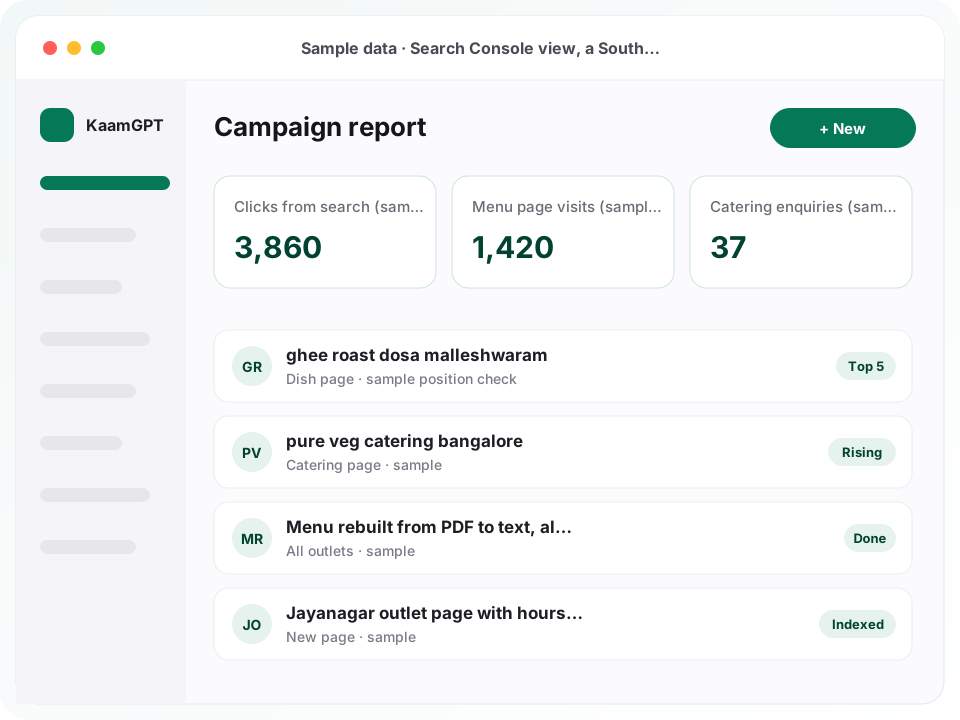
If you are comparing the best SEO company for restaurants in Bengaluru, start by searching for your own signature dish. If the first results are a listing site, a delivery app and a blog roundup, and your own page is nowhere, the problem is usually not links or keywords. It is that your menu lives in a photo or a PDF that search engines struggle to read, and your website says less about your food than everyone else does.
Restaurant website SEO fixes that from the inside. We rebuild the menu as text, give each outlet its own page, add pages for catering, private dining and the dishes people ask about by name, and make sure details such as veg marks, allergens and prices match what is printed in the restaurant. Then we track the searches that lead to bookings and direct orders, not just visits.
- ₹14,999monthly opening fee for restaurant SEO, with pages and scope listed before work begins
- ~30 daysto audit the site, rebuild the menu as text and publish the first outlet pages
- 10 outletsor a Central licence is the point at which FSSAI expects calorie values on menus
- 1 pageper outlet, with its own hours, map, menu and FSSAI details
Which restaurants gain most from their own search presence?
- Fine dining and chef-led kitchensTasting menus, chef stories and private-dining pages give critics and diners something worth reading and linking to.
- Family and casual diningOutlet pages, kids' menus and group-booking details answer the questions parents type before a weekend lunch.
- Cloud kitchens and delivery brandsA simple brand site with the menu, story and FSSAI details helps people who first met you on an app find you again.
- Cafés, bakeries and dessert shopsCelebration-cake, breakfast and work-friendly café searches reward clear pages with prices and pre-order details.
- Darshinis and udupi restaurantsBreakfast hours, signature dishes and festival specials are searched by name, often by families who have eaten there for years.
- Pubs and microbreweriesFood menus, events, screenings and venue hire can rank well; drink promotions stay off the site's marketing pages.
- Caterers and banquet kitchensPackage pages for office lunches, weddings and pujas capture enquiries worth far more than a single order.
Why don't most restaurant websites rank for their own food?
Restaurant sites are often built to look good on launch day and then left alone. The menu changes every season; the website does not. Meanwhile the listing sites and apps update constantly and attract the links, so they become the pages search engines trust for your dishes.
There is also a quieter cost. When your own site is thin, AI assistants and answer boxes fill the gaps from whatever else they find, which may be an old menu on a blog, a closed outlet on a directory or a price from three years ago. Every wrong fact repeated elsewhere is a guest who arrives expecting something you no longer serve.
- Menus as images or PDFs. A scanned menu is hard for search engines and assistants to read, cannot be quoted, and is painful to use on a phone.
- One page for many outlets. A single ‘locations’ list gives search engines no reason to show you for a Jayanagar or JP Nagar search.
- Missing details diners filter on. Veg or non-veg marks, allergens, Jain options, timings and price range are the facts people look for, and they are often absent.
- Copy that over-claims. Words such as ‘authentic’, ‘pure’ or ‘fresh’ on every dish read as filler and, in food advertising, are regulated when they mislead.
- No route from search to the till. Pages without booking, ordering or call buttons collect visits that never turn into covers.
What does SEO for a restaurant website involve?
Our SEO service for restaurants is mostly about pages and facts, with links and technical fixes in support. A typical scope combines these pieces.
The menu rebuilt as text
Every section, dish, description and price becomes text on the page, with veg and non-veg marks and allergen notes beside each item. It loads fast on a phone, can be updated in minutes, and becomes the online menu that search engines and assistants quote.
SEO in detail →Dish and cuisine pages
The dishes people search for by name, such as a signature biryani, a filter coffee or a ghee roast, get pages that explain what makes them yours. Cuisine pages answer the broader questions a curious diner asks before choosing.
SEO in detail →Outlet pages for each address
Each branch gets a page with its address, landmark, hours, phone, map, parking notes, outlet-specific menu and FSSAI number. If the site cannot support this, our team rebuilds it under the same scope.
Websites in detail →Catering, private dining and events
Pages for office catering, birthday parties, private rooms and festival set menus target searches with real money behind them, and each carries an enquiry form or WhatsApp button.
SEO in detail →Search and Maps kept in step
Your Google Business Profile, website and listings must say the same thing. The detailed Maps work is covered on our restaurant local SEO page; here we make sure the website is the source both draw from.
Local SEO in detail →Answers AI assistants can quote
Clear question-and-answer sections, consistent facts and structured data help AI assistants describe your restaurant correctly when someone asks for a recommendation. We write for accuracy, never for tricks.
AI in detail →Technical health and tracking
Speed, mobile layout, indexing, schema.org Restaurant and Menu markup, and Search Console set-up, plus tracking of calls, bookings and direct orders that start from organic search.
SEO in detail →Paid search while pages mature
New dish and catering pages take months to climb. If you need bookings sooner, a small Google Ads campaign on the same searches can bridge the gap, and its data shows which pages deserve the most writing effort.
Google Ads in detail →What are the steps in a restaurant SEO engagement?
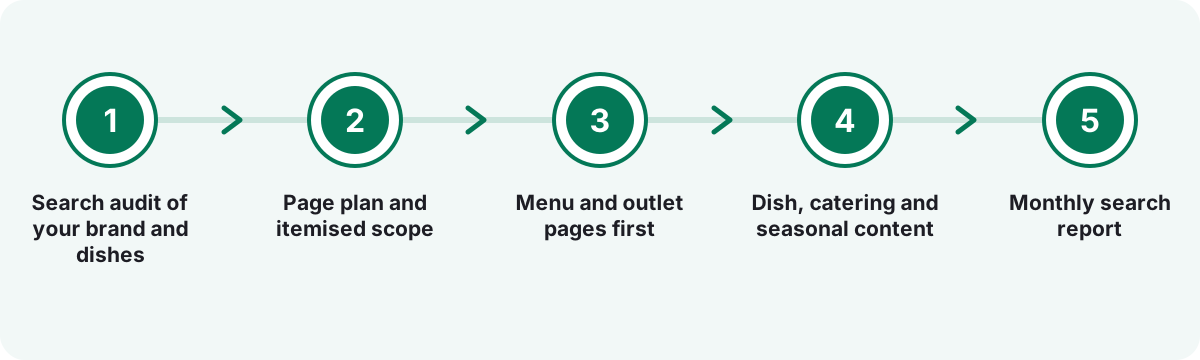
Search audit of your brand and dishes
We list who currently wins searches for your name, outlets and best-known dishes, and record how your menu, hours and FSSAI details appear across the web.
Page plan and itemised scope
A page-by-page plan names what will be written, rebuilt or retired, which outlets come first and what the monthly fee covers.
Menu and outlet pages first
The text menu, outlet pages and fixes to titles, speed and indexing go live early because they affect every other search.
Dish, catering and seasonal content
Signature dishes, catering packages, private dining and festival menus follow, timed so seasonal pages are live before diners start planning.
Monthly search report
Brand and non-brand clicks, menu visits, calls, bookings and direct orders from organic search, with the pages we will add or improve next.
How is restaurant SEO priced?
SEO starts at ₹14,999 a month, with the first changes typically live within about 30 days. The figure grows with the number of outlets, the size of the menu and whether the website needs rebuilding, and all of that is itemised before you agree. You will find every published starting price on the pricing page.
SEO
Recommended₹14,999/month
Typically 30 days
Restaurants and groups that want their own site to win dish, outlet, dietary and catering searches over listing pages.
- Technical audit
- Keyword research
- On-page optimisation
- Content plan
- Monthly reporting
Digital Marketing
₹19,999/month
Typically 15 days
Restaurant brands that want search, Maps, ads, content and a guest list run by one team against covers and direct orders.
- Channel strategy
- Creative production
- Campaign management
- Weekly reporting
Local SEO
₹4,999/month
Typically 14 days
Single outlets whose walk-ins depend mostly on the Google Maps listing, priced per location.
- Google Business Profile optimisation
- Local keyword map
- Location page on-page fixes
- Citation building and NAP cleanup
- Local link outreach
- Review replies and posts
- Monthly report
Google Ads
₹4,999/month
Typically 30 days
Kitchens that need bookings or catering enquiries this month while organic pages are still climbing.
- Account setup
- Keyword strategy
- Ad copy testing
- Conversion tracking
- Bid optimisation
Meta Ads
₹4,999/month
Typically 30 days
Launches and venues built around events, which need to be noticed nearby before anyone thinks to search for them.
- Creative testing
- Audience building
- Retargeting funnels
- Pixel setup
- Weekly reporting
Lead Generation
₹24,999/month
Typically 14 days
Caterers and banquet kitchens selling large orders through enquiries, tastings and quotes.
- Verified leads
- Multi-channel outreach
- CRM integration
- Lead scoring
- Replacement guarantee
- A site that cannot hold text menus or outlet pages may need rebuilding first; website development begins at ₹9,999 a project and sits on its own quote.
- Menu photography and content in Kannada or other languages are optional extras, priced only if you ask for them.
| Package | Starts at | Timeline | Best for |
|---|---|---|---|
| SEO | ₹14,999/month | Typically 30 days | Restaurants and groups that want their own site to win dish, outlet, dietary and catering searches over listing pages. |
| Digital Marketing | ₹19,999/month | Typically 15 days | Restaurant brands that want search, Maps, ads, content and a guest list run by one team against covers and direct orders. |
| Local SEO | ₹4,999/month | Typically 14 days | Single outlets whose walk-ins depend mostly on the Google Maps listing, priced per location. |
| Google Ads | ₹4,999/month | Typically 30 days | Kitchens that need bookings or catering enquiries this month while organic pages are still climbing. |
| Meta Ads | ₹4,999/month | Typically 30 days | Launches and venues built around events, which need to be noticed nearby before anyone thinks to search for them. |
| Lead Generation | ₹24,999/month | Typically 14 days | Caterers and banquet kitchens selling large orders through enquiries, tastings and quotes. |
What decides what a restaurant pays for SEO?
Most of the effort in restaurant SEO goes into pages, not technical tweaks. A one-outlet café with a short menu needs a handful of good pages and steady upkeep. A group with six outlets, a seasonal menu, catering and private dining needs far more writing, photography and maintenance, and its fee reflects that.
Before you sign with any SEO company for restaurants in Bangalore, find out how many pages will be created or rewritten in the first quarter, who updates the menu when prices change, and which numbers you will see each month. Vague answers to those three questions usually mean vague work.
- Number of outlets and how different their menus are.
- How often the menu and prices change during the year.
- Whether the current site can host text menus and outlet pages.
- How many catering, private-dining or event pages are needed.
- Whether existing photos are usable or new ones must be shot.
- How much ground the listing sites have already taken on your brand searches.
Why trust KaamGPT with your restaurant's search presence?
SEO, AEO and GEO in one piece of work
We write each page so search listings, answer boxes and AI assistants all pick up identical, correct facts about your food, hours and outlets.
Experience with food ordering products
We designed and built CloseToBuy, a Bengaluru food-delivery app with restaurant search, collections and live tracking, so we know how menus, deals and order flows are structured behind the screen.
We can rebuild the site ourselves
When a template cannot hold a text menu or outlet pages, our developers fix or rebuild it, so you are not caught between an SEO vendor and a web vendor.
Compliance-aware copy
Menu marks, allergens and dish descriptions are written with FSSAI's display and claims rules in mind, so the page is useful and does not promise what the plate cannot deliver.
Reports tied to the till
We report searches that end in a call, booking or direct order, not just rankings, and we say plainly when a change in sales has nothing to do with SEO.
How do Bengaluru diners research a restaurant before they go?
Search behaviour follows the city's food habits. Across the city's older south and west, many families eat vegetarian, sometimes Jain or no-onion-no-garlic, and they search with those words. Malleshwaram and Basavanagudi were the two extensions laid out in 1889 to ease crowding in the old city, and both still have long-running vegetarian eateries whose regulars search for a dish, a breakfast time or a festival special rather than for ‘restaurants near me’.
Basavanagudi also has VV Puram Food Street, a short lane of vegetarian stalls that comes alive once offices close and whose winter Avarekai Mela draws crowds from across the city. Seasonal searches for avarekai dishes, ellu bella at Sankranti or holige at Ugadi rise and fall with the calendar, and a restaurant that publishes those menus in time can be found by people planning a visit.
In the east and south-east, around Indiranagar, Koramangala and the tech corridors, research looks different: cuisine plus area, ‘open late’, ‘good for groups’, ‘vegan options’, ‘pet friendly’. These diners compare several tabs at once and decide quickly, so the page that states hours, prices, dietary options and booking details plainly tends to win their visit.
Where should the best SEO company for restaurants in Bengaluru begin on your site?
We begin with the searches that already belong to you and are leaking away. Your restaurant's name, your outlet names and your best-known dishes should lead to your own pages. When a listing site or an outdated blog wins those searches, the fix is usually quick and the gain is direct.
Next come searches you can realistically win: a dish plus an area, a dietary need plus a cuisine, catering for a specific occasion. We leave generic ‘best restaurants in Bangalore’ lists to the publishers that own them and aim for the queries where a diner is choosing what to eat, not reading a ranking.
This is the same discipline we bring to other sectors, described on our guide to SEO services in Bengaluru, adapted to how restaurants actually change: menus every season, prices every year, outlets opening and closing, and festival specials that matter for a few weeks and then disappear.
Claim your brand searches
Make the homepage, outlet pages and menu the clear answers for your name and its common misspellings, and keep titles and descriptions matched to what each page actually offers.
Publish the menu where it can be read
Replace image and PDF menus with text, keep prices and availability current, and add notes on spice levels, Jain options and allergens so diners stop calling to ask.
Build pages around the dishes people name
If guests search for your mutton pepper fry or your filter coffee, give it a page with a photo, a short story, its price and the outlets that serve it.
Give each outlet a reason to rank
Outlet pages carry local landmarks, parking, seating, timings, outlet-only dishes and real photos, so a Banashankari search finds the Banashankari branch rather than head office.
Earn links from the food conversation
Food writers, neighbourhood newsletters, event listings and festival pages link to restaurants that give them something to say. We pitch stories, not link swaps.
Publish seasonal menus a month ahead
Avarekai dishes in winter, mango desserts in summer, Ramzan and Christmas specials: pages that go live weeks before the season are indexed in time for people who plan where to eat.
What do FSSAI's display rules mean for a menu you publish online?
The Food Safety and Standards (Labelling and Display) Regulations, 2020 include a chapter on display in food service establishments, with compliance required from July 2022. Regulation 9 asks food service establishments to mention, against the items on menu cards or boards, the veg or non-veg logo and information on food allergens, which may be shown with easy-to-understand symbols.
Establishments holding a Central licence or operating outlets at ten or more locations must also show the calorific value of each item, in kcal per serving with the serving size, and display the line that an average active adult requires 2,000 kcal energy per day, though calorie needs may vary. Event caterers and premises open fewer than sixty days a year are exempt, as are free self-serve condiments and items made to a guest's special request.
Two further points matter online. Nutritional information must be available on request through booklets, handouts or the website, and e-commerce food business operators must obtain this information from restaurants and show it on their platforms where applicable. A menu page that already carries these marks gives every platform the same, correct source.
We also compare your website menu with the versions shown on delivery apps and listing sites during the audit. Where a platform shows a dish as veg that your kitchen marks non-veg, or lists an allergen-free option you no longer make, we flag it so your team can correct it at the source.
- Mark every dish veg or non-veg, using the same symbols as your printed menu.
- Note common allergens such as nuts, dairy, gluten and shellfish beside each item.
- If you hold a Central licence or run ten or more outlets, add calories per serving and the reference line.
- Keep a nutrition page or downloadable sheet ready for guests who ask.
Why do listing sites outrank a restaurant's own website?
Listing sites and delivery apps publish thousands of restaurant pages, refresh them daily and attract links from across the web. Search engines read that as authority. A restaurant site with a photo menu, three pages and no updates since opening gives them very little to weigh against it.
You do not need to beat them everywhere. For generic searches such as ‘restaurants in Koramangala’, a listing page or a roundup is often what the searcher wants. For your name, your outlets, your signature dishes, your catering and anything that needs an accurate answer, your own page should be the best result, because nobody else knows your food as well as you do.
The practical goal is that a diner who meets you on an app, a listing site or a friend's story can search your name and land on a page that answers every remaining question, then book, order or call without going back through someone else's platform.
- Make your homepage and outlet pages the obvious answer for your brand name.
- Leave generic city-wide roundups to publishers; aim for dish, dietary and occasion searches.
- Ask food writers and event pages to link to your own menu, not to a listing.
- Keep your name, address and hours identical on every listing so they reinforce your site.
How should a restaurant menu be built for search and AI assistants?
Write it as a menu first. Sections in the order you serve, dish names as guests say them, a short honest description, the price, and the marks diners filter on. Then add what helps search engines understand it: a clear page title, headings for each section, schema.org Restaurant and Menu markup, and descriptive image names for dish photos.
Keep claims modest. FSSAI's advertising and claims rules restrict words such as natural, fresh, pure, original, traditional, authentic, genuine and real in the labelling, presentation or advertising of food where they are likely to mislead. ‘Made in-house every morning’ tells a diner more than ‘fresh and authentic’ and keeps you on the right side of those rules.
Finally, keep it current. A menu with last season's prices costs you trust at the table and in search. We set up the page so your manager can change a price or mark a dish unavailable in a minute, and we review it whenever the kitchen changes the card.
- Text, not images, for every dish name, description and price.
- Veg or non-veg marks and allergen notes beside each item.
- Restaurant and Menu markup from schema.org, matched to the visible page.
- A named person responsible for updating the menu when the kitchen changes it.
Which pages does a multi-outlet restaurant website need?
A multi-outlet restaurant website works best with a clear hierarchy: the brand homepage, one page per outlet, the menu (shared or per outlet), catering and private dining, events, and an about page with the story and FSSAI details. Each outlet page needs something genuinely local: its landmark, parking, seating, outlet-only dishes, photos of that room, and timings that may differ from the others.
What it must not have is a pile of near-identical pages with the area name swapped, aimed at neighbourhoods where you have no kitchen. Those pages add nothing for a diner and search engines treat them as low value. If you deliver to an area, say so on the relevant outlet page instead.
For Bangalore brands that also run cloud kitchens under different names, each brand can have a small site of its own or a section of the main site, as long as the menus, hours and licence details for each kitchen are accurate and consistent with the apps.
- One page per real outlet, each with its own photos, timings and FSSAI number.
- A shared menu page only if every outlet serves the same dishes at the same prices.
- Separate pages for catering, private dining and events, linked from every outlet.
- No area pages for neighbourhoods without a kitchen; mention delivery coverage on the outlet page instead.
How long does restaurant SEO take, and how will you know it is working?
The first gains come from fixes: a text menu, corrected titles and outlet pages can change brand and outlet searches within a few weeks of being indexed. Dish, catering and seasonal pages take longer, often a few months, because they compete with established pages and need links and reviews to build trust.
We judge progress by the searches that bring guests. Clicks for your brand and outlets should rise first, then clicks for dishes and catering. Calls, booking-button clicks and direct orders from organic visitors are tracked separately, so you can see whether search is filling seats rather than only growing a traffic chart. If a month is flat, the report says so and explains what we are changing.
Expect seasonality in the numbers. Searches for dining out dip and recover with exams, monsoon weeks and long weekends, and festival menus spike briefly. We compare each month with the same month last year where the data exists, so a quiet August is not mistaken for failure and a busy December is not mistaken for success.
- Restaurant SEO
- From ₹14,999 a month; first changes live in about 30 days
- Menu display
- Veg or non-veg logo and allergen information against menu items (FSS Labelling and Display Regulations 2020, reg 9)
- Calorie values
- Required for Central-licence holders or outlets at 10 or more locations
- Nutrition on request
- May be given in booklets, handouts or on the website
- Website rebuilds
- From ₹9,999 per project, quoted separately when needed
- Team
- Based in Bengaluru, working with restaurants by phone, WhatsApp and video call
Where this applies around Bengaluru, Karnataka
- Bengaluru
- Karnataka
- India
- Malleshwaram
- Basavanagudi
- Jayanagar
- JP Nagar
- Banashankari
Frequently asked questions
27 answersWhat will an SEO company for restaurants in Bangalore change on my website?
Mostly the pages diners use: the menu becomes text with veg marks, allergens and prices, each outlet gets its own page, and signature dishes, catering and private dining get pages of their own. Behind that come speed, mobile layout, titles, structured data and Search Console tracking, so the changes can be measured.
What does KaamGPT charge for restaurant SEO?
Restaurant SEO begins at ₹14,999 a month, and the first round of changes usually goes live inside 30 days. More outlets, a longer menu or a site rebuild widen the scope, and each one is itemised in the proposal. A rebuild has its own quote, starting at ₹9,999.
Should my restaurant menu be a PDF or text on the website?
Text. A PDF or photo menu is hard to read on a phone, cannot be quoted by search engines or AI assistants, and is rarely updated. A text menu with sections, prices, veg marks and allergen notes is easier for guests and gives search engines something accurate to show. You can still offer a printable version alongside it.
Do restaurants in India have to show veg and non-veg marks and allergens on menus?
Under regulation 9 of FSSAI's Labelling and Display Regulations, 2020, food service establishments are to mention the veg or non-veg logo and allergen information against items on menu cards or boards, and symbols may be used for allergens. We carry the same marks onto your online menu so it matches what guests see in the restaurant.
When must a restaurant show calories on its menu?
FSSAI's display rules require calorie values, in kcal per serving with the serving size, from food service establishments that hold a Central licence or have outlets at ten or more locations. They must also show the reference line about an average active adult needing 2,000 kcal a day. Smaller restaurants are not covered by that clause.
Can a restaurant call its food authentic or fresh in its marketing?
Carefully. FSSAI's advertising and claims rules regulate words such as natural, fresh, pure, traditional, authentic and genuine where they are likely to mislead, including in brand names. We prefer specific statements a diner can check, such as ‘ground in-house each morning’, over adjectives on every dish.
How can a restaurant rank above listing sites for its own dishes?
Give the dish a page that says more than any listing can: what it is, how you make it, where it is served, the price and a real photo. Link to it from the menu and outlet pages, and earn mentions from food writers and events. Listing sites will still win generic searches, but your own dish searches should lead to you.
Does a multi-outlet restaurant in Bengaluru need a page for each outlet?
Yes. A single ‘locations’ list gives search engines no reason to show you for a neighbourhood search. Each outlet page should carry its address, landmark, hours, phone, map, parking, seating, outlet-only dishes and FSSAI number. Pages for areas where you have no kitchen should not be created at all.
Will SEO help my cloud kitchen if most orders come through apps?
Yes, in a narrower way. People who enjoyed an order often search the brand name later, and a simple site with the menu, story, hours and FSSAI details catches them. It also gives food writers something to link to. A cloud kitchen does not need dozens of pages, just accurate ones that are kept current.
How do AI assistants decide which restaurant to recommend?
Nobody outside those companies knows exactly, and we will not claim to control it. What we can do is make sure your own pages state your cuisine, dishes, dietary options, hours, outlets and prices clearly and consistently, so any assistant that reads the web has accurate facts about your restaurant to draw on.
How long does SEO take for a restaurant in Bengaluru?
Fixes to the menu, titles and outlet pages can improve brand and outlet searches within a few weeks of being indexed. Dish, catering and seasonal pages usually need a few months, because they compete with established pages. We set out expected timings per page group in the plan rather than promising a ranking date.
Which searches should a Bengaluru restaurant target first?
Your own name and outlet names, then your best-known dishes, then dietary and occasion searches near your outlets, such as Jain options in Jayanagar or a group lunch in Malleshwaram. Generic city-wide lists are usually owned by publishers and listing sites, so we aim where a diner is choosing what to eat.
Do you write restaurant content in Kannada?
We can, as an optional extra. Some neighbourhood restaurants have regulars who search in Kannada or mix Kannada dish names with English. Where that is true, dish names and key pages in Kannada can help. We price it separately so you only pay for languages your guests actually use.
Is it worth hiring an SEO company for restaurants in Bangalore for a single café?
Sometimes. A single café near offices or a college may get more from a well-kept Google profile, which our per-location <a href="/services/local-seo">local SEO</a> plan covers, than from a full website programme. If your café sells celebration cakes, catering or a destination menu, organic pages for those can pay for themselves.
Can you fix our restaurant website if it was built on a template?
Usually. Many templates can hold a text menu and outlet pages once configured properly. If yours cannot, or it is very slow on phones, our developers can rebuild it as part of a separate website project, so the SEO work has a sound base.
What structured data does a restaurant website need?
At minimum, schema.org Restaurant markup on each outlet page with the name, address, phone, hours, cuisine and price range, and Menu markup on the menu page. It helps search engines connect your pages to the right outlet. We keep it consistent with your Google Business Profile and listings.
Which numbers prove that SEO is working for a restaurant?
We separate brand and outlet searches from dish, dietary and catering searches, then track calls, booking-button clicks, direct orders and catering enquiries from organic visitors. Rankings are shown for context only. The monthly report tells you what changed, why we think it did, and which restaurant pages come next.
Do you also manage Google Maps listings for restaurants?
Yes, through our local SEO service. The website and the Maps profile must agree on hours, menu and contact details, so we usually plan them together. The <a href="/best-local-seo-agency-for-restaurants-in-bengaluru">Maps and profile work for restaurants</a> is explained in more detail for Bengaluru outlets.
Should a pub's website mention its drinks menu?
A pub can show its full menu on its own website so guests know what is served, but promotional pages, ads and social posts should focus on food, events, screenings and the venue. Liquor advertising is restricted in India and surrogate advertising is barred by the CCPA's guidelines of June 2022, so drinks stay out of promotional content.
Can SEO bring catering enquiries to a restaurant?
Yes. Catering searches carry clear intent, such as office lunch catering or pooja catering in a particular area. A page for each package, with sample menus, headcounts, delivery areas and an enquiry button, can rank for those. For a full enquiry pipeline, see our <a href="/best-lead-generation-company-for-restaurants-in-bengaluru">restaurant lead generation</a> page.
How often should a restaurant update its website?
Whenever the menu, prices, hours or outlets change, and at least before each festival season. A website that still shows last season's prices loses trust. We set up the menu so your team can edit a price or mark a dish unavailable quickly, and we review the content every month as part of the retainer.
How do SEO and Google Ads differ for a restaurant?
SEO builds pages that earn visits over time without paying per click, and it suits brand, dish and catering searches. Google Ads buys visibility immediately for chosen searches, which suits group bookings or a launch. Many restaurants use both for a while; the <a href="/best-google-ads-agency-for-restaurants-in-bengaluru">paid search side for restaurants</a> has its own page.
Do you need access to our website and Search Console?
Yes, editor access to the site and owner or full access to Search Console and Analytics. All of these remain registered to the restaurant. If none exist yet, we set them up under your email so the history and data belong to you, whatever happens to the engagement later.
Can you help a Bengaluru restaurant group with several cuisines?
Yes. A group running, say, a South Indian chain and a separate Asian brand needs a clear structure: either one site with brand sections or separate small sites, each with accurate menus, outlets and FSSAI details. We recommend the structure after the audit, based on how guests search for each brand.
How do I begin restaurant SEO with KaamGPT?
Send your website link, your current menu and a list of outlets. Call +91 79767 82366 or message that number on WhatsApp, or request a callback on this page. We will look at how your brand and dishes appear in search today and reply within a working day with a page plan and an itemised quote.
Why choose KaamGPT as the best SEO company for restaurants in Bengaluru?
We do not promise rankings. We build accurate menus and outlet pages, write dish copy that respects FSSAI's display and claims rules, can rebuild your site in-house, and report searches that end in calls, bookings and direct orders. Whether that makes us the right choice is for you to judge from the audit.
Do the delivery apps use the menu from my restaurant's website?
Not automatically. Each platform keeps its own copy of your menu, which your team or the platform updates. That is why we treat your website as the reference version and check the app listings against it during the audit, so veg marks, allergens, prices and dish names match wherever a Bengaluru diner sees them.