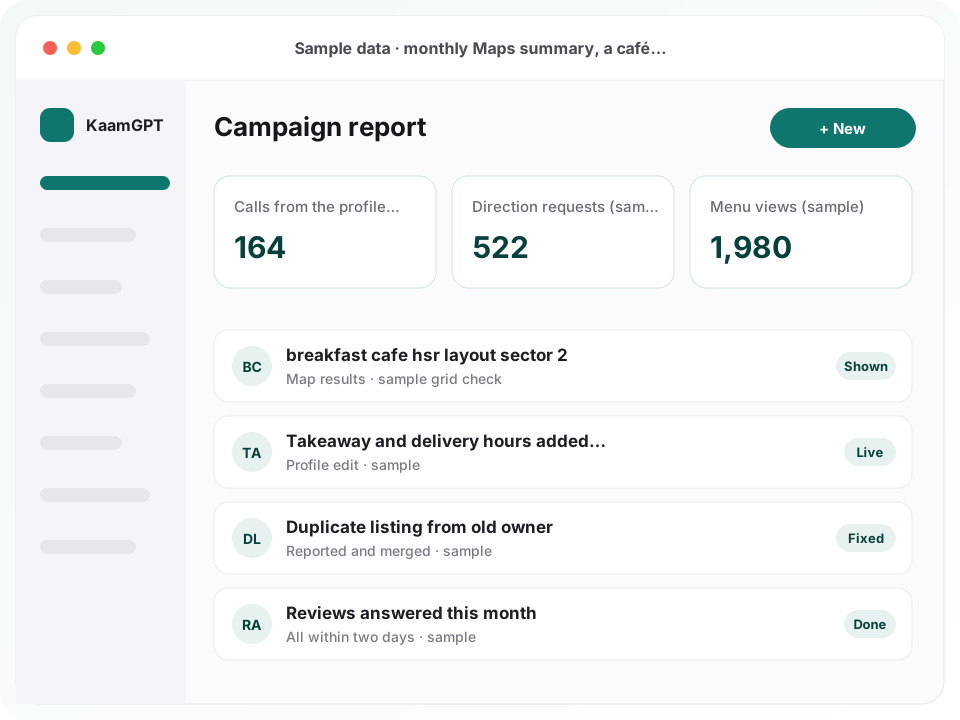
The best local SEO agency for restaurants in Bengaluru is judged at about eight in the evening, when someone standing on a busy road in Indiranagar or Koramangala opens Maps, types a cuisine and picks from the three or four places that look open, close and well reviewed. If your listing shows the wrong hours, a blurry menu photo or a review nobody answered, the decision goes elsewhere in seconds.
That is why we treat the Google profile as your front door rather than a directory entry. We set dining, takeaway and delivery hours the way Google asks, build the menu in Google's menu editor, add real dish photos, connect ordering and booking links, reply to every review and keep each outlet's details identical everywhere. For delivery-only kitchens, Google has its own rules, and we follow them.
- ₹4,999a month for each outlet's profile work, confirmed after we look at the listing
- ~14 daysto finish the profile audit, fix hours, menu and categories, and clean duplicate listings
- 1 profileper real outlet; delivery-only brands keep the address hidden and name the areas served
- Zerobought reviews, rating discounts or staff review quotas, all barred by Google's policy
Why do Maps listings decide so many Bengaluru meals?
Bengaluru's traffic makes diners local. An ordinary weeknight dinner rarely justifies a long drive, so the choice is made among places within a short ride or walk, and Maps is where that shortlist forms. Searches are blunt and immediate: dosa open now, cafe with wifi koramangala, family restaurant with parking indiranagar, dinner near ulsoor lake. These open now searches reward the listing whose hours, photos and menu answer the question before anyone has to call.
Density makes it harder. Indiranagar's 100 Feet Road, with its bars, pubs and fashion stores, and the blocks of Koramangala and sectors of HSR Layout pack many restaurants into a few streets, so a pin that sits a lane away, or a name that matches three other places, can lose the click. Shoppers on Commercial Street or office workers in Domlur looking for a quick lunch behave the same way: nearest credible option, decided on a phone.
Cloud kitchens add a twist. A single building may house several delivery brands, and Google's guidelines treat delivery-only brands differently from places with a dining room or a pickup counter. Getting that right decides whether a kitchen's listings help it or get it into trouble.
Which jobs make up restaurant local SEO?
Our local SEO service is priced per location, and for restaurants it concentrates on the profile, its menu and the reviews, supported by consistent listings and a good outlet page.
Profile set to Google's restaurant rules
Primary and secondary categories, dining hours first and then takeaway or delivery hours, special hours for festivals, attributes such as seating and payment, and a business name exactly as it appears on your signboard.
Google Business Profile in detail →Menu editor and dish photos
We use the menu editor to list sections, dishes, descriptions and prices, upload a clear menu, and add real photos of popular dishes so the names you choose take precedence over whatever guests have uploaded.
Google Business Profile in detail →Ordering and booking links
Pickup and delivery links, including any preferred provider and your own direct ordering link, plus a reservation link, so a guest can act from the profile without searching again.
Google Business Profile in detail →Restaurant reviews handled honestly
Each review gets a reply, positive or critical, every guest is given the same simple route to share feedback, and recurring complaints reach the kitchen. Rewards, gating and targets are never used.
Local SEO in detail →Consistent listings everywhere
Name, address, phone, hours and FSSAI details are aligned across your website, Google, Apple Maps, social profiles and the delivery apps, and duplicate or old listings are reported for removal.
Local SEO in detail →An outlet page that backs up the pin
Every profile points to an outlet page carrying the same address, landmark, hours and menu, so Google sees the pin and the website agree. Our restaurant SEO page explains how those outlet pages are built.
Websites in detail →Posts for events and festival menus
Short profile posts for a new menu, a live-music night, an Ugadi thali or a Christmas lunch, published early enough to be seen by people planning where to go.
Google Business Profile in detail →Visibility checks around each outlet
Every month we search your cuisines and signature dishes from a grid of points around each address and record where the listing appears. It shows which streets see you and which do not, and tells us what to fix next.
Local SEO in detail →How does the best local SEO agency for restaurants in Bengaluru work on a listing?
We start where the guest starts: on a phone, a few hundred metres from your door. We search the cuisines and dishes you are known for from several points around each outlet and note which listings appear, what they show and what yours is missing. That grid of results, not a single ranking, tells us how visible you are.
Then we put the profile in order before trying to grow it. Correct category, hours, name, pin and menu usually outweigh months of posting. Only when the basics are right do we work on photos, reviews and posts, because a busy profile with wrong hours still sends people to a closed shutter.
A local SEO agency for restaurants in Bangalore should also know when to stop. Once an outlet's profile is complete, well reviewed and visible across its streets, the job becomes upkeep: hours, menus, replies and posts. We say so, and suggest moving effort to the outlets or brands that still need it.
Hours in Google's order of preference
Google asks restaurants to show dining hours when guests can sit down, otherwise takeaway hours, then delivery. We set those, add separate hours where the profile allows and mark special hours for festivals, monsoon closures and private events.
A name that matches the signboard
No area names, cuisines or taglines added to the business name. Keep the exact name painted on your signboard; relevance for ‘biryani’ or ‘Koramangala’ comes from category, menu, description and reviews.
Dish names that you control
Google lets owners add popular dish names and photos, and owner entries take precedence over guest-added names. We use that to make sure your signature dishes are named and pictured correctly.
Ask every guest, not only the happy ones
A QR card on the table or a short line printed on the receipt asks every guest for feedback. Asking selectively or rewarding reviews breaks Google's rules, and it tends to produce reviews that read as fake.
Separate profiles where Google allows them
Each outlet gets its own profile. Co-located brands with their own signage and pickup counter may each have one; delivery-only brands get profiles with the address hidden and service areas listed.
Watch the questions guests ask
Questions in reviews and on the profile, such as parking, Jain food or high chairs, show what the listing is missing. We answer them and add the facts to the profile and the outlet page.
What does local SEO for a restaurant cost?
Each outlet's profile work costs ₹4,999 monthly, and the first clean-up is done within roughly 14 days. A lone café or darshini normally needs nothing more; a group with several outlets, or several brands under one roof, sees every profile priced line by line. Our published starting prices are public, and the scope is agreed on paper before anything changes.
Local SEO
Recommended₹4,999/month
Typically 14 days
Any outlet whose walk-ins, calls and direction requests come mainly from the Google profile, one location at a time.
- Google Business Profile optimisation
- Local keyword map
- Location page on-page fixes
- Citation building and NAP cleanup
- Local link outreach
- Review replies and posts
- Monthly report
Digital Marketing
₹19,999/month
Typically 15 days
Restaurant groups wanting Maps, ads, content and a guest list run together and judged by covers and direct orders.
- Channel strategy
- Creative production
- Campaign management
- Weekly reporting
SEO
₹14,999/month
Typically 30 days
Brands whose website should rank for dishes, catering and outlets beyond the immediate map results.
- Technical audit
- Keyword research
- On-page optimisation
- Content plan
- Monthly reporting
Google Ads
₹4,999/month
Typically 30 days
Venues that want extra visibility for bookings or catering searches through Google Ads while the profile builds its reviews.
- Account setup
- Keyword strategy
- Ad copy testing
- Conversion tracking
- Bid optimisation
Meta Ads
₹4,999/month
Typically 30 days
New outlets that need neighbours to know they exist before anyone searches for them on Maps.
- Creative testing
- Audience building
- Retargeting funnels
- Pixel setup
- Weekly reporting
Lead Generation
₹24,999/month
Typically 14 days
Caterers and banquet kitchens whose large orders start as enquiries rather than walk-ins.
- Verified leads
- Multi-channel outreach
- CRM integration
- Lead scoring
- Replacement guarantee
- Delivery-only brands sharing one kitchen are scoped brand by brand, because each needs its own profile, service areas and verification.
- If you prefer to run the profile yourself, our Google Business Profile tool in the KaamGPT workspace handles review queues and posts under a separate workspace plan.
| Package | Starts at | Timeline | Best for |
|---|---|---|---|
| Local SEO | ₹4,999/month | Typically 14 days | Any outlet whose walk-ins, calls and direction requests come mainly from the Google profile, one location at a time. |
| Digital Marketing | ₹19,999/month | Typically 15 days | Restaurant groups wanting Maps, ads, content and a guest list run together and judged by covers and direct orders. |
| SEO | ₹14,999/month | Typically 30 days | Brands whose website should rank for dishes, catering and outlets beyond the immediate map results. |
| Google Ads | ₹4,999/month | Typically 30 days | Venues that want extra visibility for bookings or catering searches through Google Ads while the profile builds its reviews. |
| Meta Ads | ₹4,999/month | Typically 30 days | New outlets that need neighbours to know they exist before anyone searches for them on Maps. |
| Lead Generation | ₹24,999/month | Typically 14 days | Caterers and banquet kitchens whose large orders start as enquiries rather than walk-ins. |
What changes the cost of Maps work for a restaurant?
The fee is per outlet because the work is per outlet: every address has its own hours, photos, reviews, duplicates and neighbours to compete with. A café on a quiet residential road needs less effort than a restaurant on a street where twenty other places serve the same cuisine. The method behind this is set out in our Bangalore local SEO guide; restaurants simply add more moving parts.
When you compare quotes from any local SEO agency for restaurants in Bangalore, ask how many outlets and brands are included, who answers reviews and within what time, and how they will handle delivery-only brands. If the answer to the last question is ‘we list them like any restaurant’, look elsewhere.
- Number of outlets and brands, including delivery-only brands at one kitchen.
- How many duplicate, old or wrongly owned listings need claiming or removing.
- How many reviews arrive each week and the reply time you expect.
- Whether menu photos and dish photos need a fresh shoot.
- How crowded your cuisine is in the surrounding streets.
- Whether every outlet already has its own page on your site.
Which food businesses depend most on their Maps listing?
- Darshinis and quick-service outletsWalk-in trade decided on the pavement, where hours, distance and a short menu photo settle the choice.
- Cafés and bakeriesWork-friendly and breakfast searches depend on attributes, photos of seating and accurate opening times.
- Casual and family diningParking, seating, kids' options and recent restaurant reviews tip weekend decisions in crowded streets.
- Fine dining and celebration venuesBooking links, interior photos and well-answered reviews reassure people planning a special evening.
- Cloud kitchens and delivery-only brandsHidden addresses, service areas, distinct branding and a website are what Google expects before listing them.
- Pubs and microbreweriesFood menus, event posts and accurate late hours drive visits; drinks offers stay out of profile posts.
- Sweet shops and caterersFestival orders and pickup times make special hours and clear service details essential around Diwali and Ugadi.
What happens after you share your Maps link?
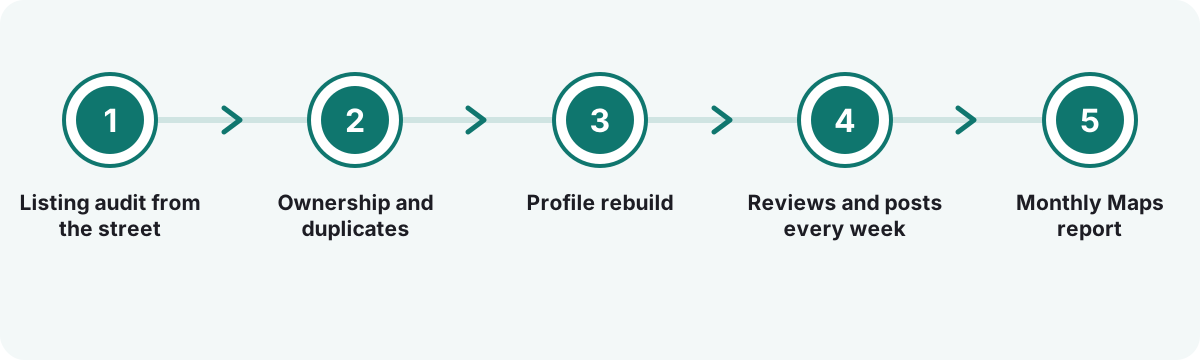
Listing audit from the street
We check each outlet's profile, name, category, pin, hours, menu, photos and reviews, and search your cuisines from several points nearby to see what diners are shown.
Ownership and duplicates
We confirm who manages each profile, add your team as owners where needed and report duplicates, closed outlets and listings created by previous owners.
Profile rebuild
Hours, categories, attributes, the menu editor, dish names, photos and ordering and booking links are set in the first fortnight, outlet by outlet.
Reviews and posts every week
Every review gets a reply, recurring complaints go to the kitchen, and posts announce menus, events and festival hours in good time.
Monthly Maps report
Calls, direction requests, menu views, booking and ordering clicks, review counts and the street-level visibility grid, set beside last month's figures.
Why let KaamGPT look after your restaurant's Maps profile?
Restaurant rules, not generic checklists
We follow Google's specific guidance on dining versus delivery hours, delivery-only brands, co-located kitchens and business names, which generic listing services often miss.
Our own profile software
Our Google Business Profile tool tracks reviews, posts and visibility grids; people on our team handle the replies and decisions a tool should not make alone.
Table-side feedback that is fair
Our RestroMenu QR menu gives every dine-in guest the same easy route to leave feedback, which keeps review requests within Google's rules.
Food ordering experience
We designed and built the CloseToBuy delivery app for Bengaluru restaurants, so ordering links, menus and deals are familiar ground for us. The case study has the scope.
No shortcuts that cost you later
No bought reviews, no keyword names, no fake addresses for virtual brands. Those tricks can get a profile suspended, and a suspended restaurant disappears from Maps at dinner time.
Websites and outlet pages in-house
If an outlet has no page of its own for the profile to link to, our web team builds one, so the pin, the page and the menu always tell the same story.
Can each brand in a shared cloud kitchen have its own Google listing?
Google's guidelines allow delivery-only brands, those operating out of virtual kitchens, to have Business Profiles only if each brand has distinct branded packaging and a distinct website. Those delivery-only brands must add their service areas and hide the address, so customers are not invited to a kitchen door that does not serve them. Several virtual brands can run from one location, but Google may ask for extra verification.
Where food brands share a building and each offers pickup, the rules change: each co-located brand needs permanent separate signage, and should show its address only if it offers pickup to all customers. A kitchen in HSR Layout running three brands with one shared counter and no separate signs should not list three addresses.
We sort this out before touching anything else, because a profile that breaks these rules can be suspended, and a suspension during a busy month costs more than any visibility it ever brought. For each brand we confirm packaging, website, signage and pickup, then set the profile type that genuinely fits.
- Delivery-only brand: distinct packaging and website, address hidden, service areas listed.
- Co-located brand with pickup: permanent separate signage, address shown only if pickup is open to all.
- Dine-in restaurant: full address, dining hours first, accurate pin at the entrance.
- Authorised partner kitchens may manage a brand's profile once the brand's authorisation is confirmed.
Which hours should a restaurant show on Google?
Google asks restaurants to list dining hours when guests can sit down to eat, and only otherwise takeaway hours, then drive-through or delivery hours. Its restaurant guide also lets you manage delivery, takeaway and pickup hours separately. That matters in Bengaluru, where many places serve breakfast, close the dining room in the afternoon and keep the kitchen running for delivery late into the night.
A guest who sees ‘open until 1 am’, walks over at eleven and finds the shutter down is unlikely to try again, and may write about it. We set the main hours to match when the dining room is open, add the other services where the profile allows, and mark special hours ahead of Ugadi, Diwali, Christmas, election days and any day the kitchen closes for maintenance.
- Dining hours as the main hours whenever guests can sit down to eat.
- Takeaway, delivery and pickup hours added separately where the profile offers them.
- Special hours entered at least a week before festivals and planned closures.
- Late-night delivery shown only for the delivery service, never as dining hours.
How can a restaurant get more Google reviews without breaking the rules?
Google's Maps content rules leave little room for interpretation. Rewarding a review in any form, whether cash, a discount or a free item, is not allowed. Neither is discouraging critical reviews or asking only the guests who seem pleased. Staff cannot be given review targets or told what a review should say.
What works within those rules is simple and slower. Ask every guest the same way, through a card on the table, a short line printed on the receipt or a WhatsApp note once a direct order is delivered. Make it easy with a short link. Reply to every review, thank people by name where they used it, and answer complaints calmly with what you have changed.
Negative restaurant reviews are not a disaster if they are answered well. A clear, polite reply to a complaint about slow service often reassures whoever reads it next more than ten five-star reviews with no text. Fake or incentivised reviews, on the other hand, can be removed and can put the profile at risk.
What should a restaurant's profile show besides the address?
Google's guide for restaurants recommends a detailed menu built in the menu editor with sections, dishes, descriptions and prices, photos and videos of the interior, exterior and dining experience, posts for offers and events, replies to reviews, ordering through the profile and links for bookings. Each of those answers a question that otherwise becomes a phone call or a lost guest.
Ordering links deserve care. The profile can carry third-party providers and your own ordering link, and you can mark which is preferred for pickup or delivery. If you want regulars to order direct, this is one of the few places where your own link can sit beside the apps, so we set it up and test it from a phone.
Attributes are the quiet part of the profile that settle practical doubts: outdoor seating, wheelchair access, payment options, whether the place suits groups or children. Only tick what is true on an ordinary evening. A guest who books for a pram-friendly lunch and finds a flight of stairs will say so, and the next family will read it.
- Menu built in the menu editor, not only a photo of the printed card.
- Dish photos named with the dishes you want to be known for.
- Interior, exterior and entrance photos so first-time guests recognise the place.
- Booking and ordering links tested from a phone, with your own link where you have one.
How can you tell whether the Maps listing is bringing guests in?
Google's restaurant guide points owners to performance figures such as searches, menu clicks and bookings. We add calls, direction requests, ordering clicks and review counts, and read them per outlet rather than for the brand as a whole, because one weak branch can hide behind a strong one.
Direction requests are the closest signal to a walk-in, and calls usually mean a booking, a delivery question or a party enquiry. When those rise while the visibility grid stays flat, the profile is converting better; when the grid improves but calls do not, the listing is being seen but not chosen, which points us back to photos, reviews and the menu.
Seasonality shows up here too. Monsoon evenings shift demand towards delivery and takeaway, long weekends empty some neighbourhoods and fill others, and festival weeks bring searches for special menus. We compare each outlet with the same period earlier where data exists, so a rainy July is not mistaken for a listing problem.
Which mistakes keep a restaurant off the diner's shortlist?
Most restaurant profiles we audit were set up once, often by a previous manager or a delivery partner, and then left. The kitchen has moved on; the listing has not.
The cost rarely shows up as a single disaster. It is a slow leak: a few guests a night who chose the place next door because its photos were clearer, its hours looked right or its last complaint had a polite answer. Across a month, in a street with a dozen similar kitchens, that leak is the difference between a full Saturday and a quiet one.
- Hours that mislead. Kitchen hours shown as dining hours, no separate takeaway or delivery hours, and festival closures never marked, so guests arrive to a shut door.
- Names stuffed with keywords. ‘Best Biryani Restaurant Koramangala’ as a business name breaks Google's naming rules and risks suspension of the profile.
- Photo menus and stale dishes. A three-year-old menu photo, dishes you no longer make and prices that have changed twice since.
- Virtual brands set up like restaurants. Delivery-only brands showing a street address and inviting walk-ins that the kitchen cannot serve.
- Review shortcuts. A free dessert for five stars, waiters chasing a weekly review target, or feedback requested only from smiling tables. Google's rules forbid all three.
- Local SEO for restaurants
- ₹4,999 a month per outlet; initial clean-up in about 14 days
- Delivery-only brands
- Need distinct packaging and website; must hide address and list service areas
- Co-located brands
- Each needs permanent separate signage; show address only if pickup is open to all
- Restaurant hours
- Dining hours first, then takeaway, then drive-through or delivery
- Reviews
- No incentives, no selective asking, no staff quotas under Google's fake-engagement policy
- How we work
- Remotely from Bengaluru, outlet by outlet, over phone, WhatsApp and video
Where this applies around Bengaluru, Karnataka
- Bengaluru
- Karnataka
- India
- Indiranagar
- Koramangala
- HSR Layout
- Domlur
- Commercial Street
Frequently asked questions
27 answersWhy hire a local SEO agency for restaurants in Bangalore instead of doing it in-house?
Much of it you could do with time and patience. What an agency adds is knowing Google's restaurant-specific rules, checking visibility from many points around your outlet, finding and removing duplicates, replying to every review promptly and keeping menus and hours current across all listings every week, which busy kitchens rarely manage.
How much is local SEO for a restaurant outlet in Bengaluru?
Each outlet costs ₹4,999 a month with KaamGPT, and the first profile clean-up takes about 14 days. Several outlets, or several delivery-only brands in one kitchen, are priced profile by profile. Our <a href="/pricing">pricing page</a> carries every published starting point, and the agreed scope is put in writing before anything changes.
Can a cloud kitchen have a Google Business Profile?
A delivery-only brand can, under conditions. Google's guidelines allow profiles for delivery-only brands operating out of virtual kitchens if each brand has distinct branded packaging and a distinct website. The address must be hidden and service areas added, so customers are not sent to a kitchen that does not serve walk-ins.
Should delivery-only brands hide their address on Google?
Yes. Google's guidelines say delivery-only brands must add service areas and hide their address to avoid confusing customers. If a brand also offers pickup to all customers and has its own permanent signage, it may show the address. We check packaging, website, signage and pickup for each brand before choosing the setup.
Can a restaurant give a free dessert for a Google review?
No. Google's Maps rules forbid rewarding reviews with anything of value, a free dessert or a bill discount included. They also rule out discouraging critical reviews, asking only pleased guests and handing staff review targets. Asking every guest in the same neutral way, then replying to everything, is the route that keeps a profile safe.
Which hours should a restaurant show on Google Maps?
Google asks restaurants to show dining hours when guests can sit down to eat; if there is no dine-in, takeaway hours, then drive-through or delivery. Separate hours for delivery, takeaway and pickup can be added where the profile offers them, and special hours should be set for festivals and closures.
Can I add my own ordering link to my restaurant's Google profile?
Yes. Google lets you add third-party ordering providers and custom ordering links in the food ordering section, and mark one as preferred for pickup or delivery. If you run direct ordering on your website or WhatsApp, your own link can sit beside the delivery apps on the profile.
Should each restaurant outlet have its own Google profile?
Yes. Every real outlet with its own address, hours and staff should have its own profile, linked to its own page on your website. A single profile for several outlets confuses guests and Google alike. Closed outlets should be marked permanently closed rather than left to collect bad reviews.
Can I put ‘best biryani’ or my area name in my restaurant's Google name?
No. Google's guidelines do not permit extras such as taglines, locations or service descriptions in the business name, and adding them can get the profile suspended. Keep the exact name on your signboard. Cuisine and area relevance come from categories, the menu, the description, photos and reviews.
How long before Maps changes bring more guests to a Bengaluru restaurant?
Fixes to hours, categories, menu and photos usually show in calls, direction requests and menu views within a few weeks. Gains from steady reviews and posts build over months. Busy streets in Koramangala or Indiranagar take longer than quieter neighbourhoods because more listings are competing for the same few places on the map.
What is Google Maps optimisation for a restaurant?
In short, making your restaurant's Google profile complete, accurate and trusted: correct category, name, pin and hours; a menu built in the menu editor; real dish and interior photos; ordering and booking links; consistent listings elsewhere; and prompt replies to reviews. Done well, it helps nearby diners choose you.
Do you handle Google Business Profile for restaurants with several outlets?
Yes. Each outlet is audited and managed as its own profile, with outlet-specific hours, photos and menus, while brand elements stay consistent. Outlet managers get a simple way to flag a closure or a sold-out dish, so the profile changes the same day.
Is it worth answering negative restaurant reviews?
Yes, every time. A calm, specific reply that explains what you have changed reassures future guests far more than silence. We draft replies in your voice, avoid arguing in public, and pass the underlying issue to your team. Removing genuine negative reviews is not possible, and trying to bury them breaks Google's rules.
Do you also fix restaurant listings on Apple Maps and delivery apps?
We align your name, address, phone, hours and FSSAI details across your website, Google, Apple Maps and social profiles, and we check the delivery-app listings against them. Changes inside the apps are made through your partner dashboards, so we prepare the corrections and your team or ours submits them with your access.
Can my pub post drinks offers on its Google profile?
We do not publish them. Liquor advertising is restricted in India and CCPA rules prohibit surrogate advertising, so a pub's profile posts should cover the kitchen, gigs, match screenings and the space itself. The menu can still list what is served. Ads for pubs are discussed on our <a href="/best-meta-ads-agency-for-restaurants-in-bengaluru">Meta ads page for restaurants</a>.
What happens if my restaurant's Google profile gets suspended?
The listing can drop off Maps until reinstated, which for a restaurant means lost walk-ins at peak hours. Typical causes are keyword-stuffed names, wrong addresses for virtual brands and suspicious review activity. We fix the cause, collect evidence such as signage and licence photos, and submit the appeal together with you.
Should a restaurant's Google profile show its FSSAI number?
There is no dedicated FSSAI field on a Google profile, but the number must be on your bills and invoices, and listing platforms show it. We make sure the outlet page on your website carries the correct 14-digit number, because that page is linked from the profile and guests do check.
Do you take photos for restaurant Google profiles?
We can arrange a shoot as an extra, or use good photos you already have. What matters most is honest, recent images of the dishes people order, the dining room, the entrance and the signboard. Over-styled pictures that do not match the plate tend to produce disappointed reviews.
How do festivals affect a Bengaluru restaurant's Maps listing?
Festivals change hours and menus, and guests search for them in advance. We set special hours before Ugadi, Ramzan, Diwali and Christmas, post festival menus a week or two ahead, and in Basavanagudi time posts around the Avarekai season, so people planning a visit see accurate details.
Is local SEO enough for a restaurant, or do I need ads as well?
For many single outlets, a well-run profile and good reviews fill most evenings. Paid search earns its place around a new opening, a menu launch, group bookings and catering. When it is worth adding is covered on <a href="/best-google-ads-agency-for-restaurants-in-bengaluru">our restaurant Google Ads page</a>.
Why does my restaurant appear for some nearby searches but not others?
Map results depend on where the searcher is standing, the words they use, your category and how well your profile matches. A grid check from many points around your outlet shows the pattern. Often a missing secondary category, a menu that lacks the dish searched for, or a misplaced pin explains the gaps.
Can you move my restaurant's pin to the correct entrance?
Yes. A map marker sitting on the far side of a building or on a back lane sends guests the wrong way and can hurt visibility. We move it to the real entrance, include a landmark in the address line and upload an entrance photo, then test directions from the nearby roads.
What does KaamGPT need to start on my restaurant's profile?
Manager or owner access to each Google profile, your current menu and hours, a few recent photos and a list of outlets and brands. Call +91 79767 82366 or WhatsApp the profile links, and we will reply within a working day with what we found and an itemised quote.
Who owns the Google profile while KaamGPT manages it?
You do. The restaurant stays primary owner, and KaamGPT is given manager access. If the engagement ends, you remove that access, and everything we built, from menus and photos to replies and posts, remains on your profile.
How do you report Maps results to a restaurant owner?
A monthly summary per outlet shows calls, direction requests, menu views, booking and ordering clicks, reviews received and answered, and the visibility grid around the outlet. We explain what moved and why, and list next month's planned profile changes.
Does a café beside a Bengaluru office campus need local SEO?
Usually yes. Office workers pick a lunch or coffee spot from Maps between meetings, often by distance and opening time alone. Accurate weekday hours, photos of seating, attributes such as Wi-Fi where true, and a short text menu help a café win those quick decisions.
Why choose KaamGPT as the best local SEO agency for restaurants in Bengaluru?
We know Google's restaurant-specific rules, from dining hours to delivery-only brands, and we will not use shortcuts that risk suspension. We combine our own profile software with hands-on review replies, and we can build the outlet pages and table QR menus that support the listing. Judge us on the audit first.