Hiring a digital marketing agency in Yelachenahalli, Bangalore comes down to one word: footfall. Between 2017 and early 2021 the Yelachenahalli station was the last stop on the Green Line, so every southbound train emptied here, and the shops along this part of Kanakapura Road grew used to a steady stream of people on foot. The line now runs further south, and the question for a café, salon or store is how to keep catching the people who pass, and how to bring them back.
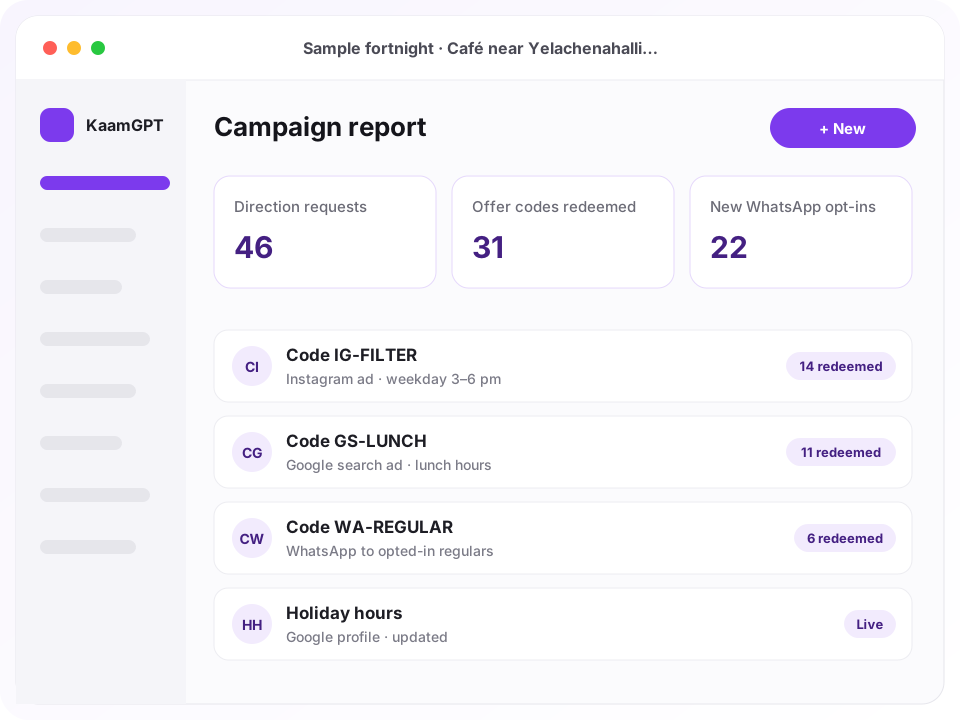
KaamGPT's answer is practical. Get the basics of your Google Business Profile right: hours, entrance, photographs. Show ads only to people who can actually reach your counter. Give every campaign its own offer code so the till, not a dashboard, tells you what worked. And keep regulars returning with occasional WhatsApp messages they asked to receive.
- ₹4,999monthly to manage radius-limited Google Ads for a shop, with click costs paid to Google
- ₹4,999monthly to manage Instagram and Facebook ads, with media costs paid to Meta
- ₹9,999upwards for a menu, catalogue or small store website, as one project
- 30 daysper ad management cycle, so a first test is judged over a full month
What does the Yelachenahalli stretch of Kanakapura Road offer a shopkeeper?
Yelachenahalli sits on Kanakapura Road in south Bengaluru, close to JP Nagar. Its elevated Green Line station opened in June 2017; it was planned under the name Puttenahalli and renamed after residents pointed out it lies nearer Yelachenahalli. The station serves households in Kumaraswamy Layout, Reserve Bank Layout and the surrounding streets, with JP Nagar the next stop north and Konanakunte Cross the next stop south.
Over the years the old village has turned into a busy commercial strip, with retail outlets, eateries and high-rise apartment buildings along the road. A shop here serves two kinds of customer. One is the commuter walking to or from the platforms, short of time and deciding on impulse. The other is the resident planning a weekend errand, who compares options on a phone first. Good marketing on this stretch treats them differently.
What can we run for a storefront near the Yelachenahalli metro?
Seven services aimed at people who can physically reach your counter. Most shops here begin with the first two and add paid reach only for launches, festivals and slow weekdays.
A Maps listing tuned for walk-ins
Hours for each day including festival closures, a pin matching the real entrance, photographs of the shopfront as seen from the road, product or menu categories, and posts for current offers. KaamGPT's profile app handles review replies and runs geo-grid checks, revealing whether the shop surfaces in searches made from JP Nagar or Kumaraswamy Layout rather than only the pavement outside.
Google Business Profile in detail →Search ads fenced to the neighbourhood
Search campaigns on Google Ads can be fenced to people nearby, only during opening hours, with location assets that display your address. Stores with an online catalogue can add Shopping or Performance Max. This is google ads for retail stores judged on calls, direction requests and codes redeemed at billing, never on impressions alone.
Google Ads in detail →Instagram and Facebook within reach
Meta Ads suit moments that need a picture: a new menu, a weekend sale, an opening. The audience is fenced to a tight radius around the shop, creative comes from your own photos and phone footage, and each campaign carries its own offer code, so redemptions at the counter trace back to the ad.
Meta Ads in detail →A posting calendar that never stalls
Owners stop posting in their busiest weeks, which is exactly when it matters. The Social Media Automation app holds a month of approved posts, new arrivals, specials, festive timings, and publishes them on schedule. For food businesses this is instagram marketing for cafes run to a calendar rather than to a mood.
Social media in detail →Bringing regulars back on WhatsApp
Customers who agree at billing can receive the odd message: festival pre-orders, a restock, a tasting evening. KaamGPT's WhatsApp apps send only to customers who said yes at the counter and log every opt-out, which suits regulars living in the apartment blocks along this road.
WhatsApp campaigns in detail →Menu and catalogue sites that load fast
A lightweight site with your menu or product range, timings, a map pin and a tap-to-chat WhatsApp link, or a small online store if you deliver. The project is priced from ₹9,999, is usually ready within about seven days, and comes with analytics installed, revealing which pages send people to the door.
Websites in detail →Pages for what people want nearby
An SEO retainer builds pages for the specific things people hunt for on this stretch, a birthday cake order, spectacle frames, a bridal make-up trial, and fixes technical issues that slow a mobile site. Monthly reports cover the agreed phrases; nothing is promised about rankings.
SEO in detail →How do you turn passing trade on Kanakapura Road into regulars?
Think in two loops. The first catches people who are already nearby and deciding now: an accurate Maps listing, correct open-now hours and search ads restricted to the neighbourhood during trading times. The second brings back people who came once: a review request, a WhatsApp opt-in at billing and occasional posts they actually see. Local business marketing on Kanakapura Road fails most often because the second loop was never built.
The station feeds the first loop. People walking to and from the platforms pass the same shopfronts day after day, and a clear sign plus a strong Google listing turns that familiarity into a first visit. After that the job is memory: making sure the customer thinks of you, not the next counter along, when they need the same thing the following week.
One offer code per channel
Give the Instagram ad, the Google ad, the WhatsApp message and the printed flyer each a different code. Counting codes at the till is the simplest honest measure of which channel brings people in.
Hours that match reality
Update Google for late weekend closings, festival days and any monsoon closures. Someone searching for a place open now is ready to walk in, and a wrong hour hands them to a competitor.
Photograph the entrance too
A picture of the shopfront from the road, with the nearest landmark visible, cuts the calls asking for directions and helps drivers stop at the right gate instead of circling back.
Ask at billing, not days later
The review request and the WhatsApp opt-in both happen at the counter, while the experience is fresh. A table tent or counter card carrying a QR code is easier for a customer to act on than a message sent next week.
Budget by weekday
Slow weekday afternoons are where small ad budgets earn their keep. Ad schedules can switch spend on when the shop is quiet and off when it is already full, so no rupee buys a queue.
Which of the six packages suits a storefront, and what does each cost?
Storefronts usually start small: a corrected listing, then one paid channel. Published starting prices are shown below in rupees, and a signed quote fixes your actual figure before work begins. Ad money is separate from every fee here. Google and Meta bill it to the payment method on your own ad account, so you can raise it for Deepavali week and cut it in a quiet month.
Digital Marketing
Full service₹19,999/month
Typically 15 days
Multi-outlet restaurants or retailers wanting one plan spanning search, social and email; ₹19,999 monthly upwards, reported weekly.
- Channel strategy
- Creative production
- Campaign management
- Weekly reporting
SEO
₹14,999/month
Typically 30 days
Specialist stores, opticians, bridal salons and cake studios, whose customers search for specific products before travelling to a shop.
- Technical audit
- Keyword research
- On-page optimisation
- Content plan
- Monthly reporting
Google Ads
₹4,999/month
Typically 30 days
Shops wanting calls and direction requests from people searching nearby right now, with spend switched on only during trading hours.
- Account setup
- Keyword strategy
- Ad copy testing
- Conversion tracking
- Bid optimisation
Meta Ads
₹4,999/month
Typically 30 days
Cafés, bakeries, boutiques and gyms whose offer is visual, shown to households within a short ride of the counter.
- Creative testing
- Audience building
- Retargeting funnels
- Pixel setup
- Weekly reporting
Lead Generation
₹24,999/month
Typically 14 days
Wholesalers and suppliers on this stretch whose buyers are other businesses, offices, caterers, clinics; starting at ₹24,999 monthly.
- Verified leads
- Multi-channel outreach
- CRM integration
- Lead scoring
- Replacement guarantee
Website Development
From ₹9,999/project
Typically 7 days
Any outlet whose menu, price list or catalogue lives only in photographs on a phone, or which wants to take orders online.
- Custom design
- Mobile first
- SEO ready
- CMS included
- Analytics setup
- 1 month free support
- The two ad-management fees pay for our time on your campaigns; media spend travels directly to Google or Meta and stays fully under your control.
- Festival bursts can be quoted as a defined extra scope, rather than raising a monthly fee all year.
What should a shop on Kanakapura Road expect to spend?
A single outlet can run a sensible programme on one ₹4,999 monthly management fee, for Google Ads or alternatively Meta Ads, plus a modest media budget the platform bills you for. Add the listing work, which costs little beyond setup, and that is often the whole bill until results justify more. Restaurants weighing this against delivery-app commissions should remember that customers who order directly remain your customers.
Prices for storefront marketing vary because the work varies. A cheap package may post three times a week to followers who live across the city; a proper one limits reach to people who can walk in and measures redemptions. The best digital marketing agency for local shops is simply the one whose report you can check against your own till roll.
- How many outlets and how many offers are running at once.
- Whether you need Google, Meta or both, since each channel carries its own management fee.
- Seasonality: festival and wedding-season bursts need more budget and creative than ordinary months.
- Whether offer codes, call tracking and direction-request reporting are included, which cheap packages usually skip.
- Who supplies photographs and clips, and how often the menu or range changes.
- Whether an online store with product listings is needed, which raises website scope beyond a simple menu site.
Which shops and outlets on this stretch do we help?
- Restaurants and cafésMenus, peak-hour posts, table or order buttons, and radius ads timed to lunch and dinner for dine-in and takeaway customers.
- Bakeries and sweet shopsFestival pre-order campaigns, cake-order pages and WhatsApp reminders to customers who asked, planned well ahead of Deepavali and Ugadi.
- Apparel, footwear and ethnic wearNew-arrival posts, wedding-season campaigns and Google listings with product categories, for stores competing with the malls further along the road.
- Opticians and electronics storesSearch campaigns for specific brands and repairs, Shopping ads where a catalogue exists, and profiles listing services such as eye tests.
- Salons and spasAppointment links, priced service menus, and review requests after appointments, with Instagram posts of real work rather than stock images.
- Gyms and fitness studiosTrial-pass campaigns to residents nearby, class timetables on the website, plus WhatsApp nudges to members who opted in.
- Pharmacies and daily-needs storesAccurate hours, delivery details and category listings, without advertising prescription medicines in ways the platforms prohibit.
- Real estate officesRental and resale enquiries around the metro, with search ads limited to serious property phrases and listings kept current on Google.
What route does a digital marketing agency in Yelachenahalli, Bangalore take from sign-up to a shop's first tracked walk-in?
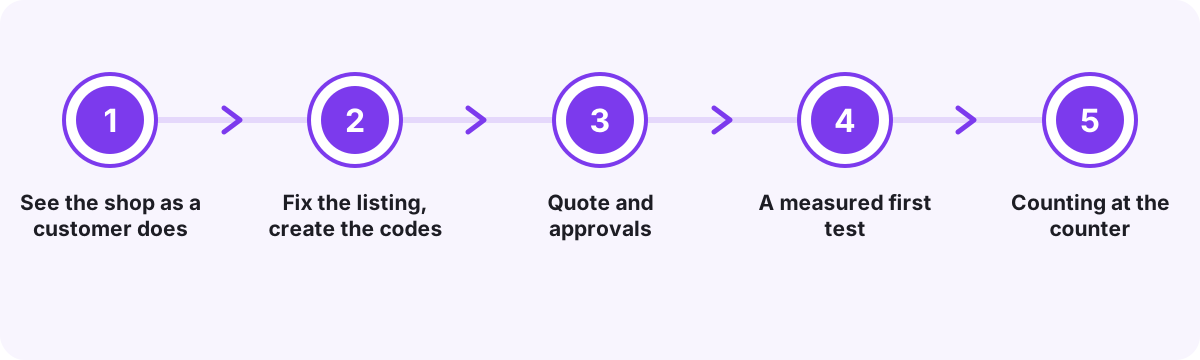
See the shop as a customer does
We search as a customer would from the metro exit, from JP Nagar and from Kumaraswamy Layout, and note what appears: your listing, rival shops, photographs, hours, reviews. The result is a short list of what is costing you visits.
Fix the listing, create the codes
Hours, pin, categories and photographs are corrected first, because they cost nothing to run. Offer codes are created for each channel you plan to use, and staff at billing are shown how to record them.
Quote and approvals
The quote, in writing, pins down scope and price. Ad text, images and the radius are approved by you before anything is shown to the public, and nothing is published without that approval.
A measured first test
One offer, one radius, one or two channels, over a single 30-day management cycle. The first month is treated as a test with a budget you set, not a gamble with money you cannot spare.
Counting at the counter
Weekly reports place ad spend beside calls, direction requests and codes redeemed at billing, so you see cost per walk-in. Channels that bring nobody through the door are cut, however good their reach looks.
Why does KaamGPT suit busy storefronts?
Measured at the till
Offer codes, calls and direction requests are the headline numbers in every report. Likes and reach appear lower down, because they do not pay rent on a Kanakapura Road shopfront.
Approvals between customers
Drafts for ads, posts and replies reach you on your phone and take a minute to approve. Nothing goes public without that tap, and nothing waits days for a meeting.
Your accounts, your customer list
Ad accounts, the Google listing and the WhatsApp opt-in list are registered to your business. KaamGPT works inside them as a user, so the customer relationships you build stay yours.
Straight talk on discounts
Permanent offers train customers to wait for them. We plan offers for slow hours and specific launches, and say so when a discount is costing more than the visits it brings.
One workspace, several apps
Listing, social publishing, WhatsApp and email run from one KaamGPT workspace, the same one 100+ companies across India use, so a shop owner has one login instead of five.
How can a shop tell whether an online ad brought someone through the door?
Platforms report clicks and reach, but a storefront is paid at the counter. The most reliable bridge between the two is a code or phrase the customer mentions at billing, different for every channel and every campaign. Staff note it, the sale is logged, and a week later you can divide ad spend by redemptions and see a real cost per visit.
Google also shows how many people requested directions or tapped to call from your profile and your ads, which is a strong signal of intent from people nearby. Put those together with codes and a simple question at billing, how did you hear of us, and the picture becomes clear enough to make decisions, even if it is never perfectly complete.
- A separate code for each ad, message and flyer.
- Direction requests and calls read from the Google profile and ads.
- A tally sheet or billing-software tag at the counter.
- Weekly comparison of spend against redemptions, not against likes.
Should a Yelachenahalli restaurant spend on Google, Instagram or delivery apps first?
Start with Google, because it is free to correct and captures diners already choosing a table. The listing, menu, hours and photographs decide a large share of first visits from people searching nearby. Instagram comes next for discovery, shown to households within a short ride. Delivery apps bring volume but charge a commission on each order and keep much of the customer relationship on their platform.
Digital marketing for restaurants in Yelachenahalli works best when these channels are given separate jobs. Google brings the hungry and nearby, Instagram introduces the menu to people who have not tried you, and your own website and WhatsApp list turn first-timers into regulars who order directly. Each job is measured on its own terms. Any digital marketing agency in Yelachenahalli, Bangalore that pours all three into one budget will misjudge at least one of them.
Why do busy counters near the station still lose customers?
Footfall hides problems. When the counter is crowded, it is easy to assume the marketing works, and nobody notices the people who searched, saw the wrong hours and went elsewhere. These are the leaks that show up most often in storefront businesses along a busy road.
- Google hours that ignore late weekend closings, so people searching after dinner are told you have shut.
- Menu or price-list photos from several years ago, setting expectations the counter can no longer meet.
- Instagram followers scattered across the city, while the people who can actually walk in live within a short ride.
- Nothing to show whether a discount was claimed because of an ad, a flyer or a regular who would have come anyway.
- Parking, entrance and landmark details missing, so drivers on Kanakapura Road pass the shop and give up.
- Locality
- Yelachenahalli, on Kanakapura Road, south Bengaluru
- Metro
- Yelachenahalli station, Green Line, opened June 2017
- Station history
- Southern end of the Green Line until the January 2021 extension
- Neighbouring stops
- JP Nagar to the north, Konanakunte Cross to the south
- This page is for
- Restaurants, cafés, retail stores, salons and gyms
- Measure of success
- Offer codes redeemed, calls and direction requests
Where this applies around Yelachenahalli, Bengaluru
- Bengaluru
- Yelachenahalli
- JP Nagar
- Kanakapura Road
- Kumaraswamy Layout
- Karnataka
- India
Frequently asked questions
22 answersMy café is near the Yelachenahalli metro. What would marketing cost each month?
Most cafés start with one paid channel. Instagram and Facebook ad management is ₹4,999 monthly, and so is Google Ads management, with media money going straight to Meta or Google. Listing fixes cost little, and a menu website is a one-time project from ₹9,999. The full managed plan begins at ₹19,999 monthly. These are rupee amounts, locked in by a quote.
Would a single shop get value from a digital marketing agency in Yelachenahalli, Bangalore?
It can be, if the work is measured at the counter. A single shop rarely needs a large retainer; it needs an accurate listing, one well-targeted channel and a way to count results. If after a month of offer codes and direction requests a channel is not bringing people in, it should be stopped, and a good agency will say so.
Is it possible to limit our ads to households around the Yelachenahalli shop?
Yes. Both Google Ads and Meta Ads let campaigns target a radius around an address. On Google we normally pick the presence option, meaning people physically in the area or there regularly, instead of the broader interest-based setting. Schedules can also limit ads to your opening hours, so spend is never wasted while the shutter is down.
How much should a retail store spend on Google Ads?
No single number fits every store. One selling everyday items within a short radius needs a fraction of what a shop advertising high-value electronics across south Bengaluru needs. We propose an opening daily figure after checking what people nearby search for and how many shops bid on it, then adjust after the first month. That money goes from your account to Google.
Can KaamGPT look after our listing on food delivery apps?
No. Listings, promotions and ads inside food delivery apps are handled on those platforms and sit outside what KaamGPT does. Our work covers channels your business owns or controls: your Google listing, Google and Meta ads, your website, WhatsApp and email. Many restaurants use both, with delivery apps for reach and their own channels for regulars.
How soon will an improved Google listing bring more walk-ins?
Corrections to hours, categories and photographs appear quickly once Google accepts them, and you can see calls and direction requests in the listing's own insights. How far visibility improves rests on how Google weighs relevance, proximity and prominence. Most shops see the clearest early effect from fixing wrong hours, because customers stop being turned away.
Will you help our salon near Yelachenahalli collect more Google reviews?
We can help you ask for them properly. Each client gets an identical review request at billing, by card, QR code or WhatsApp, and replies are drafted in KaamGPT's profile app for your approval. We do not buy reviews, offer discounts for them or ask only happy customers, all of which break Google's rules and risk removal.
Does a small Yelachenahalli café really need Instagram?
Usually, if it is used to reach nearby people rather than to collect followers. Posts of the actual food, the space and the week's specials, scheduled regularly, keep regulars interested. Paid Instagram ads limited to a short radius introduce the café to residents who have not visited. Judge it by codes redeemed, not by the follower count.
Will you shoot photographs or videos of our menu?
Neither: filming and photo shoots are not services KaamGPT provides. Good phone photographs, taken in daylight near a window, are enough for most listings and ads, and you get a short list of shots to take, so nothing is guesswork. We then edit and arrange that material into posts and ads.
Could our shop sell online through a site you build?
Yes. Website development covers small online stores with product listings, prices and order or payment options, priced by scope from ₹9,999. For stores with a catalogue, Google Shopping or Performance Max campaigns can then promote products directly, managed under the Google Ads service. Delivery and fulfilment remain with you.
What reports will we get, and how often?
Ad campaigns report weekly: spend, calls, direction requests, offer codes redeemed and what changed. SEO gets a monthly note on the phrases we agreed. Every report closes with one or two decisions for you, such as moving budget to weekday afternoons or dropping an offer that attracts only bargain hunters. A digital marketing agency in Yelachenahalli, Bangalore that cannot show you this weekly is reporting the wrong things.
When do we pay, and for how long are we committed?
After an initial conversation, which costs nothing, you receive a quote stating the scope, the fee and how and when to pay. Work begins once you accept. Ad work is organised into 30-day cycles, which suits shops that want to test and review monthly. Ad spend is charged to you by Google or Meta, never collected by us.
Which businesses near the Yelachenahalli station are not a good fit?
Shops that cannot record offer codes or ask how customers heard of them, because results would be guesswork. Businesses wanting influencers, paid followers or a promised number of customers. And outlets already full at every hour, where more marketing would only lengthen the queue; there the job is capacity, not promotion.
Do you also work with shops in JP Nagar and Konanakunte?
Yes. The same approach applies along the whole Green Line corridor, adjusted for each area's customers. See our pages for <a href="/digital-marketing-agency-jp-nagar-bangalore">JP Nagar</a>, <a href="/digital-marketing-agency-konanakunte-bangalore">Konanakunte</a> and the wider <a href="/digital-marketing-agency-kanakapura-road-bangalore">Kanakapura Road</a> corridor. A digital marketing company in Yelachenahalli can easily run a multi-outlet brand across all three.
Who do I phone to talk about my shop?
Ring +91 79767 82366, or send a WhatsApp to that number; mention the shop, the goods and the hours your counter sits idle. A specialist replies inside one working day. If it helps, share your Google listing link first; we can usually point out two or three fixes during that first conversation, before any quote.
Can you run Deepavali or Ugadi campaigns for our bakery?
Yes, and planning should start a few weeks ahead. Pre-order pages, WhatsApp announcements to opted-in customers, Instagram posts and a short radius-limited ad burst can all be timed to the festival. Festival campaigns can be quoted as a defined extra scope, so you are not paying a higher monthly fee all year.
Do you arrange influencer promotions for restaurants?
We don't. KaamGPT has no influencer programme, and it never sells followers. What we do instead is make sure the people who discover you through any route, including a food blogger you invited yourself, find accurate hours, a current menu and an easy way to return.
Can WhatsApp messages to customers get our number restricted?
They can if customers did not ask for them and block or report you. That is why KaamGPT's WhatsApp apps message only people who gave consent, log every opt-out, and encourage a light touch: festival pre-orders, restocks, events. Messages people want are rarely reported.
Does our shop need a website if the Google listing is good?
Not always. A strong listing handles hours, directions and reviews. A website becomes worthwhile when you have a menu or catalogue that changes, want online orders, or plan to run ads that need a landing page with more detail than a listing can hold. We will tell you honestly which case you are in.
What should we have ready before the first week?
Manager rights on your Google listing and any ad accounts, your current menu or price list, a few daylight photographs of the shopfront and interior, your quietest trading hours and one offer you are willing to test. Staff at billing also need five minutes to learn how offer codes are recorded.
Why is my shop missing when someone searches for a bakery near me around Yelachenahalli?
Google's local results weigh three things it names itself: how relevant a listing is, how far away it is, and how prominent the business is. A listing with vague categories, few photographs, stale hours or few recent reviews scores low on relevance and prominence, even if the shop is close. Correcting categories, adding real photographs, keeping hours current and requesting a review from every customer are the fixes within your control.
Should a shop here run discounts all the time?
Rarely. Constant discounts teach customers to wait for them and shrink margins. Offers work better when tied to slow hours, a launch or a festival, and when each has its own code so you can see whether it brought new people or simply discounted regulars. We plan offers around your quietest trading times.