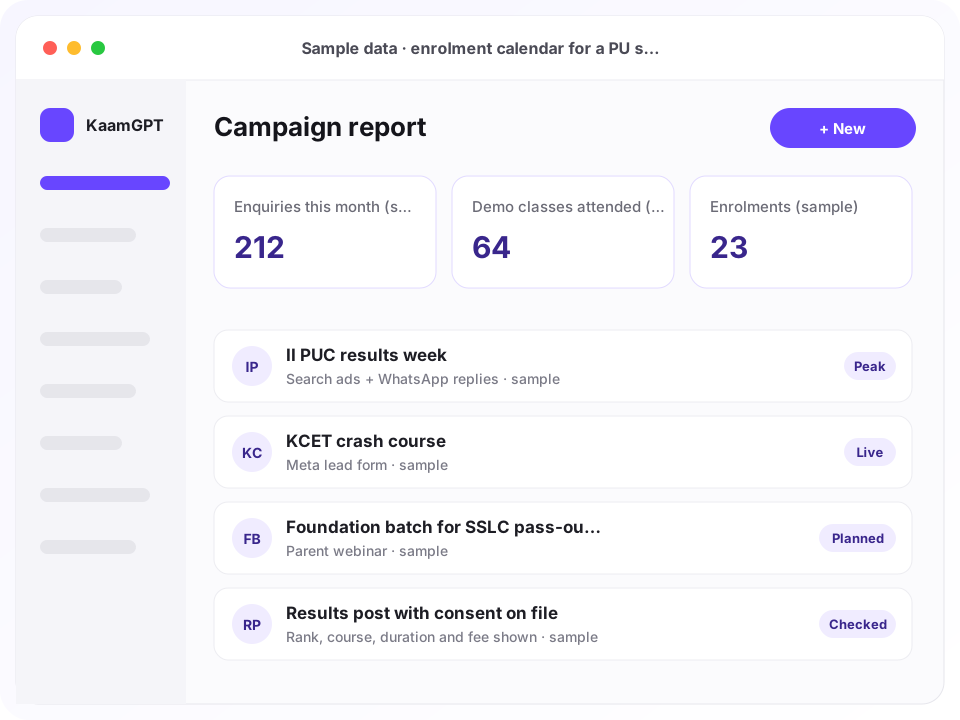
Timing decides most of what the best digital marketing agency for coaching centres in Bengaluru can do for you. A tuition centre in Malleshwaram, an entrance-exam institute in HSR Layout and a school taking applications in Whitefield all sell to families who decide in short, predictable windows, and a campaign that starts a week late meets parents who have already shortlisted someone else.
KaamGPT plans the year first and the channels second. We map when your families start looking, which exam or admission each course feeds, and what a Bengaluru parent needs to see before paying a term's fee. Search, social, WhatsApp and the website then work from that single calendar. The managed retainer behind it begins at ₹19,999 monthly, and every results claim is read against the consumer rules written specifically for coaching.
- ₹19,999monthly entry point for the managed retainer, before your course list sets the final figure
- ~15 daysfor calendar drafting, tracking repairs and the first live campaigns
- 2 buyersin most enrolments: the parent who pays and the student who has to want to attend
- 3 entrance teststhat set the Karnataka PU science year: JEE (Main), NEET (UG) and KCET
What goes wrong when coaching centres market themselves?
Effort is rarely the missing piece. A calendar is. Posts and ads start when seats look empty, which is usually after families have settled, and the busiest teaching months leave nobody free to pick up the phone when enquiries finally come.
- Ads begin after board results instead of before them, so the first message a parent sees comes from a rival that planned its admission season campaigns in January.
- One creative tries to speak to parent and student at once and persuades neither: parents weigh faculty, safety and fees, while students weigh timings, friends and the teacher's style.
- Topper posters go up without the student's written consent taken after selection, or without the rank, course and duration printed beside the photo, both of which the consumer authority's 2024 coaching guidelines require.
- Parent enquiries arrive through Instagram, WhatsApp, the website and the front desk, yet last year's admissions cannot be traced to any of them.
- Lines such as 'last few seats' run all season, which ASCI's education guidelines and the CCPA both treat as misleading when the scarcity is not real.
What would a year planned by the best digital marketing agency for coaching centres in Bengaluru look like?
We start with your last two admission cycles, not with channels. Which month did enquiries arrive, which courses filled first, which location struggled, and how many demo-class visitors went on to pay? Even rough answers from a register or a spreadsheet tell a digital marketing agency for coaching centres in Bangalore where the year's money should go and which months can run on content alone.
Then we write the year as four kinds of window. Results weeks, when parents search urgently. Pre-batch months, when they compare. Exam months, when students stop reading ads and parents stop deciding. Quiet months, when trust is built cheaply through useful content. Every channel gets a job in each window, and the enrolment funnel is measured the same way throughout.
Results-week readiness
Landing pages, ad copy and WhatsApp replies are written and approved before SSLC and II PUC results, so the centre is visible on the day families start asking what comes next.
Separate messages for parent and student
Parent ads carry faculty, safety, batch size and fees. Student content shows teaching style, timings and the atmosphere inside a real class. Both lead to the same demo class.
Quiet-month content
During exam weeks and the monsoon lull, short explainers and study plans cost little to produce and build the familiarity that pays off when the next window opens.
One enquiry register
Every call, form, Instagram message and walk-in is logged with its source and course, so next year's budget follows enrolments rather than whichever channel was loudest.
A claims check on every asset
Each poster, reel and ad is read against the CCPA coaching guidelines and ASCI's education guidelines before it goes out, and every results claim carries its disclosures.
What does managed digital marketing cover for a coaching centre?
Seven pieces, run as one programme. The emphasis shifts with your courses, your locations and wherever admissions come from today.
An academic-year media calendar
We lay your courses against the dates that drive demand: SSLC and II PUC results, the two JEE (Main) sessions, NEET (UG), KCET, school admission notices and the summer break. Each window gets a budget, a message and a channel mix agreed in advance, so spending rises before families decide rather than after. The wider approach is explained in our Bengaluru digital marketing guide.
Digital marketing in detail →Course pages that answer parents
Search brings the most deliberate enquiries, so each course needs a page with its board, exam, batch timings, batch size, faculty qualifications and fees. Those are the details the Ministry of Education's 2024 model guidelines expect a coaching website to carry anyway. Our page on SEO for coaching centres goes further, and the SEO service lists what is included.
SEO in detail →Search ads timed to decisions
Paid search runs hardest in the weeks after results and before a batch starts, on searches such as 'KCET crash course Jayanagar' or 'NEET repeater batch Bangalore'. Google does not allow personalised ads to anyone under 18, so campaigns reach families through keywords and place, which suits coaching well. See Google Ads for coaching centres.
Google Ads in detail →Instagram and Facebook for the parent
Social ads build familiarity months before the need: a faculty introduction, a ten-minute concept explainer, a walk through the real classroom. Meta lets advertisers reach teenagers by age and location only, so paid campaigns are written for parents, and students meet the centre through organic posts and through their families. The Meta Ads service sets out the management work.
Meta Ads in detail →WhatsApp replies that respect consent
Plenty of Bengaluru parents would rather type a question about fees and timings than call. We set up quick replies, demo-class confirmations and batch reminders for families who have opted in, and broadcasts go only to contacts who said yes to hearing about new batches.
WhatsApp campaigns in detail →One tap to a trial session
If a parent on a phone has to hunt for the booking form, the rest of the plan leaks. We shorten the path to a trial session, add call and WhatsApp buttons, and track every booking. Where a fresh site is the better answer, ₹9,999 is the floor for a website project, quoted on its own.
Websites in detail →Email for the slow decisions
Some decisions take a year, such as a Class 9 parent planning for JEE. A monthly letter with exam notices, study plans and new-batch dates keeps the centre in mind without pressing for a decision before the family is ready.
Email campaigns in detail →Why ask KaamGPT to run a coaching centre's marketing?
We already do this for an academy
For OneMove Chess Academy in Bengaluru we built the website, where parents book demo classes online, and we run its local search, social posts, paid search and social advertising, WhatsApp and email.
Rules read before copy is written
Our checklist comes from the CCPA's coaching guidelines and ASCI's education guidelines, so a topper poster, a testimonial or an urgency line is cleared at draft stage rather than defended after someone complains.
Every channel on one calendar
The parent who watches your physics teacher's reel on Sunday and types your name into Google on Monday should find the same batch dates, the same fee and the same demo-class link waiting there.
Judged on paid admissions
Reports lead with demo classes attended and fees received by channel. When a channel stops earning its share, we say so in the report and move the money.
Planners in Bengaluru, working remotely
Our planners sit in Bengaluru and meet centres over video calls, phone and WhatsApp, so a Basavanagudi owner and a Whitefield owner get the same attention without anyone travelling.
Matching KaamGPT packages to the size of your institute
When one plan has to steer every channel, the managed digital marketing retainer opens at ₹19,999 monthly. Clicks and impressions are billed by Google and Meta straight to the centre, so they never pass through our invoice. Before anything starts, a written quote names the courses, locations and channels in scope, plus what sits outside it.
Digital Marketing
Recommended₹19,999/month
Typically 15 days
Centres juggling several courses and admission windows that want search, social, WhatsApp, email and the website steered by one calendar.
- Channel strategy
- Creative production
- Campaign management
- Weekly reporting
SEO
₹14,999/month
Typically 30 days
Institutes wanting course and exam pages to draw unpaid enquiries from parents who research weeks ahead; ₹14,999 monthly upward.
- Technical audit
- Keyword research
- On-page optimisation
- Content plan
- Monthly reporting
Local SEO
₹4,999/month
Typically 14 days
A single tuition centre whose families live a few kilometres away and find it on Google Maps; ₹4,999 monthly for each location.
- Google Business Profile optimisation
- Local keyword map
- Location page on-page fixes
- Citation building and NAP cleanup
- Local link outreach
- Review replies and posts
- Monthly report
Google Ads
₹4,999/month
Typically 30 days
Centres needing quick enquiries in results weeks and before batch start; ₹4,999 monthly for management, with clicks billed to you separately.
- Account setup
- Keyword strategy
- Ad copy testing
- Conversion tracking
- Bid optimisation
Meta Ads
₹4,999/month
Typically 30 days
Centres wanting parents to recognise their faculty and classrooms before the decision window opens; management begins at ₹4,999 monthly.
- Creative testing
- Audience building
- Retargeting funnels
- Pixel setup
- Weekly reporting
Lead Generation
₹24,999/month
Typically 14 days
Multi-location institutes after a counselling-ready pipeline with qualification, follow-up and reporting; ₹24,999 monthly upward.
- Verified leads
- Multi-channel outreach
- CRM integration
- Lead scoring
- Replacement guarantee
- Catalogue figures mark where each service begins; a centre with many locations, courses or teaching languages should expect a larger written quote.
- Platform charges land on the centre's own card or invoice account, while KaamGPT's fee pays for planning, creative, management and reporting.
- Landing pages or a new website sit outside the retainer and are priced as a separate project.
| Package | Starts at | Timeline | Best for |
|---|---|---|---|
| Digital Marketing | ₹19,999/month | Typically 15 days | Centres juggling several courses and admission windows that want search, social, WhatsApp, email and the website steered by one calendar. |
| SEO | ₹14,999/month | Typically 30 days | Institutes wanting course and exam pages to draw unpaid enquiries from parents who research weeks ahead; ₹14,999 monthly upward. |
| Local SEO | ₹4,999/month | Typically 14 days | A single tuition centre whose families live a few kilometres away and find it on Google Maps; ₹4,999 monthly for each location. |
| Google Ads | ₹4,999/month | Typically 30 days | Centres needing quick enquiries in results weeks and before batch start; ₹4,999 monthly for management, with clicks billed to you separately. |
| Meta Ads | ₹4,999/month | Typically 30 days | Centres wanting parents to recognise their faculty and classrooms before the decision window opens; management begins at ₹4,999 monthly. |
| Lead Generation | ₹24,999/month | Typically 14 days | Multi-location institutes after a counselling-ready pipeline with qualification, follow-up and reporting; ₹24,999 monthly upward. |
How should a coaching centre budget for a full academic year?
Budget by window, not by month. A PU coaching centre might spend lightly from August to December on content and retargeting, more from January as Class 10 parents start comparing, and most in the weeks around SSLC and II PUC results. As an example only, a centre might plan for its results weeks to carry the largest single slice of the ad budget. The right split depends on where last year's enrolments actually came from, which is why the review comes first.
When you compare quotes from a digital marketing agency for coaching centres in Bangalore, insist that three costs sit on separate lines: the agency's own fee, the ad budget paid to platforms, and one-time jobs like a website build or a video shoot. Our pricing page shows the starting fees, and the written quote spells out everything else, including what is out of scope.
- How many courses and exams you prepare for, since every one of them needs its own pages, ads and messages.
- How many locations you run, as targeting, landing pages and enquiry routing are set separately for each.
- Whether you market in English only or in Kannada as well, which roughly doubles creative and page work.
- How crowded your area is in results weeks, when national brands bid on the same searches.
- How much video you need, since faculty explainers and classroom walk-throughs take shooting and editing time.
- Whether enquiry handling is ready; a centre without a register or a WhatsApp routine needs that built first.
What do the first ninety days look like for a centre?
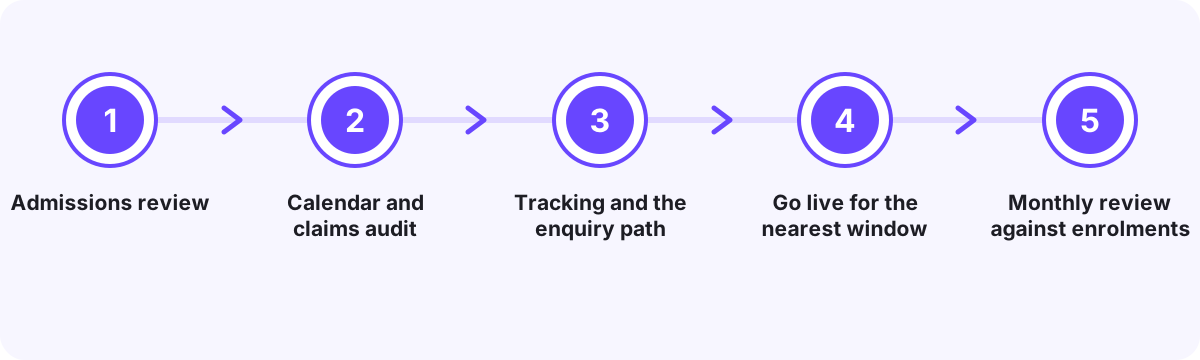
Admissions review
We read two years of enquiry and enrolment records, list your courses and the windows that feed them, and note honestly what each channel produced.
Calendar and claims audit
We draft the year's calendar with budgets by window, and read your existing posters, pages and testimonials against the coaching advertising rules, flagging anything to fix or withdraw.
Tracking and the enquiry path
Forms, calls and WhatsApp clicks are tracked, the trial-session booking is made easy on mobile, and every enquiry lands in one register with its source and course.
Go live for the nearest window
Campaigns open for whichever admission window comes next, with parent and student messages running side by side and the counsellor briefed on follow-up scripts.
Monthly review against enrolments
Each month we compare enquiries, demo classes and enrolments by channel, course and location, and shift budget towards whatever produced paying students.
Which coaching formats gain most from a planned year?
- Integrated PU science coachingTwo-year JEE, NEET and KCET programmes alongside I and II PUC, chosen by parents in the months around SSLC results.
- Repeater and crash-course batchesShort, intense courses after results, where the speed of the first reply decides who gets the student.
- School tuition centresNeighbourhood classes for state board, CBSE and ICSE students, where Maps, WhatsApp and parent word of mouth do most of the work.
- Civil services and KPSC coachingAdult aspirants who research for months and compare faculty, test series and the institute's teaching record.
- Banking, SSC and government-job preparationCost-conscious adult learners choosing between classroom batches and online courses.
- Study-abroad test preparationIELTS, GRE and GMAT students in the tech corridors who decide on schedule, batch size and the trainer.
- Schools taking admissionsK-12 schools whose season follows their own admission notices and depends on campus visits and parent reviews.
- Activity academies for childrenChess, abacus, robotics and coding classes, where a well-run demo class does most of the selling.
Where do Bengaluru families look for coaching, and why there?
Coaching demand in Bengaluru follows schools, colleges and commutes. The older southern and north-western neighbourhoods carry generations of education: BMS College of Engineering, opened in 1946, and National College stand in Basavanagudi; IISc and the MES institutions sit in Malleshwaram; Jayanagar and Seshadripuram have long-running colleges of their own. Families in these areas expect tuition and PU coaching within a short bus or metro ride, and recommendations travel through the same school gates every morning.
The newer IT corridors behave differently. In HSR Layout, Marathahalli and Whitefield many parents commute to tech parks, children attend CBSE or ICSE schools, and national test-prep brands sit beside small subject tutors. Evening and weekend batches matter more, and the first search often happens on a phone in traffic. A plan written for state-board PU students in Rajajinagar has to change before it suits a Whitefield audience, from the language of the ads to the hours the counsellor keeps.
Karnataka adds its own layer to the national exam cycle. The Karnataka Examinations Authority conducts UGCET, the exam families call KCET, and also runs counselling for state medical and dental seats filled through NEET. A centre here therefore answers to two calendars, the National Testing Agency's and KEA's, and its coaching institute marketing has to follow both without confusing families about which deadline is which.
When do Bengaluru families actually decide on coaching?
There is no single admission season. A family with a Class 10 student in a state-board school begins thinking about PU and entrance coaching around the board exams and usually settles soon after SSLC results. A Class 12 student who missed the rank they hoped for decides within days whether to join a repeater batch. A parent applying for a school seat works to a different clock again, set by each school's admission notice.
National exam dates move all of these. The National Testing Agency held JEE (Main) 2026 in two sessions, the second in early April, and its calendar proposes the first 2027 session for late January. NEET (UG) 2026 was held on 3 May and then held again on 21 June as a re-examination, which is a good reminder that a plan has to move with official notices instead of assuming last year's dates.
KCET adds a Karnataka layer. KEA conducts the test and then runs counselling for state quota seats, so a centre selling KCET preparation has two moments to plan for: the build-up to the test, and the counselling period after it, when families want guidance on options and colleges and remember who helped them.
- Before SSLC and II PUC results: parent awareness, faculty content and demo-class invitations.
- Results weeks: search ads, fast WhatsApp replies and short crash-course pages.
- Exam months: lighter spend, because neither students nor parents are deciding.
- After counselling: content for the next batch and for families of younger students.
Who decides: the parent or the student?
Both, and they look at different things. In our experience the parent usually controls the shortlist and the payment, and asks about faculty qualifications, batch size, safety, travel time and fees. The student decides whether they will actually turn up every evening, and cares about the teacher's style, timings that fit around school or college, and whether friends are joining.
Good marketing gives each of them what they need without confusing either. Parent-facing ads and pages lead with facts. Student-facing content shows real teachers solving real problems. The demo class brings both together in one room, which is why it is the conversion the whole plan is built around.
Trust rests on proof a family can check: named faculty with qualifications, a classroom they can visit, fees written down and an exit policy that is easy to find. The Ministry of Education's 2024 model guidelines list almost the same items for a coaching website, so the honest approach and the persuasive one turn out to be the same approach.
Which advertising rules shape a coaching centre's marketing?
Three sets matter most. The CCPA's 2024 guidelines on misleading advertisement in coaching have applied since 13 November 2024 to anyone running or endorsing a centre that coaches more than fifty students. They forbid false claims about selections, ranks and success rates, assurances of admission or high marks, and false urgency or scarcity, and they set disclosure rules for any advertisement built around a successful student.
ASCI's guidelines for educational advertising add rules about tone. Ads should not show school students giving up sleep or meals to study, should not portray an average or low scorer as a failure or as less loved, should not stoke fear of missing out among students or parents, and should not suggest that some subjects belong to one gender. A results claim has to describe the most recent finished academic year, with proof on file.
The Ministry of Education's guidelines, circulated to states in January 2024, are a model for state law. They say centres should not make misleading promises of rank or marks, should not enrol students below 16 or before the secondary school examination, and should publish fees and faculty details online. Karnataka already had its Tutorial Institutions Rules of 2001, so ask your lawyer how the state applies these today.
How do you measure whether coaching marketing is working?
Count what the front desk counts. An enquiry matters only when it turns into a trial session, and a trial session only when the family pays. We watch cost per enquiry to tune ads week by week, but we judge channels on cost per demo class attended and cost per enrolment, separately for each course and location, so a busy channel that never fills a batch is visible.
Coaching has a long tail. A parent who enquires in February may pay in May, and a Class 9 parent may return a year later for the integrated programme. The register keeps the original source, so a reel that started a conversation in winter still gets credit for an admission in summer, and the following year's budget reflects it.
- Enquiry: a form, call, WhatsApp message or walk-in with a name and a course.
- Qualified enquiry: the right class, board and area for a batch you actually run.
- Demo class attended: the family came, in person or online.
- Enrolment: a term or course fee paid.
How should a centre advertise its results now?
Results season is when coaching advertising is most tempting and most watched. In April 2025, after results were declared for exams such as IIT-JEE and NEET, the consumer authority said it had issued notices to institutes over guaranteed selection and assurance of rank, and that it had by then penalised 24 coaching centres. Results advertising is still allowed; it simply has to be built from records rather than from enthusiasm.
A compliant results post names the student only with written consent collected after the result, and shows beside the photo the rank, the course the student took, how long it ran and whether it was paid or free. Any disclaimer sits in the same font as the headline claim. ASCI adds that topper testimonials should come only from students who actually completed the programme at your centre, which rules out featuring a student who attended a weekend test series as if they had taken the two-year course.
We keep a consent and evidence file for every results asset, so a parent's question or a regulator's notice can be answered with documents. The file also protects the centre when a former student later asks for a post to be taken down.
- Consent: written, dated after the result, kept with the asset.
- Disclosure: rank, course name, duration, paid or free, next to the photo.
- Scope: only students who completed that programme with you.
- Year: claims from the latest completed academic year only.
- Managed retainer for coaching
- ₹19,999 monthly entry fee; roughly a fortnight to launch
- Platform budgets
- Billed by Google and Meta to the centre itself
- Windows we plan around
- Board results, JEE (Main), NEET (UG), KCET and school admissions
- Main advertising rule
- CCPA coaching guidelines, in force since 13 November 2024
- Conversion we optimise for
- A demo class attended by parent and student
- Working style
- Bengaluru planners reached on calls, WhatsApp and video meetings
Where this applies around Bengaluru, Karnataka
- Bengaluru
- Karnataka
- India
- Malleshwaram
- Basavanagudi
- Rajajinagar
- HSR Layout
- Whitefield
Frequently asked questions
28 answersWhat does a coaching centre in Bengaluru pay KaamGPT each month for managed marketing?
The managed retainer opens at ₹19,999 monthly. For that, we plan the calendar, produce creative, run the campaigns named in your quote and send a monthly enrolment report. Platform charges are separate and land on your own account, and a fresh website, if one is needed, is priced as its own project.
Does the ₹19,999 retainer cover what Google and Meta charge for ads?
It does not. The retainer pays for planning, creative and management by our team. Clicks and impressions are billed by the platforms to the centre's card, inside ad accounts registered to the centre, so the owner sees spending line by line without asking us for a statement.
How soon does a new marketing plan bring enquiries to a coaching centre?
Setup takes about 15 days: calendar, tracking, landing pages and the first campaigns. If a decision window is already open, search ads can start producing calls inside the first week, while content and SEO need months. Starting in a quiet month means the early weeks build an audience for the next window rather than filling seats at once.
When should a PU coaching centre in Bengaluru start its admission campaigns?
Earlier than most do. Parents of Class 10 students begin comparing PU and entrance coaching around the SSLC board exams, so awareness work should run from about January, with the heaviest spend in the weeks around results. Starting after results means competing for families who have already drawn up a shortlist.
Should coaching ads target parents or students?
Both, with different messages. Parents usually choose and pay, so they need faculty qualifications, fees, batch size and travel time. Students have to want to attend, so they respond to real teachers, real classrooms and timings that fit their day. We run both tracks and send them to the same demo class.
Can a coaching centre use topper photos in ads?
Yes, within the consumer authority's 2024 coaching guidelines. The student has to agree in writing after the result is out, and the ad must state the rank, the course taken, its length and whether it was paid. A disclaimer cannot shrink into small print; it takes the claim's own font. We clear each post against these points first.
Can we say limited seats in our coaching ads?
Say it only when a real, fixed batch size makes it true. The CCPA guidelines treat invented urgency or scarcity as misleading, and ASCI's education guidelines say ads must not create fear of missing out among students or parents. Publish the actual batch size instead, and update the number honestly as seats fill.
What does ASCI say about coaching ads that show stressed students?
ASCI's guidelines for educational advertising say an ad should not show school students skipping sleep or meals to study, and should not portray an average or low scorer as a failure, unhappy or less loved. Show effort and progress instead: a doubt cleared, a test reviewed with a teacher, a timetable that includes rest.
Does the Ministry of Education's age rule affect marketing to Class 8 students?
The Ministry's 2024 guidelines are a model for states, and they say coaching centres should not enrol students below 16 or before the secondary school examination. How that applies in Karnataka depends on state rules, so take legal advice before planning campaigns aimed at younger children. We will not run a campaign your lawyer has advised against.
Which channels matter most for a neighbourhood tuition centre?
For a single tuition centre, Google Maps and WhatsApp usually matter most, because parents look for something near home or school and then message to ask timings and fees. Instagram helps with familiarity. Large paid budgets rarely pay back for one centre; our <a href="/best-local-seo-agency-for-coaching-centres-in-bengaluru">local SEO page for coaching centres</a> covers the Maps side.
Which number tells a coaching owner the marketing is paying off?
Cost per enrolment, read course by course. We also track enquiries, qualified enquiries and demo classes attended for each channel and location, because they show where a problem starts. Cheap enquiries that never visit the centre look good in an ad dashboard and only cost the front desk time.
Do you make reels and videos for coaching institutes?
Yes. We script and edit short faculty introductions, concept explainers, classroom walk-throughs and parent question-and-answer clips. A teacher with a decent phone can record most of them from our shot list, and a professional shoot is quoted separately when needed. Every visual shows real rooms and real teachers, as ASCI's education guidelines expect.
Will you run Kannada and bilingual campaigns for our Bengaluru centre?
Yes. Many Bengaluru families, particularly those in state-board schools, respond better to Kannada or bilingual ads and replies. Each extra language adds its own creative and landing pages, which changes the quote, so flag early which courses need it.
Which questions separate the best digital marketing agency for coaching centres in Bengaluru from the rest?
Ask how admission windows shape their plan, how they handle results claims under the CCPA guidelines, what they count as a conversion and in whose name the ad accounts are opened. If the pitch is all followers and reach, or someone offers to put rank promises in your ads, keep looking.
Do you market schools as well as coaching centres?
Yes. Schools run on a different calendar, set by their own admission notices, and parents weigh campus visits, reviews and transport. The method carries over: map the decision window, give parents the facts they check, and count applications and admissions instead of clicks. A digital marketing agency for coaching centres in Bangalore should be able to explain that difference before quoting.
We run three locations in different parts of the city. Can each be marketed separately?
Yes, and usually it should be. Each location gets its own targeting, its own landing page with address and batch timings, and enquiries routed to its own counsellor. The Ministry's model guidelines also treat each branch of a coaching centre as a separate centre for registration, so keeping separate records suits the marketing too.
Can KaamGPT handle WhatsApp follow-up for coaching enquiries?
Yes. We set up quick replies for fees, timings and demo-class booking, plus confirmations and reminders, and restrict broadcasts to parents who opted in. Promotional SMS needs your header and templates registered under TRAI's DLT system, and we draft those templates with you.
Why is the demo class so central to coaching marketing?
A family sitting in a trial session meets the teacher, sees the room and watches other students work, which tells them more than any advert. So our ads and pages are built to fill demo classes, and every attendee hears back from the centre within a day.
How do changes in exam dates affect a coaching centre's campaigns?
Directly. NEET (UG) 2026 was held on 3 May and then again on 21 June, and JEE (Main) runs two sessions a year. We watch National Testing Agency and KEA notices and shift spend and messages for Bengaluru families when dates move, instead of following a schedule fixed months earlier.
Does a coaching centre in Bengaluru need a website if it is active on Instagram?
Yes. Instagram builds familiarity, but parents close to paying want fees, faculty qualifications, batch timings and an exit policy in writing. The Ministry's 2024 model guidelines expect a coaching website with those details, and Google needs real pages to show for course searches.
Which documents and logins should we keep ready for the first week?
The course and fee list, batch timings, faculty names with qualifications, any enquiry or admission records from last year, logins for existing ad and social accounts, and the name of whoever at the centre will answer WhatsApp. Missing pieces are normal; we help build them during setup.
Will KaamGPT commit to a fixed count of new students?
No, and you should be wary of anyone who does. Enrolments depend on teaching quality, fees, location and competition as much as on marketing. What we do commit to is a written plan, a monthly report broken down by channel, and plain advice when something is not working.
What is your approach to parent reviews and student testimonials?
Satisfied parents are asked for honest Google reviews; we never write or buy reviews. Video testimonials need written consent, and for a student's exam result the CCPA requires consent taken after the selection. Replies to reviews avoid naming minors.
Our tuition centre has about forty students. Is the full retainer sensible?
Probably not yet. Marketing for tuition centres of that size usually works best through Google Maps and a quick WhatsApp routine, both covered more cheaply by local SEO. Compare the options on our <a href="/pricing">pricing page</a>, or ask us for a short assessment before committing to anything larger.
Do you take on coaching centres outside central Bengaluru?
Yes. We work with centres anywhere in Bengaluru by phone, WhatsApp and video calls. Targeting is set per location, so a centre in Basavanagudi can reach families in Jayanagar and Banashankari while one in Whitefield reaches Marathahalli and the tech parks.
What arrives in the monthly report?
A plain-language summary of enquiries, demo classes and enrolments by channel, course and location, the spend behind them and the changes planned for next month. In results weeks a coaching centre also gets short mid-week updates, because families decide faster then.
If we part ways, what happens to our ad accounts and pages?
Nothing changes hands, because they were always yours. Ad accounts, social pages, the website and the enquiry register sit in the centre's name, and KaamGPT only holds access. Removing that access is the whole handover.
What is the quickest way to start a conversation about our admissions plan?
Ring or WhatsApp +91 79767 82366 and mention your courses and how many locations you run. A Bengaluru planner will ask a few questions about your last admission season, and the written quote follows that call.