Picking the best digital marketing agency for fashion boutiques in Bengaluru begins with one test: does the agency understand the months in which your customers actually spend? A boutique's year is not flat. It moves from the Ashada clearance in June and July to the silk-saree weeks around Varamahalakshmi, through Dasara and Deepavali, into the wedding months, and back to cottons by Ugadi. A plan that posts the same way in every one of those months wastes rupees in slow weeks and runs short of stock, staff and patience in the busy ones.
We wrote this for the people who run designer studios, ethnic wear stores, bridal boutiques and tailoring studios who are deciding whether to hand their marketing to someone else. It explains how Bengaluru shoppers move from an Instagram post to a WhatsApp chat to a trial room, where the city's boutiques cluster, what the consumer rules on online sales now ask of a sale post, and what a managed digital marketing plan from KaamGPT includes and costs.
- ₹19,999monthly is the entry fee for a managed boutique plan; the written quote fixes scope
- ~15 daysto map your season, fix profiles and publish the first planned content
- 4 channelsInstagram, WhatsApp, Google and your website, each with one clear job
- 1 Jan 2027when the amended e-commerce rule on showing a prior price beside a discount takes effect
Season by season, what should the best digital marketing agency for fashion boutiques in Bengaluru do?
We start from the calendar, not the channels. A good boutique marketing plan for Bengaluru is a year drawn on one page: when stock arrives, when the festivals fall that year, when your tailors are fully booked, and when you want quieter months filled. Only then do we decide how often to post, when to run ads and when to message past customers.
Two rules run through the whole year. First, never promote what you cannot deliver on time; a Deepavali order that misses Deepavali costs more goodwill than the sale earned. Second, keep the conversation going in the quiet months, because the customers you talk to in Ashada are the ones who book in the wedding season.
Ashada (June to July): clear stock, gather contacts
Ashada is a quiet month for weddings in many Karnataka families, and textile shops traditionally run clearance sales. We use it to move older stock with honest sale posts, and to grow the opt-in list you will need in the busy months, with a simple reason to join, such as first sight of new festive arrivals.
Shravana and Varamahalakshmi (July to August): the silk window
Varamahalakshmi is kept on the Friday ahead of Shravana's full moon, and for many Karnataka households it is an occasion for a new saree. Content shifts to silks, blouse designs and ready-to-wear blouses, and tailoring capacity is announced early so customers know the last date you can accept stitching.
Dasara and Deepavali: the busiest stretch
These are your festive season campaigns at full volume. We prepare the catalogue, the reels and the ad sets in advance, publish cut-off dates for stitching and delivery, and add extra reply cover on WhatsApp so enquiries are not left waiting during the rush.
The wedding months: appointments over impulse
Bridal and trousseau buyers do not decide from one post. The plan moves to appointment booking, bridal lookbooks, family-friendly trial slots and steady follow-up, and the enquiry handling for that stage is described on the boutique lead generation page.
Sankranti, Ugadi and summer: a lighter feed
After the wedding peak, the feed turns to cottons, handlooms and summer kurtas, and the work turns inward: reviewing which posts and searches produced orders, refreshing photography, and setting the budget for the next festive cycle.
What goes into a boutique marketing plan?
Every channel gets one job, and the jobs hand over to each other. Instagram makes people want the piece, WhatsApp answers the questions and takes the order, Google catches the people already searching, and the website removes the doubt before an advance is paid. This is how the managed plan divides the work for a boutique.
A content calendar built on your stock and the season
We plan posts around what is actually on your rails and what is arriving: new silk in time for Varamahalakshmi, lighter cottons before summer, bridal pieces months ahead of the muhurat dates. Reels show drape, fall and fit in daylight, carousels show the details a buyer zooms into, and Stories carry the day's arrivals. Done this way, instagram marketing for boutiques is prepared weeks ahead rather than on the morning of a festival.
Social media in detail →WhatsApp catalogue selling that closes the order
Most Bengaluru boutique sales still close in a chat. We set up your WhatsApp Business catalogue with clear names, prices and sizes, quick replies for the questions you answer fifty times a week, labels for each stage of an order, and broadcast lists made up only of shoppers who opted in. Good whatsapp catalogue selling means a buyer can choose, ask and pay without waiting for you to finish a fitting.
WhatsApp campaigns in detail →Paid Instagram and Facebook reach, only where it pays
Boosting from the phone rarely reaches the right people. We run campaigns to audiences within reach of your shop or studio, send the click to WhatsApp, and pause any ad set that brings no chats. Our sister page on Meta Ads for fashion boutiques covers creative and the platform's commerce and adult-content policies in depth.
Meta Ads in detail →Maps presence for the shop or the studio
People search for a tailor, a blouse stitching studio or a bridal boutique near them and choose from the map. We correct your profile's name, category, hours and photos, add your products, and reply to reviews. For a deeper look at walk-in search, see local SEO for fashion boutiques.
Google Business Profile in detail →Pages that answer what buyers research
A bride's family reads for weeks before they visit. Collection pages, fabric guides and honest pages about timelines and alterations let your site answer those searches, which Instagram cannot do. The SEO page for boutiques explains how that content is built.
SEO in detail →Search ads for buyers with a deadline
Someone who searches for urgent blouse stitching four days before a function is worth paying for. We run small, tightly targeted search campaigns for those moments and switch them off when the season passes, with the click charges billed by Google to your own card.
Google Ads in detail →A website that proves you are real
Before a stranger sends an advance for a bridal lehenga, they look for an address, a phone number, real photographs and clear terms on exchanges, alterations and delivery. We build or tidy a fast, simple site that shows those things, and keep its collection pages in step with the season.
Websites in detail →How does a Bengaluru shopper decide where to buy a festive outfit?
The path is rarely a straight line. A woman in Jayanagar sees a reel of a Kanjeevaram drape in her feed, saves it, sends it to her sister, and forgets about it for a week. When the festival gets close she searches Google for the boutique's name or for a style, checks the reviews and the location on the map, and then sends a WhatsApp message asking for the price, the blouse options and whether stitching can be done by Friday. If the reply comes quickly and answers all three, she visits for a trial. If it comes the next morning, she has already been to another shop.
Who decides depends on the occasion. For a festive saree or kurta set the buyer usually decides alone or with one friend, within days. For a wedding, the bride, the bride's mother and frequently the groom's mother are all part of the decision, and the process runs for weeks or months, with several trial visits. For men's ethnic wear the groom often brings his family, and the purchase is made late. Each of those buyers needs a different kind of content and a different speed of reply.
Trust is built in small ways: real photographs in natural light rather than borrowed catalogue images, prices or price ranges stated openly, reviews that mention fit and timely delivery, and a clear answer about alterations. Here are examples of the searches and messages a plan should be ready for, written as examples rather than measured volumes:
- "designer boutique in Indiranagar for reception lehenga"
- "silk saree with ready blouse Bangalore"
- "boutique for Varamahalakshmi saree near Koramangala"
- "how long does bridal blouse stitching take"
- A WhatsApp message: "Is this available in maroon, size 40, by Thursday?"
What do the consumer rules on online selling mean for a boutique's sale posts?
The 2020 Consumer Protection (E-Commerce) Rules, notified on 23 July 2020, apply to goods bought or sold over a digital or electronic network, including single-brand retailers. They exclude a natural person acting in a personal capacity, but not someone selling on a regular or systematic basis, which describes a boutique that sells through its website or catalogue every week. A business selling its own stock online must show clear information about return, exchange, delivery, payment methods and grievance handling, and one all-in price with its break-up, including delivery charges and tax.
The 2026 amendment to those rules was notified on 9 September 2026 and come into force on 1 January 2027. Two changes matter for a sale. When a seller announces a price reduction on its platform, the earlier price must be shown beside the reduced one, and that earlier price is defined as the lowest price of the item in the thirty days before the reduction was announced. Sponsored listings must be clearly marked, and platforms must follow the 2023 guidelines on dark patterns and carry out a yearly self-audit.
In practice that means an Ashada or Deepavali sale on your website should show a crossed-out price you actually charged recently, not an inflated tag. We keep a simple price log for the pieces we promote so the earlier price can be checked. Whether a particular WhatsApp or Instagram set-up counts as a platform under these rules is a legal question for your adviser; we apply the same honest pricing everywhere because it is also what customers trust. If you sell pre-packed ready-to-wear online, ask your adviser how the Legal Metrology (Packaged Commodities) Rules apply to your listings.
Which numbers show that a boutique's marketing is working?
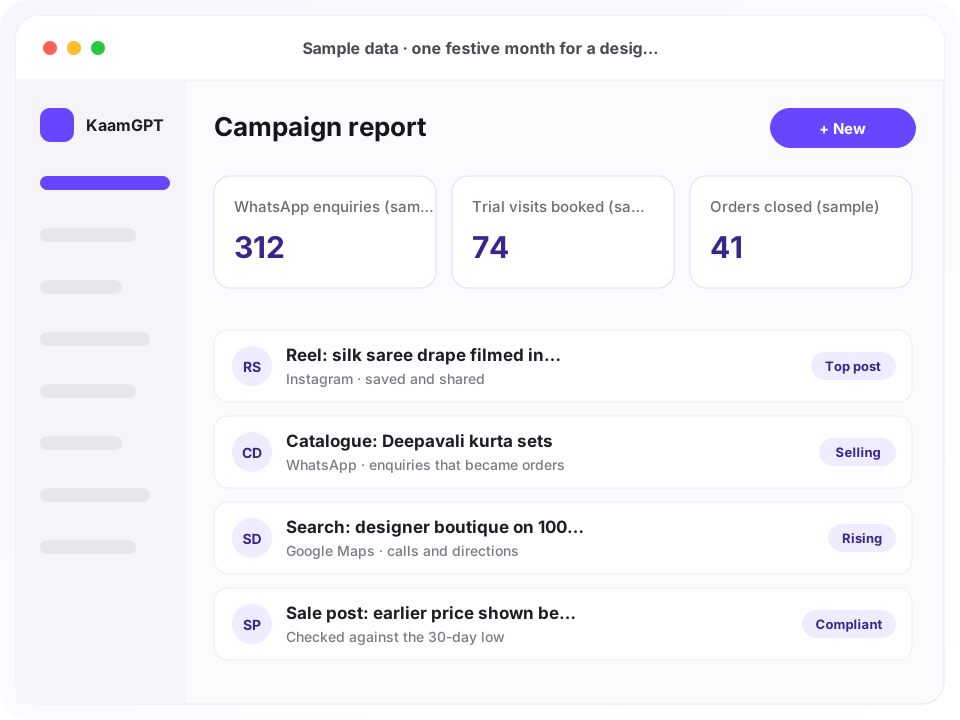
Followers and views are easy to grow and hard to bank. We report the figures that reach the cash counter: WhatsApp and Instagram enquiries, trial visits booked, orders closed, average order value, and orders from returning customers. To connect them to their source, each campaign gets its own click-to-WhatsApp link with a pre-filled message, so a chat that starts with "I saw the Deepavali kurta reel" is counted against that reel.
In the shop, a short question at billing, such as where the customer first came across you, fills the gaps that links cannot. Over a season this shows which effort deserves more money next year: perhaps Maps calls drive most alteration work, while reels drive designer orders. A plan that cannot answer that question by the end of the wedding months has not been measured properly.
- Enquiries by source: Instagram, WhatsApp link, Google Maps, website, referral
- Trial visits booked and attended
- Orders, order value and stitching orders accepted before each cut-off date
- Returning customers in each festive season
What mistakes do boutiques make with digital marketing?
Most of the mistakes come from treating marketing as something done on the day rather than planned for the season. The list below is what we check first when a boutique asks why last year's festive posts did not turn into orders.
- Using a designer's or another store's photographs, which is both dishonest and a quick way to lose trust and invite complaints.
- Calling a saree Mysore silk when it is not; Mysore Silk is a registered geographical indication held by Karnataka Silk Industries Corporation.
- Promising stitching dates the tailors cannot meet in Deepavali week.
- Messaging every number in the phone with offers instead of building an opted-in list.
- Changing the plan every week after looking at a competitor's account.
- Sending paid traffic to a website with no address, no exchange terms and no working phone number.
How is a boutique's managed marketing priced?
A boutique's managed plan begins at ₹19,999 per month, with set-up in roughly 15 days. For one shop or studio that normally includes the season calendar, Instagram content, the WhatsApp catalogue and reply set-up, the Maps profile and a monthly report. Whatever you spend on ads moves directly from you to Meta or Google. Any digital marketing agency for fashion boutiques in Bangalore ought to put its scope on paper before taking payment; ours arrives as a written quote.
Digital Marketing
Recommended₹19,999/month
Typically 15 days
Suits a boutique wanting a single team to plan its season and run Instagram, WhatsApp, Google and the site as one.
- Channel strategy
- Creative production
- Campaign management
- Weekly reporting
SEO
₹14,999/month
Typically 30 days
Fits boutiques whose website ought to appear when Bengaluru families research bridal, fabric and occasion wear; it begins at ₹14,999 monthly.
- Technical audit
- Keyword research
- On-page optimisation
- Content plan
- Monthly reporting
Local SEO
₹4,999/month
Typically 14 days
Fits a street-front shop or studio that relies on Maps calls and walk-ins; ₹4,999 monthly covers one location.
- Google Business Profile optimisation
- Local keyword map
- Location page on-page fixes
- Citation building and NAP cleanup
- Local link outreach
- Review replies and posts
- Monthly report
Google Ads
₹4,999/month
Typically 30 days
Fits short search bursts before festivals and weddings; the management fee begins at ₹4,999 monthly and click costs go to Google.
- Account setup
- Keyword strategy
- Ad copy testing
- Conversion tracking
- Bid optimisation
Meta Ads
₹4,999/month
Typically 30 days
Fits boutiques already producing strong content that now want paid Instagram and Facebook visibility, with management beginning at ₹4,999 monthly.
- Creative testing
- Audience building
- Retargeting funnels
- Pixel setup
- Weekly reporting
Lead Generation
₹24,999/month
Typically 14 days
Fits bridal, trousseau and couture studios that sell through booked consultations; it begins at ₹24,999 monthly.
- Verified leads
- Multi-channel outreach
- CRM integration
- Lead scoring
- Replacement guarantee
- You choose the ad budget and pay Meta or Google for it yourself; KaamGPT charges only for planning, creative direction and management.
- A boutique with two shops, a separate tailoring unit or an online store shipping across India gets a quote written for that set-up rather than the starting price.
| Package | Starts at | Timeline | Best for |
|---|---|---|---|
| Digital Marketing | ₹19,999/month | Typically 15 days | Suits a boutique wanting a single team to plan its season and run Instagram, WhatsApp, Google and the site as one. |
| SEO | ₹14,999/month | Typically 30 days | Fits boutiques whose website ought to appear when Bengaluru families research bridal, fabric and occasion wear; it begins at ₹14,999 monthly. |
| Local SEO | ₹4,999/month | Typically 14 days | Fits a street-front shop or studio that relies on Maps calls and walk-ins; ₹4,999 monthly covers one location. |
| Google Ads | ₹4,999/month | Typically 30 days | Fits short search bursts before festivals and weddings; the management fee begins at ₹4,999 monthly and click costs go to Google. |
| Meta Ads | ₹4,999/month | Typically 30 days | Fits boutiques already producing strong content that now want paid Instagram and Facebook visibility, with management beginning at ₹4,999 monthly. |
| Lead Generation | ₹24,999/month | Typically 14 days | Fits bridal, trousseau and couture studios that sell through booked consultations; it begins at ₹24,999 monthly. |
What decides the size of a boutique's marketing budget?
For a digital marketing agency for fashion boutiques in Bangalore, the fee is driven less by floor area than by how much has to be made and handled each month. A boutique which films its own reels and wants only planning and ads costs less to support than one that needs product photography organised, a catalogue rebuilt and replies covered through Deepavali week.
Ad spend is the other half. Purely as an illustration, a single-rail studio could trial a small daily Instagram spend during Dasara and almost nothing in Ashada; the right figure comes from your margins and stitching capacity, not from a rule of thumb. Published starting fees for every service sit on the pricing page.
- How many new pieces arrive each month and need to be photographed, listed and posted.
- Whether you sell only in the shop, through WhatsApp, or through a website that ships outside Bengaluru.
- How many festive and wedding campaigns you want to run in the year.
- Whether ads run on Instagram only, or on Google search and Maps as well.
- How much reply cover you need on WhatsApp and Instagram during the busiest weeks.
- Whether the site must be rebuilt before ads can send buyers to it.
Where do Bengaluru's boutiques cluster, and what does that mean for marketing them?
The old shopping streets still set the rhythm. Commercial Street, in Tasker Town a short walk from MG Road, is known for clothes, footwear and jewellery, and it is so busy that the street itself has only about 75 parking slots for cars. The cloth and wholesale lanes of Chickpet, next to Majestic, are where many families still buy silk and fabric before they go to a tailor. Gandhi Bazaar in Basavanagudi and the commercial 3rd and 4th Blocks of Jayanagar, with the BDA shopping complex opened in 1976, carry generations of saree, blouse and alteration trade.
The newer clusters look different. On Indiranagar's 100 Feet Road, premium fashion labels sit among bars and cafés, and designer studios have spread through Koramangala and HSR Layout, close to the young professionals who buy occasion wear. Further east, many boutiques in Whitefield work from apartments or small studios by appointment. A customer living in Whitefield rarely drives to Commercial Street on a weekday evening; she finds a boutique on Instagram, asks a question on WhatsApp and books a trial for the weekend.
That geography decides the channel mix. A street-front shop on a busy road wins walk-ins from Google Maps and needs its hours right in festival weeks. An appointment-only studio lives on Instagram and WhatsApp and needs a fast reply. Both need a website that proves they are real, because a stranger is about to send an advance for a bridal order.
Which boutique formats fit this way of working?
- Designer label studiosA small range at higher prices needs storytelling, lookbooks and an appointment flow more than discounts.
- Ethnic wear storesSarees, salwar sets and kurtas move with the festivals, so ethnic wear marketing follows the calendar closely.
- Bridal and trousseau boutiquesLong decisions by whole families mean the plan leans on trust content, reviews and patient follow-up.
- Tailoring and blouse stitching studiosCapacity is the limit, so marketing announces cut-off dates and fills the quiet weeks with alteration work.
- Home and appointment-only studiosWith no shop window, Instagram and WhatsApp carry the whole business and need a fast, polite reply.
- Men's ethnic wear and sherwani boutiquesGrooms and their families buy late and in groups, so the plan focuses on wedding-week search and referrals.
- Festive kidswear boutiquesParents buy close to the date, so short campaigns before Dasara, Deepavali and family functions do most of the work.
How do the first four weeks with a boutique run?
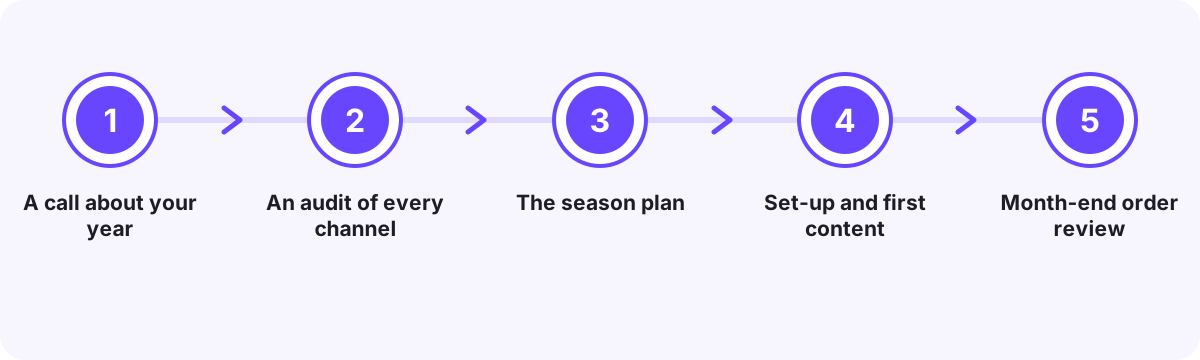
A call about your year
We ask when your stock arrives, which festivals and wedding months matter most, how many orders your tailors can take, and where your current orders come from.
An audit of every channel
We go through your Instagram account, WhatsApp Business settings, Maps listing, website and earlier ad campaigns, listing what is broken, missing or unclear.
The season plan
You receive a one-page calendar showing content themes, campaign windows, cut-off dates and budget for the next few months, plus a written quote.
Set-up and first content
Within about 15 days profiles are corrected, the catalogue and quick replies are ready, tracking links are in place and the first planned posts are live.
Month-end order review
Each month we show enquiries, trial visits and orders by source, what we will change, and how the next festival is being prepared.
Why might a boutique owner pick KaamGPT?
We plan to your calendar
Festivals, wedding months and your tailors' capacity shape the plan, so effort is spent when buyers are ready and not wasted when they are not.
One team across channels
Instagram, WhatsApp, Google and the website are handled together, so a customer hears the same prices, dates and terms wherever she meets you.
Measured by orders, not likes
Reports count enquiries, trial visits and orders by source. Follower counts appear only when they explain a change in sales.
Honest sale posts
We write offers that follow the consumer rules, with real earlier prices and clear exchange and delivery terms, and no fake countdowns or invented scarcity.
Remote, quick and in writing
The team sits in Bengaluru and works with you over phone, WhatsApp and video; each scope and each change is confirmed in writing.
Why does boutique marketing stall after the festive rush?
In our conversations with owners, the gap is rarely good clothes or good photographs. What is missing is a plan that survives the busy weeks, and of any record of which effort produced which order.
- Posting every day through Dasara and going silent in Ashada, so the account has no momentum when wedding enquiries begin.
- Replying to DMs and WhatsApp messages hours late, or with "price in DM", while the buyer is comparing three other boutiques.
- Running sale posts with a crossed-out price nobody can explain, when the amended e-commerce rules will require that earlier price to be the lowest of the previous 30 days.
- Boosting posts from the phone with no audience set, paying to reach people outside Bengaluru who will never come for a fitting.
- Keeping no record of which post, search or referral produced an order, so next season's budget is a guess.
- Managed digital marketing
- ₹19,999 monthly entry point; roughly a fortnight to go live
- Ad spend
- Paid by the boutique directly to Meta or Google
- Channels in one plan
- Instagram, WhatsApp Business catalogue, Google Maps and search, website
- Season windows planned
- Ashada, Shravana and Varamahalakshmi, Dasara, Deepavali, wedding months, Sankranti and Ugadi
- Prior-price rule for online sales
- Applies on and after 1 January 2027; the earlier price means the lowest of the preceding thirty days
- How we work
- Remote boutique support from Bengaluru over phone, WhatsApp and video calls
Where this applies around Bengaluru, Karnataka
- Bengaluru
- Karnataka
- India
- Commercial Street
- Indiranagar
- Koramangala
- Whitefield
- HSR Layout
Frequently asked questions
26 answersIn practice, what work does the best digital marketing agency for fashion boutiques in Bengaluru take on?
It plans your year around when customers buy, then runs the channels that reach them: Instagram content and ads, the WhatsApp Business catalogue and replies, your Google Maps profile, search ads before festivals, and a website that answers buyers' doubts. It reports orders and trial visits by source, not just followers, and adjusts before each festive and wedding season.
What fee does KaamGPT charge as a digital marketing agency for fashion boutiques in Bangalore?
The managed boutique plan opens at ₹19,999 per month and typically goes live in around 15 days. The exact scope depends on how much content, catalogue work and reply cover your boutique needs, and it is set out in a written quote first. Advertising money is separate; you pay Meta or Google for it yourself.
Is the advertising budget included in the monthly fee?
No. KaamGPT's fee covers planning, content direction, set-up and management. Whatever you spend on Instagram, Facebook or Google ads is billed by those platforms to your card, visible rupee by rupee in your own ad account. We suggest a budget for each festive window based on your margins and how many orders your boutique can actually stitch and deliver.
How soon can a boutique expect orders from a new marketing plan?
Fixes to your Maps profile, catalogue and WhatsApp replies often pay off within weeks, since they convert interest you already have. Content and search gain ground gradually, across one or two seasons. The best time to start is one or two months before a festive peak, so the account is active and the catalogue is ready when buyers arrive.
When should a Bengaluru boutique start preparing for Deepavali?
Ideally by Ashada or Shravana. Stock decisions, photography and the stitching cut-off date need to be settled before Dasara, because Deepavali enquiries start arriving while the Dasara orders are still being finished. Starting late usually means rushed posts, unclear delivery dates and missed replies in the weeks that matter most for most Bengaluru boutiques.
Should boutiques promote an Ashada sale on Instagram?
Yes, if the offer is honest. Ashada is a traditional clearance period for textile shops in Karnataka, and it is a good time to move older stock and grow your list of interested customers. Show the real earlier price beside the sale price, state exchange terms clearly, and avoid countdowns or stock warnings that are not true.
Can you set up and manage our WhatsApp Business catalogue?
Yes. We organise the catalogue by collection and occasion, write clear item names with prices and sizes, set quick replies for common questions about stitching, delivery and exchanges, and label chats by order stage. WhatsApp catalogue selling works best when every item in the catalogue is actually available, so we agree a routine for removing sold pieces.
Will your team reply to customer messages on our behalf?
We can set up the reply system and, where agreed in the quote, cover first replies during busy weeks using your approved answers. Most boutiques keep pricing exceptions, custom design questions and payment confirmations with the owner or a senior staff member, because buyers of fashion and bridal wear want to hear from the people making the garment.
Is a website worth it for a fashion boutique that already sells on Instagram?
Usually yes, even a small one. Instagram finds new buyers, yet people sending an advance want an address, a phone number, clear exchange and delivery terms, and proof you are a real business. A simple site also lets Google show you for searches Instagram cannot reach, such as a bride's family researching boutiques before visiting.
Do you photograph our products?
We plan the shot list for each season, explain lighting, angles and the details buyers zoom into, and review the results before they are posted. Shoots are either done by your team with that guidance or arranged separately and listed in your written quote. We never use another boutique's or designer's photographs for your products.
What counts as a result for fashion boutiques?
We count enquiries by source, trial visits booked and attended, orders closed, order value and returning customers. Each campaign gets its own click-to-WhatsApp link with a pre-filled message, and we ask you to note at billing how in-store customers first heard of you. Followers and reach are shown only where they explain a change in orders.
What is the new rule about showing an earlier price in a sale?
Under the Consumer Protection (E-Commerce) (Amendment) Rules, 2026, which take effect on 1 January 2027, a seller announcing a price reduction on its platform must show the earlier price beside the reduced one. The earlier price is the lowest price of that item in the thirty days before the reduction. Bengaluru boutiques selling online should keep a simple price log.
Do the e-commerce rules apply to a small boutique selling through WhatsApp?
The 2020 rules cover goods sold over digital networks and exclude only a person acting in a personal capacity, not someone selling regularly or systematically. Exactly how they apply to a WhatsApp-only boutique should be settled with your own lawyer. We follow their disclosure standards anyway: clear prices, delivery and exchange terms, and a contact for complaints.
Can you help a home-based boutique in Bengaluru?
Yes. Home and apartment studios in Bengaluru often depend entirely on Instagram and WhatsApp, so the plan focuses on fast replies, a clear catalogue, appointment slots and reviews. Where shoppers visit your flat for fittings at fixed hours, a Google Business Profile may be possible; if not, we keep the address private and build trust in other ways.
Do you work with tailoring and blouse stitching studios?
Yes. For a tailoring studio the limit is how many garments the tailors can finish, so marketing announces cut-off dates before Varamahalakshmi, Dasara and Deepavali, fills quieter weeks with alteration work, and keeps Maps listings accurate. We also help you explain timelines and charges clearly so customers do not arrive expecting next-day bridal blouses.
How do you handle bridal boutiques with long sales cycles?
Bridal boutiques need trust content more than offers: lookbooks of real work, clear trial and alteration steps, family-friendly appointment slots and reviews from past brides. The plan books consultations rather than chasing instant sales, and follows up patiently through months of decisions. Our <a href="/services/lead-generation">lead generation service</a> can run the enquiry pipeline if volumes are high.
Which Bengaluru neighbourhoods can you cover for a boutique?
Any of them, from Commercial Street, Jayanagar and Malleshwaram to Indiranagar, Koramangala, HSR Layout and Whitefield. Because the work is planning, content and campaigns, it is handled remotely from Bengaluru by phone, WhatsApp and video, and targets ads at the neighbourhoods your customers actually travel from.
Will someone visit our boutique?
The work is done remotely. Our Bengaluru team meets you by video or phone, collects photographs and stock details over WhatsApp, and shares plans and reports online. Where a shoot or a visit is genuinely needed for your boutique, we agree it in advance and note it in the written quote.
Can fashion boutiques use influencers in their marketing?
Yes, with honest disclosure. The ASCI code asks that influencer posts carry a label like Ad, Partnership or Collaboration at the very start, and Meta asks that paid partnerships use its branded content tool. We help choose creators whose followers live in Bengaluru and brief them on what they may and may not claim.
Should boutiques show prices publicly on Instagram?
Showing a price or a price range usually helps. Buyers comparing several boutiques skip those that only say "price in DM", and a stated price filters out enquiries you cannot serve. For custom bridal work a starting price with a clear explanation of what changes it is a fair compromise. Whatever you show must match what you charge.
How often should a fashion boutique post on Instagram?
Consistency matters more than volume. A few well-planned posts a week, with Stories for daily arrivals, usually beats daily posting that stops in the busy season. We plan heavier posting in the run-up to festivals and weddings, and lighter, planned posting in quiet months, so the account never goes silent.
Can we hire you only for Instagram ads?
Yes. Managing <a href="/services/meta-ads">Meta Ads</a> alone begins at ₹4,999 monthly; the ad money itself goes from you to Meta. It suits boutiques that already create good content and want paid reach handled properly. If your catalogue, replies or website are holding orders back, we will tell you that first.
How is a managed plan different from a freelancer posting for us?
A freelancer usually handles one channel, often posting. A digital marketing agency for fashion boutiques in Bangalore ties the season calendar, content, WhatsApp, Maps, ads and website together and measures orders across all of them. Both can work; the right choice depends on whether your problem is producing posts or turning interest into orders.
What is the first step for a boutique that wants to start?
Send your boutique's Instagram handle, any website, and the festivals or wedding months you care about most. You can message us on WhatsApp or call +91 79767 82366. We review your channels, discuss your season, and send a written plan and quote. Nothing starts until you approve it.
What should a boutique owner have ready for the first conversation?
A rough note of when stock arrives, your best-selling categories, how many stitching orders your tailors can take before a festival, your current ad accounts if any, and examples of recent orders and where they came from. Rough answers are fine; the first call is mainly about understanding your boutique's year.
Can you help a Bengaluru boutique sell to customers in other cities?
Yes, if your stock and delivery can support it. Selling across India needs a website with clear shipping, exchange and delivery terms, product pages with honest descriptions, and ads aimed at the cities where your designs sell. Custom-fit pieces are harder to sell remotely, so we usually start with ready-to-wear from your Bengaluru collection.