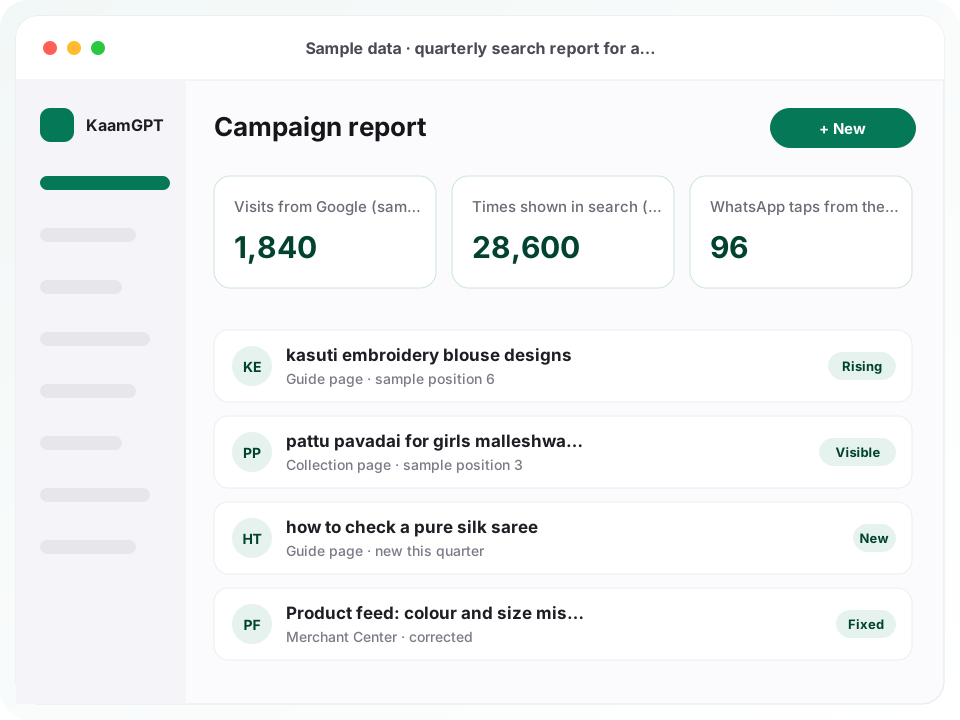
Anyone weighing up the best SEO company for fashion boutiques in Bengaluru can begin with one plain question: when a bride's family spends three weekends reading about lehengas, Kasuti borders or blouse necklines, whose website are they reading? For most boutiques the honest answer is somebody else's, because the boutique's own site is a homepage, an Instagram feed embed and a phone number. Search engines have nothing on it to show for those long, specific questions.
What follows sets out how SEO for boutique websites works when the product is personal, seasonal and often made to measure. It covers how Bengaluru families research before they visit, which kinds of page answer those searches, how to name silks and handlooms honestly when several Karnataka weaves are registered geographical indications, what Google expects from apparel product data, and what SEO services from KaamGPT include and cost.
- ₹14,999monthly opens boutique SEO; scope is then fixed on paper
- ~30 dayscovering the audit, search mapping, repairs and opening pages
- Mysore Silkcarries GI protection with KSIC as proprietor, so product titles must use that name carefully
- 3 attributescolour, size and gender are required for apparel in Google's free product listings
Which boutiques gain most from search work?
- Saree and silk boutiquesWeave and border pages match the precise searches of buyers who know the craft.
- Bridal and trousseau studiosLong research windows reward early, detailed guides and pages of finished bridal work.
- Designer label studiosA website with a clear story and collection pages gives the label a home that does not depend on one app.
- Tailoring and blouse design studiosPages of blouse patterns, necklines and timelines are among the most searched topics a tailor can answer.
- Ethnic wear stores with online salesFashion ecommerce seo on product and collection templates reaches buyers far beyond the neighbourhood.
- Kidswear and pattu pavadai boutiquesParents search by occasion and age, which suits simple, well-labelled collection pages.
- Men's ethnic and wedding wearGrooms search late and specifically, so clear pages for sherwanis, panche sets and kurtas pay off quickly.
Why don't most boutique websites appear on Google?
It is seldom a penalty or some technical mystery. The site simply has very little on it that matches the words people type, and what it has is hard for Google to read.
There is also a timing problem. Boutique owners tend to think about the website in the slow months and forget it once orders arrive, so pages are written in bursts and then left for a year. Search rewards the opposite: a site that is improved a little every month, where the bridal pages gain new photographs after each wedding season and the festive guides are refreshed before the next one.
- The whole catalogue lives on Instagram, and the website has a homepage, a contact page and an embedded feed with no text.
- Product pages carry a photograph, a price and nothing else: no fabric, no work, no length, no care, no blouse details.
- Descriptions are copied from a supplier or from another site, so the page adds nothing Google has not seen before.
- Pictures go up straight from the camera, several megabytes each and named IMG_4521, so pages crawl on mobile data.
- Weaves are named loosely, such as calling any silk saree Mysore silk, which misleads buyers and invites complaints.
Which pieces of search work does a boutique website get?
Boutique SEO is mostly about writing and structure, with a smaller amount of technical repair. Each item below is sized only once we have examined the site, so a boutique with fifty products and one with two thousand get different plans.
Technical repair and page speed
We fix what stops Google reading the site: missing titles, duplicate pages created by size and colour filters, broken links, and image files several megabytes in size. Photographs are compressed and renamed in plain words, such as maroon-ilkal-cotton-saree, so a page opens fast on a customer's phone while she waits in the trial room.
SEO in detail →Collection pages built around occasions and crafts
Most buyers search by occasion or craft, not by your product codes. Collection page optimisation means pages such as bridal silk sarees, reception lehengas, Kasuti blouses and festive kurta sets, each with a short introduction, a clear filter and links to the guides that help someone choose.
SEO in detail →Guides that answer research questions
Pages on blouse necklines, choosing a silk for a temple wedding, caring for zari, or how long custom bridal stitching takes are what a family reads before it visits. Written from your own work and photographed in your studio, they show the craft in a way a supplier catalogue cannot.
SEO in detail →Product pages with honest detail
Each product page states fabric, technique, length, blouse piece, colour, care and delivery time, with the origin of a handloom where it is known. Product markup is added for machines to read price and availability, and keep it in step with what the page shows.
SEO in detail →A link between the website and the map
Your website and your Maps listing should describe the same business in the same words. We align the two and point the profile at the right page, while walk-in search gets its own treatment on our Maps guide for boutiques.
Google Business Profile in detail →Mentions from people who matter in weddings
Links still count, and the honest ones for a boutique come from wedding photographers, planners, makeup artists, textile writers and local news when you run an exhibition. We help you earn them by contributing useful material, never by buying links.
SEO in detail →A rebuild when the site cannot be saved
Some boutique sites are built in a way that hides text from search engines or cannot be changed without whoever first built it. In those cases a simple, fast rebuild costs less than months of workarounds, and you hear that from us before paying any SEO fee.
Websites in detail →How does a boutique SEO engagement unfold?
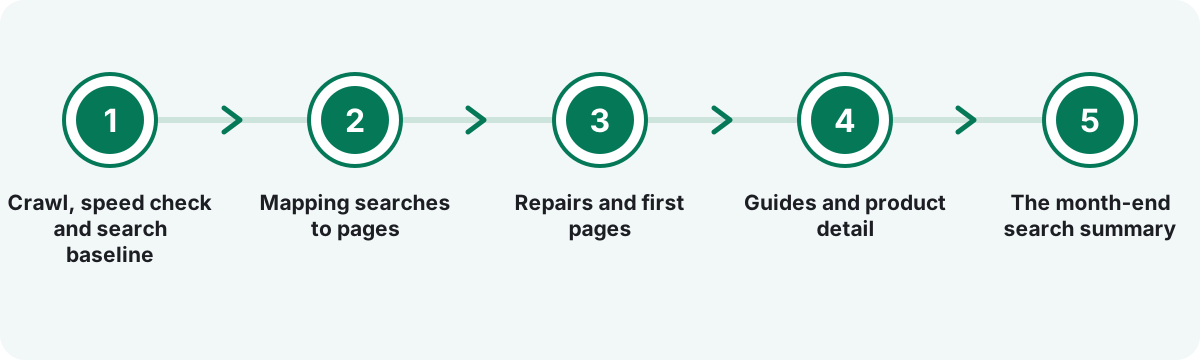
Crawl, speed check and search baseline
Our crawler walks every page, mobile speed is tested, read Search Console if you have it, and list which searches you appear for today and which pages are invisible.
Mapping searches to pages
Searches are grouped by occasion, craft and fabric and mapped to pages, and you receive a plan of what will be fixed and written first, with the written quote.
Repairs and first pages
Within about 30 days the technical issues are fixed, image files are cut down, and the opening batch of collection pages is rewritten or newly made.
Guides and product detail
Fresh guides appear monthly, timed ahead of the festival they cover, and product pages gain fabric, care and delivery detail.
The month-end search summary
You see which searches you now appear for, visits from Google, and the WhatsApp taps, calls and orders that came from those pages.
What does boutique SEO cost with KaamGPT?
Boutique SEO with us costs from ₹14,999 monthly, with early fixes and new pages generally online by day 30. For a boutique site with a modest catalogue that typically covers the audit, keyword map, technical repairs, a steady flow of new collection pages and guides, product page improvements and a monthly report. Larger catalogues, multiple languages or a site rebuild are scoped separately, and work waits for your sign-off on a written quote.
SEO
Recommended₹14,999/month
Typically 30 days
The core fit for a boutique with a website that should be found by families researching weaves, bridal wear and blouse designs.
- Technical audit
- Keyword research
- On-page optimisation
- Content plan
- Monthly reporting
Digital Marketing
₹19,999/month
Typically 15 days
Right when search sits inside a bigger season plan spanning Instagram, WhatsApp and ads; the managed retainer opens at ₹19,999 monthly.
- Channel strategy
- Creative production
- Campaign management
- Weekly reporting
Local SEO
₹4,999/month
Typically 14 days
Adds Google Maps care for every shop or studio address, ₹4,999 monthly per address, beside the website work.
- Google Business Profile optimisation
- Local keyword map
- Location page on-page fixes
- Citation building and NAP cleanup
- Local link outreach
- Review replies and posts
- Monthly report
Google Ads
₹4,999/month
Typically 30 days
Bridges the months while fresh pages climb; management begins at ₹4,999 monthly, and Google bills clicks to you.
- Account setup
- Keyword strategy
- Ad copy testing
- Conversion tracking
- Bid optimisation
Meta Ads
₹4,999/month
Typically 30 days
Puts the guides and collections before Instagram audiences; management begins at ₹4,999 monthly.
- Creative testing
- Audience building
- Retargeting funnels
- Pixel setup
- Weekly reporting
Lead Generation
₹24,999/month
Typically 14 days
Suits bridal studios needing enquiries turned into booked consultations; the plan opens at ₹24,999 monthly.
- Verified leads
- Multi-channel outreach
- CRM integration
- Lead scoring
- Replacement guarantee
- Writing is included in the SEO scope; product photography and a site rebuild, if needed, are quoted separately and in writing.
- Search results build gradually, so the opening quarter's pages and the figures to be reported are fixed together at the outset.
| Package | Starts at | Timeline | Best for |
|---|---|---|---|
| SEO | ₹14,999/month | Typically 30 days | The core fit for a boutique with a website that should be found by families researching weaves, bridal wear and blouse designs. |
| Digital Marketing | ₹19,999/month | Typically 15 days | Right when search sits inside a bigger season plan spanning Instagram, WhatsApp and ads; the managed retainer opens at ₹19,999 monthly. |
| Local SEO | ₹4,999/month | Typically 14 days | Adds Google Maps care for every shop or studio address, ₹4,999 monthly per address, beside the website work. |
| Google Ads | ₹4,999/month | Typically 30 days | Bridges the months while fresh pages climb; management begins at ₹4,999 monthly, and Google bills clicks to you. |
| Meta Ads | ₹4,999/month | Typically 30 days | Puts the guides and collections before Instagram audiences; management begins at ₹4,999 monthly. |
| Lead Generation | ₹24,999/month | Typically 14 days | Suits bridal studios needing enquiries turned into booked consultations; the plan opens at ₹24,999 monthly. |
Why does SEO cost one boutique more than another?
The biggest driver is how much needs to be written well. A seo company for fashion boutiques in Bangalore can fix the technical side of a small site in days, but good guides and collection pages take interviews, photographs and editing, which is where the bulk of each month's hours are spent.
The second driver is the catalogue. A studio with forty bridal pieces needs careful pages for each; a store with two thousand ready-to-wear items needs templates, feed hygiene and rules for sold-out stock instead. Starting fees for each service are on our pricing page, and the SEO guide for Bengaluru businesses for how we approach search in general.
- Number of products and collections on the site.
- How many new guides and collection pages are written each month.
- Whether the site platform allows clean URLs, editable titles and structured data.
- Whether a product feed for Google needs building or repairing.
- Whether pages are needed in more than one language.
- How much photography of finished work you can supply.
Why trust KaamGPT with a boutique's search work?
We write about the craft accurately
Pages are built from your own knowledge of weaves, work and fit, checked with you before publishing, so they say nothing you cannot stand behind.
SEO, AEO and GEO together
One set of clear, checked facts about the boutique is written for search engines, answer boxes and AI assistants alike.
No bought links
Mentions come from genuine work with photographers, planners and writers, which is slower but does not put your site at risk.
Reports tied to enquiries
Alongside positions and visits, we show the calls, WhatsApp taps and orders that started on a page.
Written scope, remote delivery
Our Bengaluru team works over phone, WhatsApp and online meetings, and the scope of each month is agreed in writing.
Which Bengaluru neighbourhoods shape what boutique buyers search for?
Search language in Bengaluru follows the neighbourhood. Across the older south and west of the city, in Basavanagudi around Gandhi Bazaar, Malleshwaram, Rajajinagar, Banashankari and JP Nagar, many families have long-standing tailors and silk shops, and their searches are precise: a weave, a border, a blouse pattern, a child's pattu pavadai for a family function. They often add a locality to the search because they want someone they can reach easily for trials and alterations.
In the newer eastern and southern suburbs, buyers who moved to the city for work search differently. They know the occasion but not always the vocabulary, so they search for things like what to wear to a Kannada wedding or how to drape a silk saree, and they choose a boutique that explains these things clearly. Fabric buying still pulls people into Chickpet's wholesale cloth lanes, and the boutique that wins the stitching order is often the one whose page answered the blouse question first.
For SEO this means two kinds of page. One serves the precise searcher who already knows the craft and wants proof you do it well. The other serves the newcomer who needs a guide. A boutique that writes only for one of them leaves the other to a competitor.
Page by page, how should the best SEO company for fashion boutiques in Bengaluru organise a boutique's site?
We begin with a keyword map rather than a list of blog topics. Every search we want you to be found for is assigned to exactly one page, which stops two of your own pages fighting over one query, and each page has a clear job: to show a collection, to answer a question, or to sell a piece.
Writing then follows the order in which pages earn their keep fastest. Collection pages for your best-selling categories come first, because they match searches that already carry buying intent. Guides come next, published early enough to be indexed long before their festival; a page about Varamahalakshmi silks that goes live a week before the festival is too late to rank for it this year.
A keyword map by occasion, craft and fabric
Searches are grouped into occasions such as bridal, reception and festive, crafts such as Kasuti, maggam and zardosi, and fabrics such as silk, cotton and organza. Each group gets one main page, so the site grows in a shape that search engines and shoppers both follow easily.
Pages written from your own studio
We interview you or your master tailor about how a piece is made, the hours it needs and which details a customer may alter. That material makes pages no other boutique can copy, and it reads as trustworthy to a family deciding where to spend a large sum.
Bridal wear seo planned months ahead
Brides and their families research long before the muhurat, so bridal pages and guides are published early and improved over time with real photographs of finished work, shared with the customer's permission.
Saree shop seo for craft-led searches
For a saree boutique the opportunity is in specific weaves and borders. Pages that explain a weave accurately and show your range of it can be found by people who already know exactly what they want.
Product data kept clean
Prices, sizes, colours and stock on the site, in structured data and in any Google product feed are kept identical, and sold-out pieces are handled so they do not leave broken pages behind.
How long does a family research before choosing a bridal boutique?
Far longer than a festive buyer. Once a wedding date is fixed, the bride usually starts by collecting images, then reads about fabrics, colours that suit the ceremony, and what a custom lehenga or silk saree involves. Her mother and other relatives join in, often searching separately and sharing links in a family group. Several boutiques are shortlisted, and only then do trial visits begin. The whole process can run across months, and most of it happens on Google and in saved posts long before anyone calls you.
During this phase the questions are practical and specific. How many fittings will there be? Can the blouse be stitched from our own fabric? How heavy is a hand-embroidered dupatta? What does an Ilkal saree look like next to a Molakalmuru one? A boutique whose site answers such questions in plain language, with photographs of its own finished work, becomes the one the family already trusts when it is time to book. Typical searches that bridal wear seo has to serve look like these (illustrations, not measured volumes):
Festive buyers research too, just more briefly. A few weeks before Dasara or Deepavali, people start looking up blouse designs, ready-to-wear blouses and the last date for stitching, and they compare a handful of boutiques in an evening. The pages that win those evenings are usually collection pages with prices, sizes and a clear cut-off date, not long articles. So a boutique site needs both: slow, thorough bridal guides that earn trust over months, and quick, practical festive pages that help someone decide tonight.
- "how many fittings for a bridal blouse"
- "kasuti work saree for wedding reception"
- "ilkal vs molakalmuru saree difference"
- "maggam work blouse stitching time bangalore"
- "lehenga customisation boutique in basavanagudi"
How should a boutique name Karnataka weaves on its website?
Several of Karnataka's textiles are registered geographical indications. Mysore Silk, Ilkal sarees, Molakalmuru sarees, Udupi sarees and Kasuti embroidery all appear on the Indian GI register, and Mysore Silk's registered proprietor is Karnataka Silk Industries Corporation, a state government company. Wikipedia's account of the craft notes that KSIC weaves a unique ID, a hologram-based design and an identification barcode into each saree from its factory, because the name has been misused by sellers of imitations.
For SEO this is a reason for care, not a keyword opportunity. A product page should use a registered name only when the product genuinely is that product, and say where it came from. A silk saree woven elsewhere in a similar style should be described by its actual fabric, weave and origin. Writing "Mysore silk" in a title to catch searches is misleading, can attract complaints, and falls foul of the ASCI code's rule against advertising that misleads by implication or exaggeration.
Accurate naming also ranks better over time. Buyers who search for a specific weave often know what it should look like, and a page that shows the real thing with honest detail keeps them reading. For pieces you are unsure about, we write the description from what you can verify, such as fabric, zari type and border, and leave the rest out.
Which product details must agree before Google shows a boutique's pieces?
If you sell online and want your products to appear in Google's shopping results, the product details you send must agree with your website. Google's Merchant Center rules ask that the price you submit matches the price on the landing page, in structured data and at checkout, and that availability matches the same places. For apparel shown in free product listings, colour, size and gender are required attributes, whichever country you target.
Most boutique feeds fail on exactly these points. A saree priced in the feed at one figure and on the site at another after a discount, a lehenga marked in stock that was sold last week, or a kurta with no size listed will be held back. We fix the source of those mismatches, usually the way sale prices and sold-out pieces are handled on the site, rather than patching the feed by hand every week. If your website takes orders, it should also show return, exchange and delivery terms and an all-inclusive price, as our digital marketing page for boutiques explains under the consumer rules.
What belongs on a product page for a handwoven saree or a bridal piece?
A product page has two readers: the buyer deciding whether to message you, and the search engine deciding what the page is about. Both want the same thing, which is specific, checkable detail. A page that says only "beautiful silk saree, must have" gives neither of them anything to work with, while a page that names the fabric, the zari, the border, the length and the blouse piece answers the questions a buyer would otherwise send on WhatsApp.
For bridal and custom pieces the page cannot list a fixed size or a final price, and that is fine. It should say what the starting point is, what can be changed, how many fittings to expect and how long the work takes, so a family can judge whether the timeline suits the muhurat. Photographs should show the full piece, the border and pallu or the embroidery up close, and the piece being worn, all taken in your own studio.
We build a template for each product type so your team can add new arrivals in a few minutes without missing a field. The fields below are a starting point for a silk saree; a lehenga or a kurta set has its own list.
- Fabric and weave, named accurately, with origin where you know it
- Zari type and border or pallu description
- Length, width and whether a blouse piece is included
- Price, or a starting price for custom work, matching any product feed
- Care instructions and delivery or stitching time
- Exchange and alteration terms in one plain sentence
Which SEO mistakes cost boutiques the most?
The common ones are not exotic. They are habits that made sense for Instagram and work against a website. These are the first things we look for in an audit.
None of these needs a large budget to fix. Most come down to a short written routine for whoever updates the site, which we draw up with you in the first month and check each quarter.
- Deleting sold pieces and leaving dozens of broken pages that once collected visits.
- Creating a new page for every colour of the same kurta, so none of them ranks.
- Writing one long paragraph on the homepage about the boutique's passion, and nothing on the pages that sell.
- Using borrowed catalogue photographs instead of photographs of your own stock.
- Publishing festive guides in the week of the festival, when they need weeks or months to be found.
- Changing the website platform without redirecting old addresses, losing years of search history overnight.
- Boutique SEO fee
- ₹14,999 monthly upward; opening changes live inside roughly a month
- Page types written
- Collection pages, craft and fabric guides, product pages
- Karnataka textile GIs to name carefully
- Mysore Silk, Ilkal, Molakalmuru and Udupi sarees, Kasuti embroidery
- Mysore Silk GI proprietor
- Karnataka Silk Industries Corporation
- Google apparel listings
- Price must match the site; colour, size and gender required in free listings
- Delivery
- Remote, by a Bengaluru team, with monthly written reports
Where this applies around Bengaluru, Karnataka
- Bengaluru
- Karnataka
- India
- Basavanagudi
- Malleshwaram
- Rajajinagar
- Banashankari
- JP Nagar
Frequently asked questions
26 answersBy the end of a first quarter, what should the best SEO company for fashion boutiques in Bengaluru have handed over?
A clear audit, a keyword map that assigns every important search to one page, repaired technical problems, faster image loading, and a first set of rewritten collection pages and guides. You should also see a monthly report showing which searches the site now appears for and which calls or WhatsApp taps came from Google. Big ranking changes usually take longer.
How much does KaamGPT charge as an SEO company for fashion boutiques in Bangalore?
Search work for fashion boutiques is priced from ₹14,999 monthly; early fixes and pages normally appear within a month. The final figure depends on catalogue size, how many pages are written each month and whether a product feed needs work, all of it settled on a written quote first.
How soon do fashion boutiques see enquiries from SEO?
Repairs and stronger collection pages may shift positions inside a few months, especially for searches that include your boutique's name or locality. Craft guides are slower, frequently needing a season or longer, because they compete with large publishers. So festive and bridal pages for boutiques are published early.
Is SEO worth it for fashion boutiques that sell mostly over the counter?
Often yes, because many in-store sales start with a search. A family looking for blouse stitching or a bridal silk reads pages first and then visits. If the site answers their questions and shows your address and timings, more of those visits come to you. The report counts calls, direction taps and WhatsApp messages from the site, not only online orders.
Can SEO help home-based fashion studios with no shop?
Yes. A website does not need a shopfront to rank for craft and design searches. A home studio in Bengaluru can publish guides, collection pages and photographs of finished work, and invite visitors to book a trial by appointment. Whether a Maps listing is allowed depends on whether shoppers are actually received there at published times.
Should fashion boutiques start a blog?
Only if the posts answer questions buyers actually search for. Diary-style posts about new arrivals rarely rank. Guides on choosing a silk, blouse necklines, care of zari or what a custom bridal order involves are more useful, and we organise them under the collections they support rather than in a separate blog nobody browses.
What pages should a bridal boutique website have?
A bridal collection page for each main style, a page explaining your custom process and fittings, a page of finished work shared with permission, honest guidance on timelines and what affects price, and clear contact and visit details. Bridal boutiques that publish these early give a researching family everything it needs to shortlist them.
Can we call a silk saree Mysore silk on our website?
Only if it genuinely is. Mysore Silk is a registered geographical indication, and its registered proprietor is Karnataka Silk Industries Corporation. If a saree is a similar style from another source, describe its real fabric, weave and origin instead. Misleading names harm trust and can draw complaints, and we will not write them on your pages.
Which Karnataka weaves and crafts are registered geographical indications?
The Indian GI register includes Mysore Silk, Ilkal sarees, Molakalmuru sarees, Udupi sarees, Kasuti embroidery and Sandur Lambani embroidery among Karnataka's textile entries. Boutiques in Bengaluru that stock these should name and describe them accurately, and boutiques that sell similar styles from elsewhere should say so plainly.
Do fashion boutiques need individual product pages if stock changes every week?
For one-off pieces, a strong collection page with good photographs may be enough, and individual pages can be short-lived. For pieces you restock or remake to order, individual pages are worth it because they gather search visits over time. We decide this category by category during the keyword mapping.
How do fashion boutiques stop sold-out pieces creating broken pages?
Instead of deleting a sold page, we either keep it live marked as sold with links to similar pieces, or point it permanently at the nearest matching collection. Which choice is right depends on whether the piece can be made again. Either way, buyers and search engines are never sent to an error page.
What is Google Merchant Center and does a boutique need it?
Merchant Center is where you send product details so items can appear in Google's shopping results, including free listings. A boutique that sells online can benefit from it. Google requires the price and availability you send to match your website and checkout, and for apparel in free listings it requires colour, size and gender.
Why are our boutique's products not showing in Google's shopping results?
The most common reasons are a price in the feed that differs from the website after a sale, items marked available that have sold, missing colour or size, or a product page whose details differ from what was submitted. We read the diagnostics in your account, fix the cause on the website and keep the feed in step.
Does Instagram activity improve Google rankings for fashion boutiques?
Not directly. Google ranks your website's pages on what they contain and how well they answer a search. Instagram can help indirectly, because people who discover you there later search for your boutique by name, and photographs made for Instagram can be reused on the site with proper descriptions. The two channels work best when they tell the same story.
Should a Bengaluru boutique website have pages in Kannada?
It depends on how your customers search. If many of them search in Kannada for weaves, festivals or tailoring, a set of well-written Kannada pages can reach people an English-only site misses. We look at this during the audit and, if it is worth doing, set out in the quote how the pages would be written and checked.
How do you choose keywords for fashion boutiques such as saree shops?
The starting point is your stock and the words shoppers use for it at your counter, then check how people search for those things: by weave, by occasion, by colour, by locality in Bengaluru or by question. Searches are grouped and given to one page each, with the groups closest to a purchase written first.
Can you write about our designer's work without exaggerating it?
That is how we prefer to write. We describe what was made, by what technique, how long it took and what the customer asked for, and let photographs do the persuading. Claims such as "the finest in the city" add nothing for a reader and can fall foul of the ASCI code on misleading advertising, so we leave them out.
What do fashion boutiques need to provide each month for SEO?
About sixty minutes with you for interviews or answers about pieces and techniques, photographs of new and finished work, and notice of upcoming collections and events. We do the research, writing, editing and publishing. Boutiques that share photographs regularly see their pages grow faster, because real images are what make fashion pages convincing.
Can an SEO company for fashion boutiques in Bangalore promise a first-page position on Google?
No honest one can. Positions depend on Google's systems and on what competitors publish, and both change. Our commitment is to the work itself: pages, repairs, clean product data and an open monthly report. We will be straight about which searches are within reach for a boutique of your size in Bengaluru and which are not.
Will SEO help a Bengaluru boutique sell to other cities?
It can, particularly for ready-to-wear pieces and well-known weaves that people search for across India. Pages then need plain shipping and exchange wording, honest descriptions and accurate sizing help. Made-to-measure bridal work is harder to sell remotely, so most boutiques see out-of-town orders for ready pieces first.
How are SEO results reported to owners of fashion boutiques?
A brief note arrives monthly listing the searches the site now shows for, visits from Google, which pages gained or lost ground, and the calls, WhatsApp taps and orders that started on those pages. We also explain what we wrote and fixed that month, and the next month's plan, written for an owner rather than an analyst.
Our website was built by another developer. Can you still work on it?
Usually yes. We need access to edit pages, titles and images, and ideally to Search Console. If the platform hides text from search engines or cannot be edited without the original developer, we will explain the options, including a simple rebuild through our <a href="/services">services</a>, before charging an SEO fee.
Do photographs affect a fashion boutique's SEO?
Yes, in two ways. Large, uncompressed files slow pages down on mobile, which hurts both visitors and rankings. And file names plus alt text in plain words help Google understand what a picture shows, so a maroon silk saree with a gold border can be found in image search. Your own photographs also make the pages more trustworthy than borrowed ones.
Can you help our boutique get mentioned by wedding photographers and planners in Bengaluru?
We can help you earn those mentions honestly: sharing photographs of finished bridal work with the photographer's credit, contributing styling notes to planners' articles, and telling local writers about exhibitions or trunk shows. We never buy links, because paid links can harm a site and rarely bring buyers anyway.
How does a boutique start SEO with KaamGPT?
Share the web address of the boutique, what you sell and the seasons that matter to you. You can message on WhatsApp or call +91 79767 82366. After a quick review and a conversation, a written page plan and price follow. Work starts after you approve it, and the first changes go live within about a month.
Does SEO help a boutique appear in AI assistants like ChatGPT?
Plain, factual pages help search engines and AI assistants describe your boutique correctly, and that is how we write. But nobody controls which businesses an assistant mentions, so we do not promise it. For the Maps side, fashion boutiques wanting walk-ins can add our <a href="/services/local-seo">local SEO service</a>.