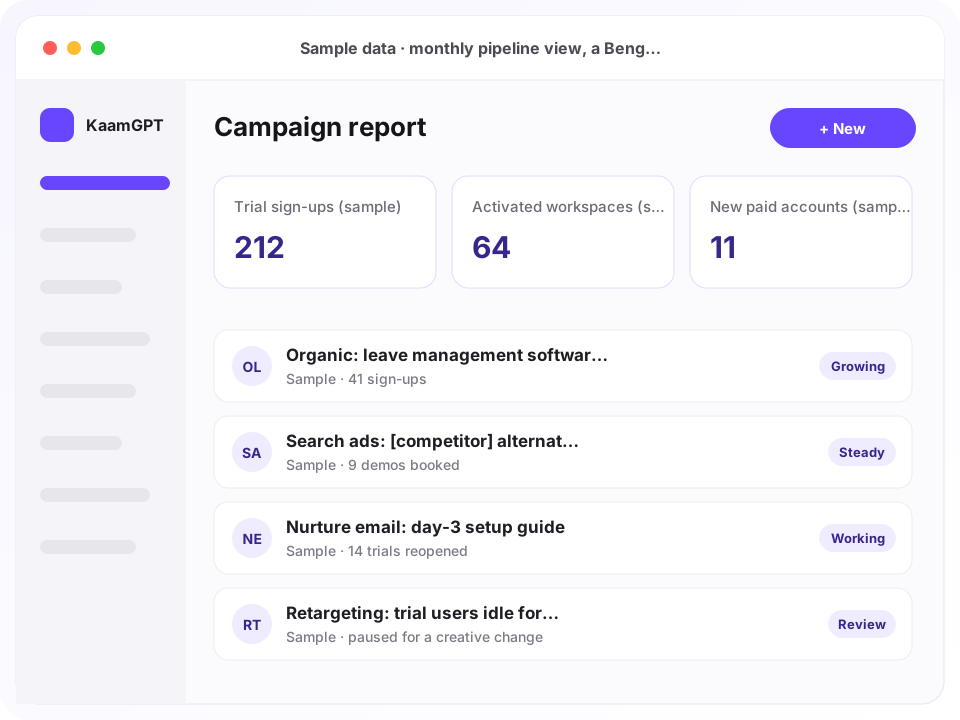
Does your software sell itself through a free plan or trial, or does a salesperson close every account? That is the first thing the best digital marketing agency for SaaS companies in Bengaluru should ask, and plenty of proposals never do. The answer decides which channels get money, what counts as a conversion and how long you wait before judging results. A self-serve tool for ten-person teams and a compliance product sold to banks can share a Koramangala co-working floor and still need opposite plans.
We are KaamGPT, a Bengaluru marketing team that plans and operates managed digital marketing for software firms over video calls and WhatsApp threads. Our company also sells a workspace product of its own, free to start and with a 14-day trial on each paid tier, which means sign-up screens, plan tables and trial-to-paid conversion are daily concerns for us too. Read on for the plan we would draw up for a Bangalore SaaS team, its price and the traps that catch most teams.
- ₹19,999monthly opens a managed SaaS retainer, with scope fixed in writing before any work
- ~15 daysfrom kick-off call to live tracking and the first two channels running
- 2 motionsproduct-led and sales-led, each with its own conversion events and channel mix
- 1 reportfrom first visit to paid account, pulled from your CRM rather than ad dashboards
Where do Bengaluru's SaaS teams sit, and how do their buyers decide?
Most early software teams in the city start in a handful of neighbourhoods. Koramangala grew from a planned suburb into a startup district, HSR Layout next door filled with co-working floors when Koramangala rents climbed, and Indiranagar's 100 Feet Road offices took the overflow. Teams that grow past fifty people often move to the Outer Ring Road campuses, Whitefield or Electronic City, where larger floors and engineering talent are easier to find. Where you sit matters less to marketing than who you sell to, but it shapes hiring, events and which founders you compare notes with.
The buyer of business software is rarely one person. A team lead finds a tool, starts a trial or asks for a walk-through, then has to convince a manager who holds the budget, a finance person who wants an annual price, and often an IT or security reviewer who sends a questionnaire. Searches move from the problem to the category to named products, for example how to track employee leave in a 40-person company, then leave management software India, then [product] pricing. A simple tool can be bought in a week; a platform that touches payroll or customer data can take a quarter.
Trust is earned with specific proof rather than claims: a pricing page that shows real numbers, a security page that lists only certifications you actually hold, product screenshots and short demo videos, customer names used only with their permission, and quick, human replies. Indian small-business buyers also expect INR pricing, a GST invoice and a WhatsApp number. Buyers in the US or UK expect self-serve sign-up, USD or GBP pricing, card payment and a reply inside their working day.
Which channels sit inside a managed SaaS retainer?
We plan around a single motion and a single market to begin with. The channels below are the usual parts; we weight them by your stage, the price you charge and the time buyers need before signing.
Search content buyers use to shortlist
Category pages, use-case pages, integration pages and honest comparison pages, written for the weeks when a buyer researches before talking to anyone. The detailed method for software sites lives on our SEO page for SaaS companies, and the general service is described under SEO services.
SEO in detail →Search ads on high-intent terms
Campaigns on category, pricing and alternative-to searches, with conversion values sent back from your CRM so Google learns which clicks became customers. How we handle competitor names and country targeting is set out on the Google Ads page for SaaS teams.
Google Ads in detail →Demand creation and trial retargeting
Short product demos and founder-led videos for tools that owners and small teams pay for themselves, plus retargeting of people who signed up and stalled. Some SaaS products thrive on Meta while others gain almost nothing; the Meta Ads page explains how to tell.
Meta Ads in detail →Onboarding and nurture email
A sequence for new sign-ups that pushes toward the first useful action, and a slower nurture for demo leads who are not ready. Each message has one job, a real sender, a postal address and a working unsubscribe.
Email campaigns in detail →Pricing, sign-up and demo pages
We fix the pages that convert: plan tables that show real prices, a sign-up flow with fewer fields, a demo form that asks only what sales needs, and fast load times. Bigger rebuilds get a project quote of their own.
Websites in detail →Pipeline for sales-led products
For products sold through demos, we add account lists, outbound sequences and qualification so sales spends time on buyers who fit. The full approach is on the lead generation page for SaaS.
Lead generation in detail →Founder and product presence
Regular posts that show the product working, explain decisions and answer common objections. For B2B software this works best from the founders' own profiles, with the company page as the archive.
Social media in detail →What would the best digital marketing agency for SaaS companies in Bengaluru do in your first ninety days?
We start with the funnel you already have, not a channel wish-list. That means reading your sign-up and demo data, talking to whoever closes deals, and writing down the one event that most reliably comes before a payment. For a product-led tool it may be inviting a second teammate; for a sales-led product it is usually a qualified demo. Every channel is then set up to report that event, so the first month produces a baseline rather than a guess.
A workable SaaS go-to-market plan is narrow at first: one buyer, one market and two or three channels, run long enough to learn. Expanding to a second country or a second segment comes once the first one pays back, not before.
Pick the conversion event before the channel
Together we settle which outcome counts (activation, a booked demo, an opportunity) and send that event to Google, Meta and your CRM. Optimising to raw sign-ups is the most common way software teams waste their first ad budget.
Split the self-serve and sales paths
Visitors who want to try the product get a sign-up with as few fields as possible. Visitors from larger companies get a demo path that asks for company size and use case. The site should make the choice obvious instead of forcing everyone through one form.
Content that answers the committee
Besides pages for the person who finds you, we write for the people they must convince: a security overview, a short ROI explainer with your own assumptions shown, and a one-page summary a champion can forward to finance.
Nurture for the long middle
Most demo leads are not ready on the day they ask. B2B SaaS lead nurturing keeps them warm with useful material, examples customers have cleared for sharing, plus an easy route back to a call, without daily mail that trains people to unsubscribe.
One market at a time
Indian buyers and US buyers need different pricing, proof and response hours. We launch in the market where you can already deliver and support customers, and add the next one only when it can be staffed.
Close the loop with sales every week
A fifteen-minute weekly call with whoever takes demos tells us which leads were real, which objections came up and which pages people mentioned. That feedback changes ad copy and content faster than any dashboard, and it keeps marketing and sales working from the same picture of the buyer.
What will a managed SaaS marketing retainer cost?
Our managed SaaS retainer begins at ₹19,999 monthly, with channels, deliverables and reports itemised in a written quote before anything starts. A seed-stage product with one market and two channels usually fits close to that starting point; a digital marketing agency for SaaS companies in Bangalore juggling multiple markets, a content programme and paid search together should price higher and spell out the reason.
Digital Marketing
Recommended₹19,999/month
Typically 15 days
SaaS teams that want one accountable plan across search, ads, email and conversion pages, measured to paid accounts.
- Channel strategy
- Creative production
- Campaign management
- Weekly reporting
SEO
₹14,999/month
Typically 30 days
Products evaluated through long solo research, where buyers compare several tools before contacting anyone.
- Technical audit
- Keyword research
- On-page optimisation
- Content plan
- Monthly reporting
Local SEO
₹4,999/month
Typically 14 days
Rarely needed for SaaS, unless you also run a physical training centre or support office customers visit.
- Google Business Profile optimisation
- Local keyword map
- Location page on-page fixes
- Citation building and NAP cleanup
- Local link outreach
- Review replies and posts
- Monthly report
Google Ads
₹4,999/month
Typically 30 days
Products with a clear category and buyers already searching for it, or for named competitors.
- Account setup
- Keyword strategy
- Ad copy testing
- Conversion tracking
- Bid optimisation
Meta Ads
₹4,999/month
Typically 30 days
Tools that owners pay for themselves, plus win-back ads for trials that went quiet.
- Creative testing
- Audience building
- Retargeting funnels
- Pixel setup
- Weekly reporting
Lead Generation
₹24,999/month
Typically 14 days
Sales-led products with a defined account list, where booked meetings matter more than sign-ups.
- Verified leads
- Multi-channel outreach
- CRM integration
- Lead scoring
- Replacement guarantee
- Media budgets never pass through our invoice; Google, Meta and other platforms bill your own account.
- Bought alone, management of Google Ads or of Meta Ads begins at ₹4,999 monthly per platform; inside a managed retainer both are scoped in the quote.
| Package | Starts at | Timeline | Best for |
|---|---|---|---|
| Digital Marketing | ₹19,999/month | Typically 15 days | SaaS teams that want one accountable plan across search, ads, email and conversion pages, measured to paid accounts. |
| SEO | ₹14,999/month | Typically 30 days | Products evaluated through long solo research, where buyers compare several tools before contacting anyone. |
| Local SEO | ₹4,999/month | Typically 14 days | Rarely needed for SaaS, unless you also run a physical training centre or support office customers visit. |
| Google Ads | ₹4,999/month | Typically 30 days | Products with a clear category and buyers already searching for it, or for named competitors. |
| Meta Ads | ₹4,999/month | Typically 30 days | Tools that owners pay for themselves, plus win-back ads for trials that went quiet. |
| Lead Generation | ₹24,999/month | Typically 14 days | Sales-led products with a defined account list, where booked meetings matter more than sign-ups. |
Splitting a SaaS budget between work and media
Any SaaS marketing budget has two halves: the work (strategy, content, campaign management, reporting) and the media (what you pay platforms for clicks and views). The work is fairly steady month to month. Media should start small, enough to collect conversion data, and grow only on channels that bring accounts at a cost the subscription price can absorb.
Content is the part founders most often under-budget. A comparison page, an integration guide or a security overview takes real product knowledge to write, and your team will need to review it. We plan for a steady number of pages each month rather than a burst at launch, because pages written in a rush tend to say the same thing as every competitor's.
A useful sanity check is payback. If a paid account brings in a few thousand rupees monthly and churns within a year, you cannot afford the same acquisition cost as a product with annual contracts. We work the numbers out with you before deciding how much to put into paid channels and how much into SEO, which is slower but keeps working after the spend stops.
- Whether you sell self-serve, through sales, or both.
- How many countries or currencies you market in.
- How much content already exists and how much needs writing.
- Typical deal size and the length of the buying cycle.
- Whether tracking from sign-up to payment already works or must be built.
- How many paid channels run in the first quarter.
Self-serve, vertical or enterprise: which marketing mix suits which SaaS?
- Self-serve team toolsHR, invoicing or project tools bought by owners: a product-led mix of search, short videos and onboarding email.
- Trade-specific vertical softwareSoftware for clinics, restaurants or logistics firms: trade-specific pages, WhatsApp follow-up and events where that trade gathers.
- Platforms for mid-sized and large firmsProducts sold to finance, IT or operations heads: account lists, demo campaigns and content for the whole committee.
- APIs and products for developersDocumentation, tutorials and integration pages do most of the work; display ads to developers rarely do.
- Products built on AI modelsA crowded category where clear use cases, honest demos and proof of accuracy matter more than another launch post.
- Software for Indian small businessesGST billing, WhatsApp tools and attendance apps: INR pricing, regional-language demos and quick phone or chat replies.
- Services firms turning into product companiesTeams moving from projects to subscriptions need a new positioning, separate from the services website.
- Security, data and infrastructure platformsLong evaluations with technical buyers: deep documentation, architecture pages and careful, verifiable claims.
From funnel review to monthly pipeline call
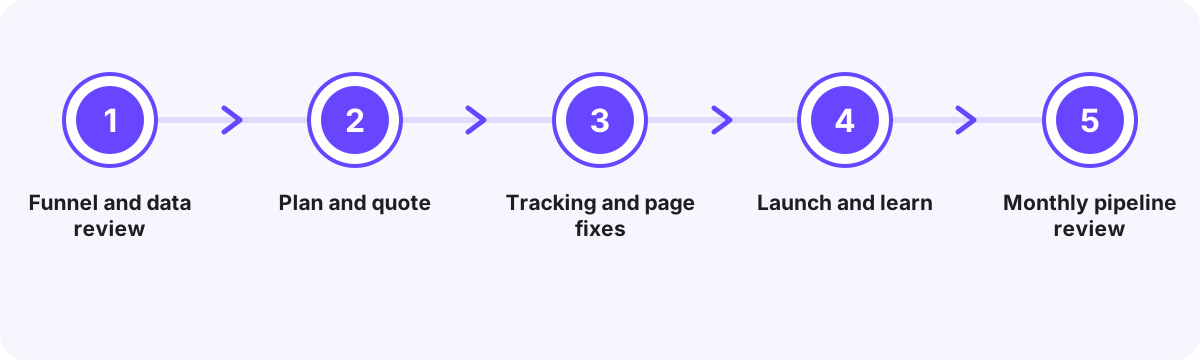
Funnel and data review
We read your analytics, CRM and product sign-up data, talk to sales or the founder who sells, and agree the event that best predicts a payment.
Plan and quote
You get a written plan: market, buyer, channels, conversion events and the reports you will see. The quote separates our fee from media spend.
Tracking and page fixes
We connect events to Google, Meta and your CRM, then fix the pricing, sign-up and demo pages that leak the most visitors.
Launch and learn
The first channels go live with small budgets. We review weekly, cut what does not reach activation or demos, and keep what does.
Monthly pipeline review
Each month we report from first visit to paid account, walk through what moved and settle the coming month's focus together.
Reasons founders bring their funnel to KaamGPT
We run a SaaS funnel ourselves
Our own workspace product has a free tier and trials on paid tiers, so activation problems are part of our week, not theory.
Reports in pipeline terms
We show sign-ups, activations, demos, opportunities and payments, so marketing and sales argue from the same numbers.
Plain written scope
Before work begins you receive a quote in writing: inclusions, exclusions and which costs go straight to platforms.
Bengaluru hours, global markets
We sit in Bengaluru, meet over video and WhatsApp, and schedule campaigns to the clock your buyers live by.
Honest claims only
We will not invent reviews, customer logos or statistics for your site or ads; everything we publish must be something you can prove.
Product-led or sales-led: what changes in the plan?
In product-led growth, the product does the first part of the selling. A visitor signs up, tries it and pays, often on a card, without speaking to anyone. Marketing's job is to bring the right visitors and get them to the moment the product proves itself. That makes onboarding email, in-product prompts and the sign-up page as important as any ad, and it makes activation, not sign-up, the number to watch.
In a sales-led motion, marketing books conversations. Contract values are higher, buyers want a demo against their own process, and a salesperson manages the deal. Here the work is account selection, content for each member of the buying group and fast, informed follow-up. An inexpensive form submission from someone outside your target companies is a cost, not a lead.
Many Bengaluru teams run a hybrid: self-serve for small accounts, sales for larger ones. That works when the website routes people clearly and the CRM flags product sign-ups from large companies for a human to contact. It fails when one funnel serves both and neither group gets what it expects. Any SaaS marketing strategy we write names the motion for each segment before naming a single channel.
- Product-led signals: sign-up, setup completed, teammate invited, usage threshold reached, card added.
- Sales-led signals: demo booked, demo held, qualified opportunity, proposal sent, contract signed.
- Hybrid flag: a self-serve sign-up from a company above your sales threshold, routed to a person within a working day.
How does a Bengaluru SaaS team market to the US, UK and Australia?
Selling abroad from Bangalore is ordinary now, but buyers there judge you by the same standard as local vendors. They expect pricing in their currency, a sign-up that does not ask for an Indian phone number, support replies during their working day and proof from companies they recognise in their own market. A site that reads as India-first will lose them before the demo.
Time zones shape everything operational. US Eastern time trails IST by nine and a half hours in summer and by ten and a half in winter, and the Pacific coast is further still, so demo slots, ad schedules and live chat cover need planning. The UK overlap with Indian afternoons is easier, which is one reason some teams start there.
We usually recommend one foreign market first, chosen by where existing paying customers already come from. Separate landing pages per market, with their own currency, proof and contact hours, let ads and SEO speak to that market directly. A second market is added once the first has a repeatable source of demos or paid sign-ups.
Is your nurture email legal in the US and in India?
Lifecycle email carries much of a long software sale, so it has to be lawful in every market you mail. In the US, the CAN-SPAM Act applies to commercial email whether the recipient is a consumer or a business; the Federal Trade Commission's guide says plainly that the law makes no exception for business-to-business email. Each message needs accurate sender details and subject lines, a valid physical postal address and an easy unsubscribe route, with every request honoured inside 10 business days.
The FTC also states that hiring another company for your email marketing does not transfer your legal responsibility. So when we run sequences for you, the unsubscribe link, the postal address and the suppression list are checked before the first send, and we keep them that way.
India notified its Digital Personal Data Protection Rules on 14 November 2025 and, per the government's explainer, gave organisations eighteen months to comply in phases. They call for a separate, plain consent notice explaining why data is collected, a visible contact for data queries, and replies to access or erasure requests within ninety days. We set up sign-up and demo forms so the notice, the purpose and the opt-out are clear from the first touch, and we treat this as a design brief rather than legal advice: your counsel should confirm the final wording.
Which numbers belong in a SaaS marketing report?
Ad dashboards report clicks, costs and platform-counted conversions. Those numbers are useful for running campaigns, but a founder needs to know what each channel added to revenue. Our monthly report starts from the CRM and the billing system and works backwards: which channel the paid accounts and qualified opportunities first came from, how long they took and what they cost.
We keep the report short. One table shows each channel's visitors, sign-ups or demo requests, activations or qualified opportunities, and paid accounts, with the media spend beside it. A second section explains what changed and why. A third lists the next month's decisions. Attribution is never perfect in a B2B purchase with several people and touchpoints, so we say which numbers are measured and which are estimated.
Seasonality matters when reading the numbers. Indian companies often decide budgets around the April start of the financial year, many US and European buyers slow down over late December, and Diwali weeks can be quiet for Indian SMB sign-ups. Bengaluru Tech Summit, held each November at BIEC, is one local moment when B2B outreach and event follow-up are worth planning for.
What should change as a SaaS company moves from seed to Series A and beyond?
Before product-market fit, marketing is mostly learning. The founder sells, the website explains one use case well, and a small amount of paid search tests which problem statements make people sign up or ask for a demo. Spending heavily at this stage buys data about the wrong product, because the product is still changing every few weeks.
Once a repeatable segment appears, usually after a round of funding, the plan widens. Content for that segment is written properly, paid search grows on the terms that already convert, nurture email is built out, and the first dedicated marketer is often hired. This is where an outside team helps most, because the work multiplies faster than headcount.
Later, with several segments, markets and a sales team, the challenge is co-ordination. Marketing and sales need one definition of a qualified lead, one CRM and one report. Brand work, analyst relations and partner programmes start to matter. We are honest when a company has outgrown a managed plan and needs a larger in-house team, and we help hand the work over cleanly.
Throughout, the cost of acquiring a customer should be compared with what that customer pays and how long they stay. A plan that grows sign-ups while that comparison gets worse is not growth; it is a bigger bill.
- Pre-fit: one use case, founder-led sales, small search tests, interviews with every early customer.
- Early scale: one segment done fully, content and paid search grown on proven terms, nurture built.
- Later stage: shared lead definitions, multi-market plans, partner and analyst work, a larger in-house team.
Why do SaaS marketing plans stall after the first quarter?
The failures we see in software marketing are rarely about a weak ad or a missing blog post. They come from measuring the wrong event, mixing two sales motions in one funnel, or expecting a channel to pay back faster than the buying cycle allows.
There is also a people problem. Early teams often hand marketing to whoever has spare time, then to a junior hire, then to a freelancer, and each change resets the tracking, the tone and the content calendar. By month four no one can trace which channel brought in the customers already paying, so the next budget decision is made on instinct.
- Paying for sign-ups that never activate, because the ad platform is told a form submission is the goal and keeps finding people who will never set up a workspace.
- Running a product-led funnel and a sales-led funnel through the same pages, so self-serve visitors hit a demo wall and enterprise buyers get a credit-card form.
- Judging SEO after two months and ads after two weeks, when the product takes six weeks to evaluate and the buyer reports to a committee.
- Copying a US playbook straight onto Indian buyers, or the reverse: wrong currency, wrong proof, wrong hours for replies and demos.
- Leads sitting in a spreadsheet nobody owns, so marketing reports volume while sales reports that nothing useful came in.
- Retainer for managed SaaS marketing
- Begins at ₹19,999 monthly; first channels live in roughly 15 days
- Single-platform ad management
- ₹4,999 monthly upwards per platform, with media billed to you by Google or Meta
- Working style
- Remote from Bengaluru: video reviews, WhatsApp threads, shared CRM dashboards
- Conversion events we track
- Sign-up, activation, demo booked, opportunity, paid account
- US email rule
- CAN-SPAM: postal address, clear opt-out, opt-outs honoured within 10 business days
- India consent rules
- DPDP Rules 2025 notified 14 November 2025, phased in over eighteen months
Where this applies around Bengaluru, Karnataka
- Koramangala
- Indiranagar
- Bengaluru
- HSR Layout
- Karnataka
- Domlur
- India
Frequently asked questions
25 answersWhat separates the best digital marketing agency for SaaS companies in Bengaluru from the rest?
Its answer when you ask which event it would optimise to and how it would report it. A good reply names activation or qualified demos, not sign-ups or impressions, and shows a report built from your CRM. Find out what it would deliberately leave out in the first quarter, and whether it has marketed business software before.
What fee does KaamGPT charge as a digital marketing agency for SaaS companies in Bangalore?
The managed retainer begins at ₹19,999 monthly, confirmed in writing. Media is extra and you pay Google or Meta for it yourself. One market with two channels sits near the starting price; several markets or a large content programme cost more. Every catalogue price appears on our <a href="/pricing">pricing page</a>.
Is SEO or paid advertising the better first channel for SaaS companies?
Usually both, in different proportions. Paid search brings measurable demos or sign-ups within weeks and tells you which messages work. SEO takes months but keeps bringing visitors after the spend stops. Early teams with little content often start with small paid campaigns while the first comparison and use-case pages are written.
What is the difference between product-led and sales-led marketing for SaaS companies?
Product-led SaaS companies let people sign up and buy without a salesperson, so marketing focuses on sign-ups that reach activation. Sales-led companies close deals through demos and negotiation, so marketing books qualified meetings with the right accounts. The two need different pages, conversion events and budgets, and mixing them in one funnel usually hurts both.
How do SaaS companies measure trial-to-paid conversion properly?
Count trials that started in a period, then count how many of those same trials became paying accounts, even if payment came weeks later. Track the activation steps in between, such as completed setup or an invited teammate. Comparing this month's payments with this month's trials mixes different groups and misleads.
How long before marketing shows results for SaaS companies in Bengaluru?
Tracking and the opening paid campaigns tend to go live within roughly 15 days. Paid search gives a read on demos or sign-ups within the first month or two. Organic rankings for comparison and category pages take months to settle. Revenue follows your sales cycle, which for a Bengaluru team selling to larger firms can be a quarter or more.
Do you work with early-stage SaaS companies that have no marketing team?
Yes. Many seed-stage teams have a founder doing sales and no marketer. For such teams the plan stays narrow: set up tracking and two channels, and write the core pages. The founder's time goes into reviewing messages and taking demos, not running campaigns.
Can KaamGPT market a Bengaluru SaaS product to the US or UK?
Yes. We build market-specific landing pages with local currency and proof, run campaigns in that country's hours, and schedule demos around your team's availability. We usually start with one foreign market, often where your existing paying customers already are, before adding another.
Does CAN-SPAM apply to business-to-business email sent by SaaS companies?
Yes. The US Federal Trade Commission says the law makes no exception for business-to-business email. Commercial messages need honest sender details and subject lines, a valid postal address and a clear opt-out, and opt-outs must be honoured within 10 business days. Using an agency does not move the legal responsibility away from you.
What do India's DPDP Rules 2025 change for SaaS companies collecting leads?
Notified on 14 November 2025, the Rules phase in over eighteen months. They require a separate, plain consent notice that explains why data is collected, a visible contact for data queries and replies to rights requests within ninety days. Sign-up and demo forms should be designed with that in mind; ask your counsel to confirm details.
Will you write content for our SaaS website?
Yes. We write category, use-case, comparison and integration pages, onboarding emails and short explainers for the people your champion must convince. Product details come from your team, and we do not publish statistics, customer names or reviews you cannot verify.
What should SaaS companies put on a pricing page?
Real numbers wherever possible, what each plan includes and excludes, how billing works after a trial, and a clear route to sales for larger accounts. Hiding prices usually cuts self-serve sign-ups and fills the demo calendar with people who leave once they hear the number.
How does nurture email help B2B SaaS companies with long sales cycles?
Most people who ask for a demo are not ready to buy that week. A short, useful sequence keeps your product in front of them with setup guides, examples you may share and answers to common objections, and makes it easy to book a call when they are ready. Too many emails trains people to unsubscribe.
Is Meta advertising worth it for SaaS companies in Bengaluru?
Some do. Meta works for software bought by owners and small teams, and for retargeting people who signed up and went quiet. It is a poor fit for products sold only to large enterprises. Our <a href="/best-meta-ads-agency-for-saas-companies-in-bengaluru">Meta Ads page for SaaS</a> covers when it pays.
Will you collaborate with an in-house marketer?
Yes. Often an in-house marketer owns positioning, events and the product team relationship while we run search, ads, email and reporting. We agree the split in the written scope so no task falls between two owners.
What tracking do SaaS companies need before running ads?
At minimum: sign-up or demo request, an activation event, and payment or closed deal, each recorded in your CRM with the source of the visit. Those events are then sent to Google and Meta so the platforms learn from customers, not just form fills. We set this up in the first fortnight.
What does a monthly report look like for a SaaS founder in Bangalore?
A short monthly report built from your CRM and billing data, with visitors, sign-ups or demos, activations or opportunities and paid accounts for each channel, and spend beside them. We add what changed, what we stopped and what we plan next, and we meet online to go through it.
Is KaamGPT itself a SaaS company?
Partly. Besides marketing services, KaamGPT builds and sells a business software workspace with a free plan and 14-day trials on paid plans. That means pricing pages, onboarding and plan upgrades are problems we work on for our own product, which helps when we plan the same things for clients.
Which areas of Bengaluru do your SaaS clients come from?
Software teams across the city, from Koramangala, HSR Layout and Indiranagar to the Outer Ring Road campuses and Whitefield. Because we work by call, WhatsApp and online meetings, location within Bengaluru does not change the service, and we also work with teams outside Karnataka.
How do you handle reviews and customer logos for SaaS companies?
Only with permission and only if real. We help you request reviews from satisfied customers on public platforms and for permission to use their name or logo. We will not write reviews, imply endorsements or show logos of companies that have not agreed.
Do you run events or webinars for SaaS companies in Bengaluru?
We plan the marketing around them: landing pages, invitations, reminders and follow-up sequences, and we track which attendees go on to book demos. Bengaluru Tech Summit each November and smaller community meet-ups are common moments. Running the physical event itself is outside our scope.
What does the first month cost beyond the agency fee?
Whatever you spend on Google or Meta media, billed to you by them, plus optional software like an email tool or CRM upgrade. We recommend a small test budget first, sized to give conversion data rather than reach. Our <a href="/best-digital-marketing-agency-in-bengaluru">Bengaluru digital marketing guide</a> covers that split for any kind of business.
What is the quickest way to reach KaamGPT about SaaS marketing?
Phone or WhatsApp +91 79767 82366 and describe the product, its typical buyer and today's sources of sign-ups or demos. A Bengaluru team member will reply, ask for access to your analytics if useful, and follow with a written quote.
Can a digital marketing agency for SaaS companies in Bangalore help with positioning?
It is included. We interview sales and a few customers, list the alternatives buyers compare you with, and write the one-line promise and proof points every page and ad will use. Positioning changes are tested in ads and landing pages before they go across the whole site.
Do you sign NDAs and work inside our tools?
Signing a non-disclosure agreement is routine for us. We operate inside your ad, analytics and CRM accounts through named logins, and if we part ways everything is handed back; ownership never leaves your company.