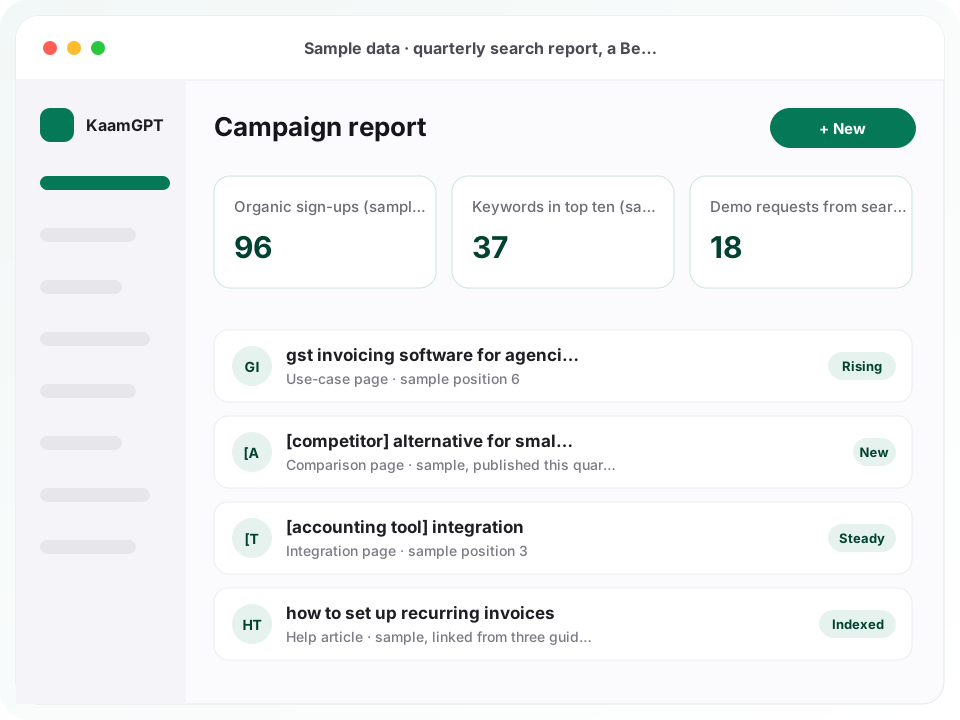
Shortlisting the best SEO company for SaaS companies in Bengaluru comes down to one narrow question: will this team help us appear when a buyer is comparing tools, not just when someone is curious? Buyers research software for weeks before they fill in any form, and most of that research is search queries and, increasingly, questions to AI assistants. The pages that win those moments are category pages, use-case pages, comparisons, integration pages and documentation, rarely the blog post about industry trends.
KaamGPT's Bengaluru team runs SEO services for software products, meeting founders online and keeping day-to-day contact on WhatsApp. We publish and maintain many search pages for our own workspace product, which means crawl budgets, duplicate templates and pages that stop ranking are issues we fix on our own site too. Below is how we would approach SEO for a SaaS product in Bangalore, what it includes, what it costs and the advertising rules for writing about rivals.
- ₹14,999monthly opens an SEO retainer, with pages and fixes counted in the quote
- ~30 dayscovering audit, stage-by-stage keyword map and early fixes ahead of new pages
- 5 page typescategory, use-case, comparison, integration and documentation, mapped to buying stages
- 0 invented ratingsstructured data and comparisons use only facts and reviews you can show
Why does SEO disappoint so many SaaS teams?
Most software sites we review are not penalised or broken. They are simply writing for the wrong searches, hiding the pages that matter, or publishing at a volume the product team cannot check for accuracy.
Another pattern is SEO handed to a content freelancer with no access to the product. The articles read well but could describe any tool in the category, so they rank for nothing specific and convince nobody. Search work for software needs a writer who has logged in, tried the setup and asked the engineers what the limits are.
- A blog full of broad trend articles that attract students and job seekers, while there is no page for the category the product is actually bought under.
- Marketing pages rendered entirely by JavaScript, or documentation on a separate subdomain that is blocked, slow or never linked from the main site.
- Hundreds of near-identical template or integration pages generated at once, most with a sentence of unique text, which then drag on the whole site.
- Comparison pages that attack a rival without evidence, which buyers distrust and which can break India's advertising code on comparative claims.
- Pricing hidden behind a contact form, so the site cannot rank or convert for the many searches that include the word price or cost.
Which keyword map would the best SEO company for SaaS companies in Bengaluru build?
We group searches by buying stage rather than by volume. Problem searches sit at the top, category and use-case searches in the middle, and comparison, alternative, pricing and integration searches at the bottom. Each group gets one page type, and each search gets exactly one page, so your own pages never compete with each other. Bottom-of-funnel searches are usually small in number but bring the visitors most likely to start a trial or ask for a demo, so they are written first.
Your sales and support teams are the best keyword source we have. The objections heard on demo calls and the questions in support tickets become headings, examples and FAQ answers, which is how pages end up saying something competitors' pages do not.
Each page is then judged by what it does for the business: sign-ups, demo requests and assisted conversions, read from your analytics and CRM. Rankings matter as a leading signal, not as the goal.
Start at the bottom of the funnel
Pricing, comparison, alternative-to and integration pages come before broad guides. They are fewer, quicker to rank for a focused product and closer to revenue.
Write from product evidence
Screenshots, short screen recordings, setup steps and real limits of the product make a page more useful than a rival's generic list, and give AI assistants concrete facts to repeat.
Make the docs part of the site
Help articles and API documentation answer long, specific searches. We make sure they are crawlable, linked from the main navigation and tied back to the relevant product pages.
Refresh before you publish more
Software changes monthly. A comparison or feature page that is a year out of date loses trust and rankings, so updates to existing pages are scheduled alongside new ones.
Earn links with things people cite
Free tools, original templates and clear explainers of a regulation or standard attract links from communities and newsletters. Paid links and link schemes are off the table.
Ask partners for the obvious links
Integration partners, marketplaces and app directories usually list the tools that connect with them. Making sure each listing exists, is accurate and links to the right integration page is quick work that many SaaS teams never finish, and it brings relevant visitors as well as links.
What does SEO for a software product include?
Every engagement covers the technical base and then builds the page types your buyers use at each stage. The mix depends on your category, your markets and how much your team can review each month.
Technical audit of the product site
Rendering, indexing, internal links, site speed, canonical tags, sitemaps and how the app, blog and docs subdomains connect. We fix what blocks discovery first, because new content on a site Google cannot read properly is wasted.
SEO in detail →Category and use-case pages
One strong page per category you sell in and one per job buyers hire the product for, each with screenshots, real examples and a clear next step. These pages usually carry the most commercial searches.
SEO in detail →Comparison and alternative-to pages
Pages for buyers weighing you against named tools, written from verifiable facts such as published features and prices, with a date and a note on when the comparison was checked. The rules behind this are explained further down.
SEO in detail →Integration and template pages
A page per integration or template, built on a template that leaves room for genuinely different content: setup steps, use cases and screenshots specific to that pairing. We add them gradually, not hundreds at once.
Websites in detail →Search inside a wider plan
SEO works best alongside paid search and email. If you want one plan across channels, our digital marketing page for SaaS shows how we join them up.
Digital marketing in detail →Testing keywords with paid search
Before writing a long page for a new keyword, a small paid test can show whether those searchers sign up. The approach is on our Google Ads page for SaaS; Google Ads management is priced separately.
Google Ads in detail →Turning organic visitors into demos
Calls to action matched to each page's stage: a template download on a how-to guide, a trial on a use-case page, a demo on a comparison page. Sales-led teams can add our lead generation work on top.
Lead generation in detail →What makes KaamGPT's SEO useful for software?
We run a large page set ourselves
Our own site publishes and maintains many search pages for our workspace product, so template quality and crawl issues are familiar ground.
Search, answer and AI visibility briefed together
Pages are written to rank, to answer questions directly and to give AI assistants clear facts about your product.
Honest comparisons
We compare on verifiable facts, date every comparison and never invent ratings, reviews or customer names.
Reports tied to sign-ups
Monthly reports show organic sign-ups and demo requests next to rankings, making the contribution of the work visible.
Written scope
The quote lists pages, fixes and updates per month, so every rupee is accounted for before work starts.
Retainer pricing for software SEO
Organic search work for a software product begins at ₹14,999 monthly, with first deliverables inside roughly 30 days and a quote that fixes the monthly count of pages, fixes and updates. A focused product in one market often fits close to the starting price; an SEO company for SaaS companies in Bangalore handling several languages, a large documentation site or a migration will quote more, with the reasons written down.
SEO
Recommended₹14,999/month
Typically 30 days
Software products whose buyers search the category and compare tools before ever contacting a vendor.
- Technical audit
- Keyword research
- On-page optimisation
- Content plan
- Monthly reporting
Digital Marketing
₹19,999/month
Typically 15 days
SaaS teams that want SEO, paid search and nurture email planned together and reported against the same pipeline.
- Channel strategy
- Creative production
- Campaign management
- Weekly reporting
Local SEO
₹4,999/month
Typically 14 days
Seldom relevant to SaaS, except for a training centre, partner office or hardware counter that customers physically visit.
- Google Business Profile optimisation
- Local keyword map
- Location page on-page fixes
- Citation building and NAP cleanup
- Local link outreach
- Review replies and posts
- Monthly report
Google Ads
₹4,999/month
Typically 30 days
Teams that need demo requests now while organic pages mature, or want to test keywords before writing pages.
- Account setup
- Keyword strategy
- Ad copy testing
- Conversion tracking
- Bid optimisation
Meta Ads
₹4,999/month
Typically 30 days
Self-serve tools that want to reach owners before they search, and to retarget readers of organic content.
- Creative testing
- Audience building
- Retargeting funnels
- Pixel setup
- Weekly reporting
Lead Generation
₹24,999/month
Typically 14 days
Sales-led products that want organic visitors and outbound outreach feeding one qualified meeting pipeline.
- Verified leads
- Multi-channel outreach
- CRM integration
- Lead scoring
- Replacement guarantee
- SEO pricing covers our work only; content tools, paid link placements or software subscriptions are never bundled in without your approval.
- A site migration, new documentation platform or full redesign is priced as a standalone website project, starting at ₹9,999.
| Package | Starts at | Timeline | Best for |
|---|---|---|---|
| SEO | ₹14,999/month | Typically 30 days | Software products whose buyers search the category and compare tools before ever contacting a vendor. |
| Digital Marketing | ₹19,999/month | Typically 15 days | SaaS teams that want SEO, paid search and nurture email planned together and reported against the same pipeline. |
| Local SEO | ₹4,999/month | Typically 14 days | Seldom relevant to SaaS, except for a training centre, partner office or hardware counter that customers physically visit. |
| Google Ads | ₹4,999/month | Typically 30 days | Teams that need demo requests now while organic pages mature, or want to test keywords before writing pages. |
| Meta Ads | ₹4,999/month | Typically 30 days | Self-serve tools that want to reach owners before they search, and to retarget readers of organic content. |
| Lead Generation | ₹24,999/month | Typically 14 days | Sales-led products that want organic visitors and outbound outreach feeding one qualified meeting pipeline. |
What drives the cost of SaaS SEO?
The largest variable is content that needs product knowledge. A comparison page requires someone to check a rival's current features and prices; an integration page needs someone to actually set up the integration. That takes more time than a generic article, and it is why we agree a realistic monthly page count rather than promising volume.
Technical debt is the second variable. A modern, server-rendered marketing site may need little work. A single-page app with client-side rendering, or a site spread across several subdomains and languages, may need weeks of fixes before new pages can perform.
The third variable is how fast you need results. A steady programme of a few strong pages each month, with refreshes, is the most cost-effective path. If a launch or a funding milestone needs faster visibility, paid search can bridge the wait for organic pages, and we would recommend that over padding the SEO scope.
- How many markets and languages the site serves.
- Whether the marketing site, app and docs share one domain.
- How many bottom-of-funnel pages already exist.
- How many hours of product review your team can spare monthly.
- Whether a migration or redesign is planned in the next year.
- How competitive the category is in search today.
How does an SEO engagement run month by month?
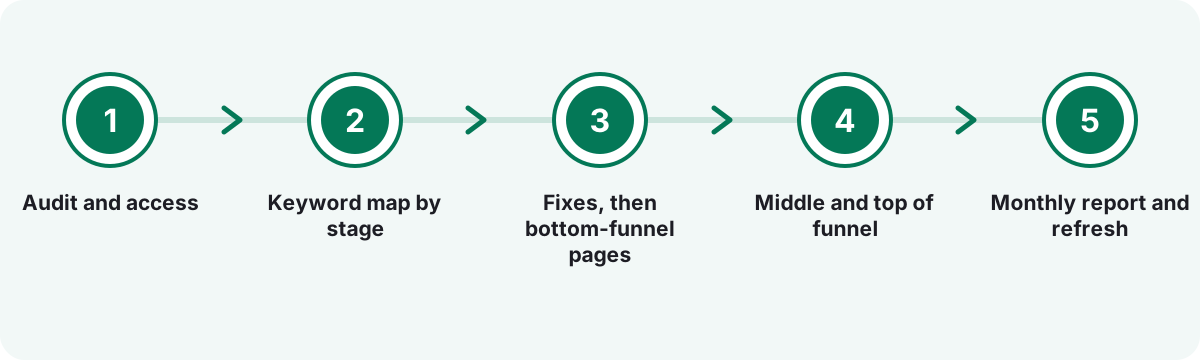
Audit and access
We review crawling, rendering, indexing and analytics, read your sales notes and support tickets, and list what blocks discovery.
Keyword map by stage
Searches are grouped into problem, category, comparison, pricing and integration stages, each matched to one page, with priorities agreed with you.
Fixes, then bottom-funnel pages
Technical blockers are fixed first. Then pricing, comparison and integration pages are written or rebuilt and reviewed by your product team.
Middle and top of funnel
Use-case pages, guides and templates follow, each linked to the pages that convert, and documentation is joined to the main site.
Monthly report and refresh
We report rankings, organic sign-ups and demo requests, and schedule updates to pages that have aged or slipped.
Organic search by SaaS segment: who gains most?
- Horizontal tools for small teamsHuge numbers of how-to and template searches; use-case pages and free templates pull in self-serve sign-ups.
- Vertical SaaS for one tradeFewer searches but very specific ones, such as clinic scheduling software, where one deep page can lead the category.
- Mid-market and enterprise platformsComparison and security pages matter most, because the buyer's colleagues search your name before agreeing.
- Developer tools and APIsDocumentation, code samples and error-message pages capture developers at the moment they need a fix.
- AI-first productsClear use-case pages with honest demos stand out in a category full of near-identical claims.
- India-first SMB softwareSearches in plain business terms such as GST billing app or staff attendance app, often on mobile, often in regional languages.
- Open-source and freemium toolsAlternative-to searches and self-hosting guides bring technical evaluators who later become paying teams.
- Security and compliance softwareExplainers of standards and audit requirements earn links and bring buyers who already have a deadline.
How do software buyers research before they speak to a vendor?
A finance lead who needs expense software, or an engineering manager who needs an error-monitoring tool, usually begins alone. They search the problem, read two or three explainers, then search the category with a qualifier: expense management software for startups, error monitoring tool with Slack alerts, open source alternative to [competitor]. Next come direct comparisons, [product] vs [product], and pricing pages. By the time they book a demo or start a trial, the shortlist is often two or three names long, and being absent from those searches means never being considered.
AI assistants have joined this research. Buyers now ask a chatbot for a list of tools that fit a company size, a budget or an integration, then check the answers by searching. Assistants assemble those lists from pages that state clear, specific facts: what the product does, who it is for, what it costs and what it connects to. Vague marketing copy gives them nothing to quote, so the same clarity that helps ranking also helps your product be described correctly.
Bengaluru's software teams that lean on search are spread across the city, from co-working floors in HSR Layout to the ORR office towers in Bellandur and the older campuses of Electronic City. Their buyers are often elsewhere entirely: Indian small businesses in other cities, or companies in the US, UK and Australia. That is why a SaaS SEO strategy here is rarely about local search and almost always about category, comparison and international pages.
Can you name competitors on comparison and alternative-to pages?
Yes, within limits. India's self-regulatory advertising code from ASCI, in the chapter on fair competition, allows advertisers to name competitors in the interests of vigorous competition and public enlightenment. Any comparison page on your website that weighs your product with another is promotional content, so we write it as if the code applies.
The code sets conditions. It must be clear which aspects of your product are being compared with which aspects of the other. The comparison must be factual, accurate and capable of substantiation, and the points compared must not be chosen to create an artificial advantage. Advertisements must not unfairly denigrate or discredit other products, and must not take unfair advantage of the goodwill attached to another firm's name or trademark.
In practice our comparison pages and alternative-to pages compare published facts such as features, plan limits and list prices, link to the rival's own pages where useful, show the date the facts were checked and say plainly where the other product is the better choice. That last part tends to make the page more persuasive, not less, because buyers trust a vendor who admits a trade-off.
- Compare like with like: plan with plan, feature with feature, at the same date.
- Keep evidence: screenshots or archived copies of the rival's pricing and feature pages.
- No claims about a rival's security, reliability or finances that you cannot prove.
- Recheck every comparison at least each quarter, and whenever either product changes pricing.
Should a SaaS site publish hundreds of integration or template pages?
Programmatic SEO, building many pages from one template and a data set, works for software when every page has something real to say. An integration page that explains what data syncs, how to set it up, what the limits are and which teams use that pairing can rank for years. A page that only swaps the partner's name into a paragraph adds nothing, and a few hundred of those can lower how search engines judge the rest of the site.
Our rule is that a programmatic page must pass the test of a human visitor: would someone who arrived from search find an answer they could not get on the parent page? If not, the page is merged or not published.
We roll these pages out in batches, watch which ones get indexed and visited, and improve the template before adding more. Integration pages, template galleries, use-case-by-industry pages and documentation are the usual candidates for SaaS; city-by-city pages for a product with no local element almost never are.
The data behind the template matters as much as the template. For integration pages we ask your engineers for the real field mappings, sync frequency and known limitations; for template galleries we need the actual templates, with screenshots, so the page is a working resource and not a description of one. Where that data does not exist yet, the honest choice is a smaller set of complete pages.
- Good candidates: integrations, templates, documentation, use cases by industry where the workflow genuinely differs.
- Poor candidates: location pages for an online product, keyword variants with the same answer, auto-written glossaries.
- Signals to watch after each batch: pages indexed, pages receiving visits, sign-ups attributed, and pages never visited after three months.
How do you rank in the US, UK and India with one website?
Most Bengaluru SaaS teams sell in English to several countries, and the real differences between markets are currency, spelling, examples, proof and legal pages. When those differences are meaningful, we create market versions of the pages that need them, typically the home page, pricing, and key landing pages, and leave documentation as one global set.
Google's guidance on localized versions gives three equivalent ways to declare them: link tags in the page head, HTTP headers, or a sitemap. Whichever is used, each version must list itself and every other version, and if two pages do not point to each other the annotations are ignored. An x-default value names the fallback for visitors who match none of the versions. Google also notes that it does not use hreflang to detect a page's language, so the content itself must be genuinely localized.
Separate pricing pages in rupees, dollars and pounds, with local payment and tax details, are usually where hreflang earns its keep. We also check that automatic redirects by IP address do not stop search crawlers, which mostly crawl from the US, from seeing the Indian version.
Spelling and examples matter more than teams expect. A US buyer reading about organisations, GST and lakhs on a page meant for them can tell it was not written for their market, and so can a UK buyer reading about sales tax. We keep a short style sheet per market covering spelling, currency format, date format, tax terms and the kinds of customer examples to use, and the writers follow it on every localized page.
Which structured data helps a software product?
Structured data helps search engines read facts about a page in a fixed format. For a product page, Google's SoftwareApplication documentation lists the name and an offer with a price as required, plus either an aggregate rating or a review. Application category and operating system are recommended.
The rating requirement is where software sites get into trouble. Some add star ratings with no real reviews behind them, or copy a score from a review site without permission. Google's structured data guidelines allow manual action against sites that break them, and invented ratings are also simply untrue. We add rating markup only where you collect genuine reviews and show them on the page.
Without eligible reviews, other markup still helps: Organization with your legal name and profiles, BreadcrumbList for site structure, FAQ content written as plain questions and answers, and clear pricing tables in HTML. These make the page easier to understand for search engines and AI assistants even when no rich result appears.
If you want genuine ratings, the route is slow but sound: ask active customers for reviews on public review platforms and on your own site after a clear success moment in the product, never in exchange for discounts that are not disclosed. Once reviews accumulate and are visible on the page, the markup can reflect them accurately.
Will AI assistants describe your software correctly?
Whether an assistant names a particular product cannot be promised; claims otherwise are guesswork. What can be done is to make sure the facts about your product are easy to find and consistent everywhere they appear: what it does, who it suits, what it integrates with, what it costs and where it is not a good fit.
That means a plain product summary near the top of key pages, a pricing page with real numbers, comparison pages that state trade-offs, documentation that answers specific setup questions, and consistent descriptions on your profiles and partner listings. The same work that helps a page rank in search gives assistants accurate material to draw from, and it reduces the risk of an assistant repeating an outdated price or a feature you removed.
We check periodically how assistants describe your product for typical buyer questions and note errors in the monthly report, together with the pages we changed in response.
Third-party sources matter too. Assistants and search engines both read review platforms, partner marketplaces, community threads and press coverage. Where those describe your product inaccurately, the fix is to correct your own listings, answer questions in public where your team genuinely can help, and keep the facts on your site current so they outweigh older copies elsewhere.
- One plain product summary, repeated consistently on the home page, listings and profiles.
- Pricing, limits and integrations stated as facts in HTML text, not only in images or PDFs.
- A changelog or release notes page, so the latest state of the product is easy to find.
- Comparison pages that say who should choose another tool, which assistants tend to quote.
- Organic search retainer
- ₹14,999 monthly upwards; first deliverables in roughly 30 days
- Page types we build
- Category, use-case, comparison, alternative-to, integration and documentation pages
- Comparison rule in India
- ASCI Code Chapter IV: factual, substantiated comparisons; no unfair denigration
- Multi-market sites
- hreflang: every version lists itself and all others, with return links
- SoftwareApplication rich results
- Need a name, an offer price and a genuine rating or review
- How we work
- Bengaluru team, online meetings and WhatsApp, written monthly report
Where this applies around Bengaluru, Karnataka
- Bengaluru
- Karnataka
- India
- HSR Layout
- Bellandur
- Electronic City
- Sarjapur Road
Frequently asked questions
29 answersWhich question exposes the best SEO company for SaaS companies in Bengaluru?
Ask which five pages they would write first and why. A team that understands software will name comparison, pricing, integration or use-case pages tied to your category, not a list of blog topics. Ask how they report on sign-ups and demos, and how they handle naming competitors.
What will KaamGPT charge as an SEO company for SaaS companies in Bangalore?
Retainers begin at ₹14,999 monthly and deliver first work within roughly 30 days. Monthly page counts, technical fixes and updates are fixed in the written quote. Multi-language sites, large documentation sets or migrations cost more. See our <a href="/pricing">pricing page</a> listing every service.
When do SaaS companies selling B2B software see SEO results?
Technical repairs sometimes register inside a few weeks. New comparison and integration pages often take two to four months to settle in rankings, and competitive category terms longer. Because B2B purchases are slow, the full effect on revenue shows over several quarters, so we report leading signals monthly.
May SaaS companies in India publish comparison pages naming rivals?
Naming competitors is permitted under the ASCI code's chapter on fair competition, provided the comparison is clear about what is compared, factual, accurate, capable of substantiation and not unfairly denigrating. We write comparison pages from published facts, date them and keep evidence of each claim.
What are alternative-to pages, and do SaaS companies need them?
They target searches like <em>[competitor] alternative</em> from people unhappy with a tool they already use. For SaaS companies with a clear rival, they are some of the highest-intent pages a site can have. They must still be honest about where the other tool is better.
Should SaaS companies in Bengaluru blog at all?
Yes, but differently from most. Articles that solve a specific problem your product also solves, with real steps and screenshots, earn sign-ups and links. Broad trend pieces and listicles on unrelated topics bring visitors who never buy, and dilute the site's focus.
Is programmatic SEO safe for SaaS companies?
It is safe when each generated page has substantial unique content, such as setup steps, limits and examples for that specific integration or template. It is risky when hundreds of pages differ only by a name. We publish in batches and expand only after the first batch is indexed and used.
How do SaaS companies use hreflang for India, the US and the UK?
Create separate versions only of pages that genuinely differ, usually pricing and key landing pages, then declare them with hreflang through link tags, HTTP headers or a sitemap. Every version must list itself and all the others, with return links, plus an x-default fallback.
Can SaaS companies get star ratings in Google results?
Google's SoftwareApplication markup requires a genuine aggregate rating or review alongside the name and price. If you collect real reviews and show them on the page, the markup can be added. We never add ratings that are not backed by real reviews.
Should documentation live on a subdomain or the main domain?
Either can work if docs are crawlable, fast and linked from the main site. Problems arise when docs sit on a platform that blocks crawlers, or are never linked from product pages. We check how your docs are discovered and fix the links in both directions.
Does SEO help SaaS companies appear in AI assistant answers?
It helps the facts about your product be found and repeated accurately. Clear product summaries, real pricing, honest comparisons and specific documentation give assistants good material. A mention cannot be promised, so we never promise one.
What does a SaaS SEO strategy look like in the first quarter?
Month one: audit, keyword map by buying stage and technical fixes. Month two: pricing, comparison and integration pages. Month three: use-case pages and early guides, with documentation linked in. A report closes every month covering rankings, sign-ups and demo requests.
Can you work with our developers on technical SEO?
Yes. We write tickets your developers can act on, with the problem, the fix, the page examples and how to test it. For a Bengaluru team we can walk through them on an online call; for teams elsewhere we work asynchronously.
How do you find keywords for a new software category?
When few people search the category name yet, we target the problem and the tools buyers use today, such as spreadsheets or a legacy product. Sales calls and support tickets show the words buyers actually use. Paid search tests can confirm intent before long pages are written.
Will you build links for SaaS companies?
We earn them through useful assets: free tools, templates, original guides and partner pages. We do not buy links, sell placements or join link exchanges, because those carry real risk and rarely last. Integration partners and communities are often the best sources.
Why pick a software-focused SEO team over a generalist in Bengaluru?
We focus on the page types software buyers use and report on sign-ups and demos, not traffic alone. We also maintain a large page set for our own software workspace. For general SEO, see our <a href="/best-seo-services-in-bengaluru">Bengaluru SEO guide</a>.
What happens to SEO during a site redesign or migration?
Rankings can drop if URLs change without redirects or content is removed. We map every old URL to a new one, keep the pages that bring sign-ups, test the staging site before launch and watch indexing closely for weeks afterwards. Migrations are quoted separately.
Should SaaS companies give each feature its own page?
Only for features people search for or evaluate on their own, such as an integration, an approval workflow or an export format. Minor features are better grouped on one page. A separate page per feature without search demand mostly adds maintenance.
Will an SEO company for SaaS companies in Bangalore improve pricing pages too?
Yes. Pricing pages rank for many searches that include price or cost, and they convert. We advise on showing real numbers, explaining what happens after a trial, comparing plans clearly and answering billing questions on the page.
What does a SaaS founder see in the monthly SEO report?
A monthly report with rankings for the keywords that matter, organic sign-ups and demo requests by page, pages published and updated, and technical issues fixed. We explain changes in plain language and agree the next month's priorities on a short call.
What is the quickest way to start a SaaS SEO review with KaamGPT?
Phone or WhatsApp +91 79767 82366 with the product URL and the rivals you meet most. Someone in Bengaluru reviews the site and sends early findings plus a written quote.
Do you write in Indian languages for SaaS companies selling to small businesses?
Where your buyers search in Hindi, Kannada or other languages and your product supports them, localized pages can make sense. We plan these with native-speaker review rather than automatic translation, and declare them with hreflang.
Do SaaS companies in Bengaluru need local SEO?
Rarely. Most sell online to customers in other cities and countries. A Google Business Profile still helps with branded searches and recruiting, and it matters more if you run a training centre or a support desk that customers visit.
Which pages should a new SaaS website have before any SEO starts?
A plain home page, a page for each core use case, a pricing page with real numbers, a security or data page if you handle customer data, documentation for setup, and an about page naming the company. Without those, SEO has nothing solid to build on, and we would write them first.
Do SaaS companies in Bengaluru need separate sites for India and abroad?
Usually not. One domain with market versions of pricing and key landing pages, connected by hreflang, keeps authority in one place. Separate country domains make sense mainly when the product, pricing and legal terms differ heavily by market, and they multiply the work.
Can you fix a SaaS site whose organic sign-ups have fallen?
We start by finding when the fall began and what changed then: a release, a migration, a template change, a search update or a competitor's new pages. Most drops trace to a specific cause such as broken rendering, lost redirects or aged comparison pages, and the fix follows the cause.
How many pages a month will you write for SaaS companies?
It depends on the page type and how much product review your team can give. A few well-researched comparison or integration pages a month usually beats a large batch of thin articles. The quote states the number, and we adjust it with you each quarter based on what is working.
Do you use AI to write SEO content?
We use software to speed up research, outlines and checks, but every page is written and edited by a person who has used the product, and checked by your team before it goes live. Pages that repeat generic text rarely rank and can mislead buyers, so we avoid them.
Who owns the content and accounts after we stop working together?
Ownership stays with you. Pages, documents, analytics and Search Console stay in your accounts and name throughout, and we hand over the keyword map and content calendar when an engagement ends.