Hiring the best Google Ads agency for restaurants in Bengaluru should not mean paying for every hungry person who types ‘food’. Most of those searches end on a delivery app or a map listing, and an ad rarely changes that. The money in restaurant Google Ads sits in narrower searches: a team dinner for twenty near MG Road, a birthday on Brigade Road, office catering in Whitefield, or someone searching your name to order direct.
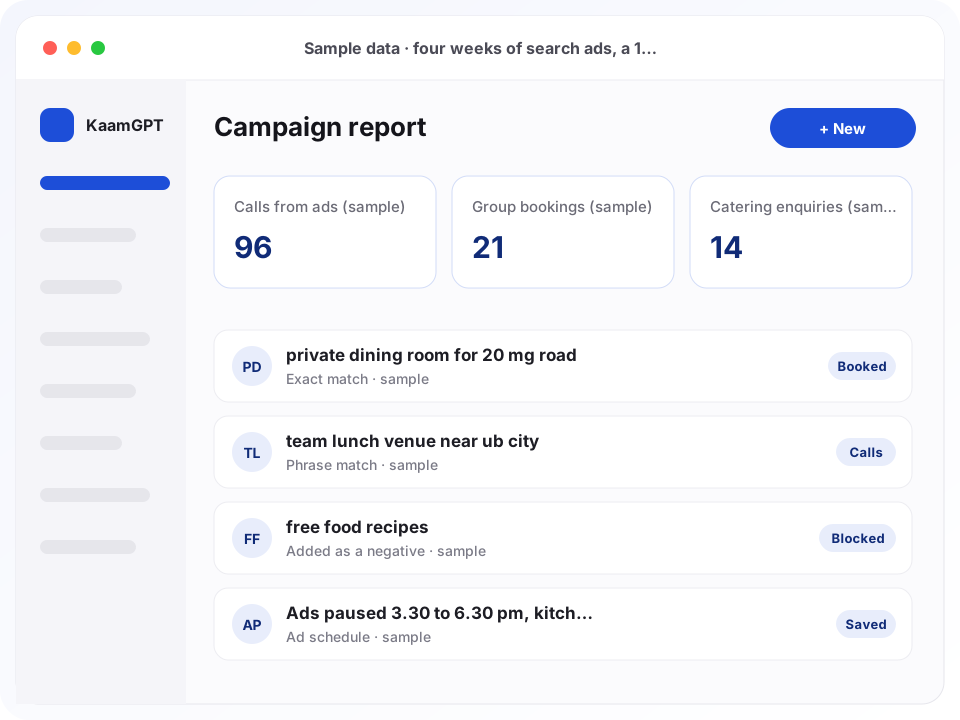
We build campaigns around those group booking searches and the occasions behind them. Ads run when the kitchen can take the business, carry call and location details, and land on pages that answer the organiser's questions. Every booking, call and direct order is counted, so you can see what a table or a catering order actually cost to win.
- ₹4,999monthly management fee to start; Google bills your ad spend to you separately
- ~30 daysto build tracking, write ads, set schedules and gather the first useful data
- No liquorIndia is not on Google's list of countries where alcohol ads may run
- Coversbookings, calls and direct orders are the conversions we count, not clicks
Why do restaurant Google Ads campaigns waste money?
When owners show us campaigns that did not work, the pattern is familiar: broad keywords, one ad group, the homepage as the landing page and conversions counted as page views. The account looked busy and the tables did not fill.
The deeper problem is that restaurant marketing budgets are small and margins are thin, so a few weeks of untargeted clicks can use up the money that a focused campaign would have turned into a dozen group bookings. Waste here is not abstract; it is a weekend's worth of covers.
- Paying for app traffic. Bidding on generic delivery searches that end on an aggregator listing buys you a click and leaves the order on someone else's platform.
- Ads while the kitchen is closed. Without an ad schedule, budget runs at three in the afternoon or after last orders, and calls go unanswered.
- Too few negative keywords. Recipe hunters, job seekers, franchise enquirers and people searching other restaurants with similar names eat the budget.
- No booking or call tracking. If a booking is not recorded as a conversion, Google's bidding optimises for clicks, which is exactly what you did not want.
- Drinks in the ad copy. Pubs and breweries that mention beer, cocktails or happy hours run into Google's alcohol policy, which does not allow alcohol ads targeting India.
Where should the best Google Ads agency for restaurants in Bengaluru put your first rupee?
We start from the bookings you want, not the keywords you could buy. A restaurant with a private room for twenty-four wants a few high-value group bookings a week; a caterer wants weekday office orders above a minimum size; a cloud kitchen wants regulars to order direct. Each goal gets its own campaign, budget and conversion, so one cannot quietly eat another's money.
Then we match the campaign to where the organisers are. Office catering targets the business districts you can actually deliver to on time. Celebration dining targets a wider radius, because people will travel further for a birthday than for a weekday lunch. Brand searches are covered everywhere, because anyone typing your name is already halfway to a booking.
Any google ads agency for restaurants in Bangalore that skips this step ends up running one campaign for everything, where cheap generic clicks crowd out the expensive, valuable ones. Separating goals is dull work at the start and the main reason accounts stay efficient later.
Exact and phrase match for occasions
Searches such as ‘private dining koramangala’ or ‘office lunch catering whitefield’ get tightly matched ad groups. Broad match is used only once conversion tracking is reliable and budgets can absorb the learning.
Negative keywords from day one
Recipes, jobs, franchise, free, delivery apps by name and similarly named restaurants are excluded before launch, and the list grows each week as new irrelevant searches appear.
Schedules that follow the kitchen
The budget is spent while staff can pick up the phone and confirm a booking, pauses through the afternoon break if you close, and pushes harder in the days before weekends and festivals.
Call assets with honest hours
The call button shows only during staffed hours, and missed calls are reviewed so we can tell you when ads are working but the phone is not being answered.
Offline conversions for confirmed tables
Bookings confirmed by phone or WhatsApp are recorded and uploaded, so Google learns which searches produce guests who turn up, not just enquiries that fade.
Brand terms kept cheap and visible
A low-cost campaign on your restaurant's name keeps your own booking and ordering links at the top when regulars search for you, instead of a listing or an app.
What goes into restaurant Google Ads management?
Our Google Ads management for restaurants is built from a few focused campaign types rather than one large account. Which ones you need depends on how your restaurant earns.
Group dining and private room campaigns
Ad groups for team dinners, birthdays, anniversaries and private dining, written around capacity, set menus and the nearest landmark, with a booking form and a call button on the landing page.
Google Ads in detail →Catering and office-lunch campaigns
Searches for office catering, pooja catering and bulk orders, targeted to the business districts you can deliver to, with menus and minimum orders stated plainly so only real enquiries come through.
Google Ads in detail →Brand protection
A small campaign on your own name so people searching for you see your booking and direct-order links first, instead of a listing site or a delivery app.
Google Ads in detail →Call and location assets
Call assets for the restaurant's phone during service hours, a location asset linked to your Google profile, and sitelinks to the menu, private dining and catering pages.
Google Ads in detail →Landing pages that answer the organiser
One page per occasion, showing capacity, set menus, sample prices, photos of the space, the FSSAI number and a brief enquiry form. Where the current site cannot carry such pages, our web team creates them.
Websites in detail →Profile and ads kept consistent
Location assets draw from your Google profile, so wrong hours there become wrong ads. The profile work is described on our Maps page for restaurants.
Google Business Profile in detail →Conversion tracking to the table
Calls, form bookings, WhatsApp clicks and direct orders are tracked, and confirmed bookings can be uploaded as offline conversions so bidding learns from tables actually filled.
Google Ads in detail →Seasonal and event campaigns
Short campaigns for New Year's Eve, December office parties, festival menus and big-match screenings, opened early enough for organisers to plan and closed the moment the dates are full.
Google Ads in detail →Why do restaurants hand their Google Ads to KaamGPT?
We have run search ads for food ordering
For CloseToBuy, a Bengaluru food-delivery app we built, we researched keywords and negatives, used call, WhatsApp and location extensions, measured calls and form fills as conversions, and adjusted bids and budgets every week.
Bookings over clicks
We set conversions as calls, bookings and direct orders before spending, so Google's bidding chases guests rather than cheap traffic.
Policy-safe accounts
We keep alcohol out of ads and landing pages for pubs and breweries, avoiding disapprovals and the risk to the whole account.
Landing pages built in-house
Private-dining and catering pages are built by our own web team, so ads never send organisers to a generic homepage.
Your account, your data
The ads account is registered to the restaurant and paid from its card; we work inside it with manager access, so the history always stays with you.
Honest about when to stop
If a campaign cannot produce bookings at a cost that makes sense for your menu prices, we say so and move the budget, or suggest spending it on the Maps listing instead.
How is Google Ads management for a restaurant priced?
Management starts at ₹4,999 a month and covers set-up, ads, tracking, weekly optimisation and reporting; campaigns are usually live and learning within about 30 days. Media is billed by Google straight to the restaurant, outside our fee. Every published starting price appears on the pricing page, and the scope is itemised before you approve it.
Google Ads
Recommended₹4,999/month
Typically 30 days
Venues selling group dining, private rooms or catering, and kitchens protecting brand searches for direct orders.
- Account setup
- Keyword strategy
- Ad copy testing
- Conversion tracking
- Bid optimisation
Digital Marketing
₹19,999/month
Typically 15 days
Restaurant groups wanting search ads, Maps, social and a guest list run together and judged by covers.
- Channel strategy
- Creative production
- Campaign management
- Weekly reporting
SEO
₹14,999/month
Typically 30 days
Brands that want their own pages to rank for catering, dishes and outlets through SEO, so paid search can shrink over time.
- Technical audit
- Keyword research
- On-page optimisation
- Content plan
- Monthly reporting
Local SEO
₹4,999/month
Typically 14 days
Outlets whose walk-ins depend on the Maps listing, which also feeds the location details in ads; local SEO is priced per outlet.
- Google Business Profile optimisation
- Local keyword map
- Location page on-page fixes
- Citation building and NAP cleanup
- Local link outreach
- Review replies and posts
- Monthly report
Meta Ads
₹4,999/month
Typically 30 days
Launches and events that need to be seen nearby before anyone knows what to search for.
- Creative testing
- Audience building
- Retargeting funnels
- Pixel setup
- Weekly reporting
Lead Generation
₹24,999/month
Typically 14 days
Caterers and banquet kitchens that need enquiry handling, qualification and quotes as well as the ads.
- Verified leads
- Multi-channel outreach
- CRM integration
- Lead scoring
- Replacement guarantee
- The management fee does not include media. If Google charges for clicks, that charge sits on your own Google Ads account and card.
- Landing pages, photography and call tracking numbers are quoted separately when they are needed.
| Package | Starts at | Timeline | Best for |
|---|---|---|---|
| Google Ads | ₹4,999/month | Typically 30 days | Venues selling group dining, private rooms or catering, and kitchens protecting brand searches for direct orders. |
| Digital Marketing | ₹19,999/month | Typically 15 days | Restaurant groups wanting search ads, Maps, social and a guest list run together and judged by covers. |
| SEO | ₹14,999/month | Typically 30 days | Brands that want their own pages to rank for catering, dishes and outlets through SEO, so paid search can shrink over time. |
| Local SEO | ₹4,999/month | Typically 14 days | Outlets whose walk-ins depend on the Maps listing, which also feeds the location details in ads; local SEO is priced per outlet. |
| Meta Ads | ₹4,999/month | Typically 30 days | Launches and events that need to be seen nearby before anyone knows what to search for. |
| Lead Generation | ₹24,999/month | Typically 14 days | Caterers and banquet kitchens that need enquiry handling, qualification and quotes as well as the ads. |
How much ad spend does a Bengaluru restaurant need?
Enough to learn something within a few weeks, and no more until it does. Click costs vary with competition in your area and occasion, so we set an opening test budget for each campaign, run it for long enough to see bookings and calls, and then move money towards the campaigns where a booking costs less than it earns.
When you speak to any Google Ads agency for restaurants in Bangalore, ask what they will count as a conversion and how they will know a booking came from an ad. If the answer is clicks or impressions, the agency is reporting activity, not tables. Our wider Google Ads guide for Bengaluru covers the same question for other sectors.
A useful sense check is the value of one booking. If a private-dining table of twelve brings in a large bill and a catering order more still, you can afford to pay noticeably more for a click in those campaigns than in one chasing single diners. We set bids from those numbers, which is why we ask about your average bill at the start.
- Which occasions you sell: private dining and catering justify higher spend than casual dinners.
- How many outlets and service areas the campaigns must cover.
- Competition for the same searches in your part of the city.
- Whether landing pages and tracking already exist.
- How quickly enquiries are answered, which decides how many clicks become bookings.
- Seasonal peaks such as December office parties and New Year's Eve.
What are the first weeks of a restaurant ad campaign like?
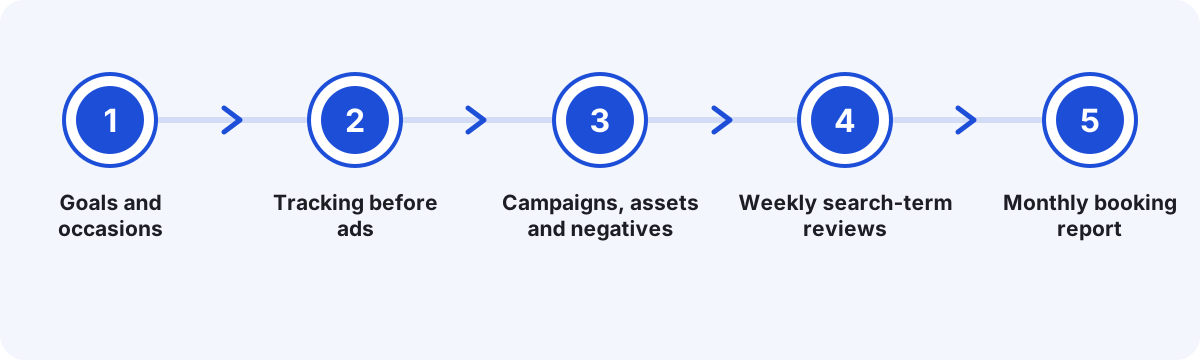
Goals and occasions
We agree which bookings matter most, such as private dining, catering or direct orders, and what each is worth to you, so the campaign has a target to optimise for.
Tracking before ads
Call tracking, booking forms, WhatsApp clicks and direct orders are set up and tested first, along with a simple way to log confirmed tables.
Campaigns, assets and negatives
Tightly matched ad groups, call and location assets, sitelinks, schedules and a starting negative list go live together.
Weekly search-term reviews
We read what people actually searched, add negatives, adjust bids and schedules, and move budget towards campaigns producing bookings.
Monthly booking report
Spend, calls, bookings, catering enquiries and direct orders by campaign, with cost per booking and the changes planned next.
Which restaurants get value from paid search?
- Restaurants with private diningPrivate rooms and buyouts are high-value bookings with planners who search days ahead, ideal for tightly matched ads.
- Caterers and banquet kitchensOffice lunches, events and pooja catering bring large orders, so a single good enquiry justifies careful search spend.
- Fine dining and celebration venuesAnniversary, birthday and proposal dinners are researched in advance; ads with the menu and booking link meet that research.
- Casual dining chainsBrand campaigns and outlet-level location assets catch people choosing between outlets in different parts of Bangalore.
- Cloud kitchens with direct orderingBrand searches from repeat customers are worth protecting so they can order direct; generic delivery terms rarely are.
- Pubs, bars and breweriesFood, venue hire, corporate parties and screenings may be advertised; any drink or liquor reference stays out of the account.
- Cafés with event spaceWorkshops, book launches and small parties are searchable occasions that a café can win with a clear venue page.
Who searches for a restaurant on Google in Bengaluru, and when?
Two kinds of people use Google search to choose a restaurant here. The first is hungry now and nearby, and usually ends up on Maps or a delivery app; ads seldom win them cheaply. The second is planning: an office administrator booking a team lunch, a friend organising a birthday, a family arranging a naming-ceremony meal, a manager ordering food for a fifty-person workshop. They search days ahead, often from work, and they want a quick answer about space, menu and price.
Those planners cluster around where Bengaluru works. The central business district around MG Road and Brigade Road draws office parties and visiting groups, and Brigade Road is where much of the city gathers on New Year's Eve. Office campuses at Manyata Tech Park, Whitefield and along the Outer Ring Road generate team lunches, offsites and catering orders through the week. Ads aimed at those offices and occasions reach people who already know the date and roughly how many are coming.
Brand searches are the third, easily missed group. Someone who enjoyed your food on an app and later searches your name to order direct or book a table is the least expensive valuable click you can buy, and often the one most worth protecting.
Can a Bengaluru pub or brewery advertise on Google?
It can advertise, but not its drinks. Google's alcohol policy lists the countries where alcohol ads may run, and India is not among them. The same policy allows zero-alcohol and very low-alcohol alternatives to be advertised in India only after the advertiser completes Google's certification. A pub's beer, cocktails, happy hours or liquor brands therefore stay out of search ads altogether.
Indian law points the same way. Liquor advertising is restricted in India, and the consumer protection regulator's misleading-advertisement guidelines of June 2022 prohibit surrogate advertisements. In a 2024 consultation on brand extension versus surrogate ads, the consumer affairs department said such ads must show only the product being advertised, must not refer to the prohibited product directly or indirectly, and must not borrow its colours, layout or typical situations.
What a pub can advertise is the rest of the experience: its kitchen, set menus for office parties, venue hire, live music, quiz nights and big-match screenings. Landing pages should follow the same rule, since the page an ad sends people to is reviewed too. We write those campaigns carefully, because a policy strike affects the whole account, not just one ad.
- Advertise food, venue hire, events and screenings, never drinks or drink offers.
- Keep liquor brand names, logos and bottle imagery out of ads and landing pages.
- Zero-alcohol drinks need Google's certification before they can be advertised in India.
- Check that event pages do not slip drink promotions back in.
Which restaurant searches are worth paying for?
Think of intent in three bands. The highest is planned group dining and catering: searches that mention a headcount, a room, an event or an office. These cost more per click and convert into the largest bills. The middle band is brand and near-brand searches, such as your name with ‘menu’, ‘booking’ or ‘order online’. The lowest is generic hunger, such as ‘food near me’ or ‘restaurants open now’, which usually belongs to Maps and the apps.
We spend most of the budget on the first two bands and very little on the third, unless you have a reason to, such as a new outlet that nobody knows yet. Negative keywords keep the bands clean, and the search terms report shows us every week whether real organisers or idle browsers are clicking.
Example searches in the top band look like farewell lunch venue whitefield, private room dinner 15 people indiranagar or south indian catering for office event. In the middle band they look like your name plus menu, timings or order online. These are illustrations of the shape of a query, not claims about how often anyone types them.
- Top band: occasions with a headcount, a room or an office, worth the highest bids.
- Middle band: your brand with menu, booking or ordering words, cheap and valuable.
- Bottom band: generic hunger searches, mostly left to Maps and the apps.
- Negatives: recipes, jobs, franchise and look-alike names, reviewed every week.
Should restaurant ads send people to Swiggy and Zomato or to your own site?
Usually to your own site, your phone or WhatsApp. When an ad sends someone to an aggregator listing, you pay for the click and the order then happens on a platform you do not control, where competing restaurants are one tap away. We make no claims here about platform terms or charges; the point is simply that a paid click should land where you can complete the sale yourself.
There are exceptions. A new cloud kitchen with no direct ordering may reasonably send brand searches to the app where it can actually take orders. In that case we keep budgets small and focus on building the direct route, so that once regulars exist, ads can send them somewhere you own.
Brand protection matters here too. If you do not appear for your own name, other advertisers and listings may, and a regular who meant to order direct ends up placing the order wherever the first link leads. A small brand campaign is often the least costly insurance a restaurant can buy.
How do you track a table booking that started with an ad?
Online bookings are the easy part: a form or booking widget fires a conversion when submitted. Phone calls are the bigger share for most restaurants, so we rely on call assets in the ads and trackable numbers on each landing page, and count calls above a sensible length. WhatsApp clicks are recorded too, though a click is not yet a booking.
The step most restaurants skip is confirmation. Once a booking is confirmed or a catering order is paid, your team logs it with the click identifier or the phone number, and we upload those as offline conversions. Over a few weeks, bidding starts favouring the searches that produce guests who actually arrive, which is the only number that matters at the end of the night.
This needs a little discipline from the floor team. A shared sheet or a field in your booking tool, filled in when a table is confirmed or a deposit paid, is enough. We set it up so it takes seconds per booking, because a tracking step that slows down a busy host on a Friday night will simply be skipped.
- Booking form submissions and direct online orders tracked on the site.
- Calls from ads and landing pages, filtered by duration.
- WhatsApp clicks recorded as a separate, softer signal.
- Confirmed tables and paid catering orders uploaded as offline conversions.
When do Bengaluru restaurants need search ads most?
December is the busiest planning month: office parties, year-end team lunches and New Year's Eve bookings in the central business district. Festival periods such as Diwali, Ramzan, Ugadi and Christmas bring family gatherings and special menus. Corporate catering rises around quarter-ends, offsites and product launches in the tech corridors.
We open those campaigns early, because organisers book ahead, and close them once the dates are full. Outside peaks, many restaurants can drop to brand protection and a small always-on catering campaign, which keeps costs predictable while the profile and website do the steady work.
- December: office parties, team lunches and New Year's Eve in the central business district.
- Festival weeks: family set menus around Ugadi, Ramzan, Diwali and Christmas.
- Quarter-ends: offsites and catering around the tech corridors.
- Quiet weeks: brand protection and a small always-on catering campaign.
- Google Ads management
- From ₹4,999 a month; campaigns live in about 30 days
- Ad spend
- Charged by Google to the restaurant's account, outside our management fee
- Alcohol ads
- Not permitted by Google in India; zero-alcohol drinks only with certification
- Surrogate ads
- Prohibited under the CCPA's 2022 misleading-advertisement guidelines
- Conversions counted
- Calls, bookings, catering enquiries and direct orders
- Team
- Bengaluru-based, working with restaurants over phone, WhatsApp and video
Where this applies around Bengaluru, Karnataka
- Bengaluru
- Karnataka
- India
- MG Road
- Brigade Road
- Whitefield
- Manyata Tech Park
Frequently asked questions
27 answersWhich tasks does a Google Ads agency for restaurants in Bangalore handle each week?
Keywords, ads, call and location assets, schedules, budgets and bids, plus the search terms report that shows what people actually typed. Most importantly it maintains conversion tracking for calls, bookings, catering enquiries and direct orders, because without that Google's bidding optimises for clicks rather than guests.
What will KaamGPT charge to run a restaurant's Google Ads in Bengaluru?
KaamGPT's management fee starts at ₹4,999 a month, with campaigns usually live and learning within about 30 days. Ad spend is separate: Google bills it to the restaurant's own account. The proposal lists campaigns, landing pages and reporting so you know exactly what the fee covers.
Can a pub in India advertise beer on Google Ads?
No. Google's alcohol policy names the countries where alcohol ads may run, and India is not one of them. Zero-alcohol and very low-alcohol drinks can be advertised in India only after Google's certification. A pub can still advertise its food, venue hire, events and screenings, as long as drinks stay out of the ads and landing pages.
Is surrogate advertising allowed for liquor brands in India?
No. The consumer protection regulator's June 2022 guidelines prohibit surrogate advertisements, and in a 2024 consultation the consumer affairs department said brand-extension ads must not refer to the prohibited product directly or indirectly, or use its colours, layout or typical situations. Restaurants should avoid liquor brand tie-ins in their ads altogether.
Should restaurant ads send people to Swiggy or to our own website?
To your own website, phone or WhatsApp wherever possible. If an ad sends someone to a delivery app, you pay for the click and the order happens on a platform you do not control. A new cloud kitchen without direct ordering may be an exception for a short time while a direct route is built.
How do I track table bookings from Google Ads?
Online bookings are tracked as form or widget conversions, calls through call assets and tracked numbers, and WhatsApp clicks as a separate signal. Confirmed bookings and paid catering orders can then be uploaded as offline conversions, so Google learns which searches produce guests who actually arrive.
Which restaurant searches are worth paying for on Google?
Planned occasions and brand searches. Searches for private dining, team dinners, birthday venues and office catering carry a date and a headcount. Searches for your own name with ‘menu’ or ‘order’ are cheap and valuable. Generic ‘food near me’ searches usually end on Maps or a delivery app and rarely justify the spend.
When should a restaurant run Google Ads for New Year's Eve bookings?
Several weeks ahead. Organisers in Bengaluru start booking New Year's Eve dinners and parties well before December ends, especially around the central business district. We open the campaign with the set menu and booking details, increase budget as the date approaches and pause it as soon as the restaurant is full.
Is Google Ads worth it for a small restaurant?
Sometimes, in a narrow form. A small restaurant with no private room or catering may get more from its Maps listing and reviews. If you do take group bookings, or regulars search your name to order, a small brand and occasion campaign can pay its way. Our <a href="/best-local-seo-agency-for-restaurants-in-bengaluru">Maps work for restaurants</a> is often the better first step.
Do you run Google Ads for catering companies in Bengaluru?
Yes. Catering is one of the best uses of paid search for food businesses, because each order is large and the searches are specific. We target the business districts you can serve, state minimum orders and menus on the landing page, and track every enquiry through to a quote and a confirmed order.
What negative keywords should a restaurant use?
Common ones are recipe, how to make, jobs, vacancy, franchise, free, training, and the names of delivery apps if you do not want app-bound traffic. Restaurants with similar names elsewhere in the city also belong on the list. Each week the search terms report is read and fresh negatives are added.
Can Google Ads show our restaurant's phone number?
Yes, through call assets. We schedule them to appear only when someone can answer, so calls are not wasted after last orders. Missed calls are reviewed, because an ad that works with a phone nobody picks up is still losing bookings.
Do restaurant ads need our FSSAI number on the landing page?
The 14-digit FSSAI number is mandatory on bills and invoices rather than on every ad, but we show it on catering and ordering landing pages anyway. Organisers placing large orders check credentials, and a visible licence number settles that question before they have to ask.
How long before a restaurant campaign produces bookings?
Brand and occasion campaigns often produce their first calls in the opening week, but the first month is a learning period while we gather search terms, refine negatives and see which ads produce confirmed bookings. Catering campaigns can take longer because orders are planned further ahead. We report progress weekly in the first month.
Should a restaurant with several outlets in Bengaluru run one campaign or many?
Usually one campaign per goal, with location assets and ad groups per outlet. Brand protection can cover all outlets, while private dining or catering campaigns may run only for outlets that offer them. This keeps budgets tied to what each restaurant can actually deliver.
Can you run Google Ads for a cloud kitchen?
Yes, carefully. A cloud kitchen's best paid search is usually its own brand name, so regulars can order direct, plus bulk or office orders if it offers them. Generic delivery searches tend to send people to apps. We keep budgets small until a direct ordering route exists and is working.
How do Google Ads and Meta ads differ for a restaurant?
Google search ads meet people who are already looking, such as an organiser searching for a private dining room. Meta ads reach people who were not looking yet, with food and events in their feed. Many restaurants use both; the social side is covered on <a href="/best-meta-ads-agency-for-restaurants-in-bengaluru">our restaurant Meta advertising page</a>.
Whose name is the restaurant's Google Ads account in?
The restaurant. The account is created in your name with your billing details, or we are given manager access to your existing one. All campaign history, audiences and conversion data remain yours if the engagement ends.
Can ads promote a restaurant's discount or set-menu price?
Yes, if the offer is real and the bill matches it. The CCPA's July 2022 guidelines say restaurants must not add service charge automatically or by default, so an advertised set-menu price should not grow at the table through a compulsory charge. We check that offers in ads match the menu and the billing.
What did KaamGPT do with Google Ads for a food business?
For CloseToBuy, a Bengaluru food-delivery app we designed and built, we ran search campaigns on phrases such as ‘order food online Bangalore’, using call, WhatsApp and location extensions, keyword research and negatives, call and form conversion tracking and weekly bid changes. The <a href="/works/closetobuy-food-delivery-app-development">case study</a> lists exactly what we did.
Do you also improve the landing pages for restaurant ads?
Yes. Ads send organisers to pages for each occasion, such as private dining, office catering or a festival set menu, with capacity, sample menus, prices, photos and a short form. If your website cannot host them, our team builds them as a separate website project.
Can Google Ads target offices near our restaurant?
Google Ads targets by location and search intent rather than by employer, so we target the business districts around you, such as Whitefield or the Outer Ring Road, and write ads for office occasions like team lunches and farewells. The searches themselves tell us who is planning.
How do I start Google Ads for my restaurant with KaamGPT?
Tell us which bookings you want more of and share access to any existing ads account. Ring +91 79767 82366 or WhatsApp the same number, or request a callback on this page. We reply within a working day with a review, a campaign plan and an itemised quote.
Why pick KaamGPT as the best Google Ads agency for restaurants in Bengaluru?
We count tables, not clicks; keep alcohol out of every account; build occasion landing pages in-house; and have run search campaigns for a Bengaluru food-delivery app. Those are things you can check. Whether that makes us the best fit is for you to decide after seeing our plan for your restaurant.
Does Google Ads help a restaurant during slow weekdays?
It can, if there is a reason to visit. A weekday set lunch for nearby offices, a mid-week tasting menu or a corporate meeting package gives the ads something specific to sell. We schedule those campaigns for the days you want to fill and switch them off when the room is booked.
Can Google Ads bring more walk-ins to a restaurant on a busy street?
A little, through location assets that show your address and distance on ads, but walk-ins are mostly decided on Maps. For a restaurant on a crowded Bengaluru street, the Google profile, photos and reviews usually do more for walk-ins than search ads. We put ad money where it changes decisions, which is planned occasions.
Do you advertise restaurant franchise opportunities?
We can, as a separate campaign with its own landing page and qualification questions, because franchise enquirers are a different audience from diners. Franchise-related searches are also excluded from your restaurant campaigns, so diners' budgets are not spent on people asking about investment terms.