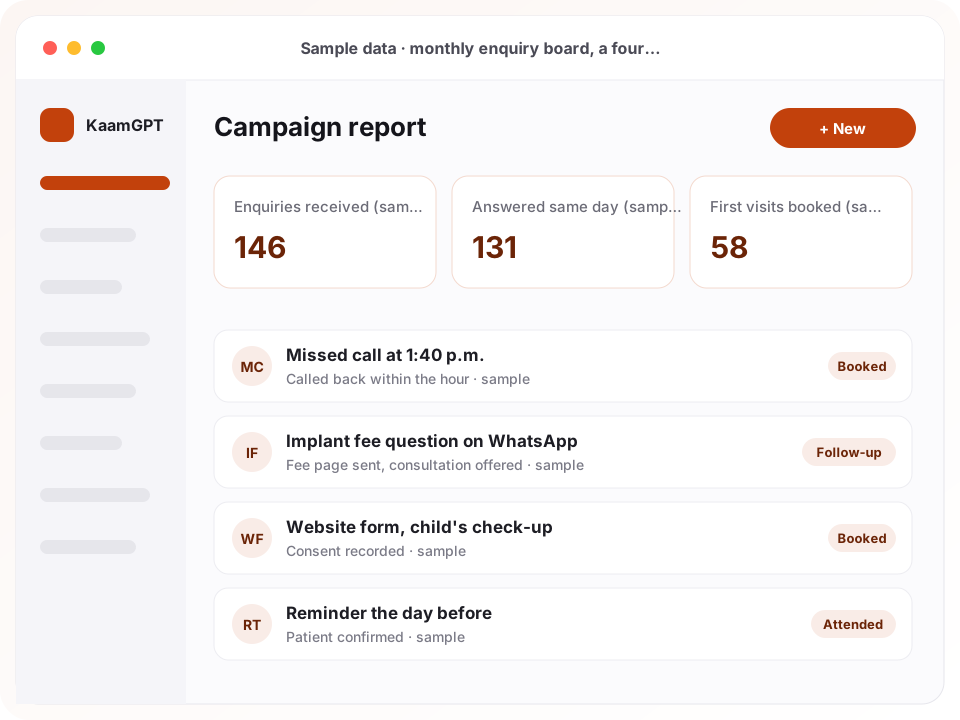
Ask any practice owner what the best lead generation company for dental clinics in Bengaluru should deliver, and the honest answer is patients in the chair, not names on a list. Most clinics we speak to already receive calls, form fills and WhatsApp messages. They lose them in ordinary ways: a missed call during a procedure, a form that reaches an inbox nobody checks, a price question answered three days late, a consultation booked and then forgotten.
Our lead generation service for clinics builds one system around that problem. Every enquiry, whatever its source, lands in a single queue the front desk can see; it is answered the same day, followed up politely and marked when it books. Consent is recorded from the first contact, as the Digital Personal Data Protection Act, 2023 expects. And the system is designed to stay inside the dentists' code, which rules out several tactics that lead-generation firms in other industries use without thinking.
- ₹24,999monthly is the entry point for a full enquiry-to-appointment system
- ~14 daysto connect channels, set up the queue and train the front desk
- Same dayis the reply window we design every enquiry route around
- Monthly feenever a per-patient commission, which regulation 8.6.1 of the dentists' code bars
How does a dental enquiry become an appointment in north Bengaluru?
North Bengaluru around Yelahanka, Hennur, Thanisandra and Jakkur has added many apartment communities in recent years, and plenty of the families living in them have no long-standing dentist nearby. Their first contact with a clinic is rarely a walk-in. It is a call from a Maps listing, a WhatsApp message asking for the price of a root canal, or a form left on a website late at night, with searches such as "dentist Thanisandra Sunday" or "braces cost Yelahanka" offered here as examples of phrasing.
What happens next decides the outcome. An urgent caller wants a time slot today. A family asking about a child's check-up wants reassurance and a convenient Saturday. An adult asking about implants or aligners wants a fee range, an idea of the number of visits and a consultation that does not feel like a sales pitch. Each needs a different response, and each cools quickly if nobody replies.
Competition is real even at the city's edge. Krishnadevaraya College of Dental Sciences stands at Hunasamaranahalli on International Airport Road, its COMEDK listing shows, so a teaching hospital's clinics compete with private practices for families along the northern corridor. A lead generation company for dental clinics in Bangalore earns its keep by making sure the clinic that replies first is also the one that replies best.
What does a dental lead generation system include?
The system is scoped to your channels, branches and front-desk hours, and the written proposal lists each part before anything is switched on.
One queue for every enquiry
Calls, website forms, Meta lead forms, Google Business Profile messages and WhatsApp chats feed one shared queue that reception can see on a screen or phone, with the source, time and status of each dental patient enquiry.
Lead generation in detail →Missed-call recovery
Every missed call during clinic hours triggers a callback task, and calls after hours receive a polite message with the next opening time, so no caller is simply abandoned.
Lead generation in detail →WhatsApp replies and reminders
Ready answers to frequent questions, fee-page links, booking confirmations, a reminder the evening before and aftercare instructions, each going only to people who opted in.
WhatsApp campaigns in detail →Forms built for consent
Compact website forms headed by a plain-language notice, pointing to the clinic's privacy policy and finished with a consent box the visitor must tick themselves; new pages, where needed, are a website project from ₹9,999.
Websites in detail →Paid demand where it is needed
Search campaigns for urgent and planned care feed the same queue, so their bookings are measured alongside every other channel. Our paid-search notes for dentists explain how they are run.
Google Ads in detail →Social campaigns for elective care
Aligner, whitening and children's dentistry campaigns on Facebook and Instagram, routed into the queue in real time, as described in our social advertising notes for clinics.
Meta Ads in detail →Reporting from enquiry to appointment
A monthly view of enquiries, response times, bookings, attendance and accepted treatment plans by source, so the clinic sees the whole path from enquiry to appointment.
Lead generation in detail →Recall by email for patients who prefer it
Some patients, often older ones or those booking for a parent, prefer email to WhatsApp. Six-month recall and pre-appointment instructions can go by email to those who chose it, with an unsubscribe link in every message and no promotional offers.
Email campaigns in detail →How does the best lead generation company for dental clinics in Bengaluru handle an enquiry?
We sort every enquiry into one of three lanes the moment it arrives. Urgent: pain, swelling, a broken tooth or a lost filling, which needs a slot today or tomorrow. Routine: check-ups, cleaning, a child's visit, which needs a convenient time and a friendly confirmation. Planned: implants, aligners, crowns or dentures, which needs information, a consultation and patient follow-up over weeks.
Each lane has its own response script, reply time and follow-up rule, written with your front desk rather than imposed on it. Urgent enquiries go to the top of the queue and get a call. Routine ones can be booked by WhatsApp. Planned ones receive the fee page, a consultation offer and up to two polite follow-ups, after which the clinic stops unless the patient replies.
This is what a dental appointment booking system means in practice: not software alone, but a clear route for every type of enquiry, a person responsible for each step and a record of what happened. Software helps, but only once the routes are agreed.
Referrals from existing patients deserve a lane of their own in the records, though never a reward. A family that recommends the clinic to neighbours is the strongest signal a practice can have, and noting it in the queue shows which dentists and services earn word of mouth, without any of the gifts or commissions regulation 8.6.1 forbids.
Answer the phone, or call back within the hour
We set up call forwarding or a second line during busy chairside hours, and a missed-call list that reception clears every hour. An urgent caller may well accept a callback within the hour; a callback the next day often reaches someone already treated elsewhere.
Reply to fee questions with context
A bare number invites comparison shopping. A reply that gives the range, explains what changes it, links the fee page and offers a consultation slot treats the person as a patient, not a price-checker.
Follow up planned treatment twice, then stop
Implant and aligner patients often need time and a family conversation. Two spaced, courteous follow-ups are helpful; more becomes pressure, which neither patients nor the dentists' code welcome.
Send no-show reminders that people want
A confirmation at booking and a short reminder the day before, with an easy way to reschedule, are the simplest no-show reminders. Only patients who opted in receive them.
Keep consent with the record
Each enquiry carries a note of how consent was given and for what, so the clinic can show it if asked, honour a withdrawal quickly and delete details once they are no longer needed.
Close the loop with every source
Bookings are marked against the channel that produced them, so Google, Meta, Maps, the website and referrals from existing patients can be compared on booked visits rather than on volume.
How is a dental enquiry system priced?
For a full enquiry system the entry fee is ₹24,999 monthly; the first fortnight goes on joining channels, building the shared queue and coaching reception. That covers the system, follow-up design and reporting. Any paid advertising that feeds it is billed by Google or Meta to the clinic's own account, and larger groups receive a written proposal per branch.
Lead Generation
Recommended₹24,999/month
Typically 14 days
Group, specialist and multi-branch practices that lose enquiries between first contact and the chair need the full system, ₹24,999 monthly upward.
- Verified leads
- Multi-channel outreach
- CRM integration
- Lead scoring
- Replacement guarantee
Digital Marketing
₹19,999/month
Typically 15 days
Clinics that already handle enquiries well but want website, Maps, ads and recall run together pick the managed programme, ₹19,999 monthly upward.
- Channel strategy
- Creative production
- Campaign management
- Weekly reporting
SEO
₹14,999/month
Typically 30 days
Practices short of researched enquiries from treatment and fee pages add organic SEO, ₹14,999 monthly upward.
- Technical audit
- Keyword research
- On-page optimisation
- Content plan
- Monthly reporting
Local SEO
₹4,999/month
Typically 14 days
Neighbourhood clinics whose calls mostly start on Maps need profile and review work, ₹4,999 monthly for each address.
- Google Business Profile optimisation
- Local keyword map
- Location page on-page fixes
- Citation building and NAP cleanup
- Local link outreach
- Review replies and posts
- Monthly report
Google Ads
₹4,999/month
Typically 30 days
Clinics wanting extra urgent and planned-treatment calls flowing into the queue add search campaigns, managed from ₹4,999 monthly.
- Account setup
- Keyword strategy
- Ad copy testing
- Conversion tracking
- Bid optimisation
Meta Ads
₹4,999/month
Typically 30 days
Aligner, cosmetic and paediatric interest from Facebook and Instagram can feed the queue directly, with campaigns managed from ₹4,999 monthly.
- Creative testing
- Audience building
- Retargeting funnels
- Pixel setup
- Weekly reporting
- The fee is a monthly one, not a charge per patient. Regulation 8.6.1 of the dentists' code forbids giving or receiving any commission for referring or procuring patients, so no such payment has a place in the system.
- Our pricing page shows the published entry prices; your proposal then names the channels, branches, reports and hours of queue monitoring.
| Package | Starts at | Timeline | Best for |
|---|---|---|---|
| Lead Generation | ₹24,999/month | Typically 14 days | Group, specialist and multi-branch practices that lose enquiries between first contact and the chair need the full system, ₹24,999 monthly upward. |
| Digital Marketing | ₹19,999/month | Typically 15 days | Clinics that already handle enquiries well but want website, Maps, ads and recall run together pick the managed programme, ₹19,999 monthly upward. |
| SEO | ₹14,999/month | Typically 30 days | Practices short of researched enquiries from treatment and fee pages add organic SEO, ₹14,999 monthly upward. |
| Local SEO | ₹4,999/month | Typically 14 days | Neighbourhood clinics whose calls mostly start on Maps need profile and review work, ₹4,999 monthly for each address. |
| Google Ads | ₹4,999/month | Typically 30 days | Clinics wanting extra urgent and planned-treatment calls flowing into the queue add search campaigns, managed from ₹4,999 monthly. |
| Meta Ads | ₹4,999/month | Typically 30 days | Aligner, cosmetic and paediatric interest from Facebook and Instagram can feed the queue directly, with campaigns managed from ₹4,999 monthly. |
Which factors change the scope?
Scope grows with the number of doors into the clinic. One location with a phone line and a website form is simpler than three branches, each with calls, Maps messages, WhatsApp, Meta lead forms and a website, all needing to reach the right receptionist.
The other big variable is the front desk itself. A clinic with a dedicated receptionist who can clear the queue every hour needs routing and reporting. A clinic where the dentist's assistant also answers phones needs more automation, simpler scripts and missed-call recovery. We scope to the team you have, not an ideal one.
Recall is the part clinics most often leave out of the scope, and it usually costs the least to run. A practice with several thousand past patients who agreed to reminders has a ready source of check-up bookings that costs nothing in advertising. Bringing that list into order, with consent recorded and old numbers removed, is often the first month's best investment.
- Number of branches and enquiry channels to connect.
- Hours the queue must be monitored, including evenings and Sundays.
- Whether paid campaigns are included or already run elsewhere.
- How many follow-up routes are needed for different treatments.
- Reminder and recall messaging volume.
- Reporting depth, from monthly summaries to branch-level dashboards.
Which practices need a full enquiry system?
- Multi-dentist group practicesSeveral diaries and specialists mean enquiries must be routed to the right dentist and slot without delay.
- Implant and full-mouth rehabilitation practicesHigh-value treatment with long decisions, where structured follow-up makes the biggest difference.
- Orthodontic and aligner clinicsMany enquiries are from parents or adults comparing options; consultation booking and follow-up drive results.
- Multi-branch dental groupsCentral visibility of enquiries across branches, with each location's bookings reported separately.
- Clinics with one receptionistMissed-call recovery and saved WhatsApp replies stop enquiries slipping away during chairside work.
- Newly opened practicesA clean system from the first enquiry, before habits form around personal phones and notebooks.
- Practices running paid adsAd money only pays off if responses are fast, so the queue protects the ad budget.
- Practices with large recall listsYears of past patients who agreed to reminders can fill check-up slots once consent and contact details are put in order.
Building the system in five steps
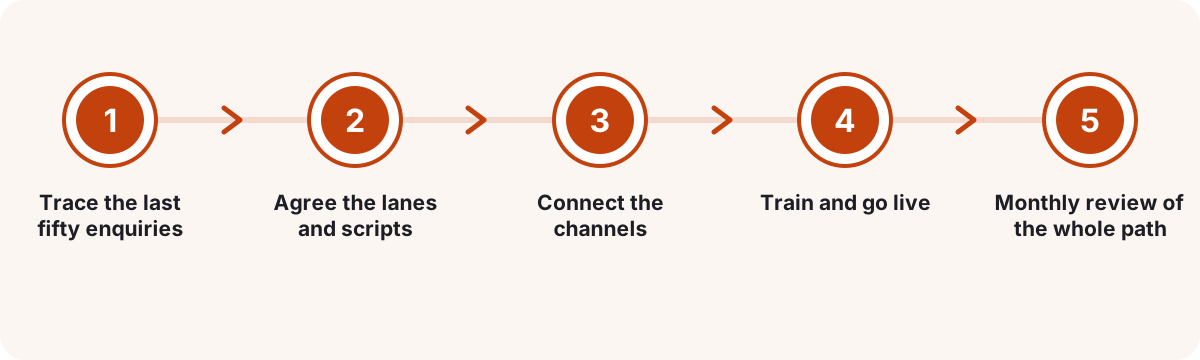
Trace the last fifty enquiries
With reception we follow recent calls, forms and messages from arrival to outcome, noting where each one waited, who answered and whether it booked. The gaps usually reveal themselves within an afternoon.
Agree the lanes and scripts
We write the urgent, routine and planned-treatment routes with your front desk, including reply times, wording for fee questions and the follow-up limit for each lane.
Connect the channels
Phone tracking, website and Meta forms, Google profile messages and WhatsApp are joined into one queue, with consent wording on every form and notifications to the right person.
Train and go live
Reception learns the queue in a short session, the first week is monitored closely, and scripts are adjusted where they feel unnatural on a real call.
Monthly review of the whole path
We report enquiries, response times, bookings, attendance and accepted treatment plans by source, and agree one or two changes for the next month.
Why dental practices choose KaamGPT for enquiries
We fix the leak before adding water
If enquiries are being lost, we fix the response process first, so any ad budget you add later is not wasted.
Consent is designed in, not bolted on
Forms, chats and reminders record what each person agreed to, so the clinic can honour withdrawals and deletion requests quickly.
Tactics the code rules out stay out
No canvassers, no per-patient commissions, no camps, no handbills and no claim vouchers, all of which the 2014 code treats as unethical.
Built around your real front desk
Scripts and routes fit the people you have, whether that is a full reception team or one assistant who also works chairside.
One report from enquiry to treatment
Every source is judged on the same measure, booked and attended first visits, so the clinic can decide where to invest next.
Which lead-generation tactics does the dentists' code rule out?
Several staples of lead generation in other industries are explicitly unethical for dentists under the Revised Dentists (Code of Ethics) Regulations, 2014. Regulation 8.1.4 rules out employing any agent or canvasser to obtain patients in a commercial manner. Regulation 8.6.1 says a dentist shall not give, solicit or receive any gift, gratuity, commission or bonus for referring, recommending or procuring a patient. Regulation 8.1.2 adds promotional camps at schools, colleges or homes for the elderly, leaflet drops and redeemable vouchers to the unethical list wherever they hand a dentist an unfair edge.
That removes the per-lead marketplaces that charge a clinic for each patient sent, referral fees to gyms, salons or corporate HR teams, street promoters with flyers, and free check-up camps run as funnels. Registered charities giving care entirely free of charge are carved out of the camp rule, but a private clinic's marketing is not charity. What remains is honest: a findable clinic, a fast and courteous response, and patients who choose to come back.
- Ruled out: canvassers or agents paid to bring in patients (8.1.4).
- Ruled out: commissions, gifts or bonuses for referring or procuring patients (8.6.1).
- Ruled out: promotional camps at educational institutions or elder-care homes, leaflets and redeemable vouchers (8.1.2).
- Allowed: factual listings, a factual website showing fees, and plain announcements of new services (8.2).
What does the DPDP Act require of a dental enquiry form?
The Digital Personal Data Protection Act, 2023 treats the clinic as a Data Fiduciary for the details a patient leaves in a form or message. Before asking for consent, the clinic must give a notice saying which personal data it wants, why, how the person can withdraw consent or exercise their rights, and how to complain to the Data Protection Board. The consent itself has to be a real choice, specific to that purpose, and recorded through a positive act rather than a pre-ticked box.
Three further duties matter for a clinic. Withdrawing consent must be as easy as giving it. Personal data must be erased once the purpose is served or consent is withdrawn, unless another law requires it to be kept. And any agency handling enquiries for the clinic is a Data Processor, which section 8(2) allows only under a valid contract. The Act's schedule sets penalties of up to two hundred and fifty crore rupees for failing to take reasonable security safeguards, so loose spreadsheets of patient numbers are a genuine risk.
For dental patient enquiries in particular, keep clinical detail out of the queue. A form can ask the reason for the visit in a few words, but symptoms, medical history and X-rays belong in the clinic's patient records, collected at the appointment under the clinic's own procedures.
- A short notice above the form, in plain words.
- An unticked consent box for contact about the enquiry, and a separate one for reminders or recall.
- Only the fields reception needs: name, phone, preferred time, reason for visit.
- A written processing agreement between the clinic and any agency that sees enquiry data.
How fast should a clinic respond, and who should respond?
We design every route around a same-day reply, with urgent enquiries called back within the hour during clinic hours. The person who replies matters as much as the speed. Fee and booking questions belong with reception, who should have the fee page and the diary to hand. Clinical questions, such as whether a symptom needs urgent care, belong with a dentist, and reception should be able to offer a callback from one rather than guessing.
Clinics often ask whether an agency should answer enquiries for them. For a dental practice we prefer not to. Patients are calling about their health, and the code's emphasis on dignity and confidentiality is better served by the clinic's own staff. We build the queue, write the scripts, monitor response times and report gaps; the clinic's team does the talking.
- Urgent lane: callback within the hour, slot today or tomorrow, a dentist available for clinical questions.
- Routine lane: same-day reply, booking by WhatsApp or phone, confirmation and a reminder.
- Planned lane: fee page and consultation offer the same day, then at most two spaced follow-ups.
- Every lane: outcome recorded, consent noted, no clinical details stored in the enquiry queue.
Can SMS and WhatsApp reminders be used for recall?
Yes, with consent and care. Appointment confirmations, the day-before reminder, post-treatment instructions and six-month recall messages are part of running a practice, and many patients find them useful. We send them only to people who agreed to receive them, keep the wording factual, and include a simple way to stop. Recall messages carry no offers or discounts, because the code frowns on any advertising built around inducements or rebates.
SMS in India runs under the Telecom Regulatory Authority of India's Telecom Commercial Communications Customer Preference Regulations, 2018, which require senders to use registered headers and content templates recorded on a distributed ledger. A clinic using an SMS provider should make sure its sender name and templates are registered properly. Many clinics find WhatsApp simpler for reminders, since patients already message the clinic there; the same consent rules apply either way.
- Confirmation at booking, with address, parking and what to bring.
- A short reminder the day before, with a reschedule link or number.
- Care instructions after treatment, sent once.
- Six-month recall, only to patients who opted in, never with offers.
How do you measure a dental lead system honestly?
The headline figure is booked first visits that actually attended, by source. Behind it sit response times, the number of enquiries answered the same day, missed calls recovered, consultations booked for planned treatment and treatment plans accepted. We report counts rather than marketing ratios, because a clinic can check counts against its diary.
We also report what we could not convert and why, in categories the front desk records: wrong number, outside the area, price, chose another clinic, not ready yet. Over a few months those reasons tell the clinic more than any ad metric, such as whether its fee page needs updating or whether Sunday hours would pay for themselves. That is the information a lead generation company for dental clinics in Bangalore should hand back to its client. Our Bengaluru lead generation guide covers the general method, and the overview for dental practices places it in the wider plan.
Where do dental enquiries get lost?
In most clinics the problem is not a shortage of interest. It is a gap between the channel that produced the enquiry and the person who should answer it. The gaps below are the ones we see most often in the first week of a review.
None of them is solved by buying more leads. Buying more simply pours more enquiries into the same leaking process, and the cost of each booked visit rises rather than falls.
- Calls ring out while the only receptionist is assisting chairside, and nobody calls back.
- Website forms arrive in an email inbox that is checked once a day, or once a week.
- WhatsApp questions about fees get a one-line reply with a number and no invitation to book.
- Consultations for implants or aligners are booked, but nobody follows up when the patient goes quiet afterwards.
- Enquiry details sit in personal phones and notebooks, with no record of consent and no way to delete them on request.
- Fee for the full enquiry system
- ₹24,999 monthly as the entry point
- Set-up
- About 14 days to connect channels and train reception
- Reply standard
- Same day for every enquiry; urgent calls returned within the hour
- Ruled out by the dentists' code
- Canvassers (8.1.4), per-patient commissions (8.6.1), camps, handbills and claim vouchers (8.1.2)
- Consent standard
- DPDP Act 2023: notice, specific consent, easy withdrawal, erasure
- Measured by
- Attended first visits and accepted treatment plans, by source
Where this applies around Bengaluru, Karnataka
- Bengaluru
- Karnataka
- India
- Yelahanka
- Hennur
- Thanisandra
- Jakkur
Frequently asked questions
24 answersWhat should the best lead generation company for dental clinics in Bengaluru actually deliver?
Booked first visits that turn up, not a spreadsheet of names. It should connect every channel into one queue, help your team reply the same day, follow up planned treatment politely, record consent properly and report results by source. It should also refuse canvassers, per-patient commissions and camps, which the dentists' code treats as unethical.
Can a dental clinic pay for patient referrals in India?
No. Under regulation 8.6.1 of the 2014 dentists' code, a dentist may neither offer nor accept a gift, fee, commission or bonus in return for a patient being referred, recommended or procured. That covers paying a lead marketplace per patient sent, paying a gym or employer for referrals, and similar arrangements.
Are free dental camps allowed for private clinics?
Under the code's regulation 8.1.2, using camps at schools, colleges or elder-care homes, leaflets or redeemable vouchers to win an unfair professional edge is unethical. Only registered charities offering care completely free are exempt. A private clinic using camps to generate patients falls on the wrong side of that line.
What consent does a dental enquiry form need under the DPDP Act?
A notice before the form explaining what data is collected, why, how consent can be withdrawn and how to complain to the Data Protection Board, followed by a consent the person gives deliberately for that specific purpose, such as ticking an unticked box. Separate consent for reminders or recall is sensible. Only collect what reception needs.
How much does lead generation for a dental clinic in Bengaluru cost?
For a Bengaluru dental clinic, KaamGPT's enquiry system has an entry fee of ₹24,999 monthly, and roughly two weeks go on joining channels, building the queue and coaching reception. Paid campaigns feeding the system are billed by Google or Meta to the clinic's own accounts. Multi-branch groups receive a written proposal per branch.
How quickly should a dental clinic reply to an enquiry?
The same day for every enquiry, and within the hour for urgent ones during clinic hours. Patients in pain often contact two or three clinics and book with whoever answers first, and planned-treatment enquiries cool within days. A missed-call list cleared hourly and saved WhatsApp replies make that pace achievable for a small front desk.
How can a dental clinic reduce no-shows?
Confirm the appointment at booking, send a short reminder the day before with an easy way to reschedule, and make the clinic's address and parking clear in the message. For long treatments, a note before each stage helps. Reminders reach only people who opted in, and the clinic tracks attendance so the effect shows.
Can dentists send WhatsApp reminders to patients?
Yes, provided the patient opted in. Confirmations, day-before reminders, care instructions after treatment and six-month recall messages are normal practice. Keep them factual, with no offers or discounts, include a simple way to stop, and honour opt-outs promptly, as the DPDP Act expects for consent-based contact.
Which company sets up enquiry handling for dental clinics in Yelahanka or Hennur?
KaamGPT sets up enquiry systems for dental clinics across Bengaluru, including Yelahanka, Hennur, Thanisandra, Sahakar Nagar and Jakkur, working remotely with clinic teams. We trace recent enquiries first, then connect the channels into one queue and train reception. The approach is the same in every part of the city; the scripts reflect each clinic's own patients.
Do you answer our clinic's calls and WhatsApp messages for us?
We prefer not to. Patients contacting a dental clinic are discussing their health, and the clinic's own staff are better placed to respond with care and confidentiality. We build the queue and scripts, monitor response times and flag gaps; your team does the talking. Where a clinic needs extra cover, we help design rotas and call forwarding.
What is consent-based follow-up for planned dental treatment?
Consent-based follow-up means contacting a person about their implant, aligner or crown enquiry only in the way and for the purpose they agreed to, usually two spaced, courteous messages after a consultation, and then stopping unless they reply. It respects the patient, avoids the pressure the dentists' code frowns on and keeps the clinic within the DPDP Act.
Can our clinic buy dental patient enquiries from a lead marketplace?
We advise against buying dental patient enquiries priced per patient or per booking. Regulation 8.6.1 bars commissions for procuring patients, and a per-patient fee to a third party looks very much like one. Bought leads also arrive without the consent trail the DPDP Act expects. Building your own channels is slower but clean.
What makes a lead generation company for dental clinics in Bangalore different?
A <strong>lead generation company for dental clinics in Bangalore</strong> works within limits most industries do not have: no canvassers, no commissions, no camps or handbills, no boasting in ads, and strict confidentiality. It should also understand clinic rhythm, such as chairside hours when nobody can answer, and design the system around it.
How long should a dental clinic keep enquiry details?
Only as long as the purpose needs. Section 8(7) of the DPDP Act asks a Data Fiduciary to erase personal data once the purpose is served or consent is withdrawn, unless another law requires it to be kept. Enquiries that never became patients should be deleted on a schedule. Patient clinical records are different: regulation 3.3.1 of the dentists' code requires them to be kept for at least three years.
Is an agency handling our enquiries covered by the DPDP Act?
Yes. An agency processing enquiry data on the clinic's behalf is a Data Processor, and section 8(2) of the DPDP Act lets a Data Fiduciary use one only under a valid contract. The clinic remains responsible for the data. We put a written processing agreement in place with every dental clinic before connecting any channel.
Can we send SMS reminders from our dental clinic's name?
Yes, through a provider that registers your sender header and message templates as TRAI's Telecom Commercial Communications Customer Preference Regulations, 2018 require. The usual use is booking confirmations and reminders to patients who said yes to them. Promotional bulk SMS to people who never agreed is not something we set up for clinics.
What do you report each month to a Bengaluru dental clinic?
Enquiries received by source, response times, missed calls recovered, first visits booked and attended, consultations for planned treatment and treatment plans accepted, all as counts the Bengaluru clinic can check against its diary. We also list why enquiries did not book, using reasons reception records, so the clinic can act on price, hours or follow-up.
Does lead generation include running ads for our dental clinic?
It can. Search and social campaigns can feed the queue, and their management is part of the written scope when included. Many clinics start by fixing the response process, then add ads once enquiries are handled well. Our <a href="/services/google-ads">Google Ads service</a> and <a href="/services/meta-ads">Meta Ads service</a> describe the campaigns.
Our dental clinic has one receptionist. Will this work for us?
Yes, and small teams often gain the most. Missed-call recovery, saved WhatsApp replies, an hourly queue check and simple scripts let one person handle more enquiries without being on the phone constantly. We design routes around the hours your receptionist is free and the moments they are needed chairside.
Can a dental group in Bengaluru see enquiries across all branches?
Yes. Each branch has its own queue and reception routing, and the group owner sees a combined view with branch-level reports. Enquiries are routed by location so a patient in Thanisandra is offered the nearest Bengaluru branch, not one across the city. Each branch is judged on its own attended first visits.
How do we start with KaamGPT's dental lead generation?
Ring +91 79767 82366, or WhatsApp the clinic's name, its branches and where enquiries currently come from. We trace a sample of recent enquiries with your team, then send a written plan with the gaps we found, the system we would build and its monthly price, before anything is switched on.
Is lead generation better than a managed digital marketing plan for dentists?
They solve different problems. A managed plan, from ₹19,999 monthly, builds visibility across website, Maps, ads and recall. Lead generation, from ₹24,999 monthly, focuses on turning every enquiry into a booked visit. Clinics losing enquiries should start with lead generation; clinics short of enquiries should start with the <a href="/best-digital-marketing-agency-for-dental-clinics-in-bengaluru">managed plan for dental practices</a>.
Do you also help dental clinics with Google Maps and reviews?
Yes. Many enquiries begin on the clinic's Google profile, so we check it is accurate before building the queue. Ongoing profile, review and directory work is our local SEO service, explained in our <a href="/best-local-seo-agency-for-dental-clinics-in-bengaluru">Maps notes for dental clinics</a> and on the <a href="/services/local-seo">local SEO service page</a>.
Can we offer a discount to patients who book through WhatsApp?
We would not. The dentists' code, in regulation 8.1.3, steers dentists away from advertising that dangles inducements or rebates, and a discount tied to one booking channel is precisely that. Patients choosing WhatsApp want convenience, not a deal; a fast, helpful reply and an easy booking are what convert them.