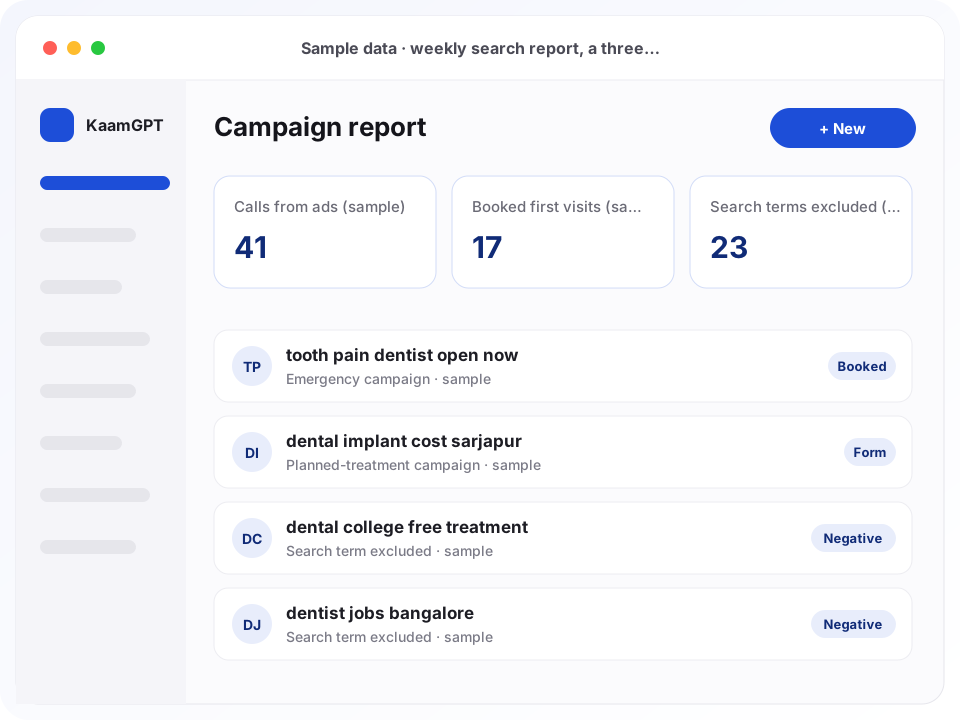
The best Google Ads agency for dental clinics in Bengaluru earns its fee in the half-minute after someone types "dentist open now" with a throbbing tooth. That person sees a few ads and a map, picks the clinic that looks closest and most credible, and taps call. If the phone rings out, the money is gone and so is the patient. Everything else in a dental account is built around that moment and its slower cousin, the implant or aligner search that unfolds over weeks.
Our Google Ads management for clinics runs separate campaigns for urgent and planned care, switches emergency ads off when nobody can answer, and tracks booked first visits rather than clicks. It also works inside two sets of rules. Google expects healthcare ads to follow local law and treats personal health as a sensitive targeting category, and the dentists' code rules out claims of being the best or the first, so the copy states facts and the targeting relies on searches and locations, not patient lists.
- ₹4,999monthly management fee; the clinic pays Google for clicks directly
- ~30 daysto build, launch and tune the first emergency and planned-care campaigns
- 0 patient listsuploaded, because Google's health policy bars advertiser-curated audiences
- Booked visitsnot clicks, are the conversion each campaign is judged on
How does the best Google Ads agency for dental clinics in Bengaluru structure the account?
We split the account by urgency first and treatment second. Urgent searches get their own campaign with its own budget, schedule and radius, because their value depends on someone answering the phone right now. Planned treatments get campaigns of their own so that an implant searcher never lands on a toothache page, and so the clinic can decide how much to invest in each line of work.
Geography is set by travel time, not by a round number of kilometres. We look at where existing patients come from, which main roads and junctions people avoid at peak hours, and where competing clinics sit. A clinic on Outer Ring Road near Bellandur may draw from both sides of the road at weekends but only one side on weekday evenings, and the radius and bids follow that pattern.
Brand searches get their own small campaign. Patients who heard about the clinic from a colleague often search its name, and in busy areas other advertisers can appear above your organic listing. A modest bid on your own name keeps that recommendation from leaking away, and it costs little because the ad is highly relevant. It is one of the first things a careful Google Ads agency for dental clinics in Bangalore sets up.
Schedule ads around the appointment book
Emergency ads run only during staffed hours, and bids rise slightly in the hours when the clinic has free chairs. On Sundays or holidays when the clinic is closed, those campaigns pause entirely.
Write ads that state, not boast
Headlines name the service, the area, the timings and practical details such as parking or a lift. No best, no first, no painless, no guaranteed, and no comparisons with other clinics.
Match each ad to one page
An ad about root canal treatment leads to a root canal page with the process, visit count and how the estimate works; an ad about aligners leads to the aligner page. Generic home pages lose patients who want specifics.
Exclude the wrong searches early
Dental searches attract job seekers, students, product shoppers and people looking for free treatment at teaching hospitals. We add negatives from the first week and review search terms every week after.
Count booked visits, not form fills
Calls longer than a set duration, forms and WhatsApp clicks are tracked, but the front desk marks which ones booked. That figure, divided into spend, gives each campaign its cost per booked visit.
Test one change at a time
When we try a new headline, a wider radius or a different landing page, we change only that element and give it enough weeks to judge. Dental volumes in a single neighbourhood are modest, so changing several things at once makes it impossible to tell what worked.
What does Google Ads management cover for a dental clinic?
Each element is scoped to your clinic's treatments, hours and locations; a single-chair practice and a multi-branch group get very different account structures, agreed in writing first.
Emergency dentist campaigns
Short, factual ads for urgent searches such as toothache, broken tooth or swelling, shown only within your staffed hours and radius, with call assets so patients can ring directly from the result. These emergency dentist campaigns are judged on answered calls that became same-day or next-day visits.
Google Ads in detail →Planned-treatment campaigns
Separate campaigns for implants, aligners and braces, crowns and bridges, and root canal treatment, each sending searchers to a matching page that explains the process and how fees are estimated.
Google Ads in detail →Search term hygiene
Weekly review of what people actually typed, with negatives for jobs, courses, free college treatment, home remedies and areas you do not serve, so the budget reaches patients.
Google Ads in detail →Call tracking for dental clinics
Tracked numbers on ads and landing pages, call recordings where the clinic agrees and informs callers, and a simple front-desk sheet to mark which calls booked, so reports reflect real appointments.
Lead generation in detail →Landing pages that answer the ad
If your site has no page for the treatment being advertised, we build a focused one with the facts, the dentists, the process and the clinic's location. Website projects begin at ₹9,999.
Websites in detail →Location assets linked to Maps
Linking the clinic's Google Business Profile so ads can show the address and distance, which matters a great deal for urgent searches in dense neighbourhoods.
Google Business Profile in detail →What do Google's healthcare policies mean for a dental clinic?
Google's Healthcare and medicines policy says it expects ads and their destinations to follow appropriate laws and industry standards, and that advertisers should familiarise themselves with the local laws of every location they target. For a Bengaluru dental clinic, the relevant local standard is the 2014 revised code of ethics for dentists, which the 2023 law creating the National Dental Commission keeps alive under its section 59(2). Google's review will not quote that code at you, but the code still applies to every ad you run.
The policy itself mostly bites on medicines. In India it does not allow prescription drugs to be promoted in ads or on landing pages by online pharmacies, and it prohibits speculative or experimental treatments everywhere. A dental clinic should therefore keep brand names of prescription medicines out of its ads and pages, and should not promote any procedure as experimental or unproven. Routine dental services such as cleaning, fillings, root canal treatment, implants and aligners are ordinary healthcare services in Google's eyes.
In practice, Google's automated review occasionally limits or disapproves a dental ad, usually because a landing page mentions a medicine, a sedation drug or an unusual claim. When that happens we read the policy reason in the account, fix the page or the wording rather than trying to slip past the review, and request a fresh look. A clinic should never be advised to hide content from reviewers, and we do not.
Why can't a dental clinic use remarketing or patient lists?
Google's Health in personalised advertising policy treats personal health content as a sensitive interest category. Its examples include treatments for chronic conditions and invasive medical procedures such as surgical procedures and injections. Advertisers promoting content in that category cannot use advertiser-curated audiences: Customer Match lists, your data segments built from site visitors, audience expansion or lookalike segments. Predefined Google audiences, such as in-market segments, remain available because Google strips sensitive signals out of them.
Some dental services, such as implant surgery or extractions, plainly fit that description, and Google decides the rest. We therefore design dental accounts that work without remarketing or uploaded patient lists. That has a privacy benefit too: patient phone numbers and email addresses never leave the clinic for an ad platform, which is a cleaner position under the Digital Personal Data Protection Act, 2023. It also keeps the account simple enough for the clinic to understand when it reads the monthly report.
- Not available for sensitive health ads: Customer Match, your data segments (remarketing), audience expansion, lookalikes.
- Still available: keywords, location and radius, ad schedule, in-market and affinity segments, demographics.
- Our default: search keywords plus location and schedule, with no patient data uploaded.
How should dental ad copy read under the code?
Regulation 8.2.8 of the dentists' code allows listings on the internet as public information, but says any claim to superiority or special skills over others will be treated as unethical. Regulation 8.2.7 allows announcing new equipment or services without boasting of being best or first, and regulation 8.1.1 rules out false promises. Read together, they describe good search copy: plain, specific and checkable.
So an ad might read "Root canal treatment in HSR Layout. Open till 9 p.m. Fee estimate after examination", rather than "Best painless root canal in Bangalore, guaranteed". We also avoid discount hooks and free-treatment offers, because regulation 8.1.3 warns against advertisements promising inducements, rebates and false benefits, and a fee page already lets patients compare costs honestly. Our overview for dental practices summarises the code.
- Use: service names, area, timings, parking, lift access, insurance or payment options you actually offer.
- Avoid: best, number one, first, painless, guaranteed, lowest-price boasts, free treatment, case results.
What counts as a conversion for a dental search campaign?
A click is not a patient, and neither is every call. We record answered calls above a short minimum length, form submissions and WhatsApp clicks as raw signals, then ask the front desk to mark which ones became booked first visits. Those booked visits, and later the treatment plans accepted, are what we optimise toward and report.
Call tracking for dental clinics needs a little care. If calls are recorded for quality, callers should be told, and recordings should be stored and deleted on a schedule the clinic controls. Tracked numbers should appear only on ads and campaign pages, while the main clinic number stays on the Google profile and signboard, so the clinic's identity stays consistent.
- Raw signals: tracked calls above a minimum length, forms, WhatsApp clicks.
- Primary conversion: a booked first visit, marked by reception.
- Later signal: an accepted treatment plan for implants, aligners or crowns.
- Health check: missed calls by hour, reviewed with the clinic monthly.
Which mistakes waste a dental clinic's ad budget?
The costliest mistakes are structural rather than creative. Running one campaign for everything, letting ads run at hours when nobody answers, skipping negative keywords and sending every click to the home page each waste money quietly, month after month. None of them shows up in a click report, which is why so many clinics believe their ads work while their appointment book disagrees.
A second group of mistakes is about trust. Ads promising painless treatment, free consultations or the best implants in Bangalore set the wrong expectations and invite exactly the scrutiny the Karnataka State Dental Council signalled in January 2025, when its notice named false promises through advertisements. Our dental website SEO notes cover the treatment pages ads should lead to, and the social advertising notes for clinics cover Facebook and Instagram.
- One campaign for every treatment, so urgent and planned searches compete for the same budget.
- Ads live when the clinic is shut.
- No negative keywords for jobs, courses and free college treatment.
- Every click sent to the home page.
- Headlines that promise painless, free or best.
What does management cost, and who pays for clicks?
Google Ads management is ₹4,999 a month at its entry level, with roughly 30 days to build, launch and tune the first campaigns. That fee pays for our work. Your clicks are billed by Google to the clinic's own card or account, and you see every rupee there. Larger groups or accounts with many treatment campaigns are quoted on scope.
Google Ads
Recommended₹4,999/month
Typically 30 days
The direct fit for clinics that can answer calls promptly and want urgent and planned-treatment searches covered, ₹4,999 per month to manage.
- Account setup
- Keyword strategy
- Ad copy testing
- Conversion tracking
- Bid optimisation
Digital Marketing
₹19,999/month
Typically 15 days
Suits clinics that want ads coordinated with their website, Maps profile and recall messages in one managed plan, beginning at ₹19,999 per month.
- Channel strategy
- Creative production
- Campaign management
- Weekly reporting
SEO
₹14,999/month
Typically 30 days
Pairs well with ads when treatment and fee pages need building anyway, since both send people to the same pages, beginning at ₹14,999 per month.
- Technical audit
- Keyword research
- On-page optimisation
- Content plan
- Monthly reporting
Local SEO
₹4,999/month
Typically 14 days
Worth doing before or with ads, because urgent searchers check the Maps profile and reviews before calling, ₹4,999 per month for each location.
- Google Business Profile optimisation
- Local keyword map
- Location page on-page fixes
- Citation building and NAP cleanup
- Local link outreach
- Review replies and posts
- Monthly report
Meta Ads
₹4,999/month
Typically 30 days
A separate channel for creating interest in aligners, whitening or children's dentistry; management also begins at ₹4,999 per month.
- Creative testing
- Audience building
- Retargeting funnels
- Pixel setup
- Weekly reporting
Lead Generation
₹24,999/month
Typically 14 days
For specialist or multi-branch practices wanting ads, call handling and follow-up as one system, beginning at ₹24,999 per month.
- Verified leads
- Multi-channel outreach
- CRM integration
- Lead scoring
- Replacement guarantee
- The management fee is written into your quote as its own line, kept apart from the ad budget, which stays in your control.
- The pricing page lists every published entry price, and our Bengaluru Google Ads guide explains how we run accounts for any business.
| Package | Starts at | Timeline | Best for |
|---|---|---|---|
| Google Ads | ₹4,999/month | Typically 30 days | The direct fit for clinics that can answer calls promptly and want urgent and planned-treatment searches covered, ₹4,999 per month to manage. |
| Digital Marketing | ₹19,999/month | Typically 15 days | Suits clinics that want ads coordinated with their website, Maps profile and recall messages in one managed plan, beginning at ₹19,999 per month. |
| SEO | ₹14,999/month | Typically 30 days | Pairs well with ads when treatment and fee pages need building anyway, since both send people to the same pages, beginning at ₹14,999 per month. |
| Local SEO | ₹4,999/month | Typically 14 days | Worth doing before or with ads, because urgent searchers check the Maps profile and reviews before calling, ₹4,999 per month for each location. |
| Meta Ads | ₹4,999/month | Typically 30 days | A separate channel for creating interest in aligners, whitening or children's dentistry; management also begins at ₹4,999 per month. |
| Lead Generation | ₹24,999/month | Typically 14 days | For specialist or multi-branch practices wanting ads, call handling and follow-up as one system, beginning at ₹24,999 per month. |
What decides a sensible ad budget?
The right budget is the amount your front desk can convert. If the clinic can comfortably take four urgent patients a day, buying twenty calls a day wastes money and annoys callers who cannot be seen. We usually start modestly, measure the cost of each booked visit, and grow spend only where bookings keep pace.
Clicks for urgent and high-value dental searches in busy parts of the city can be expensive, and the price moves with competition, season and the hour. We give an example budget range in writing after looking at your area and treatments, clearly labelled as an estimate, and adjust it monthly against actual results rather than locking you into a figure.
Season matters as well. Searches for children's check-ups tend to gather around school holidays, cosmetic enquiries before weddings and festivals, and urgent searches do not follow a calendar at all. We plan budget shifts with the clinic a month ahead so that extra spend lands when the chairs are free, rather than when the dentist is away at a conference.
- How many urgent patients the clinic can see each day without disrupting booked appointments.
- Which treatments you want to promote, since implant and aligner searches cost more than check-ups.
- How competitive your neighbourhood is, with more clinics bidding near busy junctions.
- Your staffed hours, which set how long emergency campaigns can run.
- Whether landing pages exist or must be built before launch.
- How many branches need their own campaigns and budgets.
How do patients on Bengaluru's tech corridors search for a dentist?
East and south-east Bengaluru run on long commutes. Someone who works in a Whitefield tech park and lives off Sarjapur Road may search for a dentist near the office at lunch, near home after work, or on the way in between, and the right clinic for them depends on the hour. Typical searches look like "dentist near Bellandur open late", "wisdom tooth extraction Marathahalli" or "dental clinic Electronic City Phase 1", shown here as examples of phrasing rather than search volumes.
Two buying patterns sit side by side. The urgent one is short: pain, search, call, visit, often the same evening. The planned one is long: a recommendation for implants or aligners, a spouse to consult, an employer insurance policy to check, two or three consultations and a written estimate. Many patients in these corridors moved to the city for work, have no family dentist here yet, and lean heavily on search results and reviews to decide who to trust.
That is why a Google Ads agency for dental clinics in Bangalore has to think in radii and timetables, not just keywords. A clinic in HSR Layout may want a tight radius on weekday evenings when residents are home, and a wider one at weekends. A clinic near Electronic City may find its weekday lunchtime calls come from office workers, so its ads and staffing should follow that rhythm.
Which practices get most from paid search?
- Clinics with evening and weekend hoursThey can answer the urgent searches that peak after office hours, which is where paid search shines.
- Implant and prosthodontic practicesHigher-value planned treatment justifies dedicated campaigns and a well-built process page.
- Aligner and orthodontic clinicsAdults compare options at length, so search ads plus a clear consultation process work well.
- Newly opened clinicsWithout reviews or organic rankings yet, paid search provides visibility while the profile matures.
- Clinics in dense tech corridorsMany residents have no family dentist in the city, so they rely on search results when a problem appears.
- Multi-branch dental groupsBranch-level campaigns and budgets let each location be judged on its own bookings.
- Paediatric dental practicesParents search urgently after a fall or toothache, so tight radius and clear opening hours matter more than reach.
Launch to steady state in five steps
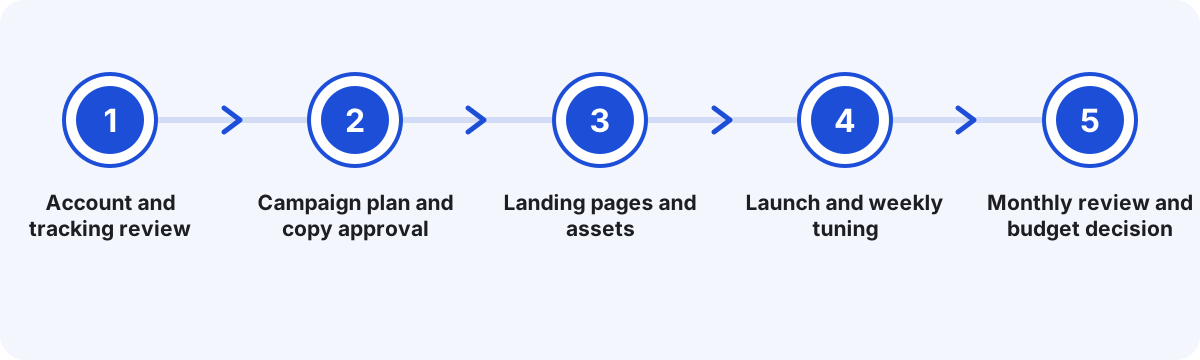
Account and tracking review
We look at any existing account, its search terms, schedules and conversions, then install call tracking and settle with reception how a booking gets marked.
Campaign plan and copy approval
We propose the campaign split, radius, hours and budget, and send every headline and description for the clinic's approval, checked against the dentists' code before you see it.
Landing pages and assets
Matching pages are fixed or built, the Google Business Profile is linked for location assets, and call assets are set to your staffed hours.
Launch and weekly tuning
Campaigns go live, and for the first weeks we review search terms, call outcomes and hours every week, cutting waste and moving budget toward the searches that book.
Monthly review and budget decision
Each month we report booked visits by campaign and treatment, cost per booked visit and missed calls, and agree whether to hold, raise or reduce the budget.
Why dentists let KaamGPT run their paid search
Copy that respects two rulebooks
Ads are written to pass Google's healthcare review and to sit comfortably with the dentists' code, so the clinic is never embarrassed by its own headline.
Hours that match the chair
Emergency campaigns follow your real staffing, which protects the budget and the clinic's reputation with callers.
Front-desk friendly tracking
A one-line booking mark per call is all we ask of reception, and it turns the report from clicks into appointments.
Accounts in the clinic's name
The Google Ads account and billing stay with the clinic; we work as managers whose access you control.
Plain monthly decisions
Each review ends with a clear recommendation on budget and campaigns, explained in a short call rather than a long deck.
No patient data leaves the clinic
We build accounts on search and location rather than uploaded lists, so your patients' phone numbers and emails never travel to an ad platform.
Where do dental ad budgets usually leak?
Most dental accounts we inherit spend steadily and report plenty of clicks, but the clinic cannot say which ones became patients. The leaks are predictable.
The other common gap is between the ad and the reception desk. A campaign can be tuned perfectly and still fail if calls go to a personal mobile that is switched off during treatment, or if the receptionist quotes a fee that contradicts the website. We look at both ends before we touch bids, because a dental ad is only as good as the first thirty seconds of the phone call it produces.
- Ads running at night and on holidays when the clinic is closed, collecting calls no one answers.
- Broad matching that pays for searches from students, job seekers and people looking for free treatment at dental colleges.
- Every treatment in one campaign, so emergency and implant searches share a budget and a landing page.
- Copy borrowed from other industries, with words like best, number one, free or guaranteed that sit badly with the dentists' code on superiority claims and inducements.
- No call tracking, so the only conversion recorded is a form fill, while many dental patients simply pick up the phone.
- Management fee
- ₹4,999 a month entry level; ad spend billed by Google to the clinic
- Build and tune period
- About 30 days for the first campaigns
- Google policy that limits targeting
- Health in personalised advertising: no Customer Match, remarketing lists or lookalikes
- Google policy on healthcare ads
- Ads and landing pages are expected to follow local law and industry standards
- Copy rule from the dentists' code
- No claims of superiority or of being best or first (regulations 8.2.7 and 8.2.8)
- Conversion we optimise for
- Booked first visits marked by the front desk
Where this applies around Bengaluru, Karnataka
- Bengaluru
- Karnataka
- India
- Whitefield
- Bellandur
- HSR Layout
- Electronic City
- Sarjapur Road
Frequently asked questions
25 answersAre Google Ads allowed for dentists in India?
Yes. Regulation 8.1 of the 2014 dentists' code allows a dentist or group of dentists to advertise with decorum, and regulation 8.2.8 accepts internet listings as public information. Google's healthcare policy treats ordinary dental services as normal healthcare advertising, provided ads and landing pages follow local law. The limits are on what the ads say, not on running them.
Can a dental clinic use remarketing in Google Ads?
Generally not for health content. Google's Health in personalised advertising policy bars advertiser-curated audiences, including remarketing lists built from site visitors, Customer Match uploads, audience expansion and lookalikes, for ads in the health category, which covers invasive procedures such as surgery and injections. We build dental accounts on keywords, location and schedule so they work without those audiences.
How much does Google Ads management for a dental clinic cost in Bengaluru?
KaamGPT's management fee for a Bengaluru dental clinic begins at ₹4,999 a month, with about 30 days to build and tune the first campaigns. Your clicks are a separate cost billed by Google straight to the clinic. We suggest an example budget range in writing after looking at your area and treatments, and revise it against bookings each month.
What makes the best Google Ads agency for dental clinics in Bengaluru?
Look for three habits: separate campaigns for urgent and planned care, ads that run only when the clinic can answer, and reporting on booked first visits rather than clicks. Add a fourth for dentists specifically: copy that never claims superiority, because regulation 8.2.8 of the code treats such claims as unethical. Ask any agency to show sample ads before you sign.
What should dental ad copy avoid saying?
Avoid best, number one, first, painless, guaranteed and any comparison with other clinics, since the dentists' code treats superiority claims as unethical. Avoid free treatment and discount hooks, which regulation 8.1.3 links to inducements and rebates. Avoid case results and patient stories. Say what you offer, where, when you are open and how fees are estimated.
Can a dentist advertise free consultation on Google?
We advise against it. Regulation 8.1.3 of the 2014 code warns against advertisements that promise inducements, rebates and false benefits, and regulation 8.1.2 names claim vouchers among unethical promotional activities. A free first consultation may be a genuine clinic policy, but leading an ad with it frames dentistry as a promotion. We describe the consultation process instead.
Should emergency dentist ads run at night?
Only if someone can answer and see the patient. An emergency ad that leads to an unanswered phone or a closed clinic wastes money and frustrates a person in pain. We schedule urgent campaigns to match staffed hours, pause them on closed days and holidays, and show opening times in the ad so callers know what to expect.
How do dental clinics track calls from Google Ads?
With call assets and tracked numbers on ads and campaign landing pages, which record when and how long each call lasted. The front desk then marks which calls booked a first visit. If calls are recorded, callers should be told. The clinic's main number stays on the Google profile and signboard so its identity remains consistent everywhere.
Who manages dental search ads in Bangalore for clinics that are new?
KaamGPT does. As a <strong>Google Ads agency for dental clinics in Bangalore</strong>, we manage campaigns for newly opened clinics that need visibility before reviews and organic rankings build up. For a new clinic we usually start with emergency and general-care searches in a tight radius, plus a Maps profile check, before adding planned-treatment campaigns.
Which Google Ads agency manages campaigns for dentists in Whitefield or HSR Layout?
We manage campaigns for dental clinics across Bengaluru, including Whitefield, HSR Layout, Bellandur, Sarjapur Road and Electronic City, working with clinics over calls, WhatsApp and video meetings. In these corridors we pay close attention to commute patterns, because a patient's nearest clinic at lunchtime and in the evening can be different.
Can we mention prescription medicines in our dental ads?
Keep them out. Google's healthcare policy restricts the promotion of prescription drugs, and in India it does not allow online pharmacies to promote them in ads or on landing pages. A dental clinic has no need to name prescription medicines anyway; ads and pages should describe treatments and the clinic, not drugs.
What counts as a conversion for dental ads on Google?
For dental ads on Google we treat answered calls above a minimum length, form submissions and WhatsApp clicks as signals, but the conversion we optimise for is a booked first visit marked by the front desk. For planned treatment we also track accepted treatment plans, because a booked implant consultation that never proceeds tells a different story.
Can our Google Ads target people who have searched for dental problems?
Google decides which signals are available. Predefined audiences such as in-market segments can be used even in sensitive categories because Google removes sensitive signals from them. Advertiser-built lists of people based on their health interest or your patient data cannot. Most dental campaigns perform best on search keywords and location anyway.
How much ad budget does a dental clinic in Bengaluru need?
It depends on how many urgent patients the clinic can see, which treatments you promote and how many clinics bid in your area. We start with a modest example budget, labelled as an estimate in writing, measure the cost of each booked visit and only scale campaigns whose bookings keep pace. The budget is always paid by your clinic directly to Google.
Do implant and aligner searches need separate dental campaigns?
Yes. Implant and aligner patients research for weeks, compare fees and often book a consultation before deciding, so their ads, landing pages and follow-up differ from emergency searches. Separate campaigns also let the clinic decide how much to invest in each treatment line and see which one actually produces accepted plans.
Why are our dental ads getting calls from job seekers and students?
Broad keywords match searches such as dentist jobs, dental courses and dental college admissions. We add negative keywords for these from the first week and review the search terms report weekly. Searches for free treatment at teaching hospitals and home remedies are excluded too, so the budget reaches people looking for a private clinic.
Should a dental clinic bid on competitors' names?
We do not recommend it. Bidding on another clinic's name sits awkwardly with the decorum the dentists' code asks for, and it mostly reaches searchers who wanted that other clinic. Bidding on your own clinic's name, on the other hand, is sensible protection when other advertisers appear above your listing.
Can Google Ads show our dental clinic on Maps?
Yes. Linking the clinic's Google Business Profile lets ads show your address and distance, and local ads can appear on Google Maps. That is particularly useful for urgent searches in dense Bengaluru neighbourhoods. The profile itself must be accurate first, which our <a href="/best-local-seo-agency-for-dental-clinics-in-bengaluru">Maps notes for dental clinics</a> explain.
How quickly do Google Ads bring patients to a dental clinic?
Emergency campaigns can bring calls within days of launch if the profile, landing page and phone handling are ready. Planned-treatment campaigns take longer to show results because patients compare options for weeks. We spend the first month tuning hours, radius and search terms, and judge results on booked visits over several weeks rather than day by day.
Will you need access to our patient records for the ads?
No. We never upload patient lists to Google, which its health advertising policy would not allow, and we do not need clinical records. We only need the front desk to mark whether each tracked call or form became a booked visit, recorded without clinical detail, so that campaigns can be judged on real appointments.
Is it better to run Google Ads or SEO for a dental clinic in Bengaluru?
They do different jobs. Ads cover urgent and high-intent searches immediately, while SEO builds treatment and fee pages that keep attracting researched visits over months. Many Bengaluru clinics run both, with ads sending traffic to the same pages SEO improves. Our <a href="/services/seo">SEO service</a> explains the organic side.
Who owns the Google Ads account if we stop working with KaamGPT?
The clinic. The account and its billing sit in your clinic's name and we access it as managers. If you end the engagement, you remove our access and keep the account, campaign history and conversion data intact. Nothing has to be rebuilt by whoever runs it next.
Can we get a quick audit of our existing dental Google Ads?
Yes. Phone +91 79767 82366 or WhatsApp us your clinic's name, then grant read-only access to the account. We look at search terms, schedules, locations, copy and conversion tracking and send back a short written audit listing the changes we would make and what management would cost.
Do you also run Facebook and Instagram ads for dental clinics?
Yes, through our <a href="/services/meta-ads">Meta Ads service</a>. Social ads suit creating interest in aligners, whitening or children's dentistry, while Google Ads catch existing demand. The rules differ on each platform, and both must sit within the dentists' code, so we plan them together when a clinic runs both.
How does a dental lead generation system differ from Google Ads management?
Google Ads management covers the campaigns. Our <a href="/services/lead-generation">lead generation service</a> adds call handling scripts, consultation booking, consent-based follow-up and reporting across every channel, from ₹24,999 monthly. Specialist and multi-branch dental practices often need that fuller system, described in our <a href="/best-lead-generation-company-for-dental-clinics-in-bengaluru">enquiry-to-appointment notes for clinics</a>.