The best SEO company for dental clinics in Bengaluru should start from an unusual advantage: the dentists' ethics code openly approves of the very thing search engines reward. Regulation 8.2.9 of the Revised Dentists (Code of Ethics) Regulations, 2014 says a website about a dentist or a clinic is not unethical where all its information is factual, and that it may carry the treatment facilities available and their fees, because that helps patients make informed choices.
That is our brief for SEO on a dental site. We build a page for every treatment you genuinely offer, publish fee ranges honestly, present each dentist with only recognised qualifications, and write patient-education articles your dentists check line by line. The aim is to be the page a Bengaluru family finds and believes while they are deciding, weeks before they pick up the phone.
- ₹14,999monthly is the entry fee for organic SEO; your scope counts the pages and articles
- ~30 daysof audit and repairs come before the first new treatment page is published
- Reg. 8.2.9of the 2014 dentists' code allows factual websites with services and fees
- Every pagewith a clinical statement is checked by your dentists before it is published
Why do so many dental websites fail to rank or convert?
Most dental sites we audit were built as digital brochures: a home page, an about page, a list of treatments in one paragraph and a contact form. Search engines have little to rank, and patients have little to believe.
A second problem is ownership. The site was often built by a vendor who has since moved on, the domain sits in a former employee's name, and nobody at the clinic can change a fee or add a dentist without a ticket and a week's wait. Before writing a word, we make sure the clinic controls its own domain, hosting and analytics.
- All treatments squeezed onto one services page, so nothing ranks for implants, aligners or root canal treatment individually.
- No fees anywhere, which sends cost-conscious researchers to a competitor or an aggregator that does show a range.
- Dentist bios listing membership abbreviations or titles the code does not accept as qualifications, alongside phrases like best or most experienced.
- Blog posts copied or spun from elsewhere, unreviewed by a dentist, with statements that are out of date or clinically wrong.
- Slow, heavy pages on a phone screen, which is where many patients first read about a procedure.
How does the best SEO company for dental clinics in Bengaluru plan the site?
We plan the site the way a patient moves through a decision. Broad questions come first (what is a root canal, do I need an implant or a bridge), then comparisons (aligners or braces, zirconia or metal-ceramic crowns), then cost and logistics (how much, how many visits, is there parking near the clinic). Each stage needs its own page, and each page links to the next one a reader would want.
The clinic's own expertise decides the order. If two of your dentists hold postgraduate degrees in prosthodontics and most of your revenue comes from implants and crowns, those pages get built and strengthened first. Generic topics with endless competition, such as broad oral hygiene tips, wait until the pages that bring in your actual patients are doing their job.
Measurement is set up before the first new page goes live, so we can tell which treatment pages bring consultation requests and which merely attract readers from other cities. A page about wisdom tooth removal read mostly by students in another state is interesting, but a page about the same treatment that produces calls from families in Bengaluru is the one we keep investing in.
Map searches to treatments, not to keywords alone
We group searches by the treatment and decision stage behind them, so "implant price", "implant cost in Bangalore" and "how much for one tooth implant" all point to one strong page rather than three thin ones.
Write for the person paying, not only the patient
Many pages are read by the spouse or adult child who will pay or accompany the patient. We answer their questions too: number of visits, time off work, what happens if a crown comes loose, how payment works.
Keep fees current or say nothing
An out-of-date fee page damages trust faster than no fee page. We agree a review date with the clinic, usually each quarter, and change ranges only when your team confirms them.
Earn links the profession would respect
Mentions from neighbourhood community sites, resident-association newsletters that list local services, and professional associations' member directories carry more weight than paid directory bundles. None of them require the clinic to boast, and none involve camps or handbills, which the code rules out.
Protect the clinic name in search
Patients who heard about you from a neighbour search your clinic name. We make sure the site, the Google profile and the major directories all show the same details, so that search confirms the recommendation instead of confusing it.
Answer the questions the front desk hears every day
We ask your receptionist which questions callers repeat: does a root canal hurt, can I eat after a filling, do you accept insurance, how long is the wait on Saturday. Each repeated question becomes a short section on the right page, which saves phone time and matches what people type into search.
What does SEO work for a dental clinic include?
Every item is scoped to your practice; a single-dentist clinic needs fewer pages than a multi-specialty group, and the written plan says exactly how many.
Treatment pages for dentists
One page for each treatment you offer: what it involves, how many visits it usually takes, aftercare, who in the clinic performs it, and how the estimate is worked out. These treatment pages for dentists are the backbone of search visibility and carry no superlatives.
SEO in detail →An honest dental fee page
A dental fee page with ranges for common procedures and a note that the final figure follows an examination, as regulation 5.7.1 asks dentists to make an estimate of costs. Fee pages answer the question patients search for most directly and filter out mismatched enquiries.
SEO in detail →Dentist profile pages
A page per dentist with recognised degrees, the treatments they provide and their registration, written to regulation 3.4.2 and without unaccepted abbreviations or specialist titles they do not hold.
SEO in detail →Speed, structure and schema
Fast mobile pages, clear headings, internal links between related treatments, and structured data for the clinic and its dentists so search engines read the facts correctly. If the site cannot be fixed economically, website development starts from ₹9,999 per project.
Websites in detail →Patient-education library
Articles on questions patients actually ask, from sensitivity after whitening to how a child's first visit goes. Each one passes a clinical accuracy review by your dentists before it is published.
SEO in detail →Links to your Maps presence
Location pages and Google Business Profile details kept consistent with the website, so organic and Maps results reinforce each other. The local SEO page for dental clinics covers the Maps side.
Local SEO in detail →Answers AI assistants can quote
Clear question-and-answer sections and consistent facts across the site, so AI search tools that summarise dental information have accurate, attributable text to draw on. We make no promise that any assistant will mention your clinic.
AI in detail →What you get by working with KaamGPT on search
Copy that respects the code
Our writers know that regulation 8.2 rules out self-aggrandising publicity, so your pages describe treatments and people factually and still read warmly.
Dentists stay the clinical authority
We write and structure; your dentists decide what is clinically correct. The review step is built into the schedule rather than squeezed in at the end.
SEO, AEO and GEO together
Every page states the clinic's facts in one consistent form, so a classic results page, a featured answer or an AI-generated summary all repeat the same accurate details.
Honest forecasting
We explain which pages should move first and why, and we never promise a ranking position or a patient count, because no honest agency can.
Reports a dentist can read in five minutes
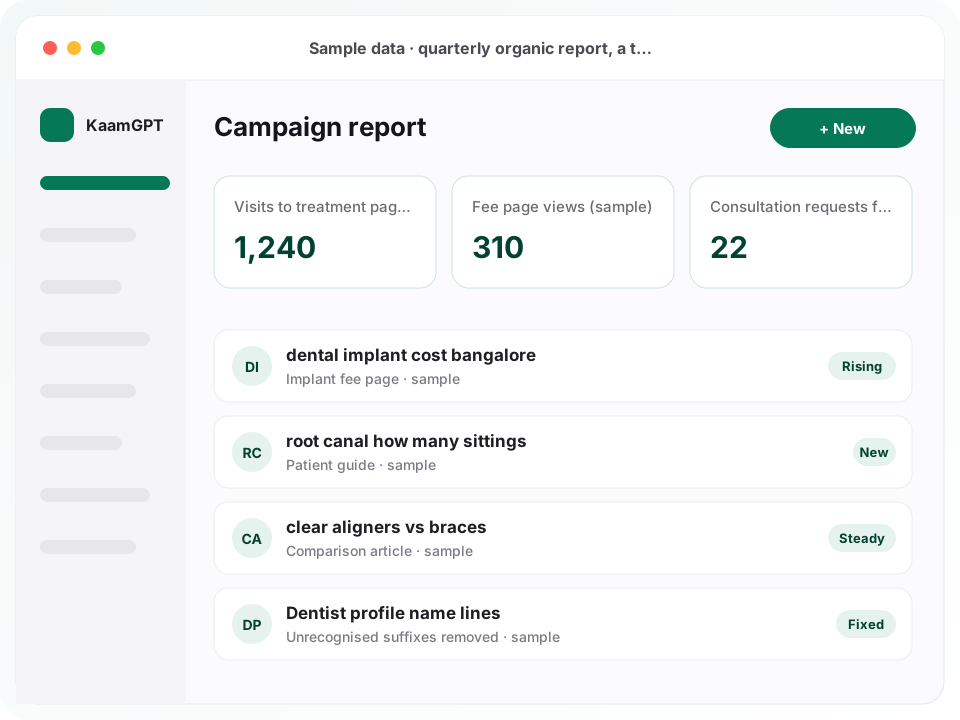
Monthly notes show which treatment pages gained visitors, which brought consultation requests and what we will build next, in plain language.
How is dental SEO priced?
Organic SEO for a clinic is priced from ₹14,999 monthly; the opening month covers the audit, the agreed page plan and the first technical repairs. A single clinic with a working site usually fits that starting scope. A group with several branches, or a site that needs rebuilding first, gets a separate written proposal, and any website build is quoted on its own.
SEO
Recommended₹14,999/month
Typically 30 days
The right fit when planned-treatment patients research for weeks and your site should answer them, from ₹14,999 a month.
- Technical audit
- Keyword research
- On-page optimisation
- Content plan
- Monthly reporting
Digital Marketing
₹19,999/month
Typically 15 days
For clinics that want search, Maps, ads and recall run together by one team, managed plans start at ₹19,999 a month.
- Channel strategy
- Creative production
- Campaign management
- Weekly reporting
Local SEO
₹4,999/month
Typically 14 days
Enough on its own for a neighbourhood clinic that mostly needs Maps calls, from ₹4,999 a month per location.
- Google Business Profile optimisation
- Local keyword map
- Location page on-page fixes
- Citation building and NAP cleanup
- Local link outreach
- Review replies and posts
- Monthly report
Google Ads
₹4,999/month
Typically 30 days
Adds immediate visibility for urgent and high-intent searches while organic pages build, from ₹4,999 a month for management.
- Account setup
- Keyword strategy
- Ad copy testing
- Conversion tracking
- Bid optimisation
Meta Ads
₹4,999/month
Typically 30 days
Useful alongside SEO for cosmetic or aligner work where interest needs creating, from ₹4,999 a month for management.
- Creative testing
- Audience building
- Retargeting funnels
- Pixel setup
- Weekly reporting
Lead Generation
₹24,999/month
Typically 14 days
For specialist or multi-branch practices wanting a full enquiry and follow-up system, from ₹24,999 a month.
- Verified leads
- Multi-channel outreach
- CRM integration
- Lead scoring
- Replacement guarantee
- Our fee covers strategy, writing, technical fixes and reporting; it does not include paid links, which we do not buy.
- The pricing page shows every starting price, and your quote names the number of pages, articles and reviews included each month.
| Package | Starts at | Timeline | Best for |
|---|---|---|---|
| SEO | ₹14,999/month | Typically 30 days | The right fit when planned-treatment patients research for weeks and your site should answer them, from ₹14,999 a month. |
| Digital Marketing | ₹19,999/month | Typically 15 days | For clinics that want search, Maps, ads and recall run together by one team, managed plans start at ₹19,999 a month. |
| Local SEO | ₹4,999/month | Typically 14 days | Enough on its own for a neighbourhood clinic that mostly needs Maps calls, from ₹4,999 a month per location. |
| Google Ads | ₹4,999/month | Typically 30 days | Adds immediate visibility for urgent and high-intent searches while organic pages build, from ₹4,999 a month for management. |
| Meta Ads | ₹4,999/month | Typically 30 days | Useful alongside SEO for cosmetic or aligner work where interest needs creating, from ₹4,999 a month for management. |
| Lead Generation | ₹24,999/month | Typically 14 days | For specialist or multi-branch practices wanting a full enquiry and follow-up system, from ₹24,999 a month. |
What changes the effort a dental website needs?
The biggest variable is the starting point. A clinic with a fast site, separate treatment pages and a few honest articles needs refinement and steady additions. A clinic with a one-page brochure needs a full page plan, new writing and technical work before results can start.
When comparing an SEO company for dental clinics in Bangalore, ask how many pages and articles each month the fee covers, who checks clinical accuracy, and whether links are earned or bought. A quote that promises a position on Google, or a fixed number of patients, is a quote to walk away from.
Organic search for dental clinics is a slow asset rather than a tap. The pages you build this year keep working next year, which is why we suggest a clinic commits to at least two quarters before judging the results, and why we put the page plan in writing so you can see what was delivered even before the enquiries grow.
- Number of treatments that need their own pages.
- Whether the current site can be improved or must be rebuilt.
- How many dentists need profile pages and how many branches need location pages.
- How many patient-education articles your dentists can review each month.
- How competitive your treatment mix is in your part of the city.
- Whether fee ranges are published and how often they change.
From audit to steady growth
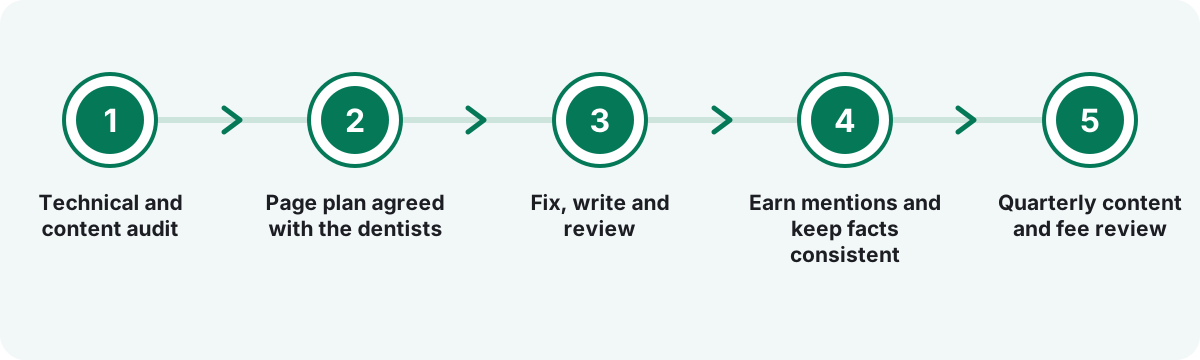
Technical and content audit
We crawl the site, time it on a mid-range phone, list every page and check each dentist's name line, every claim and every fee mention against the 2014 code and against what patients search for.
Page plan agreed with the dentists
A spreadsheet lists every treatment, comparison and cost page we propose, who in the clinic will review it, and the order we will build them in, starting with the treatments that matter most to the practice.
Fix, write and review
Technical fixes go in first. New pages are drafted in plain language, sent to the named dentist for a clinical accuracy review, corrected and only then published. Nothing clinical goes live without that sign-off.
Earn mentions and keep facts consistent
We align the Google profile and directories with the website and pursue relevant local mentions. Paid link schemes are never part of the plan.
Quarterly content and fee review
Every quarter we update fees the clinic confirms, refresh pages whose treatments have changed and report on organic visits, consultation requests and the pages behind them.
Which dental practices gain most from organic search?
- Implant and prosthodontic practicesHigh-value treatment decided over weeks, where a clear process page and fee range do the early persuading.
- Orthodontic and aligner clinicsTeenagers' parents and adults compare options at length; comparison pages and treatment-length explanations rank well.
- Paediatric dentistryParents search calmly and in detail before a first visit, so guides on what to expect build trust early.
- Endodontic referral practicesRoot canal questions are common searches, and an explanatory page helps patients referred by another dentist feel prepared.
- General family practicesA steady base of searches for check-ups, cleaning and fillings near home, best served by clear service and location pages.
- Periodontal and gum care practicesBleeding gums and loose teeth prompt worried reading; accurate, unalarming pages earn the consultation.
- Dental groups with several branchesOne authoritative treatment library shared by every branch page, rather than copies that compete with each other.
How do Bengaluru patients research a dentist before planned treatment?
Planned dental work is a considered purchase. A software engineer told she needs two implants, a parent whose child's orthodontist has suggested braces, or a retired couple pricing full dentures will rarely book the first clinic they see. They read, compare and ask around. Typical searches include "implant cost in Bangalore", "root canal how many sittings", "aligners vs braces for adults" and "pedodontist JP Nagar", given here as examples of what people type, not as measured volumes.
Two or three people often share the decision. A spouse wants to understand the cost and the number of visits, an adult child checks the dentist's qualifications for an elderly parent, and someone asks a cousin who works in healthcare. What builds trust in this phase is plain: a page that explains the procedure without hype, a fee range that does not change when they arrive, dentists whose degrees are stated clearly, and enough detail to show the clinic actually does this work regularly.
South Bengaluru shows why this research matters. Dayananda Sagar College of Dental Sciences sits at Kumaraswamy Layout and D.A. Pandu Memorial R.V. Dental College at J.P. Nagar 1st Phase, according to their admission listings with COMEDK, so teaching hospitals and many private practices serve the same households. A family in that belt has real choices, and the clinic whose pages answer their questions best tends to get the consultation.
What may a dental website say under regulation 8.2.9?
Regulation 8.2.9 is short and useful. Maintaining a website about dentists or dental clinics, where all the information is factual, is not unethical. The site can carry details of the treatment facilities available and the fees for them, which the regulation says helps patients make informed choices through a transparent system. It then adds the limit: a website should not make claims or statements that are not factual and are therefore misleading.
For SEO, that is close to an ideal brief. Search engines reward specific, accurate and complete pages, and the code rewards the same qualities. What the code removes are the shortcuts other industries use: superlatives, customer success stories, and claims of being first or best. Regulation 8.2.8 adds that listing on the internet is acceptable as public information, but any claim to superiority or special skills over others is unethical.
- Safe to publish: treatments offered, steps, number of visits, aftercare, timings, location, dentists' recognised degrees, fee ranges and how estimates are made.
- Avoid: best, leading, first, painless, guaranteed, most experienced, or comparisons with other clinics.
- Avoid: individual case write-ups or outcome photos presented as promotion, which regulation 8.2 treats as boasting of cases.
How should dentist profile pages handle degrees and specialist titles?
Profile pages rank for a dentist's name and reassure patients who have been referred, so they are worth doing well. Regulation 3.4.2 lets dentists show recognised dental degrees and certain qualifications conferred by recognised bodies after their names, in a way that does not give a false impression of their ability. Regulation 8.9.3 lists abbreviations that are not academic qualifications and must not be used as suffixes, including M.I.D.A. for a member of the Indian Dental Association and F.I.C.D. for a fellow of the International College of Dentists.
Regulation 8.3.3 adds that a dentist may not claim to be a specialist on signs or stationery without a qualification recognised in that specialty, even though a general dentist may practise all branches with adequate training. On a profile page we therefore describe what each dentist does in plain words, for example that a BDS dentist provides root canal treatment, and reserve titles such as endodontist for those with the matching MDS.
Why does Google hold dental content to a higher standard?
Google's guidance on helpful content explains that its systems give even more weight to signals of experience, expertise, authoritativeness and trust for topics that could significantly affect people's health, which it calls "Your Money or Your Life" topics. On such subjects Google wants information that is precise and in line with what experts in the field broadly agree, and it names trust as the weightiest of the four signals.
Dental treatment pages fall squarely into that group. In practice this means three things for a clinic. Every clinical page should say who wrote or reviewed it, ideally a named dentist with their recognised degree. Statements should match mainstream dental practice, not marketing optimism. And pages should be updated when the clinic's methods, materials or fees change. These habits also satisfy regulation 8.1.7, which treats publishing a dentist's opinion on a procedure in lay media as unethical unless it is supported by evidence-based studies.
There is also a practical reason to be careful. Patients now arrive at consultations having read pages from several clinics, and an over-confident claim on your site, such as a promise that a treatment is completely painless, can undermine the conversation the dentist needs to have about risks and aftercare. Measured, accurate pages make the consultation easier, not harder.
Which pages should a Bengaluru clinic build first?
Start where the clinic's work and the patients' research overlap. For most general practices that means root canal treatment, crowns, extractions including wisdom teeth, scaling and cleaning, and fillings, followed by implants and aligners if the clinic offers them. A paediatric practice starts with a child's first visit, fluoride and sealants, and dental emergencies in children.
Then build the pages patients use to decide: a fee page, a page explaining how a consultation and estimate work, and comparison pages where people genuinely weigh options. Location and dentist pages come next. A practice in J.P. Nagar or Banashankari does not need a separate page for every nearby layout; one honest location page with directions, landmarks and parking usually serves better than many thin copies. Our Bengaluru SEO guide covers the general method.
- General practice first pages: root canal treatment, crowns, extractions, scaling and cleaning, fillings.
- Planned-treatment pages: implants, bridges, dentures, aligners and braces, with visit counts and estimate steps.
- Decision pages: fees and estimates, how a consultation works, comparisons patients genuinely weigh.
- People and place pages: one per dentist, one per branch, with directions and parking.
- Education library: short, dentist-reviewed answers to the questions callers repeat most.
When does patient education become surrogate advertising?
Regulation 8.1.8 calls it unethical to indulge in surrogate advertisements in the garb of educating the public through television programmes, magazines or periodicals, and says public information given in good faith should not carry the dentist's or clinic's address, telephone number or email to attract patients. The clause is aimed at outside media, where an apparently neutral article ends with a clinic's phone number.
We keep the two kinds of content apart. Articles on your own website naturally sit within your site, which regulation 8.2.9 allows. Guest articles, newspaper columns and community newsletters are written as pure information, carry no clinic contact details and are reviewed by the dentist named as author. Our digital marketing page for dental clinics explains how that content fits into the wider plan, and the Google Ads page for dental clinics covers paid search alongside it.
- Organic SEO fee
- ₹14,999 monthly entry point; first month on audit and repairs
- Rule that permits clinic websites
- Regulation 8.2.9, Revised Dentists (Code of Ethics) Regulations, 2014
- Name-line rules
- Regulations 3.4.2 and 8.9.3 on degrees and suffixes; 8.3.3 on specialist titles
- Google standard for health pages
- Your Money or Your Life topics need high accuracy and trust
- Clinical sign-off
- Every clinical page is reviewed by the clinic's dentist before publishing
- Not offered
- Paid links or promised ranking positions
Where this applies around Bengaluru, Karnataka
- Bengaluru
- Karnataka
- India
- Kumaraswamy Layout
- JP Nagar
- Banashankari
- Bannerghatta Road
Frequently asked questions
26 answersWhat does dental SEO in Bengaluru involve?
Dental SEO in Bengaluru means building a website that answers the questions patients ask before planned treatment, in a way search engines can understand and the 2014 dentists' code allows. That covers a page per treatment, an honest fee page, dentist profiles with recognised degrees, technical speed fixes, consistent clinic details across the web and patient-education articles checked by your dentists.
How much does an SEO company for dental clinics in Bangalore charge with KaamGPT?
As an <strong>SEO company for dental clinics in Bangalore</strong>, KaamGPT prices organic SEO from ₹14,999 monthly, and the first month goes on the audit, the page plan and technical repairs. The written quote lists how many pages and articles are included each month. If the site needs rebuilding, that is a separate website project priced from ₹9,999.
Is it ethical for a dentist to have an SEO-optimised website?
Yes. Regulation 8.2.9 of the Revised Dentists (Code of Ethics) Regulations, 2014 says maintaining a website about dentists or dental clinics is not unethical where all information is factual, and that it can carry treatment facilities and fees. Optimising that factual content so patients can find it is consistent with the regulation; adding superlatives or case boasts is not.
Can our dental website publish treatment prices?
Yes. Regulation 8.2.9 explicitly allows websites to carry fees, and regulation 5.7.1 asks dentists to indicate the cost of treatment and make an estimate of likely costs. We usually publish ranges for common treatments with a clear note that the final estimate follows an examination, and review those ranges with you every quarter.
Can dentists use MIDA or FICD after their names on a clinic website?
No. Regulation 8.9.3 of the 2014 code lists abbreviations such as M.I.D.A. (Member, Indian Dental Association) and F.I.C.D. (Fellow, International College of Dentists) as unacceptable suffixes because they are not academic qualifications. We present each dentist with recognised degrees only and mention memberships, if at all, in a sentence that does not look like a qualification.
Can a general dentist's page target searches like root canal specialist?
A general dentist should not be called a specialist. Regulation 8.3.3 restricts specialist claims to dentists holding a recognised qualification in that specialty. We can still build a strong root canal treatment page that explains the procedure and names the dentist who performs it, without the word specialist. Searches about the procedure itself are usually the larger opportunity anyway.
Why does Google treat dental content as Your Money or Your Life?
Google's helpful-content guidance says its systems give even more weight to signals of experience, expertise, authoritativeness and trust for topics that could significantly affect a person's health, and calls these Your Money or Your Life topics. Dental treatment information falls into that group, so accuracy, named authorship and keeping pages current matter more than they would for a restaurant or a shop.
Who checks the clinical accuracy of the articles you write for dental clinics?
Your dentists do. We draft each page in plain language, then send it to the dentist you name for that topic. They correct anything clinically wrong, and we publish only after their sign-off. Where they want it, the reviewing dentist's name and recognised degree appear on the page, which also helps patients and search engines trust it.
How long does dental SEO take to bring consultation requests?
Technical fixes and better titles can improve visibility within weeks. A newly published treatment page usually needs several months before its position steadies, and competitive treatments such as implants or aligners in Bengaluru take longer. We set milestones in the scope, report consultation requests from organic search monthly, and never promise a ranking position.
Which pages should a new dental clinic website have?
At minimum: a home page with the clinic's real name, address, timings and phone; one page per treatment you offer; a fee and estimates page; a page for each dentist; a location page with directions and parking; and a contact page with a consent-based form. Patient-education articles come after these foundations are in place.
Is patient education with clinic phone numbers allowed for dentists?
On your own website, educational articles sit within the clinic's site, which regulation 8.2.9 allows. In outside media such as magazines, periodicals or television, regulation 8.1.8 treats educational content carrying the clinic's address or phone as surrogate advertising. We keep guest articles and columns free of clinic contact details.
Do you buy backlinks for dental websites?
No. We earn mentions from relevant local and professional sources and keep the clinic's details consistent across directories. Paid link schemes risk penalties from Google and add nothing a patient would trust. Our fee covers strategy, writing, technical work and reporting, not purchased links.
Will SEO help our clinic appear in AI assistant answers?
Clear, accurate and consistent pages give AI search tools good material to summarise, and we structure answers so they can be quoted cleanly. Whether any assistant mentions your clinic is decided by those systems, so we make no promise about it. The same work also helps ordinary search results and answer boxes.
Should we build a page for every Bengaluru neighbourhood near our clinic?
Usually not. Dozens of almost identical area pages read to Google as doorway pages and serve no patient. One strong location page with directions, landmarks, parking and transport, plus accurate Google Business Profile details, serves a single clinic better. A dental group in Bengaluru with several branches needs one genuine page per branch.
Can we publish patient testimonials on our dental website?
We advise against it. The 2014 code forbids a dentist from boasting of cases, operations or cures or permitting publication of reports of them, and regulation 8.9.2 counts giving false testimonials as unethical. Reviews that patients write independently on Google are a different matter, and we help you respond to them properly.
How is organic search for dental clinics measured?
We track organic search for dental clinics through visits to treatment and fee pages, consultation requests and calls that came from search, and the treatment lines those enquiries concern. Rankings for a sample of searches are tracked as a working signal, but the monthly report leads with enquiries, because that is what the clinic can verify.
Our dental website is old. Do we need a new one before SEO?
Not always. If the site loads reasonably fast on a phone and we can add pages to it, we improve what you have. If it is very slow, cannot be edited or is built in a way search engines struggle to read, a rebuild is cheaper in the long run. A rebuild is a separate website project, priced from ₹9,999.
What makes KaamGPT the best SEO company for dental clinics in Bengaluru for us?
We cannot claim to be best for everyone, and the code your clinic follows would not let you claim that either. What we offer a Bengaluru dental practice is writing built around regulation 8.2.9, a clinical review step owned by your dentists, honest reporting on enquiries and no paid links or ranking promises. Judge us on the page plan we send.
Do you write pages for children's dentistry differently?
Yes. Pages for paediatric dental care are written for parents: what happens at a first visit, how the team helps an anxious child, what fluoride or sealants are for, and when to bring a child in after a fall. The tone is calm and practical, and nothing implies that the reader's child has a problem.
How often should a dental fee page be updated?
Whenever fees change, and at least once a quarter as a check. An out-of-date fee range creates disappointment at the front desk, which harms trust and reviews. We agree a review date with your clinic manager and change figures only after the clinic confirms them in writing.
Is it sensible to pair SEO with Google Ads for a dental clinic?
They work well together. Ads cover urgent and high-intent searches immediately, while organic pages build over months. The ads often send traffic to the same treatment and fee pages SEO creates, so improving those pages helps both. <a href="/services/google-ads">Google Ads management</a> is a separate service, ₹4,999 monthly upward, with your ad budget billed by Google.
Does SEO for a dental clinic include the Google Business Profile?
We keep the profile consistent with the website as part of SEO, and fix obvious problems. Full Maps work such as practitioner listings, review replies and directory clean-up belongs to local SEO, ₹4,999 monthly for each address, described on the <a href="/services/local-seo">local SEO service page</a>.
Can we copy treatment descriptions from a dental textbook or another clinic's site?
No. Copied text adds nothing for search engines, may infringe copyright and often does not match how your clinic actually works. We write original pages based on your dentists' methods, materials and appointment patterns, and your dentists check them for accuracy before they go live.
Do you work with dental clinics across Bengaluru, or only in the south?
Across Bengaluru. Our team works by phone, WhatsApp and online meetings, so a clinic in J.P. Nagar, Kumaraswamy Layout, Hebbal or Whitefield follows the same process. The neighbourhood changes the competition and the searches we target, not the way we work.
How do we get a dental SEO audit from KaamGPT?
Ring +91 79767 82366, or WhatsApp us the clinic's web address. We review your treatment pages, fee information, dentist profiles and technical health against the 2014 code and against how patients in your part of Bengaluru search, then send a written page plan with the starting scope and price.
Where can I read about your general SEO approach?
Our <a href="/best-seo-services-in-bengaluru">Bengaluru SEO guide</a> describes the method we use for every business, and the <a href="/services/seo">SEO service page</a> lists what the monthly plan includes. For dental clinics the difference is the code: factual pages, recognised degrees, fee transparency and a clinical review step built into every month.