Before you shortlist the best digital marketing agency for dental clinics in Bengaluru, ask whether it knows what a dentist may lawfully say in public. The Revised Dentists (Code of Ethics) Regulations, 2014 let a dentist advertise only with decorum, forbid boasting of cases or cures, and treat any claim of superiority as unethical. A plan that ignores this can put a registration at risk, however good the numbers look.
So our managed digital marketing for clinics begins with the rules and works outward. We build a factual website and Google profile, run search ads for people in pain today and for people weighing an implant or aligners, and keep existing families coming back with recall reminders. Every piece is judged by one number the owner already understands: chairs filled by new patients who stayed for their treatment plan.
- ₹19,999monthly opens a managed plan; the signed scope lists every deliverable
- ~15 daysto put tracking, profiles and the first campaigns in place
- 2014is the year of the dentists' code of ethics every ad and page is checked against
- 3 patient typespain today, planned treatment and family recall, each with its own channel
What makes a Bengaluru family pick one dentist over another?
Most people do not shop for a dentist until something hurts. A cracked molar on a Saturday night produces a phone search such as "dentist open now Basavanagudi" and a call within minutes; the deciding factors are distance, whether anyone picks up, and a handful of recent reviews. Planned work is different. Someone considering implants, a full set of crowns or clear aligners may read for weeks, visit two or three clinics, ask a relative in the profession, and compare written estimates before agreeing to anything.
The person searching is often not the patient. Parents book for children, adult sons and daughters book for parents in their seventies, and in many joint families one member manages every appointment. That person wants the same things: the dentist's real qualifications, a clean and calm clinic, clear fees before treatment begins, parking, and evening or Sunday hours that fit around office commutes. Searches look like "kids dentist Malleshwaram", "root canal cost Jayanagar" or "aligners price Bangalore", quoted to illustrate intent, not to suggest how often they are searched.
Clinics follow households. The National Dental Commission's list of colleges with permitted seats names eighteen dental colleges in Bangalore, so the city also trains a steady supply of new dentists who open practices close to where people live. In the older southern and western neighbourhoods, a single main road can carry several clinics a short stroll apart. That density is why a digital marketing agency for dental clinics in Bangalore has to compete street by street, not city-wide.
Which pieces sit inside a managed plan for a clinic?
Each item below is part of the managed plan, weighted by what your practice needs. A single-chair clinic and a four-branch group get very different mixes, set out in writing before work starts.
A factual clinic website
One page per treatment you actually offer, the dentists with only their recognised degrees, honest fee ranges or an estimate process, timings, parking and a map. The code expressly allows websites where all information is factual, including treatment facilities and fees, so we write to that standard and avoid any superlative.
Websites in detail →Google Business Profile and practitioner listings
Correct categories, hours, photos of the clinic rather than of patients, and a profile for each public-facing dentist where Google's practitioner guidelines allow it. The dental Maps and reviews guide goes deeper on that work.
Google Business Profile in detail →Search ads for urgent and planned treatment
Separate campaigns for emergency searches, where call ads and opening hours matter, and for considered treatments, where the ad leads to a fee and process page. Copy states facts and services, never superiority.
Google Ads in detail →Measured social campaigns
Calm awareness ads about services such as children's dentistry or aligners, aimed at adults, without before-and-after boasting and without lines that imply the viewer has a dental problem.
Meta Ads in detail →Patient education that ranks
Plain-language articles on what a root canal involves, how long implants take, or when a child should first see a dentist, reviewed by your dentists for accuracy and written to answer research searches over months.
SEO in detail →Recall and reminder messages
Appointment confirmations, six-month check-up reminders and post-treatment care notes, sent only to patients who agreed to receive them, with an easy way to stop.
WhatsApp campaigns in detail →Enquiry handling and reporting
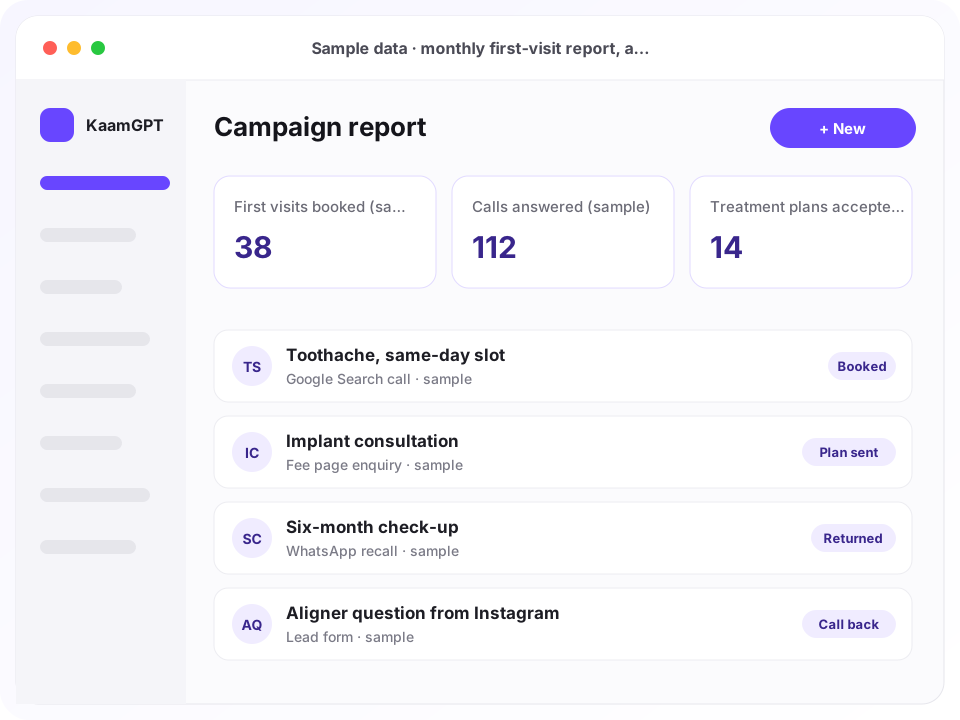
Call tracking, a single enquiry sheet for the front desk, and a monthly report that ties each booked first visit back to the channel it came from, so you can see what to keep and what to cut.
Lead generation in detail →In what order does the best digital marketing agency for dental clinics in Bengaluru tackle the work?
Sequence beats spend. Ads that send an anxious patient to a website with no fees, no dentist names and a broken call button waste money, so the foundations come first: an accurate Google profile, a factual site and a phone line someone answers. Only then do we buy attention, starting with the searches closest to a booking.
Each stage has its own test before the next one opens. The profile is ready when calls and direction requests are being recorded. The website is ready when a stranger can find the price range for a root canal in two taps. Paid search is ready to scale when the front desk is converting calls into appointments. Social campaigns come last, because they create interest rather than catch it.
Fix what a patient sees first
Name, hours, phone, categories and photos on Google, then the same details on the website and the two or three directories patients in your area still use. Inconsistent timings are the most common reason an urgent patient drives to the wrong door.
Give every treatment an honest page
Root canal treatment, extractions, implants, crowns and bridges, aligners and braces, children's dentistry and cleaning each get a page that says what happens, the usual number of sittings and how fees are estimated, written with your dentists and free of words like painless or guaranteed.
Catch pain searches by the hour
Emergency campaigns run when the clinic can actually take a patient, with call ads and a clear note on same-day slots. Outside those hours the budget pauses rather than collecting calls nobody can answer.
Nurture planned treatment over weeks
Implant and aligner patients get a fee and process page, a short consultation form with clear consent wording and a follow-up call within a working day. We report how many consultations turned into accepted treatment plans, not just how many forms arrived.
Keep the families you already have
Opted-in reminders for six-monthly check-ups, a polite request for a Google review after a completed treatment, and seasonal notes such as school-holiday slots for children. In an established practice, families who already trust the dentist are often the quickest bookings to win back.
What does it cost, and which package fits your practice?
The managed plan opens at ₹19,999 monthly and takes roughly 15 days to set up. Most single-location clinics begin at that level, while a multi-branch group, or a practice whose website must be rebuilt first, gets a scope written for it. What you pay a digital marketing agency for dental clinics in Bangalore should cover the work alone; on our plans, every rupee of ad spend goes from the clinic to Google or Meta, outside our invoice.
Digital Marketing
Recommended₹19,999/month
Typically 15 days
The natural choice when one team should run website, Google profile, ads and recall together; ₹19,999 per month upward.
- Channel strategy
- Creative production
- Campaign management
- Weekly reporting
SEO
₹14,999/month
Typically 30 days
For practices whose implant or aligner patients read for weeks before booking and should land on your treatment and fee pages; ₹14,999 per month upward.
- Technical audit
- Keyword research
- On-page optimisation
- Content plan
- Monthly reporting
Local SEO
₹4,999/month
Typically 14 days
Enough on its own for a one-address neighbourhood clinic needing its Maps profile, reviews and directory details tidied; ₹4,999 per month for each address.
- Google Business Profile optimisation
- Local keyword map
- Location page on-page fixes
- Citation building and NAP cleanup
- Local link outreach
- Review replies and posts
- Monthly report
Google Ads
₹4,999/month
Typically 30 days
For a clinic whose phones are answered promptly and which wants urgent and planned-care searches covered; management ₹4,999 per month upward.
- Account setup
- Keyword strategy
- Ad copy testing
- Conversion tracking
- Bid optimisation
Meta Ads
₹4,999/month
Typically 30 days
For cosmetic, aligner or children's dentistry, where interest has to be sparked rather than caught; management ₹4,999 per month upward.
- Creative testing
- Audience building
- Retargeting funnels
- Pixel setup
- Weekly reporting
Lead Generation
₹24,999/month
Typically 14 days
For a group or specialist practice wanting call handling, enquiry routing and follow-up as one system; ₹24,999 per month upward.
- Verified leads
- Multi-channel outreach
- CRM integration
- Lead scoring
- Replacement guarantee
- Your ad budget sits in your own Google and Meta accounts, charged to the clinic's card; it never passes through our invoice, and every rupee is visible to you.
- The pricing page shows published entry points only; the proposal you sign names locations, channels, reports and exclusions.
| Package | Starts at | Timeline | Best for |
|---|---|---|---|
| Digital Marketing | ₹19,999/month | Typically 15 days | The natural choice when one team should run website, Google profile, ads and recall together; ₹19,999 per month upward. |
| SEO | ₹14,999/month | Typically 30 days | For practices whose implant or aligner patients read for weeks before booking and should land on your treatment and fee pages; ₹14,999 per month upward. |
| Local SEO | ₹4,999/month | Typically 14 days | Enough on its own for a one-address neighbourhood clinic needing its Maps profile, reviews and directory details tidied; ₹4,999 per month for each address. |
| Google Ads | ₹4,999/month | Typically 30 days | For a clinic whose phones are answered promptly and which wants urgent and planned-care searches covered; management ₹4,999 per month upward. |
| Meta Ads | ₹4,999/month | Typically 30 days | For cosmetic, aligner or children's dentistry, where interest has to be sparked rather than caught; management ₹4,999 per month upward. |
| Lead Generation | ₹24,999/month | Typically 14 days | For a group or specialist practice wanting call handling, enquiry routing and follow-up as one system; ₹24,999 per month upward. |
Which factors move the monthly budget?
Two clinics on the same street can need very different plans. One already has a solid website and two hundred honest reviews; the other has an outdated profile with the wrong phone number and a site built a decade ago. The first needs campaigns and reporting; the second needs foundations before a single rupee goes to ads.
When you compare quotes, ask each agency to separate one-time set-up from monthly management, to name the ad platforms they will run, and to say how they will count a booked patient. If an agency cannot explain how a call becomes an appointment in its report, the report will show clicks and nothing you can act on. Our services overview lists what each line item means.
- Number of clinic locations and of dentists who need their own profiles.
- Whether the website can be fixed or needs rebuilding before ads run.
- How many treatment lines you want promoted, from general care to implants and aligners.
- Which ad platforms are in scope and how many campaigns each needs.
- How much patient-education writing your dentists can review each month.
- Whether recall reminders and front-desk call tracking are part of the plan.
Which kinds of dental practice does this suit?
- Solo general dentistsOne dentist, one or two chairs, a neighbourhood following; the priority is Maps, reviews and evening hours.
- Multi-chair family clinicsSeveral dentists and visiting specialists; each needs an accurate profile and the site must show who does what.
- Paediatric dental practicesParents are the audience, so calm explanations, first-visit guidance and school-holiday scheduling matter most.
- Orthodontic and aligner practicesLong decisions and higher fees; the plan leans on fee pages, consultation forms and patient follow-up.
- Implant and oral surgery practicesReferral-led work where clear process pages and dentist credentials support what the referring dentist said.
- Cosmetic dentistry studiosWhitening, veneers and smile work aimed at adults, with the strictest care on before-and-after content.
- Multi-branch dental groupsSeveral Bengaluru locations needing one brand voice, separate profiles per branch and comparable branch reports.
The first ninety days, step by step
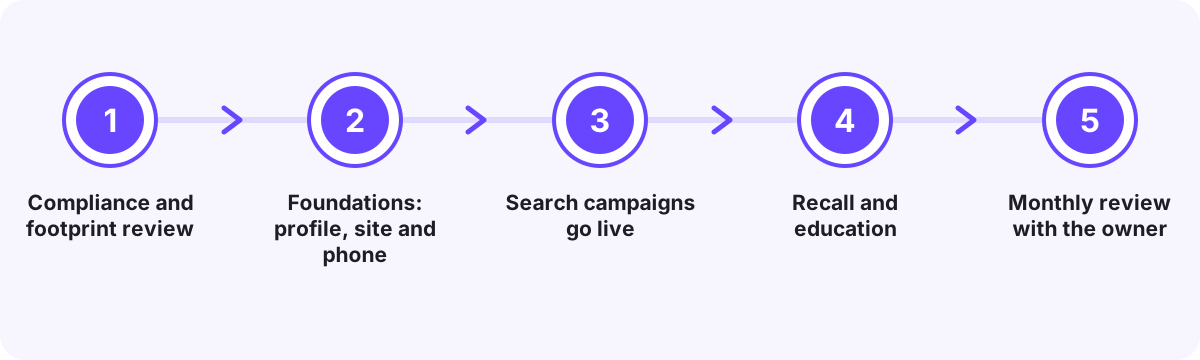
Compliance and footprint review
We read everything your clinic currently publishes, from the signboard text on your Google photos to old social posts, and flag anything the 2014 code would treat as boasting, a superiority claim or an unrecognised suffix after a dentist's name.
Foundations: profile, site and phone
We correct the Google profile, fix or rebuild the treatment and fee pages, set up call tracking and agree with the front desk how every enquiry is logged, so that the first booking we report is one you can verify.
Search campaigns go live
Urgent-care and planned-treatment campaigns start in your neighbourhood radius, with ad copy you approve line by line. In the first weeks we tune hours, locations and search terms against the calls that actually turn into appointments.
Recall and education
Opted-in reminders begin for existing patients, and the first patient-education articles go up after your dentists check them for accuracy. Social campaigns open only for the treatment lines where the numbers suggest they will help.
Monthly review with the owner
A short call each month walks through first visits by channel, accepted treatment plans, missed calls and cost per booking, and ends with one or two decisions for the next month rather than a long slide deck.
Why clinics hand this work to KaamGPT
We read the code before the brief
Our first draft of any ad or page is written against the dentists' ethics regulations, so your team spends its review time on accuracy, not on pulling back claims you never wanted to make.
One team across every channel
Website, Google profile, ads, social and reminders are run together, which means one enquiry sheet and one monthly story about where patients came from.
Bookings over vanity numbers
We report reach and clicks because platforms produce them, but the headline is first visits and accepted treatment plans, the numbers a practice owner can check against the appointment book.
Your accounts, your data
Ad accounts, the Google profile and analytics are registered to the clinic. Enquiry data is handled under a written processing arrangement, and leaving us means simply removing our access.
Reachable between appointments
We are a Bengaluru team reachable on calls, WhatsApp and video, which suits dentists who are in surgery most of the day and would rather settle a question in ten minutes than travel to a meeting.
What does the dentists' code of ethics let a clinic publish?
Regulation 8.1 of the Revised Dentists (Code of Ethics) Regulations, 2014 opens by accepting that attitudes to professional advertising have changed, and says a dentist or a group of dentists may advertise, provided they maintain decorum. The same regulation then lists what is unethical, and those items shape every plan we write for a clinic.
The permitted side is more generous than many dentists assume. Regulation 8.2 allows formal announcements on starting a practice, changing address, returning after a long break and the availability of new equipment or services, as long as there is no boastful claim of being the best or the first. Listings in directories and on the internet are allowed as public information. Regulation 8.2.9 goes further, accepting dentist and clinic websites so long as everything on them is factual, and expressly allowing them to list the treatments on offer and what they cost.
- Not allowed: demeaning solicitation and false promises through advertisements or direct marketing (8.1.1).
- Not allowed: camps and promotions in schools, colleges and old-age homes, handbills and claim vouchers (8.1.2), with an exemption for registered charities giving fully free care.
- Not allowed: agents or canvassers employed to bring in patients commercially (8.1.4).
- Not allowed: publicity inviting attention to a dentist's skill, achievements or affiliations, or boasting of cases, operations, cures or remedies (8.2).
- Allowed: websites limited to facts, including services and their prices (8.2.9), and plain announcements of new equipment (8.2.7).
Is the 2014 code still in force now that the National Dental Commission exists?
Yes, for practical purposes. The National Dental Commission Act, 2023 repeals the Dentists Act, 1948 and dissolves the Dental Council of India, but section 59(2) keeps the regulations made under the old Act in force until new standards are specified. We did not find a replacement ethics code among the regulations the Commission publishes on its website, so the 2014 code remains the text to follow.
Karnataka's regulator has also been explicit. A Karnataka State Dental Council notice dated 2 January 2025 reminded every dental practitioner to follow the 2014 code and named demeaning solicitation and false promises through advertisements on social media, direct marketing and association with corporate bodies among the practices it had come to know of. A Bengaluru clinic should read that notice as a sign that online advertising is being watched, and plan accordingly. Our wider Bengaluru digital marketing guide covers businesses without these limits.
Three patients, three timelines: emergency, planned treatment and recall
The emergency patient wants relief tonight. They search on a phone, scan the first few results, look at the star rating and call. For them the work is a correct profile, call ads during open hours, and a receptionist who answers. How those campaigns avoid superiority claims and remarketing lists is set out in the paid-search guide for clinics.
The planned-treatment patient is weighing implants, a bridge, aligners or several crowns, and the decision may involve a spouse, a loan and a second opinion. They read treatment pages, compare fee ranges and come back several times. This is where the website and patient-education articles earn their keep, which the organic search guide for dentists details.
The recall patient already trusts you but forgets. A six-monthly reminder, a note before school holidays for a child's check-up or a care message after treatment brings them back, provided they agreed to hear from you and can opt out easily. Of the three, it is the only one that needs no ad budget at all.
Which numbers tell you the marketing is working?
We ask every clinic to judge us on the appointment book. The core measures are first visits booked, first visits that turned up, and treatment plans the patient accepted. Behind them sit the working numbers: answered and missed calls by hour, enquiries by channel, and the cost of each booked first visit for every paid campaign.
Dental practice growth also shows up in places an ad report never covers. A rising share of patients naming Google as how they found you, more reviews written without prompting, fewer no-shows after reminders, and a front desk that spends less time explaining fees on the phone because the website already did. We include these in the monthly review because they predict next quarter's bookings better than this month's clicks do.
- Booked first visits, by channel and by treatment line.
- Attended first visits, so no-shows are visible.
- Accepted treatment plans for implants, aligners and crowns.
- Missed calls by hour of day, shared with the front desk.
- Cost per booked first visit for each paid campaign.
Which habits should a clinic drop before spending on ads?
Most of the problems we find in a first review are habits picked up from other industries. A festival discount banner with a countdown, a reel of a smiling patient captioned with how nervous they were before treatment, a profile name stuffed with every treatment the clinic offers, or a freelancer who replies to every review with the same paragraph. Each one is easy to stop, and each one either sits badly with the 2014 code or breaks a platform rule.
The fix is rarely more spending. It is usually a quieter, clearer version of what the clinic already does: the real clinic name on Google, honest timings, fee ranges published once and kept current, and a front desk that calls back every missed enquiry the same day.
- Stop offering discounts or free services in return for Google reviews; Google removes incentivised reviews.
- Stop calling the clinic the best or the first in the area; regulation 8.2.7 rules out those claims.
- Stop sharing patient stories or case photos as promotion, however willing the patient seems.
- Stop paying anyone a commission per patient referred; regulation 8.6.1 forbids it.
- Stop running ads at hours when nobody can answer the phone.
Why is promoting a dental practice harder than promoting a shop?
A shop can shout about its lowest price and its happiest customers. A dentist cannot do either in the usual way, and the patient is often anxious, in pain or worried about cost. The difficulties below are the ones we plan around first.
- The ethics code limits the message: no self-aggrandising publicity, no boasting of cases, operations or cures, and no claim of being the best or the first.
- Urgent patients decide in minutes, so a missed call at 9 p.m. is a lost patient, while implant and aligner patients take weeks and need several touches.
- Reviews carry enormous weight, yet a clinic may not pay for them, and a reply must never reveal anything a patient told the dentist in confidence.
- Google files health under its sensitive personalised-ads categories, which removes options other businesses rely on, such as uploading patient lists, while Meta refuses ads that hint it knows a viewer's medical condition.
- Many clinics already pay for a listing site, a social media freelancer and a website vendor separately, and nobody connects the bookings back to any of them.
- Managed digital marketing
- From ₹19,999 a month, set-up in about 15 days
- Rule set followed
- Revised Dentists (Code of Ethics) Regulations, 2014
- Still in force because
- National Dental Commission Act, 2023, section 59(2)
- Karnataka reminder
- Karnataka State Dental Council notice dated 2 January 2025
- Measured by
- Booked and attended first visits, accepted treatment plans
- Ad spend
- Paid by the clinic directly to Google or Meta
Where this applies around Bengaluru, Karnataka
- Bengaluru
- Karnataka
- India
- Jayanagar
- Basavanagudi
- Malleshwaram
- Rajajinagar
Frequently asked questions
26 answersWhat should I look for in the best digital marketing agency for dental clinics in Bengaluru?
Look for an agency that can quote the regulations dentists work under, that reports booked and attended first visits rather than likes, and that leaves your ad accounts and Google profile in the clinic's name. Ask to see how they would word an implant ad without claiming to be the best. If the answer includes superlatives or before-and-after photos, keep looking.
Are dentists in India allowed to advertise at all?
Yes, within limits. Regulation 8.1 of the Revised Dentists (Code of Ethics) Regulations, 2014 says a dentist or a group of dentists may advertise provided they maintain decorum. The same regulation then lists unethical practices, such as demeaning solicitation, false promises, canvassers, and promotional camps in schools and old-age homes, so the content and method of advertising matter as much as the decision to advertise.
What counts as ethical dental advertising in practice?
In practice, <em>ethical dental advertising</em> states facts a patient can check: who the dentists are and their recognised degrees, which treatments the clinic offers, how fees are estimated, the timings and the location. It avoids words such as best, first, painless or guaranteed, avoids showcasing individual cases, and never implies that the reader has a dental problem. We draft every line to that standard before you review it.
How do festivals and school holidays affect dental clinic marketing in Bengaluru?
They shift what people book rather than whether they need a dentist. School holidays bring parents looking for children's check-ups, the months before weddings bring questions about whitening and aligners, and long festival weekends leave urgent patients searching for whoever is open. We plan Bengaluru campaigns and reminders a month ahead around these patterns, and pause ads when the clinic itself is closed.
Is the dentists' code still valid after the Dental Council of India was replaced?
Section 59(2) of the National Dental Commission Act, 2023 keeps the regulations made under the old Dentists Act in force until new standards are specified. The Karnataka State Dental Council's notice of 2 January 2025 also told practitioners to follow the 2014 code. We therefore treat it as the operative rulebook and will update clinics if the Commission issues a replacement.
How much does dental clinic marketing in Bengaluru cost with KaamGPT?
For dental clinic marketing in Bengaluru, our managed plan has an entry price of ₹19,999 monthly and roughly 15 days of set-up. The clinic's own ad budget is charged by Google or Meta to its card, outside our invoice. Single services can also be bought on their own, with search or social ad management priced upward of ₹4,999 monthly, organic SEO upward of ₹14,999 and Maps work at ₹4,999 per address.
Do you only work with clinics in certain parts of Bengaluru?
No. Our Bengaluru team works with clinics anywhere in the city by phone, WhatsApp and online meetings, so a practice in Rajajinagar, Jayanagar or Whitefield gets the same process. What changes by neighbourhood is the targeting radius, the search terms patients use and how many competing clinics sit on the same main road.
How long before a dental clinic sees new patient bookings?
Urgent-care search campaigns can produce calls within days of going live, once the Google profile and phone handling are in order. Planned treatments such as implants and aligners take longer because patients research for weeks. Organic search and patient-education articles build over several months. We agree realistic milestones in the written scope instead of promising a number of patients.
Can a dentist post before-and-after photos to promote the clinic?
We advise against it for promotion. Meta permits before-and-after images for cosmetic procedures in ads aimed at adults, but the 2014 code says a dentist should not boast of cases, operations, cures or remedies, or permit publication of reports of them. A promotional before-and-after reel reads as exactly that, so we build creative around the clinic, the team and the process instead.
If we stop working with KaamGPT, what happens to our clinic's accounts?
Nothing has to move. The Google Ads account, Meta ad account, Google Business Profile and analytics are registered to the clinic from the start, and we work inside them with access you grant. Ending the engagement means removing that access; the campaign history, reviews and data stay exactly where they are.
How do you handle patient enquiries for dentists without breaching privacy?
Patient enquiries for dentists arrive by form, phone and WhatsApp. Every form opens with a short note on what is collected and for what, and ends with a consent box the visitor ticks, which is what the Digital Personal Data Protection Act, 2023 looks for. Only the clinic team sees the enquiry sheet, and patient lists are never uploaded to ad platforms, which Google's health targeting rules would block anyway.
Why does a dental practice need a specialist approach rather than a general agency?
General agencies often reach for testimonials, discount vouchers, influencer posts and aggressive retargeting, each of which causes trouble for a dentist under the ethics code or the platforms' health policies. A <strong>digital marketing agency for dental clinics in Bangalore</strong> ought to know those limits, write factual copy and count success in appointments rather than impressions.
Can we run free dental check-up camps as part of the marketing?
Be careful. Regulation 8.1.2 of the 2014 code names conducting camps and other promotional activity in schools, colleges and old-age homes, and distributing handbills and claim vouchers, as unethical when it gives unfair professional advantage. Registered charitable bodies providing fully free care are exempted. We do not plan promotional camps for private clinics.
Which channel matters most for a new dental clinic in Bengaluru?
For a new clinic in Bengaluru, the Google Business Profile usually comes first, because urgent patients find dentists on Maps and call straight from the listing. A factual website follows, then search ads for the hours you can take patients. Social campaigns and longer articles help later, once the basics are producing bookings.
What should a dental clinic website and profiles include?
A good dental clinic website and profiles set should show the clinic's name exactly as on its board, plus its address, hours and number, identically everywhere; each dentist with recognised qualifications only; one page per treatment explaining the steps and how fees are estimated; parking and access details; and photos of the clinic itself. Under the 2014 code, the dentist's own photograph should not appear on letterheads or signboards.
Should a dental clinic spend on ads or on its website first?
Usually the website and Google profile first. Ads send people somewhere, and if that place has no fees, no dentist names and a hard-to-find phone number, the clicks are wasted. Once a factual treatment page, a working call button and an accurate profile exist, even a modest ad budget has something to convert on. A clinic with a strong site already can start ads straight away.
Can our dentists post patient cases on their personal Instagram accounts?
We advise them not to. Regulation 8.2 of the 2014 code bars a dentist from boasting of cases or letting reports of them appear through any mode, and a personal account is still a mode. Regulation 4.2 also protects what patients share in confidence. Dentists can post about the profession, oral health tips and their clinic's working life without featuring individual cases.
How do you measure results for a dental practice?
We measure booked first visits, attended first visits and accepted treatment plans, broken down by channel. Supporting measures include answered and missed calls by hour, cost per booked visit for each campaign and review growth. Everything is reported monthly in plain language, with one or two decisions to take, so the clinic owner can check results against the appointment book.
Is it acceptable to request Google reviews from our dental patients?
Yes, provided every patient is asked the same way. Google forbids rewarding reviews, asking only patients you expect to be happy, and pushing people to post while they are still at the clinic. One identical note carrying the review link, sent to every patient once treatment ends, meets those rules and gradually builds an honest rating.
Do you write dental health articles, and who checks them?
We draft patient-education articles on topics such as root canal treatment, gum care or a child's first dental visit, and your dentists review each one for clinical accuracy before it goes live. Articles that appear on outside publications carry no clinic phone or address, because regulation 8.1.8 treats contact details in educational pieces as surrogate advertising.
Do we need separate plans for each branch of our dental group?
Each branch needs its own Google profile, its own location page and its own call tracking, because patients choose by distance. The strategy, brand voice and reporting can be shared. We quote multi-branch dental groups in Bengaluru on scope, and the written proposal lists every location covered.
How do you handle negative reviews of a dental clinic?
Replies we draft are short and calm: thanks to the writer, an offer to talk with the clinic by phone, and nothing that acknowledges a treatment relationship or describes any care. Regulation 4.2 of the 2014 code asks dentists never to disclose what patients entrusted to them, and that duty does not lapse in a public reply. Posts that look fake or abusive are flagged to Google rather than answered.
Can KaamGPT start with only Google Ads for our clinic?
Yes. Many clinics begin with <a href="/services/google-ads">Google Ads management</a> from ₹4,999 a month and add more later. Before the ads go live we still check the Google profile and the landing page, because ads that send urgent patients to a page with no phone number or fees waste the budget. The <a href="/best-meta-ads-agency-for-dental-clinics-in-bengaluru">Meta Ads page for dental clinics</a> covers social campaigns.
Is WhatsApp allowed for appointment reminders from a dental clinic?
Reminders and recall messages to patients who have agreed to receive them are a normal part of running a practice. We set up opted-in lists, keep messages factual and useful, and give a simple way to stop. Bulk promotional messages to people who never consented are not something we run, both for privacy law reasons and because they damage trust.
How do we get started with KaamGPT in Bengaluru?
Ring +91 79767 82366, or WhatsApp the clinic's name and website. Our Bengaluru team checks your current site, profile and recent posts against the 2014 code and sends back a written first view with a suggested scope. If the plan suits you, set-up begins within about 15 days of your approval.
Do you also run lead generation for specialist dental practices?
Yes. Implant, orthodontic and multi-branch dental practices often need a fuller enquiry system with call handling, consultation booking and follow-up. That system is priced upward of ₹24,999 monthly; the <a href="/best-lead-generation-company-for-dental-clinics-in-bengaluru">enquiry-to-appointment notes for clinics</a> and our <a href="/services/lead-generation">lead generation service page</a> describe it.