The best local SEO agency for manufacturers in Bengaluru has a narrower job than most people assume, and a more practical one. It is not about ranking a factory for every product it makes; that is the work of a national website. It is about making sure that the people who must physically reach you, such as a buyer coming for a supplier audit, a courier collecting samples, a transporter with a full truck or a technician needing a spare from your counter, find the right gate on the first attempt.
In an industrial estate that is harder than it sounds. Plot numbers repeat across phases, KIADB and older layouts use different naming, and many factories have a registered office in one place and production in another. KaamGPT untangles it remotely, over phone, WhatsApp and video, charging ₹4,999 monthly for every qualifying site under our local SEO service. For being found by engineers searching across India, our SEO guide for manufacturers covers the website side.
- ₹4,999monthly, charged only for a plant, counter or office that qualifies for its own listing
- ~14 daysto audit the address trail, correct the profile and pin the visitor gate
- 1 addresswritten one way across Maps, website, GST, Udyam and marketplace listings
- 0 virtual officeslisted; Google's guidelines exclude addresses where nobody works
Which manufacturing businesses rely on being found on Maps?
- Job-work shops in industrial estatesLaser cutting, powder coating, plating and machining units where customers drive in with parts and collect them days later.
- Spares and trade countersBearing, hydraulic, fastener and tooling counters where technicians arrive with a part in hand and need the shop open and easy to find.
- OEM suppliers receiving auditsPlants where buyers' quality teams visit before approval, and a smooth arrival sets the tone for the audit itself.
- Plants dispatching by truckUnits whose transporters must reach the dispatch bay, where a misplaced pin costs waiting time and detention charges.
- Factories hiring through walk-insGarment, assembly and packing units that hold walk-in interviews and need candidates at the HR gate on time.
- Manufacturers with a city sales officeCompanies whose plant is outside the city but whose buyers meet them at an office closer to town.
- Small makers selling to local tradeFurniture, packaging and fabrication units that sell to nearby dealers, contractors and walk-in buyers as well as to OEMs.
Why do factory listings on Maps misdirect people?
Manufacturers rarely set out to break Google's rules. Most problems come from a listing created years ago by a former employee, a directory that auto-generated a profile, or an owner who listed the registered office because it was easier to verify. What follows is a pin that sends people to the wrong building and a profile nobody in the company can log in to.
None of this shows up in sales reports directly. It shows up as a transporter calling the plant three times for directions, an auditor arriving late and irritated, or a walk-in customer for spares giving up and buying from the counter next door.
- The pin sits on the registered office, the owner's home or a chartered accountant's address instead of the plant that receives visitors.
- The business name on Maps carries extra words such as CNC machining best quality Bangalore, which Google's guidelines do not permit and which can lead to suspension.
- Duplicate profiles exist for the same plant, created by different people, splitting calls, photos and reviews between them.
- The plot, phase and PIN are written differently on Maps, the website, GST and Udyam records and marketplace listings, so no source agrees with any other.
- Hours show a retail pattern, or no hours at all, so visitors arrive during lunch, shift change or a weekly holiday and find the gate shut.
Which tasks make up Maps work for a manufacturing site?
Everything below is scoped per location. A single plant with a visitor gate is one location; a plant plus a city sales office plus a spares counter may be three, if each genuinely receives people. We decide that together during the audit.
A profile that meets Google's guidelines
The correct legal or trading name with no keywords added, the right primary category, accurate hours including shift breaks and weekly holidays, a short factual description and the phone line that a receptionist actually answers. Posts and replies stay on schedule through our Business Profile software.
Google Business Profile in detail →Plot, phase and PIN written one way
We choose one canonical form of your industrial area address, check the PIN with India Post, and correct it on Maps, the website footer, contact page and the directories and marketplaces where you are listed.
Local SEO in detail →The pin on the gate that matters
For large compounds we place the pin at the visitor or goods entrance, add gate photographs, and spell out the approach for drivers, such as the cross road and the landmark a driver will recognise.
Local SEO in detail →A plant location page on your website
One page per site with the address, a map, directions for cars and trucks, visiting hours, the contact for appointments and what happens at that site. It supports the profile and helps people who reach you through search rather than Maps.
SEO in detail →Directory and marketplace clean-up
Old addresses, closed numbers and duplicate entries on business directories and B2B marketplaces are corrected or removed where the platform allows, so search engines see one consistent story about where you are.
Local SEO in detail →Reviews from people who visited
Buyers after an audit, transporters after a smooth pickup and technicians after buying spares can describe a real experience. We set up a simple request routine and draft replies, without incentives and without filtering out unhappy visitors.
Google Business Profile in detail →Walk-in hiring that points to the right gate
When a plant hires operators or helpers through walk-in interviews, the job post and any Meta campaign link to the Maps profile so candidates reach the HR entrance, not the dispatch bay. Hiring campaigns are explained on our Meta Ads page for factories.
Meta Ads in detail →How are the first two weeks of Maps work spent?
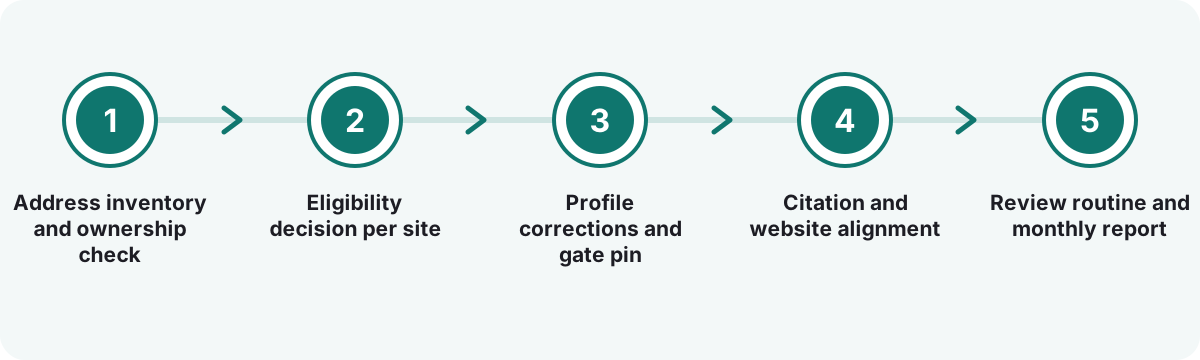
Address inventory and ownership check
We list every company address, find every existing profile and directory entry, and confirm who controls each Google listing today.
Eligibility decision per site
Each address is checked against Google's guidelines, and you agree which sites get profiles. Ineligible ones are left off or cleaned up rather than forced through.
Profile corrections and gate pin
Name, category, hours, phone and description are fixed, the pin is moved to the right entrance and gate photos are added.
Citation and website alignment
The canonical address goes onto the website footer, contact page and plant location page, and the main directories and marketplaces are corrected.
Review routine and monthly report
A simple way to ask visitors for reviews is set up, replies are drafted, and from then on a monthly note tracks calls, route requests, reviews and edits made by outsiders.
What does Maps work cost for a plant or trade counter?
Each qualifying location costs ₹4,999 monthly under our catalogue, and the opening fixes take roughly a fortnight. A company with one plant pays for one location; a company with two plants and a sales office that all receive visitors pays for three. The written scope names each site and its tasks. The full price list shows what the other services start at.
Local SEO
Recommended₹4,999/month
Typically 14 days
₹4,999 monthly per site is the sensible starting point for a plant, sales office or spares counter that receives people at a signed address.
- Google Business Profile optimisation
- Local keyword map
- Location page on-page fixes
- Citation building and NAP cleanup
- Local link outreach
- Review replies and posts
- Monthly report
Digital Marketing
₹19,999/month
Typically 15 days
Our managed plan, with ₹19,999 monthly as its floor, fits a manufacturer wanting Maps, website, ads and follow-up under a single team.
- Channel strategy
- Creative production
- Campaign management
- Weekly reporting
SEO
₹14,999/month
Typically 30 days
Website SEO, ₹14,999 monthly at minimum, suits suppliers who need engineers across India or abroad to find capability pages, beyond the local map.
- Technical audit
- Keyword research
- On-page optimisation
- Content plan
- Monthly reporting
Google Ads
₹4,999/month
Typically 30 days
Google Ads management, from ₹4,999 monthly, can add location-based search ads for trade counters and job-work units near their customers.
- Account setup
- Keyword strategy
- Ad copy testing
- Conversion tracking
- Bid optimisation
Meta Ads
₹4,999/month
Typically 30 days
Meta Ads management, likewise from ₹4,999 monthly, helps with walk-in hiring drives that send candidates to the right gate.
- Creative testing
- Audience building
- Retargeting funnels
- Pixel setup
- Weekly reporting
Lead Generation
₹24,999/month
Typically 14 days
Lead generation, ₹24,999 monthly at minimum, is for manufacturers whose main need is a steady RFQ pipeline rather than visitor footfall.
- Verified leads
- Multi-channel outreach
- CRM integration
- Lead scoring
- Replacement guarantee
- A site that does not meet Google's eligibility rules, such as a virtual registered office, is not listed and not charged for.
- Campaign budgets travel from your card to Google or Meta directly; KaamGPT's fee is for the management work alone.
| Package | Starts at | Timeline | Best for |
|---|---|---|---|
| Local SEO | ₹4,999/month | Typically 14 days | ₹4,999 monthly per site is the sensible starting point for a plant, sales office or spares counter that receives people at a signed address. |
| Digital Marketing | ₹19,999/month | Typically 15 days | Our managed plan, with ₹19,999 monthly as its floor, fits a manufacturer wanting Maps, website, ads and follow-up under a single team. |
| SEO | ₹14,999/month | Typically 30 days | Website SEO, ₹14,999 monthly at minimum, suits suppliers who need engineers across India or abroad to find capability pages, beyond the local map. |
| Google Ads | ₹4,999/month | Typically 30 days | Google Ads management, from ₹4,999 monthly, can add location-based search ads for trade counters and job-work units near their customers. |
| Meta Ads | ₹4,999/month | Typically 30 days | Meta Ads management, likewise from ₹4,999 monthly, helps with walk-in hiring drives that send candidates to the right gate. |
| Lead Generation | ₹24,999/month | Typically 14 days | Lead generation, ₹24,999 monthly at minimum, is for manufacturers whose main need is a steady RFQ pipeline rather than visitor footfall. |
How much local search work does a factory really need?
Less than a shop, usually, and that is good news. A restaurant fights for map visibility every evening; a factory mainly needs to be correct, findable by name and easy to reach. The heavy lifting happens in the first month: finding every listing, merging or removing duplicates, fixing the plot address everywhere and placing the pin. After that, upkeep is lighter: replies, photos, occasional posts and checks that nobody has edited the profile wrongly.
Where competition does exist is in job-work and trade counters. A powder-coating unit in Jigani or a hydraulic counter in Peenya competes with neighbours for searches such as powder coating jigani or hydraulic hose crimping peenya. For those, a local seo agency for manufacturers in Bangalore has more to do: categories, services, reviews and a plant location page that answers what a walk-in customer wants to know.
A useful test before signing with any local seo agency for manufacturers in Bangalore: ask it to tell you, from your Maps link alone, where the pin sits, whether the name follows the guidelines and whether duplicates exist. An agency that cannot answer those three questions quickly is unlikely to fix them well. We answer them before quoting, so you can judge the work before paying for it.
- How many of your addresses genuinely receive visitors and qualify for a profile.
- The count of stale or doubled listings, and whether you can still log in to them.
- Whether the plot and PIN details differ across GST, Udyam, website and marketplace records.
- Whether you serve walk-in trade customers or job-work clients who compare nearby units.
- Whether the website needs plant location pages built or only corrected.
Why let KaamGPT look after a factory's Maps presence?
We follow Google's rules
No keyword-stuffed names, no virtual offices, no fake locations. A listing that breaks the guidelines can be suspended, and a suspended plant listing is worse than none.
We think like a visitor
Our checks start with how an auditor, driver or technician actually arrives: which road, which gate, what hours. The profile is built around that journey.
Ownership stays with you
Profiles are owned by a company account and we work as managers. If you change agencies or staff, the listing and its reviews remain yours.
Our own profile software
KaamGPT builds Business Profile tools for review requests, replies and posts, so routine upkeep runs on a system our team uses daily.
Connected to the bigger plan
If you also need capability pages, search ads or an RFQ pipeline, the same team can add them later, with the address details already settled.
Why are industrial addresses in Bengaluru hard for Google Maps?
Bengaluru's factories mostly sit inside planned estates rather than on named streets. Peenya, the largest cluster in Bengaluru Urban, is divided into phases and stages, uses PIN 560058 and lies beside Tumkur Road, with Dasarahalli on its edge. Bommasandra, with PIN 560099, and Jigani run in numbered phases off Hosur Road and the Jigani link road. Older pockets such as the Rajajinagar Industrial Suburb, and newer KIADB layouts out at Kumbalgodu near Kengeri or around Doddaballapur, each have their own conventions for plots, sheds and cross roads.
That creates a predictable mess. The same unit appears as Plot 23, 2nd Phase on its GST certificate, as No. 23 Peenya II Stage on a marketplace, and as a pin dropped on the owner's old office on Maps. Each version is close enough to be plausible and different enough to confuse both software and drivers. Google is cautious when signals conflict, and a confused listing quietly loses visibility.
Visitors to factories also behave differently from shoppers. They come by appointment, often in a company car or a truck, and need a specific gate: the visitor entrance, the stores gate for deliveries, or the dispatch bay. A pin dropped at the centre of a large compound is not good enough, and the profile's photos and description should make the right entrance obvious.
How does the best local SEO agency for manufacturers in Bengaluru decide which sites get a listing?
Google's Business Profile guidelines are clear on a few points that matter to factories. If you merely rent a postal address and do no business there, which Google calls a virtual office, it cannot be listed. An office in a co-working space needs clear signage, staff and customers received there during business hours. Each location should have only one profile, and any business that shows its address is expected to have a permanent signboard bearing its name there.
So we start by listing every address your company uses and asking a simple question of each: do customers, suppliers' staff or job candidates come here, during stated hours, to a place with your name on the gate? Production plants with a visitor entrance usually qualify. A city sales office that meets buyers usually qualifies. A registered office at an accountant's address does not, and listing it only confuses people.
Departments are a special case. The guidelines allow publicly facing departments that operate as distinct entities, typically with a separate entrance, to have their own profiles with names different from the main business. A spares and service counter with its own entrance and hours might fit that; a purchase department inside the plant would not.
The answer is written into the scope. Sites that qualify get a profile, a plant location page and a place in the monthly report; sites that do not are either left off Maps or, where an old listing exists for them, cleaned up so they stop sending visitors to an empty office.
Inventory every address first
Registered office, plants, warehouses, sales offices and counters, each with who visits, when and through which gate. The inventory decides how many profiles are justified and stops duplicates being created later.
Verify at the place visitors use
Verification should happen at the plant or office that receives people, by someone who works there, using the company's own Google account rather than a former employee's or a vendor's.
Copy the signboard, word for word
The profile name matches the permanent signage and stationery. Taglines, product lists and area names stay out of the name field and go into the description and services, where they belong.
Hours that reflect shifts
Visiting hours for buyers, dispatch hours for transporters and counter hours for spares can differ. We set main hours to when visitors are received, and explain the others in the description and on the plant location page.
Photos that help someone arrive
The gate from the road, the signboard, the visitor parking, the reception and the loading bay are more useful to a visitor than polished machine shots. We ask for a set taken on a phone, in daylight, and add them in that order.
Keep one owner inside the company
Profile ownership stays with a company email address that outlives any employee. Agencies, including us, are added as managers, so access can be revoked while the listing stays safe.
Who searches for a factory on Google Maps, and what are they looking for?
Five kinds of people account for most factory map searches, and each wants something different. A buyer or quality engineer coming for an audit wants the visitor entrance, parking and a reception line that is picked up. A transporter wants the dispatch gate, loading hours and whether a large truck can turn in the lane. A courier wants the stores or reception counter. A job candidate wants the HR gate and the interview time. A walk-in trade customer wants to know the counter is open and stocks what he needs.
Typical searches look like the company's own name, the name plus the industrial area, or a process plus an area, for example precision engineering peenya 3rd phase, bearing dealer bommasandra or pallet manufacturer kumbalgodu. These examples show the pattern, not volumes. Most of them are navigational: the person already knows where they want to go and needs Google to get them there.
That is why google maps for factories is mostly about accuracy. A plant does not need to appear for every product nationwide on the map; it needs to appear instantly and correctly for its own name, with the right gate pinned and the right hours shown.
How should a manufacturer write an industrial area address?
Pick one form and use it everywhere. A workable pattern is plot or shed number, phase or stage, the estate's name, the main road or landmark, the locality, Bengaluru and the PIN. For example, a hypothetical unit might be written as Plot 23, 2nd Phase, Peenya Industrial Area, Bengaluru 560058. Whatever you choose, the website footer, the contact page, the Business Profile and each directory should match it character for character where the platform allows.
Check the PIN with India Post rather than copying it from an old letterhead, and keep it consistent with the address on your GST and Udyam records, because buyers' vendor-registration teams compare those documents. If the formal address is hard to find on the ground, the profile description and plant location page can mention the landmark and approach in plain language.
Where Google's map cannot find the street number, the guidelines allow you to place the pin directly. Use that to put it on the gate visitors use, not on the centre of the compound or the owner's cabin.
- Plot or shed number, then phase or stage, then the estate name.
- Main road or landmark a driver will see.
- Locality, Bengaluru and the PIN checked with India Post.
- The same spelling on Maps, website, GST, Udyam and directories.
Can a factory with several sites have several Business Profiles?
Yes, one per qualifying location. Each plant that receives visitors at a signed, staffed address can have its own profile, with its own hours, photos and phone number. What Google's guidelines rule out is more than one profile for the same location, profiles for addresses where the business does not operate, and names padded with keywords.
Some companies also want separate profiles for a spares counter or a service centre inside the main plant. The guidelines allow publicly facing departments that operate as distinct entities, usually with a separate customer entrance, to be listed separately with distinct names. Use this only when the counter really works that way; otherwise mention it in the main profile's description and services.
Name consistency matters across sites too. The guidelines allow distinct names for different types of operations, such as retail and wholesale, as long as they are applied consistently. A plant and a trade counter could follow that pattern; two plants doing the same work should share the brand name and differ only in their addresses.
How should a manufacturer collect Google reviews without breaking trust?
Reviews for a factory come from a smaller, more professional circle than a restaurant's, and that is an advantage. A buyer who completed a smooth audit, a transporter whose truck was loaded on time or a technician who found the right spare can each describe a genuine experience. A brief WhatsApp note once the visit is over, carrying the review link, usually does it.
Keep the process clean. Ask everyone who visited, not only the happy ones, and give nothing in exchange. Reply to every review in a professional tone, including critical ones about waiting time or directions, and fix the cause where you can, because the next auditor will read those replies.
Do not ask employees to review their own employer as if they were customers, and do not buy reviews. Hiring candidates sometimes leave comments about interviews; reply politely and keep HR details off the public page. A trade counter listing can also attract product questions, which deserve quick, factual answers.
- Local SEO fee
- ₹4,999 a month per qualifying location
- Opening fixes
- About 14 days: inventory, eligibility, profile, gate pin
- Not eligible on Google
- Virtual offices and addresses where the business does not operate
- Signage rule
- Permanent, fixed signage with the business name at a listed address
- Peenya and Bommasandra PINs
- 560058 and 560099
- Profile ownership
- Company account owns it; KaamGPT works as a manager
Where this applies around Bengaluru, Karnataka
- Bengaluru
- Karnataka
- India
- Peenya
- Bommasandra
- Jigani
- Dasarahalli
- 560058
Frequently asked questions
28 answersIs a factory allowed a Google Business Profile?
It is, provided it receives people at that address during stated hours and has permanent signage with the business name. A plant with a visitor entrance, a sales office that meets buyers or a spares counter usually qualifies. A manufacturer's virtual registered office, where nobody works, does not, under Google's guidelines.
Should we list our registered office or our plant on Google Maps?
List the place people actually visit. For most manufacturers that is the plant or a staffed sales office, not a registered office at an accountant's address. If the registered office is also a staffed location that receives visitors, it can have its own profile as well.
What does KaamGPT bill a manufacturer for Maps work?
₹4,999 monthly per location that qualifies for a listing, and about a fortnight for the opening fixes. A manufacturer with one plant pays for one location. The written scope lists each site and the tasks for it, and ad spend, if any, goes from you to Google or Meta outside our invoice.
Why does Google Maps send visitors to the wrong gate of our plant?
Usually because the pin sits at the centre of the compound, at an old office or wherever the address search guessed. Google's guidelines allow you to place the pin manually when an address is hard to find. We move it to the visitor or goods gate, add gate photos and describe the approach in the profile.
Can we add products and processes to our factory's name on Maps?
No. Google's guidelines say the name must not include unnecessary information such as marketing taglines, and stuffing it with products and area names risks a suspended listing. Use the name on your signboard, and put processes and products in the description, services and posts.
How should a Bengaluru factory write its industrial area address?
Choose one form, such as plot number, phase or stage, estate name, landmark, locality, Bengaluru and PIN, and use it everywhere. Check the PIN with India Post and keep it consistent with the address on your GST and Udyam records, because vendor-registration teams compare those documents.
We have two plants in Bengaluru. Do we need two listings?
If both receive visitors at signed, staffed addresses, yes: one profile per plant, each carrying its own hours, photos and numbers. Google's guidelines rule out more than one profile for the same location, so duplicates for a single plant should be merged or removed. Each Bengaluru plant also benefits from its own location page on the website.
Our old listing was created by a former employee. What can we do?
Google lets a business ask for ownership of a profile it cannot get into. We guide you through it from the company's own account, then make that account the owner and add others, including us, as managers. That way a manufacturer never loses its listing when people leave.
Do reviews matter for a manufacturer?
More than many owners expect. Buyers preparing for an audit, transporters and job candidates read them. A few genuine reviews from visitors, with professional replies, show that the plant is real, organised and responsive. Never reward anyone for reviewing you, and never filter out visitors who might be critical.
Is local SEO useful if all our buyers are outside Bengaluru?
The visibility side matters less, but accuracy still matters. Outstation buyers still visit for audits, transporters still collect goods and candidates still come for interviews. For a manufacturer selling mainly outside Bengaluru, we keep the Maps work light and focus the budget on national SEO or ads instead.
What hours should a factory show on its profile?
The hours when visitors are received, such as buyers and couriers, rather than the production shifts. If dispatch or counter hours differ, explain them in the description and on the plant location page. Include the weekly holiday, because many plants in industrial estates close on a weekday rather than Sunday.
Does a spares counter inside our plant need a separate profile?
Only if it works as a distinct, publicly facing operation, usually with its own entrance and hours. Google's guidelines allow such departments to have their own profiles with distinct names. If the counter is simply a desk inside the main reception, mention it in the main profile instead.
Can a garment unit in Doddaballapur use Maps for hiring?
Yes. Walk-in interview notices on the profile's posts, a clear HR gate photo and accurate hours help candidates arrive at the right place and time. Job ads on other platforms should link to the profile. Any manufacturer hiring this way should still keep personal details of candidates off public replies.
Why do some directories show our old address?
Directories copy data from each other and from old submissions, so a manufacturer's previous address can live on for years. We find the main ones, correct or remove entries where the platform allows, and record what was changed, so the same mistake does not quietly return.
What does the best local SEO agency for manufacturers in Bengaluru actually check first?
Who owns the existing profile, where the pin sits, whether duplicates exist, whether the name follows Google's rules, and whether the plot address matches across Maps, the website, GST, Udyam and marketplaces. Those five checks explain most problems a factory has on Maps, and they cost nothing to diagnose.
Why does a local seo agency for manufacturers in Bangalore work differently from one serving shops?
A shop competes for nearby shoppers every day; a manufacturer mainly needs to be accurate and easy to reach for planned visits. The work focuses on eligibility, gate pins, industrial addresses, shift-aware hours and reviews from professional visitors, rather than on promotions and daily posts.
Will local SEO bring us new B2B buyers?
Sometimes, especially for job-work units and trade counters that serve nearby customers. For most manufacturers, new OEM buyers come through the website, search ads, marketplaces and exhibitions. Maps work then makes sure those buyers, once interested, can find and visit you without trouble.
Can you help a manufacturer whose profile was suspended?
We can review why it may have happened, such as a keyword-stuffed name, an ineligible address or duplicates, correct the cause and help you appeal with evidence like signage photos. The decision rests with Google, so reinstatement cannot be promised, but a clean, eligible profile has the best chance.
What photos should a factory upload to Google Maps?
The gate from the road, the signboard, the visitor parking, reception and the loading bay first, because they help people arrive. Then a few clear shots of the shop floor and finished parts, avoiding anything a customer's confidentiality terms forbid. Phone photos taken in daylight are fine.
Do you also handle Google Business Profile for manufacturers outside Bengaluru?
Yes. The same rules apply to plants in Hosur, Tumakuru or elsewhere, and we manage them remotely in the same way. Each qualifying location is priced separately. The Google Business Profile for manufacturers with several plants should follow one naming pattern across all sites.
Should we pay for premium listings on business directories?
Rarely for Maps reasons. What matters is that the main directories show the same correct address and phone. Paid placements may bring enquiries in their own right, and a manufacturer can judge them on that basis, but they are not needed to fix map accuracy.
What is the first step to start Maps work with KaamGPT?
WhatsApp your Maps link and a list of your addresses to +91 79767 82366, or ring that line. We check ownership, pins, names and duplicates for each Bengaluru site, tell you which ones qualify, and send a written per-location quote. The general service is described in our <a href="/local-seo-services-in-bangalore">Bangalore local search overview</a>.
How do you report local SEO results to a manufacturer?
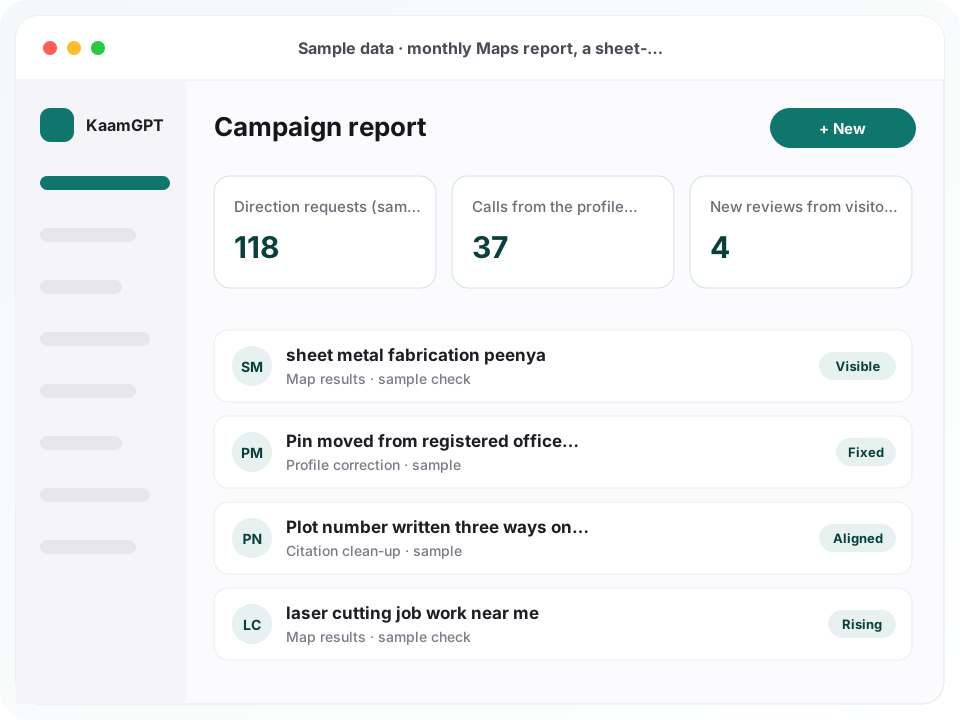
Monthly, listing profile calls, route requests, website clicks, fresh reviews and our replies, photo views and any edits suggested by other people that we accepted or rejected. For plants, direction requests and calls are the most useful signals, because they reflect real visits being planned.
Does the plant location page on our website really matter?
Yes. It hands Google another matching record of your address, and it gives visitors details a profile cannot hold well: which gate to use for what, truck access notes, appointment contacts and what to bring for a supplier audit. A short, factual page per plant is enough.
Can a manufacturer list a warehouse on Google Maps?
Only if it receives customers or visitors at a signed, staffed address during stated hours. A storage site that only your own trucks use is not what a Business Profile is for. If transporters collect goods there by appointment, raise it during the audit and we will assess it.
How long before Maps problems are fixed?
Most profile corrections, pin moves and photo uploads take effect within days of approval by Google. Directory clean-up takes longer, because each platform updates at its own pace. Within about two weeks the main fixes are usually in place, and the monthly routine continues after that.
Is it worth running ads on Google Maps for a factory?
For trade counters and job-work units that serve nearby customers, location-based search ads can help. For a manufacturer that mainly serves OEMs by appointment, the money is usually better spent on search campaigns for its processes. That trade-off is covered on our <a href="/best-google-ads-agency-for-manufacturers-in-bengaluru">Google Ads page for factories</a>.
Will your team come to our Bengaluru plant?
No. Everything is done remotely, and a set of phone photos of the gate, signboard and reception, plus a short video call, is enough. If Google asks for video verification, someone at the plant records it following Google's instructions, with us on the call to guide them.