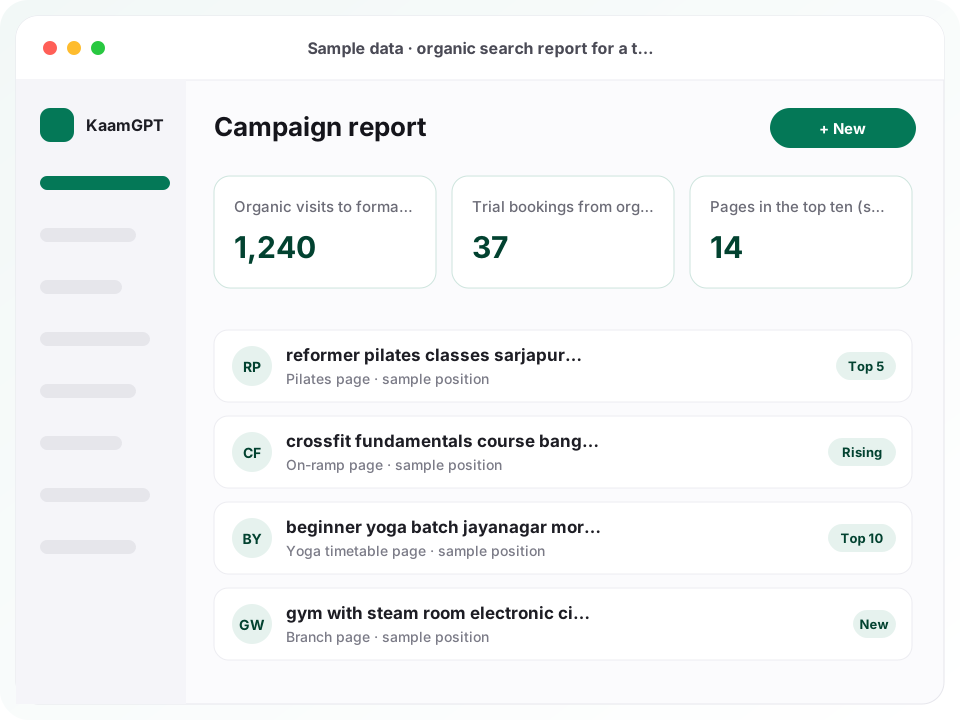
Hiring an SEO company for gyms in Bangalore makes sense only if it understands how people choose where to train. Very few walk into the first gym that appears; they spend a week or two reading about fees, batch timings, coaches, parking and whether a beginner will feel out of place. KaamGPT builds the website pages that answer those questions for strength gyms, boxes, yoga schools and pilates rooms across Bengaluru, so that your site is the one doing the explaining when the decision is made.
That means one page for every format you teach and every branch you run, a fees page that tells the truth, real coach profiles and guides for beginners that stay away from promises about kilos. SEO work starts from ₹14,999 a month through our SEO service. For the map pack that drives walk-ins, see our local SEO page for gyms; for paid search alongside it, the Google Ads page for gyms.
- ₹14,999a month is the starting fee for SEO; scope is fixed in a written quote
- ~30 daysfor the audit, keyword map and first fixes before new pages go live
- Oct–Novis when pages meant to rank for the January rush should be published
- 0 promisesof weight loss in any page we write; programmes are described, not outcomes
Which fitness formats does our SEO work cover?
- Multi-format gym floorsMany formats under one roof need a clean site structure, so each one can rank for its own searches in each branch's area.
- Small-group strength studiosClass pages that describe the session in detail, and a timetable as text, help them compete with larger names.
- CrossFit boxesOn-ramp and fundamentals pages answer the first question most newcomers search: can I start without experience?
- Yoga schoolsYoga studio seo rests on style pages, teacher credentials and morning batch timings written for each neighbourhood.
- Pilates roomsSeparate mat and reformer pages, with session prices or ranges, match the specific way people search for pilates.
- Coach-led PT spacesCoach-led pages with qualifications and consultation booking suit searches that name a goal or a trainer.
- Martial arts and boxing gymsPages by discipline and age group, with grading or competition details, match how parents and adults search.
Why do gym websites in Bengaluru struggle to rank?
Most fitness websites we audit were built as brochures. They look good and say very little that a searcher can use: no fees, no timetable that a phone can read, one page for every format, and a blog that has not been touched in a year. Search engines have nothing specific to match against a specific query.
- A single services page listing strength, yoga, pilates and boxing together, so none of them can rank for its own searches in its own area.
- Fees hidden behind 'call us', which pushes researchers to a competitor whose page answers the first question they have.
- Timetables uploaded as an image or a PDF, which search engines and phone screens both read badly.
- Blog posts copied from fitness magazines or written to promise fat loss, which add risk under the ASCI Code and add nothing a searcher cannot find elsewhere.
- Several branches sharing one contact page, so the site never tells Google which address serves which neighbourhood.
What does SEO for a gym or studio actually involve?
The work is mostly building and fixing pages that answer real questions, plus the technical care that lets those pages be found. Each item below is scoped in writing for your site, formats and branches.
A keyword map by format, area and intent
We list the searches your members actually make, grouped by format, locality and stage: early research, comparison and ready to book. Each group is assigned to one page, so pages stop competing with each other. The map becomes the plan for every page we write or fix on our SEO retainer.
SEO in detail →Format pages that explain the class
One page each for strength, group classes, CrossFit, yoga styles, pilates or boxing, saying what a session involves, who it suits, the level of experience needed, the coach and the batch timings. A first-timer should finish the page knowing exactly what will happen in their first session.
SEO in detail →Gym location pages for each branch
Each branch gets its own page with the full address, landmark directions, parking, opening hours, formats offered there and photos of that floor. The page matches the branch's Google profile word for word, which helps search engines connect the two.
Local SEO in detail →Class schedule pages that phones can read
Timetables become real web pages, not images, with each batch, its time, coach and level written as text. Changes take minutes, and people searching for a 6 am batch can find one. Where a rebuild is needed, website work starts from ₹9,999 per project.
Websites in detail →Fees and plans, explained honestly
A page that sets out plan lengths, fee ranges, joining or admission fees and what each plan includes. Researchers who know the price before they visit arrive more ready to decide, and search engines get a clear answer to one of the most common questions people ask.
SEO in detail →Beginner guides with a named author
Plain answers to the questions new members ask: what to wear, how to start after a long break, what a fundamentals course covers. Each guide carries the name and qualifications of the coach who wrote or reviewed it, and avoids medical advice and results promises.
SEO in detail →Profile and website kept in step
Hours, categories, services and branch names on each Google Business Profile are checked against the website every month. Mismatches confuse searchers and search engines alike, and they creep in every time a timetable changes.
Google Business Profile in detail →What happens in the first three months of gym SEO?
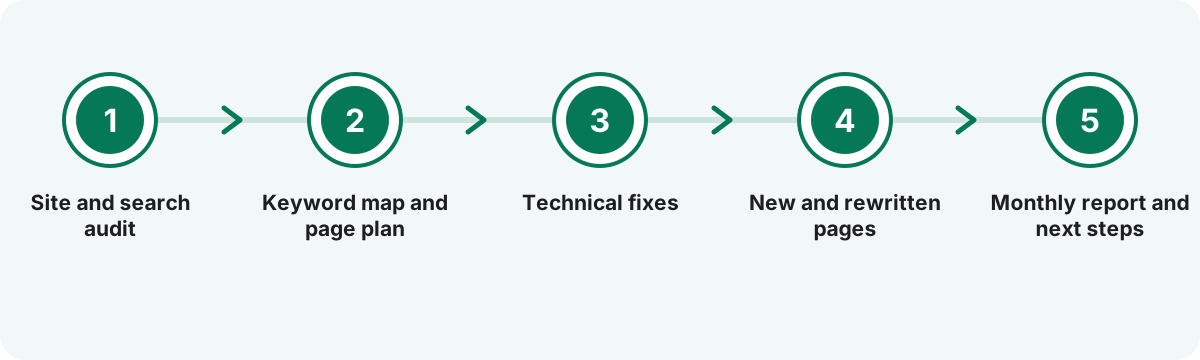
Site and search audit
We crawl the site, test it on a phone, list what already ranks and for which searches, and compare it with the pages that win the searches you want in each branch's area.
Keyword map and page plan
Searches are grouped by format, area and intent and assigned to pages. You see the full plan before anything is written, including which existing pages will be merged or retired.
Technical fixes
Speed, mobile layout, timetables as text, internal links, titles and structured data for each branch. These changes make every later page work harder, so they come first.
New and rewritten pages
Format, branch, fees, coach and beginner pages are drafted, checked by a coach where they touch on training advice, approved by you and published in the order the season calls for.
Monthly report and next steps
Rankings for the mapped searches, organic visits to each page and trial bookings from organic traffic, followed by the pages planned for the coming month.
What does SEO cost a gym, and what else might it need?
SEO for a gym or studio starts from ₹14,999 a month, and the written scope names the pages to be built, the fixes to be made and how progress will be reported. A one-room studio and a multi-branch gym with five formats sit at very different points in that range, so the quote is drawn up after an audit of your site rather than from a template.
SEO
Recommended₹14,999/month
Typically 30 days
From ₹14,999 a month, for gyms and studios that want their own website to win format, fee and locality searches.
- Technical audit
- Keyword research
- On-page optimisation
- Content plan
- Monthly reporting
Digital Marketing
₹19,999/month
Typically 15 days
From ₹19,999 a month, when SEO should run alongside Maps, ads and follow-up as one plan rather than on its own.
- Channel strategy
- Creative production
- Campaign management
- Weekly reporting
Local SEO
₹4,999/month
Typically 14 days
From ₹4,999 a month per location, if the urgent problem is a branch's map listing rather than the website.
- Google Business Profile optimisation
- Local keyword map
- Location page on-page fixes
- Citation building and NAP cleanup
- Local link outreach
- Review replies and posts
- Monthly report
Google Ads
₹4,999/month
Typically 30 days
From ₹4,999 a month in management, to cover high-intent searches while new pages are still climbing.
- Account setup
- Keyword strategy
- Ad copy testing
- Conversion tracking
- Bid optimisation
Meta Ads
₹4,999/month
Typically 30 days
From ₹4,999 a month in management, for studios that want video reach to complement slower organic growth.
- Creative testing
- Audience building
- Retargeting funnels
- Pixel setup
- Weekly reporting
Lead Generation
₹24,999/month
Typically 14 days
From ₹24,999 a month, when organic enquiries arrive but too few of them become booked and attended trials.
- Verified leads
- Multi-channel outreach
- CRM integration
- Lead scoring
- Replacement guarantee
- Content and technical fixes are both part of the SEO scope; there is no separate charge per blog post unless you ask for photography or video.
- SEO gains build over months, so we suggest reviewing results by quarter rather than by week.
- The full catalogue is on our pricing page, and our guide to SEO services in Bengaluru explains the method in general terms.
| Package | Starts at | Timeline | Best for |
|---|---|---|---|
| SEO | ₹14,999/month | Typically 30 days | From ₹14,999 a month, for gyms and studios that want their own website to win format, fee and locality searches. |
| Digital Marketing | ₹19,999/month | Typically 15 days | From ₹19,999 a month, when SEO should run alongside Maps, ads and follow-up as one plan rather than on its own. |
| Local SEO | ₹4,999/month | Typically 14 days | From ₹4,999 a month per location, if the urgent problem is a branch's map listing rather than the website. |
| Google Ads | ₹4,999/month | Typically 30 days | From ₹4,999 a month in management, to cover high-intent searches while new pages are still climbing. |
| Meta Ads | ₹4,999/month | Typically 30 days | From ₹4,999 a month in management, for studios that want video reach to complement slower organic growth. |
| Lead Generation | ₹24,999/month | Typically 14 days | From ₹24,999 a month, when organic enquiries arrive but too few of them become booked and attended trials. |
What changes the cost of SEO for a fitness business?
The size of the job depends far more on the state of the website and the number of formats and branches than on the gym's turnover. A studio with one branch, two formats and a site that already loads quickly needs a handful of strong pages and steady upkeep. A chain with six branches and five formats on a slow, image-heavy site needs restructuring first, which takes more hours in the early months.
It is worth comparing the cost with what a member brings in. As a sample only: if one extra member a month from organic search pays ₹2,000 a month for a year, the fees from those members quickly exceed the SEO fee, and organic visitors keep arriving after the work slows, unlike paid clicks that stop the day the budget does.
- Number of formats taught, since each one needs its own page and its own searches mapped.
- Number of branches, since each needs a location page that matches its map listing.
- The condition of the current site: speed on a phone, timetables as images, broken links and duplicate pages.
- How much of the writing a coach can review, which keeps beginner guides accurate and credible.
- How many other gyms and studios already rank for the same searches around each branch, which we measure during the audit.
- Whether photography of real sessions exists or has to be arranged.
Why do gyms choose KaamGPT for SEO?
Pages built around real searches
Every page is tied to a group of searches your members make, so nothing is written just to fill a content calendar.
Careful with health claims
We write to the ASCI Code and Google's guidance on health content, so pages inform without promising outcomes the gym cannot stand behind.
Search, Maps and ads under one roof
If you later add local SEO, Google Ads or Meta Ads, the same team already knows your formats, fees and branches.
Reporting tied to trials
Rankings matter only if they bring bookings, so reports show trials booked from organic visits beside the positions.
Plain-language collaboration
Our Bengaluru team works over calls, WhatsApp and online meetings, and explains every change in words a gym owner can check.
How do people in Bengaluru research a gym before they book a trial?
The research usually starts at a desk or on a phone during a commute, not at the gym's door. A software engineer in an Electronic City campus, a family on Bannerghatta Road or a new tenant off Sarjapur Road types something specific: a format, an area, a timing, sometimes a facility such as a steam room or a women-only batch. They open three or four results, compare fee ranges and timetables, check who the coaches are, read reviews and look at photos. Only then do they message one or two places to ask about a trial.
Searches in this city are written the way people give directions. Jayanagar residents add a block number, Electronic City searchers add Phase 1 or Phase 2, and people on the big corridors often add a landmark or a tech park. Many search in English with Kannada place names, and spellings vary: Banashankari, BSK, Banashankari 3rd Stage. A gym website seo plan has to cover those variants on the right pages, rather than repeating one phrase across the whole site.
Bengaluru's weather also changes what people look for. Before the March to May summer, searches lean towards programmes with an end date; during the June to September monsoon, regular outdoor walkers and runners start looking for indoor options and morning batches. Content written for those moments needs to be live weeks before they arrive.
How should a gym time its content to the fitness year?
Organic search is slow to start and slow to fade, which suits fitness businesses well if the timing is right. A page published on 2 January is competing for the January rush with pages that have been live, linked and read for months. So our fitness content strategy works backwards from the moments people search hardest: pages for the new year go live in October and November, programmes aimed at the summer run-up go live in January, and indoor and monsoon pages go up in April and May.
In between, the work is maintenance and depth. Timetables change, coaches join and leave, fees are revised, and every change needs to reach the website and each branch profile. Pages that already rank are improved with better photos, clearer answers and internal links, which is usually cheaper than writing something new. The aim is a site that grows a little more useful every month, rather than a burst of posts in December and silence after.
October and November: build for January
New format and branch pages, an updated fees page and a beginners' hub, all live and internally linked before the new year. By the time people start searching in earnest, the pages have had weeks to be crawled and tested.
January: answer the first-timer
Guides for people starting after a long break, what a first week looks like, and how to choose between group classes and open gym. These pages catch researchers who are not yet ready to message anyone.
February to May: programmes with an end date
Pages for programmes lasting a set number of weeks, partner plans and PT bundles, each describing the sessions and coaching rather than promising a body shape for a wedding or a holiday.
April and May: prepare the monsoon pages
Indoor alternatives for runners and cyclists, morning batch pages and roofed outdoor-style sessions, published before the June rains so they are ready when outdoor routines break.
All year: coach pages and reviews on the site
Each coach has a page with real qualifications and the classes they lead. Member reviews are quoted with consent and with the reviewer's own words, never rewritten into marketing copy.
What can a gym's website say about weight loss and health?
A gym's website is advertising in the eyes of the Advertising Standards Council of India, so the ASCI Code applies to its pages as much as to its banners. Clause 1.1 requires claims about facts to be truthful and capable of substantiation. Clause 3.1(b) rules out any advertisement that derides people on the basis of body shape, among other attributes. Copy that mocks 'flabby arms' or treats a larger body as a problem to be fixed fails that test, however common it is in the industry.
ASCI's guidelines on disclaimers close a familiar loophole. A disclaimer must not try to correct a misleading claim, and the Code's own example is a promise to 'lose up to 2 kgs' qualified in small print by a calorie limit. If the headline cannot stand without the asterisk, the headline has to change. Clause 1.2 adds that where a claim rests on independent research, the source and date should be given, so a blog post quoting a study needs to name it.
Google's guidance on people-first content points the same way from the search side. It asks whether it is obvious who wrote a page, and it says content on health topics must be highly accurate and consistent with established expert consensus. For a gym, that means guides written or reviewed by a named, qualified coach, no medical advice dressed up as training tips, and a clear suggestion to see a doctor where a question is really a medical one.
- Describe programmes by their content: sessions per week, coaching, progressions, assessments.
- Name the coach who wrote or checked every training guide, with real qualifications.
- Quote member stories with consent and in their own words, without implying typical results.
- Cite the source and date of any study you mention, and do not stretch what it found.
Should a gym publish its membership fees online?
Owners often fear that showing fees will scare people off or invite a price war. In practice, fee and price searches are among the most common things people type before choosing a gym, and a site that hides the answer sends the researcher to one that does not. A fees page can show ranges rather than exact figures, explain what each plan includes and set out any joining or admission fee plainly, which is also what the ASCI Code expects of an honest offer.
A good fees page earns its ranking by being the most useful answer on the subject. It explains the difference between plan lengths, what is included in each, how freezes or pauses work, and what personal training costs on top. It links to the format and branch pages, and those pages link back to it. Researchers who read it and still book a trial already know the price, so the conversation at the desk is shorter and less awkward for everyone.
How should a multi-branch gym structure its website?
The structure that works for most chains is simple: one page per branch, one page per format, and a small number of pages that combine the two only where the search demand clearly exists, such as yoga in a particular neighbourhood. Each branch page is genuinely different, with its own address, landmarks, photos, timetable and coaches. Pages that only swap the area name are thin, help nobody, and can drag the rest of the site down.
Class schedule pages deserve special care because they change so often. When the timetable lives in one place on the site and feeds every branch and format page, an update at 9 pm on a Sunday reaches every page at once. When it lives as images on ten different pages, it drifts out of date within weeks, and members turn up for batches that no longer exist. Gym location pages and timetables that stay accurate are worth more than any number of blog posts.
- One page per branch with unique photos, directions, hours and coaches.
- One page per format, linking to the branches that offer it.
- Area-and-format pages only where searches show real demand.
- One timetable source that feeds every page that shows batch times.
Which searches should a gym stop chasing?
Not every search with the word gym in it is worth a page. A single studio in Banashankari gains little from ranking for a citywide phrase that mostly attracts people who live an hour away by road. Searches that show a map are usually decided by the branch's Google profile rather than the website, so writing a page to chase them wastes effort better spent on the profile itself.
Pure exercise how-to searches are another trap. A page explaining how to do a deadlift competes with large fitness publishers and video channels, and the people reading it rarely want a membership. Such guides earn their place only when a named coach adds something specific, such as how the gym teaches the lift to beginners in its fundamentals course. The keyword map marks these searches as low priority, so the hours go where trials come from: format, fee, timing and area searches close to each branch.
- Citywide vanity phrases far from where members live.
- Map-led searches that the branch profile should win instead.
- Generic exercise tutorials with no link to joining.
- Supplement and diet topics that need a doctor or dietitian, not a gym blog.
What should the best SEO company for gyms in Bengaluru deliver in year one?
By the end of the first year, a gym should be able to point to specific pages that bring in trial bookings, not just a chart of rising traffic. The site should load quickly on a phone, every branch and format should have a page that answers the questions people really ask, the fees page should be live, and each beginner guide should carry a coach's name. Seasonal pages should have gone live ahead of January, the summer run-up and the monsoon.
Be wary of anyone promising first position for a set of searches by a set date. Rankings depend on what competitors do and on how search engines change, and nobody controls either. What a good agency can commit to is the work itself: the pages, the fixes, the reporting and a clear explanation of what changed each month and why.
- SEO for gyms and studios
- From ₹14,999 a month, in a written scope
- Time to first fixes
- About 30 days for audit, keyword map and technical fixes
- Pages built
- Format, branch, fees, coach, timetable and beginner-guide pages
- Best publishing window
- October and November, ahead of the January joining peak
- Health claims
- Written to the ASCI Code and Google's people-first content guidance
- Formats
- Open gyms, boxes, yoga, pilates and PT spaces that win members online
Where this applies around Bengaluru, Karnataka
- Bengaluru
- Karnataka
- India
- Electronic City
- Bannerghatta Road
- Jayanagar
- Sarjapur Road
- Banashankari
Frequently asked questions
28 answersHow much does an SEO company for gyms in Bangalore cost?
KaamGPT's SEO work for gyms and studios starts from ₹14,999 a month. The written scope lists the pages to be built, the technical fixes and the reporting. A one-branch yoga studio needs far less work than a chain with several formats and locations in Bengaluru, so the final quote follows an audit of your website.
What makes the best SEO company for gyms in Bengaluru different from a general SEO agency?
It knows how people choose where to train: by format, area, batch timing, fees and coach, and usually after comparing several sites. It builds pages for those decisions, keeps timetables and branch details accurate, and writes about training without breaking the ASCI Code or Google's guidance on health content. General agencies often miss those details.
How long does SEO take to bring trial bookings to a gym?
Technical fixes and improvements to existing pages can show movement within a couple of months, while new format and branch pages usually need longer to rank well. That is why we publish pages for the January rush in October and November. Expect to judge the work by quarter, using trial bookings from organic visits as the main measure.
Which pages should a gym website have to rank on Google?
A page for each format you teach, a page for each branch, an honest fees page, a timetable written as text, coach profiles, and a small set of beginner guides. Each one answers a group of real searches. Many gym sites have only a home page, a gallery and a contact form, which gives search engines very little to match.
Should each gym branch in Bengaluru have its own page?
Yes. Each branch page should carry its own address, landmarks, parking details, opening hours, photos of that floor, coaches and timetable. People searching in Bengaluru often add an area or a landmark, and a separate page per branch lets the site match those searches while staying consistent with that branch's Google profile.
Can a gym's website say that members will lose weight?
Not as a promise. The ASCI Code requires claims to be truthful and substantiated, and its disclaimer guidelines say small print cannot rescue a misleading headline, using a 'lose up to 2 kgs' claim as the example. Describe what the programme involves and who coaches it, and leave outcomes to individual members and their doctors.
Does a yoga studio in Bengaluru need SEO, or is word of mouth enough?
Word of mouth brings the first members, but newcomers to an area and people looking for a specific style or timing search online first. Yoga studio pages that name the styles, the teachers' training and the morning and evening batches help those people find you. A small studio may need only a few strong pages, which keeps the scope modest.
Should our gym publish membership fees on its website?
We recommend it, even as ranges. Fees are one of the first things researchers want to know, and a page that explains plan lengths, what each includes and any joining fee tends to attract better-informed enquiries. Hiding the price usually sends people to a competitor's site that answers the question instead.
When should a gym publish new pages before the January peak?
In October and November. Pages need time to be crawled, linked and tested before the busiest searching weeks. Programmes aimed at the summer run-up should go live in January, and indoor or monsoon pages in April and May, ahead of the June rains in Bengaluru.
Can you write blog posts for our gym about training and nutrition?
Yes, with limits. Training guides are written or reviewed by one of your qualified coaches and carry their name. We avoid medical and diet advice that should come from a doctor or registered dietitian, and we do not copy magazine articles. Fewer, better guides that answer your members' real questions do more than a weekly stream of generic posts.
How do you handle a gym timetable that changes every month?
We turn the timetable into a text-based page fed from one source, so updating it once changes every page that shows batch times. Images and PDFs are replaced. This keeps schedule searches such as early-morning or weekend batches accurate, and stops members arriving for a class that was moved.
Do gym coach profile pages help with SEO?
They help in two ways. People search for coaches by name or speciality, and Google's guidance on helpful content asks whether it is clear who created a page. A coach profile with real qualifications, the classes they lead and a photo makes training content more credible and gives searchers a reason to choose your gym.
Will SEO work for a CrossFit box with one location?
Yes, if the pages answer what newcomers search: whether they can start without experience, what the on-ramp course covers, the class times and the fee. A single-location box needs only a few strong pages, a fees page and steady upkeep, which keeps the monthly scope small. Any use of the CrossFit name should follow your affiliate terms.
How do you measure SEO results for a fitness studio?
By trial bookings and enquiries that arrive from organic search, by the rankings of the searches in the keyword map, and by visits to each format and branch page. Reports lead with bookings because rankings that bring no trials do not help the studio. We review the plan by quarter.
What is the difference between SEO and local SEO for a gym?
SEO works on the gym's own website so its pages rank for format, fee and area searches. Local SEO works on each branch's Google Business Profile and listings so the branch appears on Google Maps and in the map pack. Most gyms need both; our <a href="/services/local-seo">Local SEO service</a> covers the map side from ₹4,999 a month per location.
Can SEO and Google Ads run together for a gym?
Yes, and they suit each other. Ads cover high-intent searches straight away while new pages are still climbing, and the search terms that bring joins through ads show which pages are worth building. Over time, strong organic pages can reduce how much a gym needs to bid. Management for <a href="/services/google-ads">Google Ads</a> starts from ₹4,999 a month.
Do gym websites need separate pages for women-only batches?
If the gym runs women-only batches or floors, a page describing them clearly helps. It should state the timings, who coaches the batch, privacy arrangements and fees. Many women search specifically for this before choosing a gym, and a page that answers them directly is better than a line buried on the home page.
How does Bengaluru's monsoon affect gym searches?
Monsoon showers in Bengaluru, June to September, mostly arrive late in the day, which interrupts outdoor running, cycling and park workouts. Some of those people start searching for indoor options and morning batches. Pages that explain indoor alternatives and early batches, published by April or May, are ready for that shift.
Are search terms for gyms in Bengaluru written in Kannada?
Most fitness searches we see in Bengaluru are typed in English with local place names, sometimes in several spellings or abbreviations, such as BSK for Banashankari. Some people search in Kannada as well. We map the variants that matter for each branch and, where your members use Kannada, can add Kannada content to key pages.
What technical problems usually hold back a gym website?
Slow loading on phones, large uncompressed photo galleries, timetables uploaded as images, one contact page for several branches, missing page titles, and duplicate pages created by old offers. Fixing these is often the first month's work, because every new page performs better on a site that loads quickly and makes sense to search engines.
Can you fix our gym's website without rebuilding it?
Usually, yes. Most sites can be sped up, restructured and given new pages on the existing platform. A rebuild is only suggested when the platform cannot support text timetables, branch pages or acceptable speed on a phone. In that case, website work is quoted separately from ₹9,999 per project.
Is SEO worth it for a small personal-training studio?
It can be, because people often search for a trainer by goal, area or speciality. A focused site with strong coach pages, clear consultation booking and an honest fees page may need only a few pages and light upkeep. If most clients come from referrals, a smaller local SEO scope might be the better start.
How do member reviews on our website affect SEO?
Genuine reviews quoted with consent add specific, believable detail that helps both searchers and search engines. Keep the member's own words, do not edit them into marketing copy, and avoid implying that one member's results are typical. Reviews on each branch's Google profile matter separately for the map pack.
Do you promise our gym will reach first position on Google?
No. Rankings depend on competitors and on changes at Google, neither of which any agency controls. We commit in writing to the work: the keyword map, the pages, the fixes and honest monthly reporting. Ask any provider who promises a fixed position how they would deliver it, and what happens if they cannot.
What will you need from our gym to start SEO work?
Access to the website and Search Console, the list of branches and formats, the current timetable and fees, coach names and qualifications, and any photos of real sessions. A coach who can review training guides for accuracy each month makes a real difference to the quality of the content.
Can you help a pilates studio rank for reformer classes?
Yes. Reformer and mat pilates are searched separately, so they need separate pages with session formats, class sizes, prices or ranges and the instructors' training. A reformer studio in Bengaluru with limited machines benefits most from pages that help people book specific class times rather than general traffic.
How can I talk to KaamGPT about SEO for my gym?
Call +91 79767 82366 or send your website link on WhatsApp. Our Bengaluru team will look at the site, the searches it misses and the pages it needs, then send a written scope. Conversations happen by call, WhatsApp and online meetings.
Does an SEO company for gyms in Bangalore also handle Google Business Profiles?
We check each branch profile against the website every month as part of SEO, because mismatched hours or names confuse searchers. Full profile management, reviews and listings are a separate local SEO scope. The <a href="/services">services overview</a> shows how the two fit together.