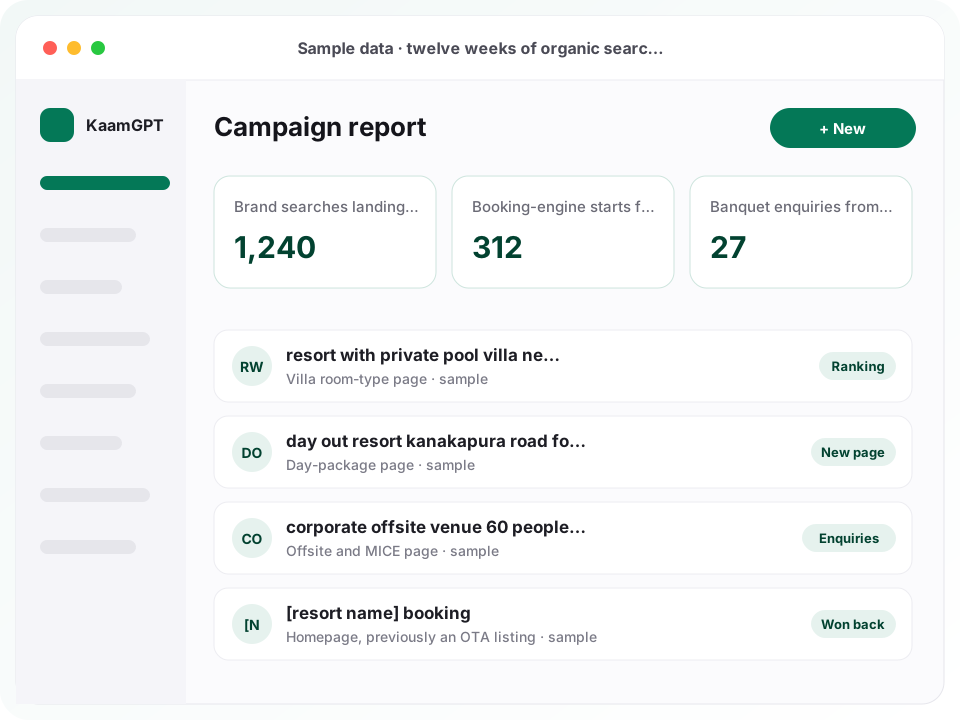
Choosing the best SEO company for hotels and resorts in Bengaluru starts with one uncomfortable search: type your own property's name into Google and count how many links above or beside yours belong to booking sites. For many resorts on Kanakapura Road or near Nandi Hills, the honest answer is several, and the guest who already wanted you pays a commission route to reach you. Organic search is how a property takes that path back, and it is slow, technical work on the website rather than a quick trick.
This page explains what that work involves for a hotel, a resort or a homestay: which pages the site needs, how room and event pages should be built, what structured data Google reads, why the booking engine's domain and speed matter, and how free booking links and AI answers change the job a page must do. It also covers the rules a hotel must respect when it writes about itself, and what our SEO service costs. Google Business Profile work is a separate job, covered on the Local SEO page for hotels and resorts.
- ₹14,999monthly starting fee for hotel SEO, quoted in writing after a site review
- ~30 daysto audit the site, fix crawl and schema problems and ship the first new pages
- 4 page familiesrooms, getaways and experiences, events and banquets, airport and transit stays
- No feesGoogle charges nothing for free booking links; clicks show in Hotel Center reports
Which kinds of properties do we do SEO for?
- Weekend resortsPool, food and a short drive: properties on Kanakapura Road, Sarjapur Road and the northern highway that live on Friday-to-Sunday stays.
- Airport and transit hotelsRooms near Devanahalli, Bagalur and Yelahanka that sell late arrivals, early departures, layovers and crew stays.
- Business hotelsCity properties near MG Road, Whitefield, Manyata Tech Park and the Outer Ring Road serving corporate travellers and project teams.
- Banquet and wedding propertiesVenues where halls, lawns and room blocks are sold together for weddings, receptions and family functions.
- Offsite and MICE resortsProperties with meeting rooms and team-building space that compete for HR and admin teams' annual offsites.
- Homestays and farm staysSmall owner-run stays near the city or in Coorg and Chikmagalur where content and direct booking matter more than scale.
- Serviced apartmentsLonger stays for relocating professionals and project consultants, searched by locality and length of stay.
- Day-out and day-use resortsDay packages with lunch, pool and activities, booked by families, schools and office teams.
Why do hotel websites lose their own guests to booking sites?
When a hotel owner asks why the OTA listing outranks the hotel's own site for the hotel's own name, the cause is rarely one thing. Usually the site was built as a brochure: a slider, a single rooms page, a gallery and a booking button that opens another company's domain. Search engines find little to rank, and the visitor finds little reason to stay.
- One page for every room. Deluxe rooms, pool villas and family cottages share a single page, so nothing on the site matches a search for a specific room type, view or bed configuration.
- The booking engine lives elsewhere. The reservation step sits on a vendor's domain or inside an iframe, so the moment of booking is invisible to analytics and the site cannot show which pages produced stays.
- Slow, image-heavy pages. Uncompressed drone videos and full-resolution photos make the homepage crawl on a phone over mobile data, which is exactly how many weekend planners browse.
- No structured data, or the wrong kind. The site either carries no schema or a generic Organization block, so search engines must guess the address, room types, amenities and check-in times.
- Content written for nobody. Pages say "luxury" and "serene" but never answer the practical questions travellers ask: distance and drive time from the city, pet policy, pool timings, day-use rules or how to reach the property from the airport.
What does a hotel SEO engagement actually include?
Our SEO work for hospitality centres on the property's own domain. Paid campaigns, social media and the Business Profile each have their own sibling page; here the focus is everything a search engine reads on your website.
Site architecture for a property
We map the site into page families: each room type, each getaway or experience, each event space, and transit stays for airport guests. Every page gets one clear search purpose, a crawlable URL and internal links from the pages a guest would naturally come from.
SEO in detail →Room-type and venue pages
Each room page carries its real size, bed configuration, occupancy, view, bathroom, photos with descriptive alt text and the questions guests ask before booking. Venue pages state seated and standing capacity, layouts, audio-visual kit and catering, so organisers can shortlist without a call.
Websites in detail →Hotel schema markup
We add Hotel, Resort or LodgingBusiness structured data with address, geo-coordinates, check-in and check-out times, amenities and the pet policy, plus FAQ, breadcrumb and event markup where the page supports it. Each block is tested and kept consistent with what the page visibly says.
SEO in detail →Booking engine speed and domain
We review how the reservation step is connected: a subdomain you control, cross-domain analytics, page weight, image formats and mobile load time. Where the vendor allows it, the booking flow is set up so that search credit and conversion data stay with your domain.
Websites in detail →Getaway and destination content
Guides written for people leaving Bengaluru for a night or two: drive routes, what to do nearby, monsoon and summer suitability, and itineraries built around the property. These pages target the long-tail planning searches where booking sites have little to say.
SEO in detail →Coordination with local listings
Your website and your map listing should agree on name, address, phone and amenities. The listing itself is handled under Local SEO; we make sure the site gives it a strong, consistent page to point to.
Local SEO in detail →Brand defence against OTAs
We strengthen the homepage, the reservations page and a direct-booking benefits page so that searches for your name plus booking, offers, contact or reviews land on your own domain, and we track how often they do.
SEO in detail →Answers that AI assistants can quote
Clear, factual paragraphs answering specific questions, such as check-in time, distance from the airport or whether outside caterers are allowed, are what AI search summaries tend to lift. We write and structure pages so those answers come from you and stay accurate.
AI in detail →What happens in the first months of hotel SEO?
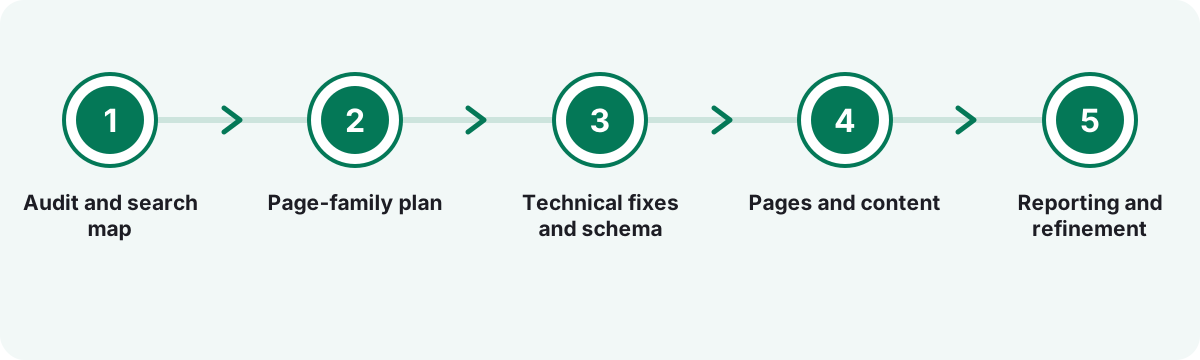
Audit and search map
We crawl the site, test speed on a mid-range phone, check the booking-engine connection and markup, and list the searches you already appear for, including your own name and where OTAs sit for it.
Page-family plan
We agree which rooms, getaways, venues and transit stays get their own pages, in what order, and what each page should lead to: a booking, an enquiry, a call or a WhatsApp message.
Technical fixes and schema
Titles, canonicals, redirects, image compression, sitemaps and Hotel or LodgingBusiness markup go in first, so new pages land on a site that search engines can read cleanly.
Pages and content
Room-type pages, event pages and getaway guides are written with your team's facts, reviewed by you for accuracy and published on a schedule that runs ahead of each season.
Reporting and refinement
Each month you see rankings by page family, organic booking starts, reservations and enquiries, along with what we changed and why. Pages that underperform are rewritten instead of left alone.
What does SEO for a hotel or resort cost with KaamGPT?
Our SEO retainer starts at ₹14,999 a month and covers the technical audit, structured data, new and rewritten pages, internal linking and monthly reporting. First fixes and pages usually ship within about 30 days. A rebuild of a dated site is quoted separately from ₹9,999 per project. Full rates are on our pricing page.
SEO
Recommended₹14,999/month
Typically 30 days
The core fit for any hotel or resort whose own website should rank for its name, its room types, its events and the getaway searches around it.
- Technical audit
- Keyword research
- On-page optimisation
- Content plan
- Monthly reporting
Digital Marketing
₹19,999/month
Typically 15 days
Suits a property that wants organic search, ads and social run as one plan, with SEO as one part of a managed engagement from ₹19,999 a month.
- Channel strategy
- Creative production
- Campaign management
- Weekly reporting
Local SEO
₹4,999/month
Typically 14 days
Fits each physical property that needs its map listing, photos and reviews managed, from ₹4,999 a month per location.
- Google Business Profile optimisation
- Local keyword map
- Location page on-page fixes
- Citation building and NAP cleanup
- Local link outreach
- Review replies and posts
- Monthly report
Google Ads
₹4,999/month
Typically 30 days
Useful alongside SEO for new properties or peak dates, since paid hotel campaigns can appear before organic pages have earned their place.
- Account setup
- Keyword strategy
- Ad copy testing
- Conversion tracking
- Bid optimisation
Meta Ads
₹4,999/month
Typically 30 days
Fits resorts selling visual experiences such as villas, pools and wedding lawns to Bengaluru audiences on Instagram and Facebook.
- Creative testing
- Audience building
- Retargeting funnels
- Pixel setup
- Weekly reporting
Lead Generation
₹24,999/month
Typically 14 days
Fits banquet, wedding and offsite sales, where each enquiry carries real value and needs qualifying and follow-up.
- Verified leads
- Multi-channel outreach
- CRM integration
- Lead scoring
- Replacement guarantee
- Every engagement starts with a written quote after we have looked at your site, booking engine and current search visibility.
- Booking-engine subscriptions, channel managers, photography and hosting are paid by the property to those vendors; our fee is for the SEO work.
| Package | Starts at | Timeline | Best for |
|---|---|---|---|
| SEO | ₹14,999/month | Typically 30 days | The core fit for any hotel or resort whose own website should rank for its name, its room types, its events and the getaway searches around it. |
| Digital Marketing | ₹19,999/month | Typically 15 days | Suits a property that wants organic search, ads and social run as one plan, with SEO as one part of a managed engagement from ₹19,999 a month. |
| Local SEO | ₹4,999/month | Typically 14 days | Fits each physical property that needs its map listing, photos and reviews managed, from ₹4,999 a month per location. |
| Google Ads | ₹4,999/month | Typically 30 days | Useful alongside SEO for new properties or peak dates, since paid hotel campaigns can appear before organic pages have earned their place. |
| Meta Ads | ₹4,999/month | Typically 30 days | Fits resorts selling visual experiences such as villas, pools and wedding lawns to Bengaluru audiences on Instagram and Facebook. |
| Lead Generation | ₹24,999/month | Typically 14 days | Fits banquet, wedding and offsite sales, where each enquiry carries real value and needs qualifying and follow-up. |
What decides the cost of SEO for a property?
The retainer reflects how much the site needs, not how many stars it has. A ten-room homestay with a clean site and one booking flow needs far less work than a resort with villas, three restaurants, two banquet halls and a dated template. We scope each factor below before quoting.
- Number of room types, villas, packages and venues that need their own pages.
- State of the current site: speed, template quality, duplicate pages and whether a rebuild is wiser than repair.
- How the booking engine is connected, and whether the vendor allows a subdomain and cross-domain tracking.
- Number of properties, since each needs its own page set and markup.
- Volume of getaway, destination and seasonal content you want published each month.
- Whether photography and floor plans exist or must be commissioned by the property.
Why would a property choose KaamGPT for SEO?
We have built a booking platform
For My Room My Hostel in Kota we built a booking website with listings organised by area and nearby institute, plus local SEO with pages per area. Hotel room and corridor pages follow the same logic of matching a page to how people search for a stay.
SEO and development under one roof
Most hotel SEO problems are template and booking-flow problems. Our team can change the site itself, rather than sending you a list for someone else to fix.
Prices published up front
Our retainer starts at a stated figure and every engagement is quoted in writing, so you know what the work costs before it starts.
Rules taken seriously
We write hotel content that respects star-classification, advertising and consumer-protection rules, and we tell you when a claim on your site needs evidence or should come down.
Reporting in bookings
Reports lead with reservations, booking-engine starts and event enquiries from organic search, not with traffic graphs that look good and pay for nothing.
A Bengaluru team you can reach
We work from Bengaluru by call, WhatsApp and online meetings, and we know the getaway corridors, tech parks and airport belt your guests travel through.
How do Bengaluru travellers search before they book a hotel or resort?
Three quite different people search for a stay around this city. The first lives here and wants out for a weekend: a couple, a family or a group of friends looking for a pool, good food and a drive under three hours. The second is a visitor with a reason to be in town, such as a meeting in Whitefield or on the Outer Ring Road, an exhibition at BIEC on Tumkur Road, or an early flight. The third is an organiser: an HR team planning an offsite, or a family pricing a wedding venue.
Each of them types something different. The getaway seeker writes resorts near bangalore for weekend with pool or pet friendly stay near nandi hills. The visitor writes hotel near manyata tech park or stay near bangalore airport for early flight. The organiser writes offsite resort near bangalore for 80 people or banquet hall with rooms on sarjapur road. These are illustrations of how queries are shaped, not figures on how often anyone types them. A hotel website needs a page that properly answers each kind.
Kempegowda International Airport sits near Devanahalli, roughly 35 km north of the city, and that distance shapes a whole category of stays around Devanahalli, Bagalur, Yelahanka and Hebbal. Nandi Hills, in Chikkaballapur district, pulls sunrise and weekend traffic north as well. To the south, Kanakapura Road holds many day-out and overnight resorts, while Sarjapur Road has farm stays and event lawns. Each corridor attracts searchers with a different reason to travel, so their content needs differ too.
How does the best SEO company for hotels and resorts in Bengaluru plan a property's site?
We begin from the stays and events you most want to sell, then work backwards to the searches that lead to them. A resort that earns most on weekend villa stays needs a different site from an airport hotel that fills on weeknights with transit passengers, or a heritage property that lives on weddings. The plan names the page families, the searches each one serves and the order in which we build them.
For most properties the first quarter goes on fixing what already exists: crawl errors, duplicate room pages, missing titles, slow templates, broken schema and the booking-engine connection. New content follows only once the foundations stop leaking. That order feels slow, but a new getaway guide on a site that loads in eight seconds rarely earns anything.
One page per sellable thing
Every room type, villa, package, event space and day-use offer you actually sell deserves its own URL with unique copy and photos. If two rooms differ only in floor, they share a page; if they differ in view, size or occupancy, they do not.
Corridor pages, written honestly
A resort near Devanahalli can rightly publish a page for airport stays and another for Nandi Hills sunrise trips, because both are true. We never create pages for places the property is not near, since a guest who arrives expecting a ten-minute drive leaves a review that costs more than the page earned.
Event and banquet pages with real numbers
Organisers shortlist on capacity, rooms for out-of-town guests, parking, power backup and whether decorators or caterers can be brought in. Pages that publish those details, with floor plans where available, attract enquiries from people who are already a good fit.
Direct-booking page that search can find
A plain page explaining what booking direct includes, such as flexible check-in on request, a welcome drink of fresh juice or a better cancellation window, gives brand searches a destination. Every benefit must be real and honoured at the front desk.
Seasonal content published ahead of the season
Pages for the April–May school holidays, monsoon weekends, Diwali and Dasara breaks, Christmas and New Year, and Q4 corporate offsites go live well before people start planning, then get refreshed each year rather than replaced.
Measure stays, not visits
We connect organic sessions to booking-engine starts, completed reservations, enquiry forms, calls and WhatsApp taps, and report them by page family. A getaway guide that brings traffic but no bookings gets reworked or retired.
How do free booking links and AI answers change hotel SEO?
Google now shows hotel prices from many sellers directly in Search and Maps. Among them are free booking links: unpaid listings that show a property's name, its website and a room rate under the "All options" view. Google charges nothing for appearing there or for the clicks. According to Google's help page, ranking among these links considers user preference, value, landing-page experience and how accurate the property's prices have been over time. Whether the property buys paid hotel campaigns does not affect where its free link appears.
Two details matter for a property's own site. First, the free link has to send the traveller to the hotel's website to book directly, not to a third party. Many hotels on a channel manager or reservation system may already be connected through that provider, so the first task is checking whether you are live and whether the link lands on a fast, working booking page. Second, clicks from free booking links are reported in Hotel Center, not in Google Ads, so they need their own line in your reporting.
AI summaries in search and chat assistants add another layer. When someone asks which resorts near Bangalore allow pets, the answer may be assembled from several pages before anyone clicks. A property whose site states its pet policy clearly, in plain text and in its markup, gives that answer something accurate to cite. A property that says nothing leaves the answer to whatever an OTA or blog wrote, which may be wrong or out of date.
- Check with your booking-engine or channel-manager vendor whether free booking links are already active.
- Make sure the rate shown matches the rate on your booking page, since price accuracy affects ranking.
- Track free-link clicks from Hotel Center reports alongside organic search sessions.
- Write plain factual answers to common questions on the pages where they belong.
Which structured data should a hotel website carry?
Schema.org has types built for this: Hotel, Resort, BedAndBreakfast and the broader LodgingBusiness, with properties for check-in and check-out times, amenities, pet policy, number of rooms, star rating and accepted payment. Individual rooms can be described with HotelRoom and their occupancy and bed details. Good hotel schema markup describes the property as it really is and matches the visible page word for word, because markup that claims more than the page shows is ignored at best.
Two fields need particular care. A starRating should only appear if the property holds that classification; the Ministry of Tourism's classification scheme for operational hotels is voluntary, valid for five years, and runs from one star to five-star deluxe, so many good properties simply have none. Review or aggregate rating markup should never be self-written for your own business. Address and geo-coordinates must match the map listing exactly, which is where this work meets the Local SEO side.
- Hotel, Resort or LodgingBusiness on the homepage, with address, geo, check-in, check-out and amenities.
- HotelRoom or Accommodation on each room-type page, with occupancy and bed type.
- Event markup for public events such as New Year dinners, with real dates and ticket details.
- FAQ and BreadcrumbList where the page genuinely contains them.
Why do booking engine speed and domain matter for search?
The booking engine is where an organic visit becomes revenue, and it is often the weakest part of a hotel site. If it opens on a vendor's domain, analytics may record the visitor as leaving, and the report credits the booking to a referral instead of the page that earned it. If it loads slowly on a phone, people who arrived from a getaway guide abandon the date picker. Booking engine speed is therefore both a ranking concern and a revenue one.
Where the vendor supports it, we prefer a subdomain such as book.yourresort.com, cross-domain measurement so one visit stays one visit, and a booking page that shows rates without waiting on heavy scripts. We also check that each room-type page deep-links into the engine with that room pre-selected, so a guest reading about the pool villa does not have to find it again in a list.
Some engines cannot do these things. In that case we say so plainly and suggest the next best set-up, such as tagging every booking link so at least the source page is known, rather than pretending the data is complete.
- Booking flow on a subdomain you control, wherever the vendor allows it.
- Cross-domain analytics so organic visits are credited to the right page.
- Room-type deep links that open the engine with the room and dates pre-filled.
- Booking page tested on a mid-range Android phone over mobile data.
Can a hotel's own website outrank OTAs for its name and long-tail searches?
For its own name, usually yes, with patience. Booking sites rank for hotel names because their pages are fast, well structured and full of reviews and photos, while many hotel sites are none of those. A homepage that loads quickly, names the property and its location clearly, carries correct markup and links to rooms, offers and contact gives Google a strong reason to prefer the official source. Searches like your name plus contact, offers or booking are the first to return.
For broad searches such as resorts near bangalore, OTAs and listicles will keep many top spots, and fighting them head-on wastes budget. The opening for a hotel website is the long tail: resort near bangalore with private pool villa for couples, monsoon getaway within 100 km of bangalore or hotel near biec with meeting room. Aggregators rarely build pages that specific, and a property that genuinely fits can.
Weekend getaway content is where this pays off. A guide to a Sunday drive to Nandi Hills that ends at your property, or a page on kid-friendly monsoon weekends written by people who host those families, answers a real planning question. It must stay honest about distance, drive time and what is actually open.
- Brand searches: fix the homepage, contact and offers pages first.
- Long-tail searches: room features, group sizes, occasions and corridors.
- Getaway guides: one clear question per page, with practical detail.
- Review the search results for your name every month and note who appears.
What rules apply when a hotel writes about itself online?
Several, and most are simple to respect. Do not call the property five-star, four-star or similar unless it holds that classification under the Ministry of Tourism's voluntary scheme; describe the facilities instead. Liquor cannot be the subject of promotion: Google's ad policy does not allow alcohol ads in India, and the consumer protection authority's 2022 guidelines prohibit surrogate advertisements. Organic pages should therefore sell the stay, food, venues and events, without bar offers or drinks packages.
The same 2022 guidelines also address bait advertising and claims of "free", so a "free breakfast" line must say exactly what is included. The authority's July 2022 guidelines say a service charge must not be added to the food bill automatically or under another name, so menu and package pages should not imply otherwise. Under section 6 of the Digital Personal Data Protection Act, 2023, enquiry forms need clear, specific consent limited to the purpose stated. Homestays in Karnataka should check the state tourism department's revised registration guidelines of 2025 and follow-up circular before publishing claims about their status.
- SEO retainer
- From ₹14,999 a month; first fixes and pages in about 30 days
- Free booking links
- Google charges no fee; clicks are reported in Hotel Center, not Google Ads
- Free-link destination
- Must send travellers to the hotel's own site to book directly
- Star claims
- Only with Ministry of Tourism classification, valid five years
- Alcohol
- Google does not allow alcohol ads in India; surrogate ads are prohibited
- Website rebuild
- Quoted separately, from ₹9,999 per project
Where this applies around Bengaluru, Karnataka
- Bengaluru
- Karnataka
- India
- Kanakapura Road
- Devanahalli
- Whitefield
- Sarjapur Road
- Hebbal
Frequently asked questions
30 answersWhat does an SEO company for hotels and resorts in Bangalore actually change on our website?
It changes structure, pages and code. Typical work includes separate room type pages, getaway and event pages, Hotel or LodgingBusiness markup, faster templates, compressed images, cleaner titles and a better connection to the booking engine. It also adds content that answers the practical questions guests ask before booking, such as drive time from the city, pet rules and check-in times.
How is hotel website SEO different from SEO for other businesses?
For hotels and resorts, hotel website SEO competes with booking sites that rank for the property's own name, depends on a third-party booking engine, and must work alongside Google's hotel price listings. Content has to cover rooms, venues, packages and destinations, and the measure of success is reservations and event enquiries rather than leads or page views alone.
Why do OTAs rank above resorts for their own names?
Usually because its page is faster, better structured and richer in photos and reviews than the resort's own homepage. Fixing speed, adding clear markup, stating the name and location plainly, and linking rooms, offers and contact pages normally helps the official site recover those brand searches over a few months.
How long does SEO take to show results for hotels in Bengaluru?
Technical fixes and the first new pages usually go live within about 30 days. Brand searches often improve first, within a few months. Long-tail getaway, room and event searches build more slowly as Google tests the new pages. We would rather set that expectation honestly than promise a ranking date we cannot control.
What are free booking links for hotels, and do we pay for them?
They are unpaid hotel listings that Google shows in Search and Maps with your property name, website and room rate. Google charges no fee for appearing or for clicks. Your booking engine or channel manager may already connect you; we check whether you are live and whether the link lands on a working direct-booking page.
Where do hotels see clicks from free booking links?
In the Reports section of Google Hotel Center. They do not appear in Google Ads, because free links carry no campaign identifier or tracking template. We add them as a separate line in your monthly report next to organic sessions and booking-engine reservations, so the two channels are not confused.
Do paid ads improve how hotels rank in free booking links?
No. Google states that taking part in paid hotel campaigns or not does not affect how free booking links rank. Ranking considers user preference, value, the landing-page experience and how accurate your prices have been over time, so keeping rates in sync with your booking page matters more.
Which schema types suit a resort near Bangalore?
Resort or Hotel on the homepage, both of which sit under LodgingBusiness, with address, geo-coordinates, check-in and check-out times, amenities and pet policy. Room pages can use HotelRoom with occupancy and bed details. Events, breadcrumbs and FAQs get their own markup where the page genuinely has that content.
Can we mark up our property as five-star in schema?
Only if the property holds that classification under the Ministry of Tourism scheme, which is voluntary and valid for five years. Without it, leave the star field out and describe the facilities instead. The same applies to the words on the page and in titles, not just the markup.
Should booking engines for hotels sit on their own domain?
Where the vendor allows it, a subdomain such as book.yourhotel.com is better than a separate vendor domain. It keeps visits continuous in analytics and lets you see which page produced each booking. If the vendor cannot offer it, we tag every booking link so the source page is still recorded.
How fast should booking pages for hotels and resorts load?
Fast enough on a mid-range Android phone over mobile data that a guest sees rates without waiting. We test on such a phone rather than a desktop, compress images, remove scripts the page does not need and ask the engine vendor about anything we cannot change ourselves.
How many room type pages do hotels need?
One for each room you sell differently. If two categories differ in view, size, bed configuration or occupancy, each deserves its own page with its own photos and copy. If they differ only by floor or a minor detail, a single page with a clear note is better than two thin duplicates.
Do getaway blog posts really bring bookings for resorts?
Only when they answer a planning question the resort genuinely fits. A guide to a monsoon weekend within a short drive of Bengaluru that ends at your property can bring bookings. A generic list of ten places to visit in Karnataka rarely does, because the reader is not choosing a stay yet.
What weekend getaway content works for Bengaluru travellers?
Practical pieces: drive routes and timing from different parts of the city, what to do nearby, suitability for children or pets, monsoon and summer conditions, and a two-day plan built around the property. Each piece must be honest about distance and what is actually open in that season.
Can an airport hotel near Devanahalli rank for transit searches?
Yes, if its pages describe the transit stay properly: distance and drive time to the terminal, airport transfer arrangements, early check-in or late check-out options and food at odd hours. Searches such as hotel near Bangalore airport for an early flight reward pages that answer those specifics plainly and honestly.
How should a banquet or wedding venue page be written for search?
With the details organisers shortlist on: seated and standing capacity per hall, lawn size, room blocks for guests, parking, power backup, decorator and caterer rules, and photos of real set-ups. Organisers searching for a venue with rooms near Bengaluru want those facts before they call, and pages that give them attract better-fitting enquiries.
Can pages for hotels and resorts mention the bar or drinks packages?
We advise against promoting liquor on the website. Google does not allow alcohol ads in India, and the 2022 consumer protection guidelines prohibit surrogate advertising. Pages should sell the stay, food, venues and events. Factual information about facilities can be discussed with your legal adviser, but offers and drinks packages stay out.
Can we say free breakfast or free cancellation on our pages?
Yes, if it is true and the page says exactly what is included and under what conditions. The 2022 consumer protection guidelines address misleading claims of free goods or services, so a breakfast that is free only on certain plans must say so beside the claim, not in a footnote.
Is a service charge mention on menu or package pages a problem for hotels?
It can be. Guidelines issued in July 2022 say hotels and restaurants must not add a service charge to the food bill automatically or under another name, and must tell guests it is voluntary. Package and dining pages should not suggest otherwise.
Do homestays near Bengaluru need special care with SEO content?
Yes, regarding status claims. Karnataka Tourism issued revised homestay registration guidelines in 2025, followed by a circular. Before a page describes the property as a registered homestay, check the notified guidelines and your registration. Content itself should focus on the host, the rooms, the food and the surroundings.
How should hotels handle an enquiry form on their website?
We ask only for what the enquiry needs, state why we collect it, and use a clear unticked consent box for any marketing messages. Section 6 of the Digital Personal Data Protection Act, 2023 requires consent that is free, specific, informed and limited to the stated purpose, so forms are built to that standard.
Will AI search answers take clicks away from hotels and resorts?
Some quick factual questions may be answered without a click. That makes it more important that the answer comes from your site and is correct. Pages that state check-in times, distances, policies and capacities clearly give AI summaries accurate material, and people who are ready to book still click through to a property they trust.
Do you do Google Business Profile work as part of hotel SEO?
That is a separate service. The map listing, photos, reviews and Q&A are covered on our <a href="/best-local-seo-agency-for-hotels-and-resorts-in-bengaluru">local SEO page for hotels and resorts</a>. Our SEO work makes sure the website gives that listing a strong, consistent landing page with matching name, address and amenities.
Should hotels run Google Ads while SEO builds?
Often it helps, especially for a new property or for peak dates that are near. Paid campaigns can appear immediately while organic pages earn their place. Our <a href="/best-google-ads-agency-for-hotels-and-resorts-in-bengaluru">Google Ads page for hotels and resorts</a> covers that work; ad spend is billed by Google to you directly.
Can one SEO plan cover several properties in Bengaluru?
Yes, but each property needs its own set of pages, its own markup with its own address and coordinates, and its own reporting. A shared homepage can introduce the group, while each property page is built to stand alone for its name, its rooms and its corridor.
What does the SEO retainer for a hotel include and cost?
It starts at ₹14,999 a month and covers the audit, technical fixes, schema, new and rewritten pages, internal linking and monthly reports. A site rebuild is quoted separately from ₹9,999 per project. Every engagement starts with a written quote. Our <a href="/best-seo-services-in-bengaluru">SEO guide for Bengaluru</a> explains the service in general.
Is SEO enough, or should a hotel use full digital marketing?
SEO builds a lasting direct channel, but it works slowly. Properties that need bookings, social content and ads planned together may prefer a managed plan, described on our <a href="/best-digital-marketing-agency-for-hotels-and-resorts-in-bengaluru">digital marketing page for hotels and resorts</a>, starting from ₹19,999 a month.
How do we start working with an SEO company for hotels and resorts in Bangalore?
Send your website, booking-engine link and the stays or events you most want to sell. We review how the property appears for its own name and its best long-tail searches, then send a written plan and quote. You can call or WhatsApp our Bengaluru team on +91 79767 82366.
Why choose a Bengaluru-based SEO company for hotels and resorts in Bangalore?
Because the content depends on local knowledge: how long the drive to Nandi Hills takes on a Saturday morning, which tech parks send offsite enquiries, and where airport guests actually stay. A team that knows these corridors writes pages that are accurate for Bangalore travellers.
What do monthly SEO reports for hotels and resorts show?
Rankings by page family, organic sessions, booking-engine starts, completed reservations, event enquiries, calls and WhatsApp taps from organic visits, plus free-link clicks from Hotel Center. Each report also lists what changed that month and what is planned next, so you can judge the work against bookings.