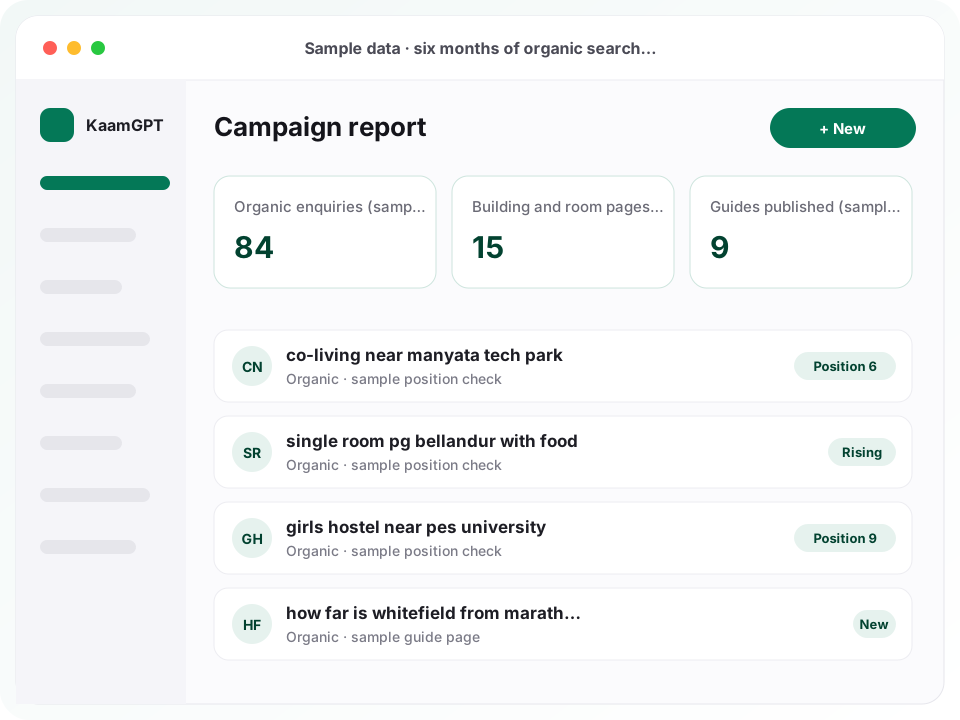
The best SEO company for PGs and hostels in Bengaluru earns its fee in one way: when a newcomer reads up on where to live, your hostel's own page answers better than any portal listing. Search starts long before the visit. A second-year student switching hostels, a parent in Patna comparing girls' hostels, or a developer with a joining date in Nagavara will spend evenings reading before they message anyone.
SEO for a paying guest house is the work of writing and structuring those answers: a page for each building and room type with the real rent, deposit, food and rules; honest guides to the walk or ride to nearby campuses and tech parks; and the technical care that lets Google read all of it. This page shows what that involves in Bangalore, what to avoid, and what it costs.
- ₹14,999is where KaamGPT's monthly hostel SEO fee begins; the quote lists every page
- ~30 daysuntil the crawl, the search map and the first hostel building pages are done
- 1 pageper building and per room type, each with rent, deposit and food terms in plain text
- 0city-name doorway pages: Google's spam policies treat them as abuse
Where does the best SEO company for PGs and hostels in Bengaluru start on a hostel site?
Order matters. Google can only rank a page it can find, read and trust, so the first weeks of pg seo go to repairs: removing duplicate pages, fixing what blocks indexing, making the site fast on a phone and putting prices and rules into text. Only then does writing new pages pay off.
After repairs, building pages come first, because they answer the most valuable searches: a named area or landmark plus a need, from someone ready to visit. Room-type pages follow, then commute guides and answers to the common questions. Each page is written for one search intent and links to the building it belongs to, which gives the site the clear, browsable structure Google's guidance asks for.
Good hostel seo is slow but cumulative. A page written well in March can still bring enquiries in the following year's admission season, which is why we ask owners to treat it as an asset rather than a campaign.
We also watch what residents actually ask. The questions your manager hears at the gate every week, about laundry, guests at weekends, parcel deliveries or the late-night food rule, are searches someone else is typing tonight. Turning the five most common into short, plain answers on the building page often brings more qualified visits than any new guide.
Put every price in text
Rent by room type, deposit, notice period, food and electricity charges go into an HTML table on each building page. People search for these details, and a page that states them earns the click.
Name the landmarks honestly
If the building is a ten-minute walk from a campus gate, say so and describe the route. If it is a bus ride, say that instead. Exaggerated distances bring visits that end at the gate.
Answer the questions parents ask
Pages on food, timings, visitors, the warden and security answer the searches parents make, and a student hostel that publishes them clearly earns more trust than one that waits to be asked.
Write each guide once, well
One thorough guide to living near a tech park is worth more than ten thin pages. Guides are updated when a metro line opens or a bus route changes, so they stay true.
Link the site and the profiles
The web page points to the Maps listing and the listing points back, both spelling the hostel's details identically.
Which SEO tasks does a hostel website actually need?
Not every hostel needs every item. A lone building whose site already loads well may see its first new page within a fortnight, while a chain carrying years of half-finished pages begins with clean-up.
An audit of what Google can read
We check indexing, duplicate pages, speed, mobile layout and which buildings, room types and questions have no page at all, and list the fixes in order of effect.
SEO in detail →A keyword and page map
We sort the phrases residents type into buckets (this building, that room type, a nearby campus, a commuting question) and assign each bucket a single URL so your own pages never fight each other.
SEO in detail →Building and room-type pages
For each building: address, landmarks, rooms, rent, deposit, notice period, food, rules, licence and real photos. For each room type: size, sharing, bathroom and what is included.
SEO in detail →Commute guides that are actually useful
Honest guides to getting from the building to the campuses and parks your residents use: walking routes, buses, metro and how long the trip takes at peak hour.
SEO in detail →Structured data and technical care
Clean titles, headings, internal links, image descriptions and schema markup describing the business, its address and its rooms, plus fixes for speed and broken links.
SEO in detail →Profiles that match the pages
The Maps listing for every address mirrors its web page word for word on name, street address and number, which tells Google both describe the same hostel.
Google Business Profile in detail →Site repair or a simple rebuild
Where the current site cannot be fixed, we build a fast, plain one with a page per building, a price table in text and a WhatsApp button that is always visible.
Websites in detail →Why do doorway pages and copied listings backfire for PGs?
A shortcut often sold to PG owners is a set of pages titled 'PG in Koramangala', 'PG in BTM Layout', 'PG in HSR Layout' and so on, each repeating the same text with the area swapped in, often for areas where the owner has no building. Google has a name for it. Its spam guidance counts sets of pages aimed at particular cities or regions, all steering visitors towards one destination, as doorway abuse.
A neighbouring clause covers scaled content: pages produced in bulk to game rankings instead of serving readers, whether typed by hand or churned out by software. Fifty thin locality pages written by a tool fit that description exactly. The risk is not just that those pages fail; a site-wide signal of low value can drag down the genuine building pages too.
The honest alternative is simple. Write a page for each place you actually operate, describe what is genuinely near it, and let guides for other areas exist only if they help a reader, for example a guide to commuting from your Marathahalli building to Whitefield.
- One page per real building, never per area you would like to rank in.
- Guides written for readers, each with information that appears nowhere else on the site.
- No copied portal descriptions or text lifted from a competitor's site.
How can a PG's own site beat listing portals in search?
Portals win broad searches like pg in bangalore because they have thousands of listings. They are weaker on specifics, because their listings are short and written by many hands. A PG's site can win the narrower searches that actually lead to visits: a named campus, a room spec, a food preference, a question about rules.
That means depth on few pages rather than breadth across many. A building page that states the walk to the gate, the menu, the deposit terms, the visitor rules, the licence and the fire equipment, with real photos of each room type, answers more of a reader's questions than any portal entry can. It also earns links from residents, colleges' accommodation lists and local guides over time.
Portals remain useful as a source of enquiries, and many hostels keep their listings. The aim of SEO is not to replace them but to make sure that a person who has heard of your building, or who searches with a specific need, lands on your page rather than a competitor's.
There is also a timing advantage. Portal listings change hands and disappear when a room is let; your building page stays at the same address year after year, gathering links and reviews. A page that has answered parents' questions through two admission seasons usually carries more weight in the third than a listing posted last week.
What should a building page for a PG contain?
Think of the page as the conversation a careful parent would have with your manager, written down. It opens with the building name, address and a one-line description of who it suits, then answers the practical questions in the order people ask them.
Structured data helps machines read the same facts. Schema markup can describe the business, its address, phone and opening details, and photos should carry descriptive file names and text alternatives. None of this replaces the writing; it simply helps search engines and AI assistants match the page to the question.
- Rooms: sharing options, size, bathroom, furniture, air-conditioning, with photos of each.
- Charges: monthly rent for each sharing type, the deposit and its return terms, notice, and how power and upkeep are billed.
- Food: meals included, menu, vegetarian or not, and whether residents can opt out.
- Rules: entry times, visitors, guests, quiet hours, and the warden or manager's role.
- Safety and licence: trade licence, guard, CCTV in common areas, fire equipment.
- Getting there: walking and transit routes to the campuses and tech parks nearby, with honest times.
How do commute guides bring enquiries to a hostel?
Commute guides answer searches that come before a room search: how to get from a neighbourhood to a campus, how long the ride takes at rush hour, which metro or bus to use. A newcomer reading them is exactly the person who will soon need a bed, and a guide written by a building nearby is the natural place to mention it.
The guides must be true and current. Whitefield's metro link changed many commutes; the Outer Ring Road's traffic changes others by the hour. A guide that says a bus takes twenty minutes when it takes fifty does more harm than no guide at all, because the reader will notice on the first day. We write them with your residents' real experience and update them when routes change.
How should a hostel chain structure its website?
A chain with buildings in Electronic City, Bellandur and Nagavara needs a site that mirrors how a newcomer thinks: first the area they will commute to, then the building, then the room. A short brand home page leads to one page per building, and each building page leads to its room types. Area guides sit alongside, linking to the buildings genuinely nearby and to nothing else.
Each layer has its own job. The brand page explains what all the buildings share: house rules, food standards, how deposits work, how to book a visit. The building page carries what is unique: the address, the landmarks, the rooms, the manager's name and the photos. The room page settles the last questions about size, sharing and price. Nothing is repeated word for word between them, which keeps every page worth indexing.
Internal links follow the same logic. A guide to commuting to Manyata links to the Nagavara building, not to every building in the chain. Menus stay short. Breadcrumbs show where a page sits. When a building closes, its page is redirected to the nearest open one with a line explaining the change, rather than left to return an error that wastes whatever trust the page had built.
- Brand page: shared rules, food standards, booking and deposit process.
- Building pages: address, landmarks, rooms, manager, licence, photos.
- Room pages: size, sharing, bathroom, inclusions and rent.
- Guides: linked only to the buildings that are genuinely close.
What does SEO cost for a PG or hostel with KaamGPT?
Hostel SEO with KaamGPT is priced from ₹14,999 monthly, and the audit plus first building pages need roughly a month. Your quote spells out the page count per month, the fixes it covers and the way Google-sourced enquiries will be counted for each building. Compare it with the other services on our pricing page.
SEO
Recommended₹14,999/month
Typically 30 days
From ₹14,999 a month, SEO fits hostel chains and co-living brands with several buildings and room types worth a page each.
- Technical audit
- Keyword research
- On-page optimisation
- Content plan
- Monthly reporting
Digital Marketing
₹19,999/month
Typically 15 days
At ₹19,999 monthly upward, the managed plan suits hostel owners who would rather have pages, Maps, ads and WhatsApp follow one vacancy calendar.
- Channel strategy
- Creative production
- Campaign management
- Weekly reporting
Local SEO
₹4,999/month
Typically 14 days
Local SEO, ₹4,999 monthly for each address, is the sensible entry for one PG whose residents mostly arrive via a Maps search.
- Google Business Profile optimisation
- Local keyword map
- Location page on-page fixes
- Citation building and NAP cleanup
- Local link outreach
- Review replies and posts
- Monthly report
Google Ads
₹4,999/month
Typically 30 days
Paid search management at ₹4,999 monthly covers the weeks when beds must fill before fresh pages have settled in the results.
- Account setup
- Keyword strategy
- Ad copy testing
- Conversion tracking
- Bid optimisation
Meta Ads
₹4,999/month
Typically 30 days
Meta campaign management, also ₹4,999 monthly to start, puts room walk-throughs in front of movers who have not begun searching.
- Creative testing
- Audience building
- Retargeting funnels
- Pixel setup
- Weekly reporting
Lead Generation
₹24,999/month
Typically 14 days
Lead generation at ₹24,999 monthly upward suits chains drowning in enquiries that need screening and following through to a signed bed.
- Verified leads
- Multi-channel outreach
- CRM integration
- Lead scoring
- Replacement guarantee
- Ranking positions cannot be promised by anyone honest; the quote names the pages and fixes we deliver, and the report shows what they bring.
- Photography, if needed, is arranged with you separately; your staff can also shoot with a shot list we provide.
| Package | Starts at | Timeline | Best for |
|---|---|---|---|
| SEO | ₹14,999/month | Typically 30 days | From ₹14,999 a month, SEO fits hostel chains and co-living brands with several buildings and room types worth a page each. |
| Digital Marketing | ₹19,999/month | Typically 15 days | At ₹19,999 monthly upward, the managed plan suits hostel owners who would rather have pages, Maps, ads and WhatsApp follow one vacancy calendar. |
| Local SEO | ₹4,999/month | Typically 14 days | Local SEO, ₹4,999 monthly for each address, is the sensible entry for one PG whose residents mostly arrive via a Maps search. |
| Google Ads | ₹4,999/month | Typically 30 days | Paid search management at ₹4,999 monthly covers the weeks when beds must fill before fresh pages have settled in the results. |
| Meta Ads | ₹4,999/month | Typically 30 days | Meta campaign management, also ₹4,999 monthly to start, puts room walk-throughs in front of movers who have not begun searching. |
| Lead Generation | ₹24,999/month | Typically 14 days | Lead generation at ₹24,999 monthly upward suits chains drowning in enquiries that need screening and following through to a signed bed. |
Why do two hostels pay different amounts for SEO?
The main driver is how much there is to describe. One building with two room types needs a handful of pages; a co-living brand with eight buildings across three corridors needs dozens, plus guides for each area. Then comes the condition of whatever site exists today; a tidy one lets writing begin almost at once, while a neglected one swallows the first month in repairs. Guides add cost too, since each needs a real route checked at a real hour.
Before signing with any seo company for pgs and hostels in bangalore, put three questions to them: how many hostel pages a month the fee pays for, whether your warden or manager signs off rents and house rules before publication, and how they will tell a Google enquiry apart from a portal one. Hesitation on any of the three is a warning.
- Number of buildings and room types that each need a page.
- Whether today's hostel site is worth patching or overdue for replacement.
- How many guides and question pages the plan includes each month.
- Whether photos and room descriptions exist or must be created.
- Whether Maps profiles need cleaning up alongside the site.
- The level of reporting, from a monthly summary to per-page tracking.
What do people search for when they look for a PG in Bengaluru?
Searches name a landmark more often than an area. People type the campus or tech park they will commute to, because that is the only Bengaluru place they know yet. Typical examples are pg near manyata tech park, which sits in Nagavara near Hebbal on the Outer Ring Road; hostel near pes university ring road campus in Banashankari; pg near bms college basavanagudi; and co-living near itpl whitefield, the International Tech Park and the city's oldest.
Others start with the corridor. Bellandur is a transit point between east and south Bengaluru on the Outer Ring Road, and searches there often add a requirement: single room pg bellandur with attached bathroom or pg on outer ring road bellandur with food. Whitefield, now on the metro's Purple Line, draws searches about commute as well as rooms. These are the phrases a site can answer with specific, true detail.
Later in the journey, searches turn into questions: how far is a building from a gate on foot, whether food is vegetarian, what the deposit is and when it comes back, whether there is a curfew. Each question is a page or a section waiting to be written, and most PG websites in Bangalore answer none of them.
Which kinds of accommodation gain most from organic search?
- Co-living brandsCo-living seo suits brands with several buildings, a design story and enough content to fill a page per building and guide per area.
- Student hostelsParents research for weeks before admissions, so pages on food, wardens, rules and fees keep working year after year.
- Executive PGsProfessionals search by room spec and commute, which detailed room-type pages answer better than a portal listing.
- Ladies PGsSearches add safety and rules to the area name, so a page that sets out entry rules, guards and CCTV in common areas matches them closely.
- Hostel chainsA clear hierarchy of brand, building and room type lets each address rank for its own neighbourhood without duplicate text.
- Food-focused PGsMenu pages, cuisine and kitchen hygiene give searchers who care about food a reason to choose one building over its neighbours.
What happens in a hostel's first half-year of SEO?
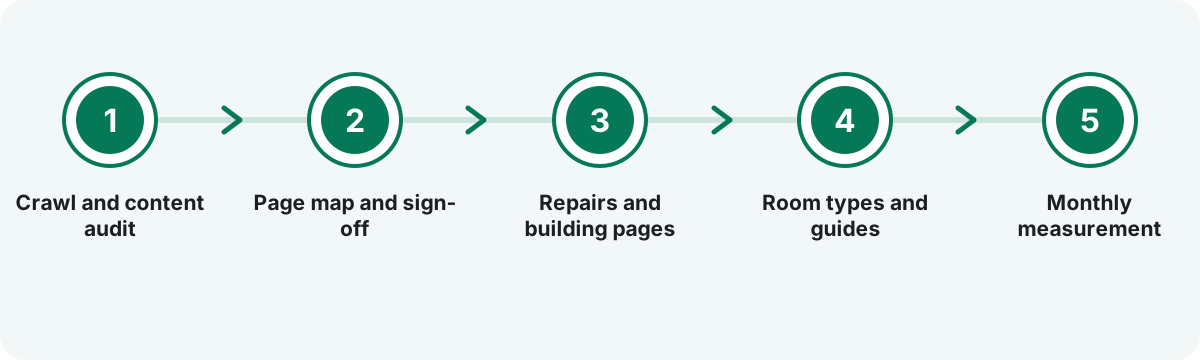
Crawl and content audit
Our crawler walks the whole hostel site; we compare it with Google's index, time it on a mid-range phone and note each address, sharing option and recurring resident question still lacking a page.
Page map and sign-off
Searches are grouped and each group gets one URL. You approve the map, including the landmarks and distances we plan to state, before any writing starts.
Repairs and building pages
Technical fixes go live first, then building pages with prices, rules, licence details and photos, each checked by your manager for accuracy.
Room types and guides
Room-type pages, commute guides and question pages follow month by month, linked into a clear structure from brand to building to room.
Monthly measurement
We report search impressions, clicks and organic enquiries per page, and update pages whose prices, rules or routes have changed.
What makes KaamGPT's SEO approach suit PGs and hostels?
Your manager checks every fact
Rent, menu, curfew and walking times go live only after the person running that building says they are right, because one wrong deposit figure undoes months of good pages.
Pages for buildings, not for towns
We stay inside Google's spam rules: no clone pages for neighbourhoods you do not serve, and a place name appears on a page only when the building really is there or nearby.
We have done this for student housing
Our My Room My Hostel project in Kota arranges hostel listings around the coaching institutes students attend, and its search work includes a page for each area and institute.
Plain reporting
Each month's note lists the hostel pages added, the searches reaching them and the chats they started, short enough to read over morning tea.
Reachable by call and WhatsApp
Message us when a rent or rule changes and the page is corrected the same working day; we operate from Bengaluru over phone, WhatsApp and video.
Why don't most PG and hostel websites rank?
A typical PG website is one screen: a photo carousel, a mobile number and a list headed 'facilities'. Search engines cannot rank what is not written down, so the site never appears for a room type, a campus or a question. Portals, which describe thousands of rooms in structured text, take those searches instead.
Some owners go the other way and buy fifty look-alike locality pages in which only the neighbourhood name changes from one to the next. Google files that habit under doorway abuse, and a penalty for it rarely stays confined to the copied pages.
- Rent, deposit and food terms appear only inside images or a PDF brochure, so they cannot be read or matched to a search.
- All buildings and sharing options are crammed onto a single 'Rooms' page, which leaves none of them able to surface for its own college or tech park.
- City and locality pages repeat the same text with a different name, which Google treats as doorway pages.
- Photos have no descriptions and file names like IMG_2041, so image search and accessibility tools learn nothing from them.
- The site is slow on a phone and the WhatsApp button hides behind a pop-up, so the few visitors who arrive leave.
- SEO starting fee
- ₹14,999 monthly; audit and first hostel pages in roughly a month
- Page rule
- One URL per building and room type, never per area without a building
- What each building page states
- Rent, deposit, notice, food, rules, licence, real photos, honest routes
- Policy we follow
- Google's rules against doorway and mass-produced pages
- Who checks facts
- Your manager approves prices, rules and distances before publishing
- Reporting
- Impressions, clicks and organic enquiries per page each month
Where this applies around Bengaluru, Karnataka
- Bengaluru
- Karnataka
- India
- Bellandur
- Whitefield
- Nagavara
- Banashankari
- Basavanagudi
Frequently asked questions
25 answersBy the end of month one, what should a hostel owner have in hand from SEO work?
A crawl and content audit, a list of buildings, room types and questions with no page, a page map you approve, and the first technical repairs. If the site is in reasonable shape, the first building page may also go live. You should finish the month knowing exactly what will be written next and why. Any seo company for pgs and hostels in bangalore should be able to show you that list on paper before asking for a second month's fee.
What do PGs and hostels pay KaamGPT for SEO?
Our hostel SEO begins at ₹14,999 monthly, with page counts and repair work fixed in a written scope. When one building gets nearly all its residents from Maps, we will point you to <a href="/services/local-seo">local SEO</a> for that address instead, starting at ₹4,999 monthly.
When do PGs and hostels see enquiries from new SEO pages?
Fixes to a broken site can register within weeks; fresh hostel pages tend to need several months, and crowded corridor searches longer still. That is why many PGs and hostels pair early SEO with search ads for urgent gaps. Pages written well keep working through later admission seasons and joining waves without further cost per click. When you weigh an seo company for pgs and hostels in bangalore, ask for a month-by-month page plan rather than a promise about rankings.
Can my PG website rank above the big listing portals?
For broad searches like 'pg in bangalore', rarely. For specific searches that name a campus, a room spec, food or rules, often yes, because a detailed building page answers them better than a short portal entry. Those narrower searches are also the ones that lead to visits, so they matter more for filling beds. Independent PGs and hostels that publish this depth regularly appear beside the portals for exactly those searches.
Are pages for every Bengaluru locality a good idea for a PG website?
No, not if you have no building there. Google regards region-by-region pages that all herd visitors to one place as doorways. Write pages for the places you actually operate, and guides for other areas only when they genuinely help a reader, such as a commute guide. PGs and hostels with buildings in several areas can, of course, have one real page for each.
Should rent and deposit be published on a hostel website?
Yes, in text rather than an image. People search for prices, and a page that states rent by room type, deposit, notice period and food terms earns their click and their trust. Hiding prices tends to bring calls from people who leave once they hear them, which wastes your manager's time. Hostels that publish full terms also field fewer arguments at move-out.
Do PGs and hostels need a blog?
Not a blog of general posts. What helps is a small set of useful guides: commuting from your building to nearby campuses and tech parks, what to bring when moving in, how deposits and notice work. Each should answer a real question a new resident asks, and be kept up to date.
How do you write SEO pages for a girls' hostel?
By stating the facts parents look for: entry and visitor rules, the warden's role, the guard, CCTV in common areas, the kitchen and the route to the campus. We avoid claims like 'fully safe' that no one can prove, and never publish photos of residents. Clear, checkable facts serve both search engines and parents better. Girls' hostels that publish these facts tend to get better-prepared enquiries from families.
Will AI assistants recommend my hostel if the SEO is done well?
No one can promise that. Assistants draw on pages that state facts clearly, so a building page with address, rooms, prices, rules and routes in plain text is more likely to be read correctly. We write for people first and keep the structure clean, which is the most an honest provider can do.
How is SEO different for co-living brands and single PGs?
Co-living brands usually have several buildings, a brand story and room types worth a page each, so a fuller site and monthly guides make sense. A single PG may need only one strong building page, a Maps profile and a few answers. The page map follows what you actually have to describe. Both kinds of hostels benefit from the same honesty about prices and rules.
Can you fix a hostel website another agency built?
Usually, yes. After an audit we tell you whether patching it or starting fresh costs less over a couple of years. Common fixes include removing duplicate locality pages, moving prices out of images, speeding up the mobile version and repairing broken links. You keep ownership of the domain and site throughout.
What role do photos play in hostel SEO?
A large one. Real photos of each room type, bathroom, kitchen and common area, with descriptive file names and text alternatives, help pages appear in image results and help readers trust them. Stock or borrowed photos do the opposite. No usable pictures yet? Your warden gets a room-by-room list of shots to take in daylight.
Does the Karnataka licensing change affect what I publish?
It affects what you can honestly say. Inspectors now look at licensed bed counts, corridor cameras, guards and fire equipment, following BBMP's 2024 conditions and the High Court's 2026 order. Publish your licence and the safety features you have, never more beds than the licence allows, and update pages if anything changes after an inspection. PGs and hostels whose pages match what an inspector finds also avoid awkward questions from residents.
Should one team handle both the hostel website and its Google Maps listings?
The two should be coordinated, because a building's page and its Maps profile must carry the same name, address and phone. Some operators keep Maps as a separate service; our <a href="/best-local-seo-agency-for-pgs-and-hostels-in-bengaluru">local SEO guide for PGs and hostels</a> covers profiles, photos and reviews in detail, and either team can work from the same building list.
How are SEO results counted for hostels in Bengaluru?
We report impressions, clicks and positions from Google Search Console for each page, and organic enquiries tagged at the first WhatsApp message or call. Over time we compare enquiries and move-ins from organic pages with those from ads and portals, so you can see what search is worth for each building.
Is it sensible for hostels to run SEO and Google Ads side by side?
Yes, and they usually should while new pages mature. Ads cover urgent gaps and test which searches convert; the best of those then get permanent pages. Read the <a href="/best-google-ads-agency-for-pgs-and-hostels-in-bengaluru">paid search page for hostels</a> for campaign detail, and our <a href="/services/google-ads">Google Ads service</a> for what management covers.
Do students and parents search in languages other than English?
Some do, especially parents. Most PG searches in Bengaluru are in English with local place names, but a short section in Hindi or Kannada, or a line saying which languages your manager speaks, can help a family decide. We add other languages only where your staff can actually answer in them.
What technical problems most often hold back PG and hostel websites?
Prices and rules in images, duplicate locality pages, very slow mobile loading from heavy photo galleries, missing page titles, and pop-ups that hide the WhatsApp button. All of these can be put right, and doing so lifts existing hostel pages before a word of new copy is added. Many websites of PGs and hostels carry at least two of them at once.
Do small hostels of thirty beds in Bangalore need monthly SEO?
Full monthly SEO often is not. A single PG usually gains more from a strong Maps profile, one detailed building page and fast replies. SEO becomes worthwhile as buildings and room types multiply. Until then, a lighter start makes more sense, and we will propose one.
Who writes hostel page content, and who approves it?
Our writers draft every page from details your manager supplies and from a visit by video call. Your manager approves prices, rules, distances and safety claims before anything goes live. That check keeps pages accurate, which is the single most important ranking and trust factor for a hostel site. For hostels with several buildings, each manager approves their own building's page.
How do PGs and hostels start SEO with KaamGPT?
Ring or WhatsApp us on +91 79767 82366 and share the hostel site plus each building's sharing options. A brief audit and a walk-through call come next, then a written page plan with its price. Nothing is changed on your site until you approve the plan.
Does SEO help with resident turnover between semesters?
Indirectly. Pages that rank for campus-based searches bring steady enquiries ahead of each term, which lets you fill rooms vacated between semesters faster. Combined with a waiting list from past enquiries, organic pages reduce the weeks a bed sits empty. Our <a href="/best-digital-marketing-agency-for-pgs-and-hostels-in-bengaluru">digital marketing guide for PGs and hostels</a> covers the full calendar.
Does hostel SEO cover my Instagram as well?
SEO itself covers your site and how search engines read it. Instagram and Facebook are handled under <a href="/services/meta-ads">Meta Ads</a> or the managed digital marketing plan. Room videos made for social can also be embedded on building pages, so one shoot serves both, and we plan them together where you use both services.
Will you build city pages for every area near my hostel?
No. We build pages for the buildings you run and honest guides that help readers, not area pages copied with a different name. Google treats the latter as doorway pages. A hostel chain with real buildings in several areas gets a page for each of them, which is both allowed and useful. For hostels, a page per real building is both allowed and useful.
What SEO approach suits student hostels near colleges?
One that writes for parents as well as students: food, timings, wardens, visitor rules, fees and the route to the campus gate, all checked by your manager. Pages naming the college you serve, such as a hostel near PES University in Banashankari, should describe the real walk or ride, not a hopeful one.