Choosing the best digital marketing agency for restaurants in Bengaluru starts with an uncomfortable question: how much of next month's revenue depends on two delivery apps whose rules you do not set? For many kitchens in Koramangala or HSR Layout the honest answer is most of it, and that is not a failure. The apps bring hungry people and riders. What they do not hand you is a guest you can invite back on your own terms.
So the plan we write starts from your format, not from a list of channels. A sixty-cover dine-in on Indiranagar's 100 Feet Road needs weekend reservations and walk-ins. A cloud kitchen with three brands from one address needs ratings, repeat orders and a reason to order direct. A café near a tech park lives on weekday lunch. Each gets different work, a different budget split and different numbers in the monthly report.
- ₹19,999monthly entry fee for a managed restaurant plan, with every task named in the written quote
- ~15 daysfrom signed scope to live campaigns, profiles and the first content calendar
- 14 digitsin your FSSAI number, which must appear on every bill and invoice you issue
- Coversorders and repeat guests are what the monthly report counts, ahead of reach
How would the best digital marketing agency for restaurants in Bengaluru plan your first quarter?
We start with the till, not the feed. Two weeks of order and booking data, split by channel and hour, tell us where the next rupee should go. A kitchen whose weekday lunch is full but whose Sunday dinner is thin needs a different first month from one that is busy only on weekends.
Then we decide what a guest is worth reaching, and from how far. Diners in Bangalore rarely cross the city for an ordinary dinner, so most targeting is a few kilometres around each outlet. Celebration dining, destination cafés and catering are the exceptions, and we treat them as separate campaigns with their own budgets.
Fix the facts before you buy attention
Hours, menu, photos, phone, ordering links and the FSSAI number are checked on your website, Google profile, Instagram bio and every app listing. Paid traffic sent to a wrong menu is money spent annoying people.
Give regulars a direct route
A short web ordering link, a WhatsApp number that actually gets answered and a table card that asks for consent turn a delivery customer into someone you can reach again, without promising anything the apps' contracts forbid.
Plan around dayparts, not weeks
Office lunches near tech parks, after-work groups on Thursday, family meals on Sunday, late delivery after eleven: each slot gets its own message and its own measure, and campaigns switch off when the kitchen is already full.
Treat festivals as booking windows
New Year's Eve in the CBD, the Avarekai season in Basavanagudi, Ugadi, Ramzan evenings, Diwali and Christmas each have a lead time. We open bookings and menus early enough for groups to plan, instead of posting on the day.
Read ratings as an operations signal
Low ratings for late delivery or cold food are not a marketing problem. We pass them to your kitchen team with the pattern attached, because no campaign outspends a recurring complaint.
What does a restaurant marketing retainer actually include?
A managed digital marketing plan for a restaurant is a set of connected jobs, weighted by your format. Below is what we usually combine; the audit decides how much of each you need.
Channel plan by format and daypart
We map where your revenue comes from today, by channel and by hour, then set targets for each daypart: weekday lunch, evening delivery, weekend brunch, late dinner. A pub, a darshini and a cloud kitchen end up with very different plans, and each plan names the number it is meant to move.
Digital marketing in detail →Maps profiles that answer the 8 pm question
Hours for dine-in, takeaway and delivery, the menu, dish photos, ordering and booking links, and replies to reviews. For multi-outlet brands, one accurate profile per address. Our local SEO for restaurants page goes deeper on this part.
Google Business Profile in detail →Appetite-first social ads in a tight radius
Short dish videos, launch announcements and event nights shown to people within realistic travel or delivery distance, with click-to-WhatsApp or booking buttons. The detail of how we build these is on our Meta ads for restaurants page.
Meta Ads in detail →Search ads only where intent is high
Bookings for groups, birthday dinners, private dining and catering are worth paying for; generic ‘food near me’ clicks that end on a delivery app usually are not. We keep Google Ads narrow and tie it to calls, bookings and direct orders.
Google Ads in detail →A guest list you are allowed to use
We set up consent capture at the table, on the website and on direct orders, then send opted-in guests a small number of useful messages: the new menu, a festival special, a slow-Tuesday invitation. Fewer, better messages keep people on the list.
WhatsApp campaigns in detail →A website that the apps cannot replace
A fast site with the menu as real text, outlet pages, catering and party pages, and your FSSAI details in the footer. It is where direct online ordering, bookings and press links point, and it is the page AI assistants read when asked about you.
SEO in detail →Restaurant social media with a purpose
A content calendar built around what is actually happening in your kitchen: seasonal produce, a chef's special, a new outlet, a regular's favourite. Every post has a job, whether that is a booking, a direct order or a review.
Social media in detail →How much of a restaurant's business should run through Swiggy and Zomato?
There is no right percentage, and anyone who quotes one without seeing your numbers is guessing. The delivery apps solve two hard problems at once: they put your menu in front of people who are already hungry, and they bring riders. For a new cloud kitchen in HSR Layout, the apps may be the only sensible starting channel. Aggregator dependence becomes a risk only when you have no other route to the guests who already love your food.
The relationship has been contested. In April 2022 the Competition Commission of India ordered an investigation into Zomato and Swiggy on a complaint by the National Restaurant Association of India, which raised concerns including price parity clauses and access to customer data. We make no claims about anyone's fees or terms. What we do say is: read your own contract before you advertise a lower price on your website, because some agreements restrict exactly that.
A healthy plan keeps the apps for discovery and delivery while building direct online ordering for regulars, phone and WhatsApp orders for nearby offices, and table bookings that never touch an app. The aim is not to leave the platforms. It is to make sure a bad month on one of them is survivable.
- Keep app listings complete and current; they are often the first place a new guest meets you.
- Offer direct ordering on your own site or WhatsApp for repeat customers, within what your agreements allow.
- Collect consent at the table, on direct orders and at the counter, never by scraping order data.
- Compare the cost of a direct order, including your own delivery, with an app order before scaling either.
Where must the FSSAI number appear when you market food?
Every food business in India, cloud kitchens included, needs an FSSAI licence or registration. FSSAI's licensing FAQs say a cloud kitchen with no seating must obtain one according to its eligibility, and that a 14-digit licence number starts with 1 while a registration number starts with 2. Since an FSSAI order of June 2021, that 14-digit number must be declared on cash receipts, purchase invoices, cash memos and bills issued by food businesses.
Online, the same FAQs say a platform that only lists food businesses must list only those holding a valid licence or registration. In practice that means your number travels with your listings. If you run several outlets, check that each listing carries the number for that kitchen, and that your own direct-order confirmations and invoices carry it too.
For marketing, we put the number in the website footer, on direct-order bills and in the outlet details, and we check it against every listing during onboarding. Bigger chains have extra menu duties under the 2020 labelling and display rules, which our SEO for restaurants page explains, because they shape how a menu should be published online.
When do Bengaluru diners decide where to eat?
Most dinner decisions are made late and close to home. Someone in Koramangala at 7.30 pm compares two or three places on Maps or an app, looks at photos, checks whether it is open and how far it is, and decides within minutes. Searches look like south indian breakfast open now, rooftop dinner indiranagar or biryani delivery hsr layout late night, and the winner is often simply the listing that answered every question.
Planned occasions run on a longer clock. A birthday dinner for twelve, a team lunch after a product launch or a family celebration during Ugadi is chosen days ahead, often by one organiser who checks menus, asks about a private area and wants a quick reply on WhatsApp. Trust here comes from recent reviews, clear set-menu prices and a person who answers. Those guests are worth far more than a single delivery order, so they deserve their own campaign.
What should a restaurant's monthly marketing report show?
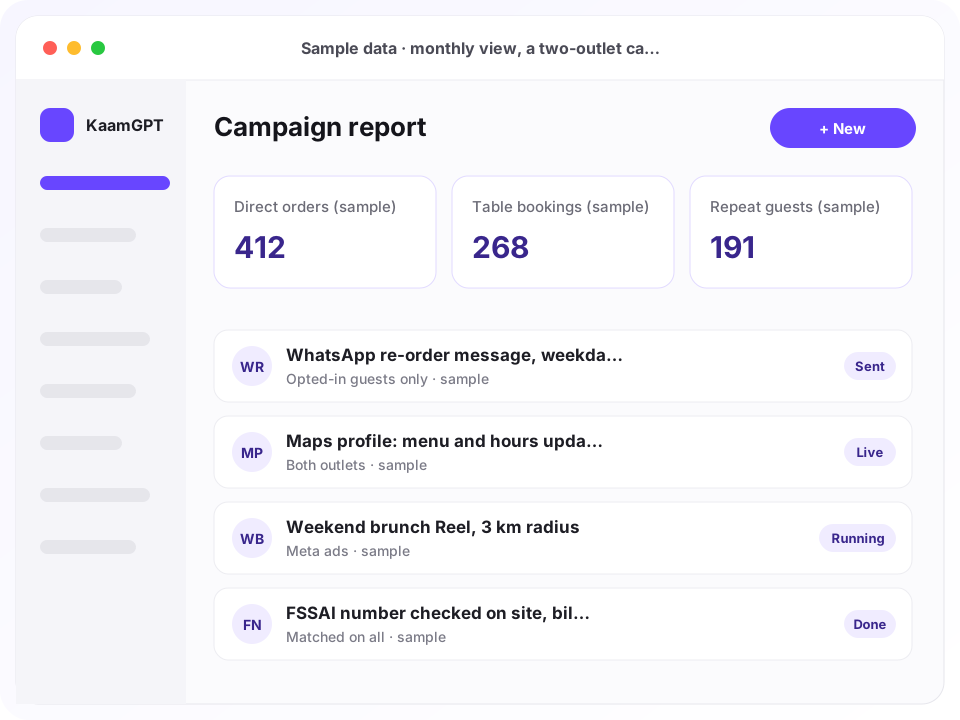
If the report could have been written without looking at your till, it is the wrong report. We start from covers and orders, by outlet and channel, and only then look at the marketing numbers that explain them: calls and direction requests from Maps, bookings from ads, direct orders from WhatsApp messages, and review volume and replies.
Each spend line is shown as cost per booking or cost per direct order, so you can compare a Meta campaign with a Google one, or either with a discount on the apps. When a number moves, we say whether we think marketing caused it or something else did, such as a new chef, a road closure or a cricket final.
- Covers and direct orders by outlet, week on week.
- Bookings and calls from Google, and what each cost.
- Opted-in guests added, messages sent and orders that followed.
- Ratings and reviews on Google and the apps, with recurring complaints passed to the kitchen.
How should a cloud kitchen with several brands market each one?
Many Bengaluru cloud kitchens run three or four virtual brands from one address: a biryani brand, a bowl brand, a dessert brand. Each needs its own menu, photos and story, but they share one FSSAI licence, one kitchen team and one delivery radius. Marketing them as if they were unrelated companies wastes money; marketing them as one blurs what each is for.
We give each brand a clear job. One is the brand people search for by dish, so its photos and menu names must be excellent. Another exists for late-night orders, so it gets attention only after ten. A third may be a test, run for a few weeks and closed if nobody reorders. The guest list stays shared, with consent recorded once, so a regular of one brand can hear about another without being messaged twice.
Because there is no dining room, cloud kitchen marketing leans on ratings and repeat orders more than on reach. We watch reorder rates by brand, read every complaint about packaging or delivery time, and only increase ad spend on the brand whose customers come back without a discount.
What does each restaurant marketing package cost?
Published starting prices sit on our pricing page. For a restaurant, managed digital marketing begins at ₹19,999 a month, and the quote you sign spells out outlets, channels and deliverables. Whatever Google or Meta bill for showing your ads goes from your card to theirs; our fee is only for planning, creative and management.
Digital Marketing
Recommended₹19,999/month
Typically 15 days
Restaurants and multi-brand kitchens wanting a single team to run Maps, ads, content and the guest list against covers and direct orders.
- Channel strategy
- Creative production
- Campaign management
- Weekly reporting
SEO
₹14,999/month
Typically 30 days
Restaurant groups that want their own website to rank for cuisine, dish and outlet searches instead of leaving those visitors to listing sites.
- Technical audit
- Keyword research
- On-page optimisation
- Content plan
- Monthly reporting
Local SEO
₹4,999/month
Typically 14 days
Single outlets whose walk-ins and calls depend on an accurate, well-reviewed Google profile, priced per location.
- Google Business Profile optimisation
- Local keyword map
- Location page on-page fixes
- Citation building and NAP cleanup
- Local link outreach
- Review replies and posts
- Monthly report
Google Ads
₹4,999/month
Typically 30 days
Venues that take group bookings, private dining or catering and want to pay only for searches with a date and a headcount behind them.
- Account setup
- Keyword strategy
- Ad copy testing
- Conversion tracking
- Bid optimisation
Meta Ads
₹4,999/month
Typically 30 days
Cafés, new openings and event-led venues that need nearby people to see the food before they think of searching for it.
- Creative testing
- Audience building
- Retargeting funnels
- Pixel setup
- Weekly reporting
Lead Generation
₹24,999/month
Typically 14 days
Caterers, banquet kitchens and office-lunch services that sell large orders through enquiries, calls and quotes.
- Verified leads
- Multi-channel outreach
- CRM integration
- Lead scoring
- Replacement guarantee
- Each additional outlet, brand or city adds scope, so the quote prices it explicitly rather than hiding it in a bundle.
- Photography and video shoots, influencer fees and printed table cards are third-party costs; we list them separately when you want them.
| Package | Starts at | Timeline | Best for |
|---|---|---|---|
| Digital Marketing | ₹19,999/month | Typically 15 days | Restaurants and multi-brand kitchens wanting a single team to run Maps, ads, content and the guest list against covers and direct orders. |
| SEO | ₹14,999/month | Typically 30 days | Restaurant groups that want their own website to rank for cuisine, dish and outlet searches instead of leaving those visitors to listing sites. |
| Local SEO | ₹4,999/month | Typically 14 days | Single outlets whose walk-ins and calls depend on an accurate, well-reviewed Google profile, priced per location. |
| Google Ads | ₹4,999/month | Typically 30 days | Venues that take group bookings, private dining or catering and want to pay only for searches with a date and a headcount behind them. |
| Meta Ads | ₹4,999/month | Typically 30 days | Cafés, new openings and event-led venues that need nearby people to see the food before they think of searching for it. |
| Lead Generation | ₹24,999/month | Typically 14 days | Caterers, banquet kitchens and office-lunch services that sell large orders through enquiries, calls and quotes. |
How much should a Bengaluru restaurant budget for marketing?
Split the money into two buckets before comparing proposals. The management fee pays for people who plan, write, shoot, launch and report. The media budget is the separate amount the ad platforms bill for showing your ads, and it should scale with the number of outlets and how far your guests will travel. A single neighbourhood café can learn plenty from a small test; a three-outlet brand opening a fourth needs more.
When you speak to a digital marketing agency for restaurants in Bangalore, insist that those two numbers are written separately, along with the results that will be reported each month. If a proposal blends fee and ad spend into one figure, you cannot tell whether the work or the media is earning its keep.
- How many outlets, brands and delivery zones the plan has to cover.
- Whether you need fresh photography and video, or already have usable food images.
- How much of the work is paid ads versus organic profiles, content and the guest list.
- Whether direct ordering, booking and WhatsApp tools are already running or still need setting up.
- How many festival and launch campaigns fall inside the quarter.
- Whether the website needs rebuilding before it can carry traffic.
Where does Bengaluru go out to eat, and why there?
The old centre still draws the evening crowd. Church Street is a 750-metre stretch from Brigade Road to St. Mark's Road, running parallel to MG Road, and is known for shopping and nightlife. Brigade Road itself has plenty of pubs, cafés and restaurants and has long been the city's New Year's Eve gathering point. Restaurants here market to visitors, office groups and celebrations, so reservations, group menus and late-evening visibility matter more than a delivery radius.
East and south-east, the pattern changes. Indiranagar's 100 Feet Road is known for bars and pubs as well as fashion stores, while Koramangala and HSR Layout mix startup offices with dense housing for young professionals. That combination produces both a busy dine-out scene and heavy delivery demand from the same streets, which is why so many cloud kitchens sit in the lanes behind the main roads. Restaurant marketing in Bengaluru for these areas has to serve the person at the door and the person on the sofa.
In the older south, habits are different again. VV Puram Food Street, the Thindi Beedi close to Basavanagudi's Sajjan Rao Circle, packs more than twenty vegetarian stalls into under 150 metres, gets busy after six in the evening and hosts the Avarekai Mela each December or January. Basavanagudi also has long-running vegetarian restaurants with loyal families. Here word of mouth, festival timing and accurate Maps listings do more work than glossy ads.
Which kinds of restaurants does this work suit?
- Fine-dining and chef-led restaurantsReservations, tasting menus and private dining carry the month, so the plan leans on search, Maps and a carefully kept guest list.
- Casual dining and family restaurantsWeekend dinners and birthdays drive revenue; local social ads and review replies do most of the lifting.
- Cloud kitchens and virtual brandsWith no dining room, cloud kitchen marketing is about ratings, repeat orders and a direct ordering habit for the most loyal customers.
- Cafés and bakeriesMorning and afternoon trade near offices and colleges, plus celebration cakes ordered ahead, reward a steady local presence.
- Pubs, bars and microbreweriesFood, music nights, screenings and the venue are what may be promoted; drinks and liquor brands stay out of every ad.
- Darshinis and udupi restaurantsFast, repeat and neighbourhood-led, they gain most from accurate Maps listings, opening hours and festival menus.
- Caterers and banquet kitchensLarge orders start as an enquiry, so the work is a clear menu-and-package page, quick replies and honest quotes.
How does the work begin and run?
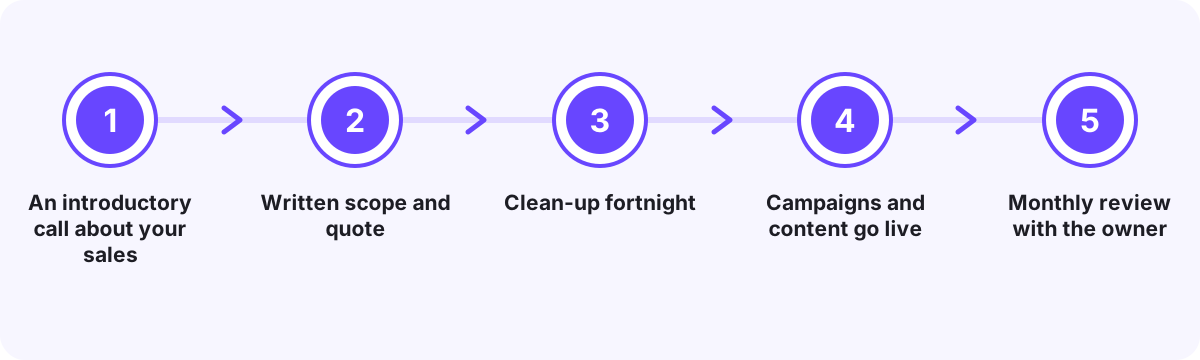
An introductory call about your sales
We ask for recent sales by channel and hour, your app ratings, your Google profile and your last few campaigns. Nothing is signed at this stage; we only want to know where you stand.
Written scope and quote
You receive a document naming the outlets, channels, monthly deliverables, reporting and the starting fee, with ad budgets shown separately as your own spend.
Clean-up fortnight
Profiles, menus, hours, photos, links, FSSAI details and tracking are fixed first. Consent capture for WhatsApp is switched on so the guest list starts growing from day one.
Campaigns and content go live
Ads, posts and messages launch by daypart. We check bookings and direct orders weekly and move budget towards what is filling seats or tickets.
Monthly review with the owner
One page of numbers you recognise from your own till: covers, direct orders, bookings, repeat guests and cost per result, followed by the changes planned for the coming month and the reasons for them.
Why do restaurant owners choose KaamGPT?
We have built food ordering, not only marketed it
CloseToBuy is a Bengaluru app for ordering from nearby restaurants. Our team designed its customer app, admin panel and website, shipped it to Google Play, and handled its search ads, Meta campaigns, WhatsApp and email. The CloseToBuy case study sets out the scope.
Software for the floor as well as the feed
Our RestroMenu tool gives you a table QR menu with ordering that checks the guest is actually there, which is also a natural, consented place to collect a phone number.
One team across channels
Search, Maps, Meta, WhatsApp, email and the website sit with one team, so a festival menu does not launch on Instagram while Google still shows last month's hours.
Rules taken seriously
We keep FSSAI details consistent, keep liquor out of ads and only message guests who said yes. A campaign that puts your licence or ad account at risk is not a campaign we run.
Plain reporting and written scope
Fees and deliverables are agreed on paper first, and the monthly report uses the numbers your manager already watches at closing time.
What makes restaurant marketing harder than it looks?
Most restaurateurs who call us have already tried something: an agency that posted daily, a boosted post before a launch, a discount campaign on the apps. Effort was seldom missing. What was missing was a line from the work to the till, so nobody could say which spend brought guests back.
- Aggregator dependence. When almost every order arrives through an app, a change in visibility or ratings there moves your whole month, and you hold few direct contacts to fall back on.
- Followers that never eat with you. Reach from city-wide audiences looks good in a report but rarely turns into covers within the three or four kilometres a diner will actually travel.
- Out-of-date details everywhere. Old menus, wrong hours, a closed outlet still showing on Maps and an FSSAI number that differs between the bill and the listing all cost trust quietly.
- Liquor rules ignored. Pubs and microbreweries sometimes run drinks offers as ads, but India restricts the advertising of liquor and the CCPA's 2022 guidelines prohibit surrogate ads, so the account or the brand ends up at risk.
- No owner for the guest list. Phone numbers sit in a booking app, a POS and a manager's phone, without recorded consent, so nobody can lawfully send the next invitation.
- Managed digital marketing
- ₹19,999 monthly starting fee; campaigns live in around 15 days
- Ad spend
- Billed by Google or Meta to the restaurant, never bundled into our fee
- FSSAI number
- 14 digits; licences start with 1, registrations with 2; required on bills and invoices
- Cloud kitchens
- Need an FSSAI licence or registration even with no seating
- Liquor
- Not advertised; pubs promote food, events and venue only
- Who you deal with
- A Bengaluru team reached on phone, WhatsApp and video calls
Where this applies around Bengaluru, Karnataka
- Bengaluru
- Karnataka
- India
- Koramangala
- Indiranagar
- HSR Layout
- Basavanagudi
- Brigade Road
Frequently asked questions
26 answersWhat work does the best digital marketing agency for restaurants in Bengaluru do month to month?
It keeps your Google profiles, menus and listings accurate, runs paid ads only where they bring bookings or direct orders, produces food content with a purpose, and grows a consented guest list you can message. Then it reports in covers, direct orders and repeat guests, so you can see whether the month's fee earned its place.
What is KaamGPT's fee for marketing a restaurant?
Our managed restaurant plan starts at ₹19,999 a month and takes roughly 15 days to set live. Outlets, channels and deliverables are fixed in the quote before anything begins. Google and Meta bill you directly for ads, which keeps media money visible, and the <a href="/pricing">pricing page</a> lists all our published starting points.
Should a new cloud kitchen in Bengaluru spend on marketing outside the delivery apps?
At first, mostly not. A new cloud kitchen usually gets its earliest orders through the apps, so ratings, photos and menu clarity there come first. Once regulars appear, a direct ordering link, a WhatsApp number and consented re-order messages give you a second channel. Paid social in a tight delivery radius helps when launching a new brand from the same kitchen.
Can my restaurant offer lower prices on its own website than on Swiggy or Zomato?
Read your own agreement before you do. Price parity clauses were among the concerns in the National Restaurant Association of India's complaint that the Competition Commission ordered investigated in 2022, and terms can vary by contract. We will not advise a discount that breaches what you signed; we can plan direct-order perks that do not depend on price.
Is a digital marketing agency for restaurants in Bangalore worth it for a single outlet?
Often, provided the scope matches one outlet. A single restaurant usually needs a clean Google profile, a small radius ad budget, review replies and a guest list more than daily posting. When that covers it, our per-location <a href="/services/local-seo">local SEO</a> plan may be the better start.
Where should a restaurant display its FSSAI licence number?
FSSAI requires the 14-digit licence or registration number on cash receipts, purchase invoices, cash memos and bills issued by food businesses. Listing platforms must list only licensed or registered businesses, so your number appears there too. We also add it to the website footer and direct-order confirmations, and check that it matches across every outlet's listings.
Does a cloud kitchen need an FSSAI licence if it has no seating?
Yes. FSSAI's licensing FAQs state that cloud kitchens with no seating arrangements must obtain an FSSAI licence or registration according to their eligibility. A registration number starts with 2 and a licence number with 1. Your marketing should never run ahead of that paperwork, because platforms and customers will ask for it.
Can a Bengaluru pub advertise its drinks offers online?
No, and we will not run such ads. India restricts the advertising of liquor, and the Central Consumer Protection Authority's 2022 guidelines prohibit surrogate ads that point to prohibited products. A pub can promote its food, live music, screenings, events and venue. Our <a href="/best-google-ads-agency-for-restaurants-in-bengaluru">Google Ads for restaurants</a> page explains how that plays out in campaigns.
How do you measure whether restaurant marketing is working?
By your till first. We track covers and direct orders by outlet, bookings and calls from Google, orders that follow WhatsApp messages, and ratings on Google and the apps. Every paid campaign is reported as cost per booking or cost per direct order, so you can compare it with any discount you run on an app.
Which Bengaluru neighbourhoods are hardest for restaurant marketing?
The busiest ones, because every pin on the map is competing. Koramangala, Indiranagar and HSR Layout have dense dining and delivery demand, so profiles, photos and reviews must be excellent just to be considered. In Basavanagudi or Malleshwaram, loyalty and festival timing count more. We set targets by neighbourhood rather than for Bengaluru as a whole.
What content works best for restaurant social media?
Content tied to a reason to visit or order: a seasonal dish, the chef making something regulars ask for, a new outlet, a weekend brunch, a festival menu. Short vertical videos of real food do more than designed posters. Each post should carry one clear next step, such as booking, ordering direct or saving the place.
How long before a restaurant sees results from digital marketing?
Profile and listing fixes can change calls and direction requests within weeks. Paid campaigns produce bookings once they run, though the first month is partly a test of audiences and offers. Website search and a guest list build more slowly, over a few months. We set expectations per channel in the written scope rather than promising a date.
Do you run campaigns for restaurants with outlets across Bengaluru?
Yes. Every outlet gets its own profile, radius and targets, because a café in Whitefield and one in Jayanagar serve different people at different hours. Brand-wide work such as the website, menu photography and festival creative is shared. The quote prices every additional outlet clearly, so the cost of growth is visible before you open the next one.
Can you build a WhatsApp guest list for my restaurant legally?
Yes, with consent. We set up opt-in at the table, on direct orders and on the website, explaining what guests will receive. WhatsApp's own business rules ask for opt-in before any message, and the Digital Personal Data Protection Act wants consent that is specific and informed. We never import phone numbers from bills or app orders without that permission.
What is the first thing you fix for a restaurant?
The facts people check before they come: opening hours for dine-in and delivery, the menu, photos, the phone number, ordering and booking links, and the FSSAI number. If those disagree between Google, your website and the apps, paid traffic is wasted. Fixing them usually takes the first fortnight of an engagement.
Do you handle marketing for Bengaluru cafés near tech parks?
Yes. Cafés near tech parks live on weekday mornings and lunch, so the plan targets the offices within walking or short-ride distance, shows the menu and timings clearly, and offers pre-ordering where it helps. Weekends are often quiet, which is a separate problem we plan for, sometimes with a different menu or audience.
Is a digital marketing agency for restaurants in Bangalore any different from a social media agency?
A social media agency usually measures posts, reach and followers. A marketing team for a restaurant should measure what happens at the till: bookings, covers and direct orders. Social content is one tool in that plan, alongside Google profiles, search ads, a website, WhatsApp and the delivery-app listings, all judged by the same numbers.
Can you work with our existing photographer or PR agency?
Yes. Many restaurants already have a photographer, a PR contact or an influencer manager. We plan around them, share the content calendar, and make sure their work lands in the right places, such as Google profiles, ads and the website. If a shoot is needed, we list it as a separate cost in the quote.
What has KaamGPT built for a food business in Bengaluru?
For Close To Buy Private Limited we designed and built CloseToBuy, an app for ordering from nearby Bengaluru restaurants with search, collections, deals and live tracking to the door. The back office and website were ours too, the app went live on Google Play, and we ran its ads, WhatsApp and email. Read the <a href="/works/closetobuy-food-delivery-app-development">case study</a>.
Do you also handle lead generation for restaurant catering?
Yes, as a separate service. Catering, corporate lunches and party bookings sell through enquiries and quotes rather than carts, so they need a different funnel and quicker replies. Our <a href="/best-lead-generation-company-for-restaurants-in-bengaluru">lead generation for restaurants</a> page covers how we qualify and follow up those enquiries for Bengaluru kitchens.
How do festivals change a restaurant's marketing calendar in Bengaluru?
They open booking windows that need lead time. New Year's Eve around Brigade Road and Church Street fills early, the Avarekai season brings crowds to Basavanagudi, and Ugadi, Ramzan, Diwali and Christmas each suit special menus. We schedule announcements, set menus and ads weeks ahead, then switch them off once the restaurant is full.
Will the Google, Meta and Instagram accounts stay in the restaurant's name?
Yes. Ad accounts and Business Profiles are created in the restaurant's name, or we are added to yours as a partner. The consented guest list is your data as well. Should the engagement end, the accounts, lists, reports and the creative we made for your restaurant remain yours to keep using.
What should I send KaamGPT before the first call about my restaurant?
Your Google profile link, your delivery-app listings and a rough split of recent orders by channel are enough to start. Phone or WhatsApp us on +91 79767 82366, or ask for a callback on this page. Expect a reply inside a working day, and a written quote arrives before any work or ad spend.
Can you help a restaurant improve its Google rating?
We reply to every review, ask genuine guests for feedback in ways Google allows and pass recurring complaints to your team. Buying reviews or trading discounts for them breaks Google's policies, so we do neither. Ratings follow food and service; marketing can only make sure happy guests remember to say so.
What makes restaurant marketing in Bengaluru different from other cities?
Distances and traffic make Bengaluru diners intensely local on weekdays, while a few areas such as the CBD, Indiranagar and Koramangala draw people from further away at weekends. Large tech-park populations shape lunch and late delivery. Food streets and festivals in older neighbourhoods reward timing and accurate Maps listings over heavy advertising.
Do you set up direct online ordering for restaurants?
We can set up a direct ordering route that suits your size: a WhatsApp order flow, an ordering page on your site, or table ordering with our RestroMenu tool for dine-in. For larger needs our team builds web and app ordering, as we did for a Bengaluru food-delivery app. We start with whichever your kitchen can handle well.